Scale-Bearing Spleenwort
Asplenium lepidotum
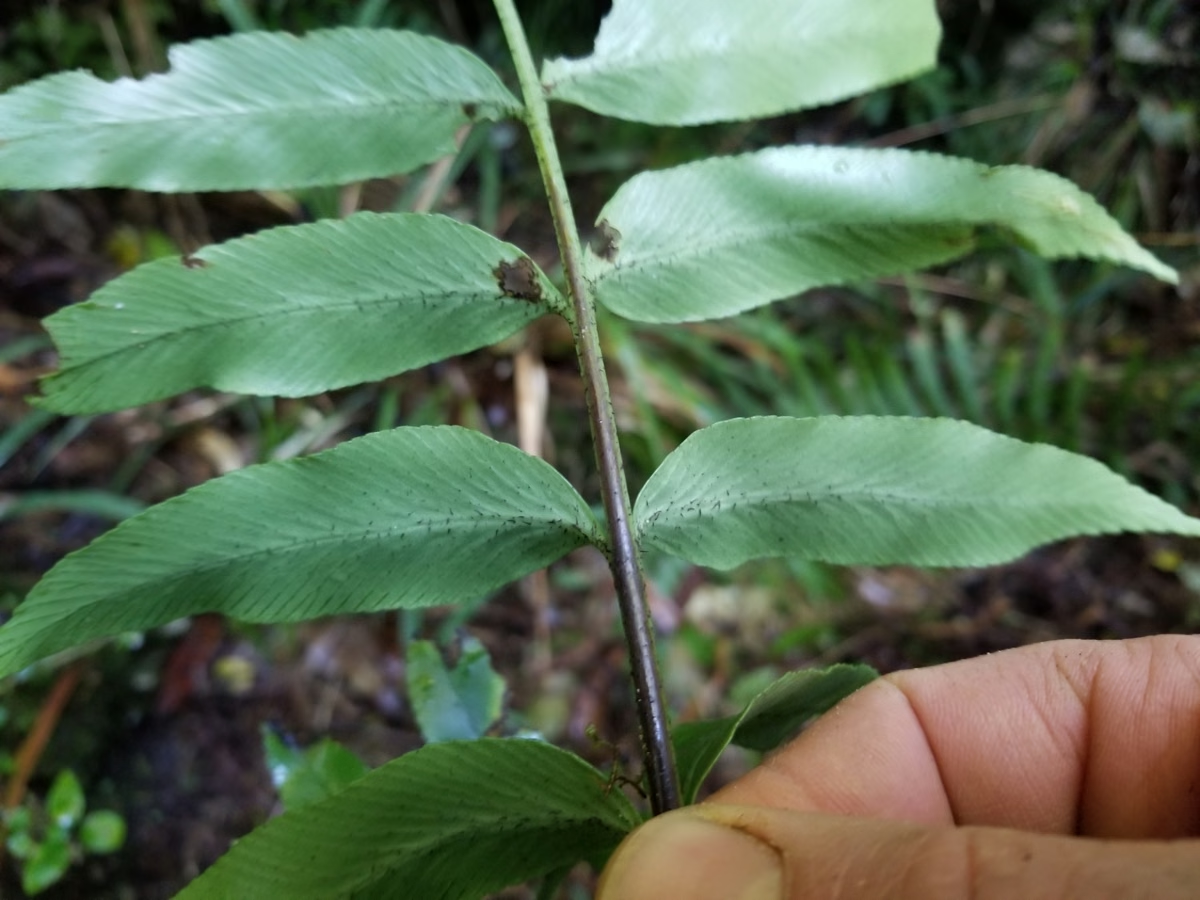
Asplenium lepidotum is an endemic fern from north-western Te Waipounamu, described as a distinct species in 2016. It grows chiefly on rock outcrops. Its young fronds carry abundant scales; mature fronds reach 120-1,100 mm and may be divided or undivided.
Identification
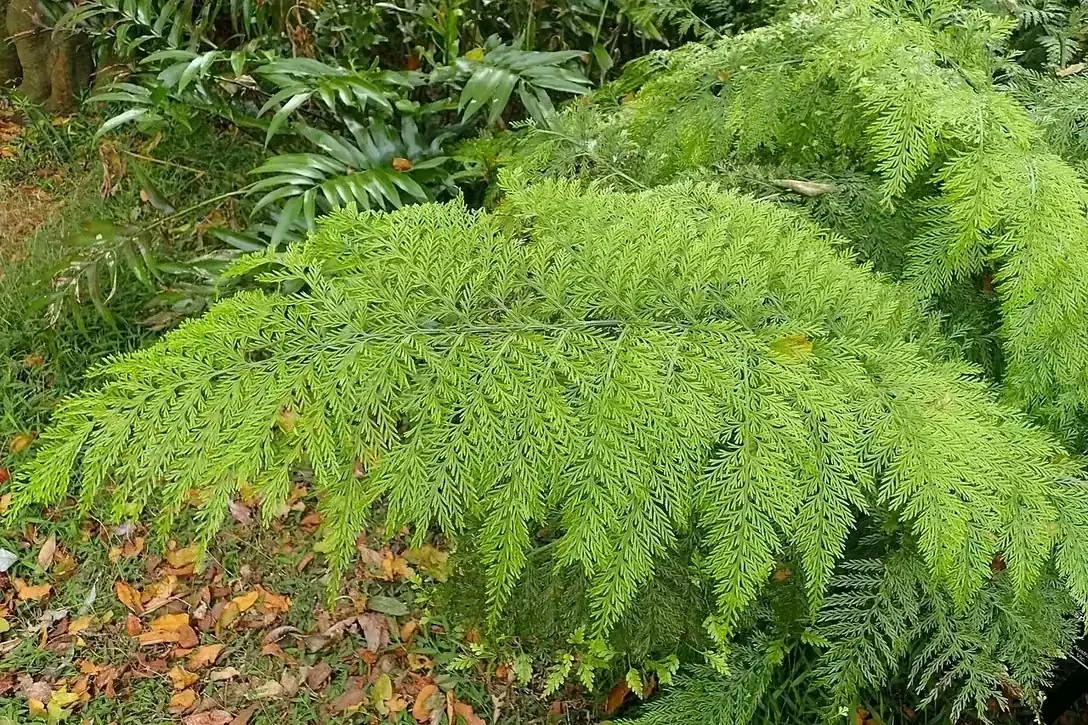
The fern has a stout, usually erect rhizome and fronds recorded at 120-1,100 mm long. Fronds are usually divided into a row of pinnae on either side of an elongated terminal segment; some are undivided. Their margins are toothed.
Abundant small scales on the upper surfaces of young pinnae distinguish it from similar Asplenium oblongifolium and A. obtusatum. Scales may be lost from older fronds, so young growth is best for identification. The Latin name lepidotum refers to these scales.
Quick facts
| Scientific Name | Asplenium lepidotum Perrie & Brownsey |
|---|---|
| Family | Aspleniaceae |
| Frond length | 120-1,100 mm |
| NZ conservation status | Not Threatened (2023), range restricted |
| Known natural range | North-western South Island |
| Height | Fronds 12-110 cm long |
| Water Needs | A cultivation watering requirement is not given in the species account |
| Light | No tested cultivation light rating is supplied |
| Spread | Usually an erect rhizome; clump width is not quantified |
| Frost Tolerance | Minimum tolerated temperature is not documented |
| Salt Tolerance | Salt tolerance is not documented |
| Growth Rate | Annual extension is not quantified in the cited accounts |
| Lifespan | Rhizomatous fern |
Natural climate range
Recorded sites span approximately sea level to 1,100 metres in north-western South Island. The fern grows on rock outcrops in both lowland and upland locations; the flora profile does not specify a tested frost-tolerance limit.
| City | Climate Suitability |
|---|---|
| Auckland | Not assessed |
| Wellington | Not assessed |
| Christchurch | Not assessed |
Habitat and distribution
The known range runs from north-west Nelson south along the West Coast to near Greymouth, with an outlying population near Hokitika. Inland records reach the Bryant Range, Marino Mountains and Reefton; reported elevations extend from sea level to about 1,100 m.
It grows on rocks, bluffs and outcrops, often limestone but also marble and mudstone, and is sometimes found in open sites. Rarely it grows as an epiphyte on kahikatea near limestone. Associated vegetation can include small broadleaved trees and shrubs, beech or podocarp forest.
Natural growing conditions
In the wild, this fern is associated with base-rich rock rather than ordinary garden soil. Its natural habitat includes limestone, marble and mudstone outcrops; these observations should not be treated as a tested garden cultivation recipe.
Planting and establishment
NZPCN does not provide propagation techniques for this species. The fern grows naturally on base-rich rock such as limestone, marble and mudstone, but those observations are not a tested home planting method.
Ecology and hybridisation
The Flora of New Zealand reports evidence of hybridisation with Asplenium flaccidum subsp. flaccidum, and possible hybridisation with A. appendiculatum subsp. appendiculatum. It usually grows on rock and is only rarely recorded as an epiphyte.
Observing this spleenwort
Rock outcrops in north-western South Island are recorded habitat for this fern. Look for scales on the upper surfaces of young pinnae: those scales can be lost as the fronds grow older.
Habitat protection
This fern is tied to rock outcrops in its known natural range and is only rarely epiphytic. NZPCN does not describe a reliable cultivation method, so natural limestone and other base-rich habitats are useful places to study it.
Seasonal observations
Young fronds carry the abundant upper-surface scales used to identify this fern, whereas older fronds may lose them. The species profile does not provide a seasonal schedule for frond production or garden maintenance.
Pruning
The sources describe Asplenium lepidotum as a fern with an erect or short-creeping rhizome and fronds, rather than a woody shrub. Neither cited profile provides a species-specific pruning method for cultivated plants.
How to Grow Scale-Bearing Spleenwort (Asplenium lepidotum)
Spore propagation remains untested in the account
The NZ Plant Conservation Network profile does not provide a propagation method. It suggests that the species may behave like Asplenium oblongifolium and Asplenium obtusatum, but supplies no tested sowing instructions for Asplenium lepidotum itself. That tentative comparison does not establish a germination temperature, substrate recipe or timetable.
The Importance of Its Rock Habitat
This spleenwort is strongly associated with base-rich rock, especially limestone bluffs and outcrops. It is usually terrestrial on rock, although occasional plants grow on trees near occupied cliffs. Collections span sea level to approximately 1,000 m. The account also notes that open coastal habitats are rarely, if ever, occupied, despite the resemblance to coastal spleenworts.
Inspecting New Fronds for Identification
Young pinnae carry abundant scales on their upper surfaces. This is a particularly useful character when checking material against similar species. Those diagnostic scales can disappear as the fronds mature, so older foliage alone can be misleading. The grooved frond axis is also scaly, and the rhizome bears dark brown scales about 1-3 cm long.
Allowing for a variable frond size
Published frond lengths range from about 12 cm to 1.1 m. The blade is pinnate and tapers into a long terminal segment that is usually undivided. Fertile fronds bear elongated sori away from the margins, with their covering membranes approximately 5-20 mm long. These measurements describe the fern's development and identification; the source does not quantify an annual growth rate or an eventual clump width.
Pests and diseases
The cited Flora of New Zealand and NZPCN profiles do not provide species-specific pest or disease treatments. Small scales on the frond surfaces are a natural identifying character, particularly on young fronds.
Names and classification
Asplenium lepidotum was formally described by Perrie and Brownsey in 2016. The NZPCN profile does not provide a Māori name for this species, so a name has not been inferred from related spleenworts.
Identifying young fronds
Examine the upper surface of newly emerging fronds for the abundant small scales that give this fern its name. Scales can fall from older fronds, so mature foliage alone may be misleading.
Related ferns
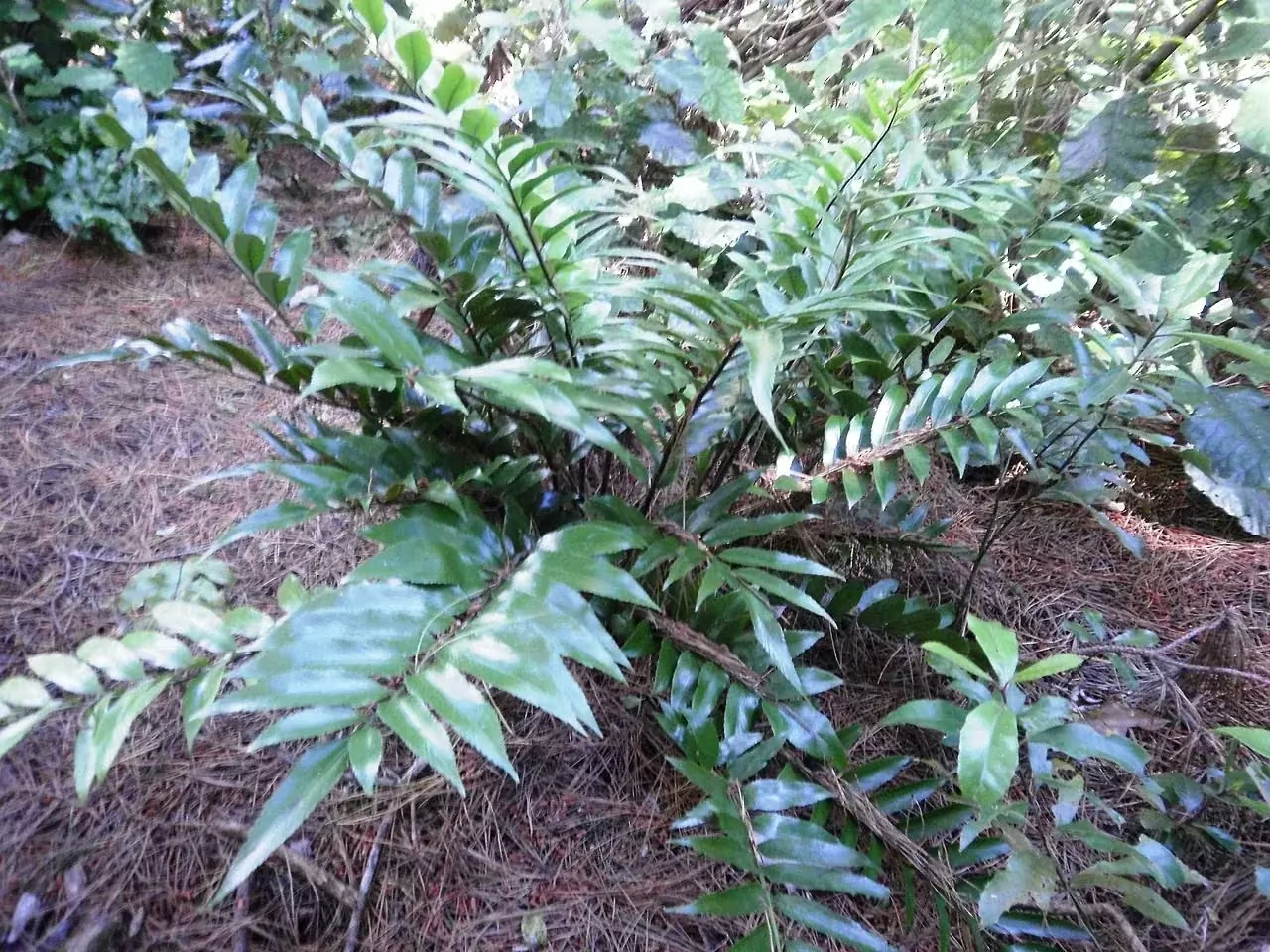
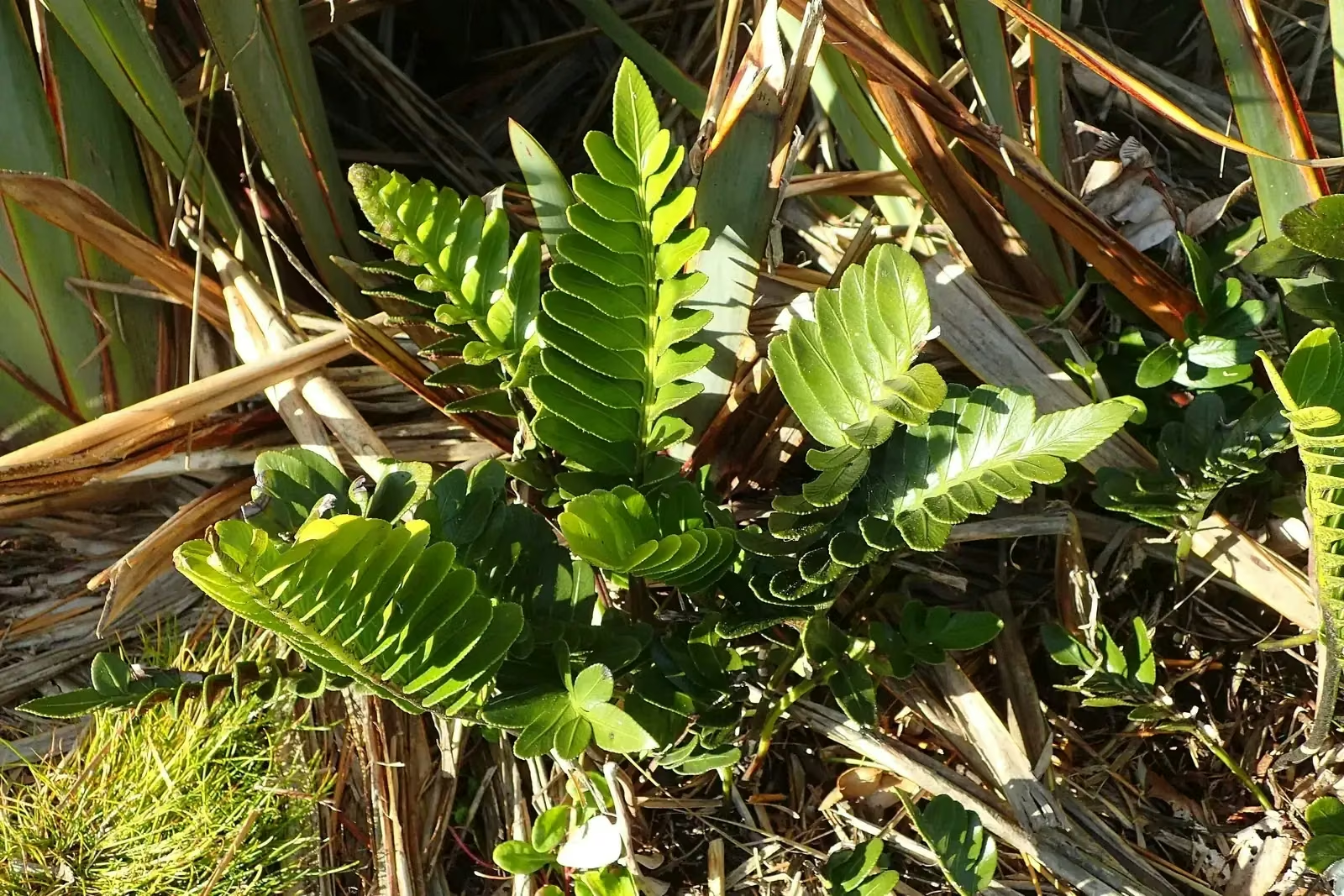
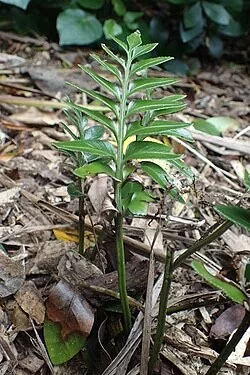
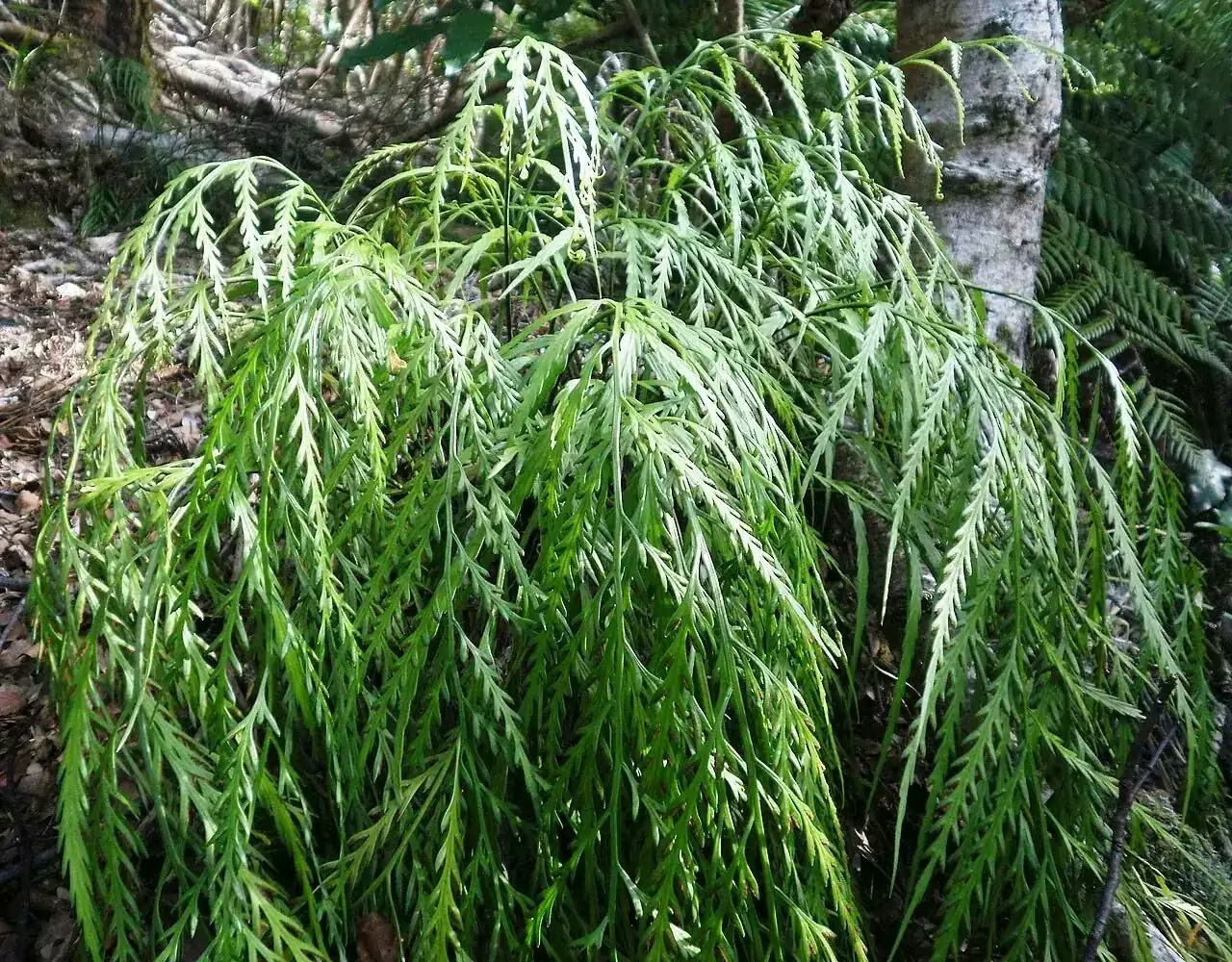
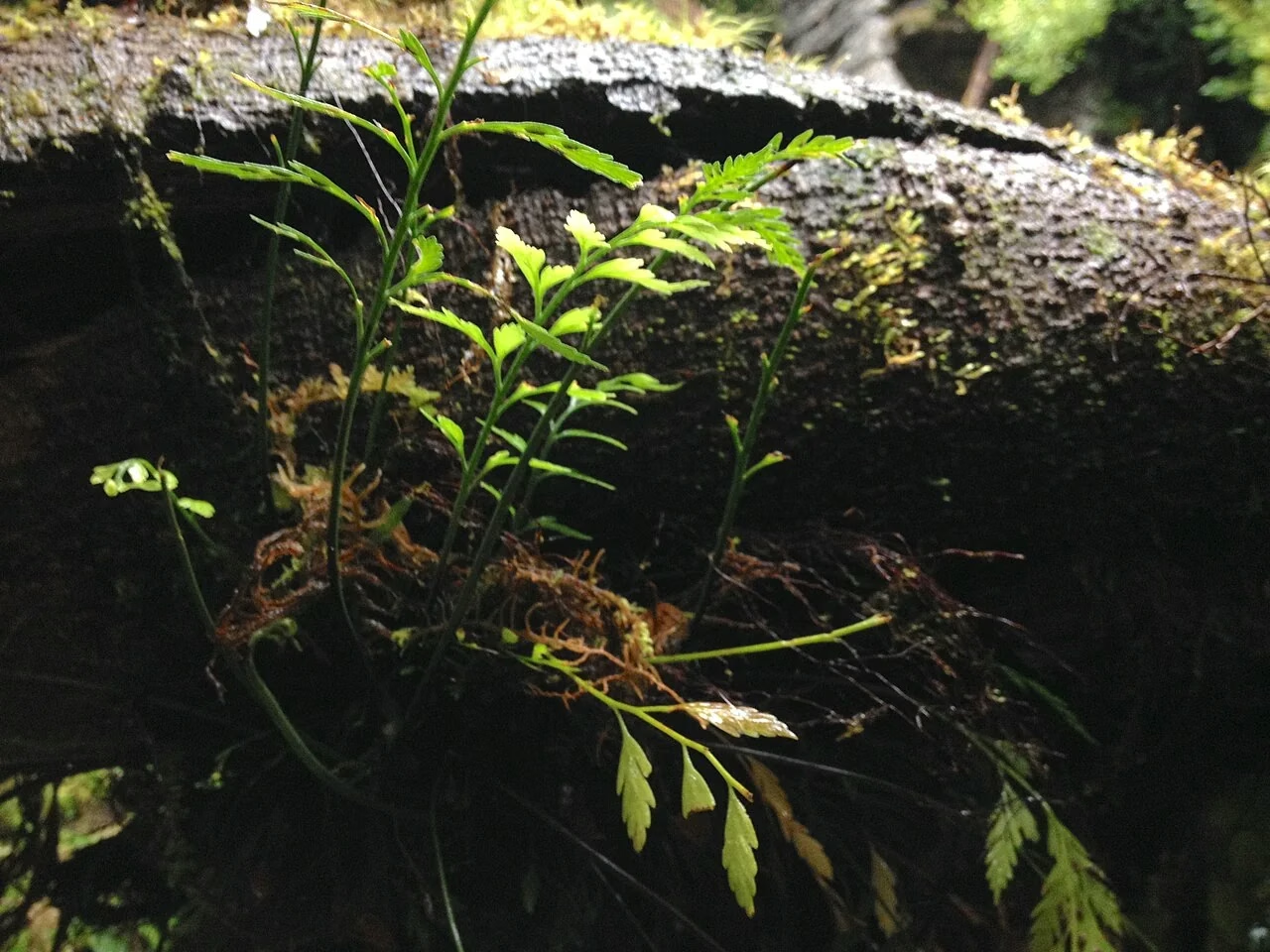
Other spleenworts include these New Zealand Asplenium species.

Conservation
The 2023 national assessment lists Asplenium lepidotum as Not Threatened with the range-restricted qualifier. The 2017 assessment listed it as At Risk - Naturally Uncommon; its distribution remains confined to the north-western South Island.
Frequently asked questions
Which fronds are most useful for identification?
Emerging and young fronds retain the conspicuous scales on the upper sides of their pinnae. These scales may be lost from older fronds.
Is it restricted to the coast?
No. Collections extend inland and reach about 1,000 m elevation. Its association with limestone and other base-rich rock is more characteristic than an exposed coastal setting.
How large can a frond become?
The botanical account gives a broad range of 12-110 cm for total frond length.
Sources
- Flora of New Zealand: Asplenium lepidotum, Brownsey and Perrie (2018).
- NZPCN: Asplenium lepidotum.
- Perrie and Brownsey (2016), original species description.
The Flora treatment is especially useful for checking the toothed pinna margins and abundant scales on young pinnae.
Last updated: