Buttercup
Ranunculus membranifolius
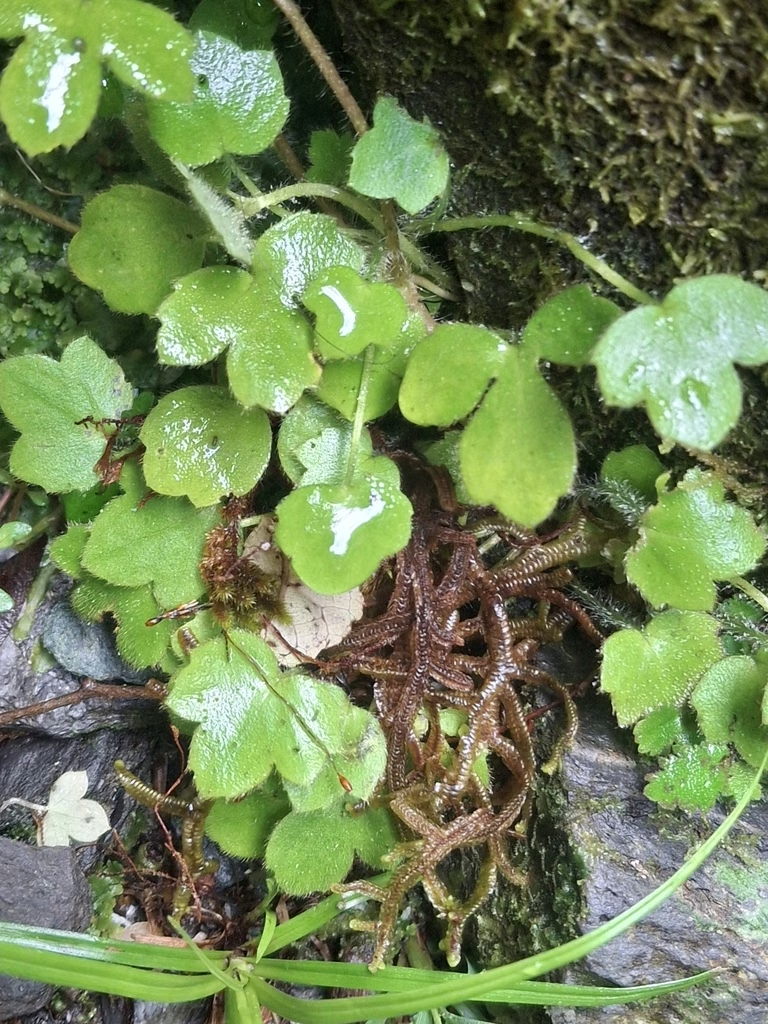
Ranunculus membranifolius is a small endemic buttercup of damp New Zealand forest and scrub. Its hairy, arching runners carry rosettes of three-parted leaves and tiny yellow flowers. This perennial has tufts of leaf rosettes on slender, arching, hairy stolons.
Identification
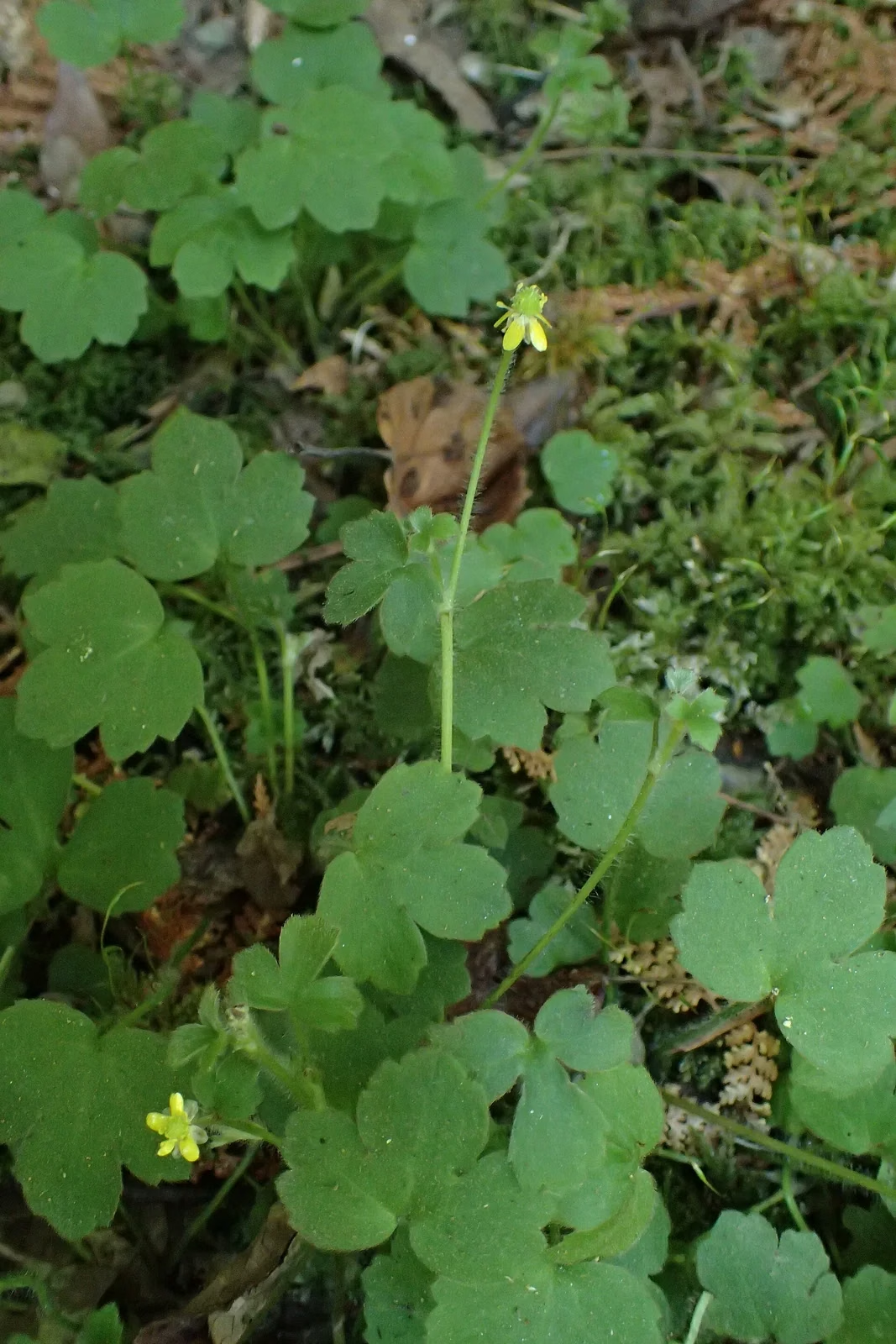
This perennial has tufts of leaf rosettes on slender, arching, hairy stolons. Basal leaves usually consist of three hairy leaflets, each roughly 1-2 cm across and shallowly three-lobed.
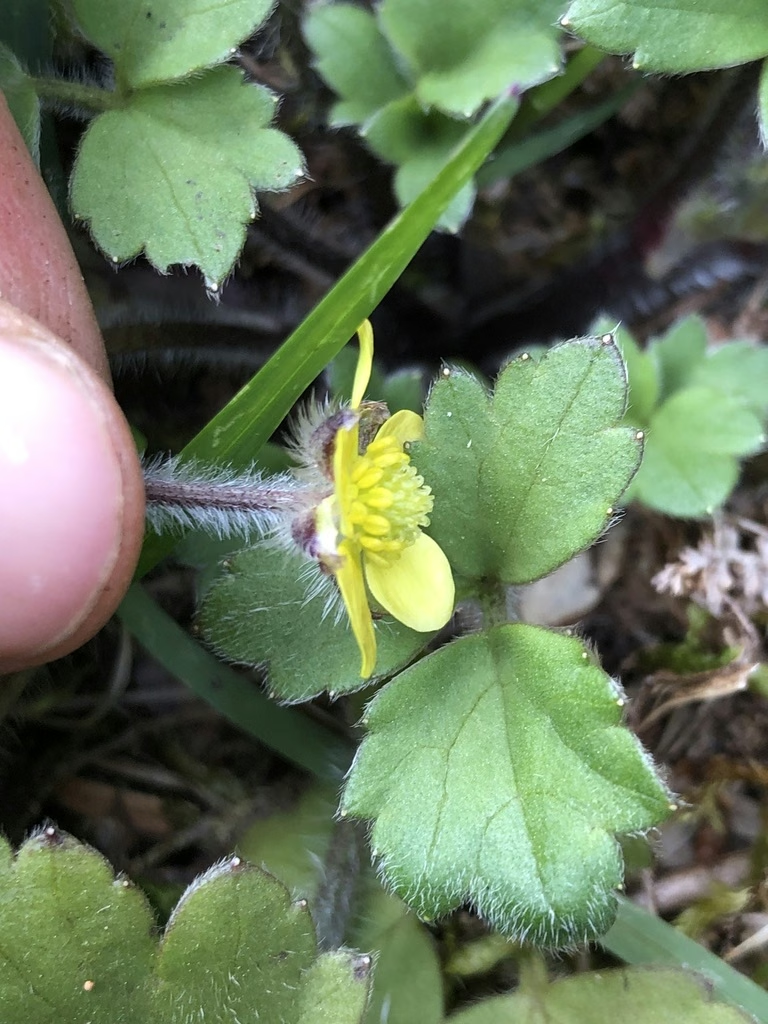
Flowers grow on ascending hairy stems or in the axils of stolons. They are yellow, about 4-8 mm across, and the hairy sepals bend back during flowering.
Quick facts
| Scientific Name | Ranunculus membranifolius |
|---|---|
| Former name | Ranunculus hirtus var. membranifolius |
| Family | Ranunculaceae |
| Origin | Endemic to New Zealand |
| Habit | Hairy, arching runners with leaf rosettes |
| Habitat | Damp forest and scrub |
| Flower | Yellow, 4-8 mm across |
| National status | Not Threatened (2023) |
| Height | Creeping rosettes with ascending flower stems; vertical height unquantified |
| Water Needs | Damp forest and scrub habitat; no cultivation schedule supplied |
| Light | Forest and scrub in its natural habitat |
| Spread | Rosettes linked by arching hairy stolons; maximum width unquantified |
| Frost Tolerance | Minimum tolerated temperature is not documented |
| Salt Tolerance | Salt tolerance is not documented |
| Growth Rate | Annual extension is not quantified in the cited accounts |
| Lifespan | Stolon-forming perennial herb |
Natural range
Flora records the species in both main islands, from Taranaki and central North Island ranges south through Nelson, Westland and Fiordland, with occasional records farther east in Marlborough, Canterbury and Otago.
| City | Climate Suitability |
|---|---|
| Auckland | Not assessed |
| Wellington | Not assessed |
| Christchurch | Not assessed |
Habitat and distribution
The species occurs in damp forest and scrub up to about 1,400 m. Flora reports it most commonly west of the Main Divide and states it is not known north of approximately Taupō.
A Lower North Branch Von forest list records it alongside forest herbs and shrubs in Otago.
Natural growing conditions
Published records place this buttercup in damp forest and scrub, including forest on loose soil in the Karamea district. Those observations describe wild conditions; the cited sources do not specify a tested garden watering schedule.
Planting considerations
The plant forms rosettes along arching runners rather than growing as one fixed upright clump. Flora describes its damp natural habitat, but the consulted accounts do not provide a species-specific planting method.
Growth by runners
Hairy stolons arch between the tufts of leaves. Flowers can arise either on ascending stems or in the leaf axils of these stolons, giving the spreading plant two described positions for its flowers.
Observing the plant
Search damp forest ground for small rosettes connected by slender hairy runners. The leaflets are rounded to inversely egg-shaped, shallowly three-lobed and sometimes lightly toothed; the flowers are only 4-8 mm across.
Garden context
Its low, runner-bearing habit and damp forest habitat differ from those of larger mountain buttercups. The botanical references do not document garden trials or establish how it performs as a planted groundcover.
Flowers and fruit
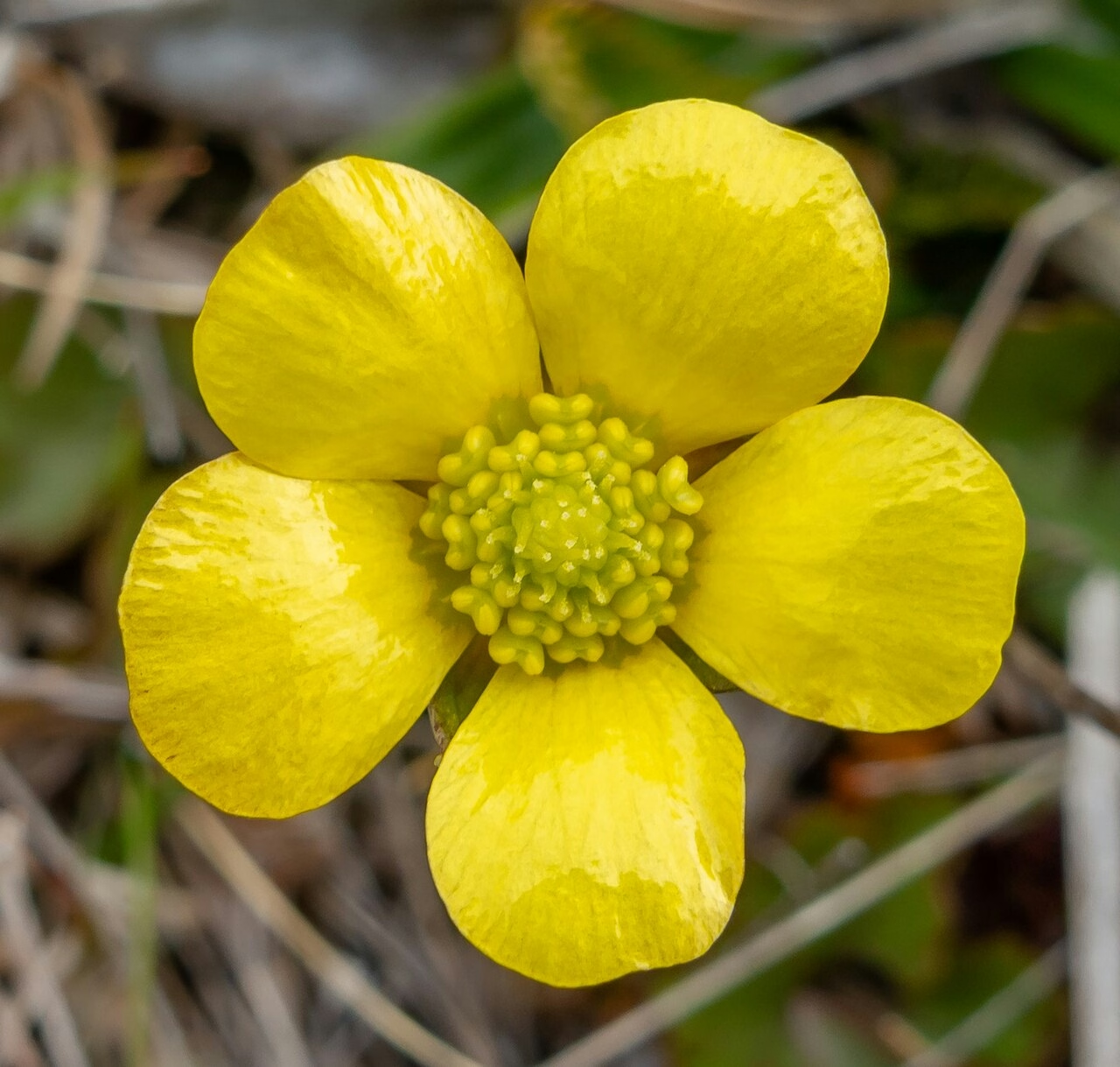
The flowers have five narrow yellow petals and hairy sepals that bend backwards while the flower is open. The slender, hairy flower stalks are approximately 2-6 cm long.
Each rounded fruit head holds about 20-40 pale, flattened, hairless achenes, with straight beaks or beaks curved only at the tip.
Growth form
Leaf rosettes occur on arching stolons, while flowering stems rise above them. Leaves on those stems resemble the basal leaves but are smaller and often divided into three lobes rather than three separate leaflets.
How to Grow Buttercup (Ranunculus membranifolius)
Stolons and division evidence
Flora of New Zealand describes rosettes borne on arching, hairy stolons in Ranunculus membranifolius. This documents its linked, spreading growth form. The account does not provide a tested stolon-division technique or seed-germination treatment, and it does not quantify how quickly detached rosettes establish.
The damp forest setting
Published habitat records place the species in damp forest and scrub up to approximately 1,400 m. It is most frequent west of the Main Divide and is not recorded north of about Taupō in the cited Flora treatment. An Otago forest plant list provides a further local record. These observations give a specific woodland context for identified plants.
Following leaves along the runners
The basal leaves usually have three hairy leaflets, although some are three-lobed. Leaflets are commonly about 1-2 cm across and shallowly divided, with occasional teeth. Smaller leaves occur on the stems. The rosette-and-stolon combination helps distinguish this buttercup from a species growing as a single upright tuft.
Observing flowers and fruit heads
Small yellow flowers, approximately 4-8 mm across, occur on ascending hairy stems or from stolon axils. Their hairy sepals bend backwards during flowering. Mature heads contain approximately twenty to forty pale achenes. These details support identification across the reproductive cycle. No fixed flowering-month calendar or cultivated watering interval is supplied in the cited botanical description.
Plant health
Hairs on its stolons, leaves and flower stalks are normal features described by Flora. The cited botanical accounts do not identify particular pests or diseases affecting Ranunculus membranifolius.
Naming and classification
Flora lists Ranunculus hirtus var. membranifolius and var. stoloniferus as earlier names. Philip Garnock-Jones transferred the first name to species rank as Ranunculus membranifolius in 1987.
Compare with Ranunculus reflexus
Flora distinguishes this species from the similar Ranunculus reflexus by its slender runner-bearing habit, smaller flowers, shorter flower stalks and achenes with straighter beaks. The two can grow together.
Related native buttercups
Explore other New Zealand Ranunculus species, including buttercups of forest and mountain habitats.
Conservation
The 2023 national vascular plant assessment lists this endemic buttercup as Not Threatened. The Otago regional assessment also lists it as Regionally Not Threatened and records a type locality in the Dart Valley.
Frequently asked questions
How does the plant form a spreading patch?
Leaf rosettes occur along slender, arching, hairy stolons.
What happens to the sepals at flowering?
The hairy sepals bend backwards, away from the small yellow petals.
Where does it grow naturally?
The Flora records damp forest and scrub, most often west of the Main Divide, reaching about 1,400 m.
Sources
Identification, habitat, range and comparison: Flora of New Zealand Series. Scientific synonyms and national assessment: Flora of New Zealand taxon profile.
Otago status and type locality: Otago regional assessment. Forest observation: NZ Plant Conservation Network plant list.
Last updated: