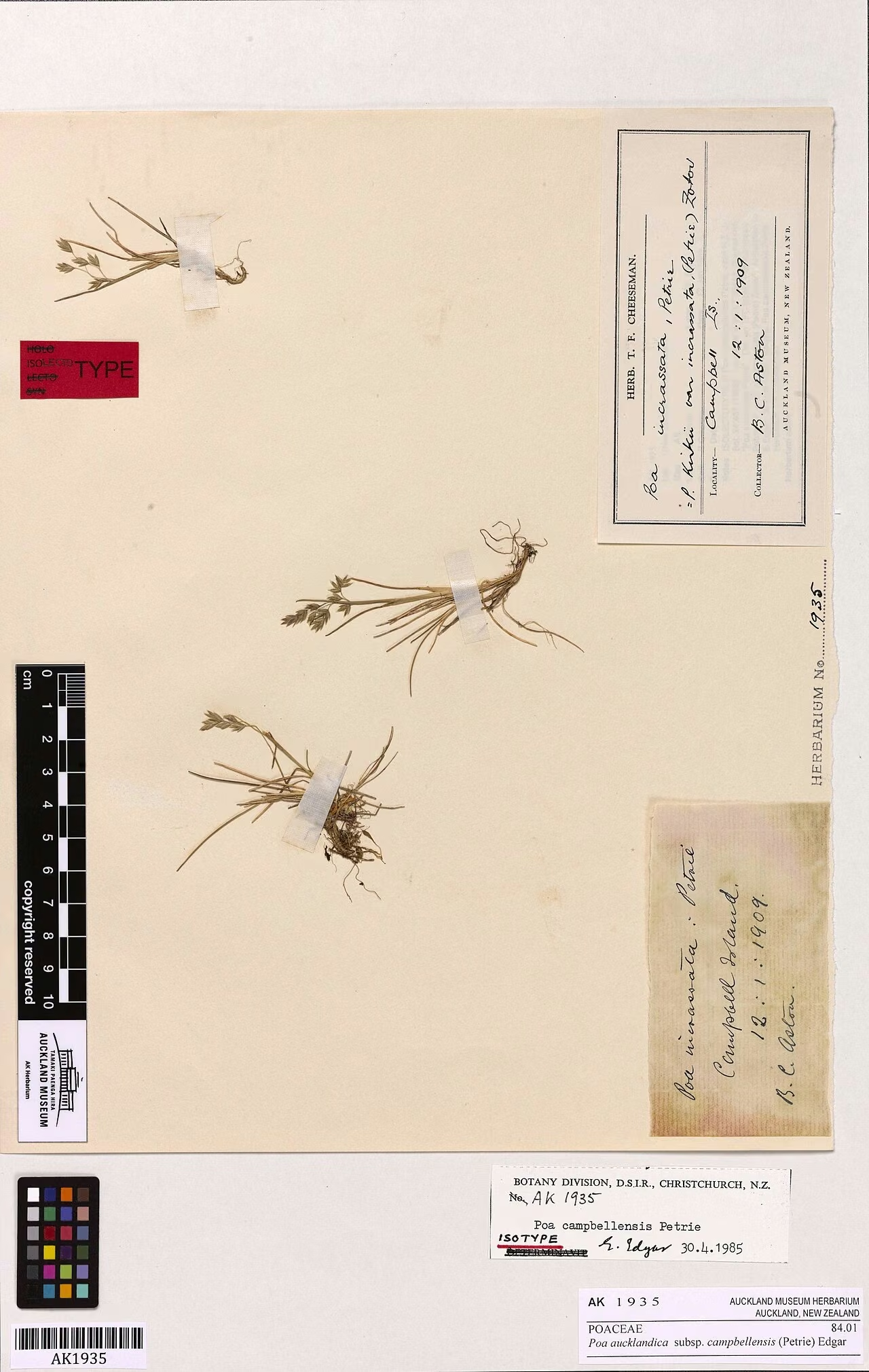
Auckland Island Poa
Poa aucklandica subsp. aucklandica
Last updated:
Auckland Island poa (Poa aucklandica subsp. aucklandica) is a small, slender tufted grass with soft, narrow leaves up to about 16 cm long and flowering stems usually 6.5 to 12 cm tall. It is endemic to the subantarctic Auckland Islands, where it grows in upland herbfield and rock crevices. It is one of three subspecies of Poa aucklandica, the others being confined to Campbell Island and to Mount Anglem on Stewart Island. It is ranked At Risk - Naturally Uncommon because it is an island endemic known from a single location, though it is abundant within its habitat. Explore more native grasses and flaxes in our native plant guide.
Plant Description
Auckland Island poa is a tufted perennial grass forming slender, lax tufts with narrow, erect leaves. The leaf-sheaths are hairless and the ligule is 1.0 to 1.3 mm long. The leaf-blades are 4 to 12 cm long, occasionally to 16 cm, and are flaccid and soft, varying from flat to folded.
The flowering stems (culms) are usually 6.5 to 12 cm tall, ranging from 4.5 to 30 cm. They carry a small panicle 3 to 5.5 cm long, occasionally to 8 cm, with few but relatively large spikelets 4.5 to 8 mm long, each holding three to five florets. The grains are about 1.5 mm long and 0.7 mm wide. The chromosome number is 2n = 28.
It is distinguished from Poa aucklandica subsp. campbellensis of Campbell Island, which has shorter culms, and from subsp. rakiura of Mount Anglem on Stewart Island, which has taller culms. Location is a reliable guide, as each subspecies is confined to its own island.
Quick Facts
| Scientific Name | Poa aucklandica subsp. aucklandica |
|---|---|
| Height | Flowering stems usually 6.5-12 cm, occasionally to 30 cm |
| Spread | Small, slender, lax tufts |
| Water Needs | Moist; wet subantarctic climate |
| Light | Open upland herbfield and rock faces |
| Frost Tolerance | Good; an upland subantarctic grass |
| Salt Tolerance | No reliable information |
| Growth Rate | No reliable information |
| Lifespan | Perennial |
Climate Best Suited to
Suits the cold, wet, windy and cloudy upland climate of the Auckland Islands, with cool summers and frequent rain. It is not adapted to warmth or drought.
Regional Suitability
| City | Climate Suitability |
|---|---|
| Auckland | Low |
| Wellington | Low |
| Christchurch | Low |
| Dunedin | Low |
Plant Habitat
Poa aucklandica subsp. aucklandica is endemic to the Auckland Islands (Motu Maha), far to the south of Stewart Island/Rakiura. It is known only from this island group.
It grows in upland herbfield and in rock crevices, where its small tufts fit into gaps between larger herbs and on rocky ground.
Growing Requirements
Soil Requirements
It roots in thin, moist peaty soil in herbfield and in soil-filled rock crevices.
- Moist, organic soil
- Rock crevices with little soil
- Low fertility
Light Requirements
It grows in open upland sites without tree cover, under the heavy cloud typical of the subantarctic.
- Open herbfield and rock
- Diffuse light
Water Requirements
Frequent rain and mist keep its upland habitat moist year round.
- Needs steady moisture
- Not drought tolerant
Planting and Establishing
This subspecies is not commercially available, NZPCN records its propagation as not known, and its only habitat is a protected nature reserve, so it should not be collected from the wild.
It is of interest to botanists and conservation programmes rather than home gardeners. Anyone seeking a small native tufted grass for a garden should choose a mainland species grown by native plant nurseries.
Ecological Role
Auckland Island poa forms part of the low grass and herb cover of the upland herbfield, filling spaces between larger herbs and colonising rock crevices. Like other Poa species it is wind-pollinated.
Its flowering and fruiting times are not known because it has been insufficiently studied and collected. The removal of feral grazing animals from parts of the Auckland Islands has benefited herbfield vegetation generally.
Uses & Significance
Garden Uses
It has no garden use, as it is not cultivated and its requirements in cultivation are not known.
- Of scientific interest only
- Not commercially available
Ecological Value
It adds to the diversity of endemic grasses in the subantarctic herbfield and helps cover bare rock and soil.
- Island endemic subspecies
- Part of upland herbfield communities
Landscaping Uses
There is no landscaping use for this grass. Its natural setting, small soft tufts tucked into rock crevices among herbfield, is best appreciated on the Auckland Islands themselves.
For a small, fine-leaved tussock effect in a mainland rock garden, use a commercially grown native Poa suited to local conditions.
Seasonal Care Calendar
Spring
New growth begins as the short subantarctic growing season starts.
- Leaf growth resumes
- Flowering season not documented
Summer
The main growing period on the islands. Exact flowering and fruiting months have not been recorded.
- Active growth
- Panicles may appear
Autumn
Growth slows as temperatures fall.
- Growth slows
- Old stems wither
Winter
Tufts persist through the cold, wet winter.
- Dormant or slow growth
- Exposed to wind and cold
When to Prune and How Much
No pruning is needed for wild plants. In cultivation, dead leaves could be combed out by hand to keep tufts tidy.
Avoid cutting small tufts hard, as their recovery rate is not known.
How to Grow Auckland Island Poa
NZPCN records propagation of Poa aucklandica subsp. aucklandica as not known, and the subspecies is not commercially available. Its only natural habitat is the Auckland Islands Nature Reserve, part of a World Heritage Area, so material can only be collected under permit. The methods below describe how small tufted Poa species are generally propagated and would be a starting point for a botanic garden or conservation programme, not proven techniques for this subspecies.
From Seed
Spikelets contain three to five florets and grains about 1.5 mm long. Since the flowering and fruiting season is not known, seed collection would require repeated visits or observation of cultivated plants.
As this is a grass of a cold climate, it is sensible to keep seed trays cool rather than on heated propagating benches.
- Collect ripe panicles from cultivated plants or under permit
- Sow seed on a moist, free-draining seed mix and cover lightly
- Keep cool and evenly moist
- Prick out seedlings into small pots when large enough to handle
- Grow on in cool conditions before planting out
By Division
Small tufted grasses can usually be split into smaller rooted pieces. This would be best done in cool, moist weather to limit stress on the divisions.
Keep divisions reasonably large, with plenty of roots, because small pieces of slow-growing island grasses can easily dry out and fail.
- Lift a well-established cultivated tuft
- Tease apart sections that each have roots and several shoots
- Pot into a gritty mix with some organic matter
- Keep cool and lightly shaded until new growth appears
Pests & Diseases
No pests or diseases specific to this grass are recorded. Introduced mammals such as pigs and goats once damaged vegetation on the Auckland Islands; goats have been eradicated and pig control is the focus of ongoing conservation work.
In cultivation, warm or dry conditions would be more of a problem than pests.
Cultural Significance
No Māori name or traditional Māori use is recorded for Auckland Island poa in the sources consulted.
The name aucklandica means of the Auckland Islands, the only place this subspecies grows. It was once treated as a variety of the mainland Poa kirkii, as Poa kirkii var. aucklandica.
Bonus Tip
When comparing the three subspecies of Poa aucklandica, look first at the flowering stem height: Campbell Island plants are shortest, Mount Anglem plants on Stewart Island are tallest, and Auckland Islands plants sit in between, usually 6.5 to 12 cm.
Related Plants
Explore other native plants that share similar characteristics or habitats with Auckland Island Poa (Poa aucklandica subsp. aucklandica), offering further insights into New Zealand's diverse flora. These related species provide context and opportunities for complementary planting in your garden.
Cockspur Flower
Coleus australis
Pleurophyllum criniferum
Pleurophyllum criniferum
Poa antipoda
Poa antipoda
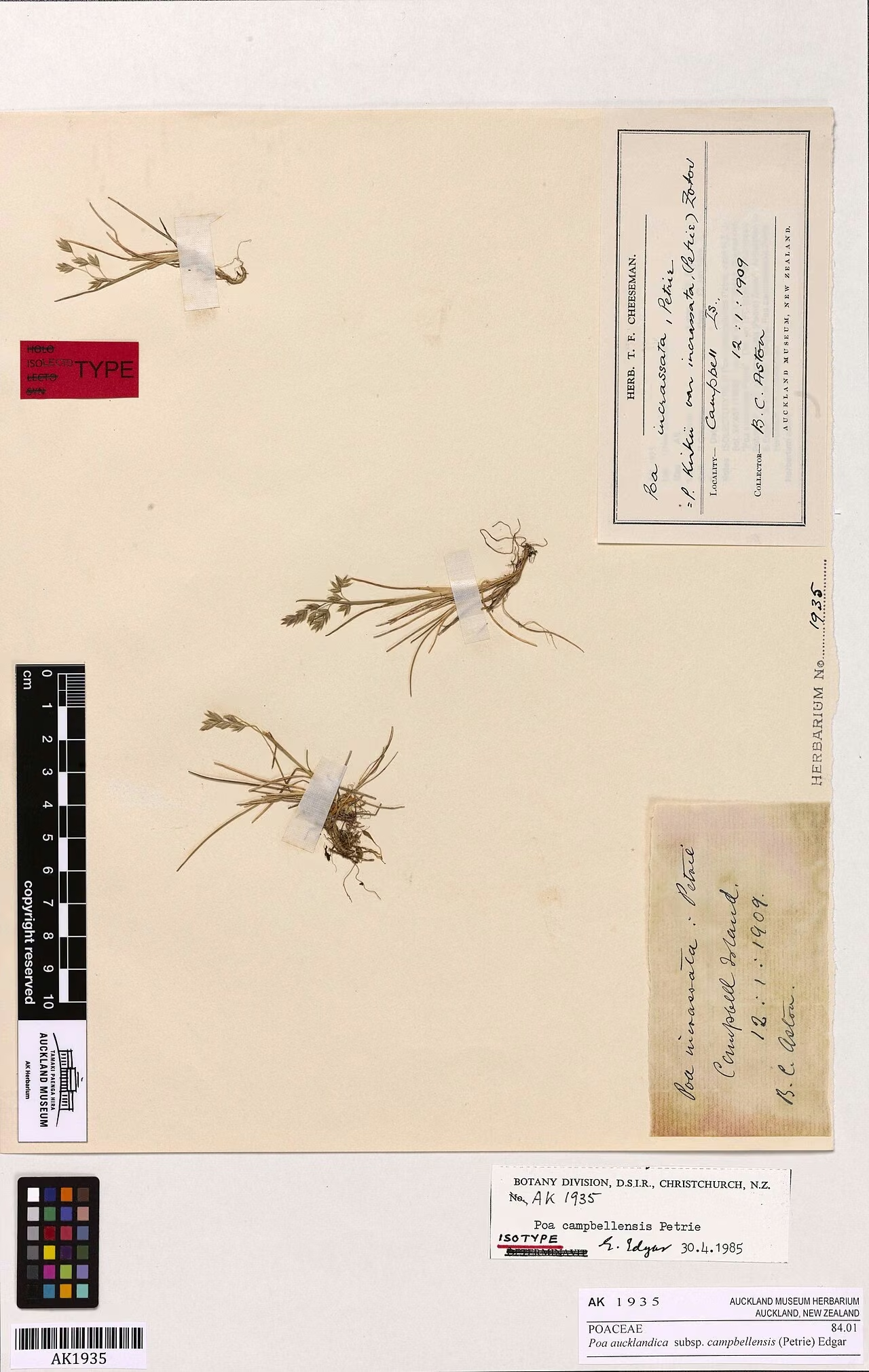
Campbell Island Poa
Poa aucklandica subsp. campbellensis
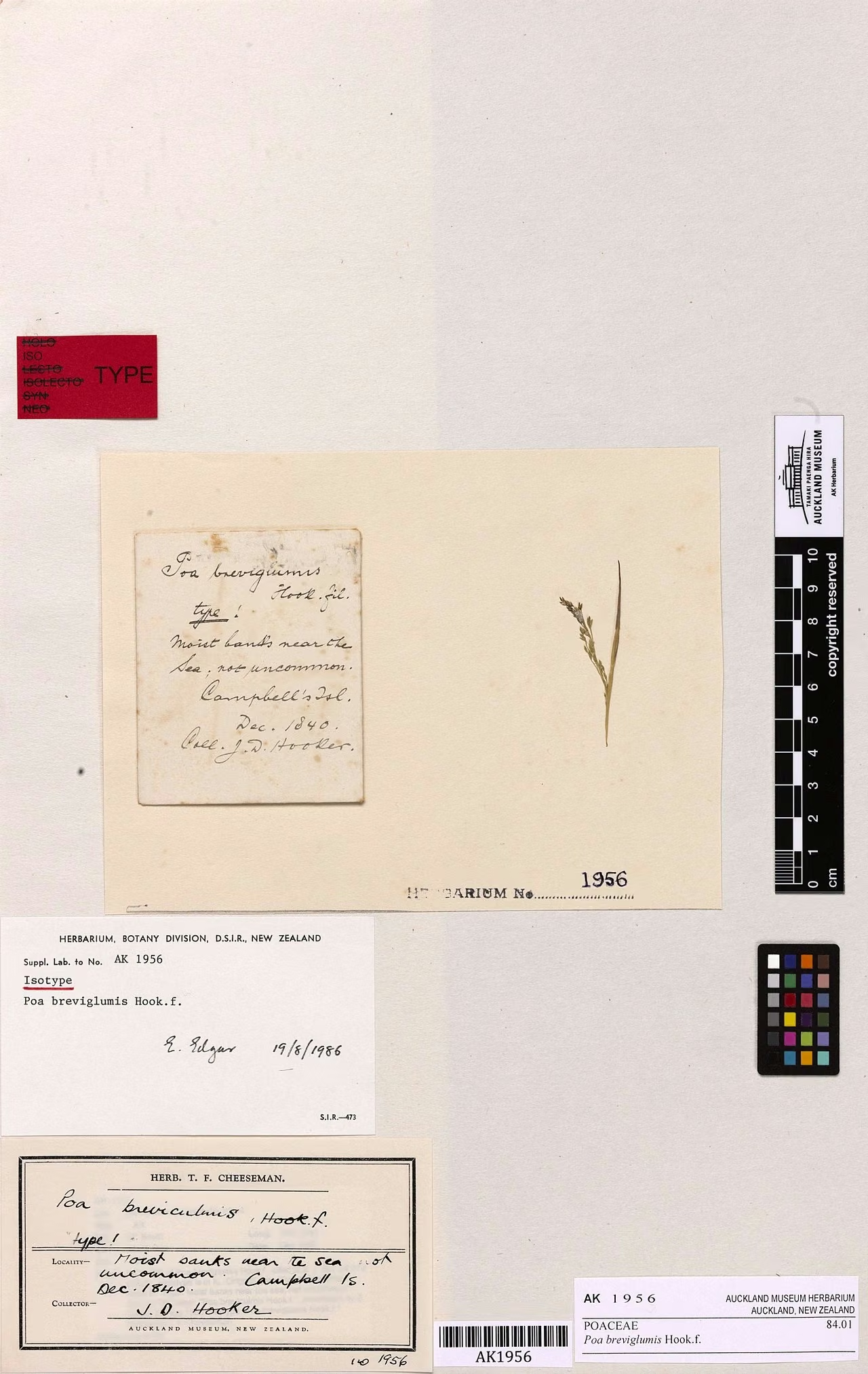
Poa breviglumis
Poa breviglumis
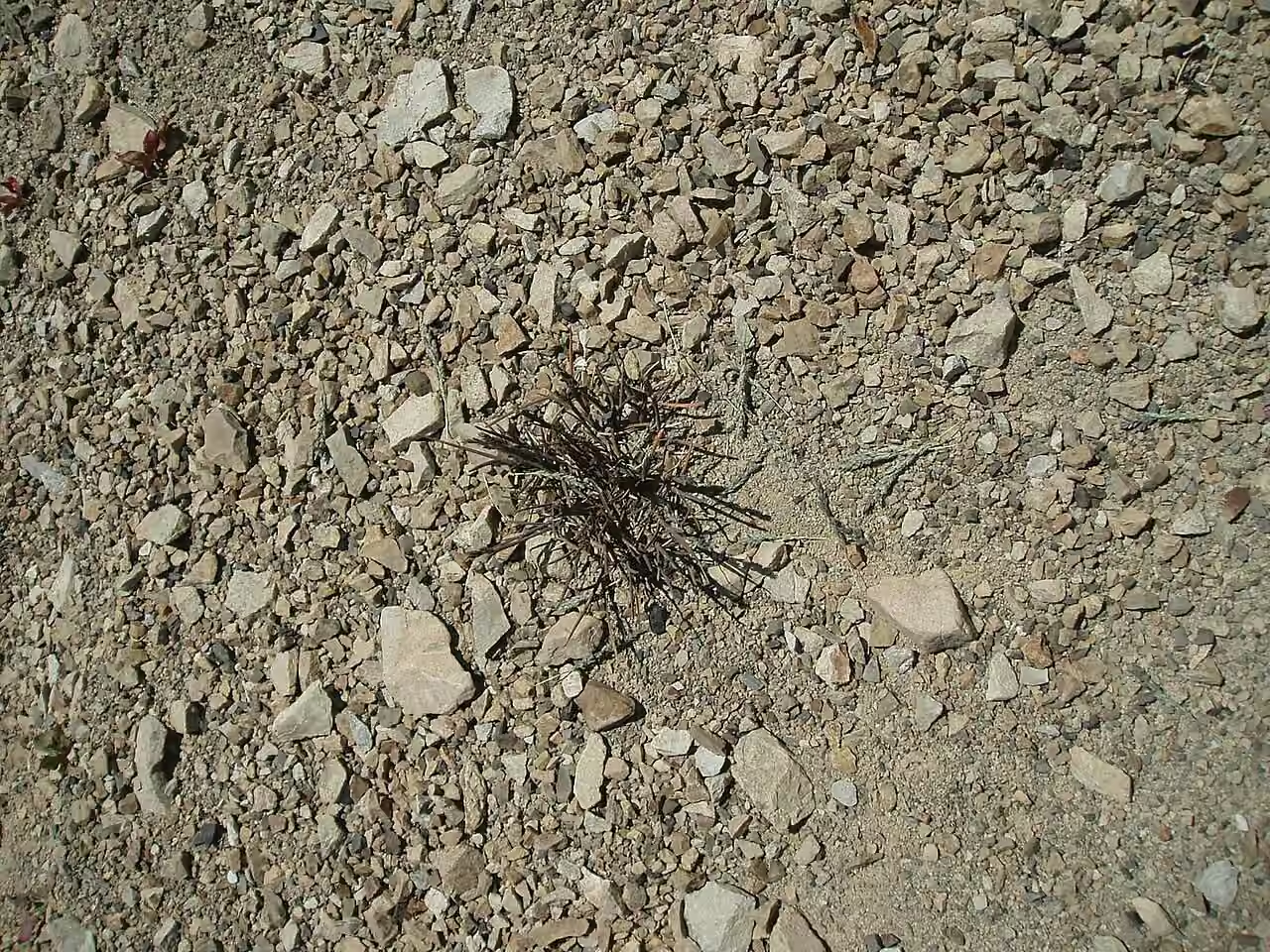
Scree Poa
Poa buchananii
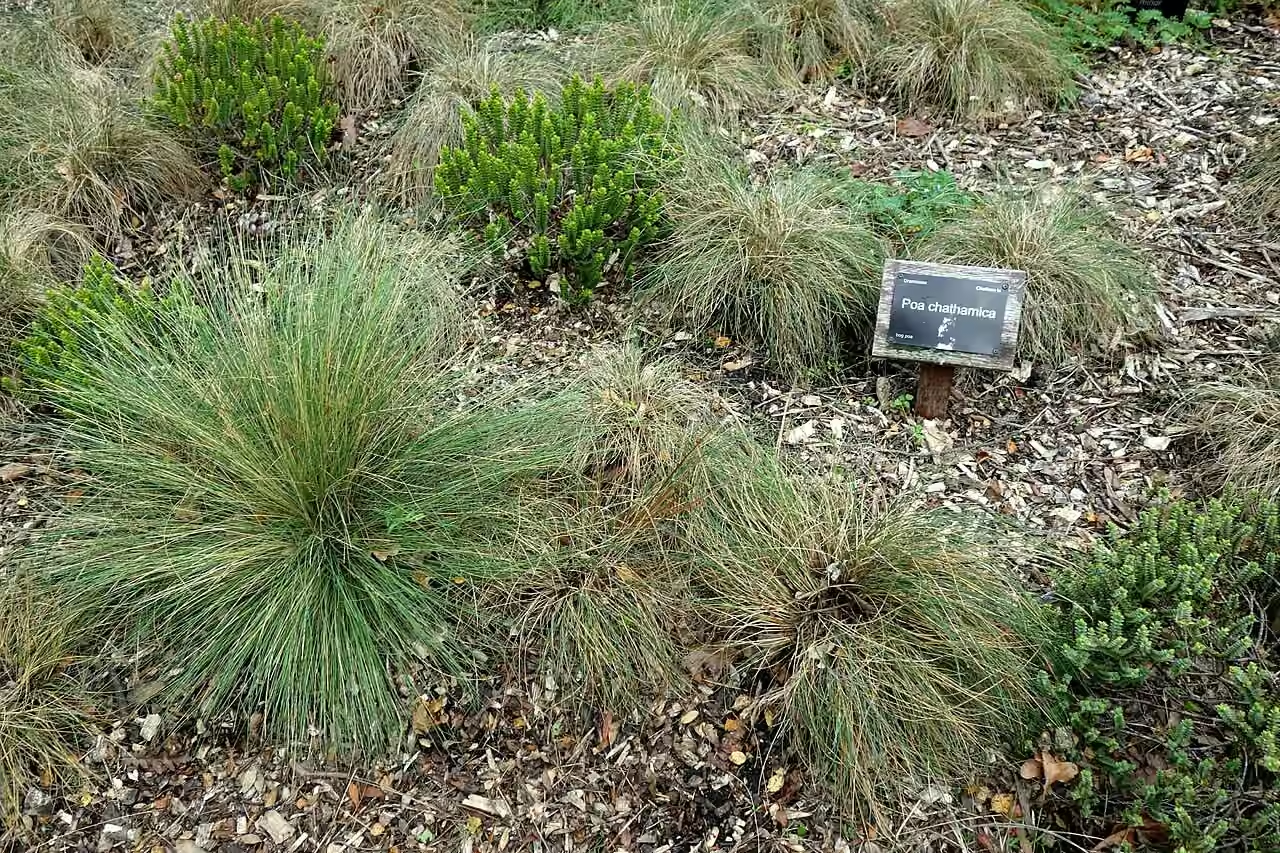
Chatham Islands Poa
Poa chathamica
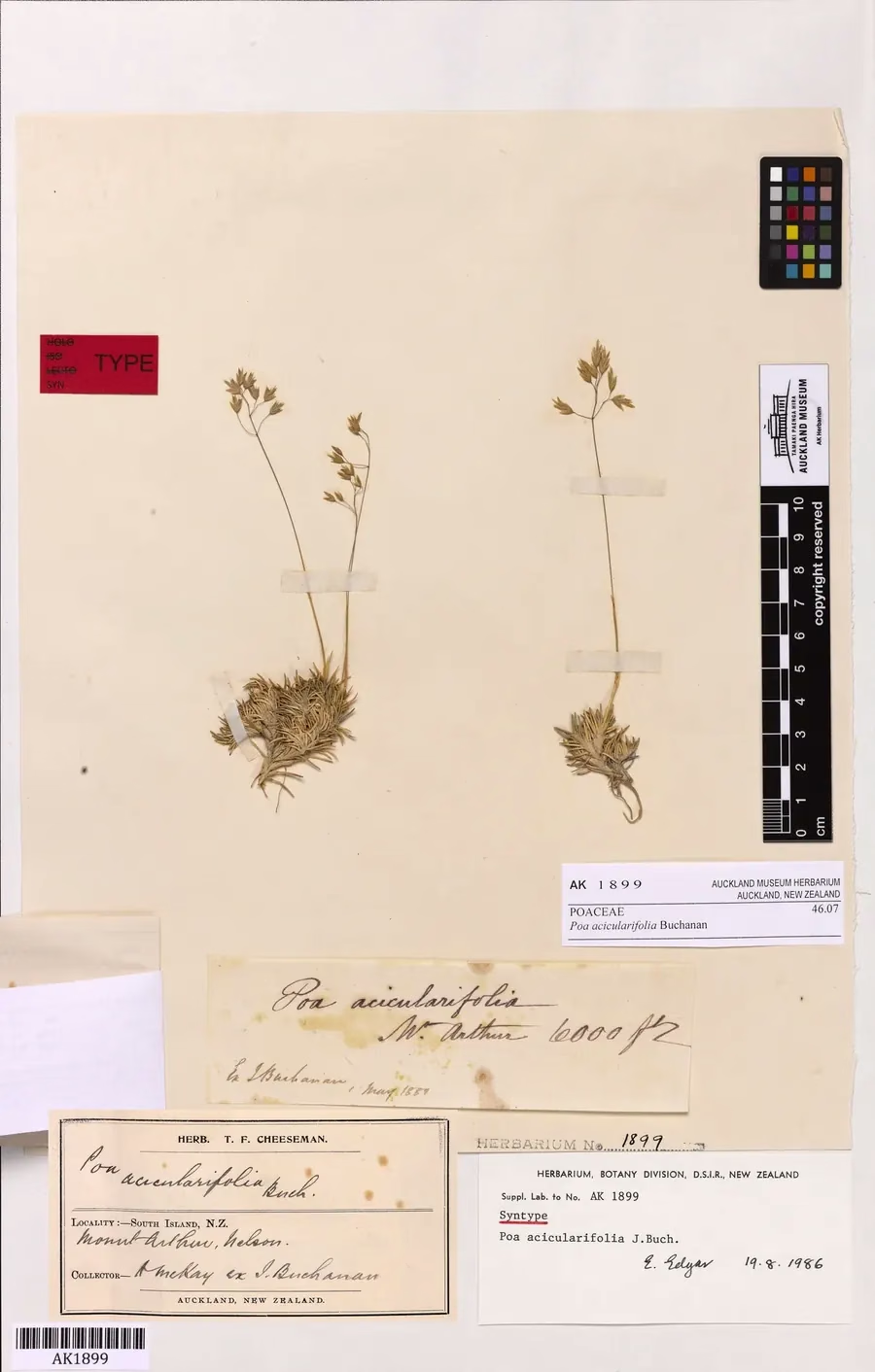
Acicularifolia Grass
Poa Acicularifolia Grass
Plant Conservation
Poa aucklandica subsp. aucklandica is ranked At Risk - Naturally Uncommon (2023) with the qualifiers Data Poor: Size, Island Endemic and One Location. NZPCN states it is not threatened but is listed as a narrow-range island endemic that is abundant within its known habitats.
The Auckland Islands are a nature reserve within the New Zealand Subantarctic Islands World Heritage Area. Better survey data on its population, and continued biosecurity and control of introduced animals, would most help this grass.
Frequently Asked Questions
Where does Auckland Island poa grow?
It is endemic to the Auckland Islands in New Zealand's subantarctic, where it grows in upland herbfield and in rock crevices.
How many subspecies of Poa aucklandica are there?
There are three: subsp. aucklandica on the Auckland Islands, subsp. campbellensis on Campbell Island with shorter flowering stems, and subsp. rakiura on Mount Anglem, Stewart Island, with taller flowering stems.
Is Auckland Island poa threatened?
It is ranked At Risk - Naturally Uncommon. NZPCN says it is not threatened but is listed because it is a narrow-range island endemic, abundant within its known habitats.
When does Poa aucklandica subsp. aucklandica flower?
Its flowering and fruiting times are not known. NZPCN notes the subspecies has been insufficiently studied and collected to say.
Sources and Further Reading
The botanical, growing, and conservation details for Auckland Island Poa (Poa aucklandica subsp. aucklandica) on this page draw on the New Zealand plant references below. Consult them for full technical records and the latest distribution data.