Scree Poa
Poa buchananii
Last updated:
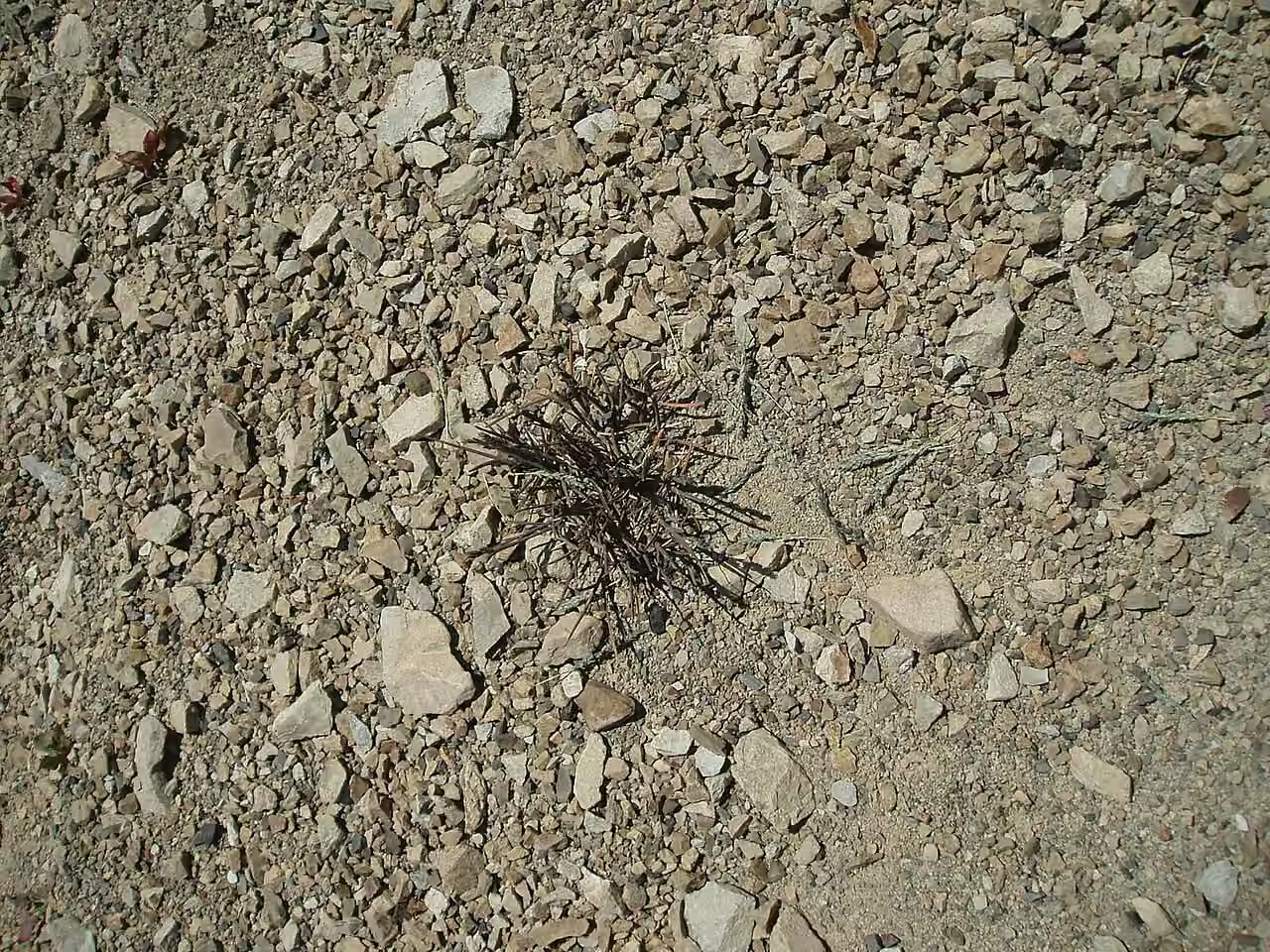
Scree poa (Poa buchananii) is a small, stiff, blue-grey native grass that forms dense tufts 7 to 25 cm tall on loose alpine ground. Its short, rigid, rough leaves are packed closely together, and it carries narrow, compact, spike-like flower heads that make it very distinct among New Zealand Poa species. It is endemic to the South Island, east of the Main Divide, where it grows at subalpine to alpine altitudes on scree, stony moraine and loose debris in fellfield. It was named after the botanist and artist John Buchanan and is ranked Not Threatened. Explore more native grasses and flaxes in our native plant guide.
Plant Description
Scree poa is a glaucous (blue-grey), small, stiff perennial grass that forms dense tufts 7 to 25 cm tall. Branching is mostly within the leaf-sheaths, with a few shoots breaking out at the base of the plant. The basal sheaths are very light brown and the upper sheaths purple-green, tough and distinctly ribbed. The leaf-blades persist on the plant and are usually 1.5 to 5 cm long (rarely as short as 0.5 cm), folded, about 3 mm wide if flattened, rigid, leathery and prominently nerved.
The flower head is a contracted, oblong panicle 1.5 to 5.5 cm long, narrow and spike-like, with numerous densely packed spikelets. Each spikelet is 2.5 to 3.5 mm long with two to four florets, light green and often tinged purple. The chromosome number is 2n = 28.
The Flora of New Zealand describes this glaucous scree plant as very distinct from all other New Zealand Poa species because of its stiff, rough, close-packed leaves and its compact, spike-like panicle. Most other small alpine Poa species have softer leaves and more open panicles.
Quick Facts
| Scientific Name | Poa buchananii |
|---|---|
| Height | 7-25 cm |
| Spread | Small, dense tufts |
| Water Needs | Low to moderate; sharply drained scree |
| Light | Full sun |
| Frost Tolerance | High; a subalpine to alpine grass |
| Salt Tolerance | No reliable information |
| Growth Rate | No reliable information |
| Lifespan | Perennial |
Climate Best Suited to
Suits the cold, dry-continental mountain climate east of the Main Divide, with hard frosts, snow cover, strong sun and drying winds. It would struggle in warm, humid lowland conditions.
Regional Suitability
| City | Climate Suitability |
|---|---|
| Auckland | Low |
| Wellington | Low |
| Christchurch | Medium |
| Dunedin | Medium |
Plant Habitat
Poa buchananii is endemic to the South Island, where it is found east of the Main Divide. Its type was collected from Mt Darwin and Mt Dobson in Canterbury at about 1200 to 1800 m (4000 to 6000 ft), and herbarium records include Gorilla Stream in the Burnett Mountains of Aoraki/Mount Cook National Park. It is also recorded in Otago.
It grows at subalpine to alpine altitudes on scree, stony ground on moraines and loose debris in fellfield. These are unstable, sparsely vegetated habitats where plants must cope with moving stones, intense sun and frost.
Growing Requirements
Soil Requirements
It roots into loose rock debris with very little fine soil, where drainage is extremely sharp.
- Scree and coarse stony debris
- Very free draining
- Low fertility
Light Requirements
Scree and fellfield are open, treeless sites with high light and strong ultraviolet exposure.
- Full sun
- No shade tolerance recorded
Water Requirements
Moisture comes from snowmelt and rain, but the stony ground drains at once, so the plant must cope with dry surface conditions.
- Sharp drainage essential
- Avoid wet, heavy soils in cultivation
Planting and Establishing
Scree poa is rarely if ever offered by nurseries, and wild plants in national parks and conservation land must not be dug up. For alpine garden enthusiasts it would suit a scree bed, raised trough or crevice garden filled with coarse gravel.
If you obtain plants, set them into a deep, gritty mix in full sun, top-dress with stone chips to keep the crown dry, and water only until established.
Ecological Role
Scree poa is a specialist of loose scree and moraine, where its dense tufts may help trap fine material between stones. Like other Poa species it is wind-pollinated.
Its stiff, glaucous leaves are typical of plants adapted to high light, drying winds and cold in eastern South Island mountains. Specific insect associations have not been documented in the sources consulted.
Uses & Significance
Garden Uses
A specialist plant for alpine collections rather than general gardens.
- Scree beds and gravel gardens
- Alpine troughs and crevice gardens
- Blue-grey foliage contrast among rocks
Ecological Value
It is part of the sparse plant cover of eastern South Island scree and fellfield, helping stabilise loose debris.
- Colonises unstable scree and moraine
- Adds to alpine grass diversity
- Endemic to the South Island
Landscaping Uses
In a rock or gravel garden, scree poa's small, dense blue-grey tufts and narrow spike-like heads provide fine texture against pale stone. Plant several together among larger rocks to imitate a natural scree slope.
Pair it with other scree-adapted natives, such as small cushion plants, in a sunny, sharply drained raised bed where it will not be overwhelmed by lusher plants.
Seasonal Care Calendar
Spring
Growth resumes as snow melts from the screes. Flowering months are not recorded in the sources consulted.
- New growth
- Check drainage in cultivated beds
Summer
Plants produce compact, spike-like panicles of light green, often purple-tinged spikelets during the short alpine summer.
- Flowering and seed set
- Water sparingly in cultivation
Autumn
Seed ripens and the tufts harden off before winter.
- Collect seed from cultivated plants
- Clear fallen leaves from tufts
Winter
Wild plants are often under snow; in gardens, keep the crown dry.
- Fully frost hardy
- Avoid winter wet
When to Prune and How Much
No pruning is needed. The leaf-blades persist on the plant, and the tufts are naturally tidy.
If old flower stems look untidy, pull them out by hand once seed has dropped.
How to Grow Scree Poa
NZPCN and the Flora of New Zealand give no propagation details for Poa buchananii, so the advice below follows standard methods for small tufted native Poa species, adapted to this grass's need for very sharp drainage. Wild plants grow mainly on public conservation land and in national parks, where collecting needs a permit. Use cultivated stock or seed collected legally, ideally from a source close to where the plants will be grown.
From Seed
Seed forms in the densely packed spikelets of the spike-like panicle. Collect it as the panicle dries and the florets loosen, and sow fresh in a gritty mix. Exposing sown pots to winter cold may help, as with many alpine plants, but no species-specific germination data were found.
- Collect ripe panicles into a paper bag in late summer or autumn
- Rub out the florets and discard coarse chaff
- Sow thinly on a free-draining seed mix with plenty of grit
- Cover with a thin layer of fine gravel and keep just moist
- Prick out seedlings into deep pots of gritty mix when large enough
By Division
Large cultivated tufts can be split, keeping each piece reasonably big because the plant is small and slow to recover from disturbance.
- Lift a mature tuft in early spring
- Cut it into two or three pieces, each with good roots
- Replant into a very gritty mix and top-dress with stone chips
- Water lightly until new growth appears
Pests & Diseases
No pests or diseases specific to scree poa are recorded. In the wild, browsing by introduced animals such as hares and chamois can affect alpine vegetation generally.
In cultivation the main risk is rot of the crown and roots in wet, poorly drained soil or humid lowland conditions.
Cultural Significance
No Māori name or traditional Māori use is recorded for scree poa in the sources consulted.
The species honours John Buchanan (1819-1898), a Scottish-born New Zealand botanist and scientific artist. Poa albida, a name published by Buchanan, is listed among its synonyms, along with Poa anceps var. alpina and Poa sclerophylla; the accepted name Poa buchananii was published by Victor Zotov.
Bonus Tip
Scree poa is one of the easiest native grasses to identify in the field: if you see a stiff, blue-grey grass with a narrow, spike-like flower head growing straight out of loose scree in the eastern South Island mountains, it is almost certainly Poa buchananii.
Related Plants
Explore other native plants that share similar characteristics or habitats with Scree Poa (Poa buchananii), offering further insights into New Zealand's diverse flora. These related species provide context and opportunities for complementary planting in your garden.
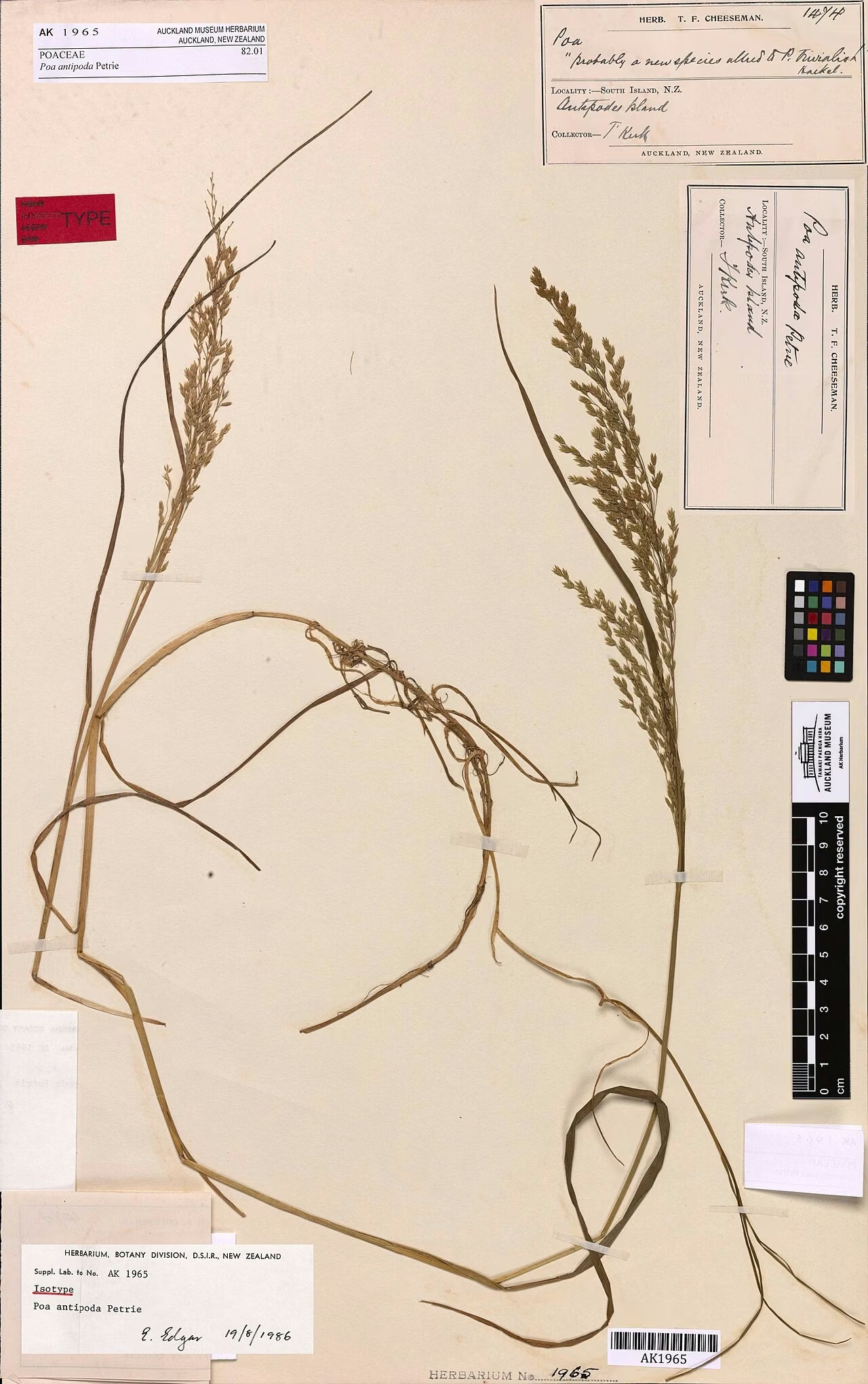
Poa antipoda
Poa antipoda
Auckland Island Poa
Poa aucklandica subsp. aucklandica
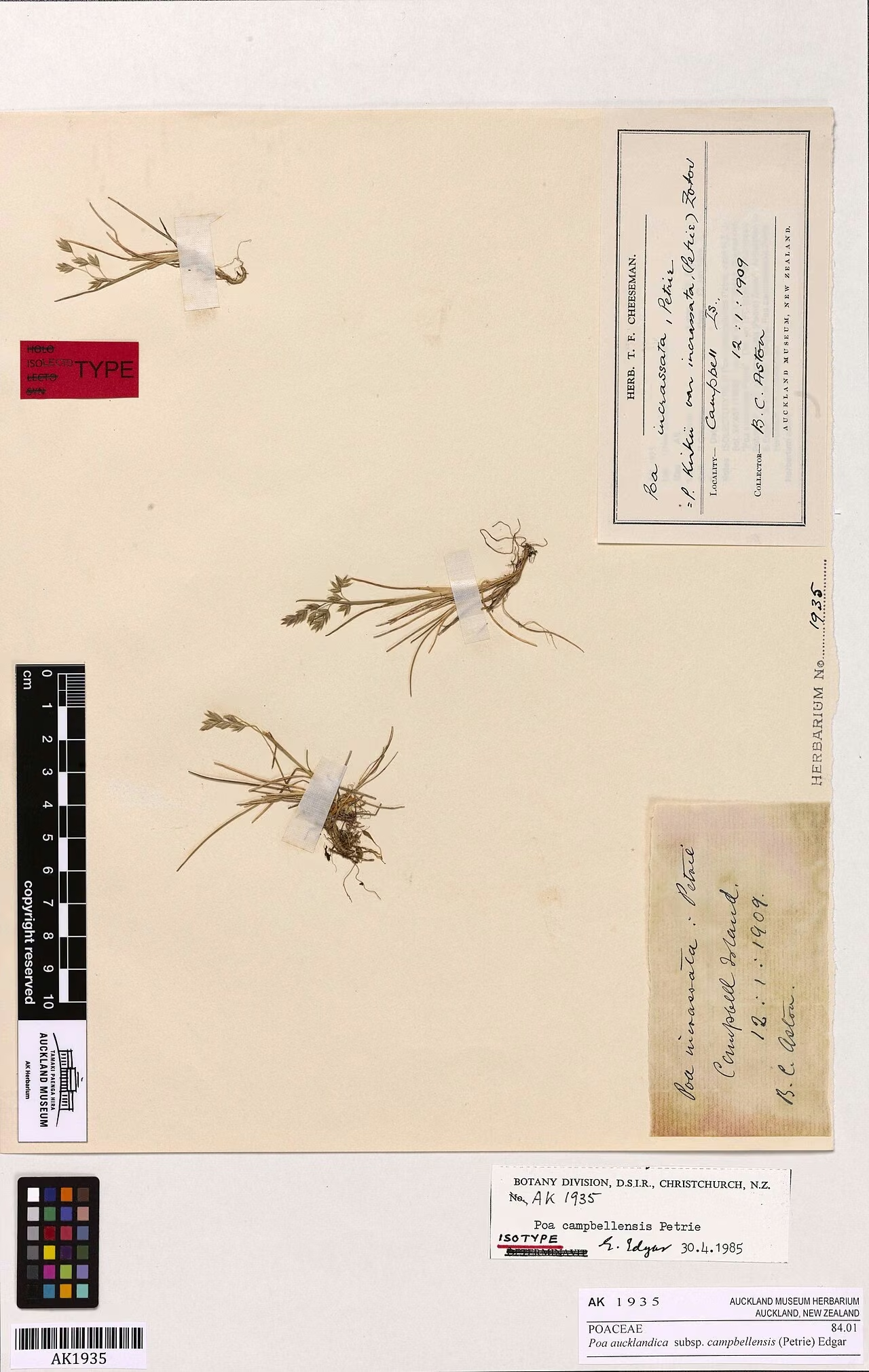
Campbell Island Poa
Poa aucklandica subsp. campbellensis
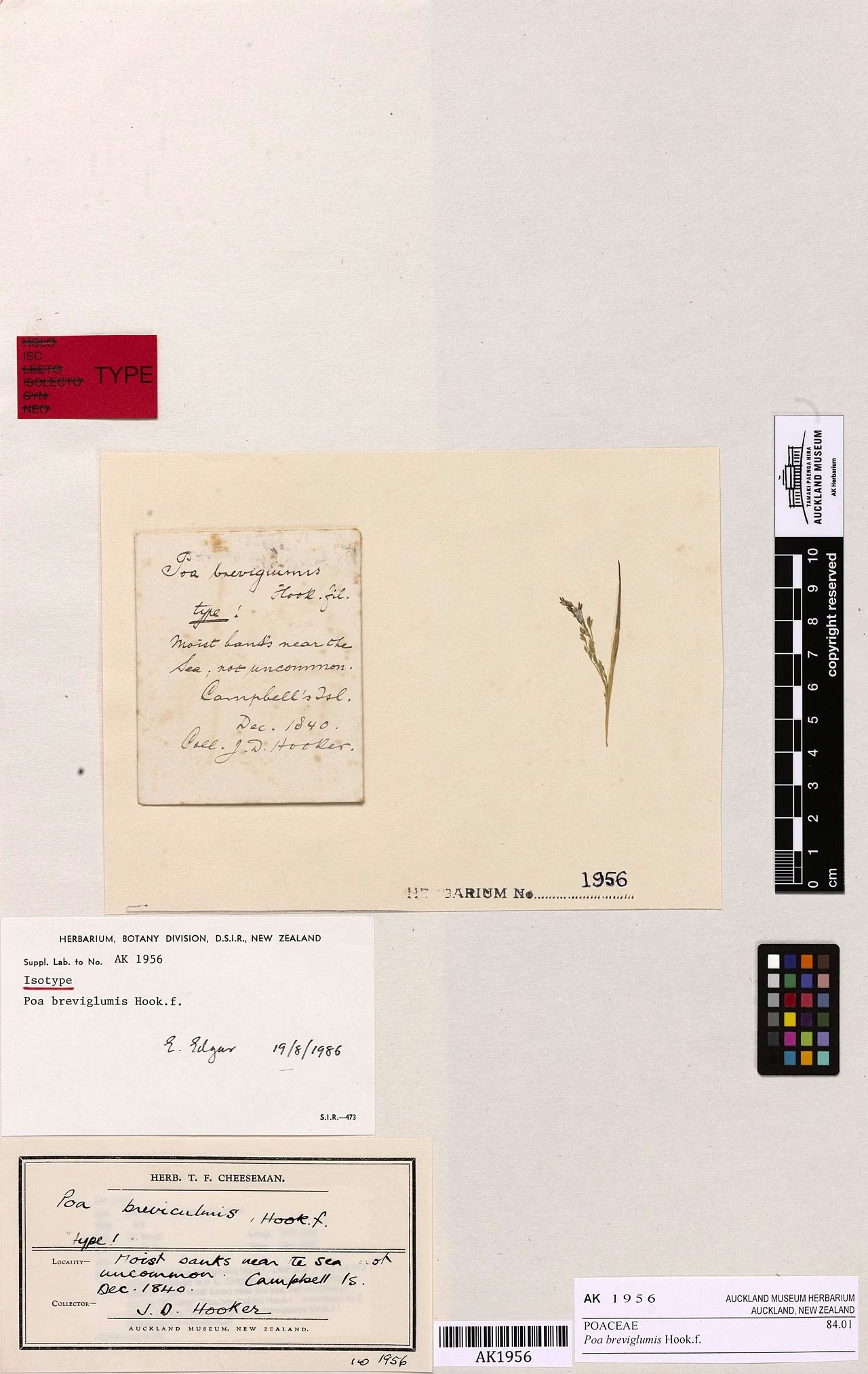
Poa breviglumis
Poa breviglumis
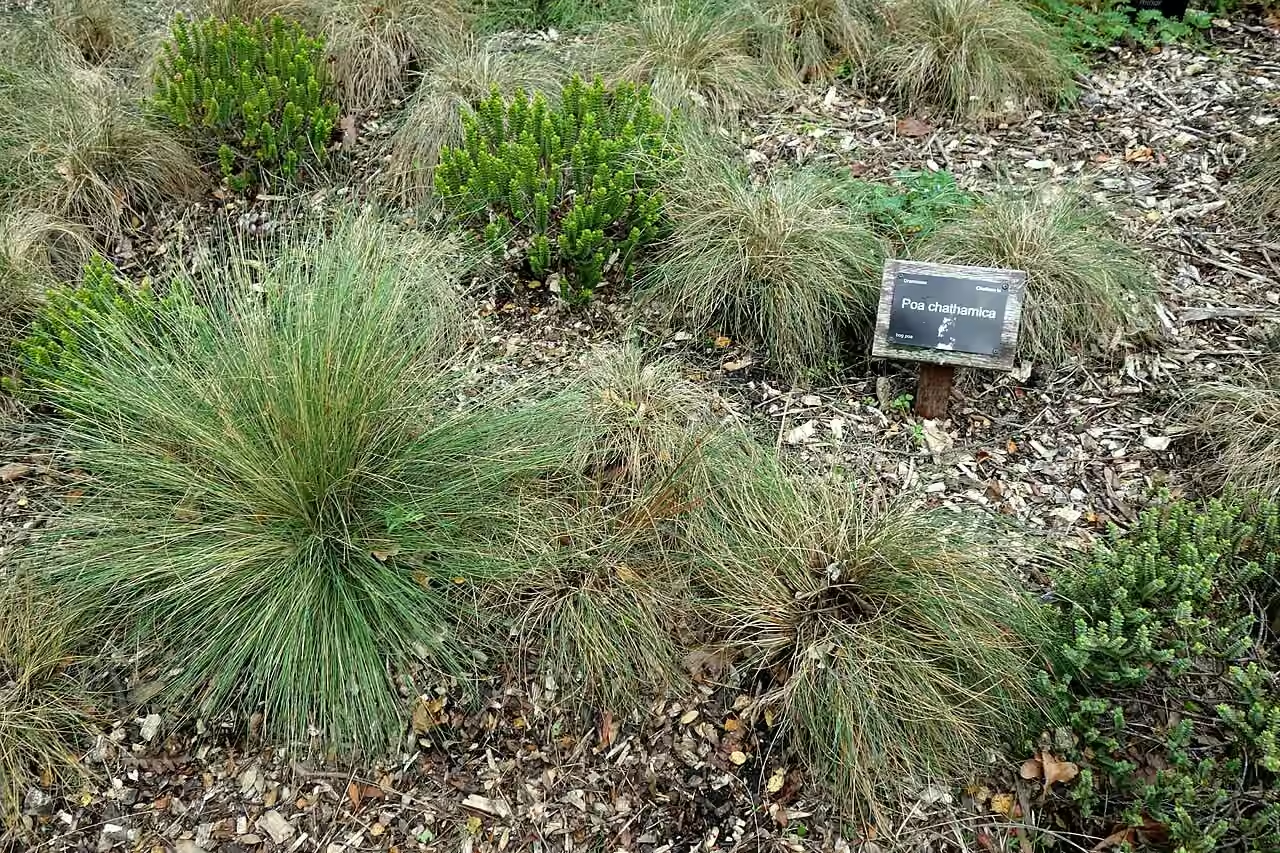
Chatham Islands Poa
Poa chathamica
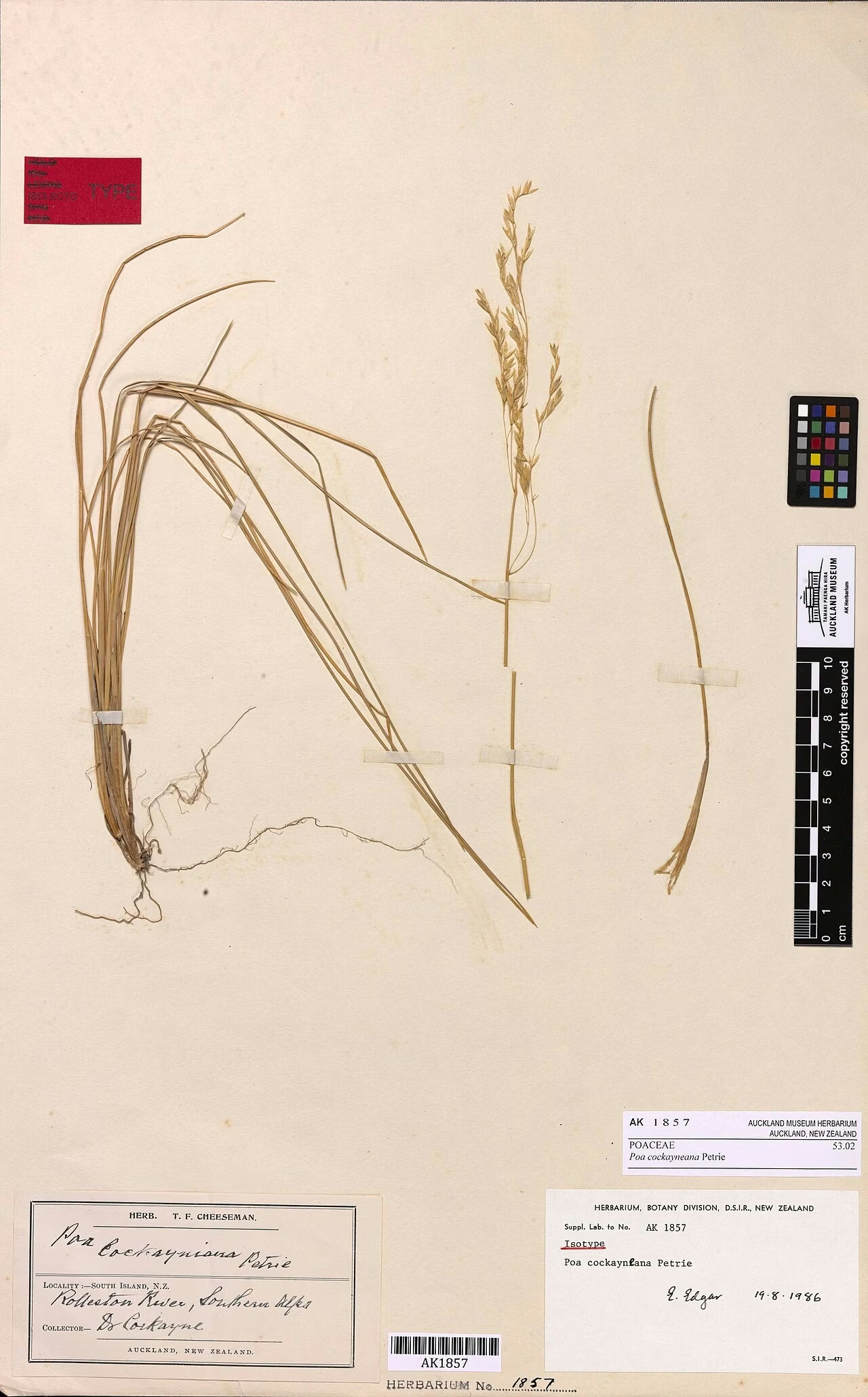
Avalanche Grass
Poa cockayneana
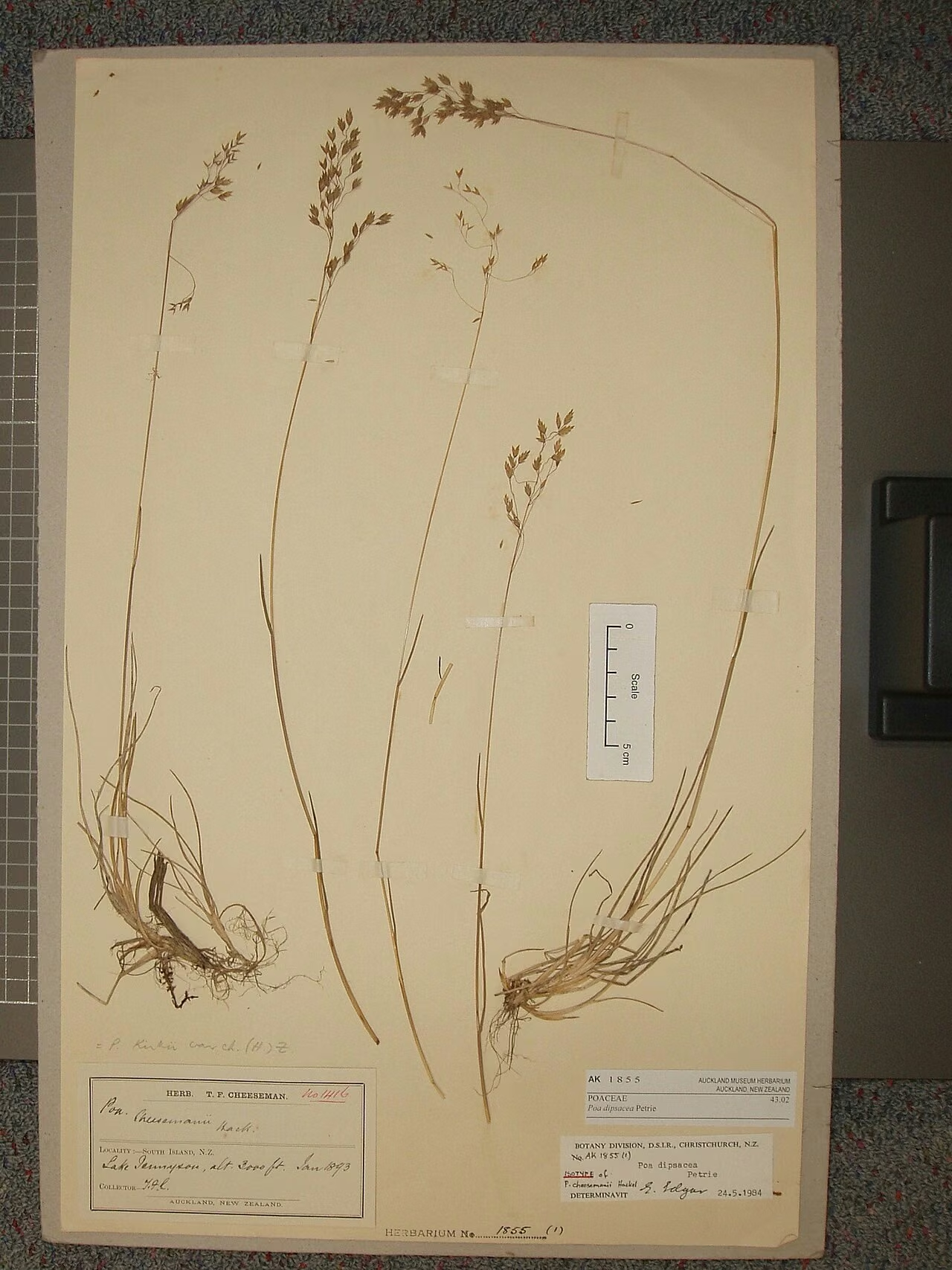
Poa dipsacea
Poa dipsacea
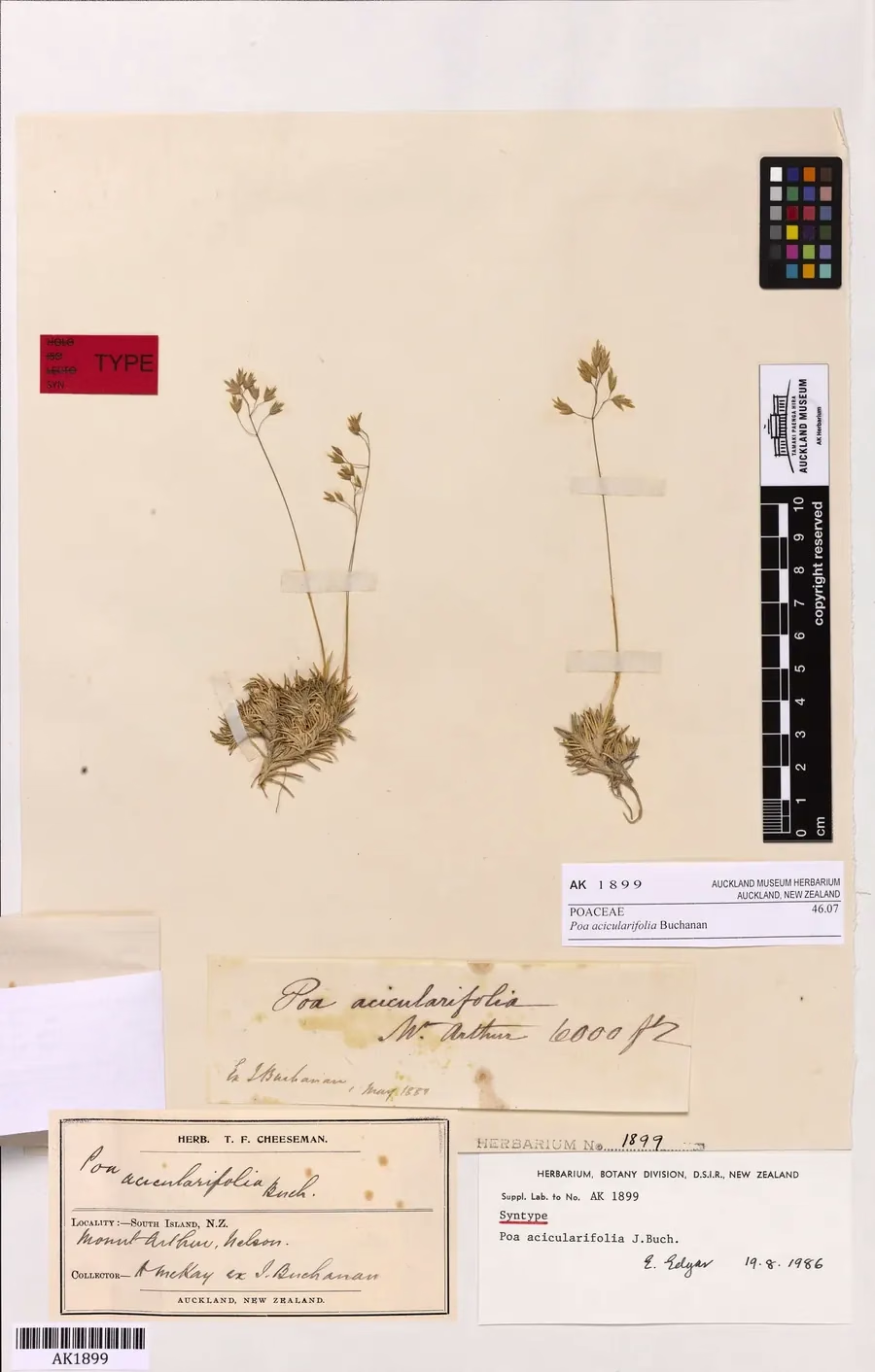
Acicularifolia Grass
Poa Acicularifolia Grass
Plant Conservation
Poa buchananii is ranked Not Threatened (2023) and has held that status in every national assessment since 2004. In Otago it is Regionally Not Threatened (2025).
Much of its scree and fellfield habitat lies within national parks and conservation land. Controlling browsing animals and preventing weed spread into alpine areas help protect it and other scree specialists.
Frequently Asked Questions
Where does scree poa grow?
It is endemic to the South Island east of the Main Divide, growing at subalpine to alpine altitudes on scree, stony ground on moraines and loose debris in fellfield.
How do you identify Poa buchananii?
The Flora of New Zealand calls it very distinct: a glaucous scree grass with stiff, rough, close-packed leaves and a compact, narrow, spike-like panicle 1.5 to 5.5 cm long.
Who is Poa buchananii named after?
It honours John Buchanan (1819-1898), a New Zealand botanist and scientific artist who collected and illustrated many native plants, including grasses.
Is scree poa a threatened plant?
No. It has been ranked Not Threatened in every national assessment since 2004 and is Regionally Not Threatened in Otago.
Sources and Further Reading
The botanical, growing, and conservation details for Scree Poa (Poa buchananii) on this page draw on the New Zealand plant references below. Consult them for full technical records and the latest distribution data.