Pleurophyllum
Pleurophyllum criniferum
Last updated:
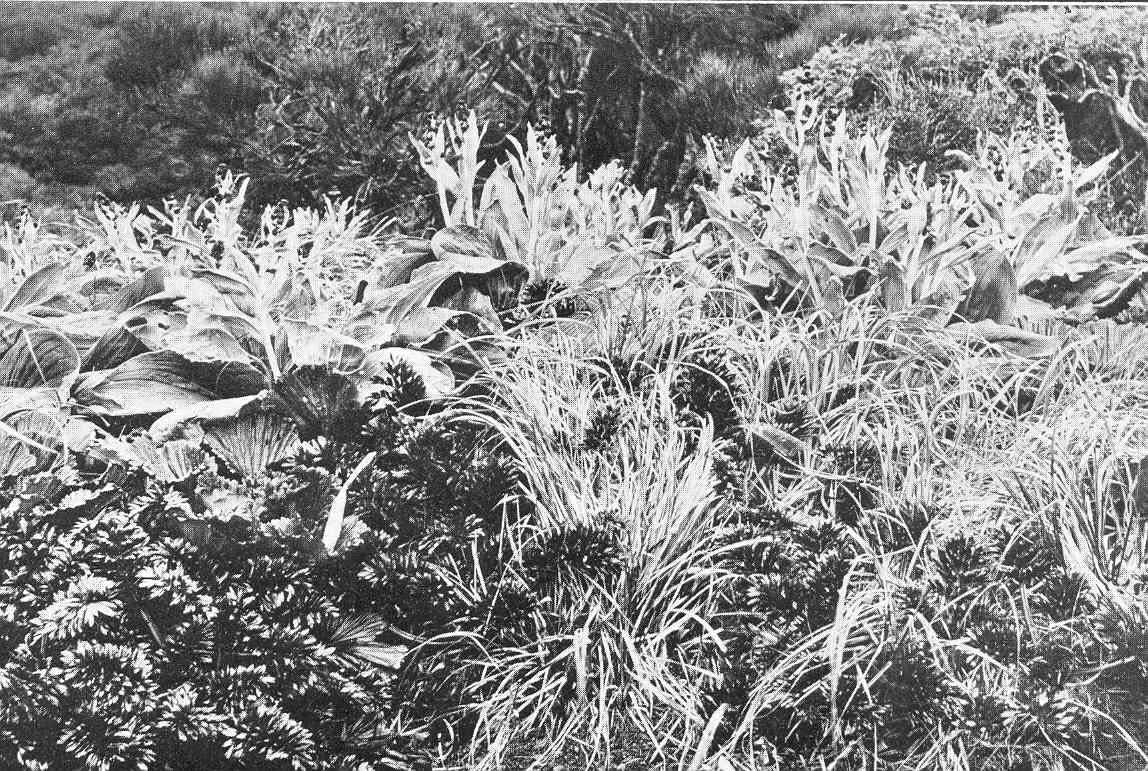
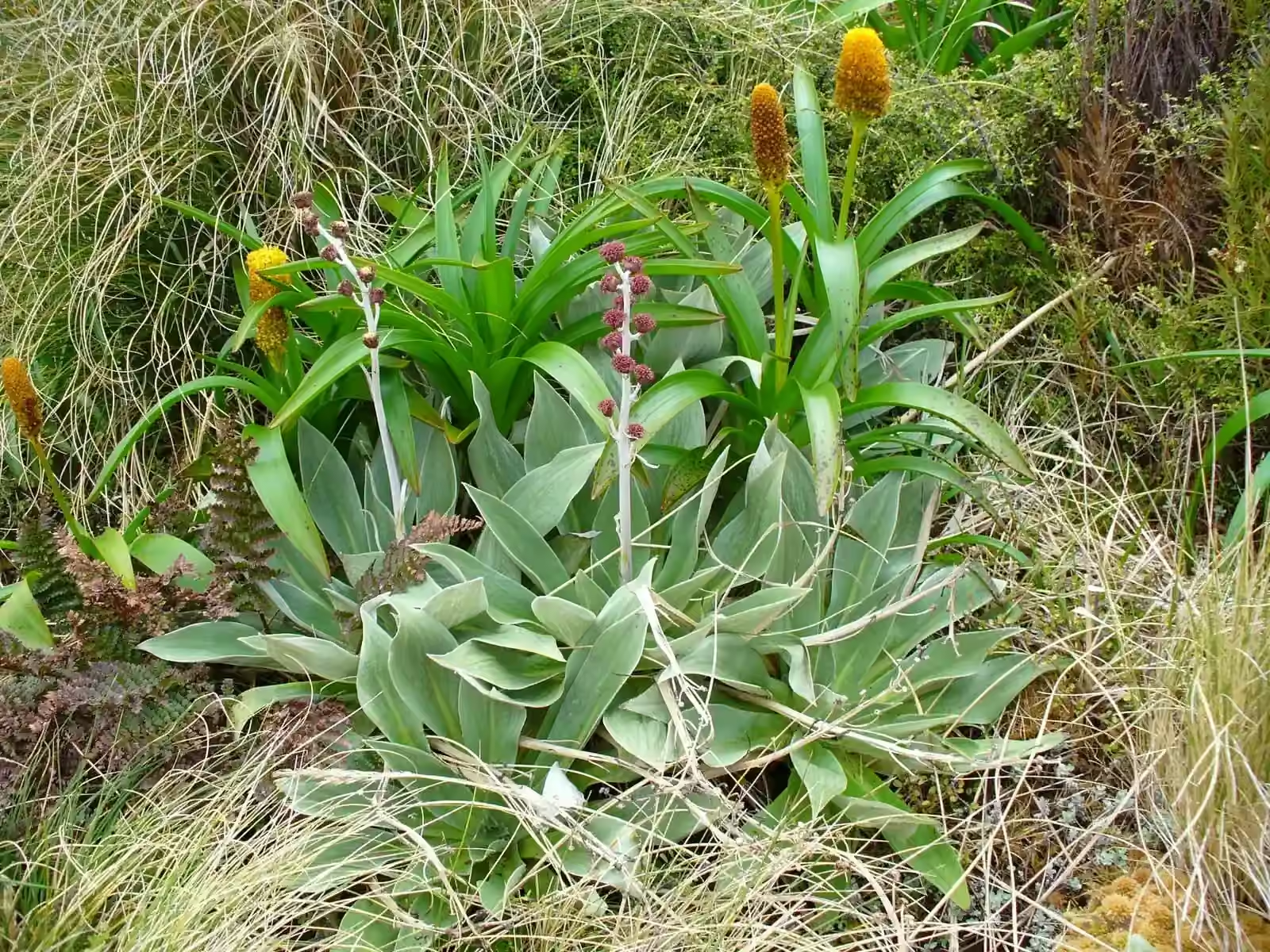
Pleurophyllum criniferum is one of the celebrated megaherbs of New Zealand's subantarctic islands: a giant perennial daisy whose ribbed leaves can exceed 1 m in length and whose stout flowering stems reach 2 m. In summer each stem carries 15 to 30 flower heads with dark purple centres and tiny, inconspicuous rays. It grows only on the Auckland, Campbell and Antipodes Islands, in peaty coastal and lower montane herbfield. It is ranked At Risk - Naturally Uncommon because of its restricted range, but it is widespread within those islands, and it recovered strongly after feral sheep were removed from Campbell Island. Explore more native flowering plants in our native plant guide.
Plant Description
Pleurophyllum criniferum is a large perennial herb in the daisy family. Its leaves rise from the base and can exceed 1 m including the stalk. The blade is usually oblong-ovate to broadly lanceolate, clad underneath in thin, close-pressed white hairs and above in scattered bristly and beaded hairs. It has up to 20 ribs, which give the genus its name, and the margins are obscurely scalloped with conspicuous linear hydathodes, small water-secreting pores.
Stout, grooved flowering stems grow up to 2 m tall, with leaves diminishing to linear bracts upwards. Each stem bears about 15 to 30 flower heads in a long raceme. The ray florets are short and inconspicuous, so the heads look like dark purple buttons formed by the disc florets. The seeds are densely covered in stiff hairs and carry a pappus.
Of its two relatives, Pleurophyllum speciosum has stiffer, almost stalkless leaves with very prominent ribs and showy pale mauve rays, while Pleurophyllum hookeri has silvery hairs on both sides of its leaves. P. criniferum's thinner, distinctly stalked leaves and inconspicuous rays separate it.
Quick Facts
| Scientific Name | Pleurophyllum criniferum |
|---|---|
| Height | Flowering stems up to 2 m; leaves over 1 m long |
| Spread | Large leaf rosettes; no reliable spread figure |
| Water Needs | High; constantly moist peat |
| Light | Open herbfield in a cloudy climate |
| Frost Tolerance | Moderate; grows in a cold oceanic climate with little severe frost |
| Salt Tolerance | Some; grows in coastal herbfield exposed to salt-laden wind |
| Growth Rate | No reliable information |
| Lifespan | Perennial |
Climate Best Suited to
Suits the cold, windy, cloudy and very wet oceanic climate of the subantarctic islands, with cool summers and few sunny days. It is not adapted to warm or dry conditions.
Regional Suitability
| City | Climate Suitability |
|---|---|
| Auckland | Low |
| Wellington | Low |
| Christchurch | Low |
| Dunedin | Low |
Plant Habitat
This megaherb is endemic to three subantarctic island groups: the Auckland Islands, Campbell Island/Motu Ihupuku and the Antipodes Islands. The type was collected on Campbell Island. It is widespread within its island habitats.
It grows on peaty ground in coastal and lower montane herbfield, from near the shore up into the island ranges, where it forms a striking part of the megaherb community alongside species of Anisotome, Stilbocarpa and Bulbinella.
Growing Requirements
Soil Requirements
It grows in deep, wet, acidic peat built up under the cool, saturated subantarctic climate.
- Deep organic peat
- Permanently moist
- Low fertility, high organic content
Light Requirements
It grows in open herbfield, but the islands are among the cloudiest places in the world, so the light it receives is mostly diffuse.
- Open sites without tree cover
- Adapted to frequent overcast
Water Requirements
Rain or drizzle falls on most days of the year on these islands, keeping its peat constantly damp.
- Needs constant moisture
- Would not tolerate drought
Planting and Establishing
Pleurophyllum criniferum is not available in the nursery trade, and NZPCN says it should not be removed from the wild. The islands where it grows are nature reserves with restricted access.
Megaherbs are notoriously hard to keep alive on the mainland because summers are too warm and dry. Only specialist growers in the coolest, wettest parts of the far south, with deep moist peat and shelter from heat, would have any chance.
Ecological Role
Pleurophyllum criniferum is a dominant member of the subantarctic megaherb fields, forming dense stands with other giant herbs. Botanists have suggested that the dark colours and large size of subantarctic megaherb flowers help them absorb warmth and attract scarce insect pollinators, but no detailed pollination study for this species was found in the sources consulted.
Introduced grazing animals once suppressed it. After feral sheep were removed from Campbell Island in stages between 1970 and 1991, Pleurophyllum species there recovered in range, abundance and plant size, along with other megaherbs, Chionochloa antarctica and Poa species.
Uses & Significance
Garden Uses
It has no practical garden use and is not cultivated commercially.
- Of interest to botanists and visitors to the subantarctic
- Better appreciated in the wild or in photographs
Ecological Value
As a dominant megaherb it shapes the structure of subantarctic herbfield and provides shelter and food for invertebrates in a landscape without trees.
- Major component of megaherb communities
- Indicator of recovery after grazing animals are removed
- Part of an endemic genus
Landscaping Uses
This plant is not used in landscaping. Its value lies in the spectacular natural displays of massed megaherbs on the subantarctic islands, which are among the most photographed plant communities in New Zealand.
For a bold-leaved native in mainland gardens, consider plants that are adapted to warmer conditions rather than attempting this species.
Seasonal Care Calendar
Spring
New leaves expand from the base as the short subantarctic growing season begins.
- Leaf growth resumes
- Flowering stems start to rise
Summer
Flowering from December to February, with tall racemes of dark purple flower heads.
- Peak flowering
- Insects visit the heads
Autumn
Fruit ripens from January to May, and hairy seeds with a pappus are released.
- Seed dispersal
- Flowering stems wither
Winter
Plants persist as leafy rosettes through the cold, wet winter.
- Little growth
- Older leaves die back
When to Prune and How Much
No pruning is relevant for wild plants. In cultivation, spent flowering stems and dead leaves would simply be removed at the base to reduce rot.
Avoid damaging the crown, from which all new leaves arise.
How to Grow Pleurophyllum
NZPCN describes propagation of Pleurophyllum criniferum as difficult and states that it should not be removed from the wild. All of its natural populations are within subantarctic nature reserves that form part of a World Heritage Area with restricted access, so any seed collection requires a permit. The notes below describe the general approach used for subantarctic megaherbs and are not a guarantee of success; the main obstacle is that mainland summers are too warm for the plants to survive long term.
From Seed
Fruit ripens from January to May. Megaherb seed is best sown fresh in a cool environment, and seedlings need constant moisture and protection from heat. Expect slow progress and losses. Fresh seed has the best chance of germinating.
- Obtain seed only from a legal, permitted source
- Sow fresh seed onto a moist, peat-rich, free-draining mix
- Keep cool, shaded and constantly damp
- Grow seedlings on in a cool glasshouse or shade house
- Pot on carefully into deep containers to allow for a large root system
By Division
Large established plants with several crowns could in theory be divided, as with other rosette-forming perennials. This would only be attempted on cultivated plants, never on wild ones, and losses are likely.
- Choose a vigorous cultivated plant with more than one crown
- Divide in cool, moist weather with a sharp spade
- Replant immediately in deep, moist peat
- Keep shaded and well watered until new leaves appear
Pests & Diseases
Grazing by introduced sheep, and probably other introduced mammals, historically reduced megaherbs on the subantarctic islands. Their removal has allowed Pleurophyllum to recover.
No specific insect pests or diseases are recorded. In mainland cultivation, heat stress, drought and crown rot would be the main problems.
Cultural Significance
No Māori name or traditional Māori use is recorded for this plant in the sources consulted.
The genus name comes from the Greek pleuro (rib or side) and phyllo (leaf), referring to the ribbed leaves. Pleurophyllum is endemic to New Zealand's subantarctic islands, and its megaherbs attracted attention from early botanical visitors such as Joseph Hooker in 1840.
Bonus Tip
When photographing megaherbs on a subantarctic voyage, use the leaves to sort the Pleurophyllum species: thin, stalked leaves with white felt underneath and button-like purple flower heads indicate P. criniferum, while showy mauve daisies on stiff, deeply ribbed leaves are P. speciosum.
Related Plants
Explore other native plants that share similar characteristics or habitats with Pleurophyllum (Pleurophyllum criniferum), offering further insights into New Zealand's diverse flora. These related species provide context and opportunities for complementary planting in your garden.
Pittosporum anomalum
Pittosporum anomalum
Plantago aucklandica
Plantago aucklandica
Cockspur Flower
Coleus australis
Poa antipoda
Poa antipoda
Auckland Island Poa
Poa aucklandica subsp. aucklandica
Campbell Island Poa
Poa aucklandica subsp. campbellensis
Poa breviglumis
Poa breviglumis
Hookeri Plant
Hookeri Plant
Plant Conservation
Pleurophyllum criniferum is ranked At Risk - Naturally Uncommon (2023) with the qualifiers Partial Decline and Range Restricted. NZPCN describes it as a naturally uncommon endemic that is widespread within its island habitats.
Its islands are protected as nature reserves and are part of the New Zealand Subantarctic Islands World Heritage Area. The eradication of introduced mammals, and strict biosecurity to stop new pests and weeds arriving, are the key actions that protect it.
Frequently Asked Questions
What is a megaherb?
Megaherbs are herbaceous plants with unusually large leaves and flowers. Pleurophyllum criniferum is one of the subantarctic megaherbs, with leaves over 1 m long and flowering stems up to 2 m tall.
Where does Pleurophyllum criniferum grow?
It is endemic to New Zealand's subantarctic Auckland, Campbell and Antipodes Islands, where it grows in peaty coastal to lower montane herbfield.
How do you tell Pleurophyllum criniferum from Pleurophyllum speciosum?
NZPCN says P. criniferum has thinner, distinctly stalked leaves and inconspicuous ray florets, whereas P. speciosum has showy rays. P. hookeri differs again in having silvery hairs on both leaf surfaces.
Can you grow Pleurophyllum criniferum in a garden?
NZPCN rates propagation as difficult and says it should not be removed from the wild. It is not a practical garden plant in mainland New Zealand.
Sources and Further Reading
The botanical, growing, and conservation details for Pleurophyllum (Pleurophyllum criniferum) on this page draw on the New Zealand plant references below. Consult them for full technical records and the latest distribution data.