Perching Astelia
Astelia microsperma
Astelia microsperma
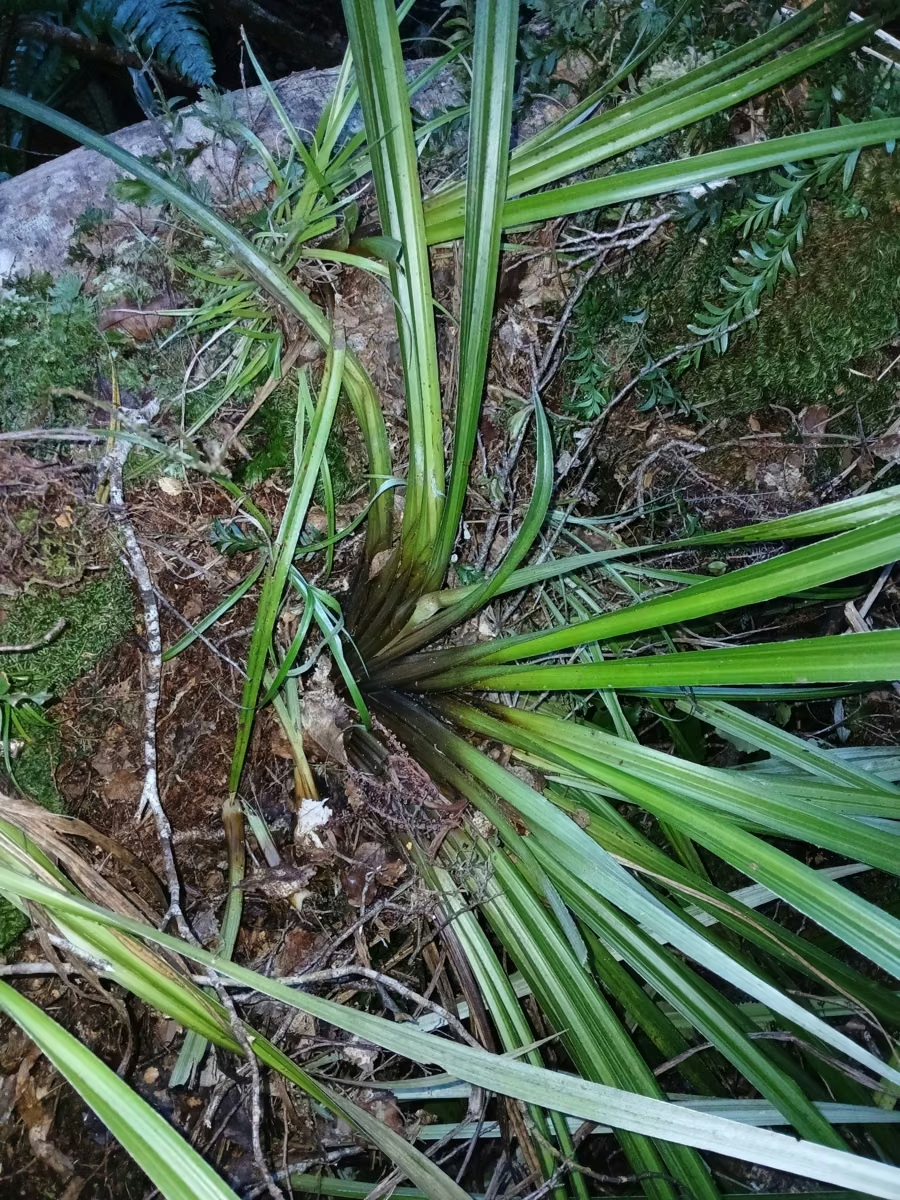
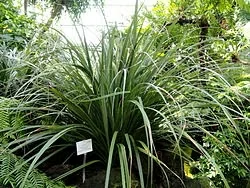
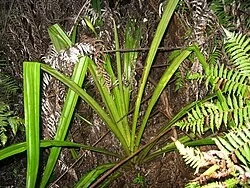
Astelia microsperma is a tufted perennial endemic to Te Ika-a-Māui / North Island. It is often found as a nesting epiphyte, growing on trees in forest rather than rooting only in the ground.
Identification
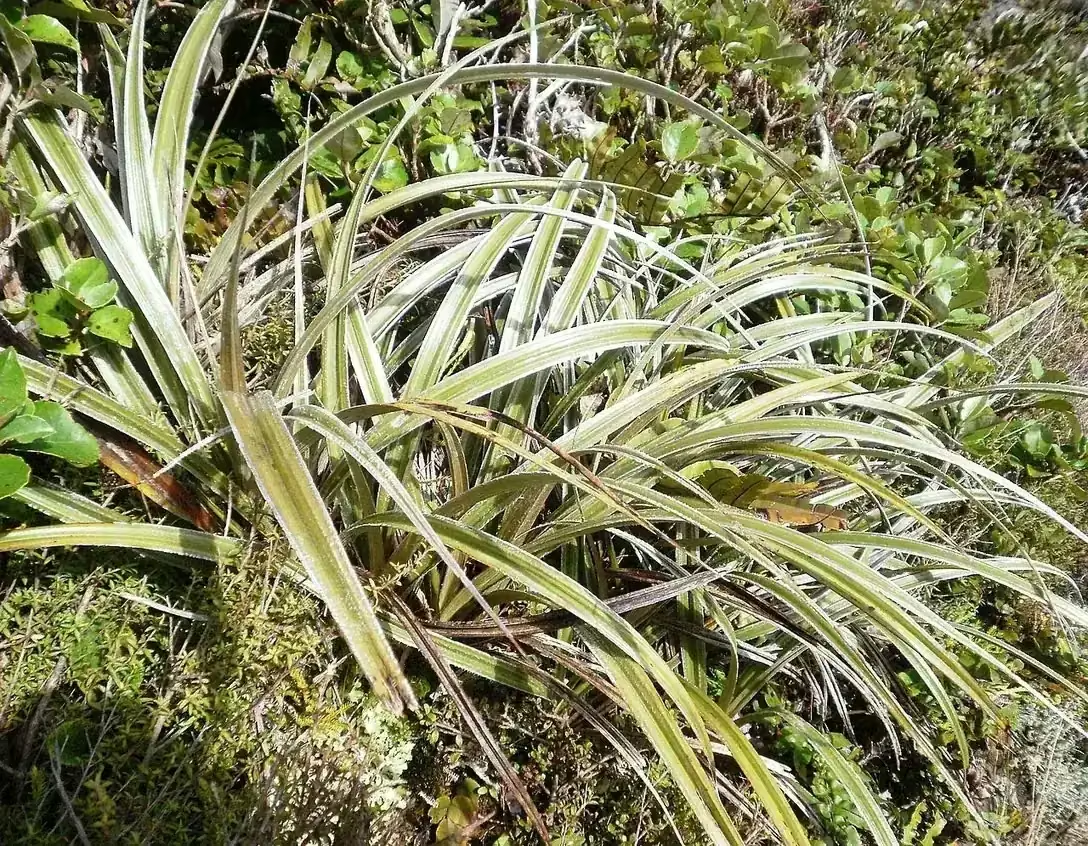
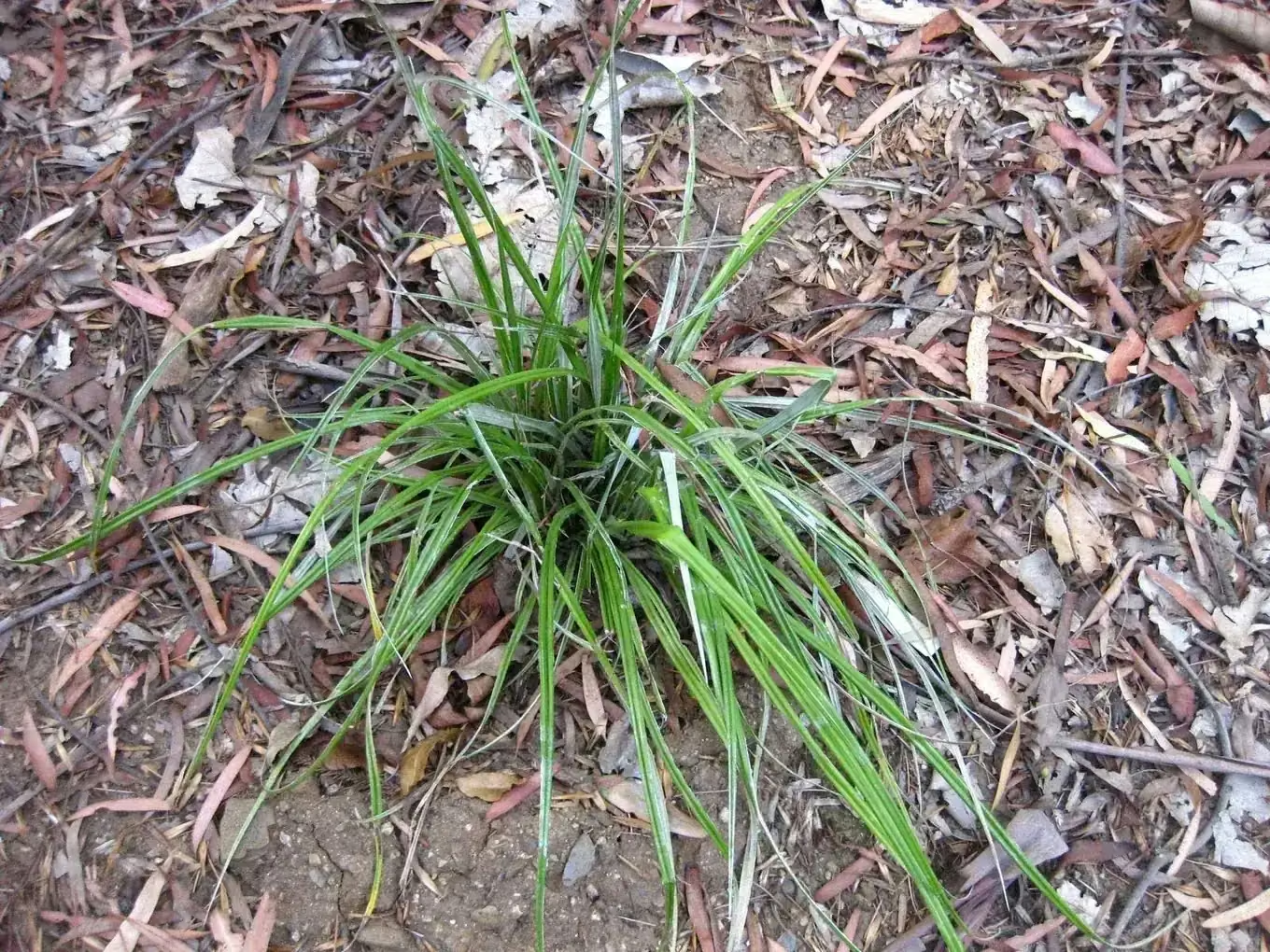
The Flora of New Zealand describes a tufted plant with narrow leaves about 40-150 cm long and commonly 1-2.5 cm wide. The leaf sheath darkens towards its base, with a narrow band of white scales.
Flowering stems arch out from the leaf fan. The flowers are whitish and the small, round fruit is milky white with numerous shiny black seeds. Older descriptions under Collospermum microspermum should be read alongside the revised classification.
Quick facts
| Scientific Name | Astelia microsperma |
|---|---|
| Family | Asteliaceae |
| Leaf length | Approximately 40-150 cm |
| Flowering period | November to February |
| Fruiting period | February to June |
| National status | Not Threatened (2023) |
| Height | Leaf length 40-150 cm; final height about 1.5 m in the North Egmont guide |
| Water Needs | A species-specific cultivation watering schedule is not documented |
| Light | Forest epiphyte; a tested cultivation light rating is not supplied |
| Spread | Tufted leaf fans; mature clump width unquantified |
| Frost Tolerance | Minimum tolerated temperature is not documented |
| Salt Tolerance | Salt tolerance is not documented |
| Growth Rate | Annual extension is not quantified in the cited accounts |
| Lifespan | Tuft-forming perennial |
Natural range
Kew records this species as native to the North Island. Te Ara describes its older name, Collospermum microspermum, as a perching plant usually found above 300 metres; that historical usage needs care after taxonomic revision.
| City | Climate Suitability |
|---|---|
| Auckland | Not assessed |
| Wellington | Not assessed |
| Christchurch | Not assessed |
Habitat and distribution
This astelia is endemic to the North Island. Botanical survey reports describe it as a nesting epiphyte in forest, and Auckland Council records it high on Mount Tamahunga alongside other species more often found at higher elevations.
Growing requirements
A Taranaki Regional Council restoration guide lists Astelia microsperma for the North Egmont ecological district and gives a final height of 1.5 m. The cited source should be consulted for site-specific suitability rather than assuming all North Island habitats are equivalent.
Planting
The North Egmont restoration guide includes this astelia in a regional planting list. Its natural occurrence as a forest epiphyte and the guide’s local context are useful when selecting a site, but do not constitute a detailed planting protocol.
Ecology
NZPCN reports that its fleshy berries are dispersed through fruit-eating animals and attachment. It is also recorded as a nesting epiphyte in forest, where its tufted leaves grow above ground on supporting trees.
Observing perching astelia
Look for the leaf fan growing on a tree in North Island forest. The Flora of New Zealand describes darkening at the base of the leaf sheath and inflorescences that arch outward from the leaves.
Restoration context
Taranaki Regional Council includes this plant in its North Egmont restoration guide and gives a final height of 1.5 metres. The guide is intended for that ecological district, so its advice is best interpreted in that regional context.
Flowering and fruiting
Flora of New Zealand gives November to February as the flowering period and February to June as the fruiting period. The white fruit is described as roughly 4.5 mm across, containing numerous small black seeds.
Pruning
The Flora of New Zealand describes a fan of long leaves with flower clusters arching outward. Neither the Flora profile nor the cited regional restoration guide provides a species-specific pruning regime for this astelia.
How to Grow Perching Astelia (Astelia microsperma)
Seed and the alternative generic name
Flora of New Zealand describes the seed-bearing plant under its current name, Astelia microsperma, while retaining a botanical description originally published as Collospermum microspermum. These names need to be linked when checking nursery material or older propagation records. The Flora description records numerous shiny black seeds, about 1 mm long and 0.8 mm wide, inside the small white berries.
Following female flowering and fruiting
The species has separate male and female plants. Male flower clusters and the smaller flowers of female plants therefore have different measurements in the botanical account. Fruit is described as milky white, approximately 4.5 mm across, seated in a thin floral cup. Published fruiting records extend from February to June, following flowering from November to February.
Space for the Leaf Fan
Its narrow leaves can reach 1.5 m long, while the flowering stem arches away from the fan. The darkening leaf sheath has a narrow basal band of white scales. A North Egmont restoration guide also lists a final height of approximately 1.5 m. These observations give a useful indication of the size of a developed tuft.
Using the local habitat evidence
North Island field accounts record this plant as a nesting forest epiphyte, and the Taranaki guide includes it in a regional restoration list. Those sources support its identity and local use. They do not specify seed pretreatment, sowing depth, germination temperature or a successful division size, so those practical details remain unverified for this species.
Pests and diseases
The cited NZPCN profile does not provide a species-specific pest or disease treatment. A darkened leaf-sheath base is part of the Flora of New Zealand description, so it should not automatically be interpreted as disease.
Names and taxonomy
An earlier scientific name is Collospermum microspermum. A 2015 revision placed Collospermum within Astelia and resurrected A. microsperma in part; older descriptions may therefore use a different species circumscription.
Identification context
The Flora of New Zealand describes leaves that are narrower in proportion than those of Astelia hastata, together with a darkened sheath base. Older treatments may have grouped plants differently, so identification should use current references.
Related astelias
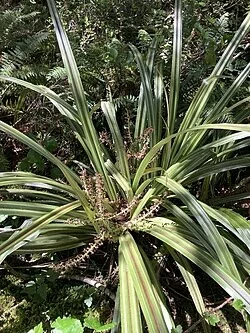
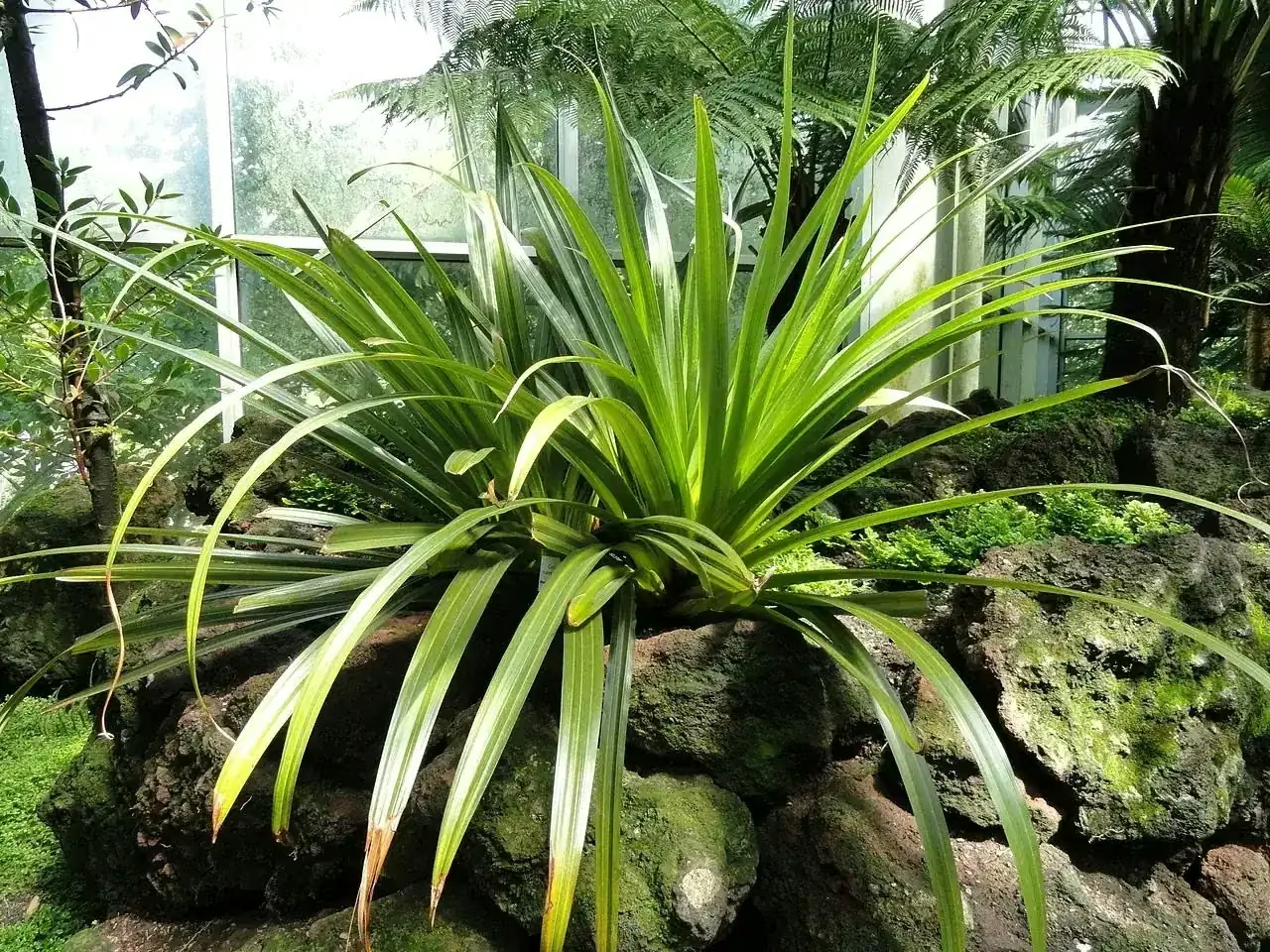
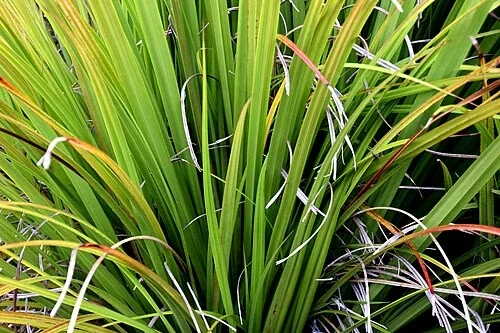
Explore other New Zealand members of the genus Astelia, including forest, coastal and wetland species.
Conservation
The 2023 national assessment lists Astelia microsperma as Not Threatened. NZPCN reports a separate 2025 Auckland assessment of Regionally Vulnerable and a 2026 Northland assessment of Regionally Naturally Uncommon.
Frequently asked questions
What colour are the berries?
The Flora account describes milky-white, rounded berries approximately 4.5 mm across, containing many small black seeds.
Is Collospermum microspermum another species?
It is an earlier name for Astelia microsperma. Older botanical descriptions and records often use that generic placement.
Does every plant produce berries?
No. Astelias have separate male and female plants; fruit develops on female plants after successful pollination.
Sources
Last updated: