Hebe
Veronica treadwellii
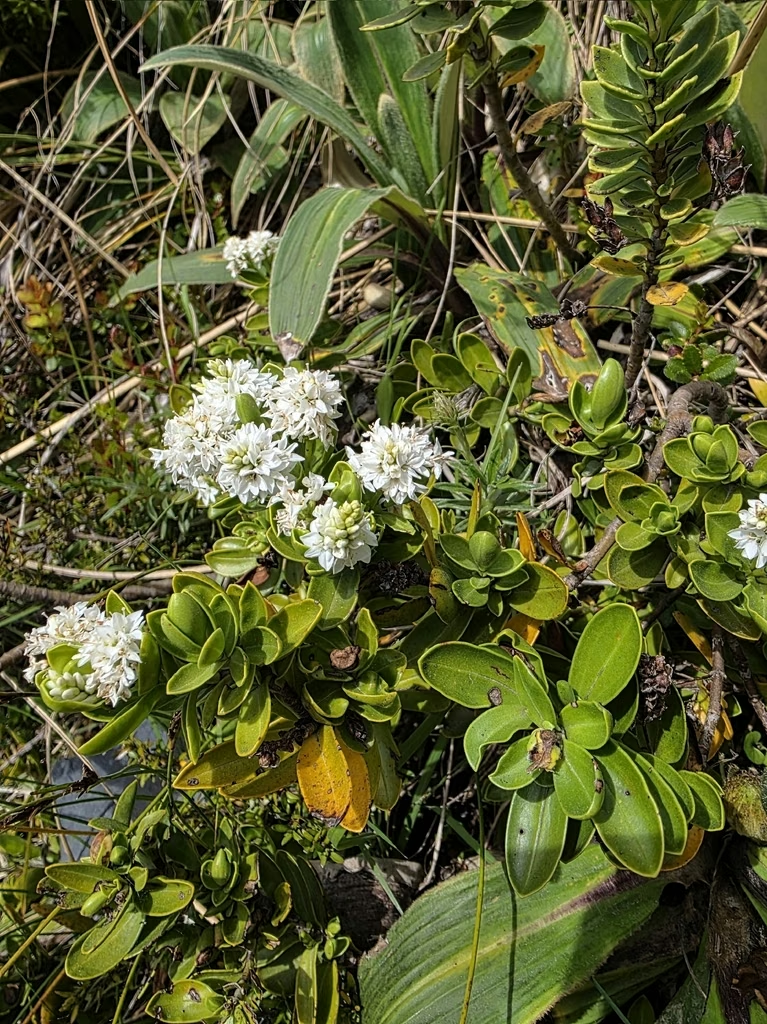
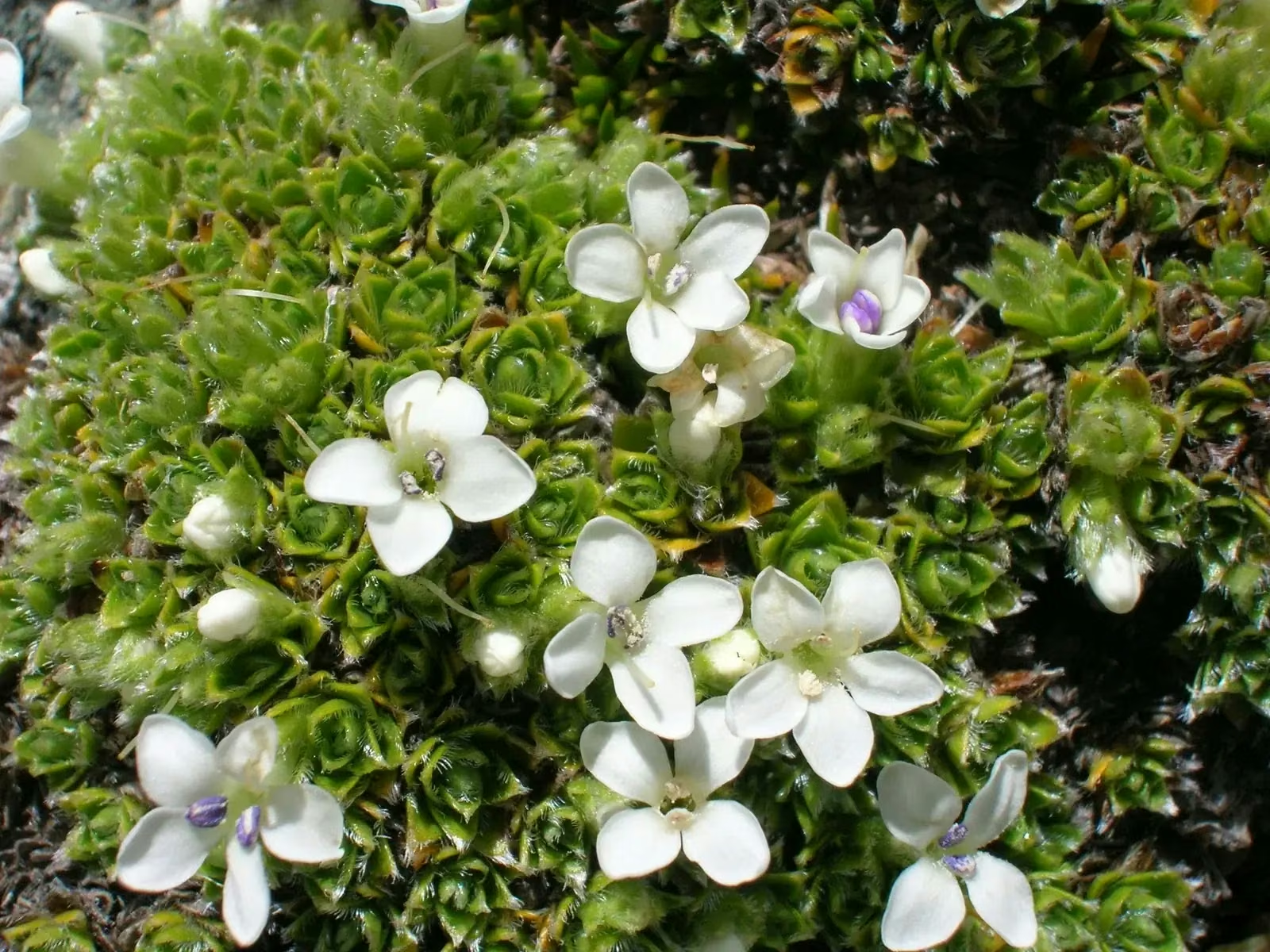
Veronica treadwellii is a low, spreading hebe endemic to South Island mountains. Its dished leaves and short clusters of white flowers grow among subalpine shrubs and mountain grassland on or near the Main Divide.
Identification
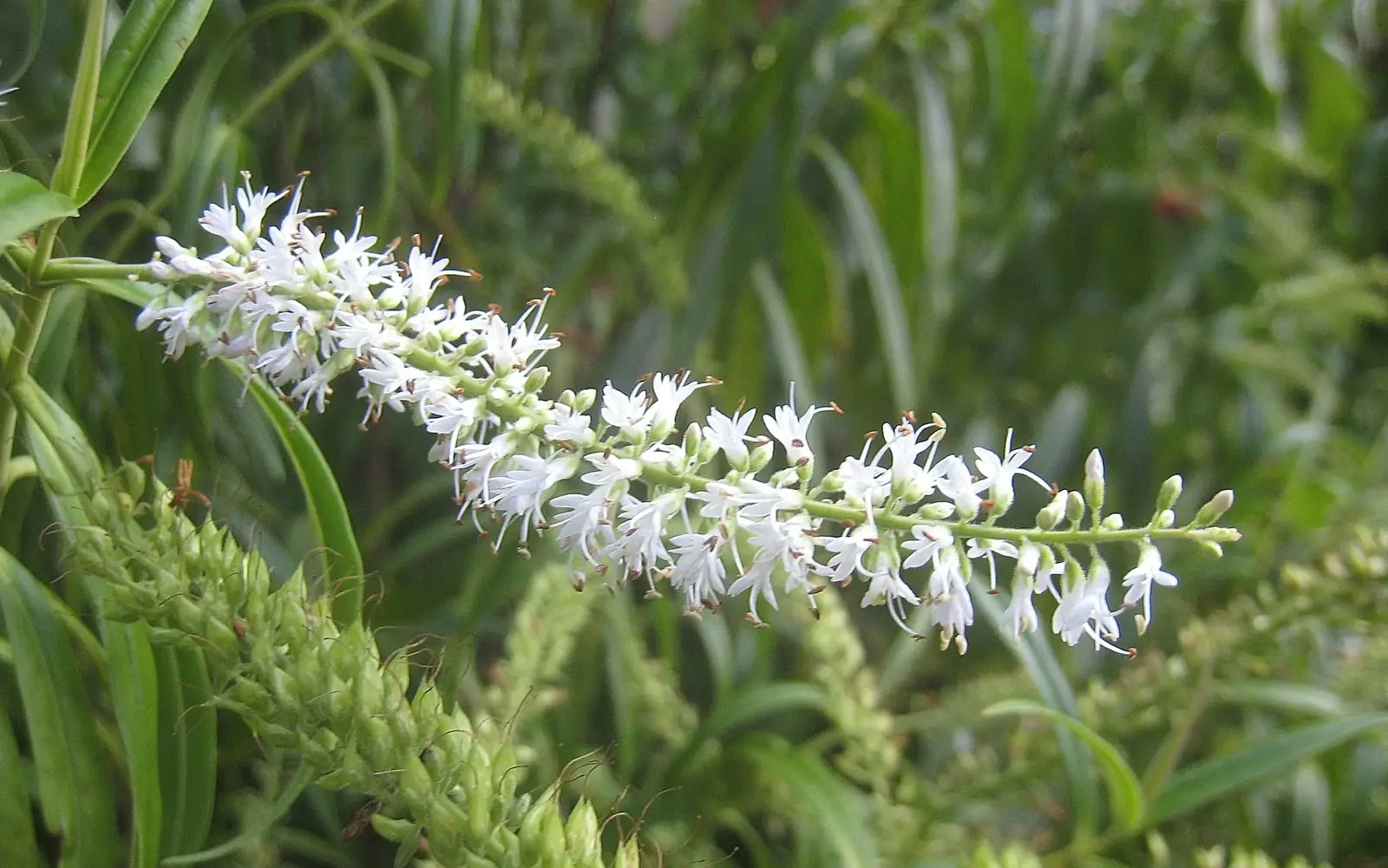
This spreading shrub reaches about 30 cm tall, with branches that lie down or ascend. Its glossy, somewhat fleshy leaves are usually 13-29 mm long, broadly oval to reverse lance-shaped, and concave like a shallow dish. Flower clusters grow laterally near the tips of branches and usually contain eight to 34 white flowers.
Quick facts
| Scientific Name | Veronica treadwellii (Cockayne & Allan) Garn.-Jones |
|---|---|
| Synonyms | Hebe treadwellii; Hebe brockiei |
| Family | Plantaginaceae |
| Origin | Endemic to New Zealand |
| Height | Up to 30 cm |
| Habitat | Subalpine shrubland and mountain grassland |
| Flowering | December to February |
| National status | Not Threatened (2023) |
| Water Needs | A cultivation watering requirement is not given in the Flora account |
| Light | Subalpine shrubland and penalpine grassland in its natural habitat |
| Spread | Spreading, decumbent to ascending branches; width unquantified |
| Frost Tolerance | Minimum tolerated temperature is not documented |
| Salt Tolerance | Salt tolerance is not documented |
| Growth Rate | Annual extension is not quantified in the cited accounts |
| Lifespan | Woody perennial shrub |
Natural range
Flora of New Zealand records this endemic hebe from western Nelson, Canterbury near the Main Divide and Westland. Documented collections span approximately 762-1,680 metres, an observed range rather than a tested garden hardiness limit.
| City | Climate Suitability |
|---|---|
| Auckland | Not assessed |
| Wellington | Not assessed |
| Christchurch | Not assessed |
Habitat
Veronica treadwellii grows in subalpine shrubland and penalpine grassland. Flora records it in western Nelson at Bald Knob Ridge and in mountain areas of Canterbury and Westland, on or near the Main Divide.
Natural growing conditions
This small shrub occurs in mountain grassland and subalpine shrubland. The cited botanical accounts describe its natural sites but do not establish a species-specific garden soil mixture or irrigation schedule.
Planting considerations
Its low, spreading form reaches about 30 cm high, and the natural habitat includes subalpine shrubland. The NZPCN and Flora descriptions do not provide a tested planting method for this particular hebe.
Flowers and dispersal
Plants bear either female or bisexual flowers, on separate individuals. The flowers are arranged in lateral racemes, rather than in the strictly terminal clusters characteristic of some other hebes. NZPCN reports wind dispersal of the seeds.
Field identification
Compare the plant’s overall habit as well as its leaves when distinguishing it from Veronica subalpina. Veronica treadwellii usually has broader, more dished leaves; the two can grow together, and pressed specimens may be difficult to separate.
Garden context
This low mountain hebe has spreading branches, glossy dished leaves and short lateral clusters of white flowers. The botanical sources give its wild habitat and size but do not report trials of its performance in gardens.
Seasonal changes
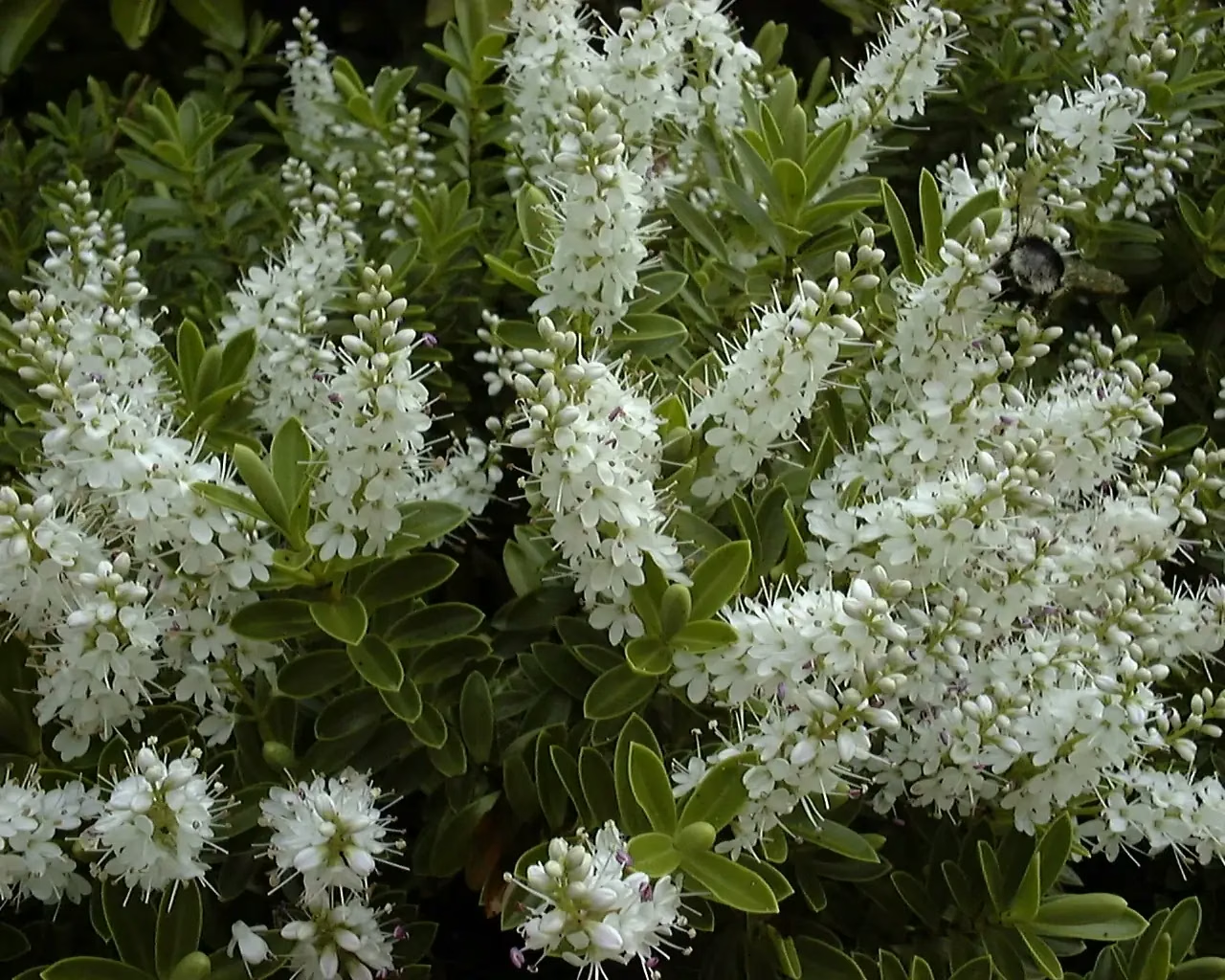
Flowering is recorded from December to February. Flora reports fruits from December to February, persisting to October. Each short lateral flower cluster bears closely arranged white flowers, and the anthers may be pink, beige or cream.
Branch growth
The branches are naturally decumbent or ascending, producing a low spreading form. Young stems range from hairy to almost hairless, with any hairs arranged in two lines; the cited sources do not prescribe a pruning regime.
How to Grow Hebe (Veronica treadwellii)
Seed and cutting evidence
The cited botanical accounts do not give a tested seed-germination or cutting-rooting procedure for Veronica treadwellii. Older names include Hebe treadwellii and Hebe brockiei. These connections help identify records, but a cultivation method described for another hebe should be checked before it is attributed to this species.
The spreading woody framework
Plants reach about 30 cm tall, with branches that lie down or ascend. Young stems have hairs in two lines or become nearly smooth. Leaf blades are approximately 10-32 mm long and 4-15 mm wide in the modern Flora, with a glossy upper surface and a shallowly concave, somewhat fleshy texture.
Following buds and lateral racemes
The leaf bud is distinct, with its enclosing leaves pressed together at their margins until developed. Flower racemes arise laterally, measure about 15-31 mm and carry roughly five to thirty-four crowded flowers. Female and bisexual flowers occur on separate plants, a relevant distinction when observing which plants go on to produce capsules.
Using the seasonal and habitat records
Flora places the species in subalpine shrubland and penalpine grassland, with recorded elevations around 762-1,680 m. Flowers occur in December-February. Fruit records overlap that period and capsules can persist into October. These observations describe identified wild plants; the accounts do not supply a measured annual spread, planting distance or horticultural watering schedule.
Plant health
Leaves are naturally concave and their colour ranges from light to dark green above. These features help identify the hebe. The cited botanical profiles do not give a species-specific list of pest or disease treatments.
Names and classification
Hebe treadwellii and Hebe brockiei are synonyms of Veronica treadwellii in the Flora of New Zealand treatment. The epithet honours Charles H Treadwell, who lived from 1862 to 1936.
Separating similar hebes
Veronica subalpina generally has narrower, flatter leaves and less crowded flowers on longer stalks. Flora notes that the two species are very similar and may occur together, so several characters should be checked.
Related native veronicas
Explore other native Veronica species, including small-leaved and mountain hebes.
Conservation
The 2023 assessment lists Veronica treadwellii as nationally Not Threatened. NZPCN also records a 2025 Otago regional assessment of Regionally At Risk - Regionally Naturally Uncommon, illustrating the difference between national and regional status.
Frequently asked questions
Where are its flower clusters produced?
The short racemes arise laterally on the shoots, rather than forming only a terminal spike.
Do all plants have the same flower type?
No. The modern Flora records female and bisexual flowers on separate plants.
Is Hebe brockiei an earlier name?
Yes. It is included among the earlier names associated with Veronica treadwellii.
Sources
Identification, habitat, flowering and conservation: NZPCN.
Names, range, elevation and comparison with related species: Flora of New Zealand.
The concave, fleshy leaves and lateral clusters of white flowers are useful characters for recognising this shrub.
Last updated: