Lyall's Parahebe
Veronica lyallii
Last updated:
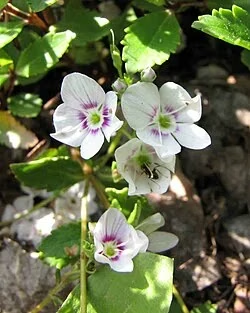
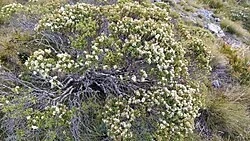
Lyall's Parahebe (Veronica lyallii), formerly Parahebe lyallii, is a low, spreading evergreen subshrub endemic to New Zealand that forms loose mats 10 to 40 cm high. It has reddish creeping stems and small, rounded, toothed dark green leaves. From late spring into summer it bears delicate white to pale pink flowers finely veined with purple. In the wild it colonises stony riverbeds, screes and rocky cliffs from lowland to subalpine altitudes, mostly in the South Island. Explore more native shrubs in our native plant guide.
Plant Description
Identification and Physical Characteristics
Veronica lyallii , formerly classified as Parahebe lyallii and commonly known as Lyall's Parahebe or Lyall's Speedwell, is a charming evergreen subshrub endemic to New Zealand. It typically grows as a low-lying, spreading plant that forms loose mats or tufts, reaching a height of 10-40 cm. The stems are often reddish and creeping, rooting where they touch the soil. Its small, dark green leaves are broadly oval to rounded, with distinctly toothed margins and a somewhat leathery texture. From late spring through summer, Lyall's Parahebe produces a profusion of delicate white to pale pink flowers on slender, upright stalks. Each flower is intricately marked with fine purple veins that radiate from a reddish-pink or purple center, creating a stunning visual display in its natural rocky habitat.
Quick Facts
| Scientific Name | Veronica lyallii |
|---|---|
| Height | 10-40 cm |
| Spread | 40-60 cm |
| Water Needs | Moderate; requires consistent moisture |
| Light | Full sun to partial shade |
| Frost Tolerance | High |
| Salt Tolerance | Medium |
| Growth Rate | Moderate |
| Lifespan | Perennial subshrub |
Climate Best Suited to
Lyall's Parahebe is a hardy plant well-suited to the temperate and montane climates of New Zealand. It is particularly common throughout the South Island, where it thrives in cool, humid conditions. It is extremely frost-hardy and can withstand the harsh winters of subalpine environments. While it can be grown in the North Island, it prefers positions where it is protected from intense heat and where its roots can remain cool and moist.
Regional Suitability
| City | Climate Suitability |
|---|---|
| Auckland | Medium |
| Wellington | High |
| Christchurch | High |
| Dunedin | High |
| Invercargill | High |
Plant Habitat
Natural Occurrence and Ecology
In the wild, Veronica lyallii is a specialist of stony and gravelly environments. It is frequently found along the banks and beds of mountain streams and rivers, on screes, slips, and rocky cliffs from lowland up to subalpine altitudes. It excels in sites that are subject to periodic disturbance or where seeps provide constant moisture through the substrate. Its ability to colonize gravelly river flats makes it a common sight in the river valleys of the South Island.
Growing Requirements
Soil Requirements
Requires very well-drained soil. It thrives in gritty, stony, or sandy mediums that mimic its natural riverbed habitat.
- Well-drained
- Gritty/Stony
- Moderately fertile
Light Requirements
Best in full sun or light dappled shade. Strong light is necessary to keep the growth habit compact and encourage flowering.
- Full Sun
- Light Shade
Water Requirements
Prefers even and regular moisture, especially during the establishment phase. Once mature, it has moderate drought tolerance.
- Regular moisture
- Avoid waterlogging
Planting and Establishing
Establishment Guidance
To establish Lyall's Parahebe in your garden, select a site with exceptional drainage. If planting in a traditional garden bed, incorporate plenty of river sand or fine gravel to open up the soil structure. Space plants about 30-40 cm apart to allow for their spreading habit. Water the new plants regularly during their first summer to ensure they develop a deep root system. Once established, they are relatively low-maintenance and will slowly spread to form a charming, flowering carpet.
Ecological Role
Biodiversity and Ecosystem Impact
Lyall's Parahebe plays a vital role in stabilizing loose gravel and soil on river flats and mountain slopes. Its creeping stems form a protective network that helps prevent erosion in sensitive riparian and subalpine zones. The abundant flowers provide a rich source of nectar for native bees, flies, and butterflies, making it an important component of New Zealand's high-altitude pollinator networks.
Uses & Significance
Garden Uses
This plant is an ideal candidate for rock gardens, gravel borders, or as a softening element along the edges of stone paths. It is also well-suited to container gardening and alpine troughs.
- Rock gardens
- Gravel borders
- Softening path edges
Ecological Value
Ecologically, it is significant for supporting biodiversity in mountain stream environments and for its role as a pioneer species on disturbed rocky ground.
- Soil stabilization
- Pollinator support
- Pioneer species
Landscaping Uses
In landscape design, Veronica lyallii is valued for its delicate texture and long flowering season. It is effectively used in mass plantings to create a "wildflower meadow" effect in stony areas. Its ability to cascade over walls or stone edging makes it a versatile choice for multi-level gardens. The reddish stems and dark foliage provide year-round interest even when the plant is not in bloom.
Seasonal Care Calendar
Spring
Apply a light dressing of general-purpose fertilizer. This is the best time for planting or dividing large mats.
- Light fertilization
- Planting/Division
Summer
Monitor soil moisture during dry periods. Trim back spent flower spikes once the main flush of blooming has finished to keep the plant neat.
- Watering
- Deadheading
Autumn
Take semi-hardwood cuttings for propagation. Ensure the plant is not smothered by falling leaves from neighbouring trees.
- Take cuttings
- Clear debris
Winter
Lyall's Parahebe is dormant and requires minimal care. Ensure that the site remains free-draining to prevent winter root rot.
- Check drainage
- Minimal care
When to Prune and How Much
Lyall's Parahebe benefits from regular, light trimming to maintain its compact shape and prevent it from becoming too woody in the center.
- Trim after flowering
- Remove dead stems
A light shear in late summer will encourage new growth and may lead to a secondary flush of flowers in autumn. Avoid heavy pruning into old wood.
How to Grow Lyall's Parahebe
Cultivating Lyall's Parahebe ( Veronica lyallii ) is a rewarding experience for any native plant enthusiast. This species is one of the most adaptable and reliable of the former Parahebe group, and its ability to thrive in stony, challenging environments makes it a valuable asset for New Zealand gardens. The key to success lies in understanding its natural preference for cool, moist substrates combined with excellent surface drainage.
The most efficient method of propagation is through tip cuttings. These should be taken in late summer or early autumn when the stems have become slightly firm but are still flexible (semi-hardwood). Select healthy, non-flowering tips about 5-8 cm long. Remove the lower leaves and dip the base in a rooting hormone. Insert the cuttings into a very free-draining mix of sand and perlite. Keep the cuttings in a shaded, humid environment-such as a greenhouse or under a plastic cover-until they have rooted, which usually takes 4-6 weeks.
From Seed
Lyall's Parahebe can also be successfully grown from seed. The seeds are produced in small, flattened capsules that should be collected once they have turned brown.
Sow the seeds onto the surface of a fine, pre-moistened seed-raising mix. They require light to germinate, so cover them only with a very thin layer of fine grit. Maintain constant moisture but avoid waterlogging the tray.
- Collect ripe capsules in late summer.
- Sow on surface of moist mix.
- Maintain consistent humidity.
Germination is usually reliable if the seeds are fresh. Once the seedlings are large enough to handle, transplant them into individual pots to grow on for a full season before planting out in the garden.
From Division
Because of its creeping habit, established mats of Lyall's Parahebe can often be divided in early spring.
- Lift a section of rooted mat.
- Separate into smaller rooted plantlets.
- Replant immediately into moist, gritty soil.
Pests & Diseases
Lyall's Parahebe is generally very hardy and free from serious pests and diseases. However, in humid or poorly ventilated conditions, it can be prone to downy mildew or leaf spot fungi. Improving air circulation and avoiding overhead watering in the evening will help prevent these issues. Scale insects or aphids can occasionally be found on new growth; these can be managed with organic soaps or oils. The most significant threat is root rot, which occurs if the soil drainage is insufficient.
Cultural Significance
Lyall's Parahebe is a significant member of New Zealand's subalpine botanical heritage. It represents the specialized flora that has adapted to the high-energy environments of mountain river systems. Its common name honours David Lyall, the 19th-century botanist whose extensive collections helped the scientific community understand the unique nature of New Zealand's mountain plants. It is valued today as a quintessential "Kiwi" rock garden plant.
- Honours botanist David Lyall
- South Island botanical legacy
- Endemic mountain flora
Bonus Tip
To mimic its natural habitat and keep it looking its best, mulch around your Lyall's Parahebe with clean river stones or schist gravel. This not only looks aesthetically pleasing but also helps keep the roots cool and moist while ensuring the foliage stays dry and disease-free.
Related Plants
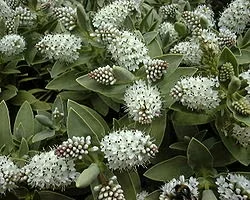
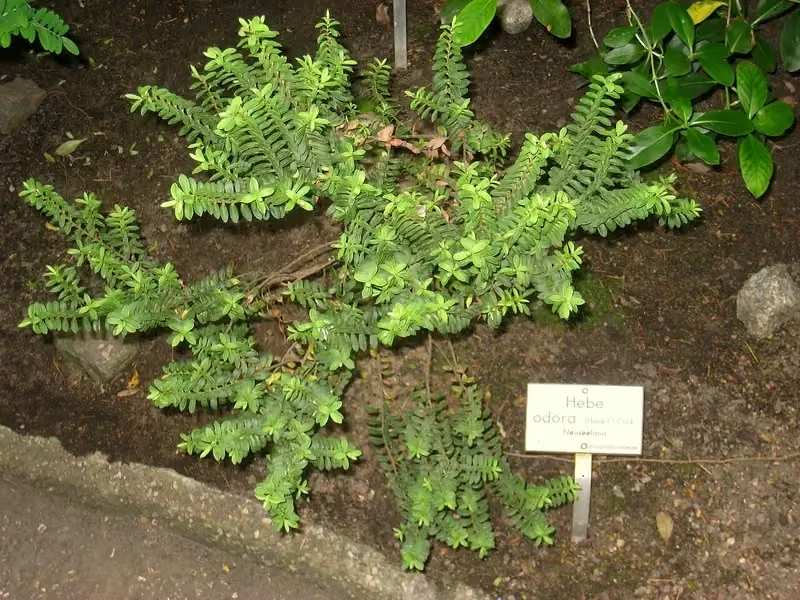
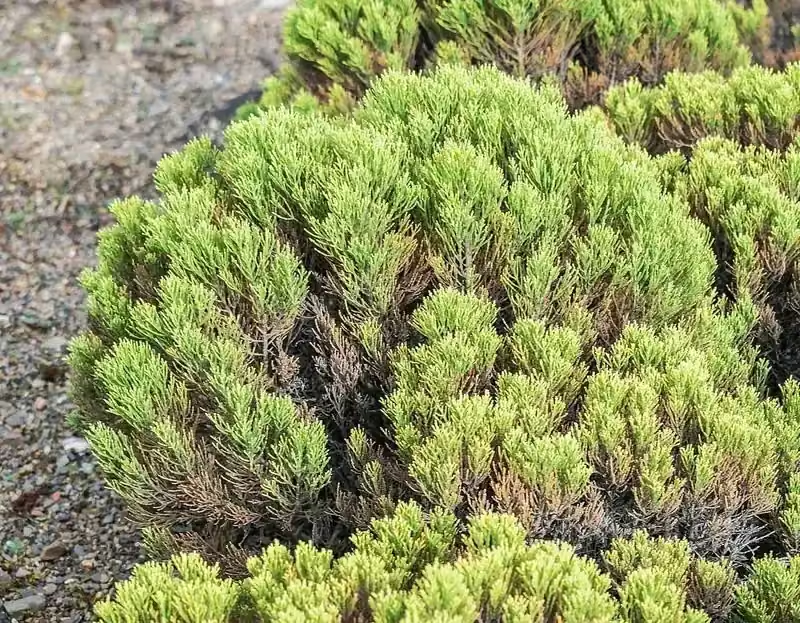
Explore other native plants that share similar characteristics or habitats with Lyall's Parahebe ( Veronica lyallii ), offering further insights into New Zealand's diverse flora. These related species provide context and opportunities for complementary planting in your garden. For another native shrub, explore Archeria.


Plant Conservation
Conservation Status and Threats
Currently classified as 'Not Threatened', Lyall's Parahebe remains common in suitable South Island habitats. However, its specialized riverbank niche is vulnerable to changes in river flow patterns and the spread of exotic weeds like Willows and Gorse. Continued monitoring of New Zealand's unique subalpine waterways is essential for the long-term conservation of this and other mountain waterway species.
Frequently Asked Questions
How tall does Lyall's Parahebe grow?
It is low growing, reaching 10 to 40 cm tall and spreading 40 to 60 cm.
Does Veronica lyallii tolerate frost?
Yes, it is extremely frost hardy and withstands harsh subalpine winters.
Where does Lyall's Parahebe grow naturally?
On stony riverbeds, screes and rocky cliffs, and is common throughout the South Island.
What conditions suit it in the garden?
Full sun to partial shade with consistent moisture and good drainage.
Sources and Further Reading
The botanical, growing, and conservation details for Lyall's Parahebe (Veronica lyallii) on this page draw on authoritative New Zealand plant references and citizen-science observation records. Consult the sources below for full technical records and the latest distribution data.