Snow Hebe
Veronica densifolia
A compact alpine shrub
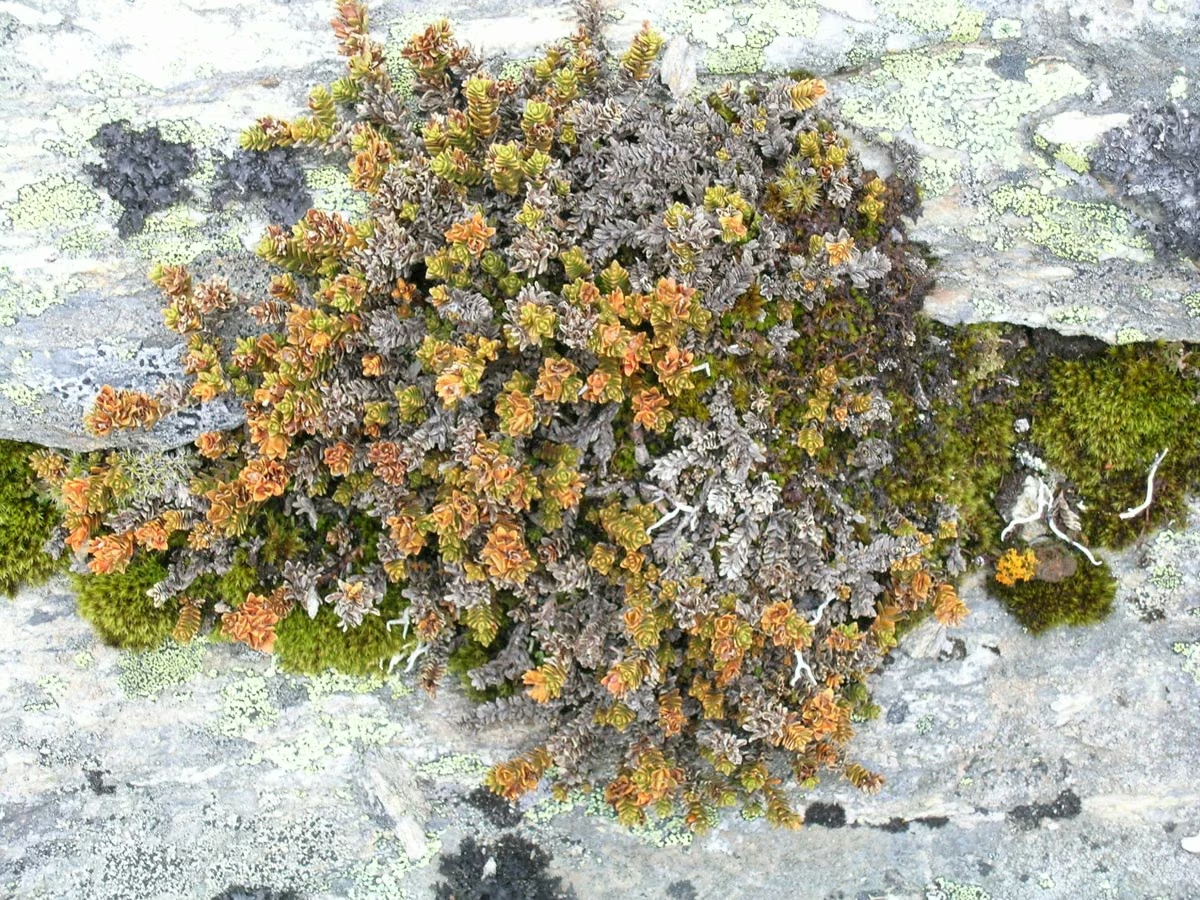
Veronica densifolia is a low-growing alpine subshrub native to New Zealand’s South Island and the Australian Alps. It is one of the plants informally called snow hebes. Snow hebe forms a low, branching subshrub from a woody horizontal stem.
Identification
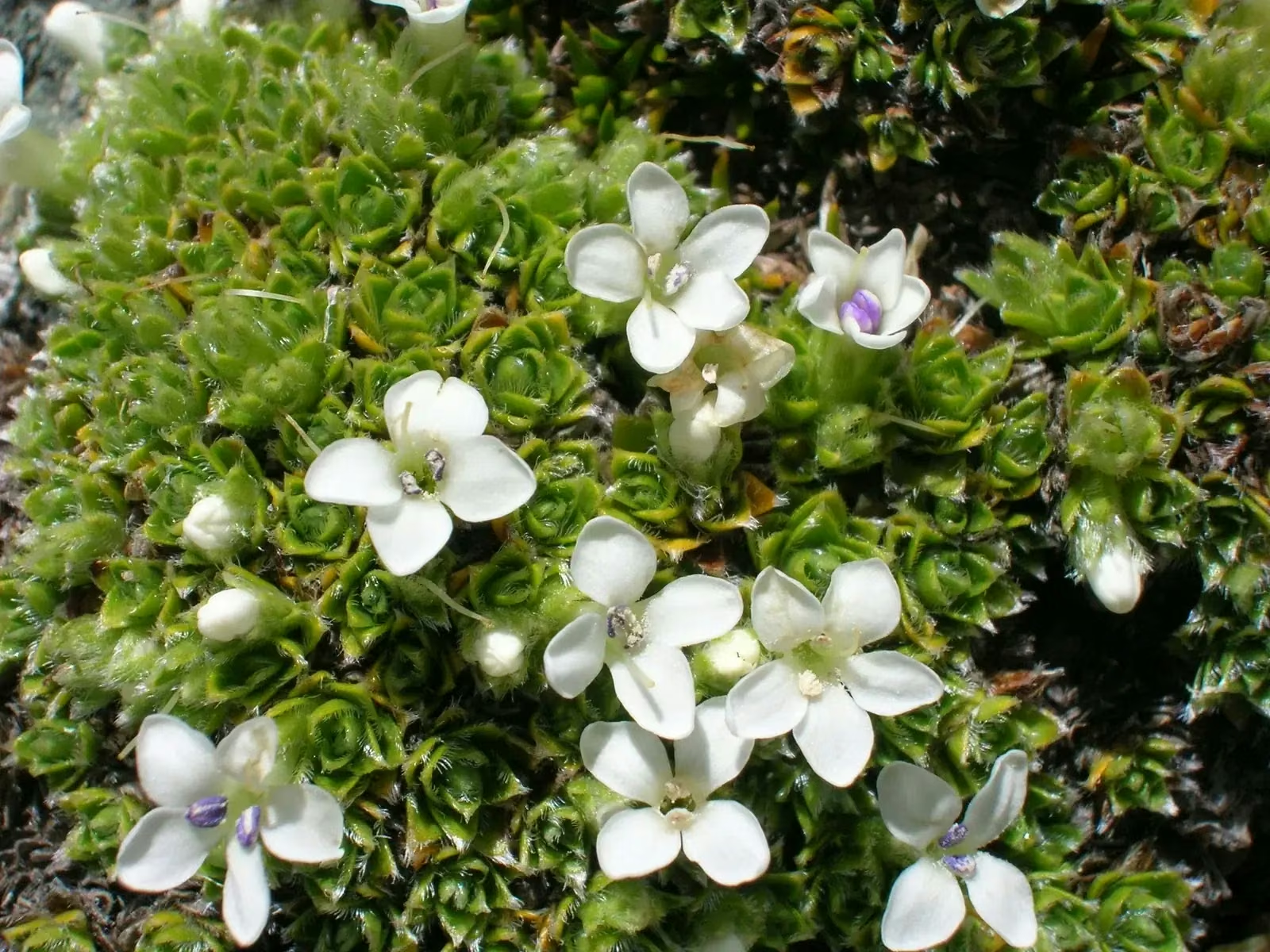
Snow hebe forms a low, branching subshrub from a woody horizontal stem. The small leaves overlap in opposite pairs, are usually concave and often have a keel; their upper margins are thickened.
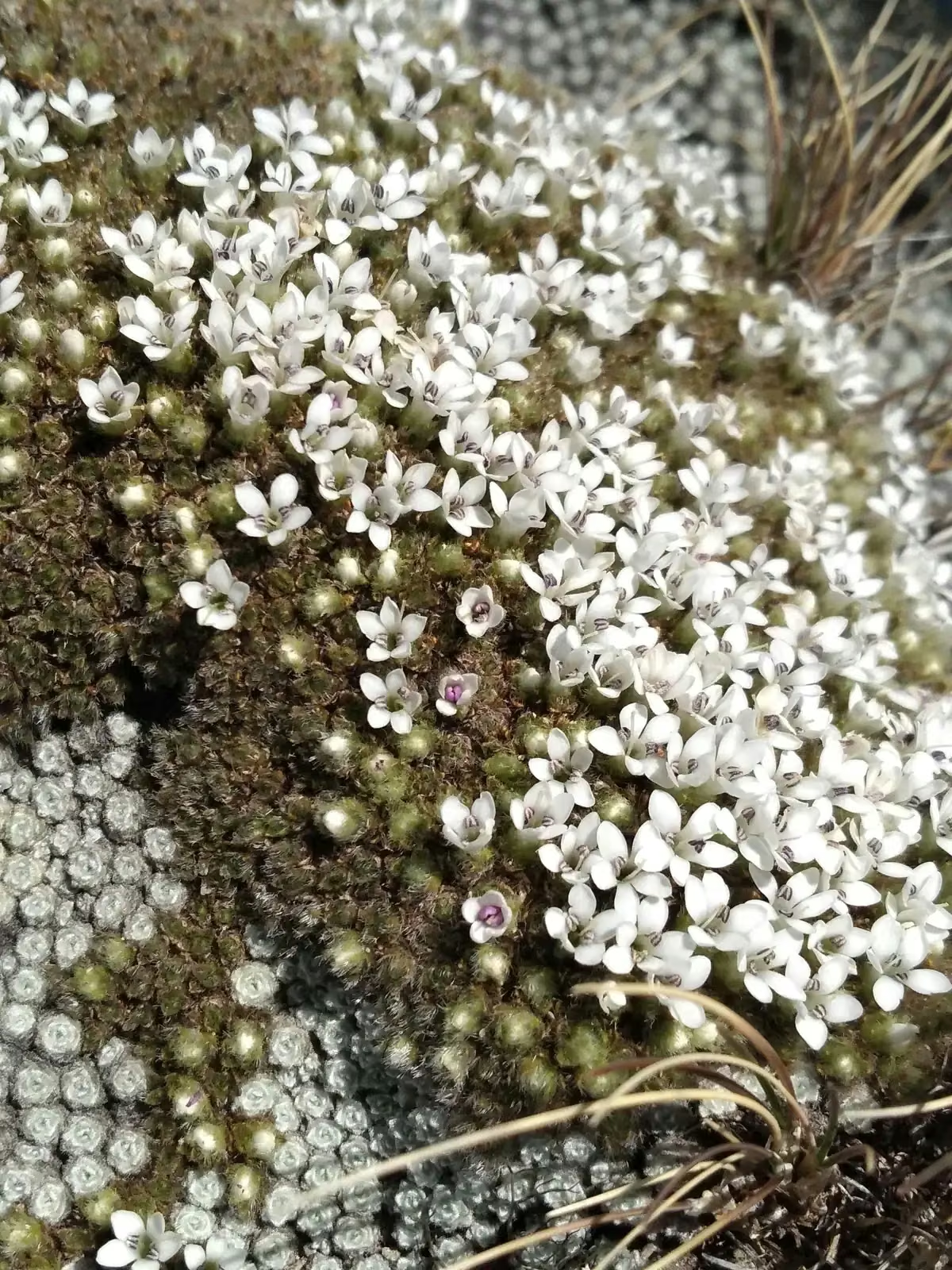
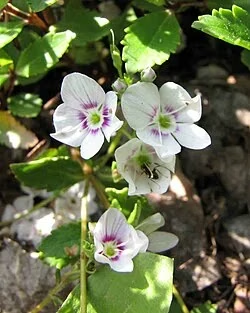
Flowers are typically solitary near the tips of branches. The Flora of New Zealand describes the corolla as white, sometimes purplish. Capsules contain numerous minute seeds.
Quick facts
| Scientific Name | Veronica densifolia |
|---|---|
| Family | Plantaginaceae |
| Natural elevation | 1,158-1,830 m in New Zealand records |
| Flowering | November to January, rarely October |
| Conservation status | Not Threatened nationally (2023) |
| Height | Up to about 5 cm in the modern New Zealand Flora |
| Water Needs | Dislikes drought; a watering interval is not specified |
| Light | Rock garden or pot cultivation is recorded; lowland flowering is uncommon |
| Spread | Branches from a woody horizontal stem; maximum NZ patch width unquantified |
| Frost Tolerance | Minimum tolerated temperature is not documented |
| Salt Tolerance | Salt tolerance is not documented |
| Growth Rate | Annual extension is not quantified in the cited accounts |
| Lifespan | Perennial woody subshrub |
Alpine climate
New Zealand herbarium records cited by the Flora of New Zealand span approximately 1,158-1,830 metres. NZPCN notes that cultivated plants rarely flower at low elevation and that the species dislikes humidity and drought.
| City | Climate Suitability |
|---|---|
| Auckland | Not assessed |
| Wellington | Not assessed |
| Christchurch | Not assessed |
Habitat and distribution
In New Zealand, V. densifolia occurs mainly on drier South Island ranges east of the Main Divide, including Canterbury, Otago and Southland, with a Westland record at Mount Turner. It also occurs in Australia’s Kosciuszko National Park.
It grows in alpine grassland, cushion vegetation, scrub and fell-field, among boulders, rock crevices and exposed ridges. Some plants occur in seepages or boggy ground.
Growing requirements
NZPCN describes this species as suitable for a rock garden or pot but notes that it dislikes humid conditions and drought. It also reports that plants rarely flower at low elevations, an important limitation for gardeners.
Growing in a Pot or Rock Garden
NZPCN reports that this snow hebe can be grown in a pot or rock garden. Its warning that the plant dislikes both humidity and drought should inform the choice of site and moisture management.
Ecology and hybridisation
The Flora of New Zealand records a rarely collected hybrid with Veronica thomsonii, named V. ×uniflora. Its native habitats include alpine herb-fields, rocky turf and boulderfields as well as some wet seepage sites.
Garden use
Of the snow hebes, NZPCN identifies V. densifolia as reasonably suited to wider cultivation in a rock garden or pot. Its tendency to flower poorly at low elevations remains a practical consideration.
Rock-Garden Placement
Its low branching habit and naturally rocky alpine habitats make a rock garden a relevant setting. NZPCN also supports pot culture, while cautioning that excessive humidity and drought are unsuitable for this species.
Flowering and fruiting
Flowers are usually recorded from November to January, occasionally October. Flora of New Zealand records fruiting from January to March and notes that old fruit can remain visible at other times of year.
Pruning
The NZPCN species profile does not specify a pruning regime. This plant is a low subshrub with small, closely overlapping leaves, rather than one of the taller hedge-forming hebes; its natural form is compact.
How to Grow Snow Hebe (Veronica densifolia)
Seed and the cultivation evidence
NZ Plant Conservation Network records successful cultivation of Veronica densifolia in a rock garden or pot. Its entry does not give a seed-treatment or cutting-rooting method. The modern Flora describes many minute seeds within the capsules, but a description of seed production does not establish the temperature or duration required for germination.
Humidity, drought and elevation
The cultivation notes identify two limitations: the plant dislikes humidity and drought, and it rarely flowers at low elevations. These are more specific observations than a general claim that all small hebes suit lowland gardens. Natural New Zealand records span approximately 1,158-1,830 m and include fellfield, rocky turf, exposed ridges and some seepage or boggy sites.
Following the Low Woody Framework
Flora of New Zealand gives a height of about 5 cm for this subshrub. Numerous branches arise from a horizontal woody stem. The very small opposite leaves overlap closely and can be tightly pressed to the shoots. Their blades are approximately 2-6.5 mm long, with a keel underneath and thickened margins.
Checking reproductive development
The usually solitary flowers occur near branch tips and are white, sometimes purplish in the Flora description. Published New Zealand flowering records concentrate in November-January, with occasional October observations. A cultivated plant that remains leafy at low elevation is consistent with the reported flowering limitation. Record its site and season when comparing performance with plants observed in mountain habitats.
Pests and diseases
NZPCN does not identify a specific pest or disease treatment for this snow hebe. It does warn that the species dislikes both humidity and drought, which are relevant growing conditions when assessing a struggling plant.
Names and classification
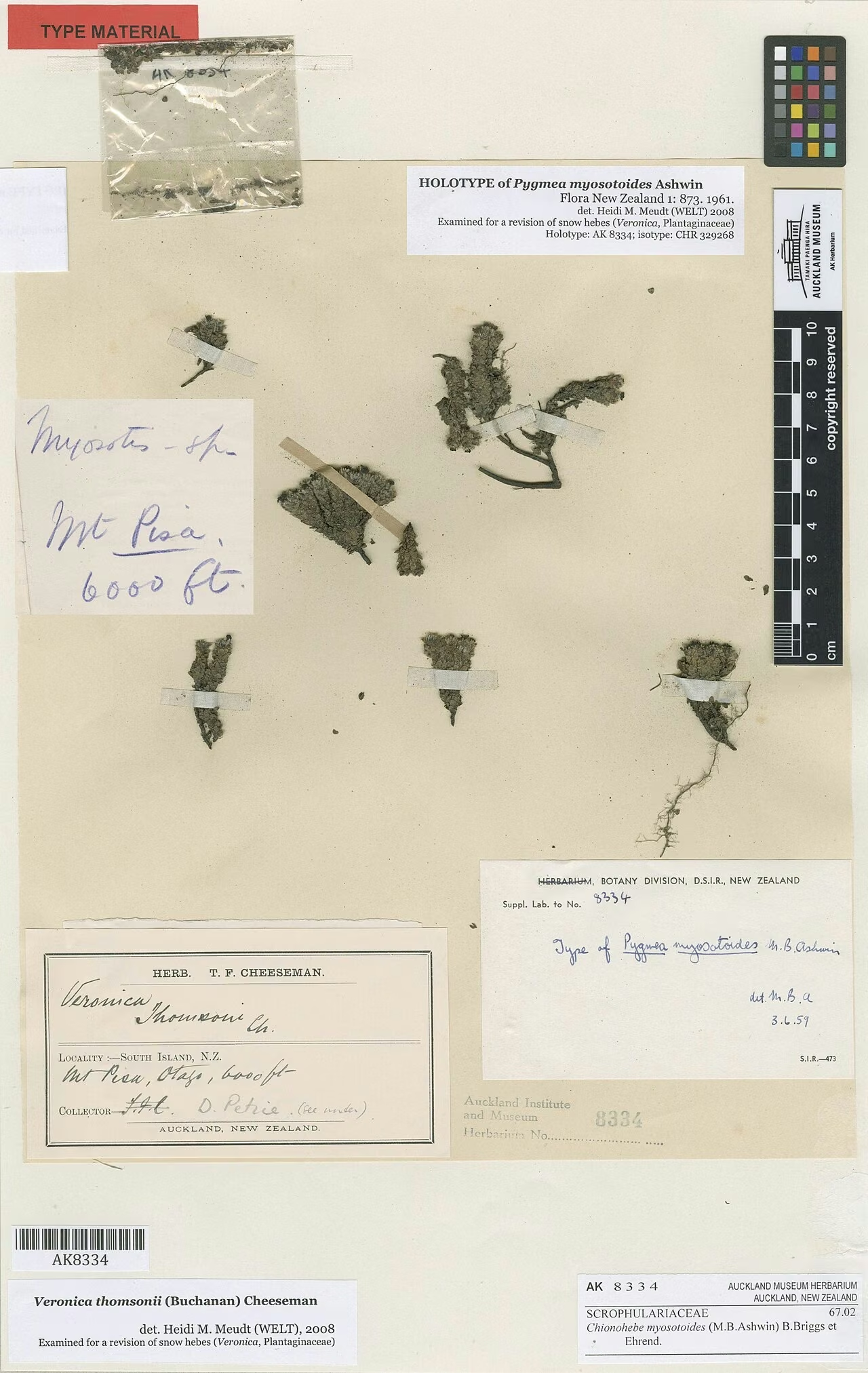
The Flora of New Zealand places this species among the informal snow hebe group. Earlier scientific names include Chionohebe densifolia, Hebe dasyphylla and Pygmea tetragona; the cited profiles do not provide a Māori name.
Identifying snow hebe
Look for paired, overlapping leaves that are widest below the middle, concave and often keeled. The thickened upper leaf margins and small hairs help distinguish this subshrub from related New Zealand snow hebes.
Related native veronicas
Explore other native Veronica species, including the snow hebes thomsonii and pulvinaris.

Conservation
The 2023 national vascular-plant assessment lists Veronica densifolia as Not Threatened. The plant is indigenous but not endemic to New Zealand: its range also includes the Australian Alps.
Frequently asked questions
Why might a lowland plant fail to flower?
NZ Plant Conservation Network specifically reports that this species rarely flowers at low elevations, even though rock-garden and pot cultivation are recorded.
Is it endemic to New Zealand?
No. It is native to New Zealand and also occurs in Australia's Kosciuszko National Park.
How tall is it in the modern NZ Flora?
The New Zealand Flora describes a very low woody subshrub reaching about 5 cm.
Sources
Last updated: