Hebe
Veronica masoniae
Veronica masoniae is a low, spreading hebe found only in the mountains of western Nelson. It has small glossy leaves with a pronounced keel beneath, and white or mauve-tinged flowers in clusters at the ends of its shoots.
Identification
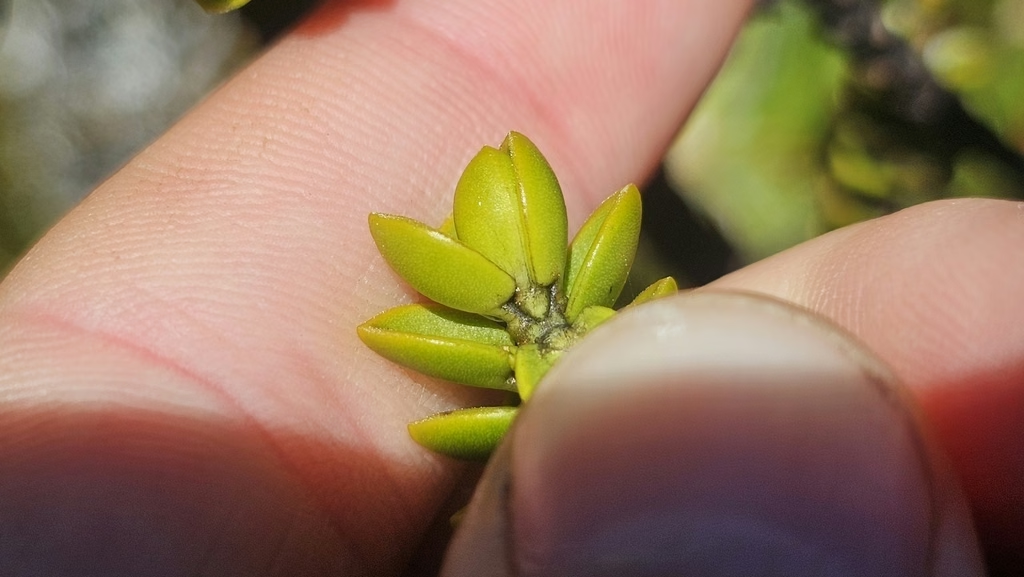
This spreading or bushy shrub reaches about 50 cm tall. Its rigid, concave leaves are usually 6-9 mm long and 4-8 mm wide, with a blunt tip and an abruptly truncated base. The dark green, glossy blades are sharply keeled along the underside. Young branchlets may be green or reddish brown and bear hairs in two lines.
Quick facts
| Scientific Name | Veronica masoniae (L.B.Moore) Garn.-Jones |
|---|---|
| Synonyms | Hebe masoniae; Leonohebe masoniae |
| Family | Plantaginaceae |
| Origin | Endemic to New Zealand |
| Height | Up to 50 cm |
| Range | Western Nelson mountains |
| Flowering | Mainly December to February |
| Fruiting | Mainly January to May |
| National status | Not Threatened (2023) |
| Water Needs | Some natural sites are wet; a cultivation watering regime is not given |
| Light | Mountain tussock grassland and low scrub in its natural habitat |
| Spread | Spreading or bushy branching; maximum width unquantified |
| Frost Tolerance | Minimum tolerated temperature is not documented |
| Salt Tolerance | Salt tolerance is not documented |
| Growth Rate | Annual extension is not quantified in the cited accounts |
| Lifespan | Woody perennial shrub |
Natural range
The known natural range lies in the mountains of western Nelson in the South Island, extending from near Boulder Lake in the north to the Braeburn Range in the south. The species is endemic to New Zealand.
| City | Climate Suitability |
|---|---|
| Auckland | Not assessed |
| Wellington | Not assessed |
| Christchurch | Not assessed |
Habitat
NZPCN records this hebe in Chionochloa australis grassland, other tussock grassland and scrub. It also grows in wet sites; its natural setting is the mountain country of western Nelson rather than the coastal lowlands.
Natural growing conditions
The recorded habitats range from mountain tussock grassland to scrub and include wet sites. These observations describe where the plant grows naturally; the cited NZPCN account does not provide a tested garden soil or watering recipe for it.
Planting considerations
This hebe forms a low shrub up to about half a metre, with decumbent, ascending or erect branches. Its known wild sites include tussock grassland and scrub, but the cited species profile does not specify a planting method.
Life cycle
The species produces flowers at the ends of branchlets, followed by small capsules. NZPCN reports wind dispersal of its seeds. Its recorded communities include Chionochloa australis grassland and tussock grassland in western Nelson mountains.
Field identification
Examine both the leaves and flower clusters when identifying this hebe. The leaves are keeled beneath and cluster around the bud, while large bracts with hairy margins partly conceal the calyx in strictly terminal flower clusters.
Garden context
The plant’s small, glossy leaves and low, spreading habit give it a different appearance from taller broad-leaved hebes. Its flowers appear in short terminal clusters rather than the long spikes of some cultivated relatives.
Flowers and fruit
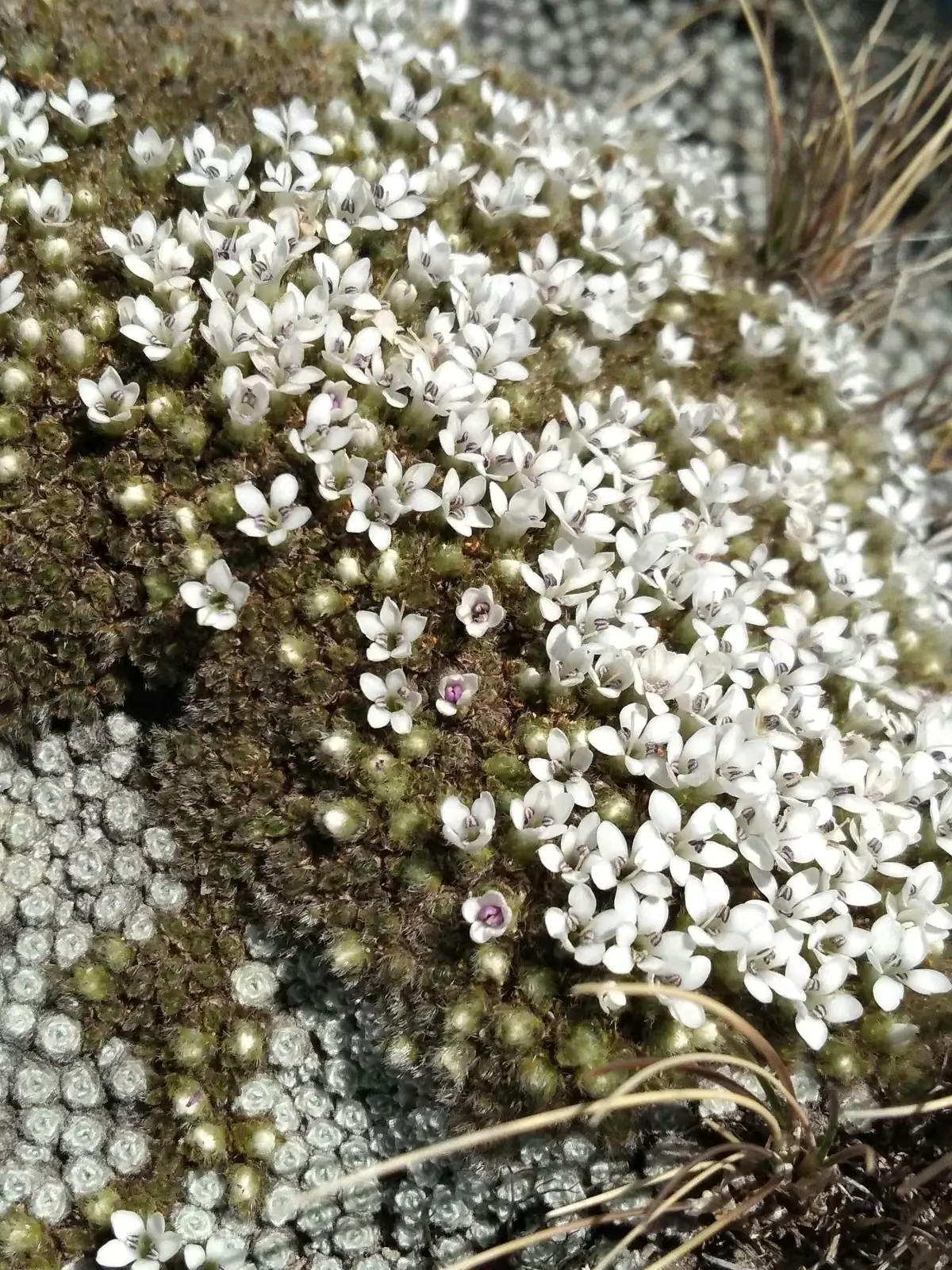
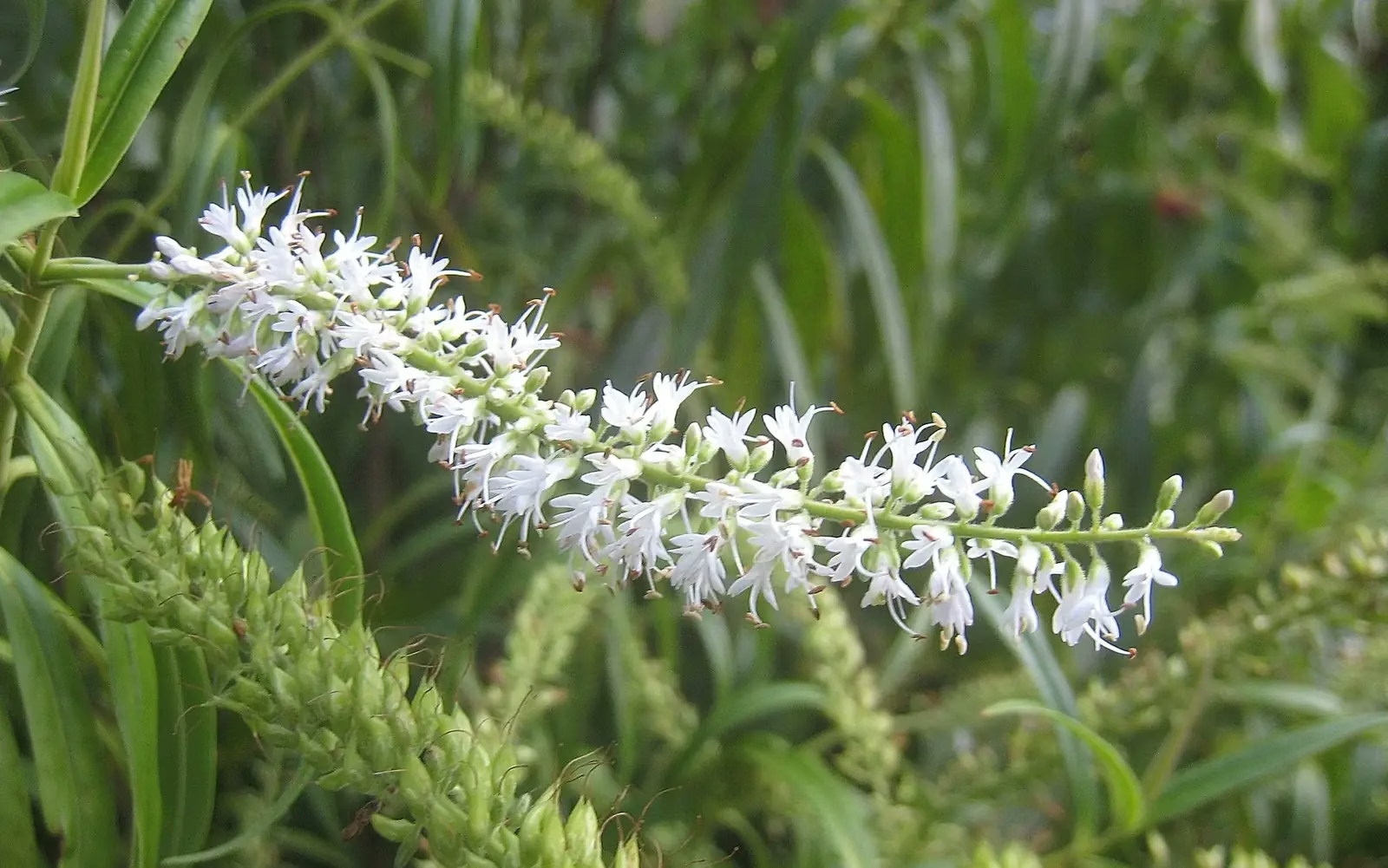
Flowering is mainly December to February, occasionally starting in October or continuing to April. Fruiting is recorded mainly January to May, occasionally to November. The terminal clusters usually hold two to ten flowers, whose lobes are white or sometimes tinged mauve.
Branch growth
Branches can lie along the ground, ascend or stand upright. As leaves fall, a small portion of each leaf stalk remains attached above the node. The species account describes these features but gives no specific pruning regime.
How to Grow Hebe (Veronica masoniae)
Seed and cutting protocols
The cited Flora of New Zealand and NZ Plant Conservation Network accounts describe Veronica masoniae botanically, without giving a species-specific seed-germination or cutting-rooting protocol. Older records can use Hebe masoniae or Leonohebe masoniae. Keep these names linked when checking the identity and history of labelled material.
Allowing for a Low Shrub
This western Nelson plant can spread or become bushy, reaching about 50 cm tall. Stems may lie down, ascend or stand upright. The rigid, concave leaves are often nearly as broad as they are long, with truncate to slightly heart-shaped bases. Their small blunt tips, glossy surfaces and prominent underside keel help distinguish the foliage.
Observing buds and flower spikes
The leaf bud is distinct and enclosed by young leaves that remain pressed together at their margins. Short terminal spikes carry crowded white flowers. Flora gives spike lengths of approximately 8-18 mm and usually two to fourteen flowers. The green or reddish-brown young branchlets carry hairs in two lines, another useful close-range identification character.
Keeping the mountain site context
The recorded habitat includes carpet grass, other tussock grassland and low scrub, sometimes in wet places. Flora records elevations of about 769-1,553 m. Flowering observations span October-April, with December-February the main period in the NZPCN account. These sources provide seasonal and habitat context, but do not prescribe a potting mixture, watering frequency or time for cultivated plants to reach flowering size.
Plant health
Young branchlets naturally have lines of small hairs, and some leaf margins carry short hairs as well. These traits are part of the published description; the NZPCN account does not list species-specific pest treatments.
Names and classification
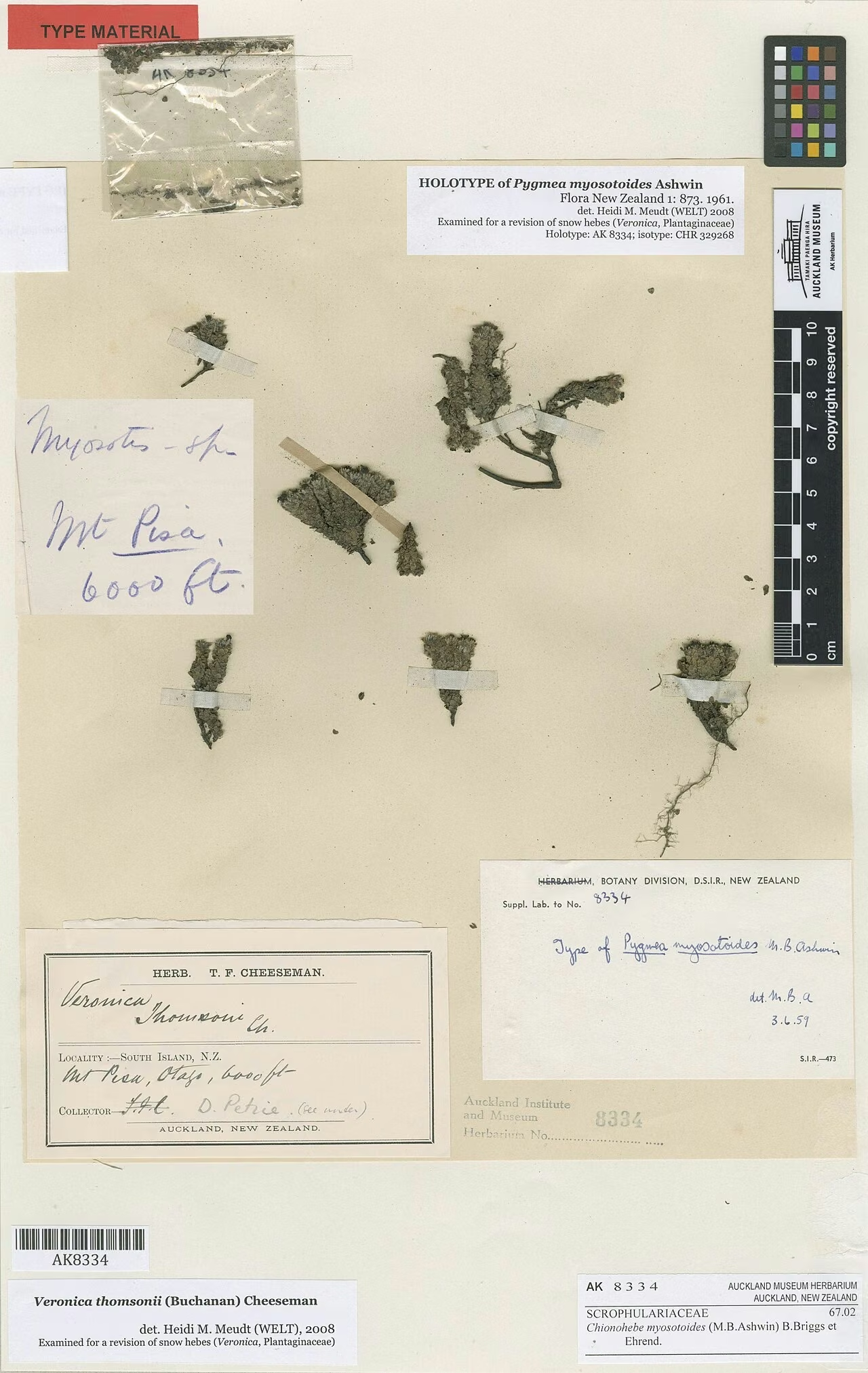
The species epithet honours botanist Ruth Mason, who recognised distinguishing features of the plant. Earlier names include Hebe masoniae and Leonohebe masoniae. It was first described as a variety of Hebe pauciramosa and is now treated as a distinct species.
Look closely at the bracts
A useful distinguishing combination includes flower clusters at shoot tips and large, hair-edged bracts that almost hide the calyx. The sharply keeled underside of the leaf is another feature to check alongside the flowers.
Related native veronicas
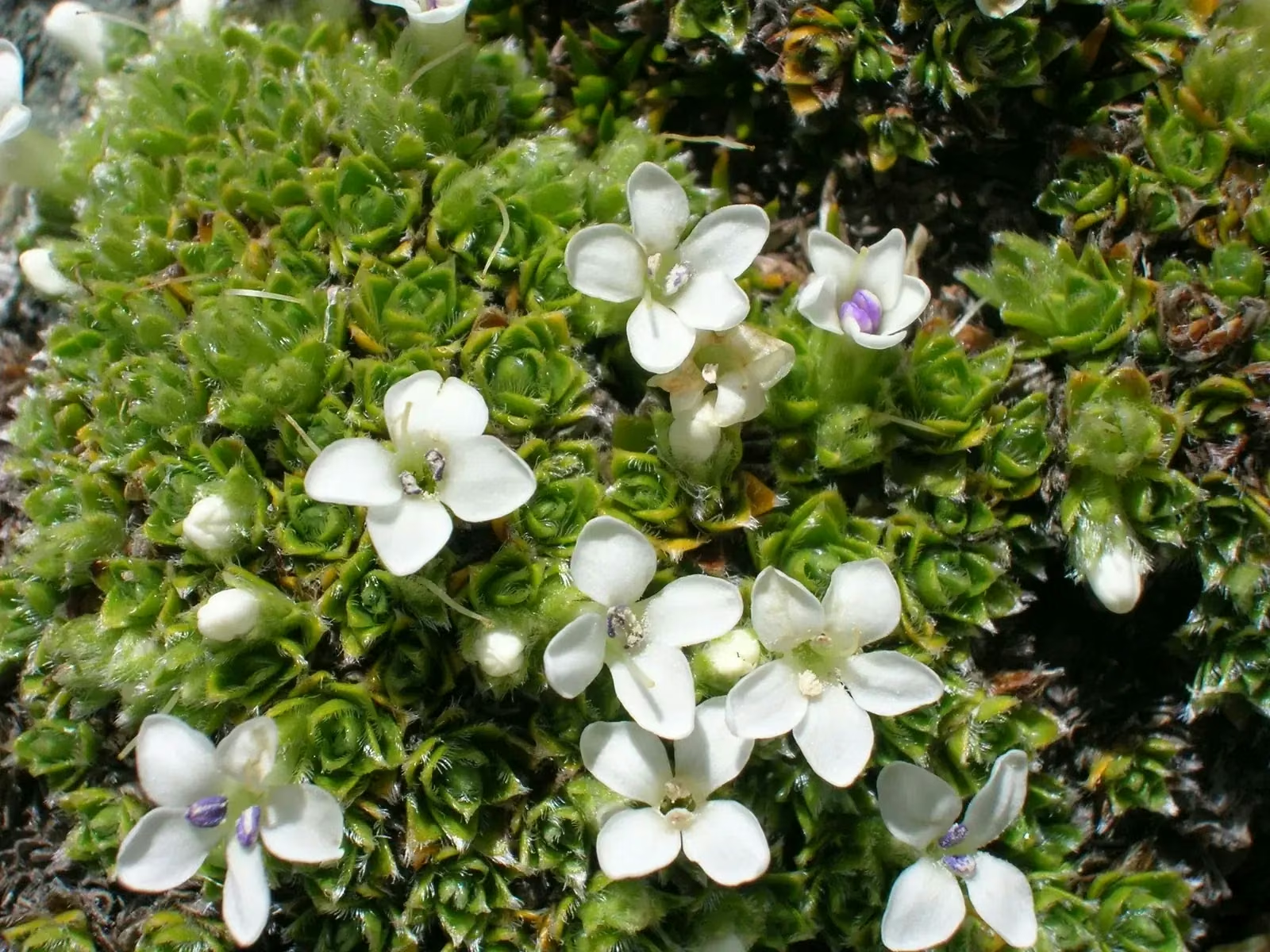
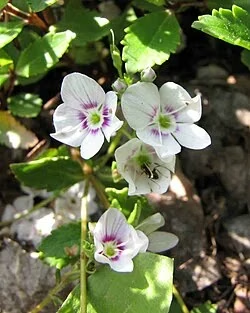
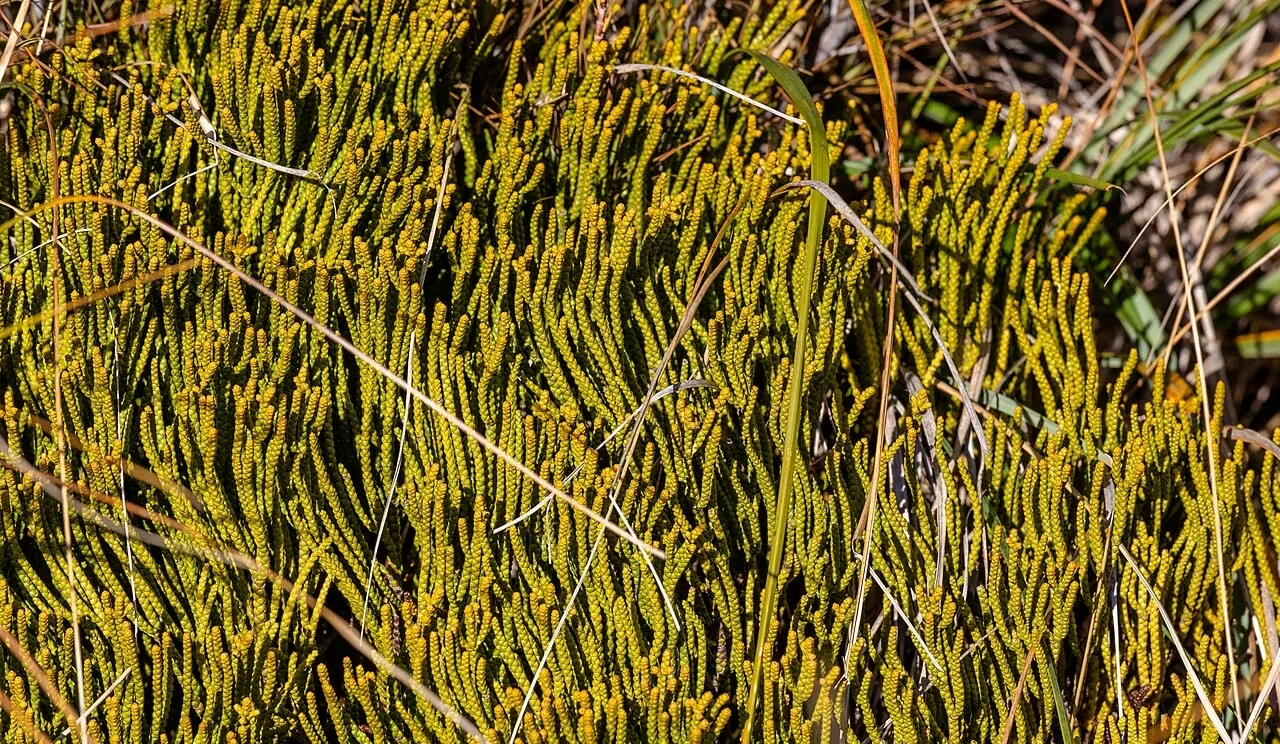
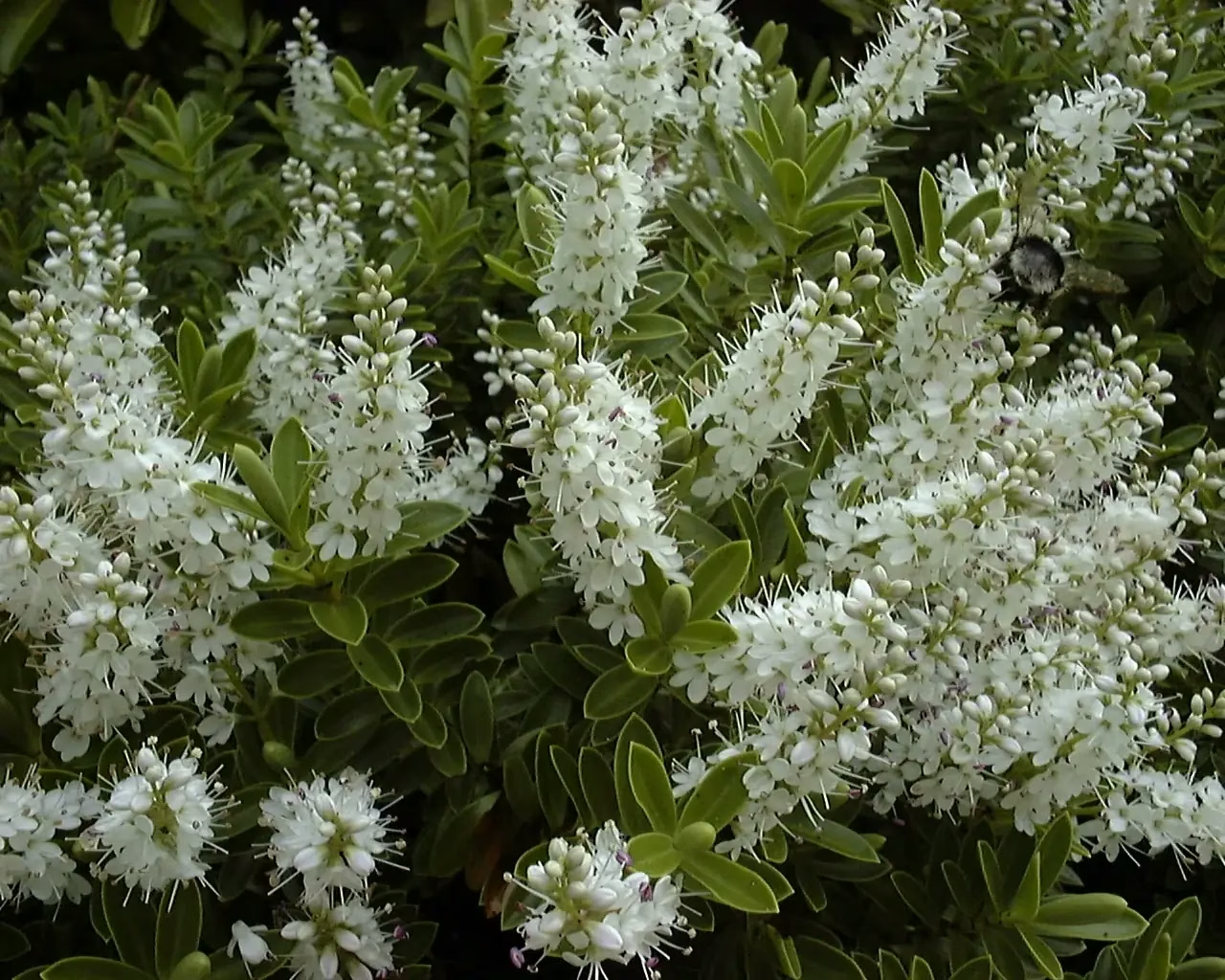
Explore other native Veronica species, including small-leaved and mountain hebes.
Conservation
Veronica masoniae is endemic to New Zealand and was assessed as Not Threatened in the 2023 national assessment. Its documented range is nevertheless confined to western Nelson mountain country, making accurate identification and habitat records useful.
Frequently asked questions
Where is this hebe native?
It is endemic to western Nelson mountain country in New Zealand, where records include tussock grassland and low scrub.
Are the leaves long and narrow?
No. They are short and relatively broad, rigid and concave, often with a truncated or slightly heart-shaped base.
Where are the flower spikes?
The crowded white flowers occur in short terminal spikes at the ends of shoots.
Sources
Identification, habitat, flowering and conservation: NZPCN. Current name and synonyms: Flora of New Zealand.
Taxonomic status and endemic origin: Biota of New Zealand.
Last updated: