Pimelea
Pimelea notia
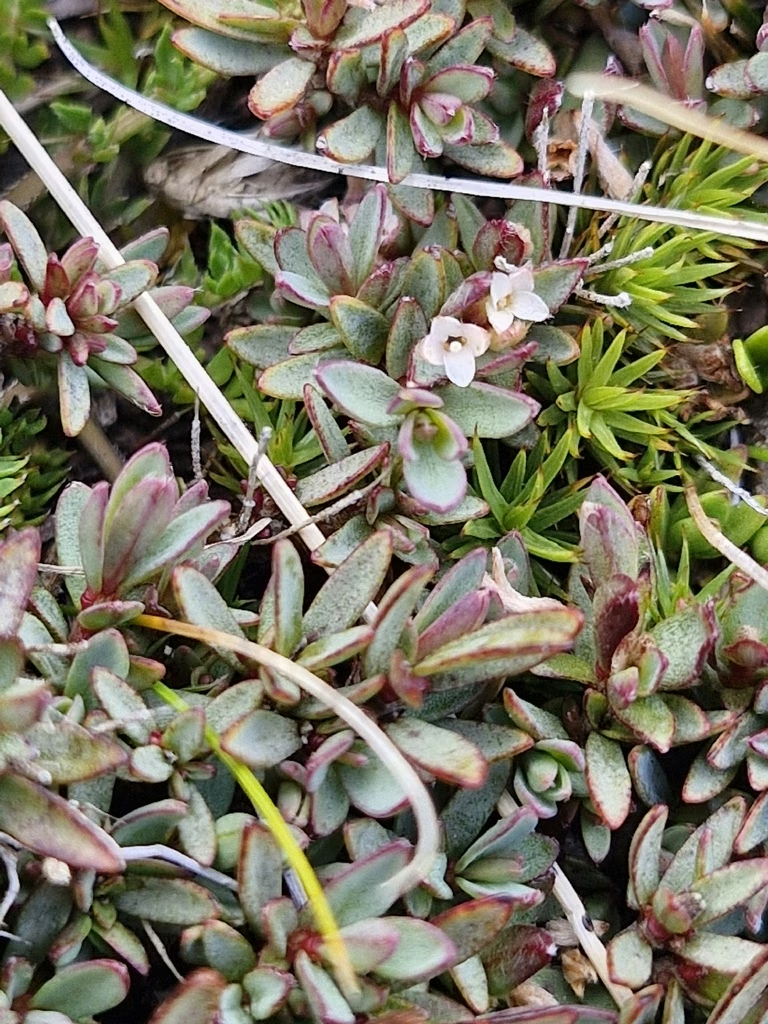
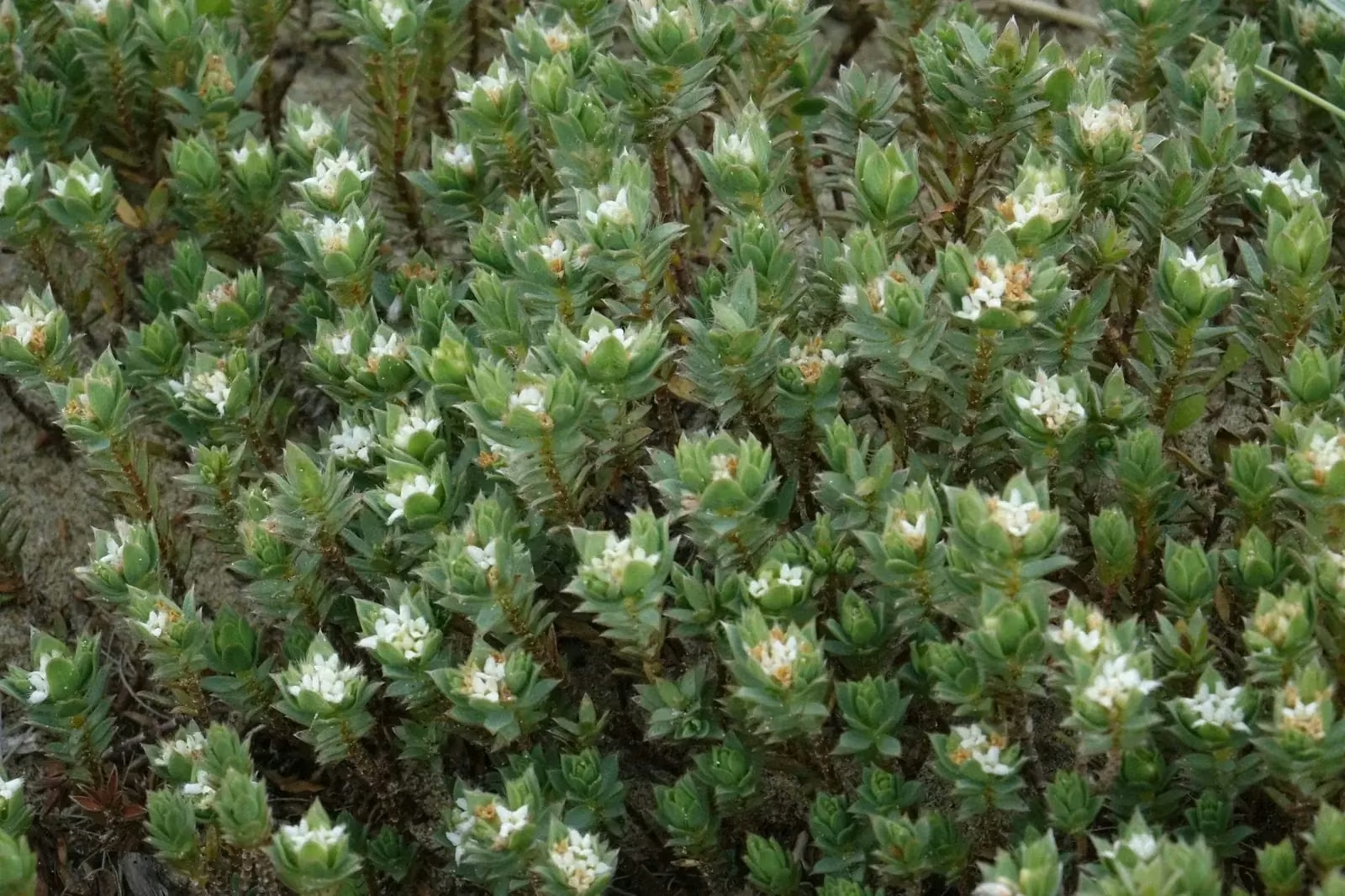
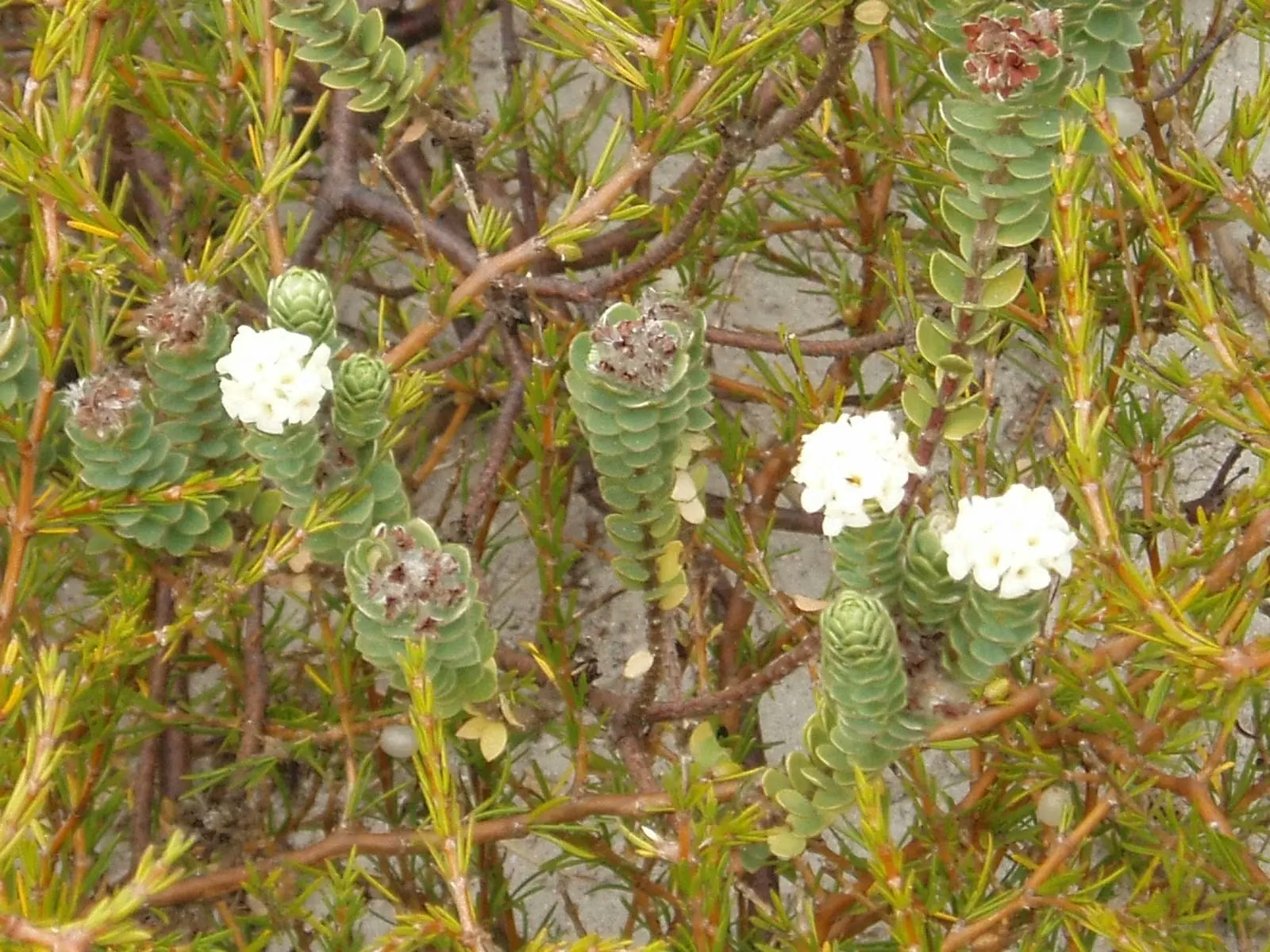
Pimelea notia is a very low, spreading shrub endemic to southern New Zealand. Its tiny paired leaves, white flowers and orange fruits occur among tussocks and alpine herbfields. This small, usually ground-hugging shrub has short branches radiating from stout main stems.
Identification
This small, usually ground-hugging shrub has short branches radiating from stout main stems. Young stems are brown and sparsely hairy; older stems become grey to black and hairless.
Leaves occur in opposite pairs clustered toward the shoot tips. They are about 3-5 mm long and 2-2.5 mm wide, often with red margins and sparse hairs near the tip.
Quick facts
| Scientific Name | Pimelea notia |
|---|---|
| Family | Thymelaeaceae |
| Origin | Endemic to New Zealand |
| Range | Central and South Otago, Southland |
| Habit | Low, spreading shrub |
| Habitat | Tussock grassland, herbfield and bog margins |
| Flowers | White; flowering in summer |
| Fruit | Fleshy and orange |
| National status | Not Threatened (2023) |
| Height | Usually ground-hugging; a maximum height is not given in the species profile |
| Water Needs | A cultivation watering requirement is not documented |
| Light | Open grassland and herbfield in its natural habitat |
| Spread | Short branches radiate from stout stems; maximum width unquantified |
| Frost Tolerance | Minimum tolerated temperature is not documented |
| Salt Tolerance | Salt tolerance is not documented |
| Growth Rate | Annual extension is not quantified in the cited accounts |
| Lifespan | Woody perennial shrub |
Natural range
NZPCN records this endemic species in Central and South Otago and Southland. It occurs from lowland to alpine elevations, including sites associated with limestone at lower altitudes and late-lying snow in the mountains.
| City | Climate Suitability |
|---|---|
| Auckland | Not assessed |
| Wellington | Not assessed |
| Christchurch | Not assessed |
Habitat and distribution
The plant grows in open tall and short tussock grassland and herbfield, along bog margins and in alpine snow-bed areas. At lowland sites it is associated with limestone outcrops.
The type collection came from the Remarkables Range near Rastus Burn, an Otago mountain locality.
Natural growing conditions
Its recorded habitats span lowland limestone, tussock grassland and alpine snow beds. These observations describe varied wild sites; the cited botanical accounts do not establish a tested soil recipe or watering schedule for cultivation.
Planting considerations
The species is a low, appressed shrub with short branches arising from stout stems. Its published profiles describe natural habitats rather than a species-specific planting protocol, spacing recommendation or proven nursery method.
Growth among tussocks
The plant’s short branchlets radiate from thicker main stems and carry crowded leaf pairs. This compact habit occurs in open grassland and herbfield as well as on bog margins and late snow-bed sites.
Observing the plant
Look closely at the tiny oval to broadly elliptic leaves: their margins may be red, and a lens can reveal sparse hairs near the leaf tips. Older stems are grey to black and hairless.
Garden context
Its ground-hugging form and small orange fruits distinguish this southern shrub in its natural habitat. The cited Flora and NZPCN accounts do not report garden trials or reliable species-specific cultivation methods.
Flowers and fruit
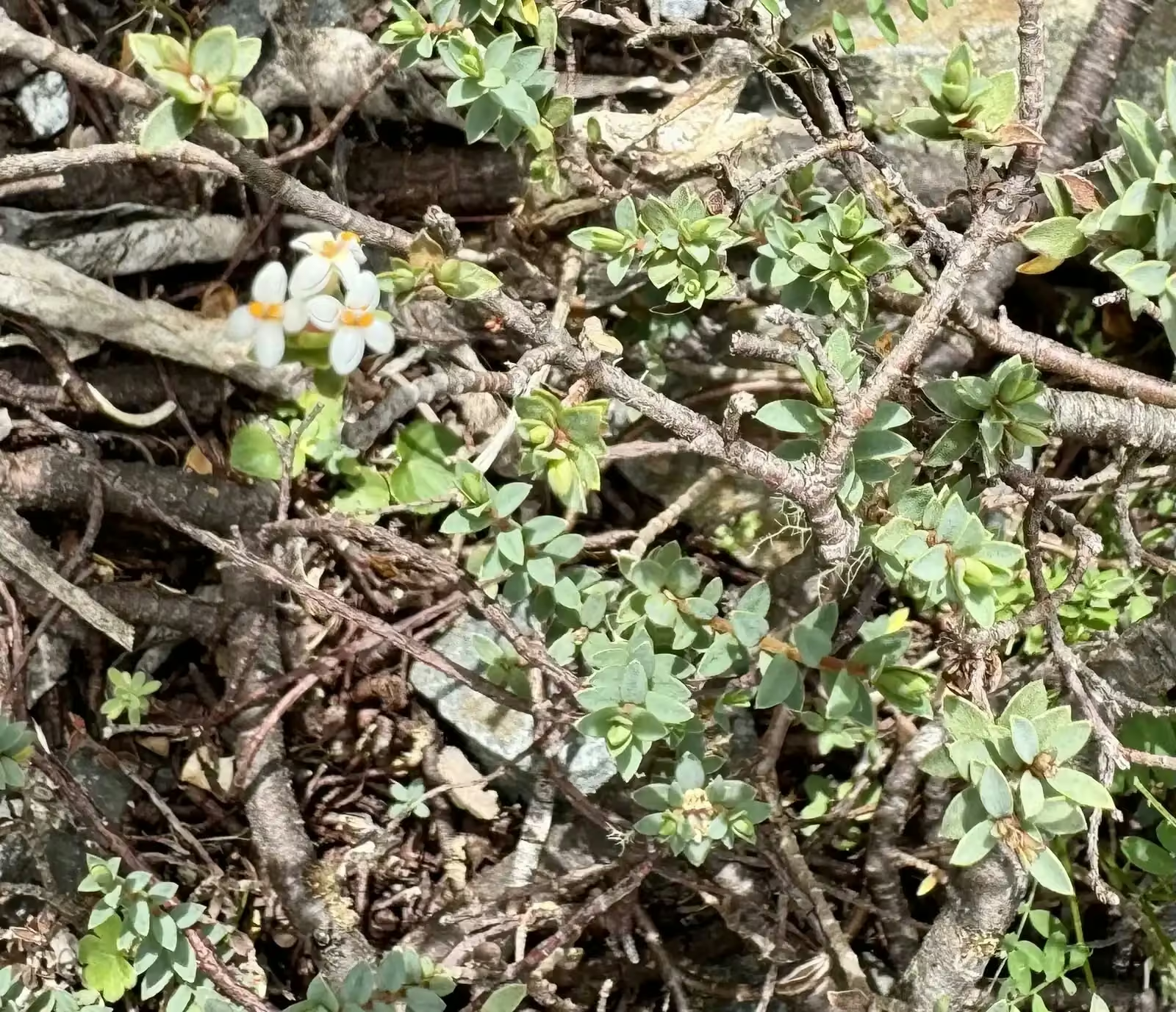
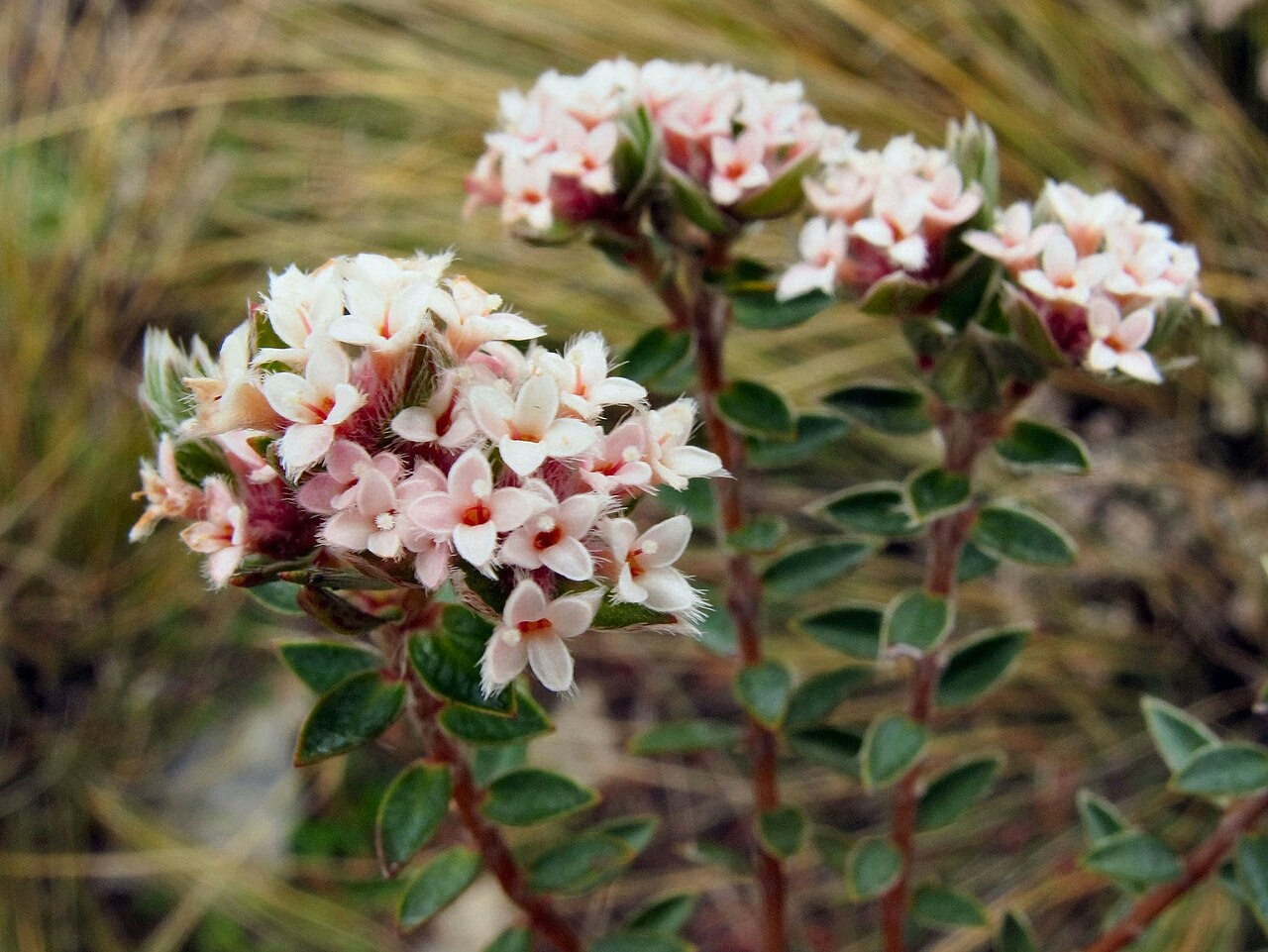
One to five white flowers form at the ends of shoots, with four bracts larger than the neighbouring leaves. Flora records flowering in summer; the flowers are sparsely hairy outside and hairless inside.
The fleshy, egg-shaped orange fruit is approximately 5 mm long and 3.5 mm wide.
Growth form
Young brown branchlets are sparsely hairy and closely spaced, while older stems lose their hairs and turn grey to black. The botanical descriptions do not provide a pruning method for this naturally low shrub.
How to Grow Pimelea (Pimelea notia)
Cuttings: a proposed method
The NZ Plant Conservation Network profile reports no propagation trial, but suggests that semi-hardwood and hardwood cuttings would probably succeed. This is a tentative recommendation for Pimelea notia, not a reported trial with rooting percentages or treatment instructions. The account gives no cutting length, hormone concentration or time to rooting.
Recognising the branching shrub
This small shrub usually hugs the ground, with short branches radiating from stout main stems. Young stems are brown and sparsely hairy; old stems become grey to black and lose their hairs. Closely spaced opposite leaves gather towards the ends of young branches. Their blades are approximately 3-5 mm long and 2-2.5 mm wide, sometimes edged in red.
Flowers and Seed-Bearing Plants
The species is gynodioecious, meaning populations include female plants and plants with bisexual flowers. Terminal clusters contain one to five white flowers. NZPCN records flowering from November to February and fruit from January to May. The fleshy orange fruit is approximately 5 mm long, containing an ovoid seed about 3 mm long.
Interpreting the site records
Documented habitats range from lowland to alpine country: tall and short tussock grassland, herbfield, bog margins and late snow-bed sites. Lowland occurrences are associated with limestone outcrops. These records reveal a broader habitat range than an exclusively alpine label suggests. They do not establish one potting mix or irrigation interval that has been demonstrated to suit every cultivated plant.
Plant health
Red leaf margins and sparse hairs near the tips are described features of the species. The referenced botanical profiles do not specify pests or diseases, so these traits alone should not be taken as damage.
Naming and classification
Pimelea notia was described by Colin Burrows and Mike Thorsen in 2011. It belongs to Thymelaeaceae, the same family as the native cushion shrubs in the genus Kelleria.
Reading the flower heads
The species has female plants and plants with bisexual flowers, a reproductive arrangement called gynodioecy. The flower heads contain one to five blooms, and the female floral tube is shorter in the published description.
Related native Pimelea
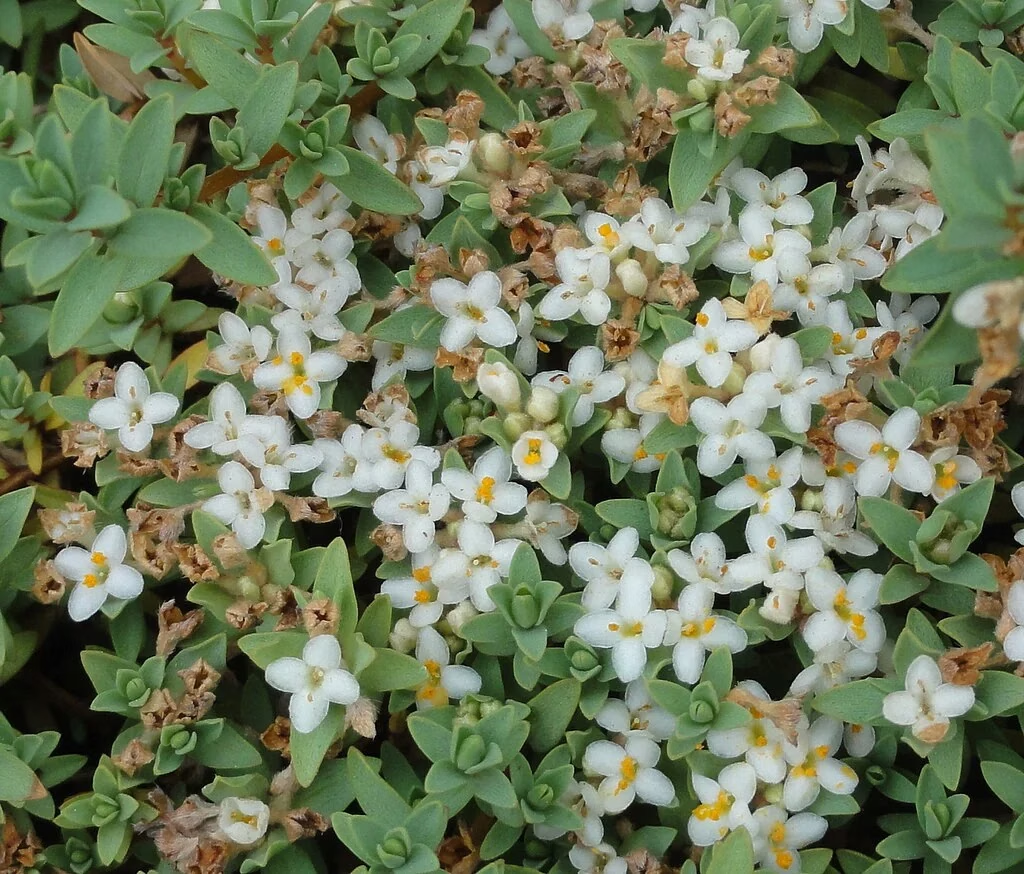
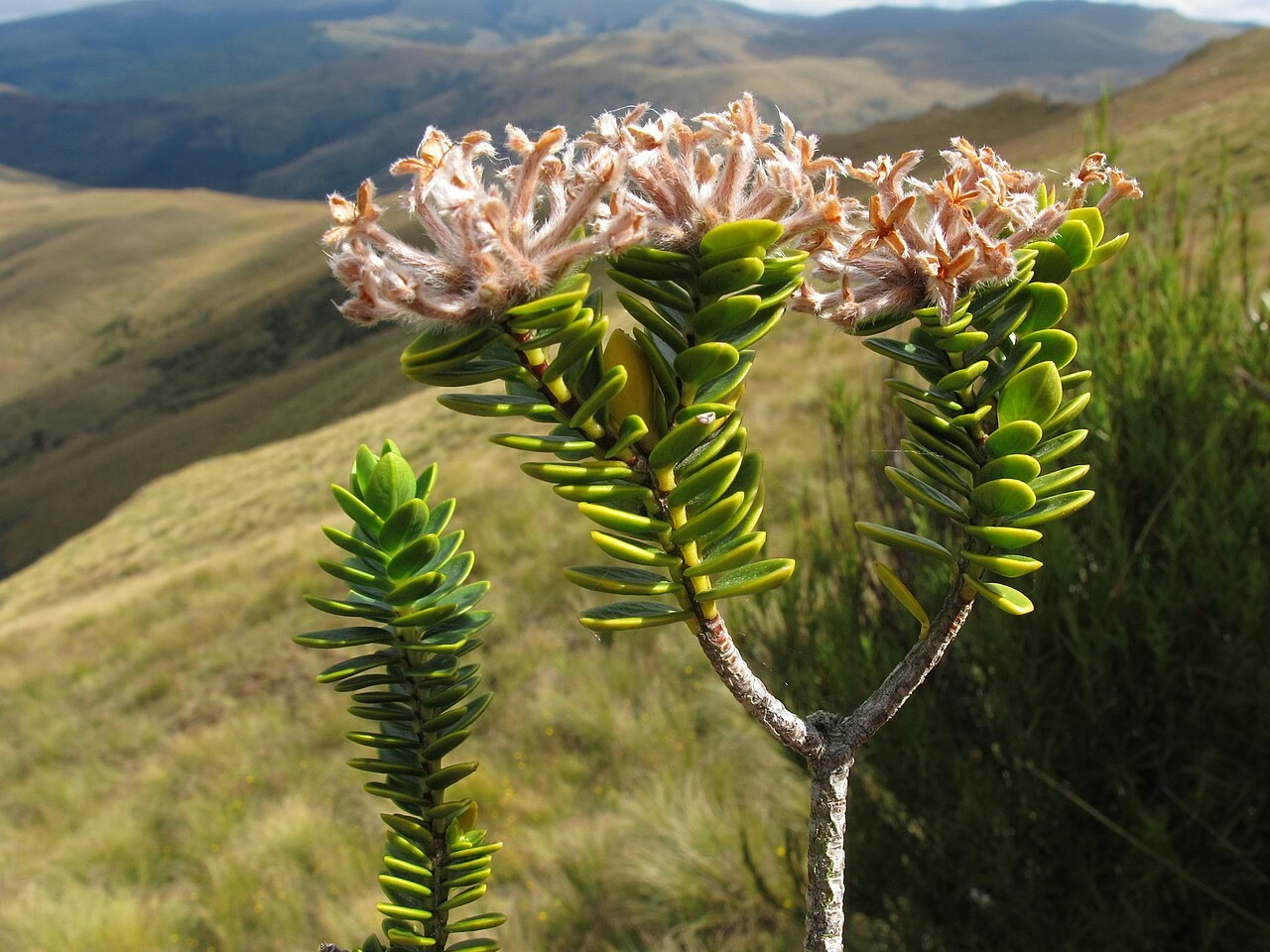
Explore other New Zealand Pimelea shrubs, including species of alpine and open habitats.
Conservation
NZPCN records Pimelea notia as nationally Not Threatened in the 2023 assessment. Otago’s 2025 regional assessment lists it as Regionally At Risk - Regionally Naturally Uncommon and identifies Otago as a national stronghold.
Frequently asked questions
Are cuttings a proven propagation method?
The species profile proposes semi-hardwood and hardwood cuttings as probably suitable, but reports no propagation trial.
What colour are its fruits?
They are fleshy and orange, approximately 5 mm long and 3.5 mm wide.
Does it occur only in alpine sites?
No. The recorded range extends from lowland limestone outcrops through grassland and bog margins to alpine snow-bed habitats.
Sources
Description, distribution and habitat: NZ Plant Conservation Network. Flower, fruit and naming details: Flora of New Zealand.
Original taxonomic treatment: Burrows, New Zealand Journal of Botany, 2011. Regional conservation context: Otago regional assessment.
Last updated: