Mat-Forming Herb
Leptostigma setulosum
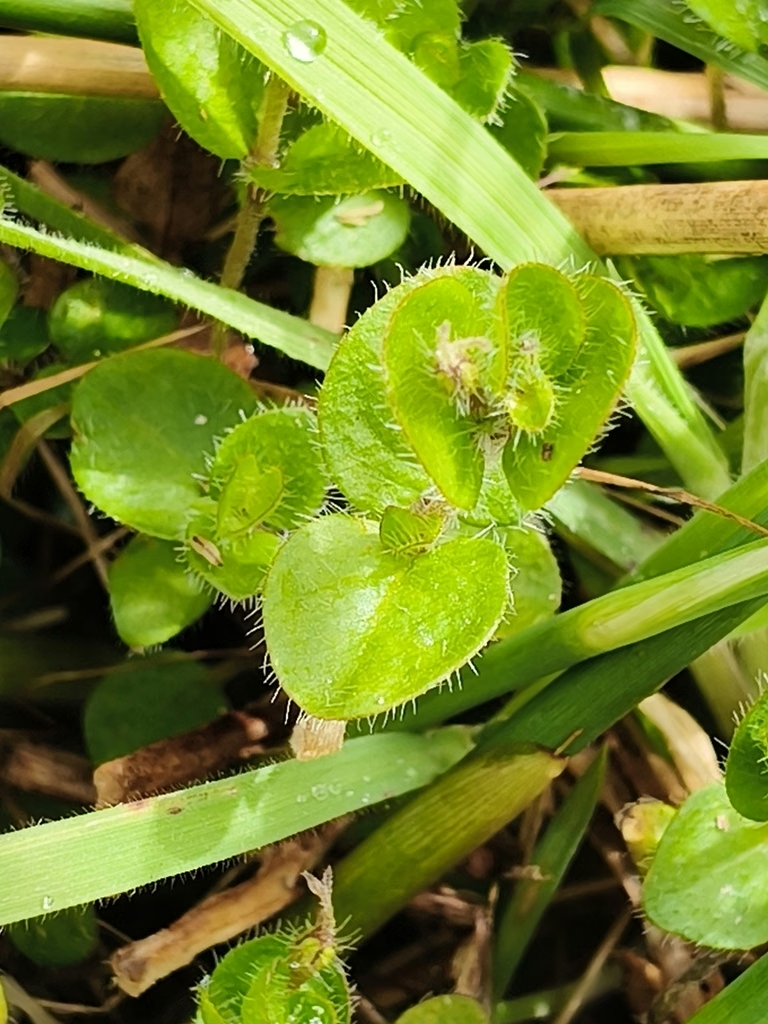
Leptostigma setulosum is a tiny New Zealand endemic herb that spreads in low mats. Its wiry stems, paired leaves and small tubular flowers are clothed in distinctive stiff hairs. This slender plant forms open patches or mats up to about 30 cm across, with wiry branching stems and stiff, flattened hairs.
Identification
This slender plant forms open patches or mats up to about 30 cm across, with wiry branching stems and stiff, flattened hairs. Auckland University describes its mats as 1-2 cm high.
Leaves grow in opposite pairs, typically 5-10 mm long, and vary from oval to broadly elliptic. Both surfaces bear stiff hairs; the slightly thickened margins are fringed with hairs.
Quick facts
| Scientific Name | Leptostigma setulosum |
|---|---|
| Earlier names | Nertera setulosa, Coprosma setulosa |
| Family | Rubiaceae |
| Origin | Endemic to New Zealand |
| Growth | Low, wiry mat-forming herb |
| Mat size | Up to about 30 cm across |
| Flower colour | Green and purple |
| National status | Not Threatened (2023) |
| Height | Mats about 1-2 cm high |
| Water Needs | Recorded on damp grassy edges and beneath kānuka; no irrigation interval established |
| Light | Open grassland to the ground beneath kānuka scrub |
| Spread | Open patches or mats about 20-30 cm across |
| Frost Tolerance | Described as hardy once established; a minimum temperature is not specified |
| Salt Tolerance | Salt tolerance has not been established for this species |
| Growth Rate | Spreads by slender branching stems; annual extension is not measured |
| Lifespan | Mat-forming herb; longevity in years is not documented |
Natural range
The University of Auckland describes this endemic plant as occurring throughout New Zealand. Kew records it in the North and South Islands, including Stewart Island, while Flora of New Zealand confirms its endemic status.
| City | Climate Suitability |
|---|---|
| Auckland | Not assessed |
| Wellington | Not assessed |
| Christchurch | Not assessed |
Habitat and distribution
A New Zealand Journal of Botany comparison records the species in grassland and open sites. A field report from Pouto Peninsula also describes spreading patches beneath kānuka scrub, showing that it can occur in more than one setting.
Ground-Level Growing Conditions
Leptostigma setulosum occupies both open grassy sites and the ground beneath kānuka. A Pouto Peninsula field account records spreading patches under scrub, while other observations include a damp grassy road edge. Its habitat therefore includes some shelter as well as open vegetation.
Planting rooted material
Use nursery-propagated material identified as Leptostigma setulosum; older labels may read Nertera setulosa or Coprosma setulosa. The species can be propagated from pieces that already have roots, according to NZ Plant Conservation Network. Its mature mat stays only about 1-2 cm above the ground.
Flower development
The flowers are bisexual and protogynous: the stigma is receptive before the anthers mature. Auckland University illustrates the sequence from emerging stigmas to emerging stamens as the stigma degenerates.
Observing the plant
Use a hand lens to inspect opposite leaves and the small cup-like sheath where their stalks meet. That sheath bears two or three glandular teeth; the leaf stalks are slender and 2-4 mm long.
A small herb in lawns
A Canterbury Botanical Society garden account includes Leptostigma setulosum among native herbs that established in a managed lawn. This is a useful record of its ability to occupy a low grassy sward; the account does not demonstrate tolerance of a particular mowing height or frequency.
Flowers and maturing fruit
The tiny flowers are stalkless and sit at the ends of shoots or in leaf axils. Their tubular corollas widen at the mouth and normally have five narrow, hairy lobes. Bristly fruits begin fleshy and become dry as they mature.
Growth form
Fine, branching stems spread into a mat or open patch rather than rising as a conventional shrub. Their short stiff hairs may be sparse on some stems except around the leaf-stalk axils.
How to Grow Mat-Forming Herb (Leptostigma setulosum)
Rooted pieces and division
The published cultivation recommendation for this species is to use rooted pieces. This takes advantage of its thin, spreading stems and gives a new plant an existing root system. NZ Plant Conservation Network describes propagation this way as straightforward and established plants as hardy. It also records occasional availability through specialist native nurseries. A piece carrying roots is the documented starting material; an unrooted cutting or a seed treatment would be a different method.
Room for a Shallow Mat
The University of Auckland describes a plant only 1-2 cm high, spreading approximately 20-30 cm across. Its paired leaves and wiry branches remain close to the surface. When assessing a position among other herbs, consider the space for that small mat rather than the height of an upright perennial. Observations beneath kānuka and in grassland show that this species occupies more than one vegetation setting.
Recognising development
Examine new growth with a hand lens: the opposite leaves have stiff hairs, and the tiny flowers have projecting reproductive parts. The stigma emerges first, followed by the stamens as the stigma deteriorates. This sequence is illustrated in the University of Auckland photographs. Fertilisation is followed by bristly fruit that changes from fleshy to dry, so mature fruit should not be expected to remain a soft berry.
Seed evidence
The botanical accounts describe the fruit, but do not provide a species-specific sowing temperature or germination timetable. Rooted material is the propagation route supported by the cultivation reference.
Recognising normal leaf surfaces
The pointed hairs on the leaves and their edges are part of this herb’s normal structure. Under magnification they are single-celled, unlike the multicellular hairs reported for Nertera villosa. Their flattening when dry is also a documented feature, rather than evidence of a pest.
Naming and classification
Hooker originally described the plant as Nertera setulosa; Flora also lists Coprosma setulosa as a synonym. Fosberg’s 1982 combination places it in Leptostigma, within the coffee family, Rubiaceae.
Distinguishing the hairs
A study of New Zealand Leptostigma and Nertera reports that this species has single-celled, pointed hairs that flatten when dry. This differs from the multicellular hairs described for Nertera villosa.
Related native Rubiaceae
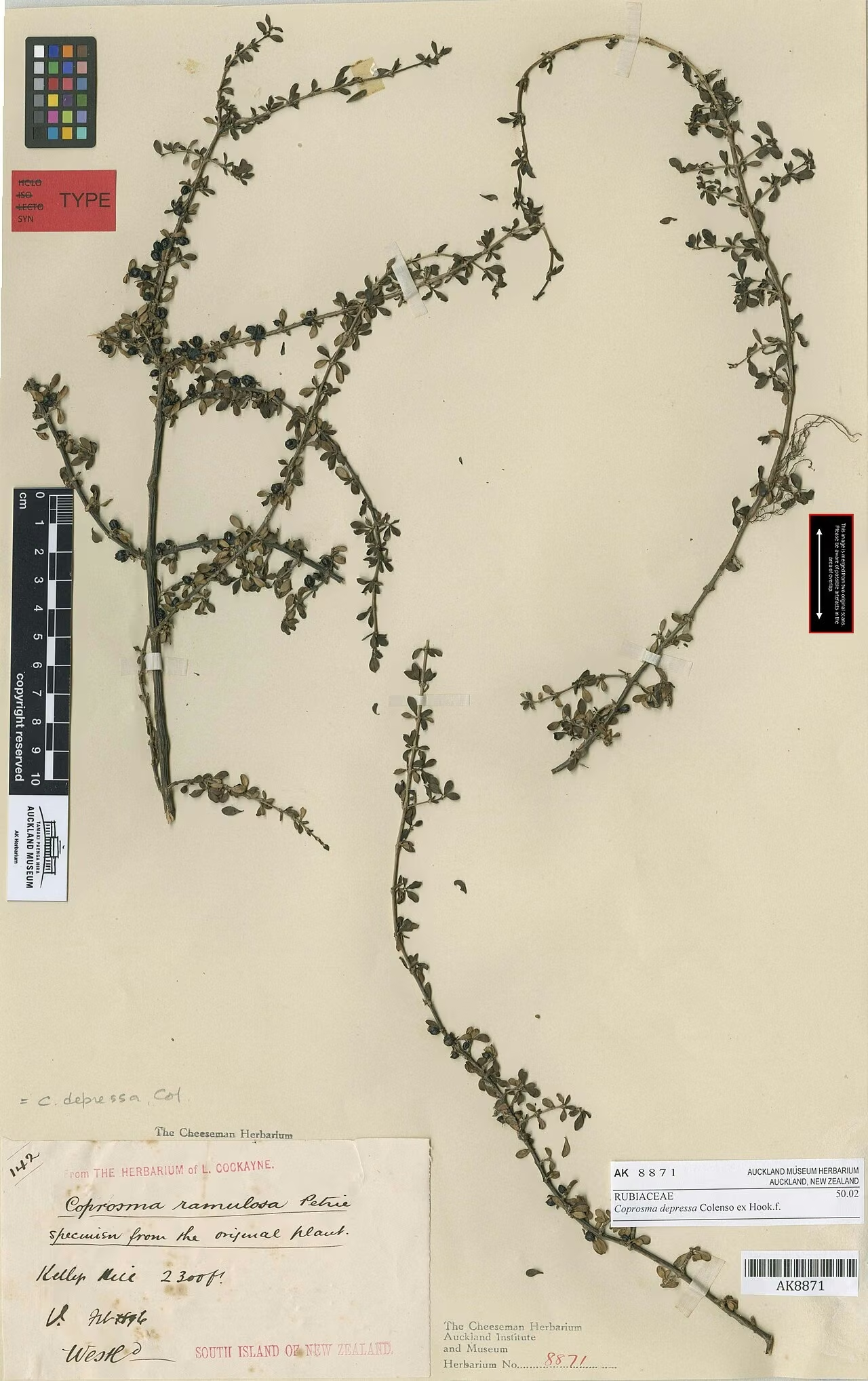
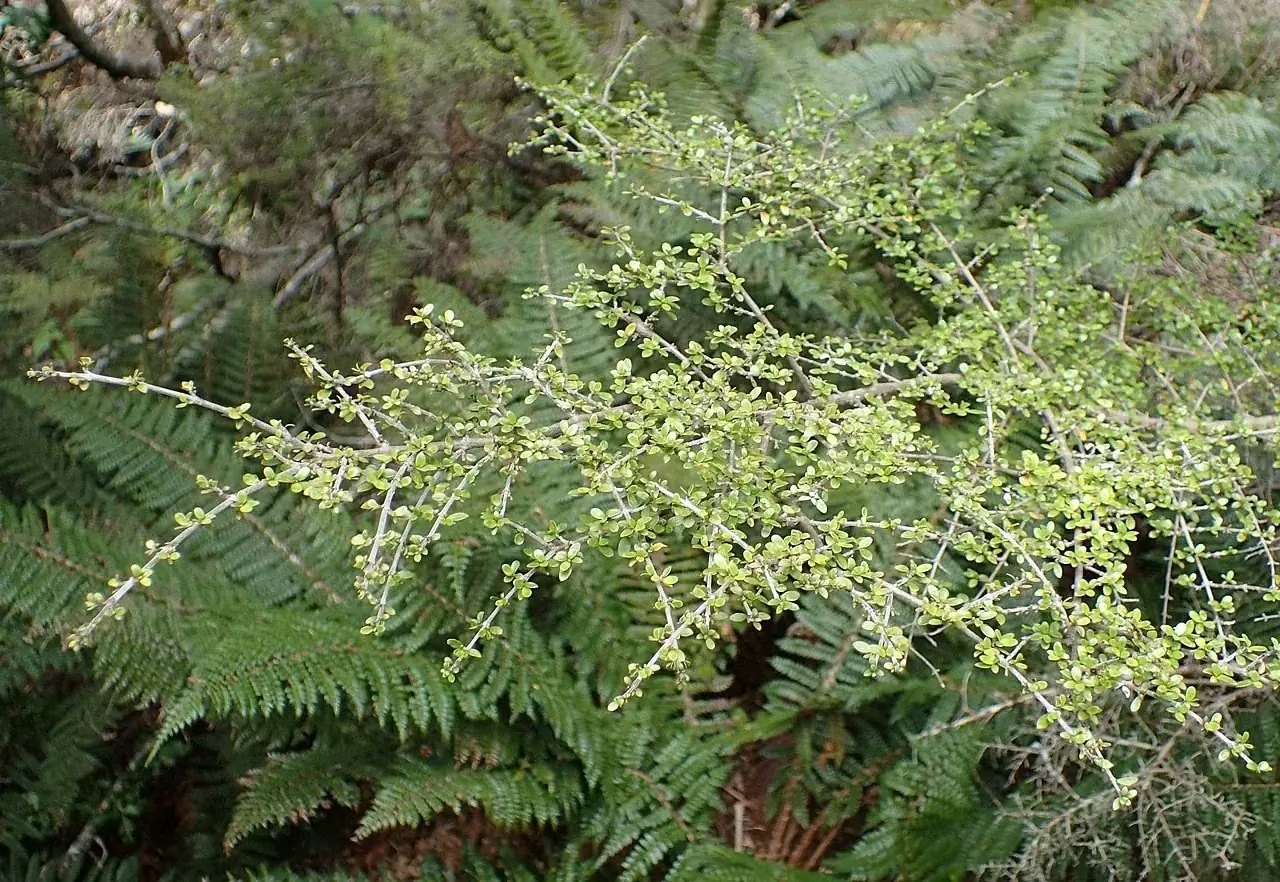
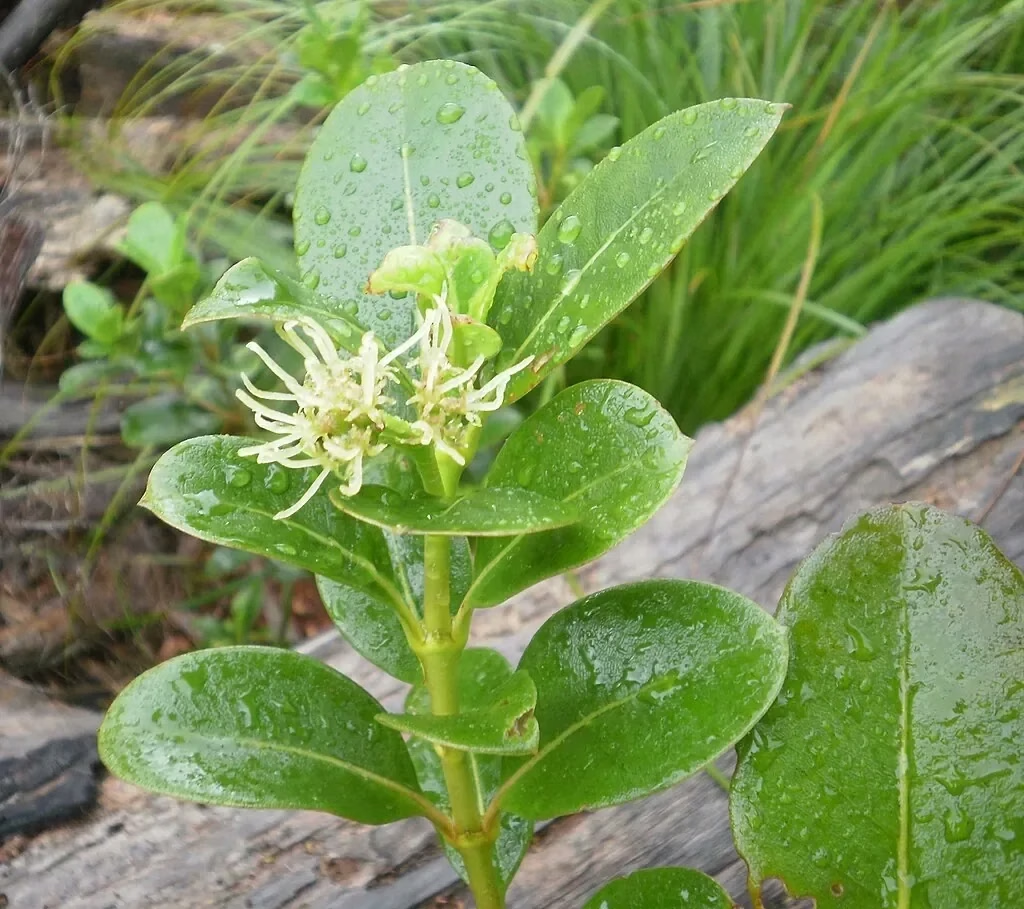
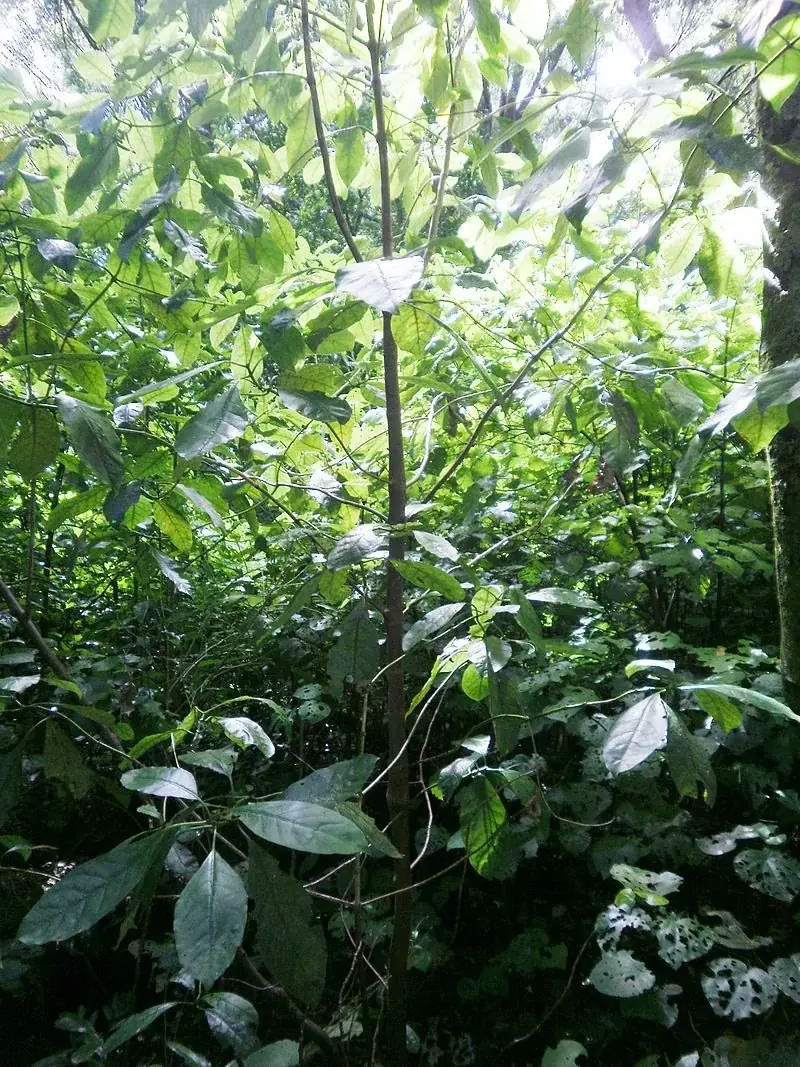
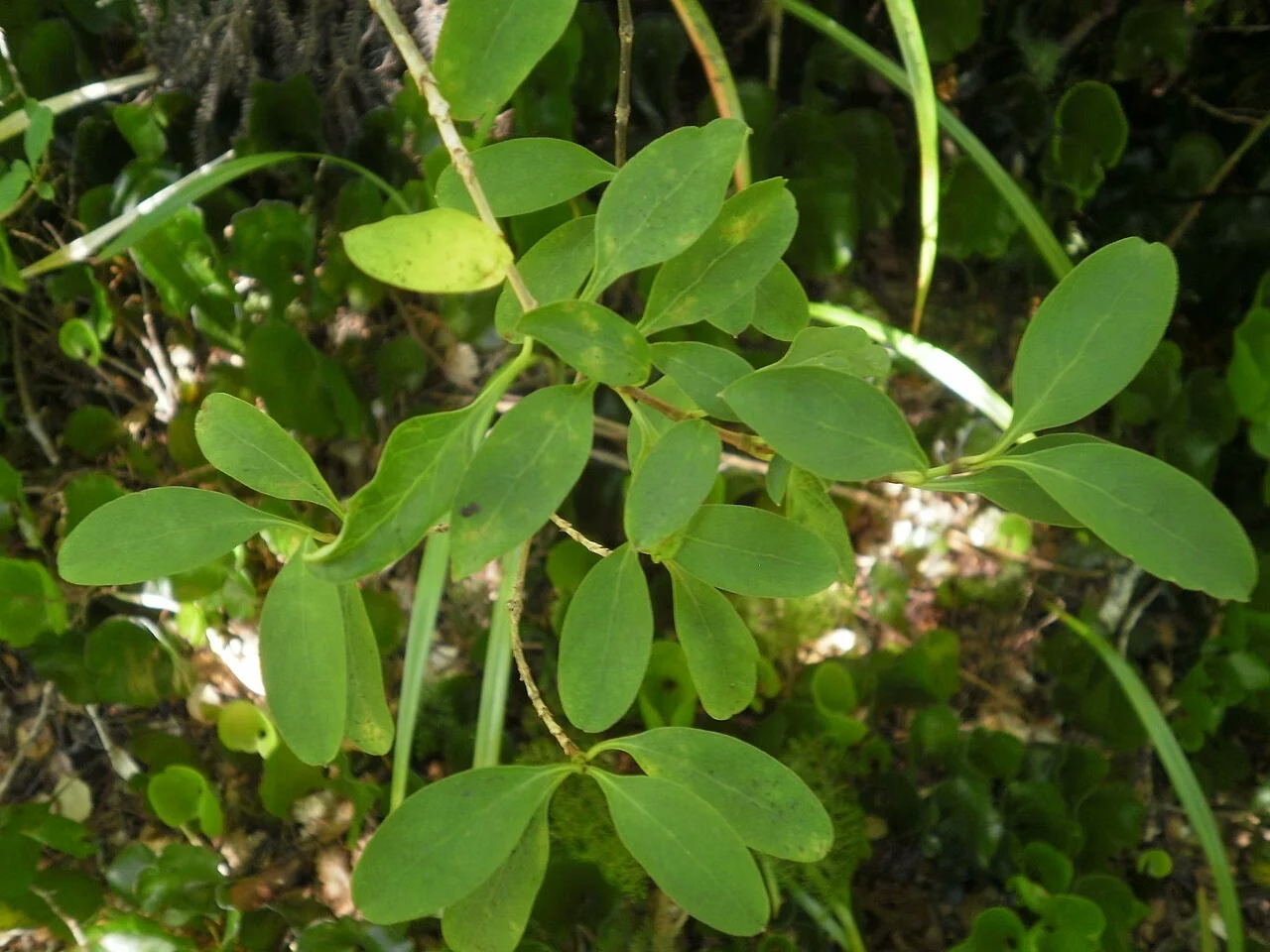
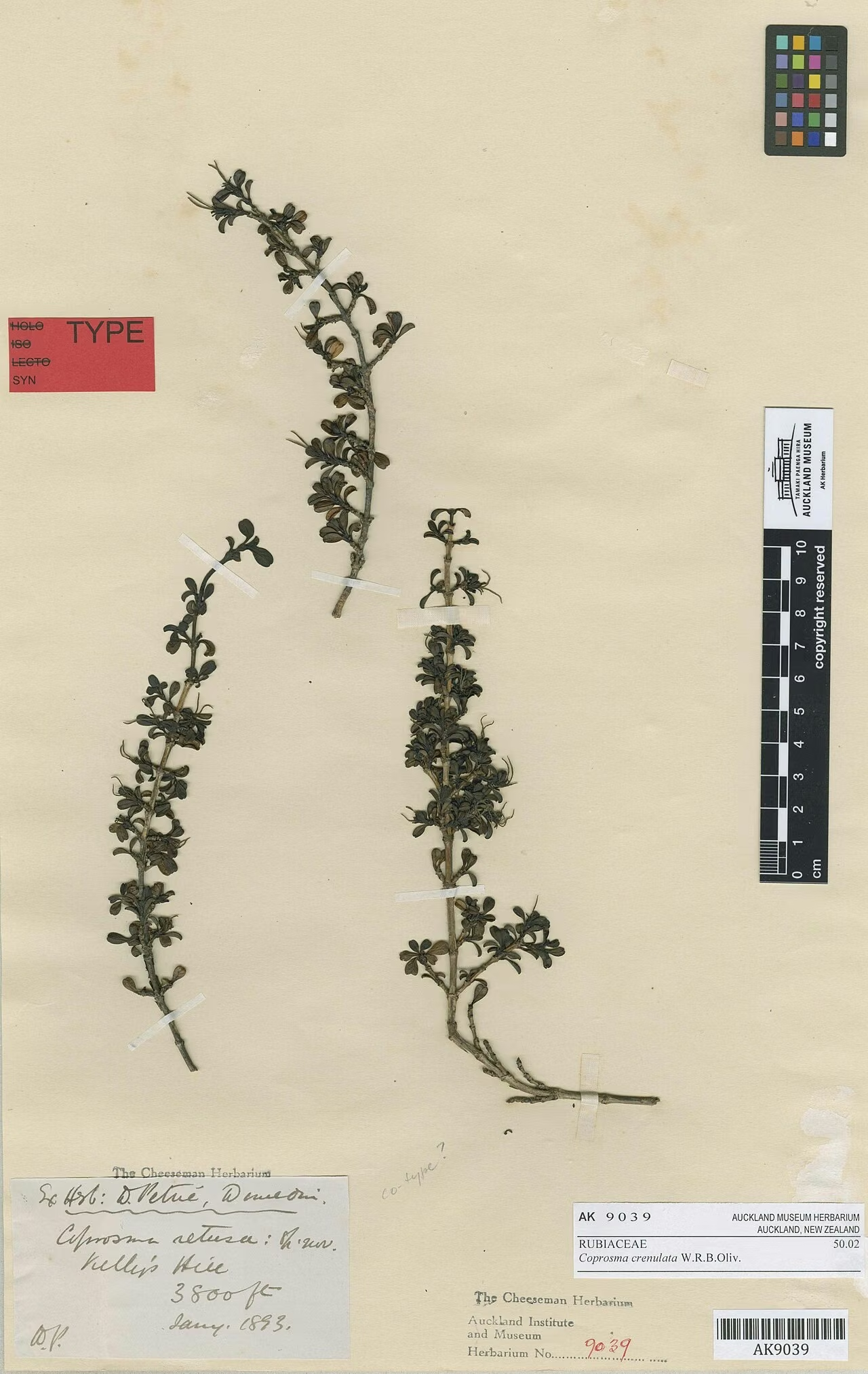
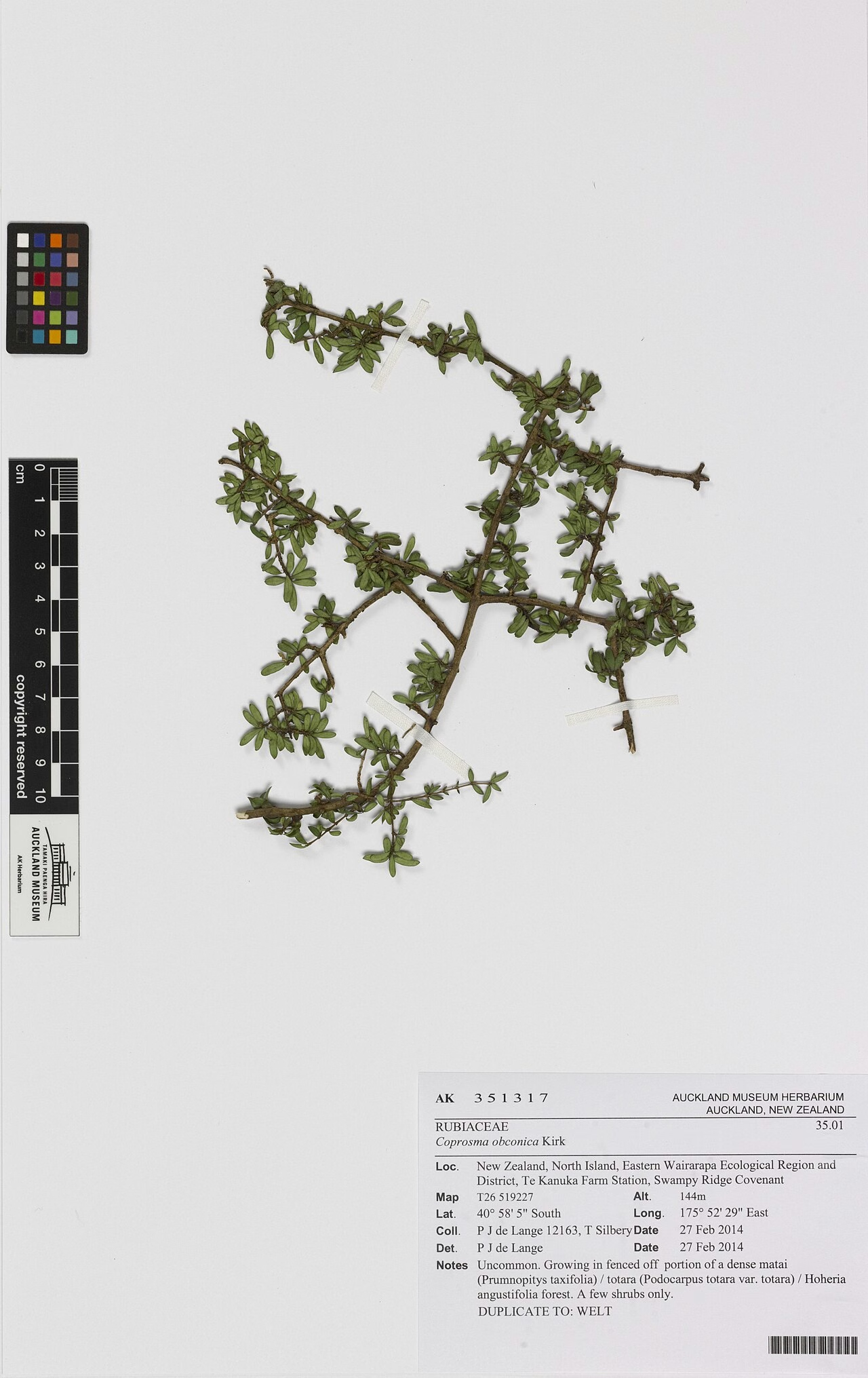
Explore New Zealand plants in the coffee family, including low-growing and shrub-forming coprosmas.
Conservation
Flora of New Zealand records Leptostigma setulosum as endemic and nationally Not Threatened in the 2023 assessment. The Auckland regional assessment records a declining trend with low confidence; local trends and national status address different scales.
Frequently asked questions
Is Nertera setulosa the same species?
Yes. Nertera setulosa is the earlier combination; Coprosma setulosa is another name applied to the same New Zealand herb.
Can this plant be propagated without seed?
Yes. NZ Plant Conservation Network recommends rooted pieces, making vegetative propagation a documented option for Leptostigma setulosum.
Why do the flowers show different projecting parts?
The flower is female-receptive before its anthers mature. The projecting stigma is therefore visible earlier than the stamens, as shown in the University of Auckland flower photographs.
Sources
Botanical description and synonyms: Flora of New Zealand. Mat dimensions and flower sequence: University of Auckland NZ Plants. Propagation, native status and conservation: NZ Plant Conservation Network species profile. Hair structure: Gardner’s systematic notes. Lawn observation: Canterbury Botanical Society journal. Local conservation: Auckland regional assessment. Grassland comparison: New Zealand Journal of Botany.
Garden observation: Canterbury Botanical Society journal. Regional status: Auckland regional assessment. Open habitat comparison: New Zealand Journal of Botany.
Last updated: