Rock Fern
Cheilanthes sieberi
Last updated:
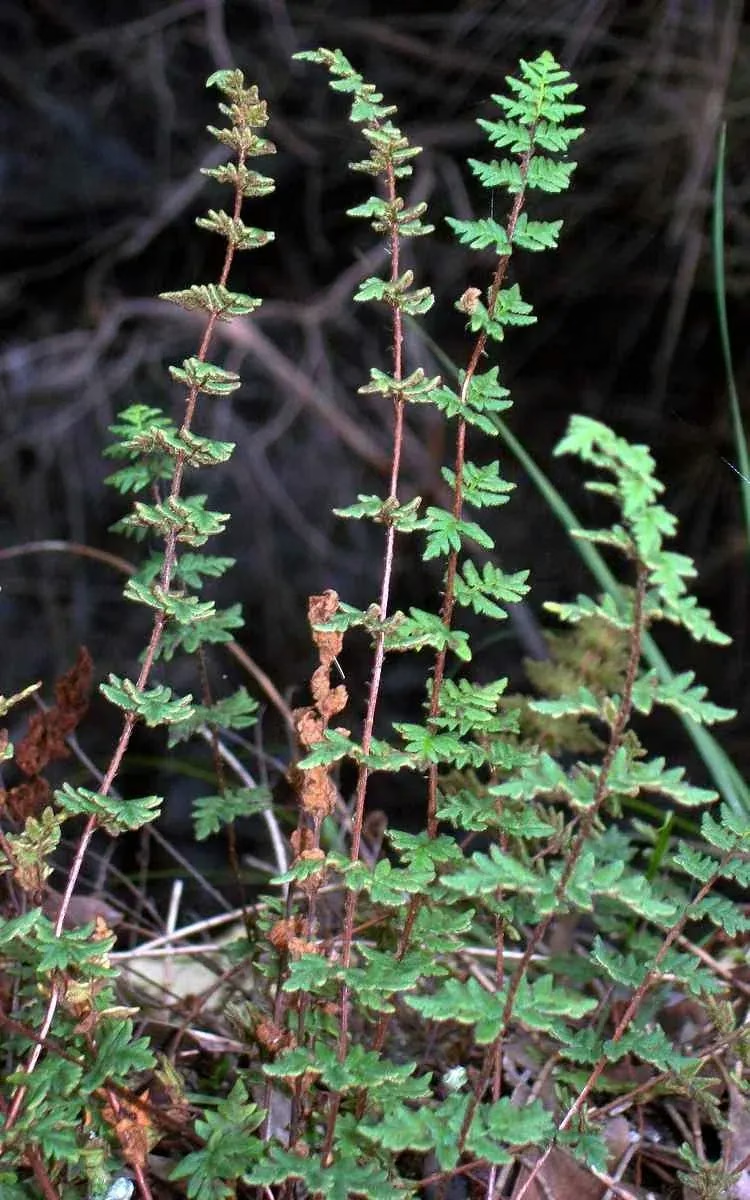
ferns profile: Rock Fern (Cheilanthes sieberi) is an indigenous, non-endemic fern of dry rocky places in New Zealand. conservation profile treats the New Zealand plant as Cheilanthes sieberi subsp. sieberi, while Flora of New Zealand and Biota NZ list Cheilanthes sieberi as the current species name. It is commonest in drier eastern districts, rocky coastal sites, and open scrub or grassland with sparse vegetation.

Plant Description
Identification and Physical Characteristics
Rock Fern has short to long-creeping rhizomes and rigid, upright red-brown stipes. The fronds are narrow, often harsh to touch, and usually two to three times divided. Compared with Woolly Cloak Fern, it has little or no hair on the upper lamina surface and lacks the dense narrow scales on the lower surface. The frond margins roll inward around the marginal sori, a drought-adapted feature of this rock fern group.
Quick Facts
| Scientific Name | Cheilanthes sieberi |
|---|---|
| Height | Fronds usually 60 - 445 millimetres long |
| Spread | Small clumps from creeping rhizomes |
| Water Needs | Low once established |
| Light | Full sun to light shade |
| Frost Tolerance | High |
| Salt Tolerance | Moderate in coastal shelter |
| Growth Rate | Moderate in dry rock crevices |
| Lifespan | Perennial fern |
Climate Best Suited to
Rock Fern suits dry, sunny, sharply drained sites from coastal to montane climates. It is particularly well matched to eastern districts where winter moisture and summer dryness shape open rock habitats.
Regional Suitability
| City | Climate Suitability |
|---|---|
| Auckland | Medium on dry coastal and volcanic rock sites |
| Wellington | Medium on sunny rocky banks and coastal hills |
| Christchurch | High on dry Canterbury rock and Port Hills habitats |
| Nelson | Medium to high on dry rocky slopes and open scrub |
Plant Habitat
Natural Occurrence and Ecology
Flora of New Zealand records this fern from the Three Kings Islands, much of the North Island from Te Paki to Wellington, and eastern South Island districts from Marlborough Sounds to Dunedin. It grows on dry cliffs, rocky outcrops, roadside banks, shingle, heated ground around fumaroles, grassland, coastal scrub, kānuka and mānuka margins, and full-sun rocky sites. Substrates include greywacke, lava, pumice, basalt, mica schist, and limestone.
Growing Requirements
Soil Requirements
Lean, sharply drained mineral crevices with sparse vegetation and little organic matter.
- Greywacke or volcanic rock
- Limestone or schist
- Sparse competition
Light Requirements
Full sun is tolerated and often natural, with light shade under scrub also suitable.
- Full sun
- Open scrub
- Light shade
Water Requirements
Establish with light watering, then grow on the dry side with strong drainage.
- Dry tolerant
- Winter moisture
- No stagnant roots
Planting and Establishing
Establishment Guidance
Plant into a dry rockery, sunny wall pocket, trough, shingle bank, or pot with a gritty mineral mix. Keep the crown exposed and the root run tight. Avoid rich soil, heavy mulch, and irrigation systems intended for lush forest ferns. Once roots are established, reduce watering and allow fronds to toughen in bright light.
Ecological Role
Biodiversity and Ecosystem Impact
Rock Fern belongs to the dry rocky fern assemblage that includes Annual Fern, Woolly Cloak Fern, Pellaea calidirupium, and small spleenworts. It occupies hot, exposed niches where drought, thin soils, and competition limit other ferns. Its fronds protect marginal sori with inrolled edges and contribute spores to open dryland habitats that are often under-recognised in fern conservation.
Uses & Significance
Garden Uses
Use in sunny rock gardens, native dryland displays, troughs, and specialist fern pots.
- Sunny rockeries
- Dry native gardens
- Collector fern pots
Ecological Value
It adds native fern diversity to open rocky sites and supports dryland fern communities.
- Dry rock assemblages
- Open habitat diversity
- Wind-dispersed spores
Landscaping Uses
Rock Fern is a good small fern for lean, hot, sharply drained native plantings. Its upright fronds work well with scoria, greywacke, low grasses, and dryland herbs. Keep taller plants from shading it, and use it where its small scale can be appreciated close to paths, walls, or rock steps.
Seasonal Care Calendar
Spring
New fronds mature quickly as dry sites warm.
Summer
Established plants tolerate heat and periodic drought.
Autumn
Good time to plant as rain returns.
Winter
Hardy in drained sites, but avoid wet stagnant pots.
When to Prune and How Much
Pruning is minimal. Remove dead fronds with fine scissors and keep weeds from crowding the crown. Do not pull old fronds, because the rhizome can be loosened from shallow rock crevices.
- Snip dead fronds
- Hand-weed around crowns
- Avoid pulling plants from crevices
Always use clean, sharp tools and avoid disturbing new growth.
How to Grow Rock Fern
From Spores
Rock Fern is readily propagated from spores when ripe fronds are available from cultivated or permitted material. Sow spores thinly on sterile, gritty fern mix and keep the tray humid in bright shade. Young gametophytes need moisture, but the developing sporophytes should be gradually hardened to stronger light and drier air. This gradual transition is important because soft growth raised in constant humidity can collapse when planted into dry rock conditions.
- Collect ripe spores
- Sow on sterile gritty mix
- Keep humid in bright shade
- Harden gradually to dry light
From Division
Established cultivated clumps can be divided by separating rooted rhizome sections with active growing points. Water the clump first, handle the roots gently, and pot each piece into a small container of mineral mix. Keep divisions shaded and just moist until growth restarts, then move them into brighter, drier conditions. Do not divide wild plants, and avoid making pieces so small that they dry before roots recover.
- Divide rooted cultivated clumps
- Keep growing points intact
- Use small gritty pots
- Move gradually to sun
Establishing in a Rockery
Choose a sunny, sharply drained crevice, shingle pocket, or rock wall with very low competition. Tuck the roots into gritty mix and water gently to settle them. During the first season, water in prolonged drought but allow the surface to dry. Avoid fertiliser, rich compost, and heavy mulch. Once established, Rock Fern should be compact, firm, and resilient, with fronds that remain upright through sun, wind, and dry periods.
- Choose a sunny crevice
- Use gritty mineral mix
- Water only during establishment
- Keep competition low
Pests & Diseases
Slugs and snails may graze soft new fronds in damp pots. Root rot can occur in rich or waterlogged media. In the landscape, shading, weed competition, and disturbance to rocky banks are usually more important than insect pests.
Cultural Significance
Rock Fern is a useful representative of New Zealand's dryland fern flora. It shows that native fern habitats include sun, rock, shingle, and geothermal ground as well as damp forest. Its specific name honours Franz Wilhelm Sieber, a nineteenth-century botanist and collector.
- Dryland native fern
- Named for Franz Sieber
- Useful in rock-habitat education
Bonus Tip
Plant Rock Fern slightly proud of the crevice surface so the crown stays dry and the inrolled frond margins can be seen close up.
Related Plants
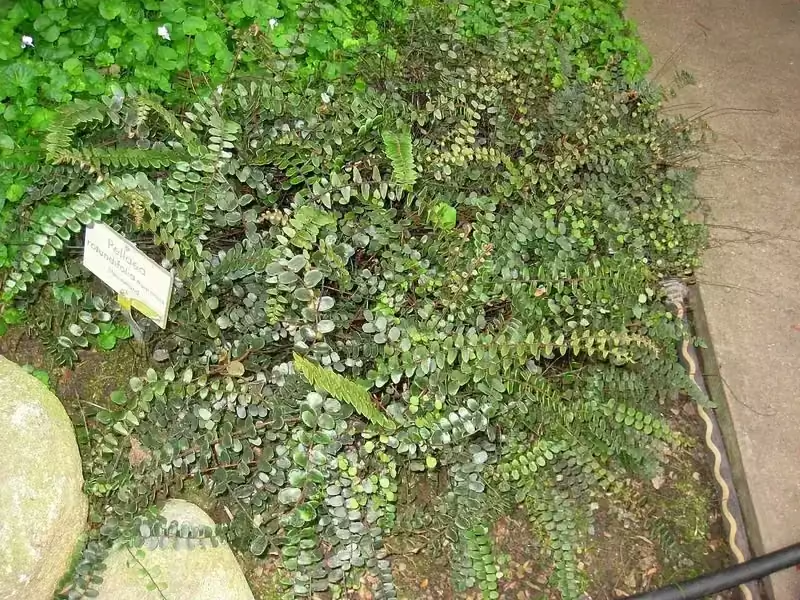
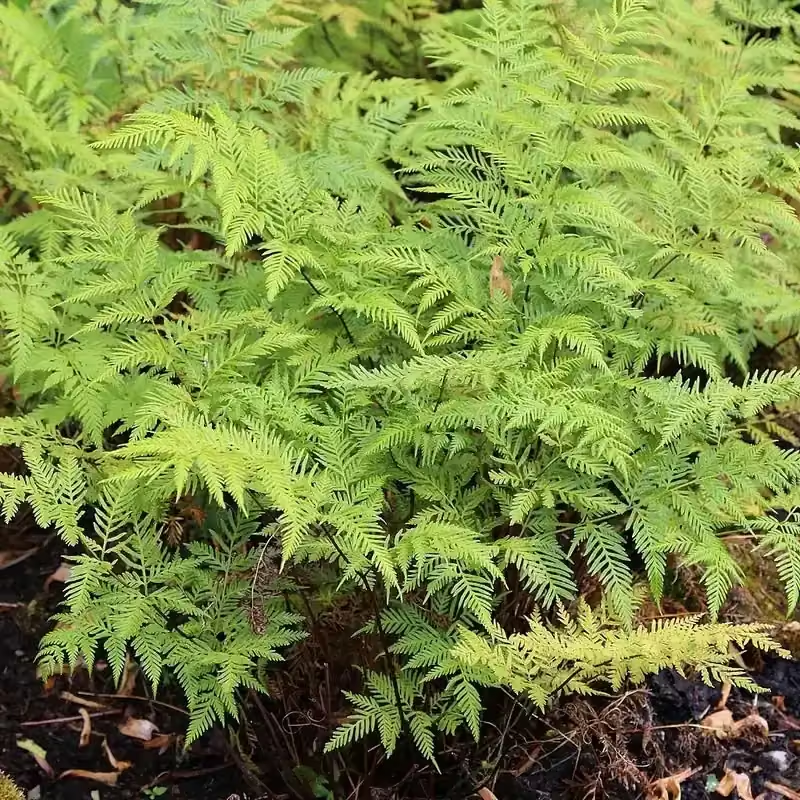
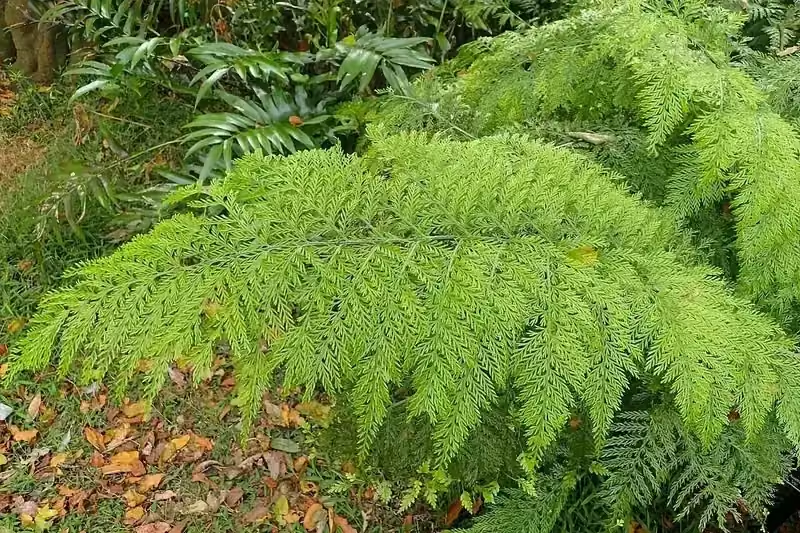
Compare Rock Fern with other dryland and rock-crevice ferns.





Plant Conservation
Conservation Status and Threats
Rock Fern is Not Threatened nationally, with the SO qualifier recorded by conservation profile for the current assessment. Regional assessments can still identify local decline or rarity, especially where dry rocky sites are modified. Protecting open rock habitat, avoiding unnecessary spraying, and controlling smothering weeds will support local populations.
Frequently Asked Questions
Is Rock Fern native to New Zealand?
Yes. It is indigenous but not endemic.
Where does Rock Fern grow?
It grows on dry cliffs, rocky outcrops, shingle, roadside banks, scrub margins, coastal rocks, and sometimes geothermal ground.
How is it different from Woolly Cloak Fern?
Rock Fern has much less hair and scaling on the fronds, while Woolly Cloak Fern is visibly woollier.
Sources and Further Reading
The botanical, growing, and conservation details for Rock Fern draw on authoritative New Zealand plant references and taxonomic databases.