Woolly Cloak Fern
Cheilanthes distans
Last updated:
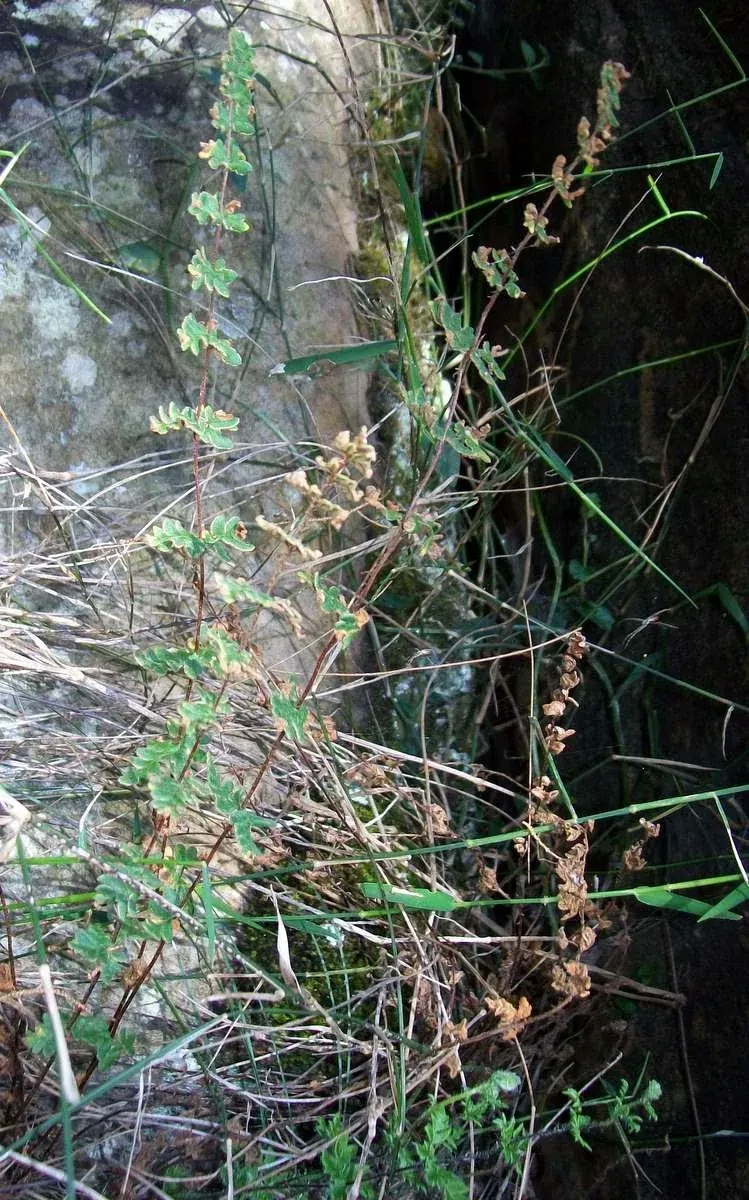
ferns profile: Woolly Cloak Fern (Cheilanthes distans) is an indigenous, non-endemic New Zealand fern of dry rocky habitats. It is also called woolly rock fern. Flora of New Zealand records it from coastal and lowland dry cliffs, rocky outcrops, scoria, lava fields, roadside banks, cuttings, and grassy hillsides, often in sunny sites under kānuka, mānuka, or open scrub.

Plant Description
Identification and Physical Characteristics
This small rigid fern has short to long-creeping rhizomes, red-brown stipes and rachises, and narrow fronds that are usually two-pinnate to two-pinnate-pinnatifid. It is distinguished from rock fern by the abundant white hairs on the upper surface and pale brown scales on the lower surface of the lamina. The sori run almost continuously around the pinna margins and are protected by the inrolled edges of the frond segments.
Quick Facts
| Scientific Name | Cheilanthes distans |
|---|---|
| Height | Fronds usually 25 - 310 millimetres long |
| Spread | Small creeping clumps in rock crevices |
| Water Needs | Low once established |
| Light | Full sun to light scrub shade |
| Frost Tolerance | High |
| Salt Tolerance | Moderate in coastal shelter |
| Growth Rate | Moderate in lean dry sites |
| Lifespan | Perennial fern |
Climate Best Suited to
Woolly Cloak Fern suits dry eastern and coastal climates where rock crevices provide sharp drainage, winter moisture, and summer drought tolerance.
Regional Suitability
| City | Climate Suitability |
|---|---|
| Auckland | Medium on scoria, coastal banks, and dry open rock |
| Wellington | Medium on dry rocky coastal and hill sites |
| Christchurch | High on Port Hills and dry Canterbury rock habitats |
| Nelson | Medium to high on dry rocky slopes and coastal outcrops |
Plant Habitat
Natural Occurrence and Ecology
In New Zealand it occurs in the North Island from Te Paki to Wellington, mainly in eastern districts, and in eastern South Island areas from Tasman Bay to Banks Peninsula. Flora of New Zealand also records it from Raoul Island. Habitats include dry cliffs, rocky outcrops, scoria, lava fields, road cuttings, grassy hillsides, and rock crevices on volcanic rock, greywacke, sandstone, and limestone. It often grows with other dry rock ferns such as Annual Fern, Rock Fern, and Pellaea calidirupium.
Growing Requirements
Soil Requirements
Lean mineral crevices with sharp drainage and little organic enrichment.
- Scoria and volcanic rock
- Sandstone or limestone
- Low fertility
Light Requirements
Full sun or bright light produces the compact upright form typical of wild plants.
- Full sun
- Open scrub
- Light shade only
Water Requirements
Water during establishment, then allow the plant to follow natural dry cycles.
- Dry tolerant
- Winter moisture
- No waterlogging
Planting and Establishing
Establishment Guidance
Plant nursery-grown or spore-raised material into a dry rock crevice, sunny wall, scoria pocket, or trough with a gritty mineral mix. Do not add rich compost or heavy mulch. Water gently until roots enter the crevice, then reduce irrigation so fronds harden. The species is well suited to a pot or dry rockery where competition is low and the woolly fronds can be seen closely.
Ecological Role
Biodiversity and Ecosystem Impact
Woolly Cloak Fern is part of a characteristic dry rocky fern assemblage in New Zealand. Its tough fronds and protective hairs and scales allow it to occupy exposed sites that are too dry for many forest ferns. It helps retain fine material in cracks, contributes spores to dryland fern communities, and provides structure for tiny invertebrates in sunny rock habitats.
Uses & Significance
Garden Uses
Use in dry native rock gardens, troughs, scoria banks, and sunny fern collections.
- Rock gardens
- Scoria banks
- Dry troughs
Ecological Value
It supports native dryland fern diversity and is nationally secure.
- Dry rock habitat
- Native fern assemblage
- Drought-adapted fern cover
Landscaping Uses
This fern is useful where a small, tough, dryland native fern is needed for hot rock pockets or lean banks. It should be planted with other low-competition dryland species rather than lush forest ferns. Keep weeds, rank grass, and trailing groundcovers away from its crown so the small fronds are not shaded out.
Seasonal Care Calendar
Spring
New growth hardens as conditions warm.
Summer
Established plants tolerate dryness but young plants may need occasional water.
Autumn
Planting is easiest as moisture returns.
Winter
Fronds remain tough in cold, well-drained sites.
When to Prune and How Much
Prune only dead fronds. Snip old stipes rather than pulling them, because tugging can loosen the rhizome from the crevice. Keep the site open by removing weeds by hand.
- Remove dead fronds
- Do not pull rhizomes
- Hand-weed nearby competitors
Always use clean, sharp tools and avoid disturbing new growth.
How to Grow Woolly Cloak Fern
From Spores
Woolly Cloak Fern can be grown from spores when mature fronds shed from the marginal sori. Sow spores thinly on a sterile, gritty medium with fine pumice, sand, and a small amount of sieved organic matter. Keep the tray humid but not wet, in bright shade. The young gametophytes need steady moisture, but later sporophytes should be hardened gradually to brighter and drier conditions. Avoid rich mixes, because soft growth is less drought tolerant and more prone to rot.
- Collect ripe marginal spores
- Sow on gritty sterile mix
- Keep humid in bright shade
- Harden young ferns gradually
From Division
Division is possible from cultivated clumps with creeping rhizomes. Water the plant first, then separate small rooted sections with intact growing points. Pot divisions into a sharp mineral mix and keep them in bright shade until new growth resumes. Do not overpot, because a tight gritty root run better matches natural rock crevices. Once established, move divisions into sunnier positions and reduce watering to encourage tough compact fronds.
- Divide cultivated rooted rhizomes
- Use sharp mineral mix
- Keep shaded while recovering
- Move gradually into sun
Establishing in Dry Rock
Choose a sunny crevice or scoria pocket where water drains quickly but winter rain can enter the root zone. Tuck the young plant into the crevice with gritty mix, water gently, and shade briefly only if the plant was grown under cover. During the first summer, water during prolonged drought but let the surface dry between waterings. After establishment, avoid irrigation, fertiliser, and mulch. The goal is a firm, lean plant that can withstand heat and wind without producing lush weak growth.
- Choose sunny dry crevices
- Set roots into gritty pockets
- Water lightly at first
- Avoid fertiliser and mulch
Pests & Diseases
Cultivated plants may be grazed by slugs or snails when kept too damp. Rot can occur in rich or waterlogged media. In gardens, shading and weed competition are greater threats than insect pests.
Cultural Significance
Woolly Cloak Fern is significant as a native fern adapted to dry and exposed New Zealand habitats, showing that fern diversity is not restricted to wet forests. Its woolly scales and drought tolerance make it a useful species for interpreting dryland plant adaptations.
- Dryland native fern
- Drought adaptation
- Rock habitat education
Bonus Tip
Grow it in a sunny scoria trough beside Annual Fern and Rock Fern to show the dry-rock fern community in miniature.
This Woolly Cloak Fern note is specific to Cheilanthes distans, connecting identification, habitat context, and practical care so the section remains useful for readers comparing New Zealand plant profiles.
Related Plants
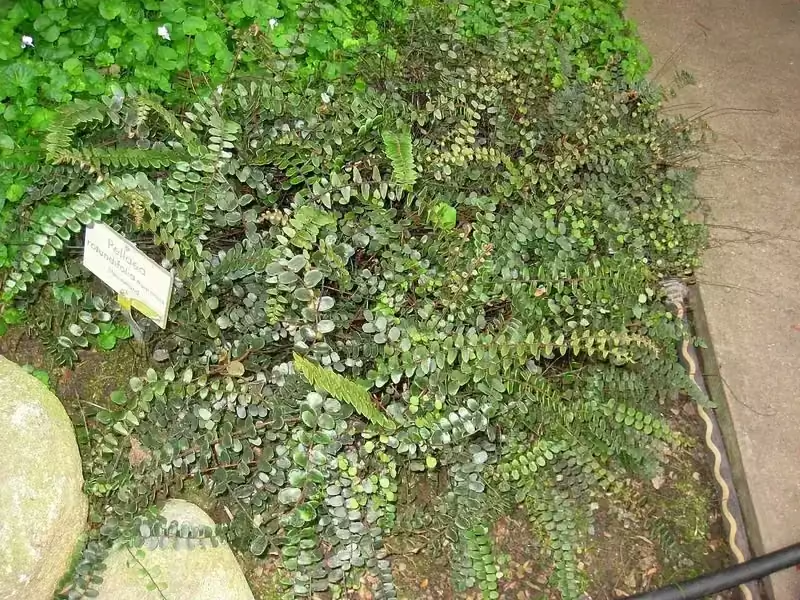
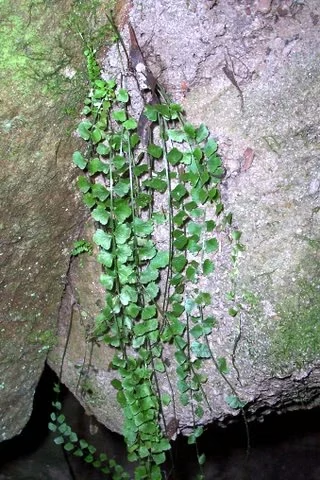
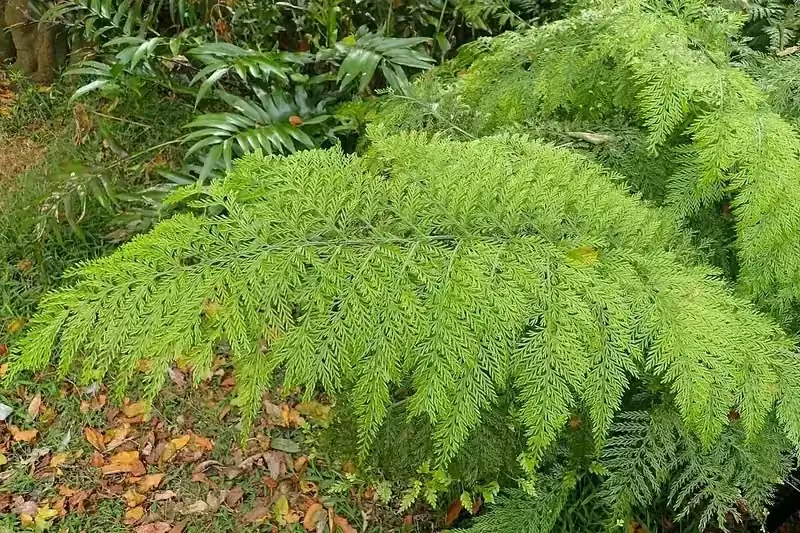
Compare Woolly Cloak Fern with other dry rock ferns and small rock crevice species.





Plant Conservation
Conservation Status and Threats
conservation profile and Flora of New Zealand record Woolly Cloak Fern as indigenous and Not Threatened. Local populations can still be harmed by road works, weed smothering, herbicide drift, quarrying, and loss of open rocky sites, so dry rock habitats should be managed with the same care as wetter fern habitats.
Frequently Asked Questions
Is Woolly Cloak Fern native to New Zealand?
Yes. It is indigenous but not endemic.
How is it different from Rock Fern?
It has abundant hairs on the upper lamina and pale brown scales underneath, giving it a woollier appearance.
Can it grow in full sun?
Yes, it often grows in sunny dry rock habitats if roots are established in crevices.
Sources and Further Reading
The botanical, growing, and conservation details for Woolly Cloak Fern draw on authoritative New Zealand plant references and taxonomic databases.