Cress
Cardamine polyodontes
Cardamine polyodontes is a perennial cress endemic to New Zealand. It grows on cliffs, scree and in shrub-tussockland, and is named for the many conspicuous hydathodes at the edges of its terminal leaflets.
Identification
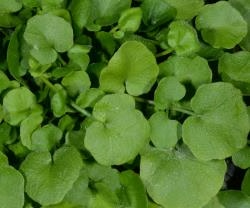
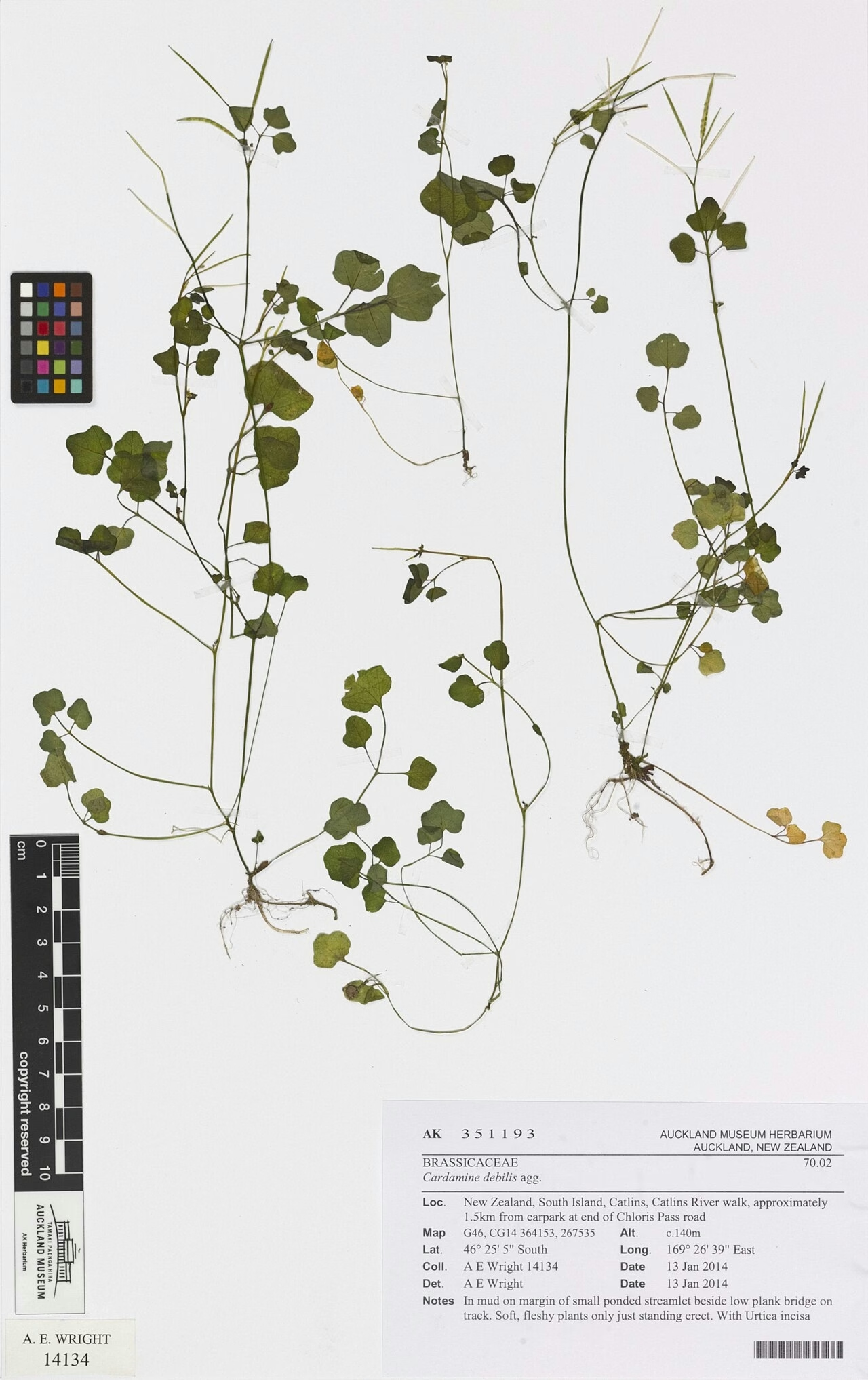
The plant forms one rosette or several on short branches. Leaves can reach 140 mm and may be simple or divided. The usually rounded terminal leaflet has five to eleven prominent marginal hydathodes.
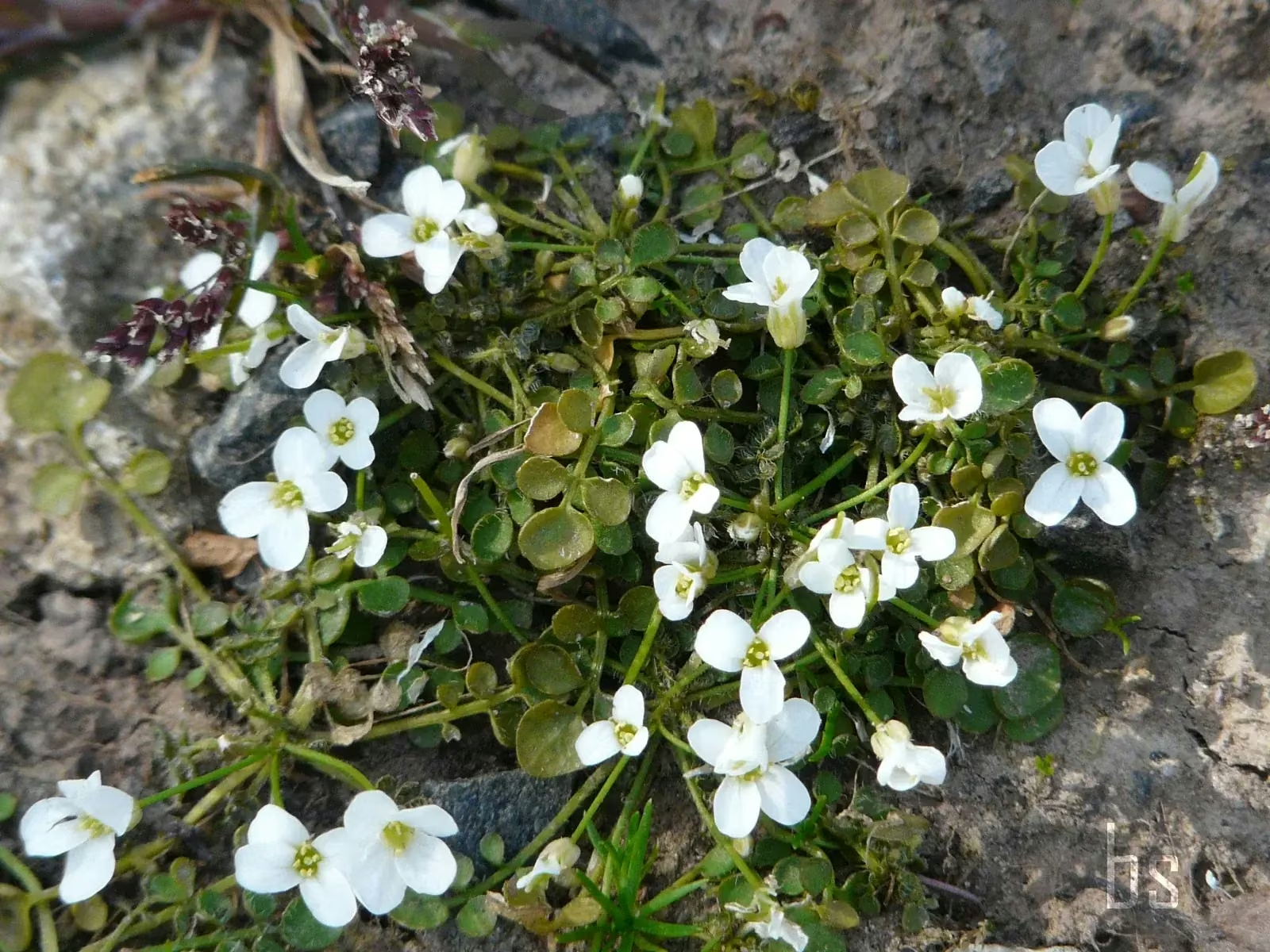
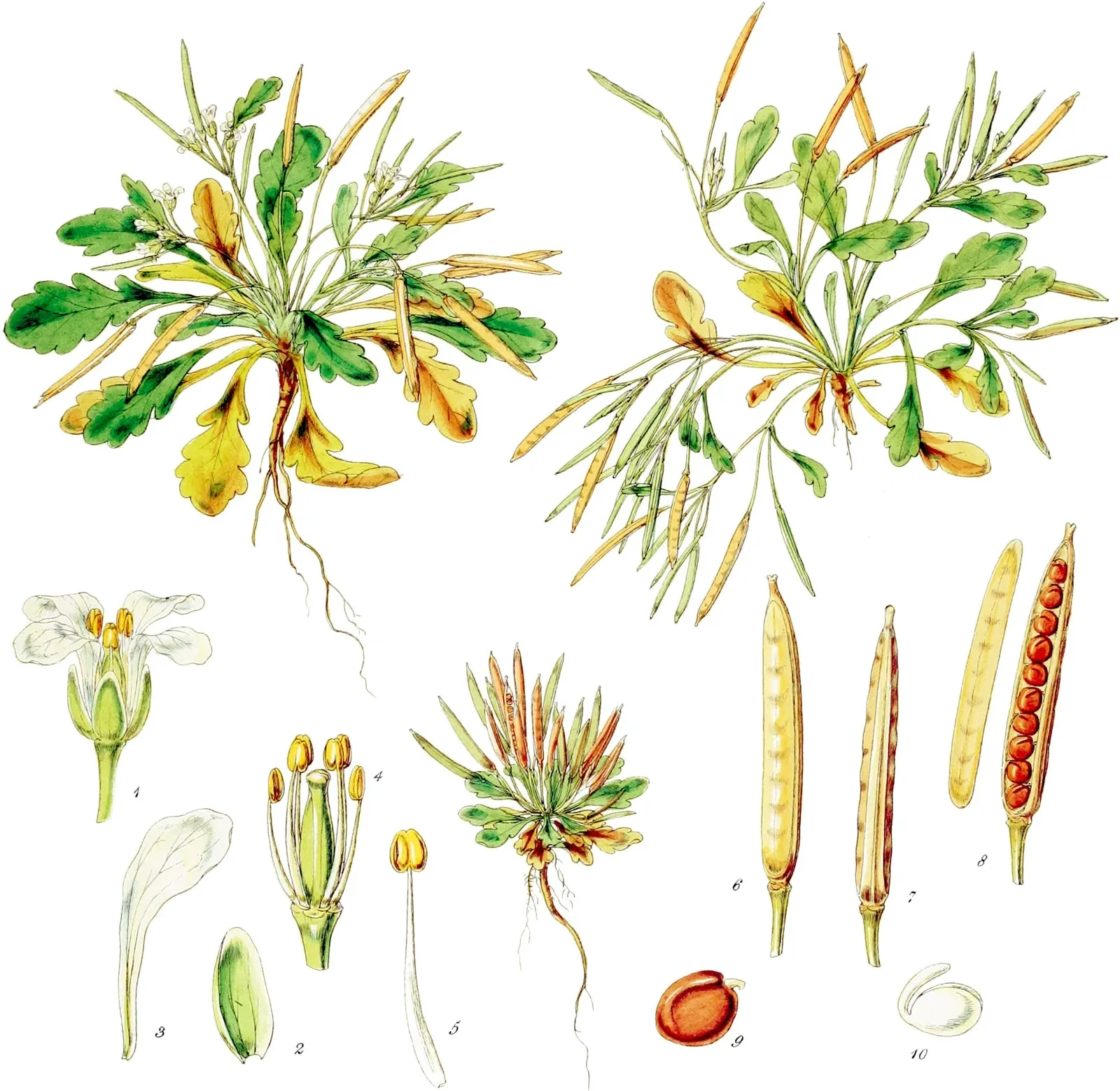
Petals are white and 7.5-9 mm long. Hairless pods measure 35-47 mm; they are green when mature, becoming straw-coloured when they open.
Quick facts
| Scientific Name | Cardamine polyodontes |
|---|---|
| Family | Brassicaceae |
| Leaf length | Up to 140 mm |
| Flowering | December to March |
| Fruiting | December to April |
| National status | Not Threatened (2023) |
| Height | Flowering stalks up to 35 cm long |
| Water Needs | Wild sites include watercourses and scree; a garden watering schedule is not specified |
| Light | Cliffs and shrub-tussockland are recorded habitats; no cultivation rating is given |
| Spread | One or several rosettes on short lateral branches; width is not quantified |
| Frost Tolerance | Minimum tolerated temperature is not documented |
| Salt Tolerance | Salt tolerance is not documented |
| Growth Rate | Annual extension is not quantified in the cited accounts |
| Lifespan | Perennial herb |
Natural range
Flora of New Zealand records this cress in the Volcanic Plateau, Gisborne and southern North Island, and in several northern and western South Island regions. Its field distribution does not establish a tested garden temperature limit.
| City | Climate Suitability |
|---|---|
| Auckland | Not assessed |
| Wellington | Not assessed |
| Christchurch | Not assessed |
Habitat and distribution
Cardamine polyodontes is recorded in Gisborne, the Volcanic Plateau and the southern North Island, and in western Nelson, Sounds Nelson and Westland in the South Island.
Its habitats include cliffs, watercourses, scree and shrub-tussockland. The specimen used to formally describe the species was gathered from rock crevices at Lewis Pass.
Natural growing conditions
Records place this herb among shrub-tussockland and on scree and cliffs, as well as along watercourses. The Flora description records these sites but does not provide a tested species-specific watering or soil recipe.
Planting considerations
The published Flora profile identifies cliff, scree and tussock habitats but does not supply a planting method for this particular cress. Its presence in rocky habitats alone does not establish how to grow it in a garden.
Ecology
The herb occurs in shrub-tussockland as well as on cliffs and beside watercourses. Its rosettes can produce flowering racemes with four to eight flowers, occasionally with an additional flower or branch lower down the stalk.
Observing the plant
The large, usually round terminal leaflet and its five to eleven conspicuous marginal hydathodes are useful identification characters. When fruit is present, examine the long hairless pods alongside the leaves rather than relying on leaf shape alone.
Landscape considerations
Its recorded natural settings include scree, cliffs and shrub-tussockland. Flora of New Zealand does not describe landscape performance for Cardamine polyodontes, so its wild habitat should not be mistaken for a tested garden design.
Flowering and fruiting
Flowers have been recorded from December to March, with fruit from December to April. Flora illustrates flowers with two petals and flowers without petals as well as the typical white-petalled form.
Growth form
This is a perennial herb rather than a woody shrub. It may have a single rosette or several on short lateral branches; the Flora profile does not prescribe species-specific pruning for it.
How to Grow Cress (Cardamine polyodontes)
Seed characters
The seeds of Cardamine polyodontes are comparatively substantial within this group of native cresses: about 1.8-2.2 mm long and 1.1-1.5 mm wide. They are oblong, wingless and henna to henna-green. Flora of New Zealand describes those characters, but does not supply a germination treatment or an experimental sowing timetable for the species.
Rosettes and lateral growth
This is a perennial with one basal rosette or several rosettes produced on short lateral branches. Leaves can reach 14 cm long and may be divided or simple. The terminal leaflet normally has four to ten shallow lobes, each associated with a conspicuous hydathode, and the blunt tip bears another hydathode. Those details are valuable for recognising young plants before reproductive structures appear.
Natural sites
Records include cliffs, shrub-tussockland, watercourses and scree. These are descriptions of wild populations rather than a tested choice of growing medium. The older informal label Cardamine “tussock race” occurs in the botanical literature, but does not indicate that every population occupies an identical grassland setting or that a particular garden watering regime has been established.
Flowering and fruiting observations
The ascending flowering stalk can reach 35 cm. Each raceme generally bears four to eight flowers, sometimes with an additional lower flower or lateral branch. The stalk is usually hairless, occasionally sparsely hairy. Flowers are recorded from December to March and fruit from December to April. Examining the lobed terminal leaflet, hydathodes and relatively large mature seeds together gives a useful identity check for any cultivated parent plant.
Plant health
Flora of New Zealand does not list species-specific pests, diseases or treatments for this cress. The prominent hydathodes around the terminal leaflet are normal plant features used to distinguish the species.
Naming and classification
Peter Heenan described Cardamine polyodontes in 2017. The name means many teeth and refers to the numerous marginal hydathodes. Earlier work used the informal name Cardamine “tussock race”.
Distinguishing related cresses
Compared with Cardamine glara, this species is generally larger and more robust, with a longer inflorescence, a rounded terminal leaflet bearing five to eleven prominent hydathodes, and longer, broader fruit pods.
Other New Zealand mustards
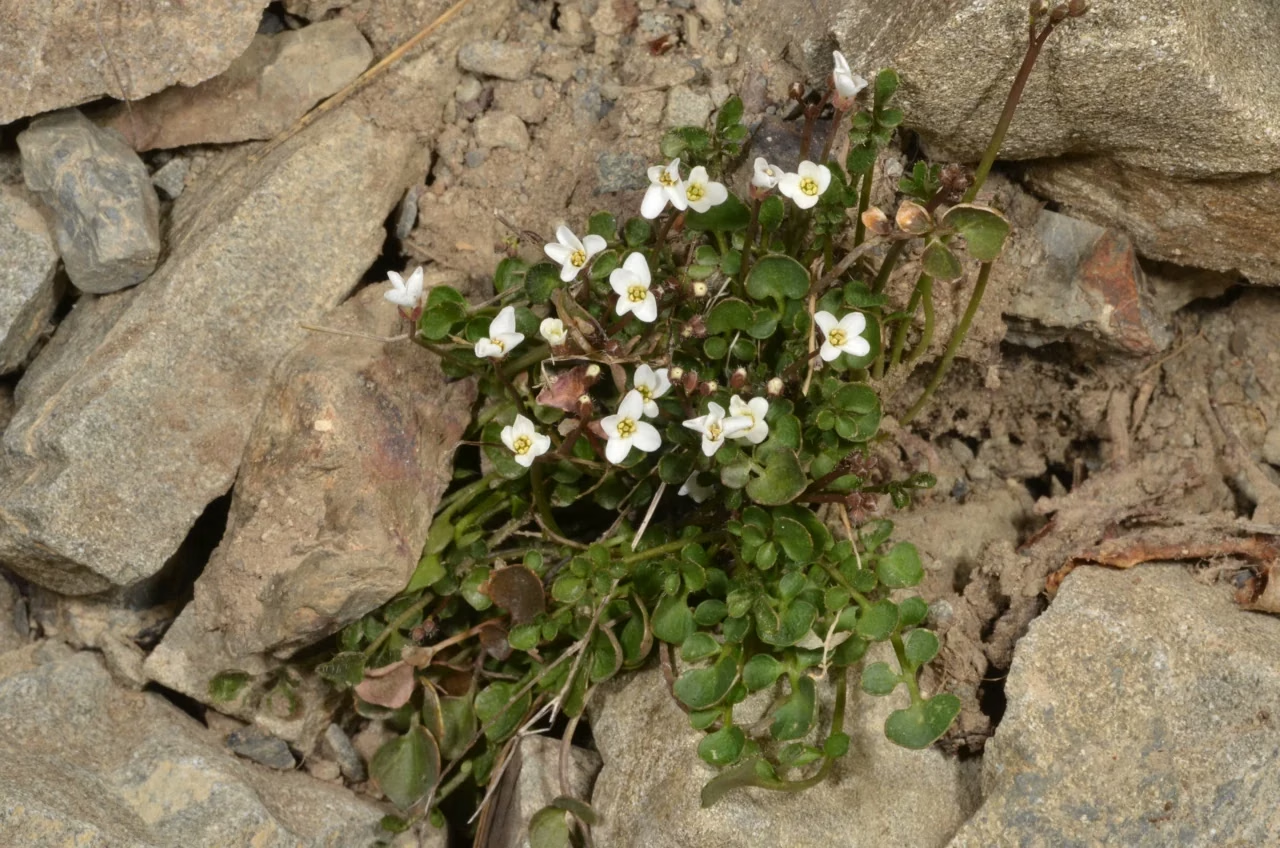
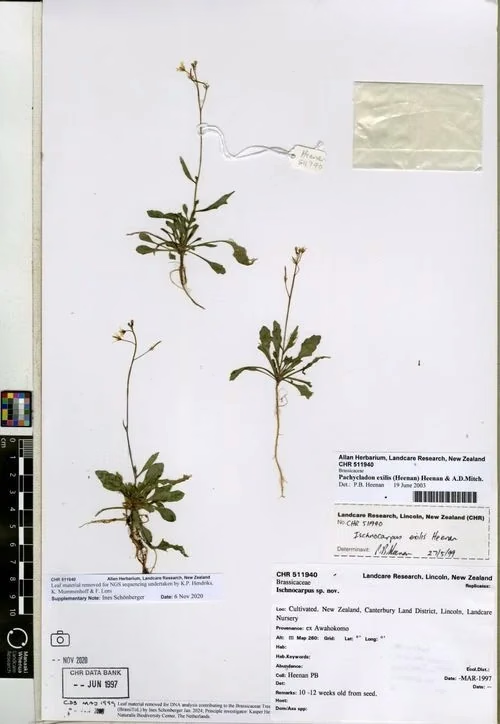
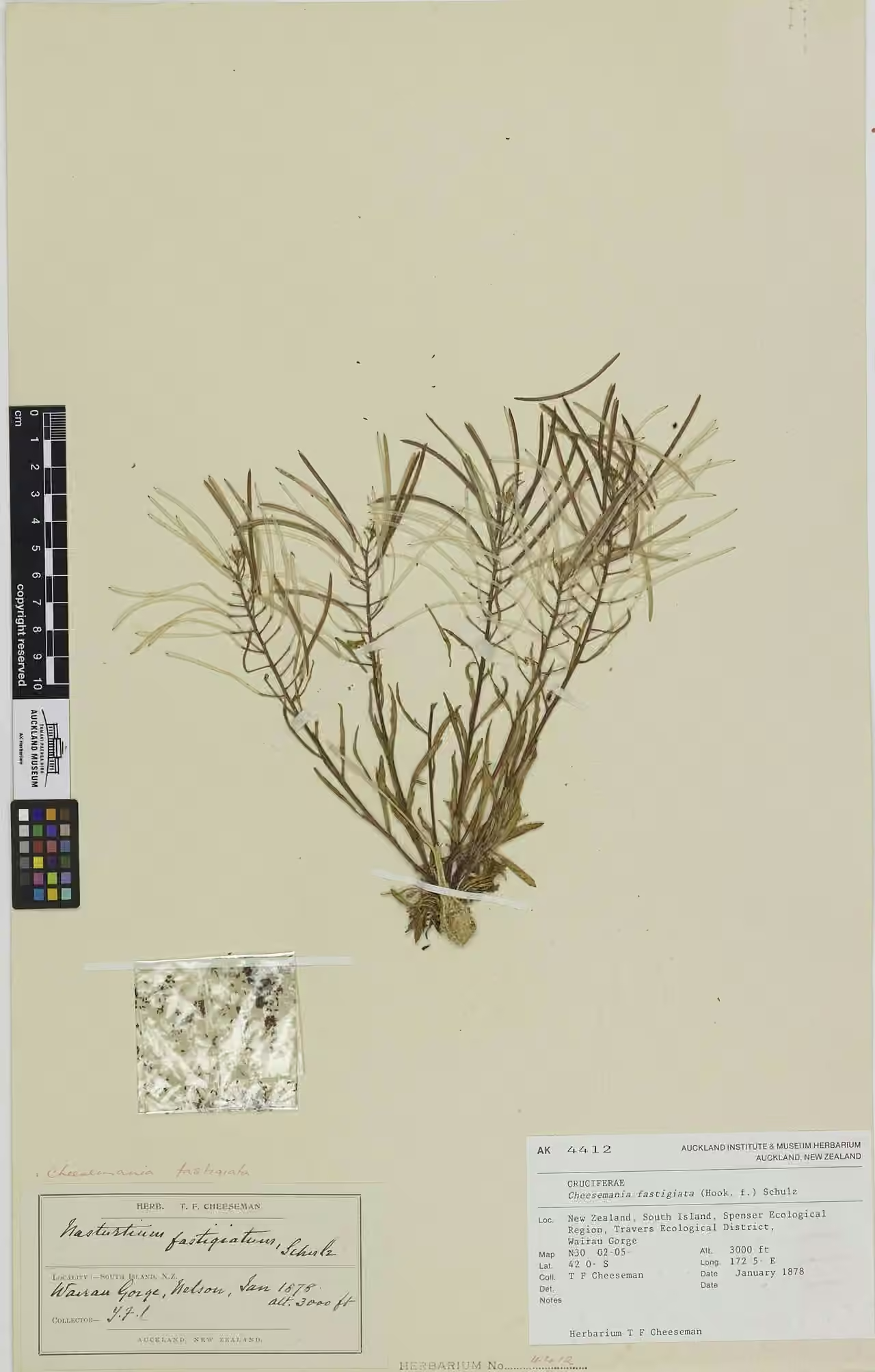
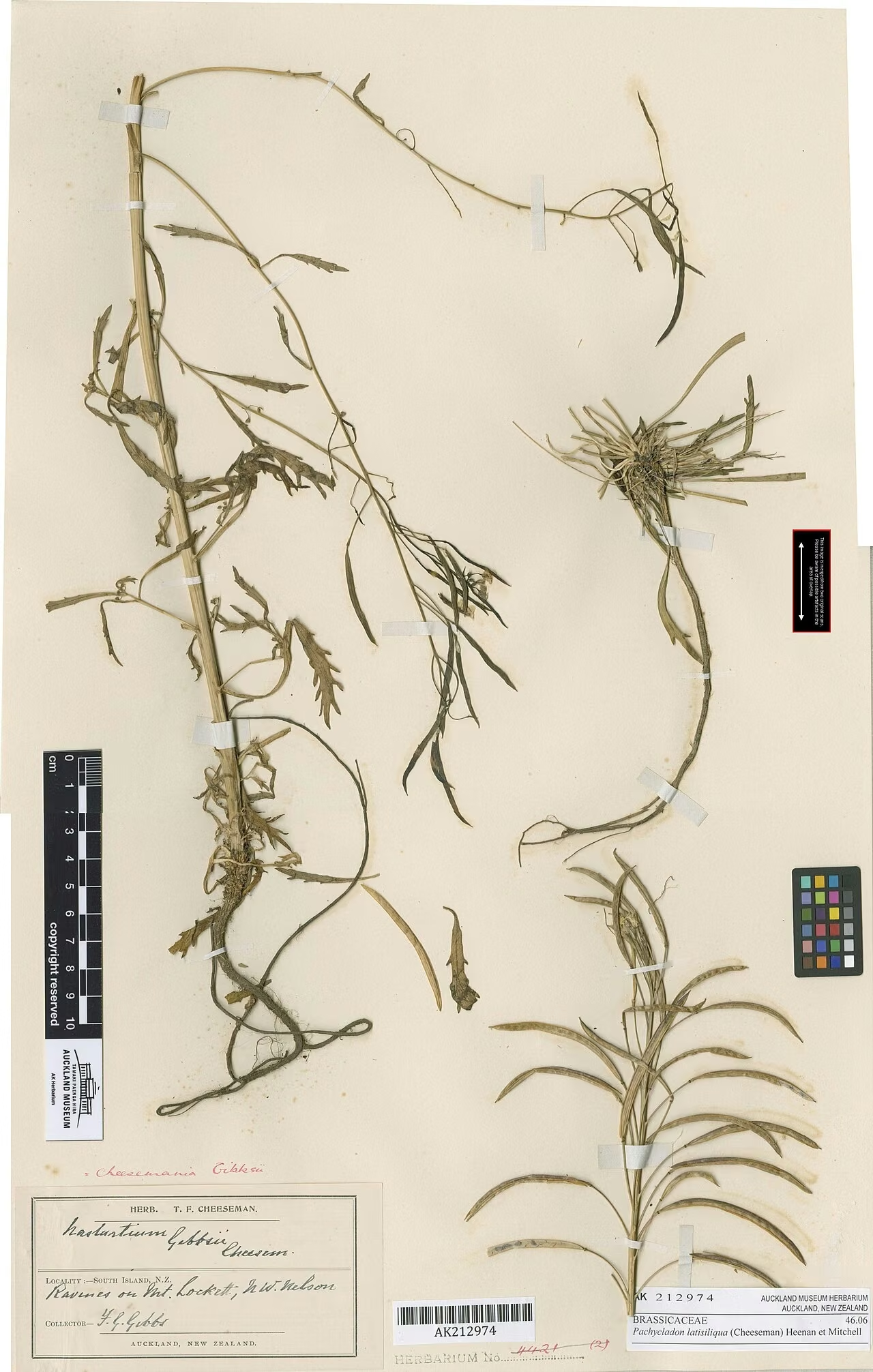
Explore other New Zealand plants in the mustard family, including Cardamine and alpine Pachycladon species.

Conservation
Cardamine polyodontes is endemic to New Zealand and was assessed as Not Threatened nationally in 2023. The Wellington regional assessment lists it as Data Deficient, reflecting uncertainty at a regional scale despite its national classification.
Frequently asked questions
What does polyodontes mean?
The name means many teeth and refers to the numerous hydathodes around the terminal leaflet.
Where does it grow?
Flora of New Zealand records it on cliffs, scree, in shrub-tussockland and beside watercourses in parts of both main islands.
What is conspicuous on the terminal leaflet?
It normally has four to ten shallow lobes, with conspicuous hydathodes on the lobes and at the blunt leaf tip.
Sources
Identification, habitat and phenology: Flora of New Zealand: Cardamine polyodontes. Conservation status: NZPCN and the Wellington regional assessment.
The rounded terminal leaflet and its prominent marginal hydathodes are especially useful characters for recognising this cress.
Last updated: