Cress
Cardamine alalata
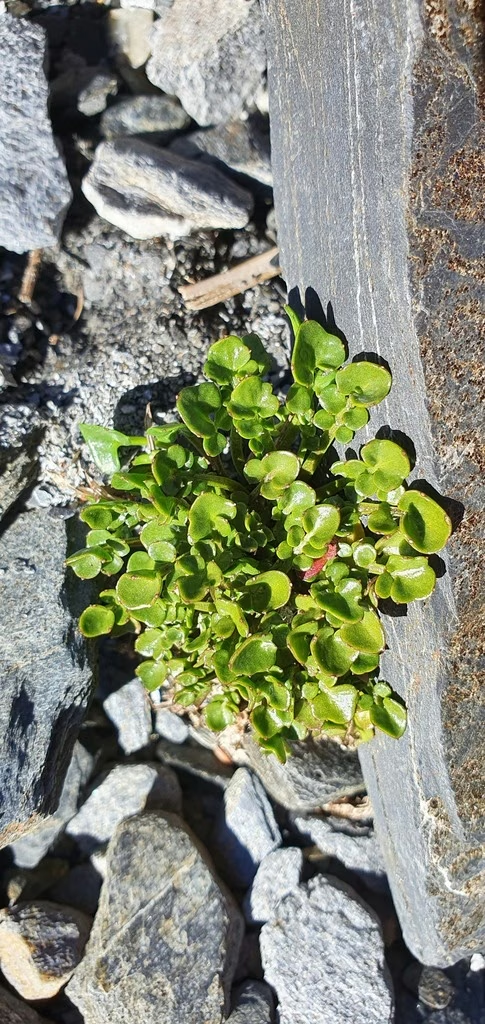
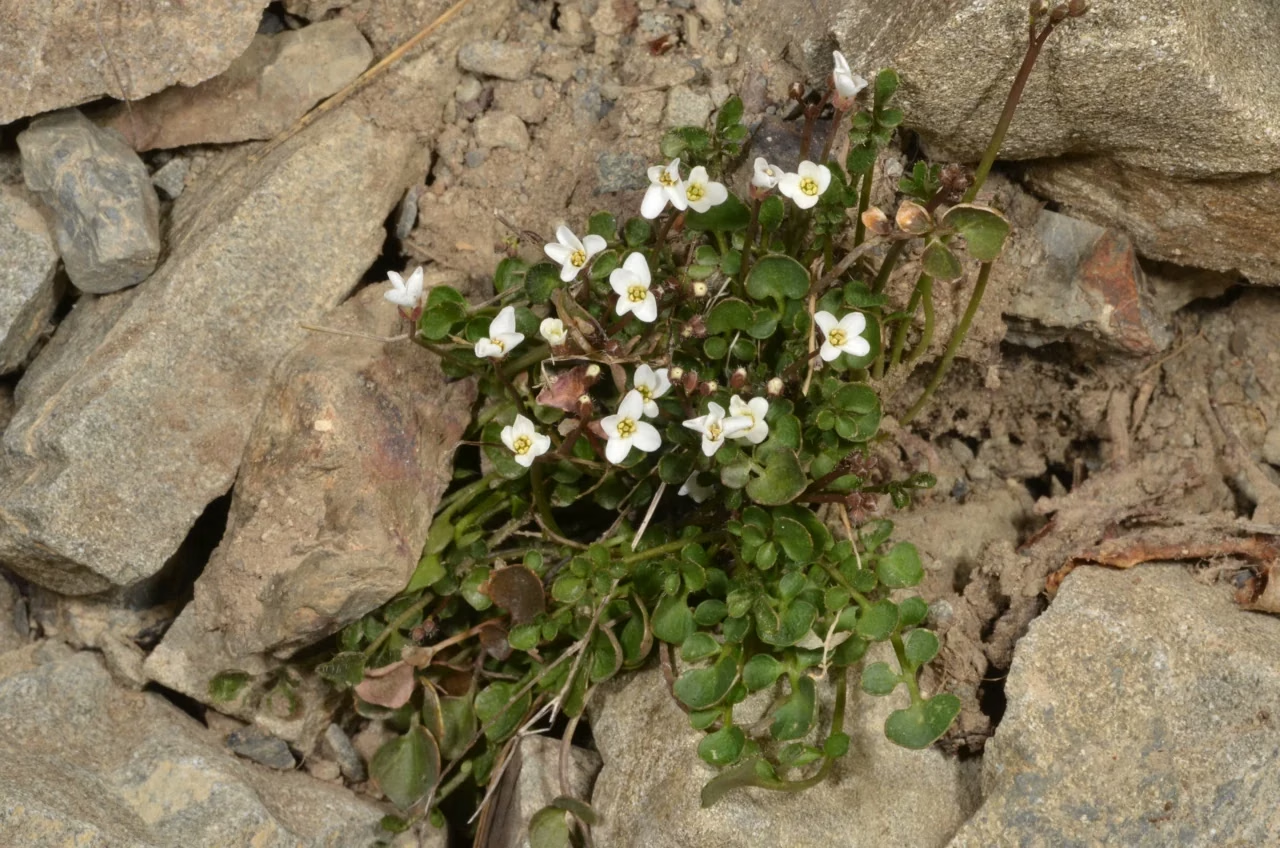
Cardamine alalata is a small perennial herb endemic to New Zealand. It forms one or more leaf rosettes and grows in alpine rock crevices, bluffs and other stony habitats. This rhizomatous herb has one or several rosettes of glossy leaves that can be green to grey-green and flushed purple.
Identification
This rhizomatous herb has one or several rosettes of glossy leaves that can be green to grey-green and flushed purple. Leaves are up to 100 mm long and may be simple or divided, with a rounded terminal segment that can have triangular side lobes.
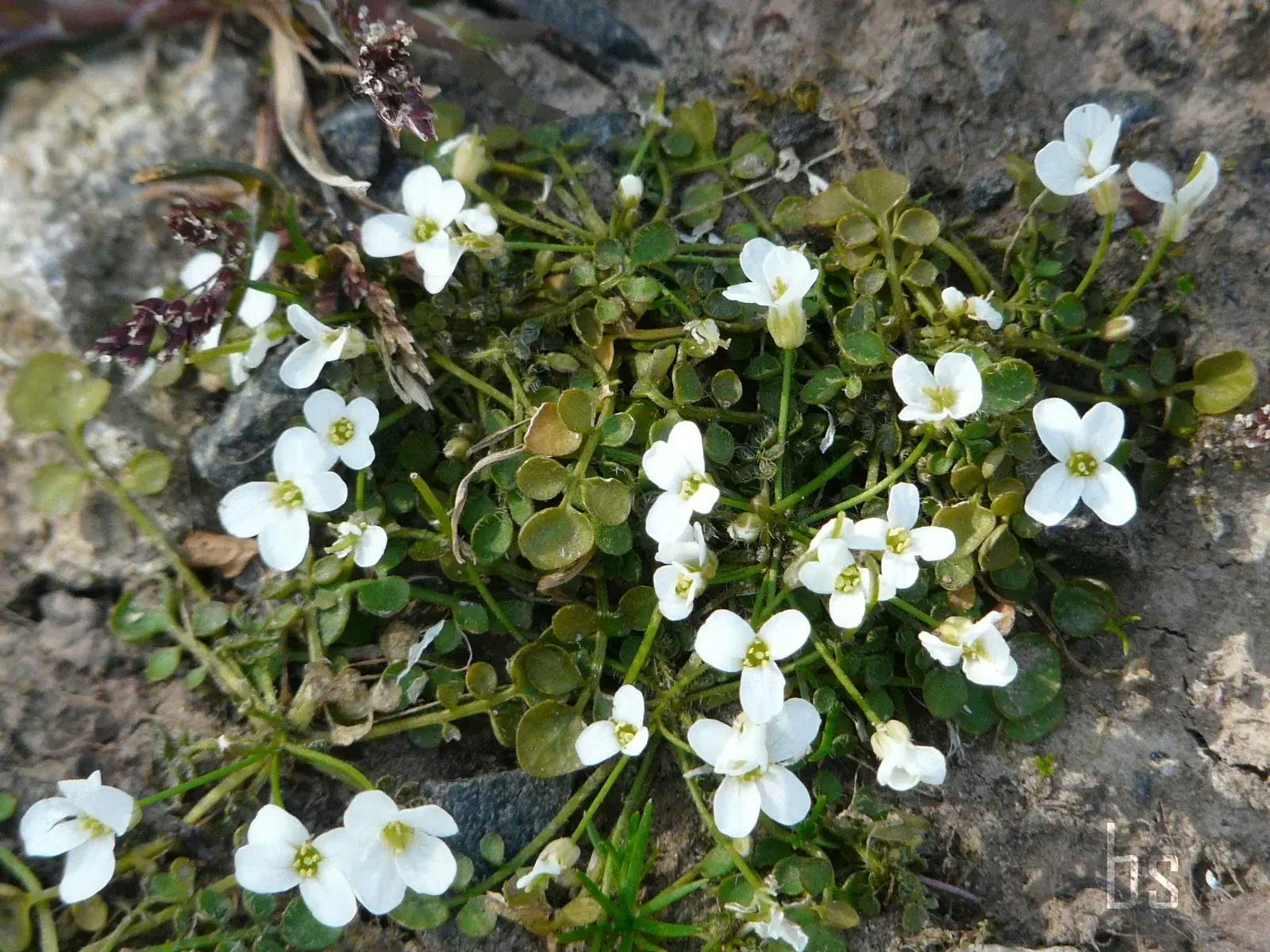
The white-petalled flowers occur on stalks up to 120 mm long. Their elongated fruit pods contain small seeds with a narrow marginal wing, which gives the species its name.
Quick facts
| Scientific Name | Cardamine alalata |
|---|---|
| Family | Brassicaceae |
| Leaf length | Up to 100 mm |
| Flowering period | December to March |
| Fruiting period | December to March |
| National status | Not Threatened (2023) |
| Height | Flowering stalks up to 12 cm long |
| Water Needs | Wild habitats include damp seepages as well as alpine rock and scree; irrigation is untested |
| Light | Recorded on alpine bluffs and rocky ground; a cultivation light requirement is not given |
| Spread | Rhizomatous rosettes with short lateral branches; mature spread is not quantified |
| Frost Tolerance | Minimum tolerated temperature is not documented |
| Salt Tolerance | Salt tolerance is not documented |
| Growth Rate | Annual extension is not quantified in the cited accounts |
| Lifespan | Perennial herb |
Natural altitude
Flora of New Zealand records this species mainly in alpine rock habitats, with one lower-altitude collection at approximately 600 metres in the Karangarua Valley. These observations do not establish a tested garden temperature range.
| City | Climate Suitability |
|---|---|
| Auckland | Not assessed |
| Wellington | Not assessed |
| Christchurch | Not assessed |
Habitat and distribution
Cardamine alalata occurs in both main islands, with records from Gisborne, the Volcanic Plateau and southern North Island, and from Nelson, Marlborough, Canterbury and Westland. It grows on alpine bluffs, rock ledges and crevices.
Other recorded sites include scree, river gravels, damp seepages and alpine herbfield. It is endemic to New Zealand.
Natural growing conditions
Recorded substrates include alpine rock bluffs, scree and river gravels, with some collections from damp seepages. These observations describe the wild habitat; the cited Flora profile does not provide a tested cultivation recipe for this species.
Planting
The Flora of New Zealand profile does not give a species-specific planting procedure for Cardamine alalata. Its natural sites range from rocky alpine crevices to damp seepages, and those observations alone cannot determine a reliable garden method.
Ecology
The herb forms a single rosette or multiple rosettes on short lateral branches, with a rhizome below. It occupies several open alpine habitats, including rock ledges and scree, as well as some damp seepages.
Observing this alpine herb
Look for a small rosette with glossy leaves and white flowers on rocky alpine ground. Flora of New Zealand records flowering from December to March, the same period in which fruits have been observed.
Landscape considerations
This species is documented from alpine bluffs, scree and rocky ground rather than from a tested garden planting trial. The Flora profile does not provide species-specific landscape guidance, so its precise cultivation requirements remain uncertain.
Flowering and fruiting
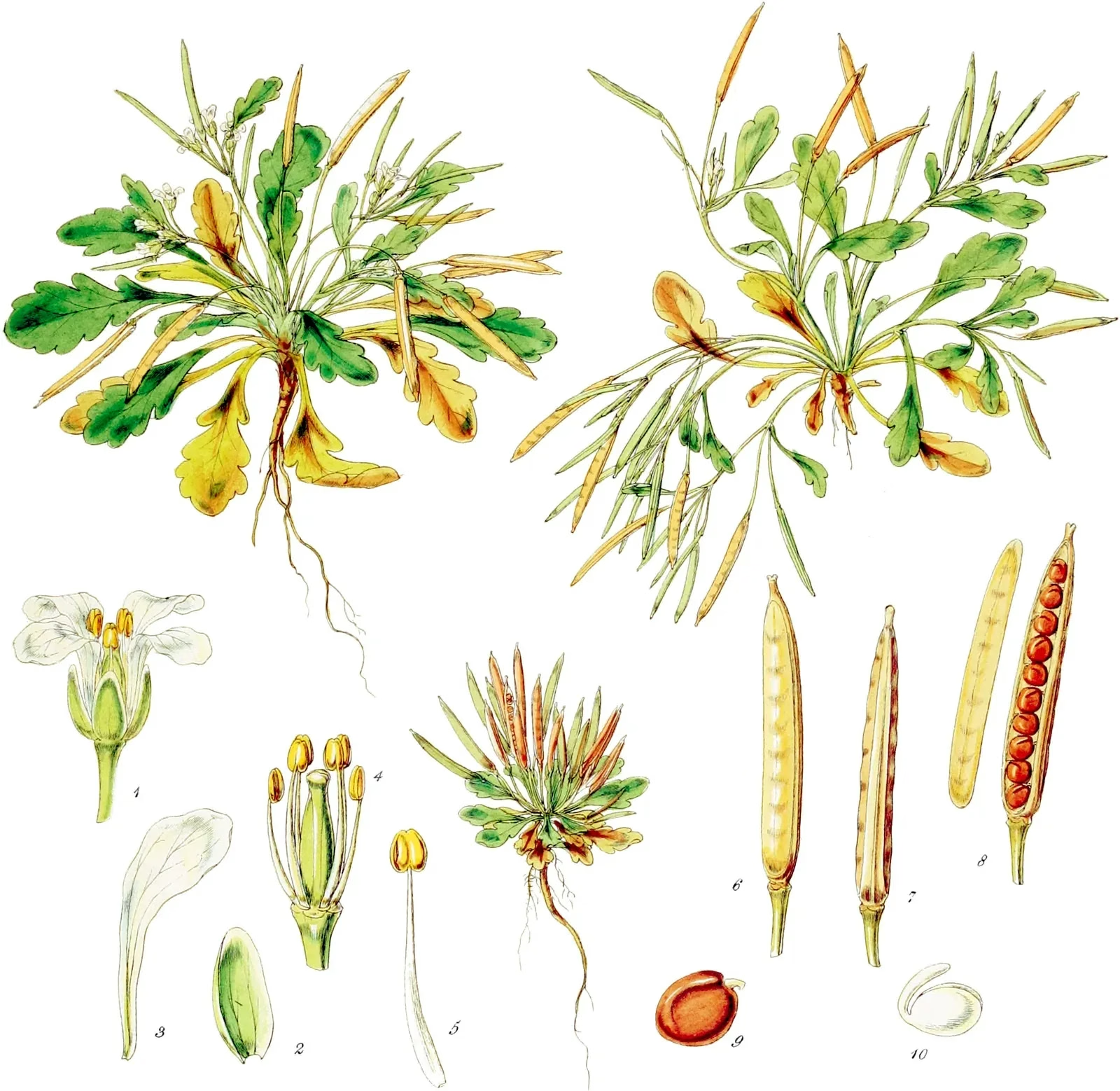
Flora of New Zealand records both flowering and fruiting from December to March. The slender pods are 9-38 mm long and can mature from green or purple-green to purple-brown as their valves open.
Pruning
This is a small perennial herb with leaf rosettes rather than a woody shrub. The cited Flora profile describes its leaves and flowering stems but does not report a species-specific pruning method for cultivated plants.
How to Grow Cress (Cardamine alalata)
Seed characters and propagation evidence
The distinctive seed of Cardamine alalata has a very narrow wing around its sides and tip. Seeds are about 0.9-1.5 mm long, and the wing is less than 0.1 mm wide. That structure gives the species its name. Flora of New Zealand describes the seed and reproductive season, but does not report a germination treatment or a tested sowing temperature.
Understanding Its Alpine Sites
Most records concern alpine rock-bluff ledges and crevices. The species also occurs in river gravel, rocky ground, scree, damp seepages and herbfield. A single lower-altitude record comes from a stony site at about 600 m in the Karangarua Valley, Westland. That unusually low record is useful context, but it does not demonstrate general performance in lowland gardens.
Rosettes and rhizomes
This perennial has a rhizome and can form either a single rosette or several rosettes on short lateral branches. The type collection was described as a close clump about 14 cm across. That is an observation of one wild collection, not a measured mature garden spread. Glossy leaves reach about 10 cm long and can be green, grey-green or purple-flushed.
Following flowers and pods
Flowers and fruit are both recorded from December to March. The hairless flowering stalk can reach 12 cm and carries one to twelve flowers in each inflorescence. Pods eventually release the small winged seeds. Checking mature seed wings and the conspicuous leaf hydathodes helps confirm the species when examining cultivated material previously labelled with an informal alpine-cress tag name.
Pests and diseases
The cited Flora profile does not list species-specific pest or disease treatments. Leaves may naturally be flushed purple, and mature pods may become purple-brown; these colours form part of the published description.
Naming and classification
Peter Heenan described Cardamine alalata in 2017. Its name refers to the wing on the seed margin. Earlier collections had been grouped under informal labels including the high-altitude glossy-green cardamine.
Identification features
The glossy leaves, often with a rounded terminal segment and triangular side lobes, are useful field characters. Flora of New Zealand also notes conspicuous hydathodes, small water-secreting structures, on the leaf margins.
Other New Zealand mustards
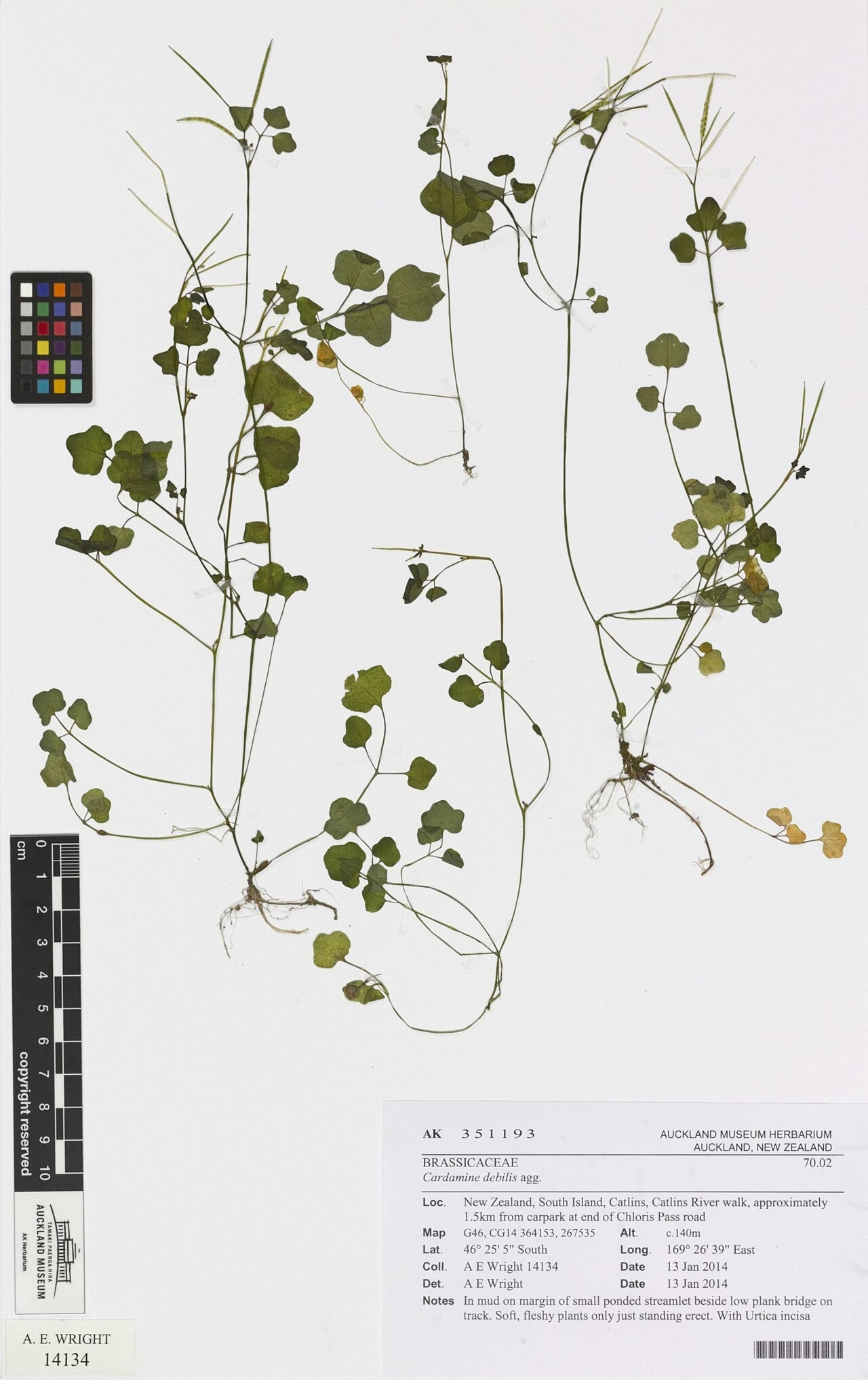
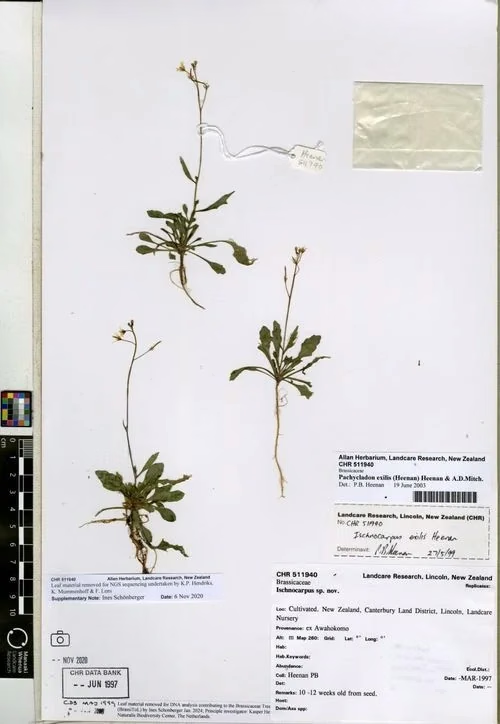
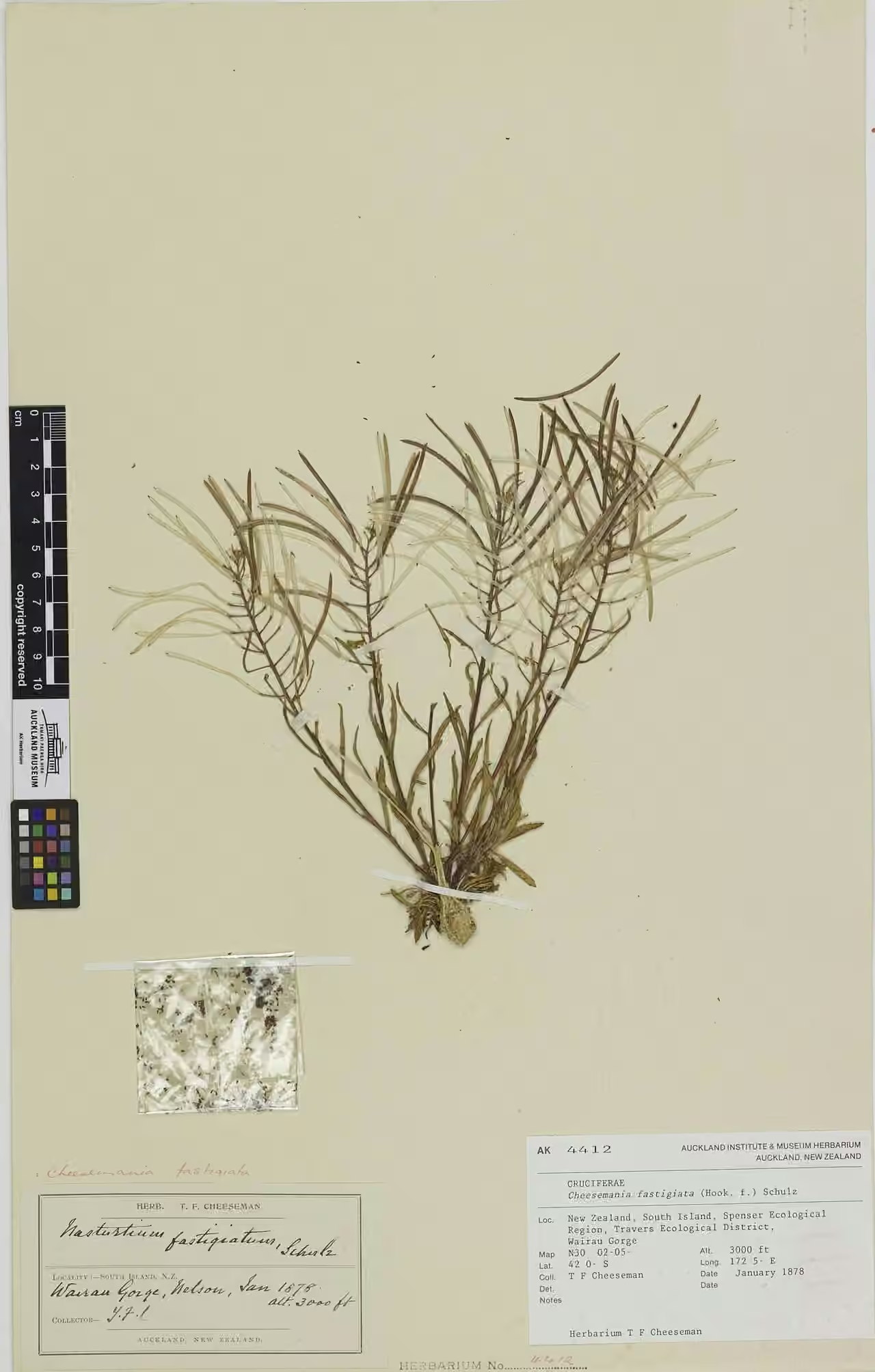
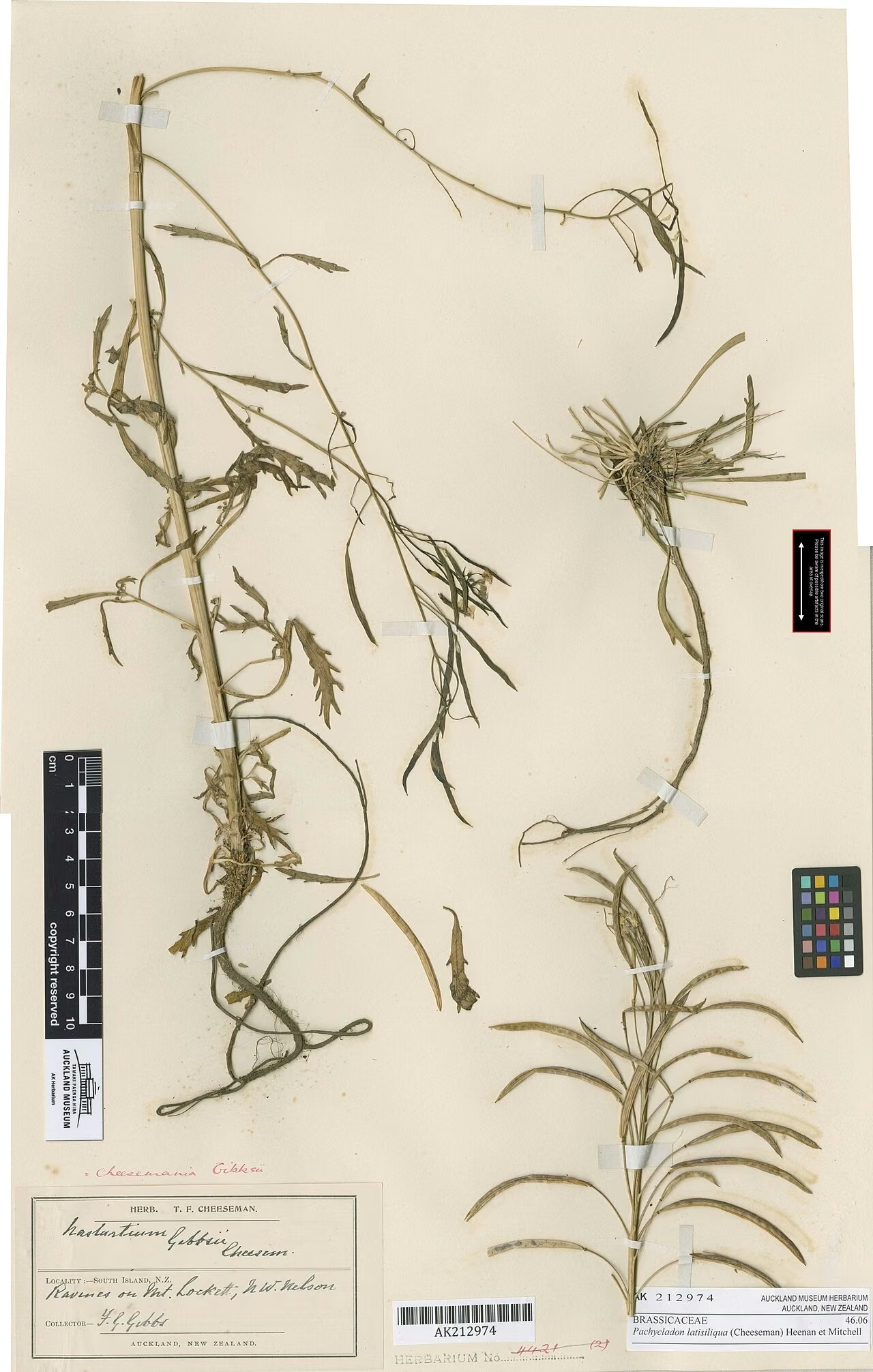
Explore other New Zealand plants in the mustard family, including Cardamine and alpine Pachycladon species.

Conservation
The 2023 national assessment lists Cardamine alalata as Not Threatened. NZPCN separately reports it as Regionally Naturally Uncommon in Wellington in 2025, showing that a regional assessment can differ from the national classification.
Frequently asked questions
Where does it grow?
Recorded habitats include alpine rock ledges, scree and damp seepages.
When can it flower?
Flora of New Zealand records flowers and fruit from December through March.
What does the name alalata refer to?
It refers to the narrow wing along the seed margins and tip. That wing is less than 0.1 mm wide.
Sources
Last updated: