Cress
Cardamine intonsa
Identifying features
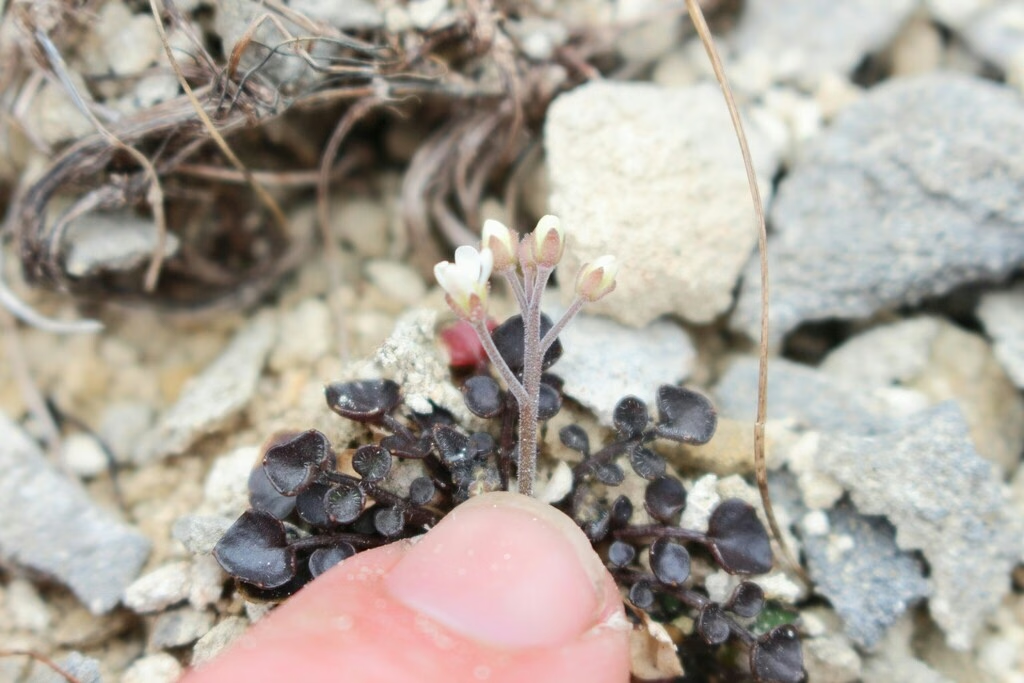
Cardamine intonsa is a perennial cress endemic to Aotearoa New Zealand. It is recognised in part by the small hairs on its seed pods, which inspired the name intonsa, meaning unshaven.
Identification
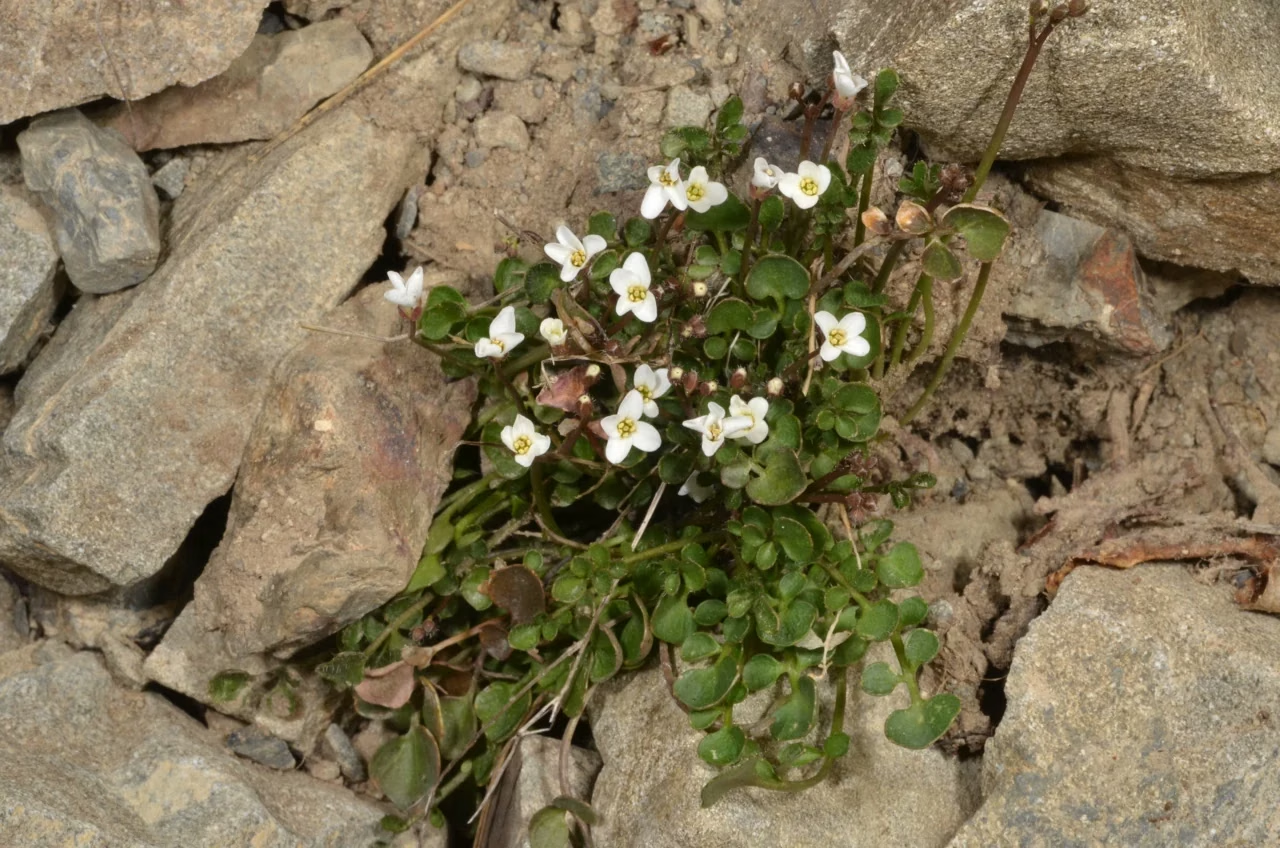
The herb forms a single rosette or short lateral branches. Its divided leaves can reach 125 mm long and are light green to pale grey-green. The terminal leaflet is rounded to kidney-shaped, often with shallow lobes and conspicuous hydathodes.
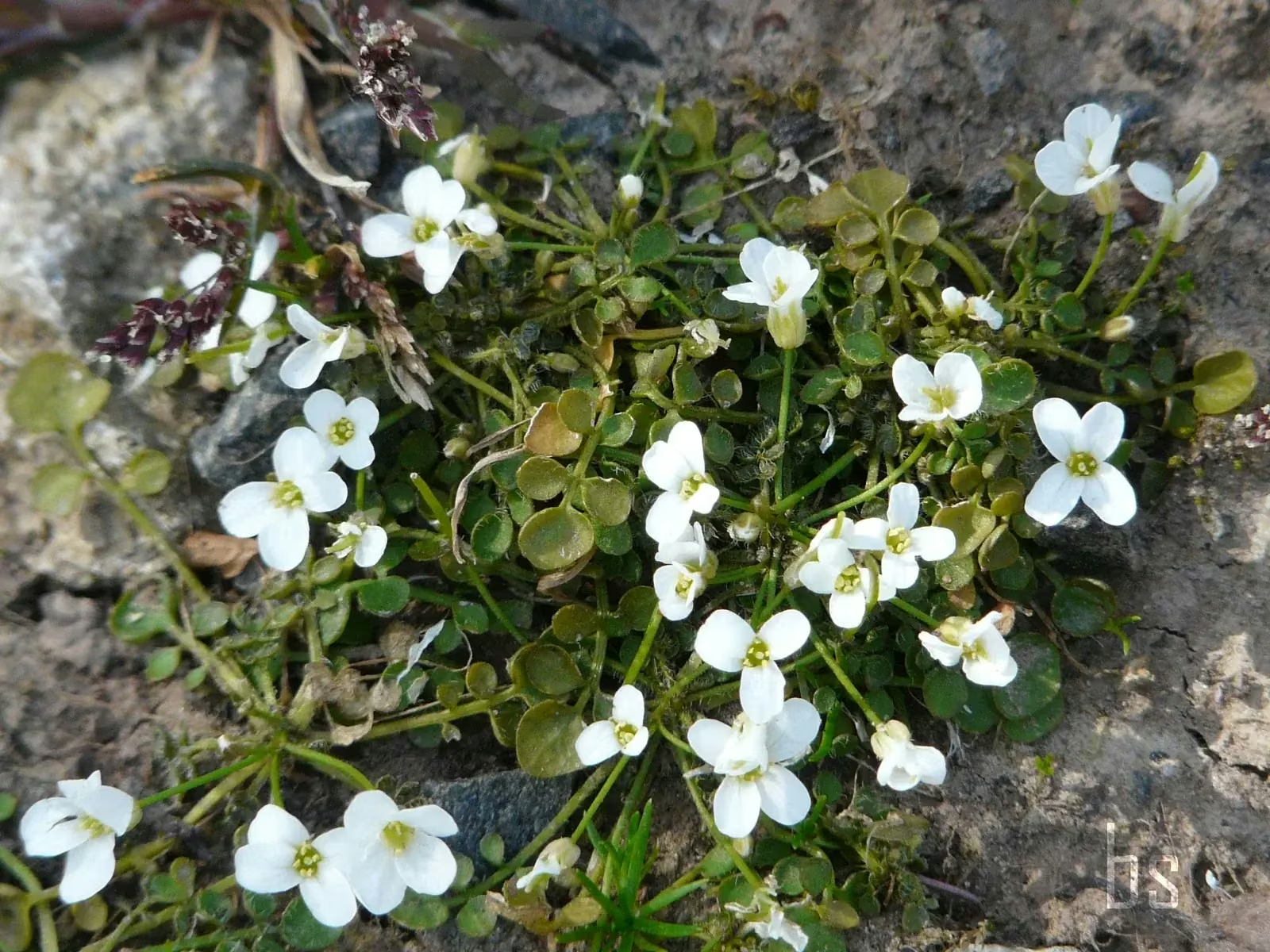
Flowering stems can reach 350 mm. The petals are white and approximately 4-4.5 mm long. The narrow fruit pods carry short hairs, although the extent of the hairs varies among collections.
Quick facts
| Scientific Name | Cardamine intonsa |
|---|---|
| Family | Brassicaceae |
| Leaf length | Up to 125 mm |
| Flowering period | August to January |
| Fruiting period | November to February |
| National status | Not Threatened (2023) |
| Height | Flowering stalks up to 35 cm long |
| Water Needs | Wild sites include watercourse margins, river terraces and rocky ground; garden irrigation is untested |
| Light | Open rock sites and forest are both recorded habitats |
| Spread | One rosette or short lateral branches; mature width is not quantified |
| Frost Tolerance | Minimum tolerated temperature is not documented |
| Salt Tolerance | Salt tolerance is not documented |
| Growth Rate | Annual extension is not quantified in the cited accounts |
| Lifespan | Perennial herb |
Natural range
Flora of New Zealand records this species in the southern North Island and across several South Island regions. Its documented habitats range from open rock bluffs to forest and watercourse margins; a tested garden temperature limit is not given.
| City | Climate Suitability |
|---|---|
| Auckland | Not assessed |
| Wellington | Not assessed |
| Christchurch | Not assessed |
Habitat and distribution
Records include the southern North Island and Sounds-Nelson, Marlborough, Westland, Canterbury, Otago and Southland. The species occurs on rock bluffs and outcrops in open ground or forest.
It is also documented on scree and river terraces, at the margins of watercourses and among tussocks or herbfield. The type specimen was collected on a cliff face at Mount Pleasant in the Port Hills.
Natural growing conditions
Flora of New Zealand records this cress in both open and forested rock habitats, as well as river margins and scree. The cited profile does not provide a tested species-specific soil, watering or cultivation recipe.
Planting
The Flora profile describes several natural habitats for Cardamine intonsa but does not supply a species-specific planting protocol. Occurrence on bluffs and watercourse margins alone does not establish how it should be established in a garden.
Ecology
This species grows on rock outcrops in forest and open ground, but is also recorded on river terraces and among tussocks. Flora of New Zealand notes that hairs on its fruit-pod valves vary in their placement between collections.
Observing this cress
Look for divided, pale green leaves and slender white flowers in the species’ recorded habitats. The hairs on its fruit pods and the small, conspicuous leaf hydathodes are features used by Flora of New Zealand for identification.
Landscape considerations
The plant’s natural habitats include rocky bluffs, scree, watercourse margins and tussock herbfield. The cited Flora profile gives no tested landscaping method for this species, so those observations should not be mistaken for a complete garden prescription.
Flowering and fruiting
Flora of New Zealand records flowering from August to January and fruiting from November to February. The fruit-pod valves are green-brown to red-brown when mature and turn straw-coloured as they open.
Pruning
Cardamine intonsa is an herb with basal rosettes rather than a woody shrub. Its Flora profile describes short lateral branches and flowering stems but does not specify a species-specific pruning method.
How to Grow Cress (Cardamine intonsa)
Seed and propagation evidence
The wingless seeds of Cardamine intonsa are approximately 1-1.2 mm long, yellow-brown to henna-coloured, and oblong to almost rounded-oblong. Flora of New Zealand gives their structure and the seasonal records, but does not report a tested sowing treatment or division protocol. The published information therefore supports identifying mature reproductive material without establishing a nursery method.
Its range of growing sites
Natural populations occur mainly on rock bluffs and outcrops in both open places and forest. Additional records include scree, river terraces, watercourse margins, tussock vegetation and herbfield. This variety is useful context for understanding its ecology; an irrigation interval, shade percentage or artificial soil recipe is not specified by the Flora treatment.
Identifying vegetative growth
The perennial forms one rosette or short lateral branches. Divided leaves reach about 12.5 cm long and are light green to pale grey-green, with relatively thin blades. Their surfaces and margins vary from nearly hairless to moderately hairy. The terminal leaflet is commonly kidney-shaped or angular-kidney-shaped, with shallow lobes and small conspicuous hydathodes.
Checking flowers and developing pods
Flowering stalks can reach 35 cm and often branch into racemes containing five to eight flowers. Hairs on the stalk and flower stalks typically point backwards. Flowering is recorded from August to January, with fruit from November to February. Flora also describes variation in the distribution of hairs on the pod valves, so completely uniform hair coverage should not be required when checking the identity of a cultivated seed source.
Pests and diseases
The cited Flora profile does not list a species-specific pest or disease treatment. Short hairs on the fruit pods are a normal defining character of this species, although their distribution on the valves can vary.
Naming and classification
Peter Heenan described Cardamine intonsa in 2017. Its specific name means “unshaven” and refers to the short hairs on the seed pod, a feature used in distinguishing it from related cardamines.
Distinguishing related cardamines
Flora of New Zealand distinguishes C. intonsa from C. glara by conspicuous leaf hydathodes, smaller floral parts and usually hairy fruit pods. The pod hairs can be spread over the valves or concentrated near their ends.
Other New Zealand mustards
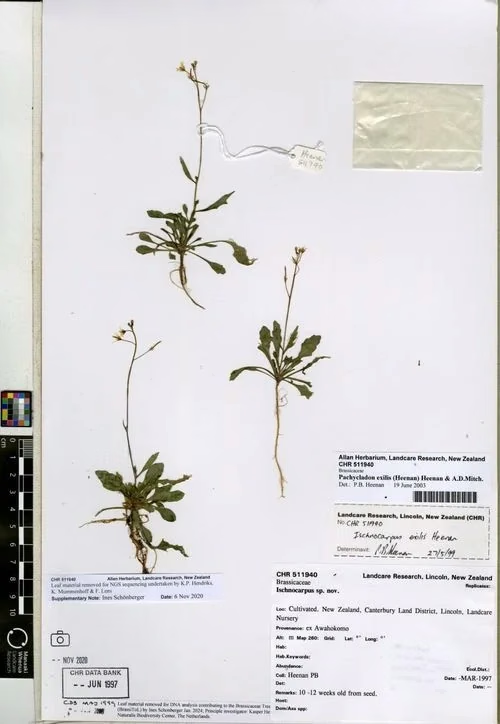
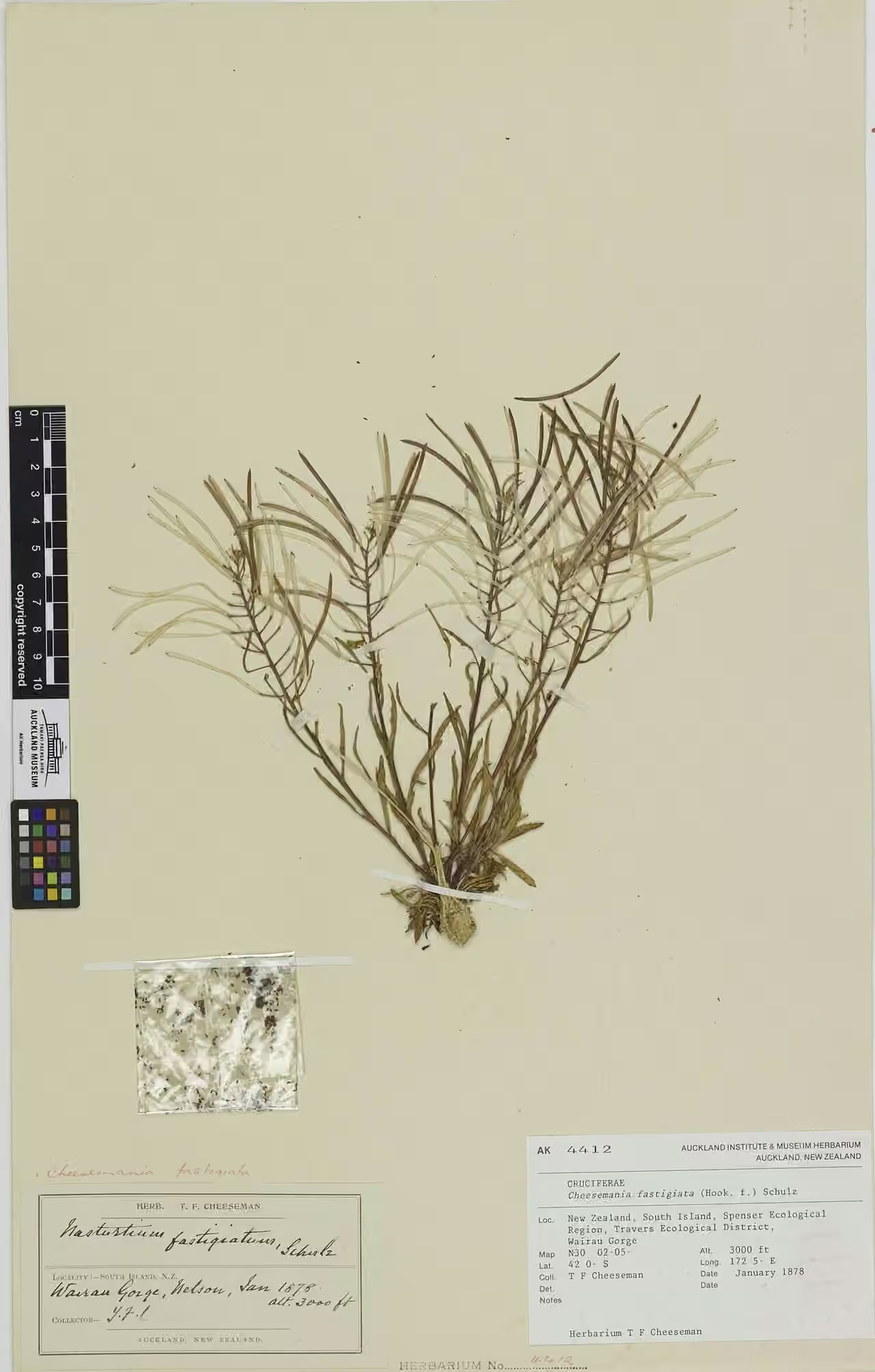
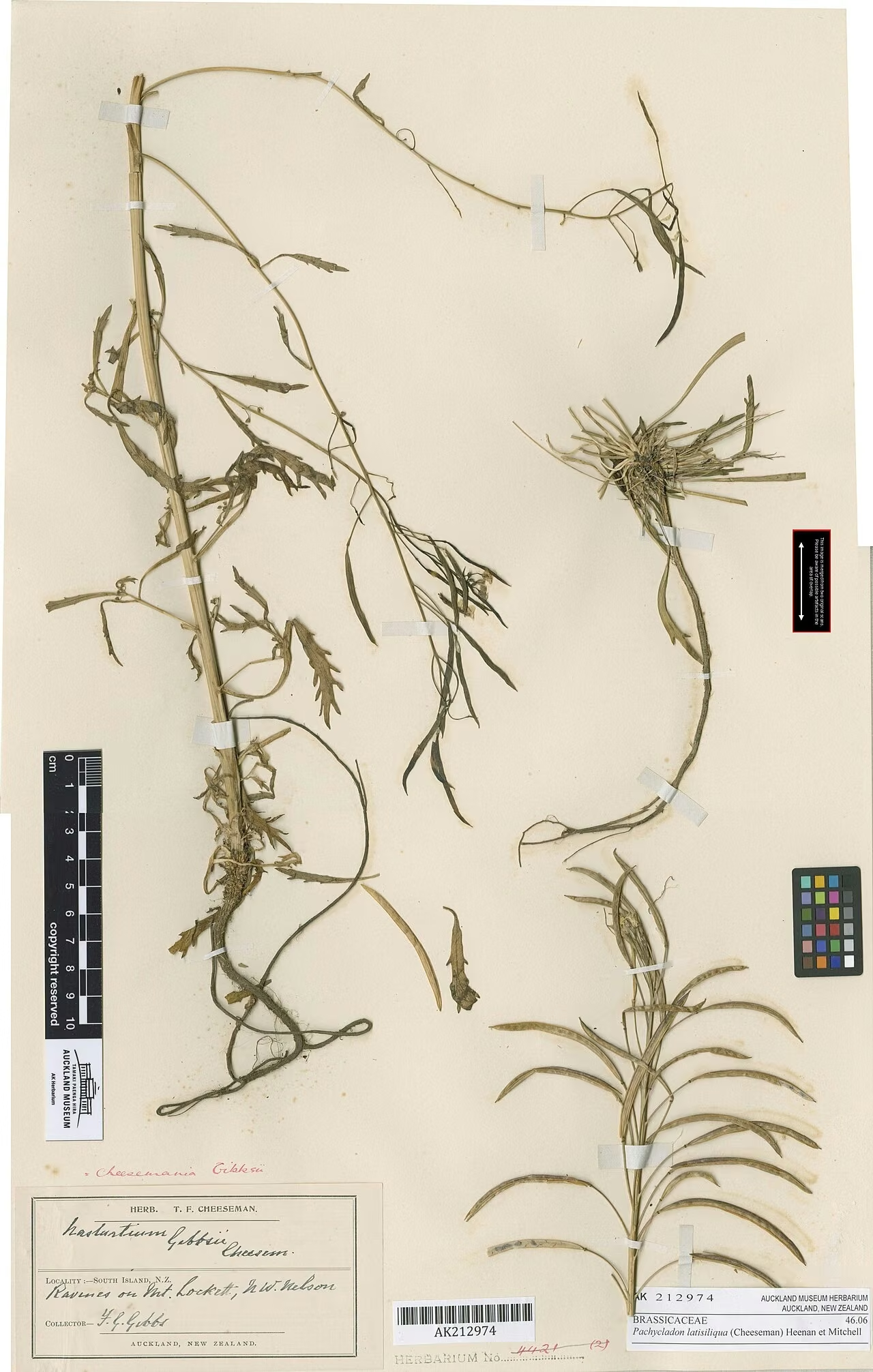
Explore other New Zealand plants in the mustard family, including Cardamine and alpine Pachycladon species.

Conservation
The 2023 national assessment lists Cardamine intonsa as Not Threatened. NZPCN reports separate 2025 regional classifications of Regionally Naturally Uncommon in Otago and Data Deficient in Wellington.
Frequently asked questions
Why is it called intonsa?
The name refers to short hairs on the fruit pod.
When does it flower?
Flora of New Zealand records flowering from August through January.
Must every seed pod have hairs along its whole length?
No. Flora records variation in hair distribution on the pod valves of Cardamine intonsa, including collections with only parts of the valves hairy.
Sources
Last updated: