Cress
Cardamine heleniae
Hairy-leaved cress
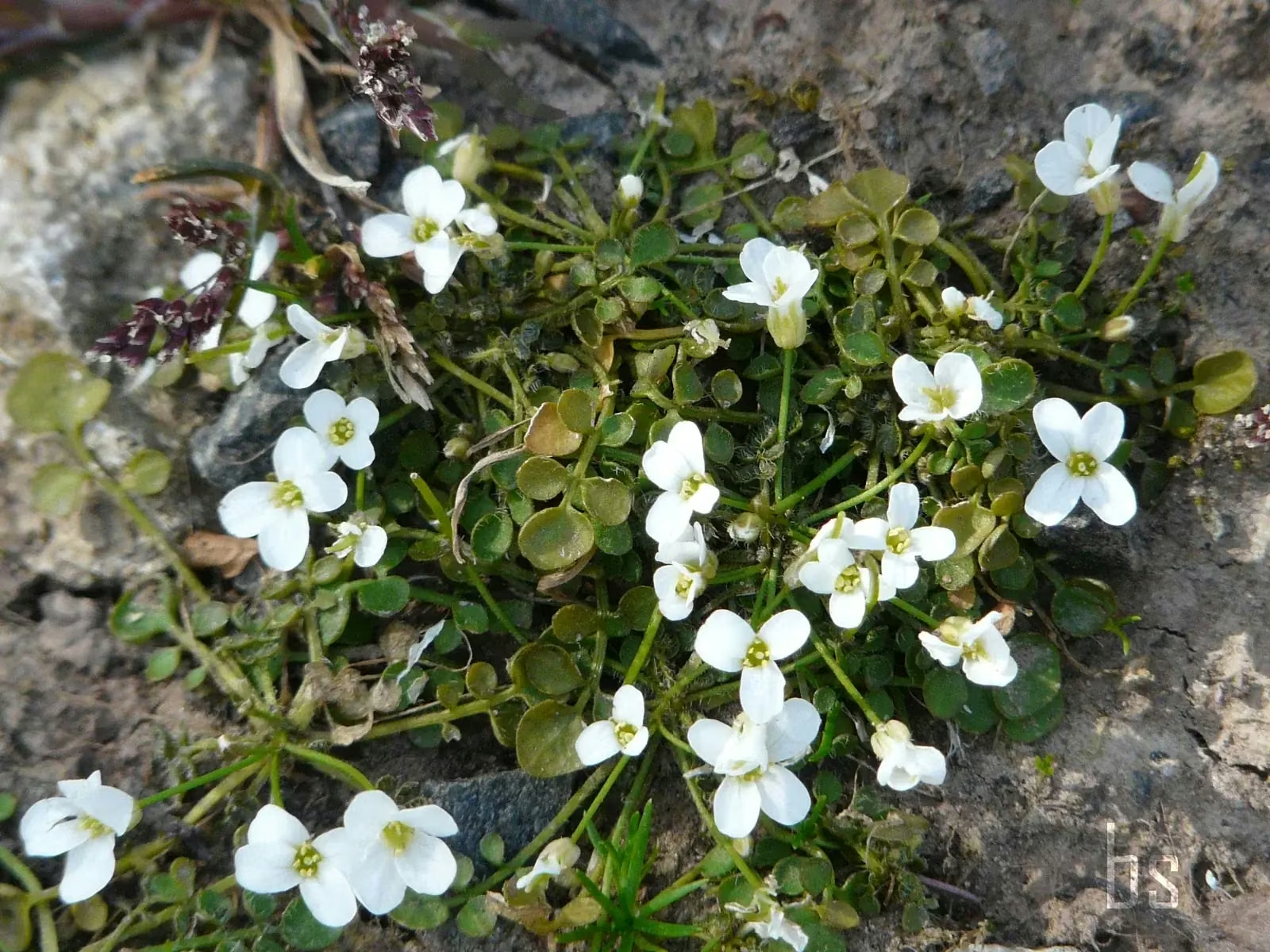
Cardamine heleniae is a small endemic cress with notably hairy leaves and white flowers. It has been collected in both main islands, although its original natural distribution remains uncertain. This perennial forms a single rosette or short lateral branches.
Identification
This perennial forms a single rosette or short lateral branches. Leaves can reach 120 mm and are divided into leaflets; their margins have conspicuous spreading hairs. The leaves are green to green-brown, with green-brown to red-brown stalks.
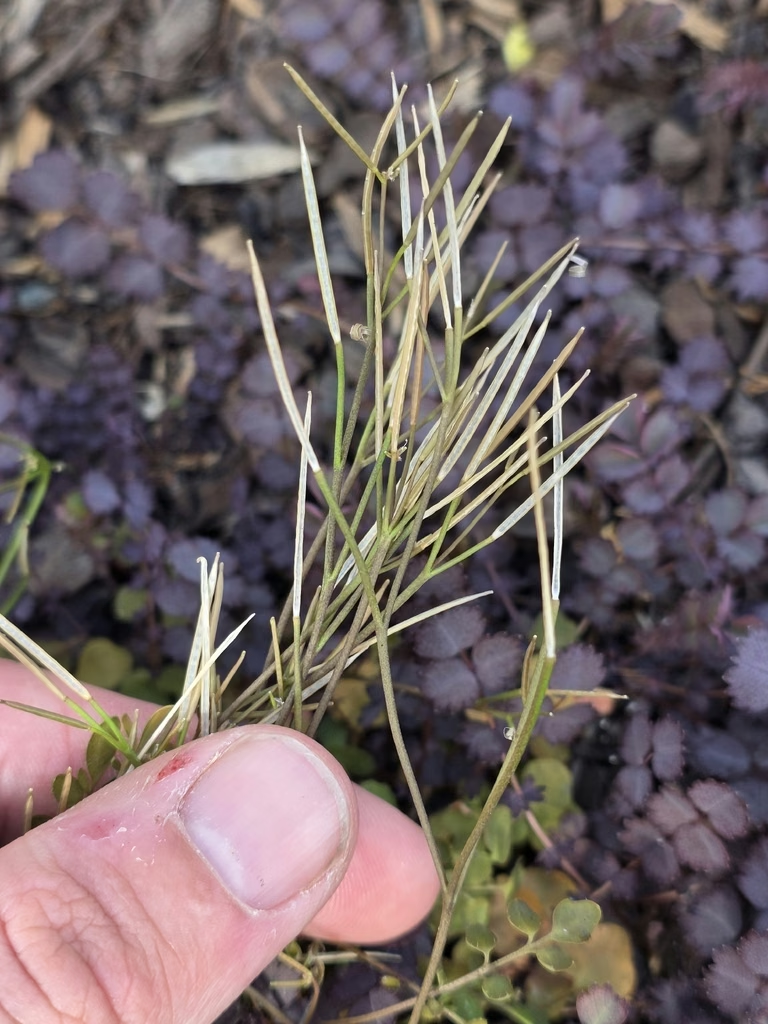
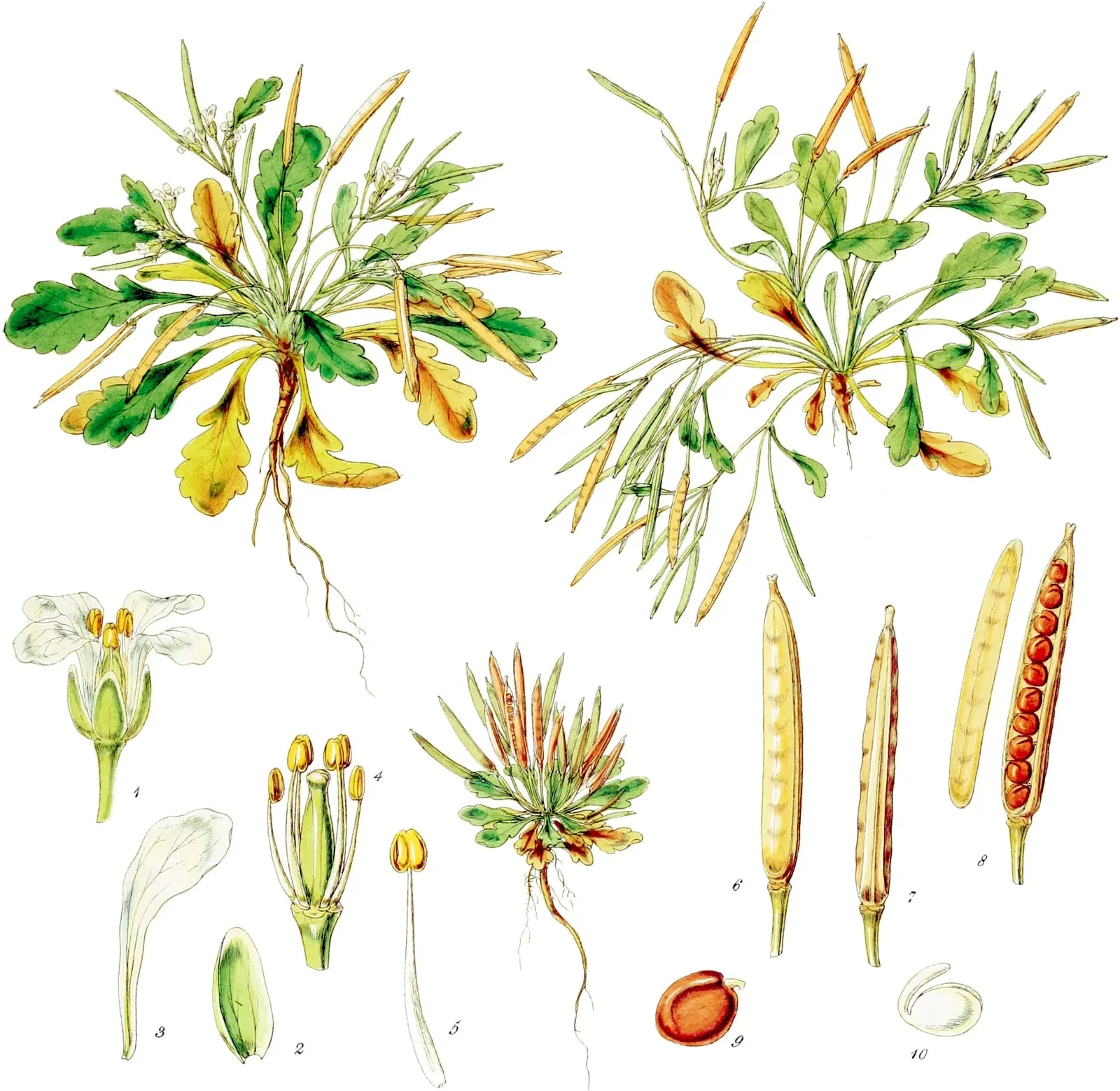
The flowers are white. The narrow fruit pods are green-brown to reddish-brown and contain oblong seeds. The hairy leaf margins help distinguish it from the similar Cardamine corymbosa.
Quick facts
| Scientific Name | Cardamine heleniae |
|---|---|
| Family | Brassicaceae |
| Leaf length | Up to 120 mm |
| Flowering period | July to December |
| Fruiting period | July to February |
| National status | Not Threatened (2023) |
| Height | Flowering stalks up to 15 cm long |
| Water Needs | Cultivation watering needs are not specified |
| Light | A cultivation light requirement is not specified |
| Spread | One rosette or short lateral branches; mature width is not quantified |
| Frost Tolerance | Minimum tolerated temperature is not documented |
| Salt Tolerance | Salt tolerance is not documented |
| Growth Rate | Annual extension is not quantified in the cited accounts |
| Lifespan | Perennial herb |
Distribution context
Collections have been made in widely separated North Island locations as well as Marlborough, Canterbury and Otago. Flora of New Zealand notes that the sparse records and likely under-collection make the plant’s natural distribution difficult to establish.
| City | Climate Suitability |
|---|---|
| Auckland | Not assessed |
| Wellington | Not assessed |
| Christchurch | Not assessed |
Habitat and distribution
Flora of New Zealand records collections in Auckland, Gisborne, Taranaki and the southern North Island, and in Marlborough, Canterbury and Otago. It suggests that the eastern South Island may be part of its natural range, but describes that conclusion as uncertain.
It has been collected on limestone and mudstone, and also occurs on disturbed ground in gardens, lawns and nursery pots. Its wild habitat remains incompletely understood.
Growing conditions
The species can occur in amenity gardens, lawns and nursery pots, where Flora of New Zealand describes it as having strong weedy tendencies. Its occurrence on limestone and mudstone suggests an association with base-rich substrates, although wild habitat information remains limited.
Planting
The Flora profile documents this species appearing spontaneously in gardens and nursery pots but does not supply a species-specific planting protocol. Its tendency to spread in disturbed settings is relevant when considering it for a contained collection.
Ecology
Cardamine heleniae is known from few documented wild sites, so its original habitats and population sizes are uncertain. The Flora profile records it on base-rich rocks and in disturbed human-managed places such as paths, lawns and nursery pots.
Observing this cress
The plant may be encountered on bare soil or in garden pots. Look closely at the leaf margins: NZPCN notes that its conspicuous hairs distinguish it from the otherwise similar Cardamine corymbosa.
Garden considerations
Flora of New Zealand records this cress as a frequent weed in gardens, lawns and nursery pots. Its ability to appear on disturbed soil matters when deciding whether it is suitable for a particular garden or collection.
Flowering and fruiting
Flora of New Zealand records flowers from July to December and fruits from July to February. These periods overlap for much of the year; the white flowers and narrow seed pods may therefore appear together.
Pruning
Cardamine heleniae forms small herbaceous rosettes rather than woody branches. The cited Flora profile does not report a species-specific pruning method; it describes plants growing as weeds on disturbed ground and in nursery pots.
How to Grow Cress (Cardamine heleniae)
Propagation from seed
NZ Plant Conservation Network identifies seed as the propagation route for Cardamine heleniae. Flora of New Zealand describes its wingless, oblong seeds as approximately 0.9-1 mm long and pale green to yellow-green. Neither description supplies a numerical germination temperature or a seed pretreatment. Greenish seed colour is part of the species description, not enough on its own to judge maturity.
A native cress in garden settings
This perennial often appears as a weed in amenity gardens, lawns and nursery pots. Its few known wild localities leave considerable uncertainty about the full natural habitat. Records on limestone and mudstone indicate an association with base-rich substrates, but the limited evidence should be retained when describing its requirements. A plant's presence in a nursery pot does not establish a tested potting recipe.
Recognising the rosette
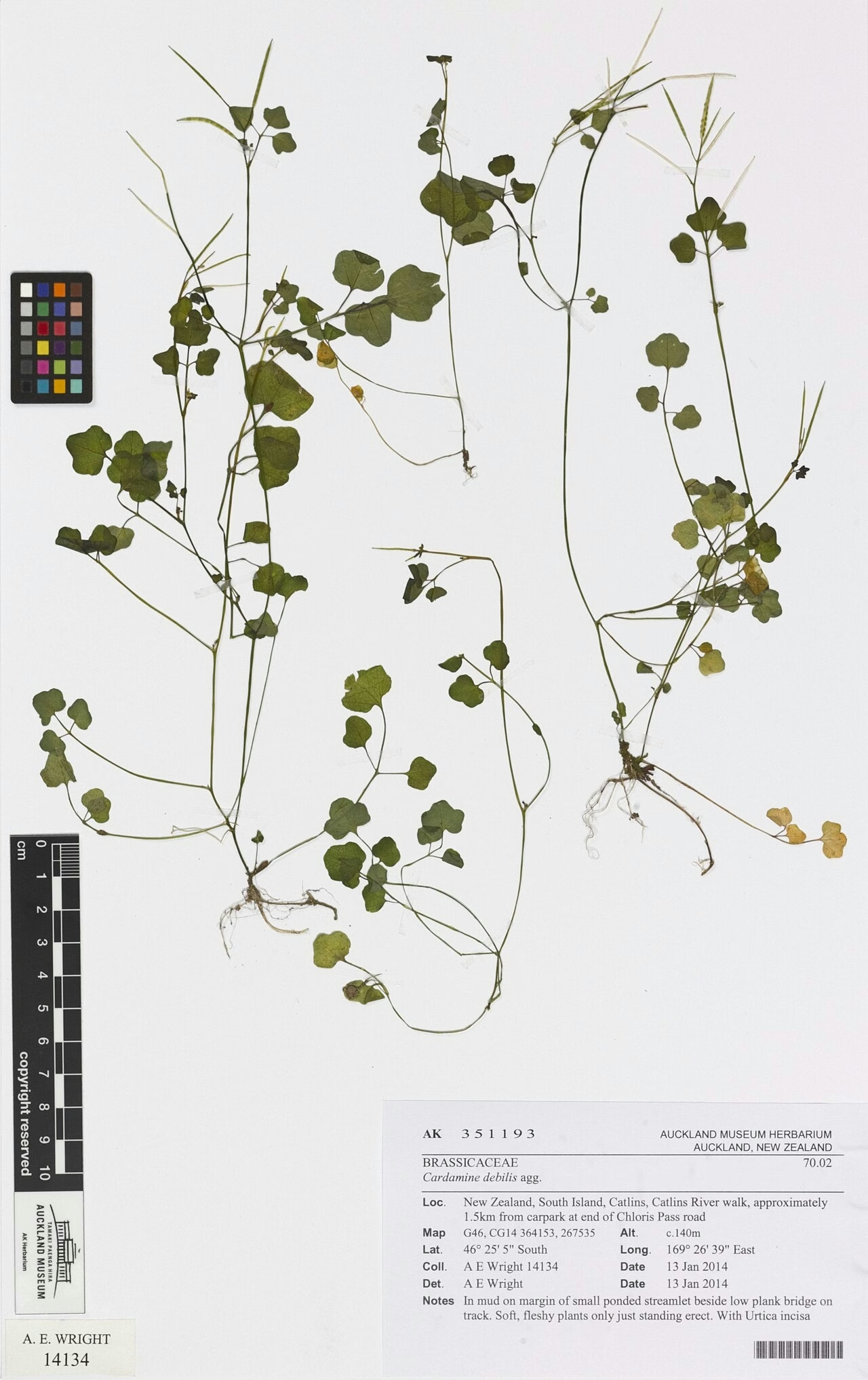
Plants develop one basal rosette or short lateral branches. The divided leaves reach about 12 cm long and have thin, membranous blades. Hairs can be conspicuous along their margins, and the rounded terminal leaflet often has two shallow lobes and distinct hydathodes. The leaf stalk can be green-brown or red-brown.
Flowering Stalk and Recorded Fruiting Months
The flowering stalk reaches about 15 cm and may bear solitary flowers or several small, flat-topped clusters, each with two to eight flowers. Flowering is recorded from July to December and fruit from July to February. Identifying a self-sown plant from its rosette, hairs and reproductive structures is more reliable than assigning a name simply because it grows among garden plants.
Pests and diseases
The cited Flora profile does not list a species-specific pest or disease treatment. Hairs on the leaf margins are a normal diagnostic feature of Cardamine heleniae and distinguish it from similar cresses.
Naming and classification
Peter Heenan described Cardamine heleniae in 2017 and named it for Helen F. Heenan. A revision of New Zealand Cardamine separated it from the broader former treatment of C. corymbosa.
Distinguishing similar cresses
Compared with C. corymbosa, this species has conspicuously hairy leaf margins, distinct leaflet stalks and narrow green-brown to reddish-brown pods. Flora of New Zealand also notes conspicuous hydathodes on the leaflet margins.
Other New Zealand mustards
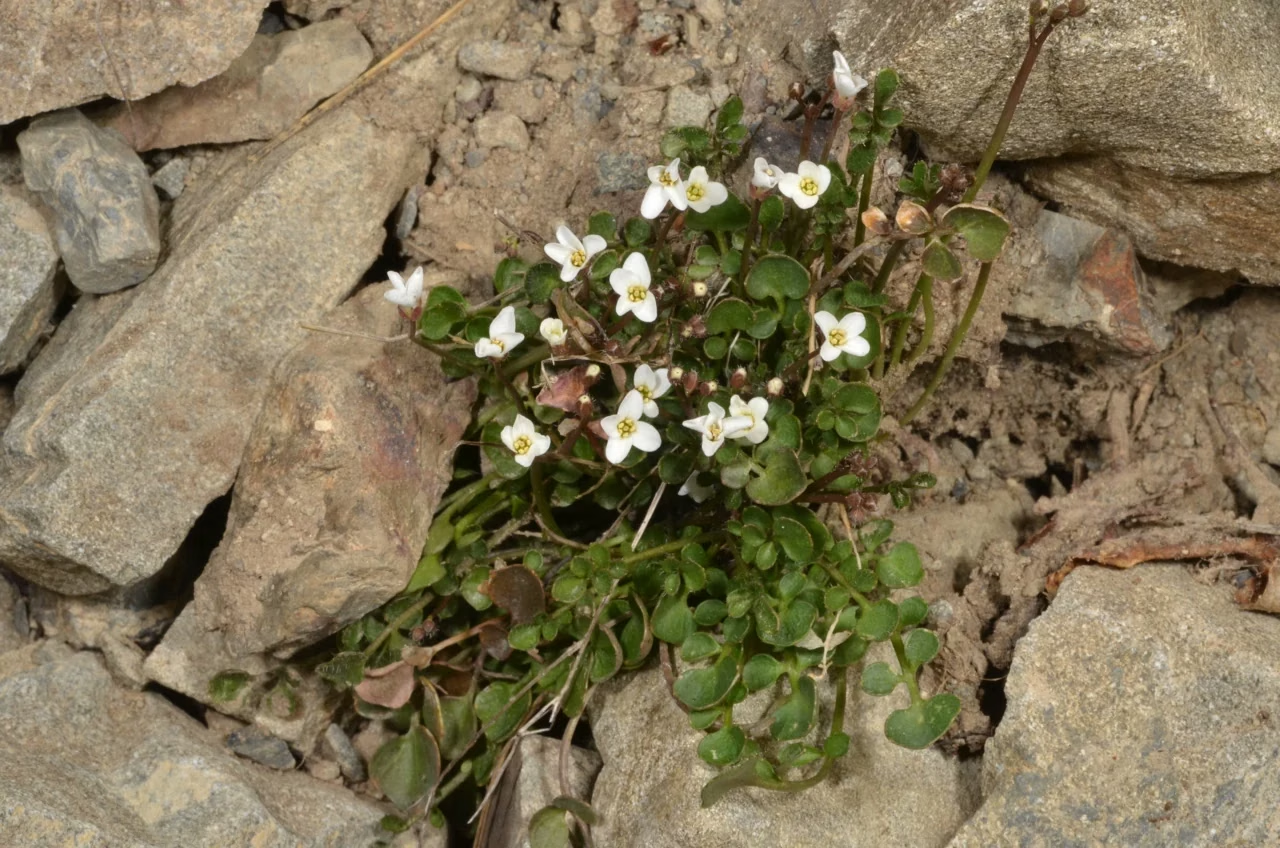
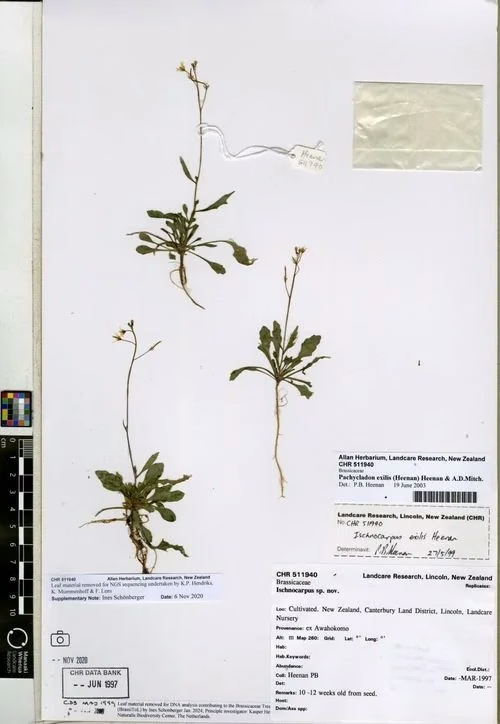
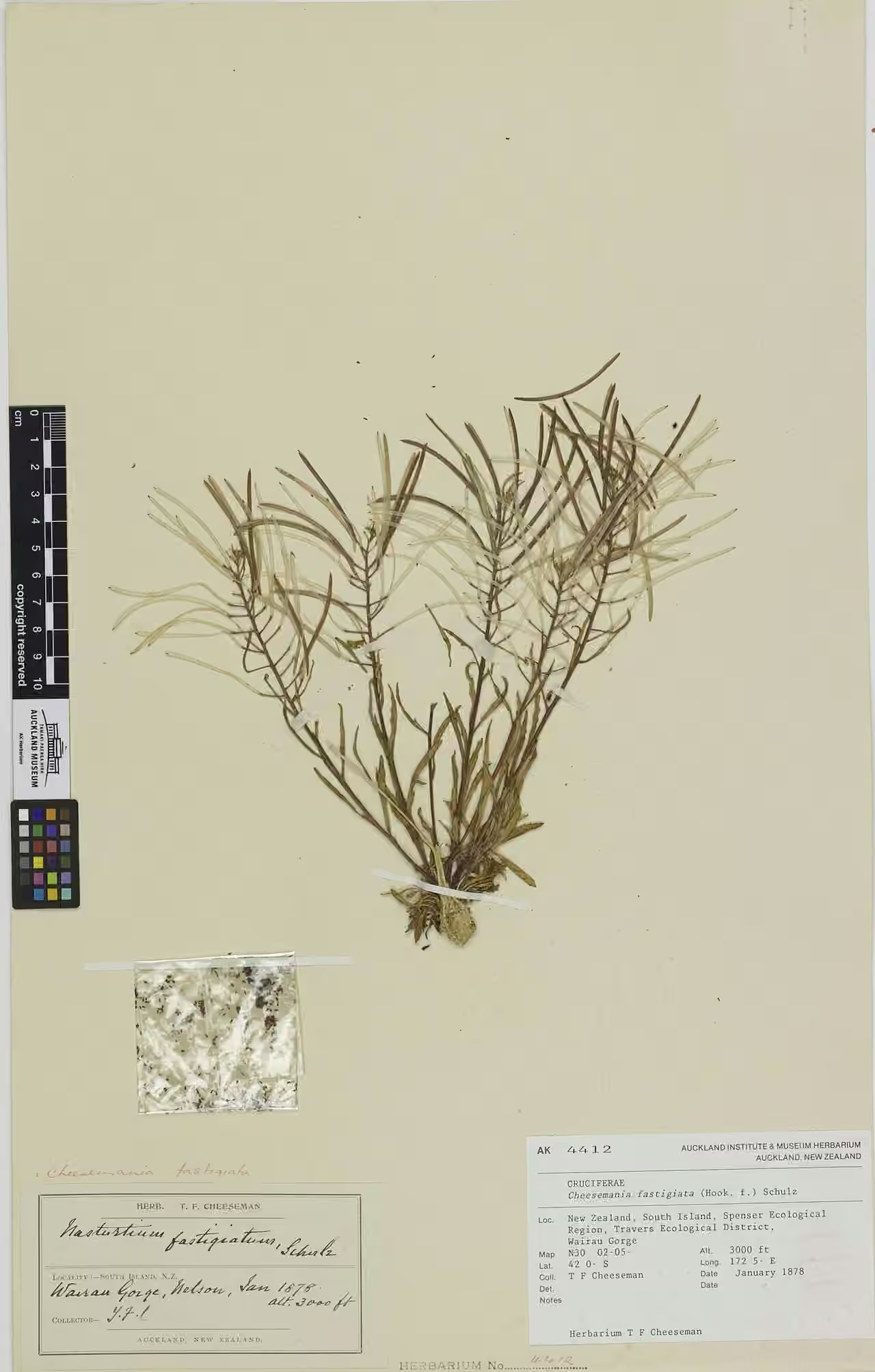
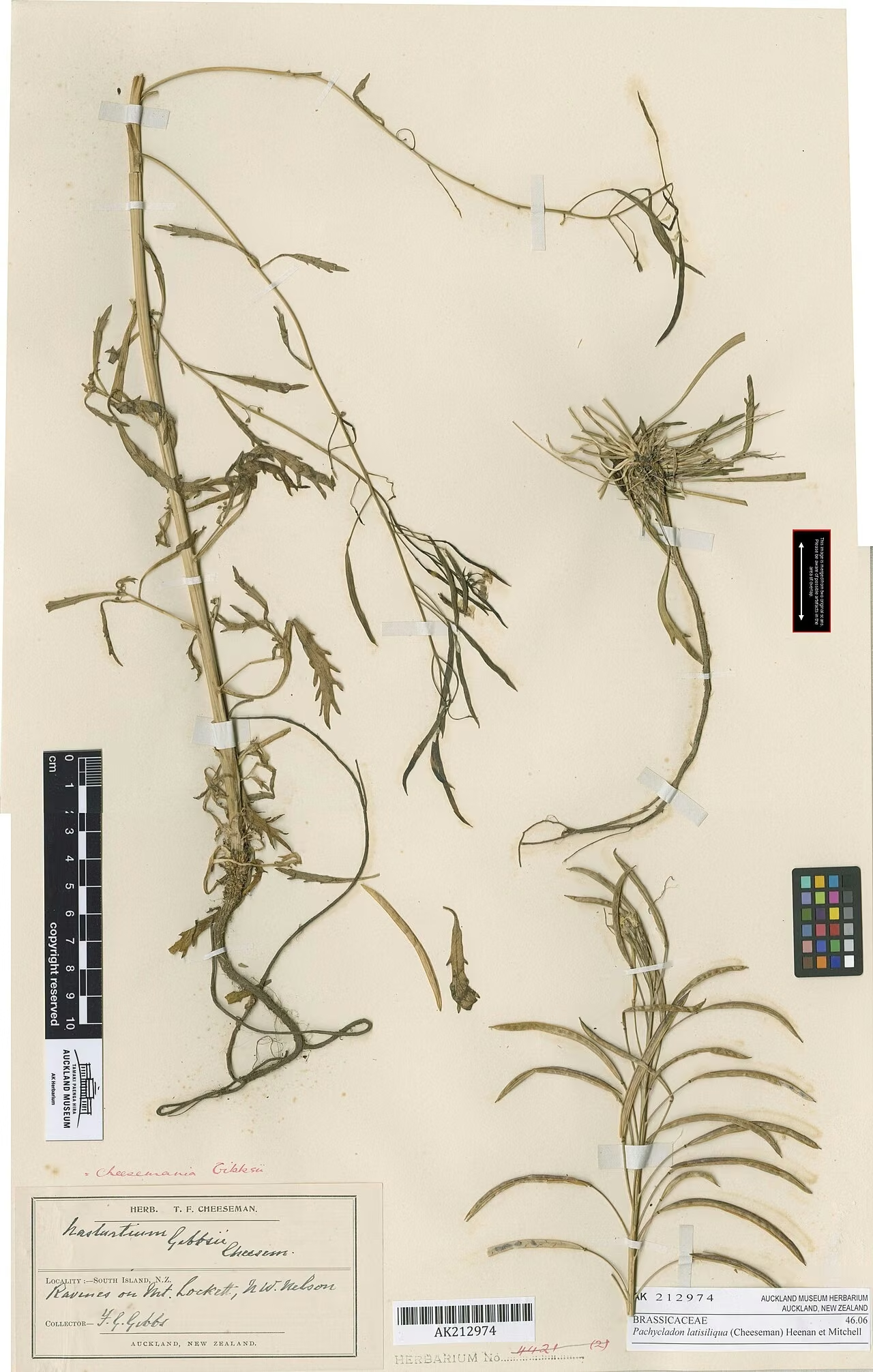
Explore other New Zealand plants in the mustard family, including Cardamine and alpine Pachycladon species.

Conservation
NZPCN lists the 2023 national assessment as Not Threatened. The earlier 2017 assessment was Data Deficient because its natural range, habitat and population sizes were uncertain; the Flora profile continues to describe those uncertainties.
Frequently asked questions
How can it be recognised?
Its conspicuously hairy leaf margins help distinguish it from C. corymbosa .
Is its natural distribution fully known?
No: Flora of New Zealand reports uncertainty about its original range and wild habitats.
Can an indigenous cress grow as a garden weed?
Yes. Cardamine heleniae is native to New Zealand and is documented as a weed in gardens, lawns and nursery pots.
Sources
Last updated: