Cress
Cardamine dimidia
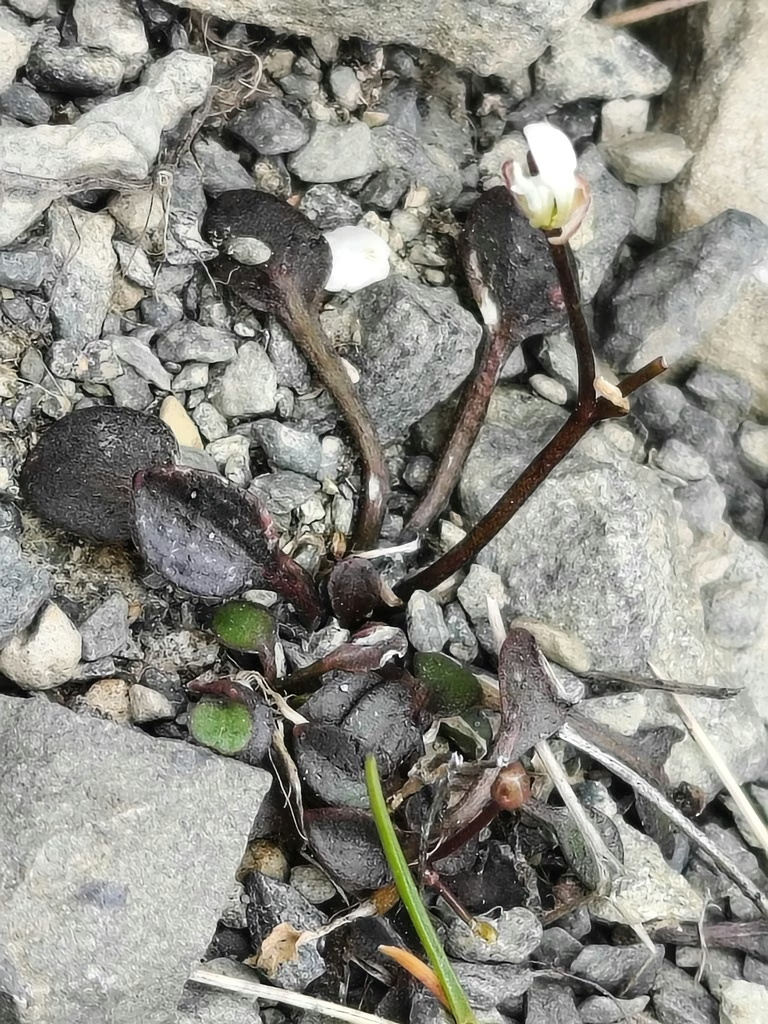
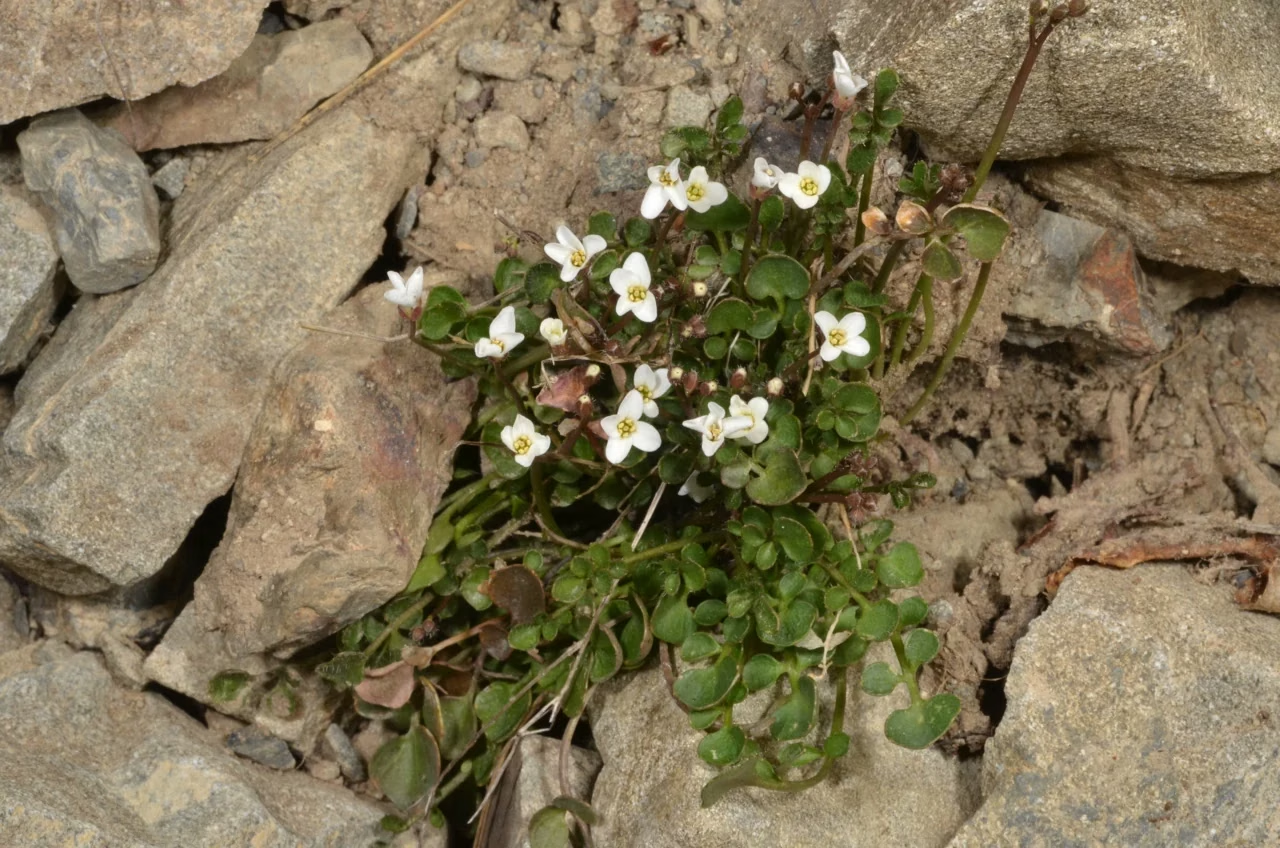
Cardamine dimidia is a small perennial herb endemic to the South Island. It grows chiefly on bluffs and rock outcrops, especially in shaded crevices, on ledges and among sheltered boulders.
Identification
This herb forms a single rosette or short lateral branches. Its glossy, firm leaves can be green, purple-brown, brown-green or bronze and reach approximately 50 mm long. Leaf shape varies by region and can be simple or lobed.
Flowering stems rise to about 110 mm and usually bear five to eleven white-petalled flowers. The petals are shorter than those of the related Cardamine bilobata, a distinction reflected in the species epithet.
Quick facts
| Scientific Name | Cardamine dimidia |
|---|---|
| Family | Brassicaceae |
| Leaf length | Up to 50 mm |
| Flowering period | September to April |
| Fruiting period | December to April |
| National status | Not Threatened (2023) |
| Height | Flowering stalks up to 11 cm long |
| Water Needs | A garden watering regime is not given in the Flora account |
| Light | Shaded or sheltered rocky sites in the wild |
| Spread | One rosette or short lateral branches; mature width is not quantified |
| Frost Tolerance | Minimum tolerated temperature is not documented |
| Salt Tolerance | Salt tolerance is not documented |
| Growth Rate | Annual extension is not quantified in the cited accounts |
| Lifespan | Perennial herb |
Mountain distribution
The species is primarily confined to the Southern Alps and neighbouring eastern South Island mountains. The cited Flora profile records its shaded rock habitats but does not provide a tested garden temperature or frost limit.
| City | Climate Suitability |
|---|---|
| Auckland | Not assessed |
| Wellington | Not assessed |
| Christchurch | Not assessed |
Habitat and distribution
Cardamine dimidia is endemic to the South Island, with records from Sounds-Nelson, Marlborough, Westland, Canterbury, Otago and Southland. It usually grows on bluffs and rock outcrops, in shaded crevices or on ledges.
It also occurs in sheltered spaces among large boulders. The type specimen was collected from a tributary of Lauder Creek in the Dunstan Mountains.
Natural growing conditions
The Flora of New Zealand describes shaded rock crevices, ledges and sheltered boulder sites as its usual habitats. The cited species profile does not provide a tested garden cultivation method, watering regime or soil mix.
Planting
Neither the cited Flora profile nor the national assessment provides a species-specific planting protocol. Its naturally shaded rock habitat is useful identification context, but does not establish a proven method for growing it in a garden.
Ecology and hybridisation
Flora of New Zealand reports possible hybrids involving C. dimidia and C. glara in Marlborough and Canterbury, and a possible hybrid with C. eminentia in Southland. These field collections are described as putative rather than confirmed.
Observing this cardamine
Look for glossy rosette leaves and white flowers in sheltered rock crevices within its known South Island range. The Flora profile records flowers from September to April, although the timing can vary between sites.
Landscape considerations
This species is recorded primarily from shaded bluffs and sheltered boulders in the Southern Alps and neighbouring ranges. The Flora profile does not provide evidence that these natural microhabitats translate directly into a reliable garden setting.
Flowering and fruiting
Flora of New Zealand records flowering from September through April and fruiting from December through April. The flowers have white petals; published fruiting and flowering periods overlap during the warmer months.
Pruning
Cardamine dimidia is a small rosette-forming herb, not a woody shrub. Its Flora profile describes leaves and flowering stems but does not give a species-specific pruning method or response to cutting.
How to Grow Cress (Cardamine dimidia)
Seed evidence
The seeds are approximately 0.9-1.3 mm long, broadly oblong, and range from henna-coloured to pale yellow. A wing is normally absent, though an extremely narrow one sometimes occurs. Flora of New Zealand describes these features and the plant's seasonal development, but does not provide a germination treatment or a verified method for dividing the rosettes.
Sheltered rock habitats
Cardamine dimidia is primarily a plant of bluffs and rock outcrops, especially shaded crevices and ledges. It also occupies sheltered spaces among large boulders. These records identify the physical protection of its natural sites; they do not establish a specific potting mix or watering interval for garden cultivation.
Variation in the rosette
The perennial has one rosette or short lateral branches. Glossy, leathery leaves reach about 5 cm long and may be green, bronze, brown-green or purple-brown. Their blades can be simple or divided, with small lobes often concentrated toward the base. Flora notes broader, rounder leaves around Mount Cook, while plants from the Torlesse, Craigieburn and Puketeraki ranges can have more distinctly divided leaves.
Watching flowering stems
The species lacks stem leaves. Its glossy, hairless flowering stalk reaches about 11 cm and usually carries five to eleven flowers, sometimes arranged in loose whorls or a nearly flat-topped cluster. Flowering is recorded from September to April, with fruit from December to April. The variable leaf outline therefore needs to be considered alongside the leafless flowering stalk and mature seed when checking an identified cultivated collection.
Pests and diseases
The cited Flora profile does not list a species-specific pest or disease treatment. Leaves can naturally be green, bronze, brown-green or purple-brown; colour should therefore be assessed alongside other identification features.
Naming and classification
Peter Heenan described Cardamine dimidia in 2017. The epithet means “half” and refers to its petals being about half the length of those of the related Cardamine bilobata.
Distinguishing related cardamines
Compared with C. bilobata, this species has a more compact habit, shorter flower clusters, smaller sepals and petals, and usually a longer fruit pod with a short style. Leaf shape also varies regionally.
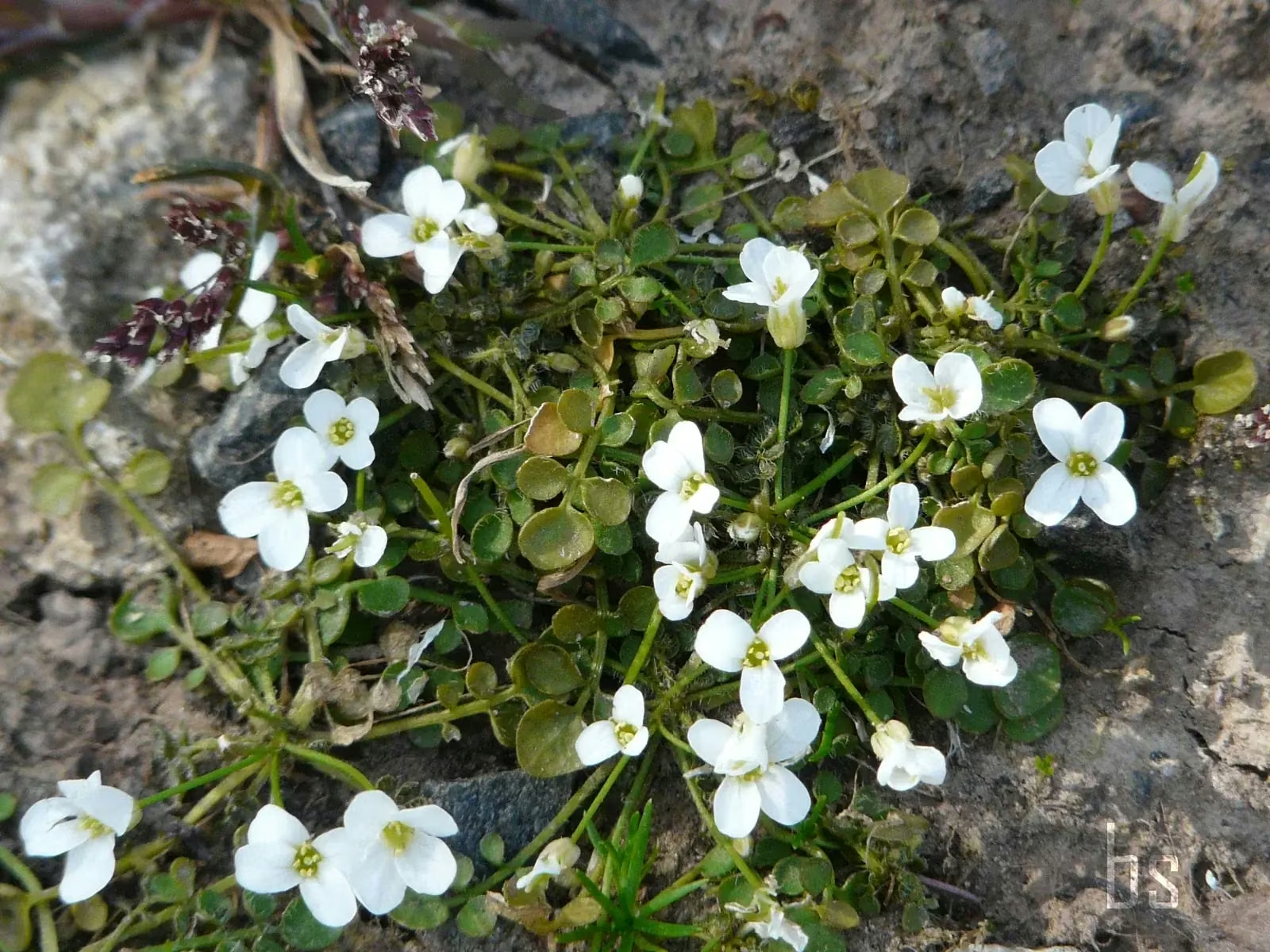
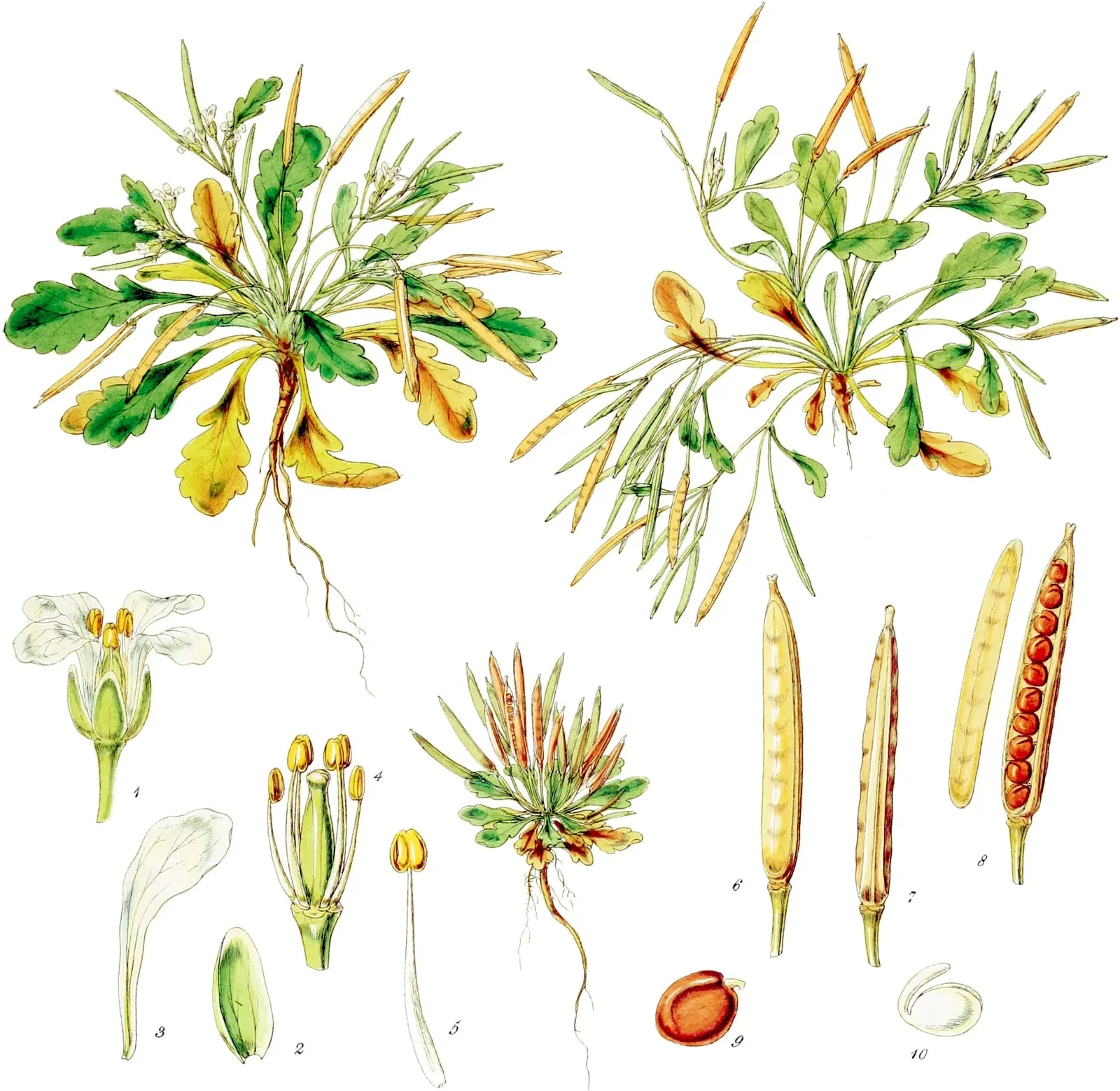
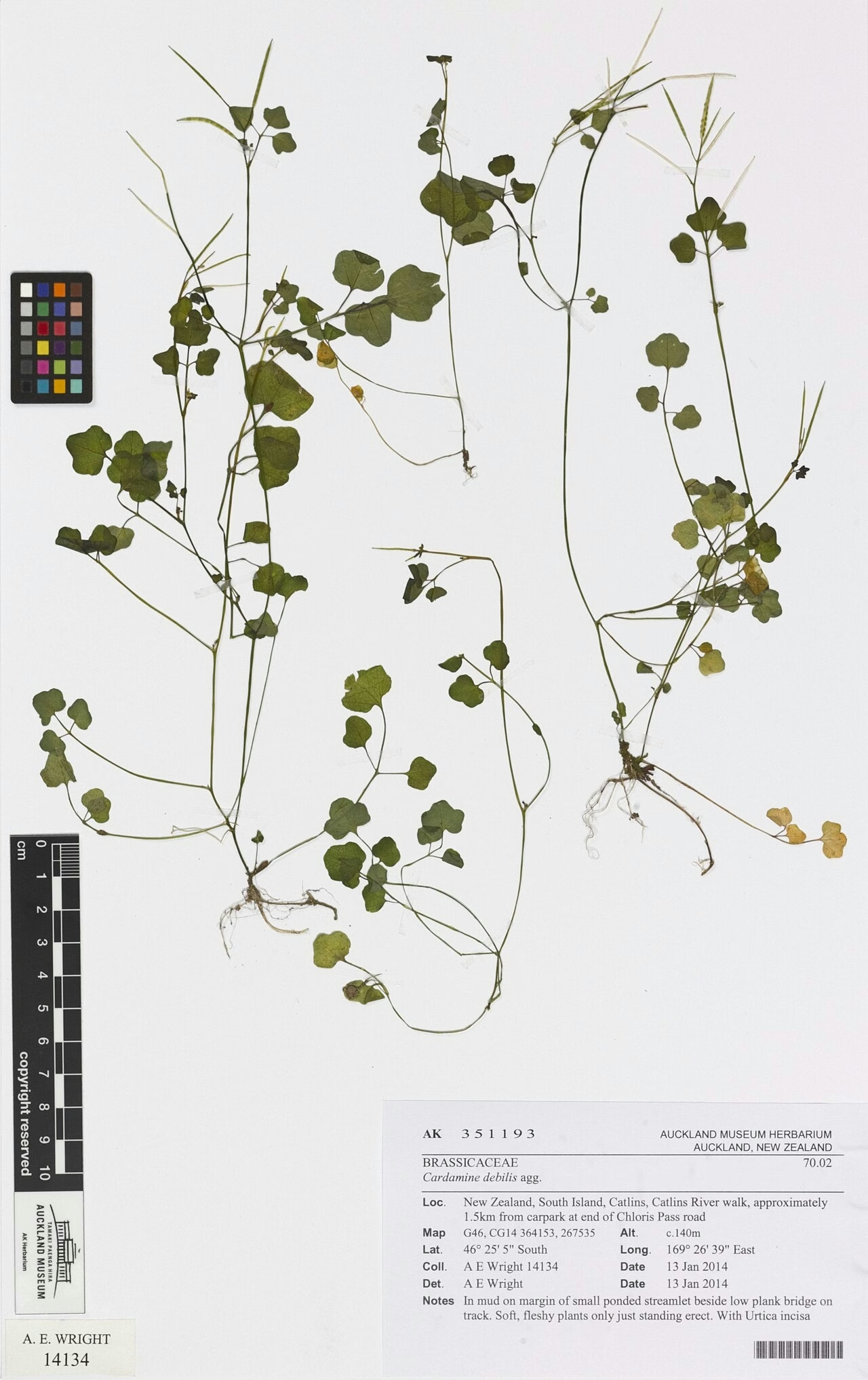
Other New Zealand mustards
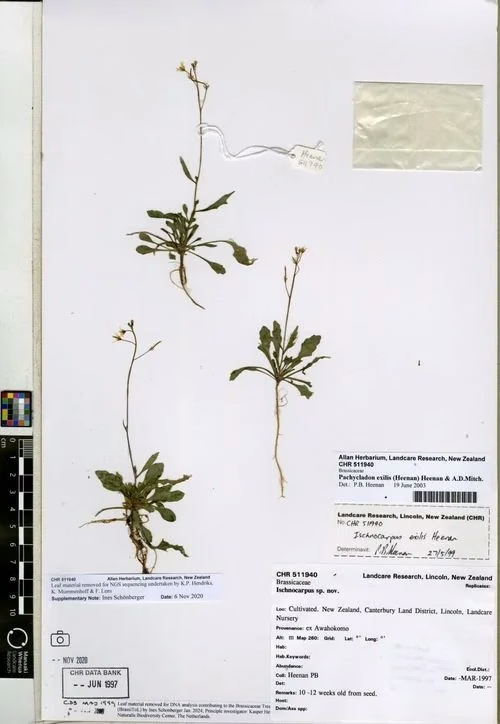
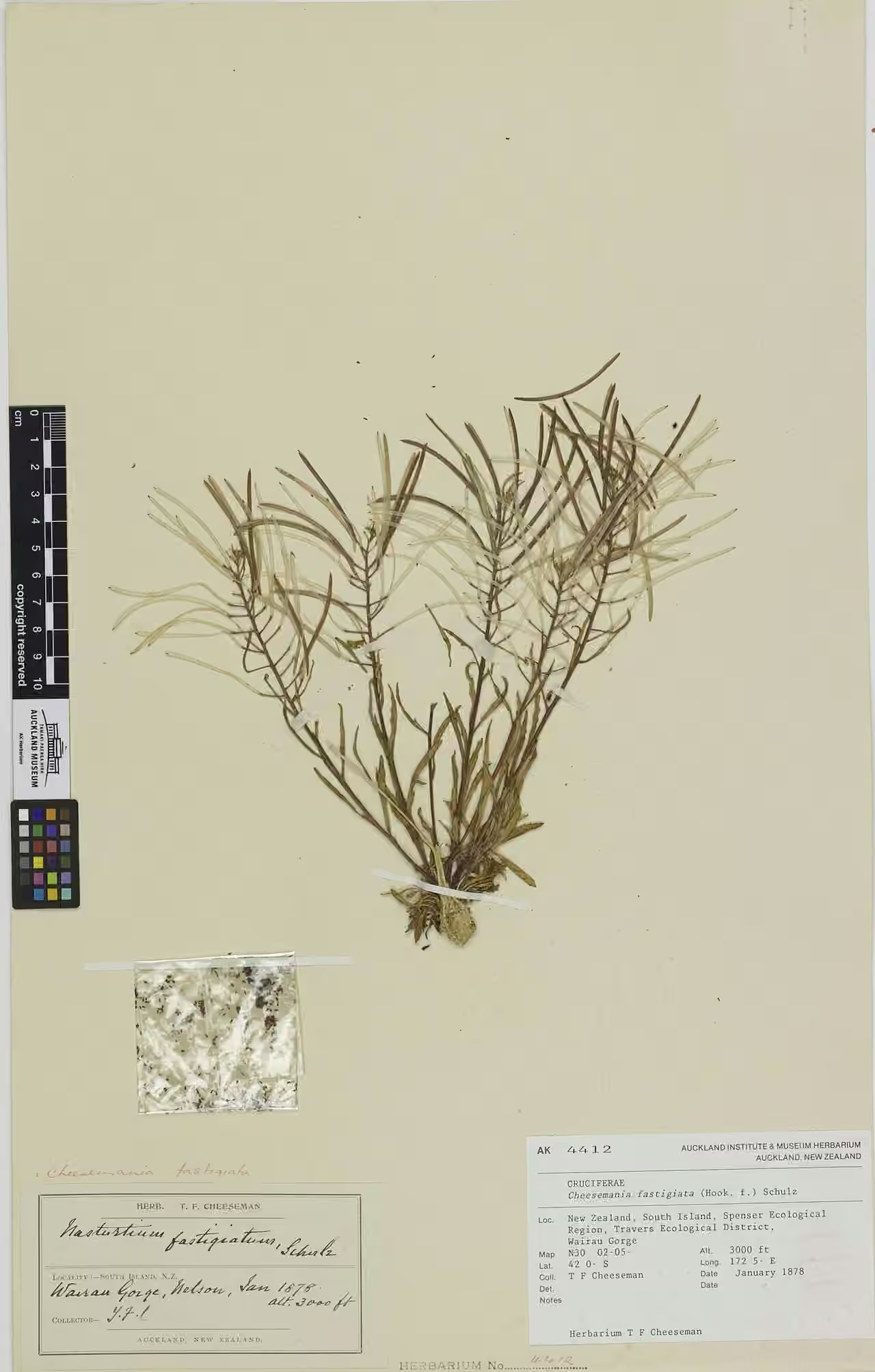
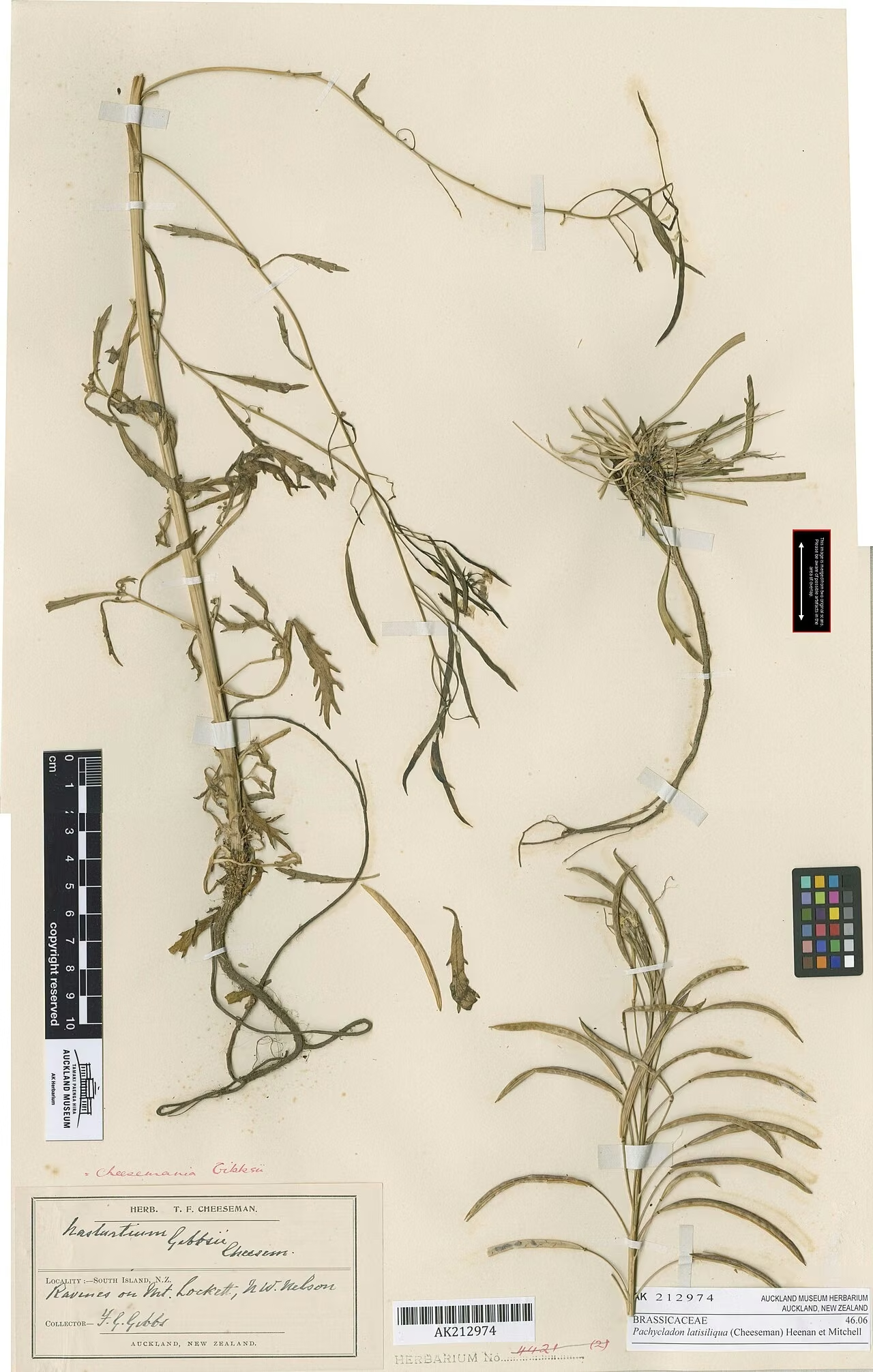
Explore other New Zealand plants in the mustard family, including Cardamine and alpine Pachycladon species.

Conservation
The 2023 national assessment lists Cardamine dimidia as Not Threatened. The 2025 Otago assessment treats it as Regionally Naturally Uncommon and identifies Otago as a national stronghold, illustrating the distinction between regional and national assessments.
Frequently asked questions
Where does it grow?
The species is recorded in shaded crevices and on ledges or sheltered boulders in South Island mountain country.
When does it flower?
The Flora records flowering between September and April.
Are the leaves always divided in the same way?
No. Flora records regional variation, including broader, rounder leaves near Mount Cook and more divided leaves in the Torlesse, Craigieburn and Puketeraki ranges.
Sources
Last updated: