Cress
Cardamine basicola
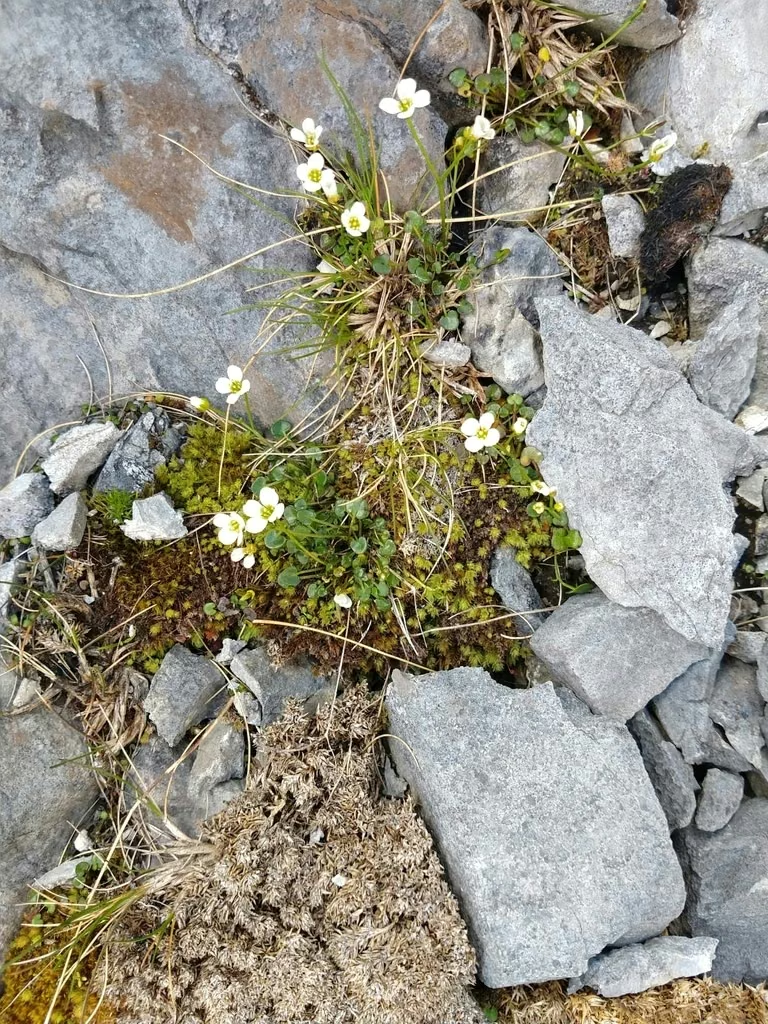
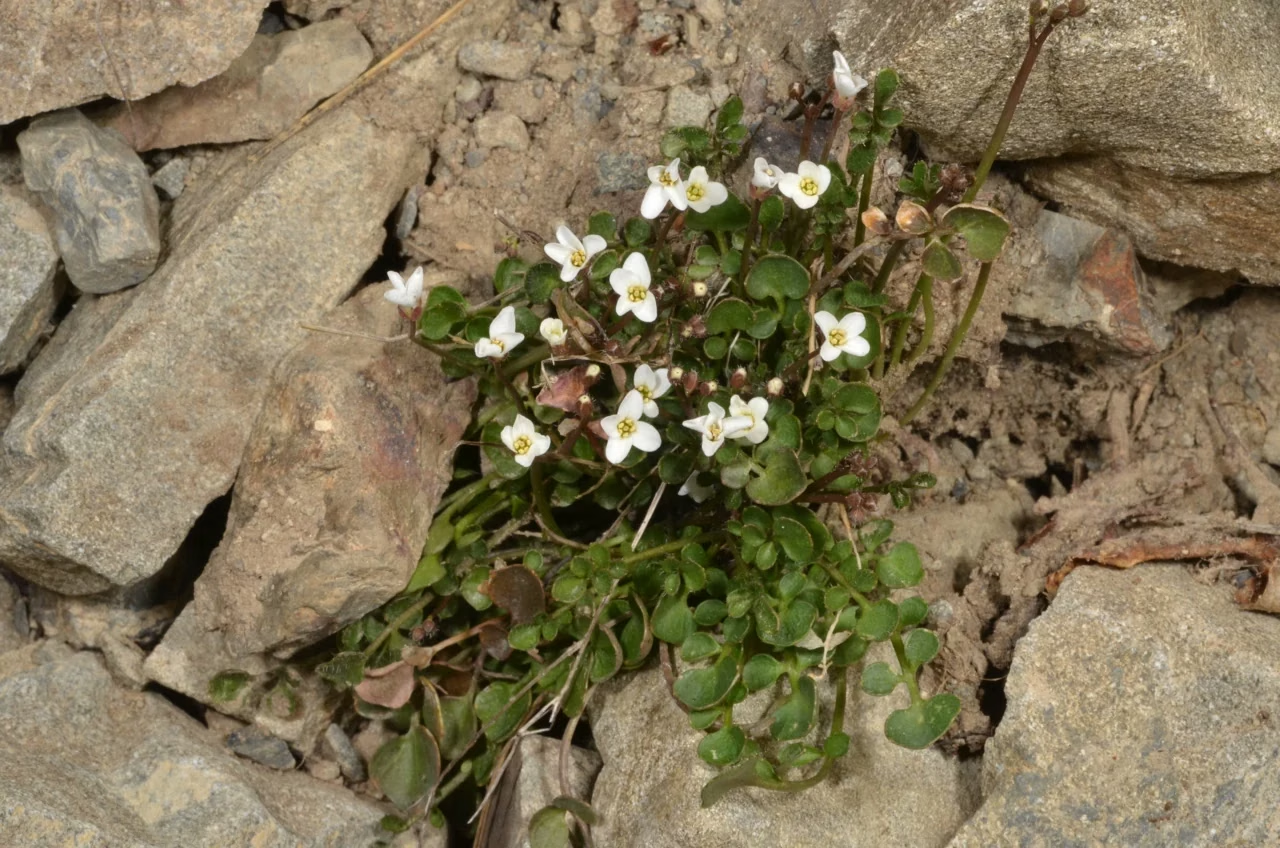
Cardamine basicola is a perennial herb endemic to the north-western South Island. Its natural sites include shaded crevices in limestone and marble and, on Dun Mountain, ultramafic rock. This small herb forms a single rosette or short lateral branches.
Identification
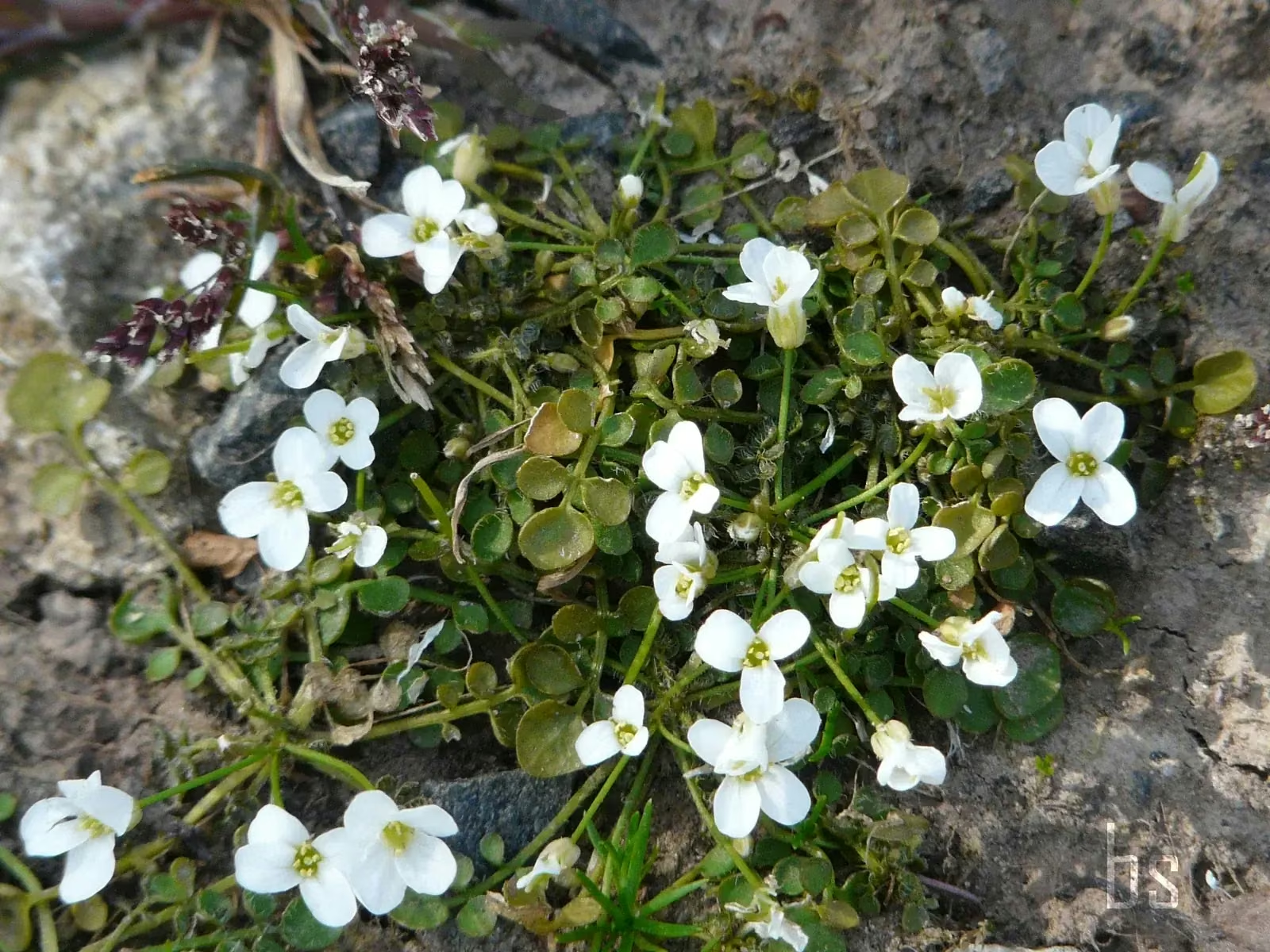
This small herb forms a single rosette or short lateral branches. Its dark green leaves are glossy, sometimes purple-brown, and can be simple or divided; the rounded to kidney-shaped terminal leaflet usually has a distinctly heart-shaped base.
White flowers are borne on spreading to ascending stalks up to 250 mm long. The narrow fruit pods contain small yellow-brown to reddish-brown seeds that lack wings.
Quick facts
| Scientific Name | Cardamine basicola |
|---|---|
| Family | Brassicaceae |
| Leaf length | Up to 95 mm |
| Flowering period | December to April |
| Fruiting period | January to May |
| National status | Not Threatened (2023) |
| Height | Flowering stalks up to 25 cm long |
| Water Needs | Wild sites include moist rock crevices; a garden watering schedule is not given |
| Light | Usually shaded crevices and ledges in the wild, with some open-site records |
| Spread | One rosette or short lateral branches; mature clump width is not quantified |
| Frost Tolerance | Minimum tolerated temperature is not documented |
| Salt Tolerance | Salt tolerance is not documented |
| Growth Rate | Annual extension is not quantified in the cited accounts |
| Lifespan | Perennial herb |
Natural setting
The Flora of New Zealand records this species on shaded rock crevices and ledges in north-western South Island, including forest and open sites. The cited profile does not state a tested frost or garden temperature limit.
| City | Climate Suitability |
|---|---|
| Auckland | Not assessed |
| Wellington | Not assessed |
| Christchurch | Not assessed |
Habitat and distribution
Recorded South Island regions include western Nelson, Sounds-Nelson and Westland. NZPCN describes occurrences from Gouland Downs east to the Richmond Ranges and south to Nelson Lakes National Park.
It most often occupies limestone and marble cliffs or outcrops, favouring shaded ledges and crevices. On Dun Mountain it also occurs on ultramafic rocks, in moist crevices, open ground and forest.
Natural growing conditions
The species is strongly associated with shaded crevices on limestone and marble, but it also occurs on ultramafic rocks and occasionally conglomerate. These wild habitat records do not constitute a tested garden cultivation recipe.
Planting
Neither the cited Flora nor NZPCN profile supplies a species-specific planting method. Although the plant is recorded on shaded limestone and marble ledges, its natural substrate association alone does not establish suitable garden moisture or propagation conditions.
Ecology
On Dun Mountain, Cardamine basicola has been recorded in moist rock crevices and overhangs, in forest, and in sparsely vegetated areas among Chionochloa defracta. Elsewhere it commonly occupies limestone or marble ledges.
Observing this cardamine
In its documented north-western South Island range, look for small rosettes on shaded rock ledges. The glossy dark green leaves and usually heart-shaped base of the terminal leaflet are useful features in the Flora description.
Landscape considerations
This is a plant of specialised natural rock habitats, including shaded limestone crevices and the Dun Mountain ultramafic belt. The cited species profiles do not provide tested advice for establishing it in a garden or rockery.
Flowering and fruiting
Flora of New Zealand records flowers from December to April and fruit from January to May. The petals are white; fruit pods are green or red-brown at maturity and become straw-coloured after opening.
Pruning
Cardamine basicola is a small rosette-forming perennial herb rather than a woody shrub. Its Flora profile describes the leaves and flowering stalks but does not provide a species-specific pruning method for cultivated plants.
How to Grow Cress (Cardamine basicola)
Seed and the limits of the account
The seeds of Cardamine basicola are small and wingless, approximately 0.9-1.3 mm long, and range from yellow-brown to henna-coloured. Flora of New Zealand supplies their description and fruiting dates, but does not give a germination treatment or a tested division method. A nursery protocol cannot be established simply from the seed measurements.
Rock crevices and substrate
The strongest habitat association is with shaded ledges and crevices on limestone or marble outcrops and cliffs, in both forested and open settings. Plants also occur less often on conglomerate boulders, in grassland and on scree. On Dun Mountain they grow on ultramafic substrates in shaded or moist crevices and overhangs, in forest, and in sparsely vegetated sites with good soil moisture.
Form of an established plant
This perennial forms one basal rosette or short lateral branches. Its glossy, leathery leaves reach approximately 9.5 cm long and are normally dark green, though purple-brown plants occur. Leaf blades can be simple or divided, so the absence of conspicuous lateral leaflets does not by itself exclude this species. The terminal leaflet is generally rounded to kidney-shaped.
Flowers and fruiting stems
Flowering is recorded from December to April and fruit from January to May. The stalk can reach 25 cm and may branch into several racemes, usually with two to twelve flowers in each. Some flowers occur lower on the stalk or appear singly. The earlier informal label, Cardamine “calcicole”, reflects the usual limestone association without describing every substrate on which the species is recorded.
Pests and diseases
The Flora and NZPCN profiles do not list a species-specific pest or disease treatment. The leaves are usually dark green and can rarely be purple-brown, a colour included in the published description.
Naming and classification
Peter Heenan described Cardamine basicola in 2017; earlier material carried the informal tag name “calcicole”. The specific epithet refers to its association with base-rich substrates such as limestone and marble.
Distinguishing related species
Flora of New Zealand distinguishes this species using glossy leaves with a rounded to kidney-shaped terminal leaflet and usually strongly heart-shaped base. Unlike Cardamine alalata, its published description states that the seeds lack wings.
Other New Zealand mustards
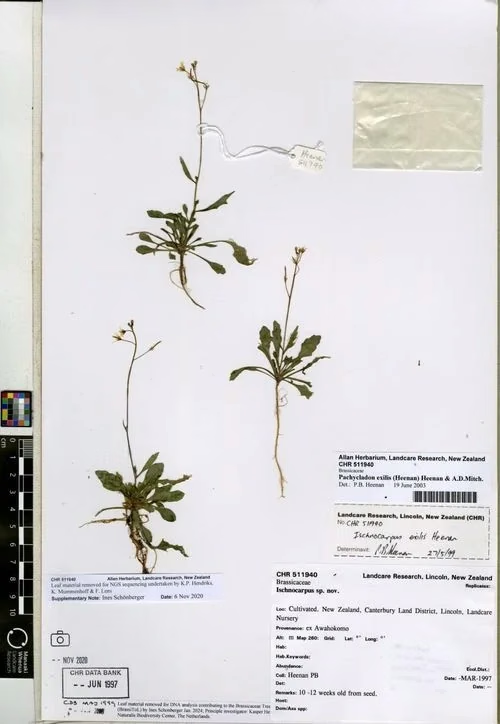
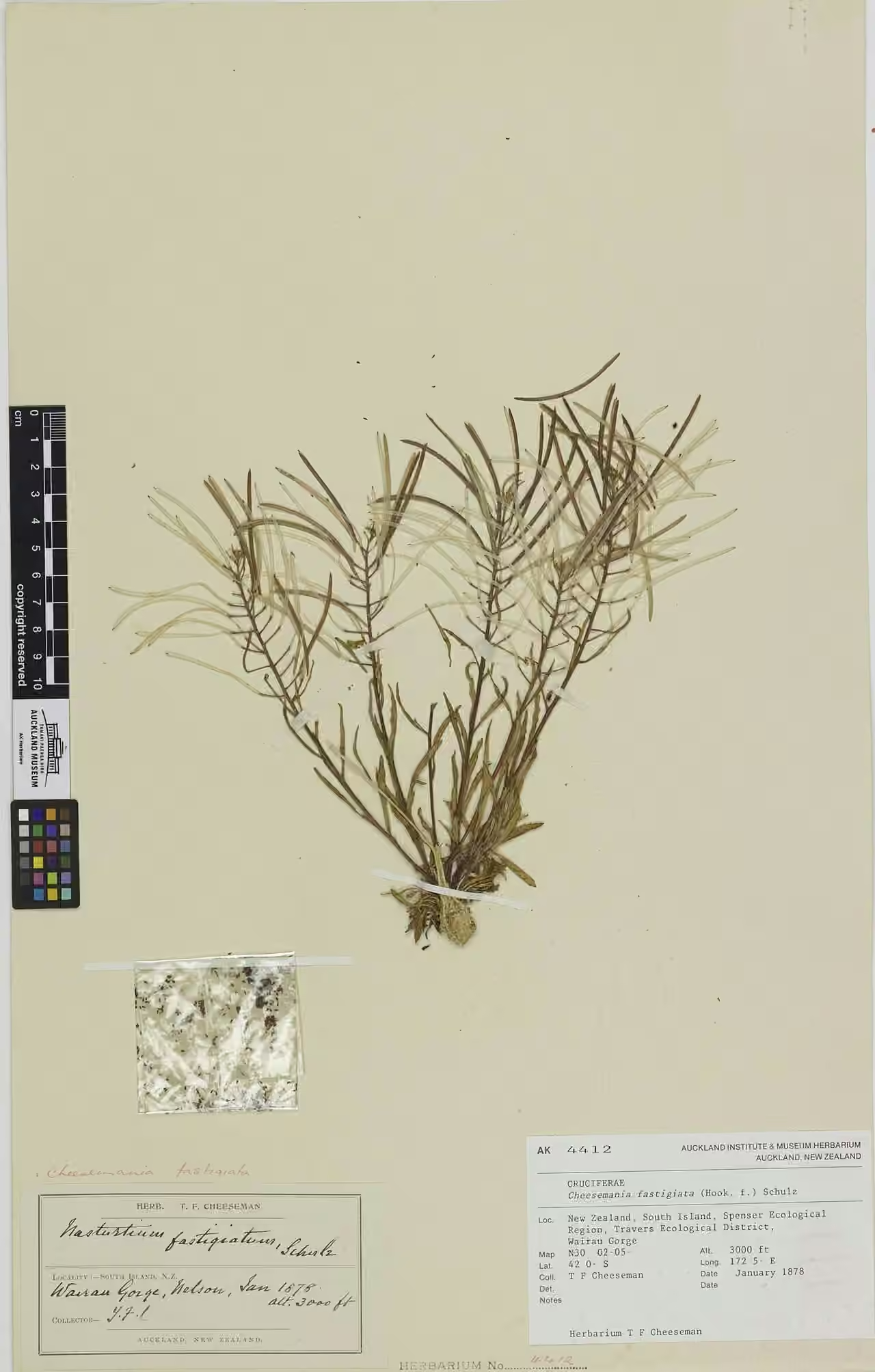
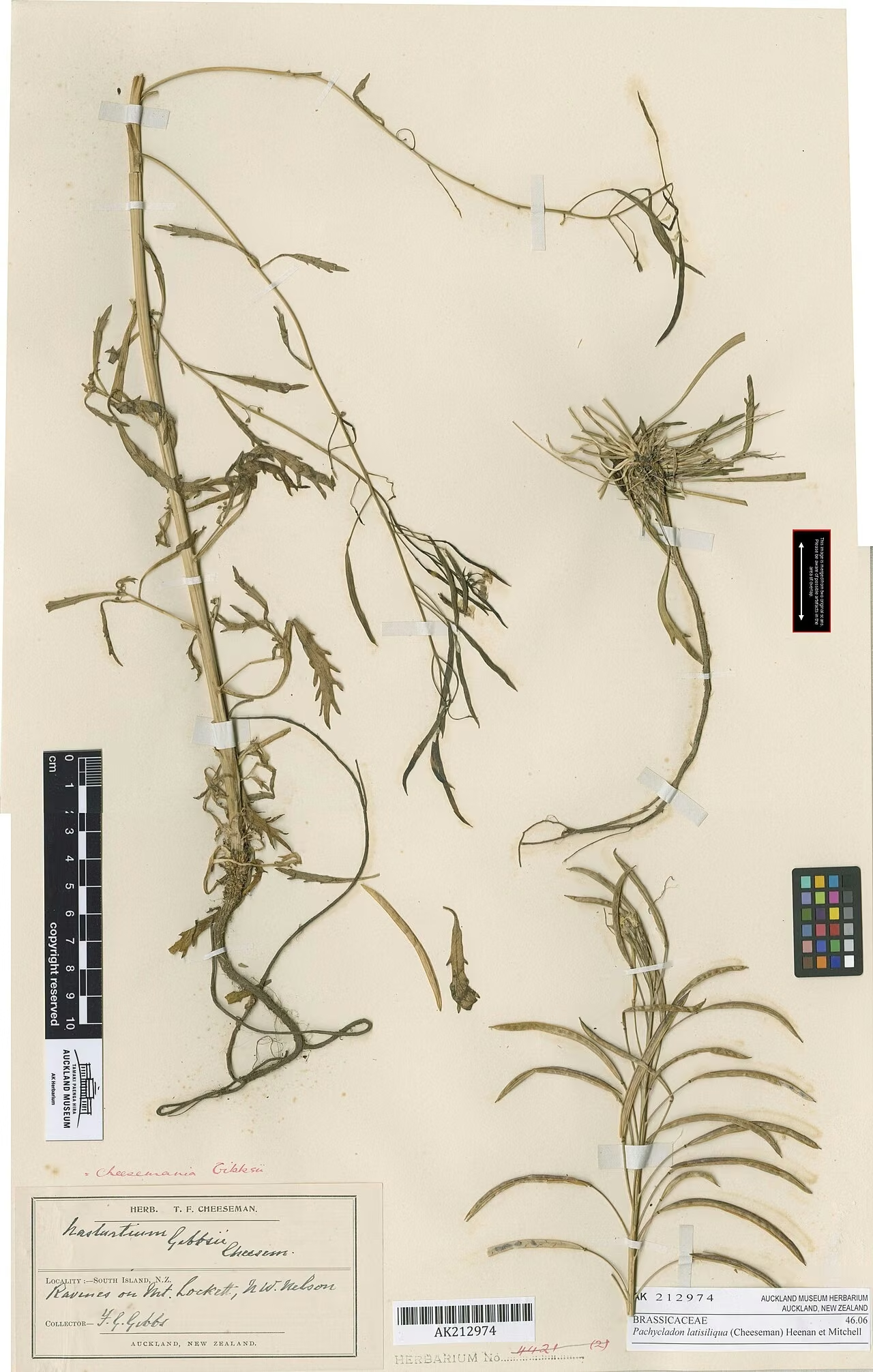
Explore other New Zealand plants in the mustard family, including Cardamine and alpine Pachycladon species.

Conservation
The 2023 national vascular plant assessment lists Cardamine basicola as Not Threatened. It is endemic to New Zealand and is documented in the north-western South Island, including Nelson and Westland.
Frequently asked questions
Does it only grow on limestone?
No: Flora of New Zealand records it on ultramafic soils at Dun Mountain and occasionally on conglomerate.
When does it flower?
The recorded flowering period is December to April.
Is it restricted to limestone?
No. Limestone and marble are the main recorded substrates, but Cardamine basicola also grows on ultramafic rock, conglomerate and some other stony sites.
Sources
Last updated: