Pygmy Tree Orchid
Bulbophyllum pygmaeum
A diminutive epiphytic orchid
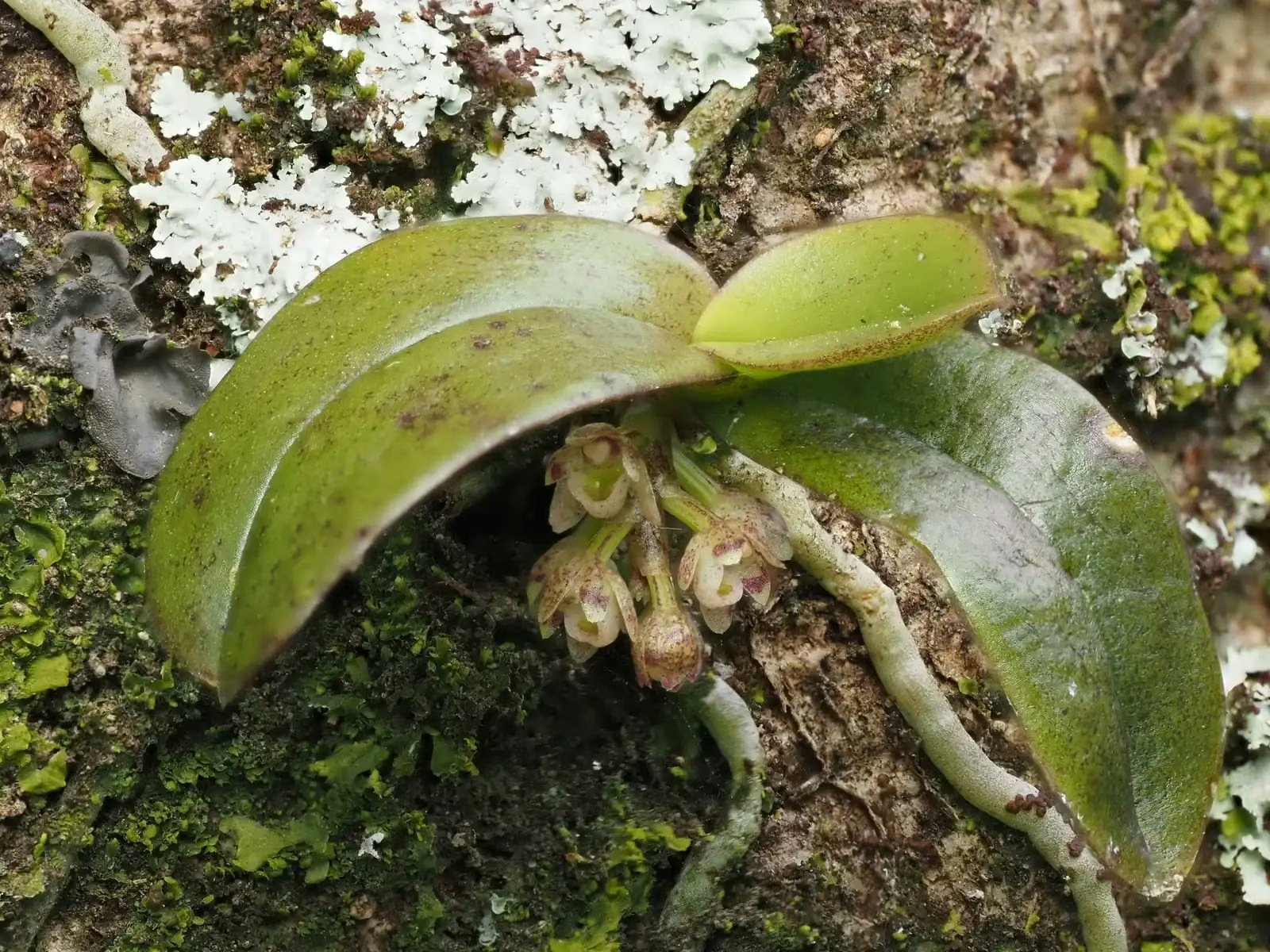
Bulbophyllum pygmaeum, also recorded as piripiri, is a tiny orchid endemic to Aotearoa New Zealand. It forms spreading mats on trees and sometimes on rock. The branching, pale rhizomes form mats that may exceed 200 mm across.
Identification
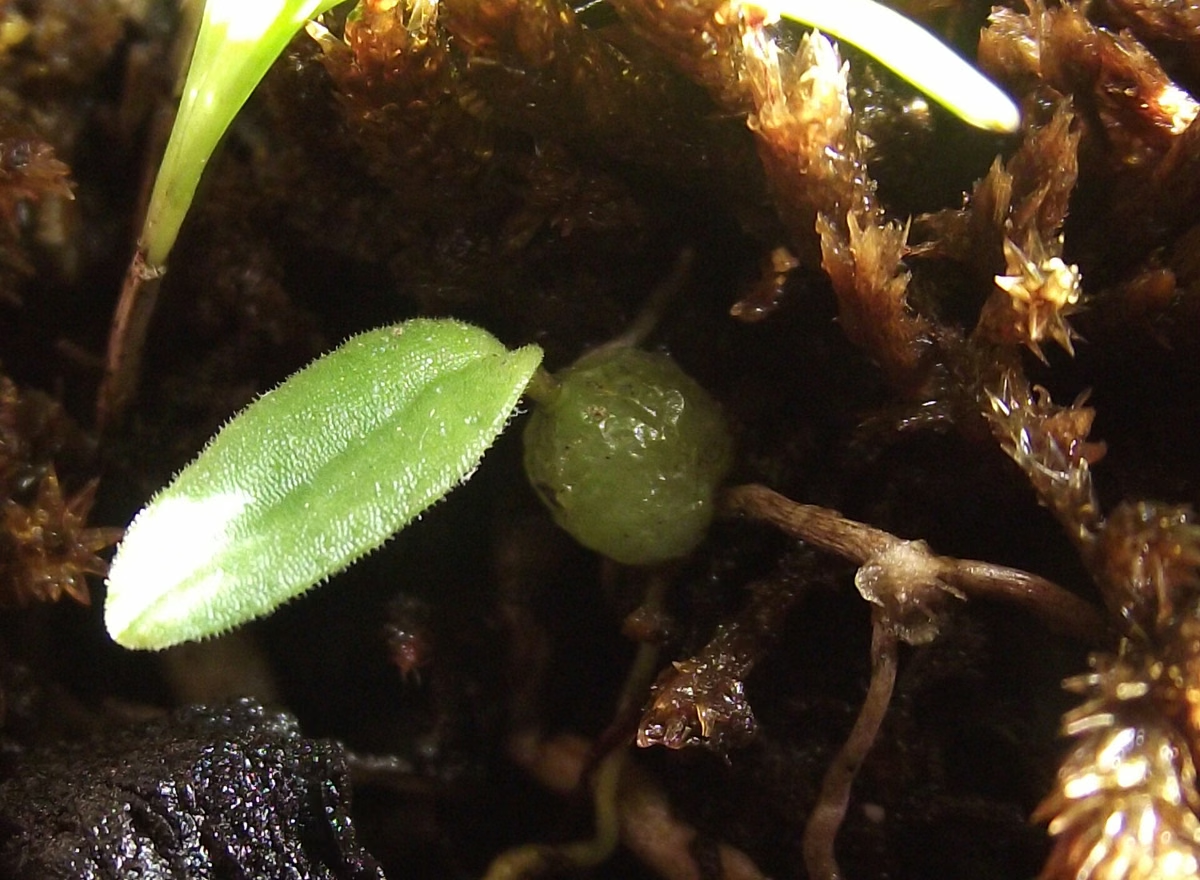
The branching, pale rhizomes form mats that may exceed 200 mm across. Each round green pseudobulb is approximately 3-5 mm across and bears one small leaf, usually 4-10 mm long. Older pseudobulbs become deeply wrinkled.
The solitary white flower is minute, approximately 1.5-2 mm long. Tiny coarse hairs on the leaves and ovary help distinguish this orchid from Bulbophyllum tuberculatum, which generally has larger leaves and pseudobulbs.
Quick facts
| Scientific Name | Bulbophyllum pygmaeum |
|---|---|
| Family | Orchidaceae |
| Leaf length | 4-10 mm |
| Flowers | December-January |
| Fruiting season | January to May |
| Distribution | Three Kings Islands to Rakiura |
| Conservation status | Not Threatened (2023) |
| Height | Low epiphytic mat; pseudobulbs 3-5 mm across |
| Water Needs | Keep moist during dry months, especially when trunk-mounted |
| Light | Semi-shade |
| Spread | Spreading or diffuse mats 20 cm or more across |
| Frost Tolerance | Minimum tolerated temperature is not documented |
| Salt Tolerance | Salt tolerance is not documented |
| Growth Rate | Annual extension is not quantified in the cited accounts |
| Lifespan | Rhizomatous perennial orchid |
Natural range
NZPCN records this orchid from coastal to montane habitats, from Manawatāwhi / Three Kings Islands to Rakiura / Stewart Island. This range describes where it has been observed; it does not establish a tested frost-tolerance limit.
| City | Climate Suitability |
|---|---|
| Auckland | Not assessed |
| Wellington | Not assessed |
| Christchurch | Not assessed |
Habitat and distribution
This orchid occurs from Manawatāwhi / Three Kings Islands through the North and South Islands to Rakiura / Stewart Island. Its habitats extend from coastal areas to montane forest.
It usually grows on trunks and branches, but also occurs on fallen logs, rocks, cliffs and banks. It is an epiphyte where it grows on another plant, using it for support rather than rooting in the ground.
Growing requirements
NZPCN reports that this orchid grows well in semi-shade and can be grown in a hanging basket with standard orchid mix. It also describes mounting it on a tree trunk, with moisture maintained during drier months. Plants should not be removed from the wild.
Establishing cultivated plants
NZPCN describes two ways to grow this orchid. Choose cultivated material and leave wild plants undisturbed.
- Grow it in a hanging basket with standard orchid mix, or attach it to a tree trunk.
- Place it in semi-shade and maintain moisture in drier months, particularly when grown on a trunk.
Ecology
The flowers are usually produced from December to January, followed by fruits from January to May. Its minute seeds are dispersed by wind. The plant’s small pseudobulbs and branching rhizomes allow it to form low, spreading mats on its support.
Garden use
The species’ small, spreading mats make it suitable for close viewing in a hanging orchid basket or on a tree trunk. Its flowers are only about 1.5-2 mm long, so the plant is most easily appreciated at close range.
Placement in a garden
For a cultivated plant, NZPCN describes a hanging basket or a position attached to a tree trunk. A semi-shaded position and moisture during dry periods reflect the conditions recommended for this particular orchid.
Seasonal observations
Flowers are recorded in December and January, with fruiting from January to May. NZPCN recommends keeping trunk-mounted plants moist during dry months; these flowering and fruiting periods are observations rather than a fixed timetable for every site.
Pruning
The NZPCN profile does not provide a pruning method for this species. Its pseudobulbs naturally become deeply furrowed as they age, so wrinkles alone do not establish that an old pseudobulb needs removal.
How to Grow Pygmy Tree Orchid (Bulbophyllum pygmaeum)
Rhizomes and cultivated material
The NZ Plant Conservation Network account describes successful cultivation of this particular miniature orchid in two settings: a hanging basket containing standard orchid mix, and a mount on a tree trunk. Its propagation entry concerns establishing plants in these settings; it does not specify seed culture, division size or a germination period. Begin with cultivated material. The account explicitly advises leaving wild plants where they grow.
Basket or trunk placement
A semi-shaded position is recommended for Bulbophyllum pygmaeum. For a trunk-mounted specimen, continuing moisture during the drier months is specifically mentioned. The rhizomes branch extensively and interweave over their support, producing mats that may exceed 20 cm across. Allow for this sideways development when choosing a mounting surface or basket.
Reading the pseudobulbs
Each green pseudobulb is only about 3-5 mm across and carries one leaf at its top. Pseudobulbs become deeply furrowed and wrinkled with age, a change included in the botanical description. The leaves themselves measure roughly 4-10 mm long. These small structures are best checked close up before interpreting the appearance of an established mat.
Watching for flowers and fruit
Look particularly carefully during December and January: the white flowers are approximately 1.5-2 mm long and can be missed without close inspection. Fruits are recorded from January to May. Record flowering on the actual cultivated plant when assessing its progress, since this orchid's miniature flowers offer a different indication of development from the conspicuous spikes of many larger cultivated orchids.
Pests and diseases
The NZPCN species profile does not identify specific pests or diseases for this orchid. Its pseudobulbs naturally wrinkle with age; this normal change should not by itself be treated as a diagnosis.
Māori name
Manaaki Whenua’s Ngā Rauropi Whakaoranga records piripiri as a Māori name for Bulbophyllum pygmaeum, and also lists the former name Ichthyostomum pygmaeum. See its ethnobiology record.
Distinguishing similar orchids
Look for a diffuse mat of rounded pseudobulbs and very small, slightly rough leaves. The closely related B. tuberculatum has a more compact habit, larger leaves and pseudobulbs, and lacks the tiny hairs on the leaf and ovary.
Other native orchids
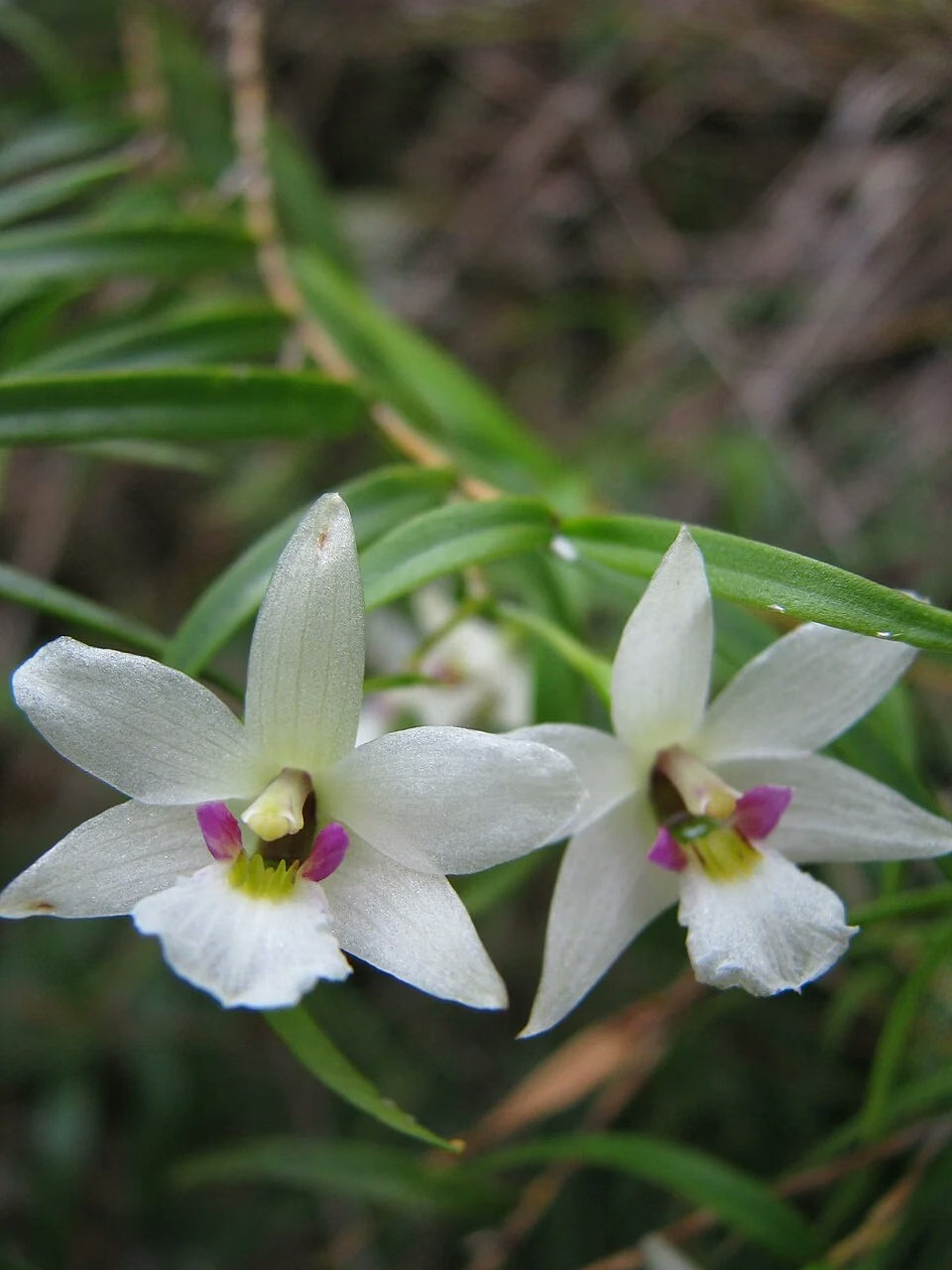
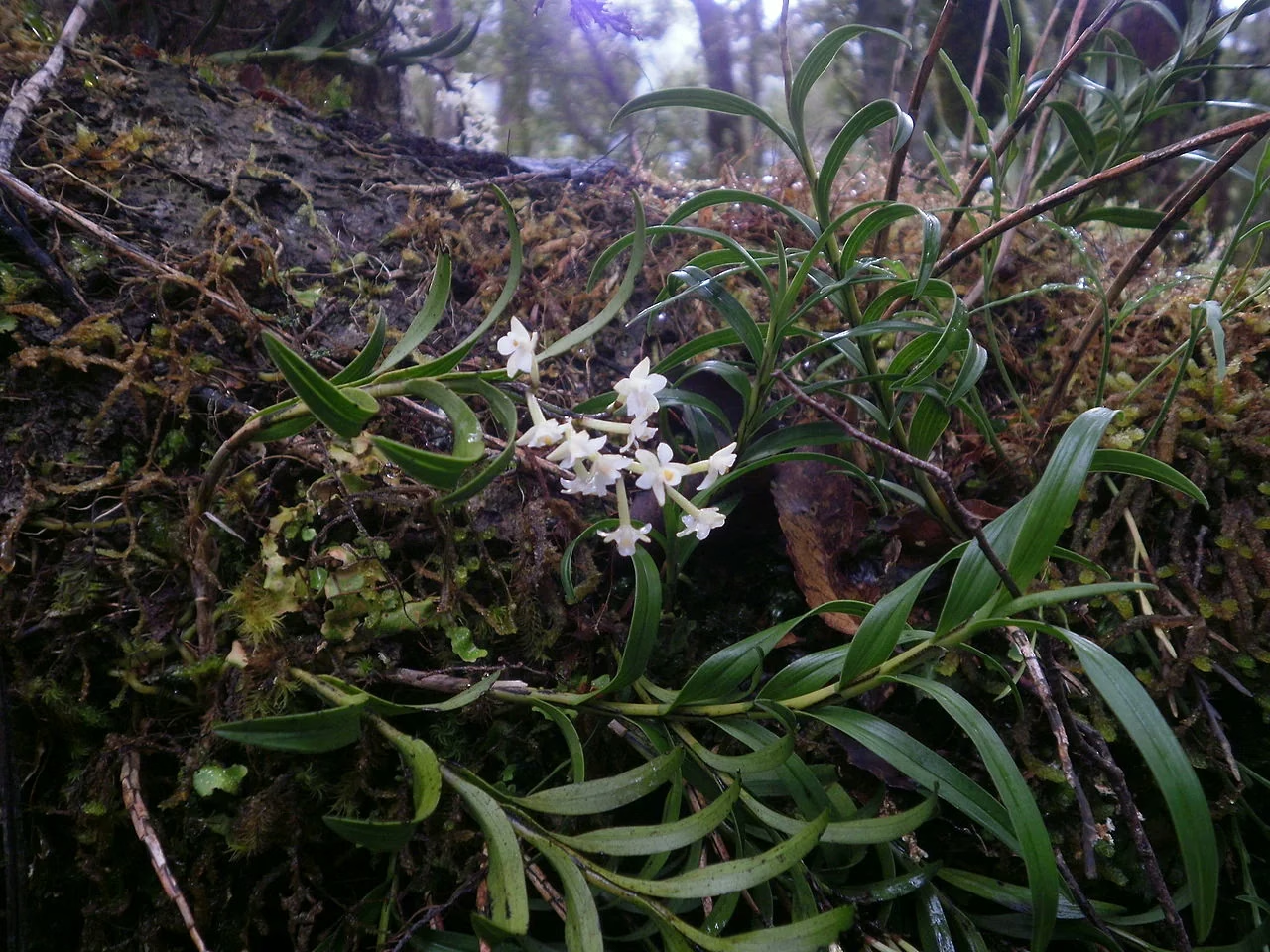
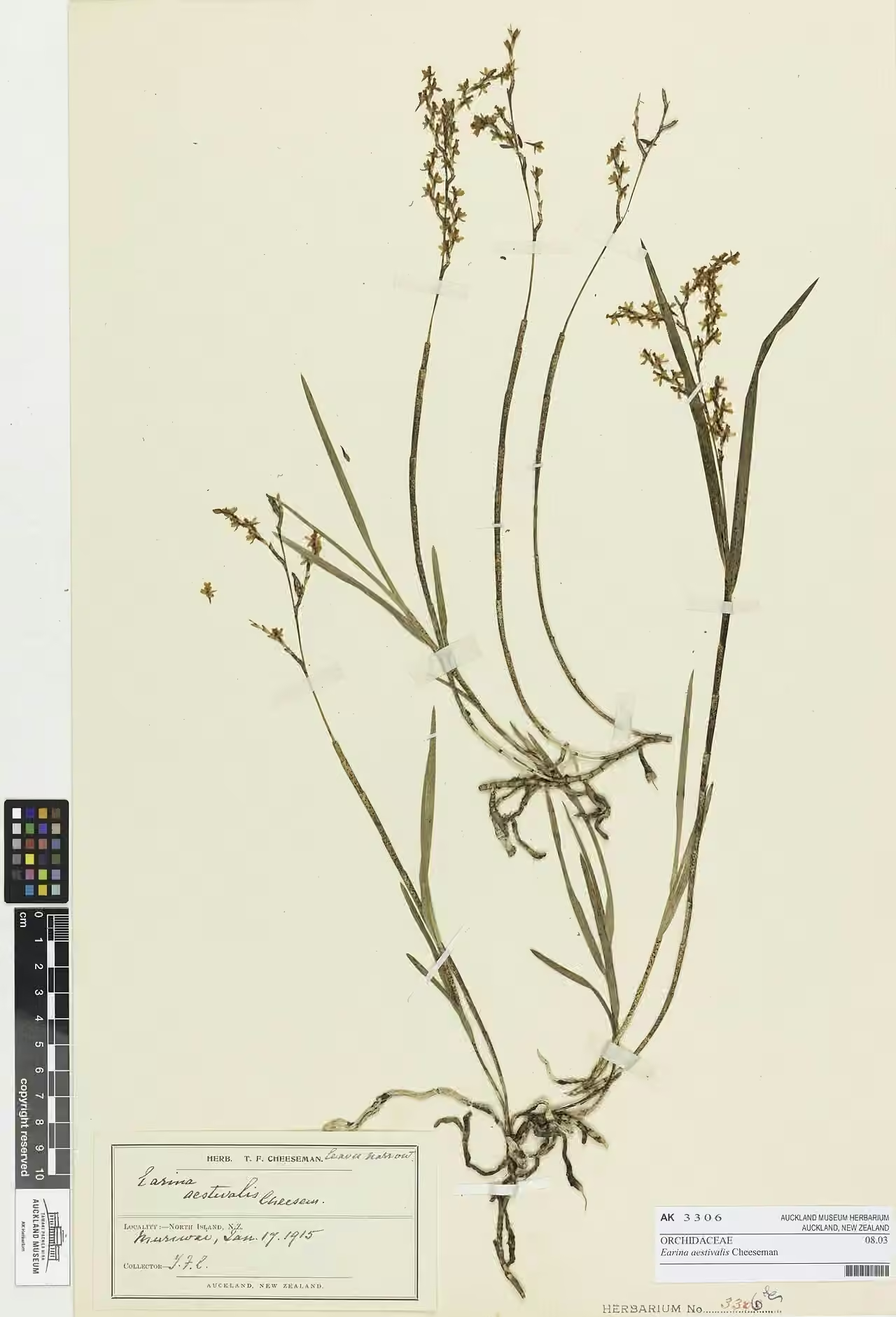
Explore other New Zealand orchids, including both tree-growing and ground-growing species.
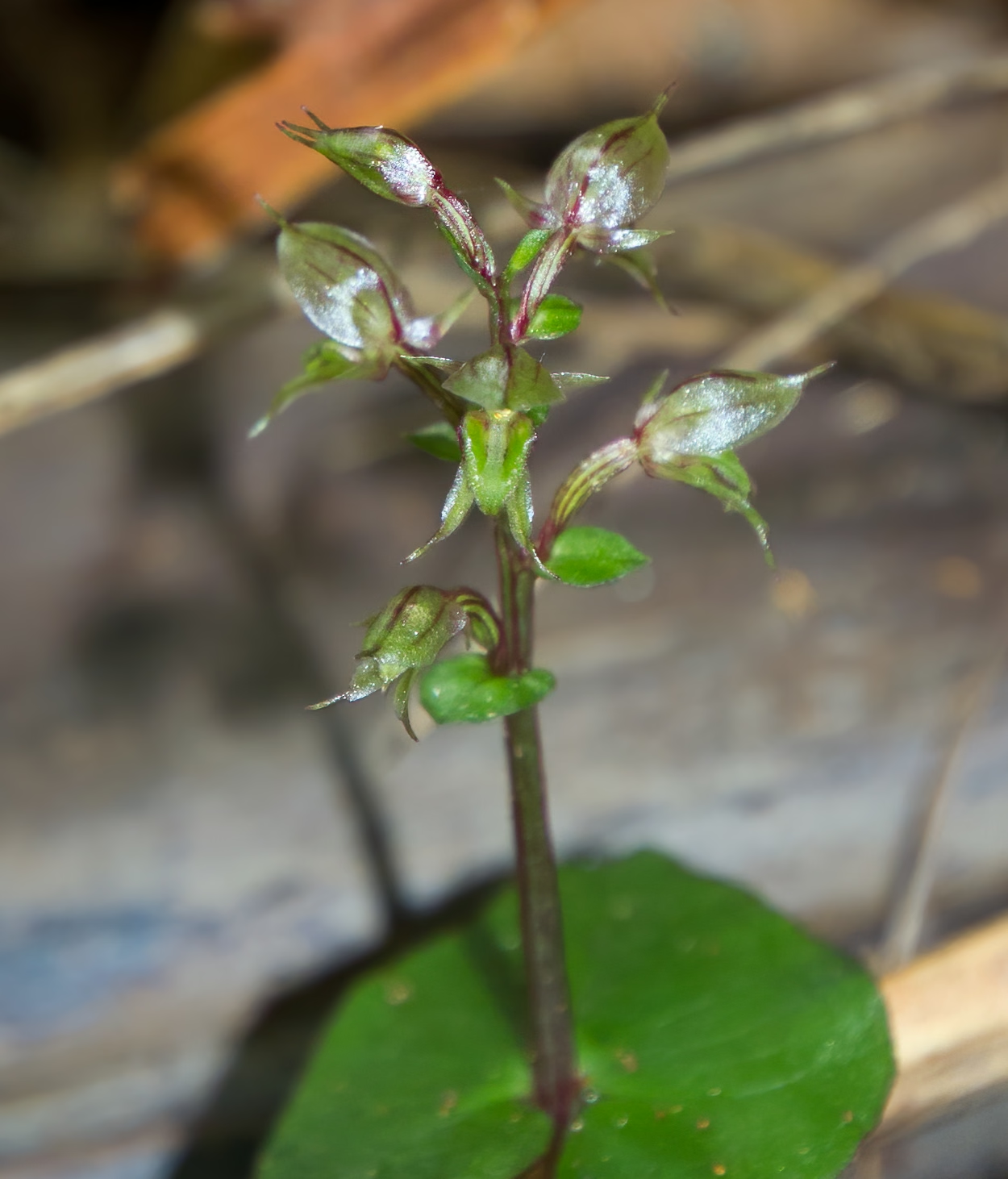

Conservation
The 2023 New Zealand assessment classifies Bulbophyllum pygmaeum as Not Threatened. NZPCN nevertheless advises leaving wild plants in place; their value in a forest includes their position on living trees and other natural substrates.
Frequently asked questions
Can pygmy tree orchid grow on rock?
Yes. In addition to tree trunks, branches and fallen logs, its recorded substrates include rocks, cliff faces and banks.
Why do older pseudobulbs look wrinkled?
Deep grooves develop as the pseudobulbs age. This is included in the species description, so an old wrinkled pseudobulb is not by itself evidence of disease.
How large are its flowers?
The white flowers are only about 1.5-2 mm long. Close viewing is needed to appreciate them during the December-January flowering period.
Sources
Last updated: