Winika
Dendrobium cunninghamii
Last updated:
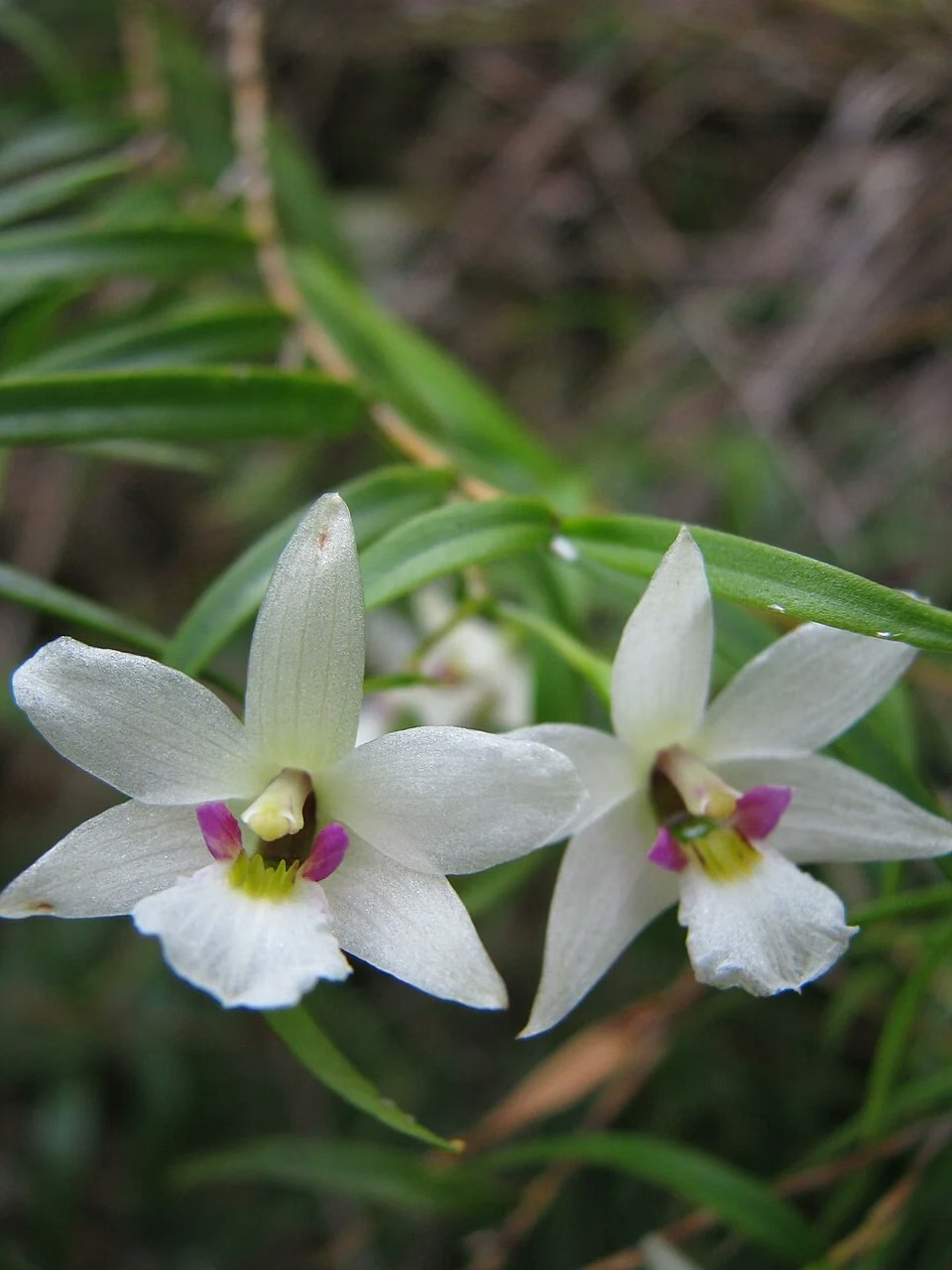
Dendrobium cunninghamii, known as Winika or the Christmas orchid, is New Zealand's largest native epiphytic orchid. It forms impressive tufts up to two metres wide from wiry, highly branched, yellowish stems that are jointed like miniature bamboo. Around mid-summer it bursts into bloom with clusters of flowers about 2 cm across, each with pure white petals and sepals and a three-lobed lip marked in rose pink and purple. It grows perched on forest trees such as podocarps, beeches and tree ferns, and also on rocks and cliffs, from the coast up to about 1,000 metres across the North, South, Stewart and Chatham Islands. Slow-growing and long-lived, it needs high humidity. Explore more native flowering plants in our native plant guide.
Plant Description
Identification and Physical Characteristics
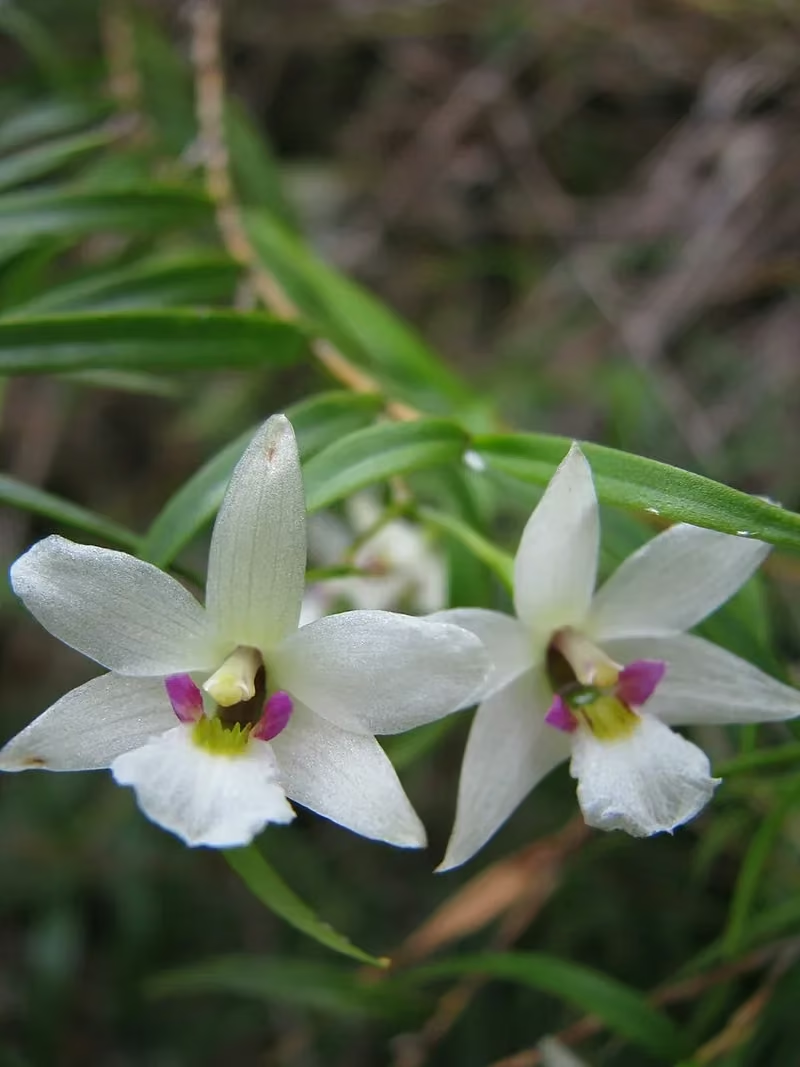
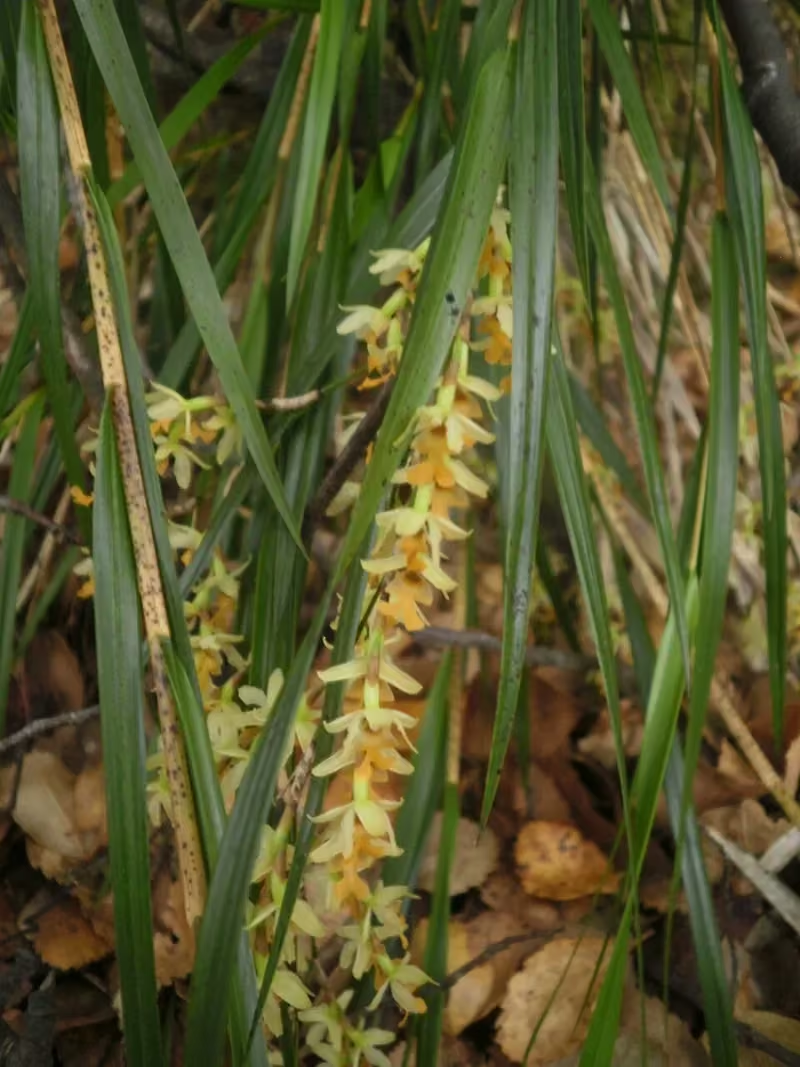
Dendrobium cunninghamii is New Zealand's largest epiphytic orchid, forming impressive tufts that can span up to two metres in width. Its most distinctive feature is its wiry, highly branched stems that are polished, yellowish, and possess jointed nodes, giving them a strong resemblance to miniature bamboo. The leaves are narrow, linear, and relatively short (3-5 cm), arranged alternately along the upper portions of the stems. During mid-summer (often around Christmas), the plant erupts into bloom with clusters of flowers borne on short lateral stalks. Each flower is about 2 cm wide, featuring pure white petals and sepals with a complex, three-lobed labellum (lip) marked with rose pink, purple, and green ridges. The flowers possess a delicate, sweet fragrance that fills the surrounding forest air.
Quick Facts
| Scientific Name | Dendrobium cunninghamii |
|---|---|
| Height | Up to 1-2 metres (Epiphytic) |
| Spread | Up to 2 metres |
| Water Needs | Moderate (Ambient Humidity) |
| Light | Bright Indirect Light to Partial Sun |
| Frost Tolerance | Moderate |
| Salt Tolerance | Moderate |
| Growth Rate | Slow |
| Lifespan | Perennial (Long-lived) |
Climate Best Suited to
Winika is a hardy orchid found throughout the North, South, Stewart, and Chatham Islands. It thrives in temperate rainforest climates but is remarkably adaptable, occurring from coastal sea level up to montane elevations of approximately 1,000 metres. It requires a climate with high ambient humidity and good air circulation. While it can withstand moderate frosts, it is typically found in the relative shelter of the forest canopy or on cliff faces where extreme temperature fluctuations are somewhat moderated by the surrounding vegetation or rock mass.
Regional Suitability
| City | Climate Suitability |
|---|---|
| Auckland | Highly Suitable |
| Wellington | Highly Suitable |
| Christchurch | Suitable |
| Dunedin | Suitable |
| Queenstown | Suitable |
| Invercargill | Suitable |
Plant Habitat
Natural Occurrence and Ecology
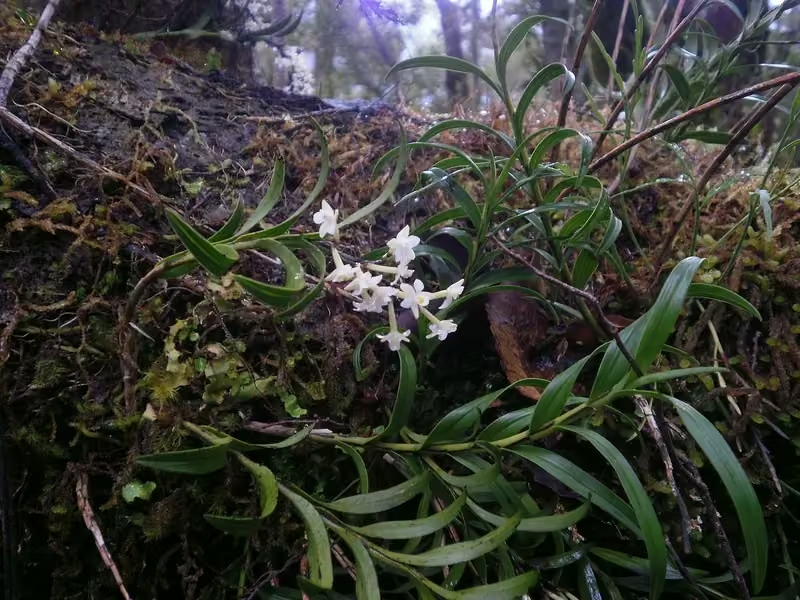
The New Zealand bamboo orchid is primarily an epiphyte, meaning it grows on other plants-usually large forest trees like podocarps, beeches, and tree ferns. It anchors itself to the bark using a network of tough, wiry roots that absorb moisture and nutrients from the air and accumulating organic debris. However, it is also lithophytic, frequently found growing on rocks, cliff faces, and fallen logs. In some urban environments, it has even been observed colonizing brick walls. It prefers open forest situations where it can access bright, filtered light and constant airflow, avoiding the darkest, most stagnant parts of the deep forest interior.
Growing Requirements
Soil Requirements
As an epiphyte, it does not grow in soil. It requires a very coarse, free-draining medium or can be attached directly to a surface.
- Coarse orchid bark
- Tree fern slabs
- Lava rock / pumice
Light Requirements
Requires bright, indirect light. It can tolerate some direct morning sun, but intense midday sun may cause the leaves to yellow or burn.
- Bright filtered light
- Dappled shade
- East-facing aspect
Water Requirements
Thrives on high humidity. The roots should be allowed to dry slightly between waterings to mimic the wetting and drying cycles of tree bark.
- Regular misting
- Consistent humidity
- Rainwater preferred
Planting and Establishing
Establishment Guidance
Establishing Winika in a home garden is most successful when it is mounted or grown in a hanging basket. To mount the orchid, place a small clump of the plant against a piece of tree fern slab or a rough-barked log, placing a small amount of damp sphagnum moss around the roots. Secure it tightly with soft twine or plastic-coated wire. Alternatively, use a hanging basket filled with a very coarse mix of pine bark, charcoal, and perlite. The best time to establish Winika is in spring as new root growth begins. Once established, the orchid will slowly expand its network of bamboo-like canes, eventually creating a spectacular cascading display of foliage and flowers.
Ecological Role
Biodiversity and Ecosystem Impact
Dendrobium cunninghamii is a significant component of New Zealand's forest canopy biodiversity. By growing high in the trees, it creates additional habitat and food sources for canopy-dwelling invertebrates. Its flowers are specifically adapted for pollination by native bees and flies, contributing to the health of these insect populations. The orchid also acts as a "biological filter," trapping wind-blown dust and nutrients that would otherwise wash straight to the forest floor, eventually contributing to the organic matter that supports other epiphytic life forms like ferns and mosses.
Uses & Significance
Garden Uses
A prized specimen for native plant enthusiasts and orchid collectors. It is ideal for cool greenhouses, sheltered courtyard walls, or as a striking feature in a large hanging basket.
- Epiphytic displays
- Hanging baskets
- Native courtyard features
Ecological Value
Enhances the structural complexity of native forests. It supports native pollinators and provides a unique example of New Zealand's diverse orchid flora.
- Pollinator support
- Canopy biodiversity
- Indicator of forest health
Landscaping Uses
In landscaping, Winika is used to add a layer of vertical interest and "authentic forest feel" to garden designs. Its unique, cane-like stems provide a texture that is quite different from other native shrubs. It is particularly effective when attached to established native trees like Ponga ( Cyathea dealbata ) or Kauri, where it can be seen at eye level. It adds a touch of seasonal elegance to shaded outdoor spaces, especially during its mid-summer flowering peak.
Seasonal Care Calendar
Spring
New growth begins. Apply a very dilute, balanced orchid fertilizer once a month. Increase misting as humidity levels drop.
- Light fertilization
- Check root growth
Summer
Peak flowering season (Dec-Jan). Ensure the orchid does not dry out during hot winds. Provide maximum humidity.
- Frequent misting
- Enjoy the blooms
Autumn
Flowering ends and capsules ripen. Reduce fertilization. This is an ideal time for moving or re-mounting the orchid.
- Collect seed capsules
- Re-mounting
Winter
Dormant period. Stop fertilization and reduce watering frequency. Ensure the orchid is protected from prolonged freezing.
- Reduce watering
- Protect from deep frost
When to Prune and How Much
Winika requires minimal pruning. Its branched, wiry canes should generally be left to grow naturally to maintain the plant's characteristic "tufted" appearance.
- Remove dead canes
- Trim spent flower stalks
Only remove canes that have completely dried out and turned greyish-white. Be careful not to damage the living, yellowish-green canes, as these are the source of next season's flowers and new growth.
How to Grow Winika
Cultivating the Winika ( Dendrobium cunninghamii ) is a uniquely rewarding experience that brings the essence of the New Zealand rainforest into your home or garden. Unlike terrestrial plants, this epiphytic orchid has evolved to live in the "air," relying on high humidity and rapid drainage. Success depends on understanding its need for root aeration and its preference for cool, humid conditions. It is a slow-growing but long-lived species that, once established, requires very little maintenance. Successful cultivation begins with providing a stable substrate and a location that mimics the dappled light and constant airflow of the forest canopy.
From Division
Division is the most practical method for the home gardener to propagate Winika. This should be done in early spring when the plant is just beginning to show signs of new growth.
Ensure that each division has a healthy section of rhizome and at least 3-5 active canes.
- Carefully remove the orchid from its basket or mount.
- Use a sterile, sharp knife to cut through the rhizome, ensuring each piece has a good root system.
- Trim any dead or decaying roots from the division.
- Mount the division immediately onto a tree fern slab or place it in a small basket with fresh orchid bark.
- Keep the new plant in a high-humidity, shaded spot until new root tips are visible.
- Mist daily but avoid keeping the base of the canes constantly wet.
From Seed
Propagating New Zealand orchids from seed is an advanced technique that is rarely successful without laboratory equipment. Orchid seeds are microscopic and lack their own food reserves.
In the wild, they rely on a symbiotic relationship with specific mycorrhizal fungi to germinate.
- Collect the dry, brown capsules before they split and release the dust-like seeds.
- Sowing these seeds directly into the moss around a parent plant sometimes yields results, as the necessary fungi are already present.
- For commercial production, seeds are sown in sterile flasks on nutrient-rich agar.
- This process is slow and can take several years before a plant is large enough to be moved to a pot.
Additional Methods
Winika can occasionally produce "keikis" or small plantlets along the nodes of the older canes. These can be left until they have developed several roots of their own, then carefully detached and mounted separately. This is a natural cloning process and is the easiest way to start a new plant if your specimen is healthy and vigorous. Regardless of the method, always use mineral-free water (like rainwater) to prevent salt buildup on the sensitive epiphytic roots.
Pests & Diseases
Generally pest-resistant, but aphids and scale insects can sometimes hide in the joints of the canes. These can be treated with a dilute horticultural oil spray. Root rot is the most significant disease risk, which occurs if the growing medium is too dense or stays waterlogged. Ensure excellent drainage and allow the medium to breathe.
Cultural Significance
Winika holds deep significance in Māori culture. It is often referred to as the "Christmas Orchid" because of its summer blooming period. The name 'Winika' was famously given to a sacred war canoe (waka taua) of the Tainui people, which was adorned with the orchid. It represents endurance, beauty, and the spiritual connection between the people and the forest.
- Waka Winika connection
- Summer heritage symbol
- Traditional orchid lore
Bonus Tip
To encourage flowering, give your Winika a "cool rest" in late winter. Reduce watering and move it to a slightly brighter, cooler spot. This temperature drop helps trigger the production of flower buds for the coming summer.
Related Plants
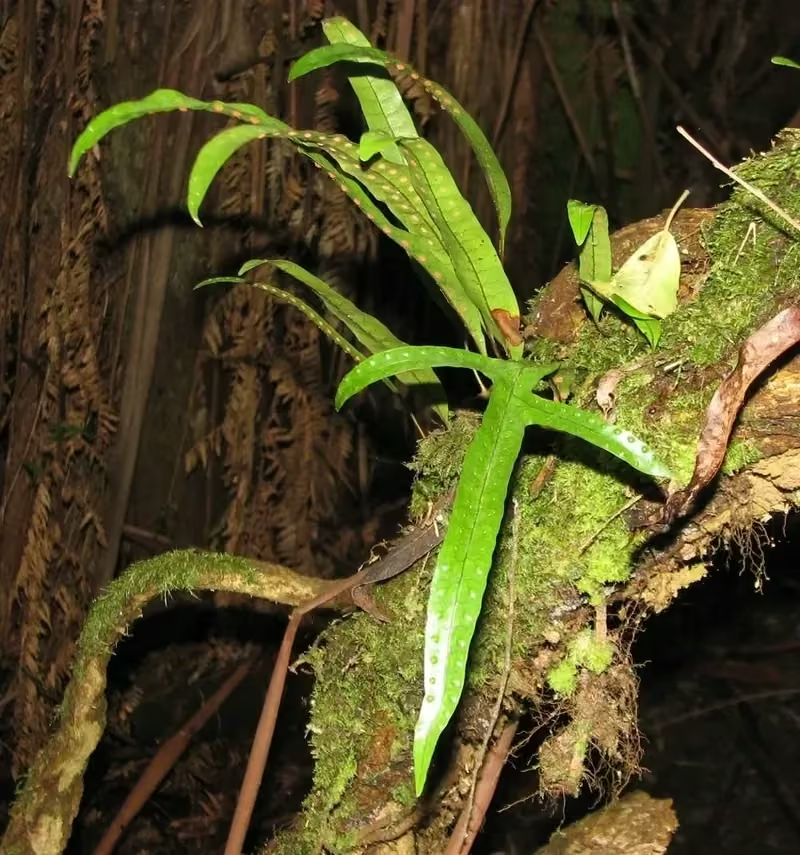
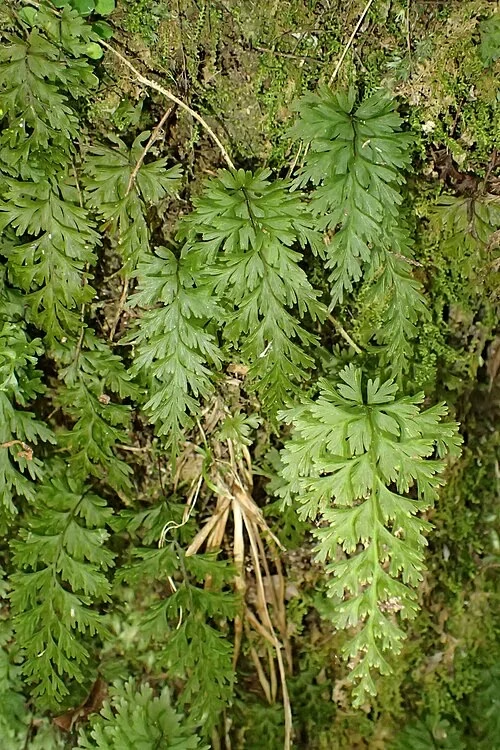
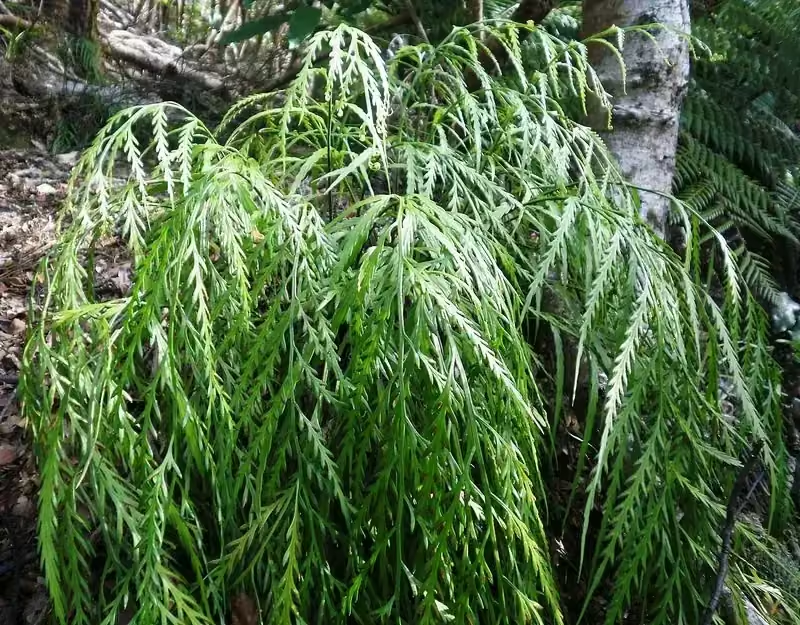
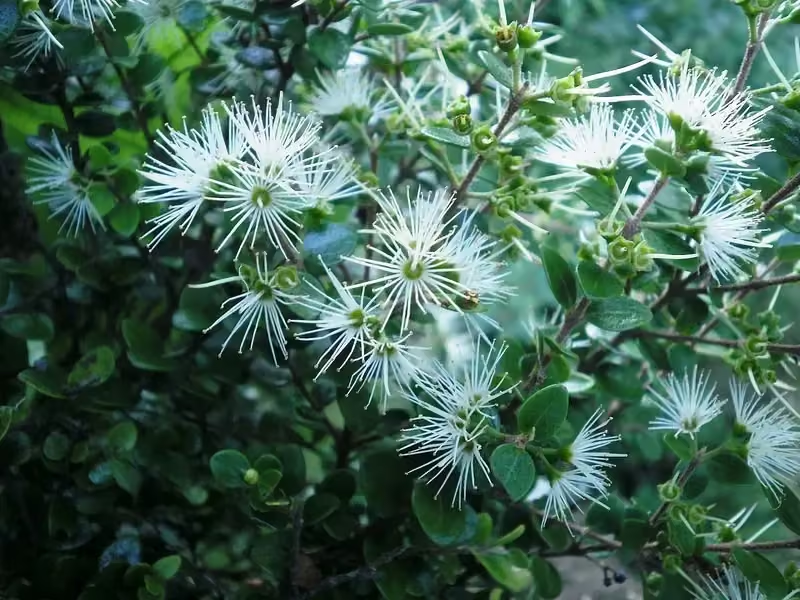
Explore other native plants that share similar characteristics or habitats with Winika ( Dendrobium cunninghamii ), offering further insights into New Zealand's diverse flora. These related species provide context and opportunities for complementary planting in your garden.

Plant Conservation
Conservation Status and Threats
Dendrobium cunninghamii is currently classified as Not Threatened. It remains common in many areas of New Zealand. However, as an obligate epiphyte, it is entirely dependent on the health of mature native forests. The loss of large host trees due to land clearing and the impact of browsing mammals like possums on forest humidity levels pose long-term risks to this iconic orchid. Preserving intact forest ecosystems is essential for its survival.
Frequently Asked Questions
How big does Dendrobium cunninghamii grow?
This epiphytic orchid reaches about 1 to 2 metres and can form tufts up to 2 metres wide.
When does Dendrobium cunninghamii flower?
It flowers in mid-summer, often around Christmas, with white blooms marked in rose pink and purple.
Where does Winika grow naturally?
It grows as an epiphyte on forest trees, rocks and cliffs from the coast up to about 1,000 metres elevation.
Does Dendrobium cunninghamii tolerate frost?
It has moderate frost tolerance and prefers a temperate climate with high ambient humidity.
Sources and Further Reading
The botanical, growing, and conservation details for Winika (Dendrobium cunninghamii) on this page draw on authoritative New Zealand plant references and citizen-science observation records. Consult the sources below for full technical records and the latest distribution data.