Southern Shore Spleenwort
Asplenium scleroprium
Last updated:
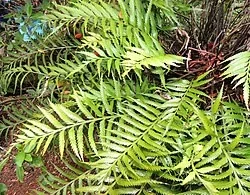
Southern Shore Spleenwort (Asplenium scleroprium) is a robust coastal fern endemic to New Zealand, growing 15 to 50 cm tall from stout, erect, fleshy rhizomes densely clothed in blackish-brown scales. Its thick, leathery fronds are dark green to blue-green, with ovate to elliptic blades and pinnae that are deeply and regularly toothed, distinguishing it from the similar Asplenium obtusatum. It grows mainly in the far south of the South Island, Stewart Island and several subantarctic islands, on exposed rocky headlands and cliffs in the path of salt spray. Highly salt-tolerant, it is classified At Risk - Naturally Uncommon. Explore more native ferns in our native plant guide.
Plant Description
Identification and Physical Characteristics
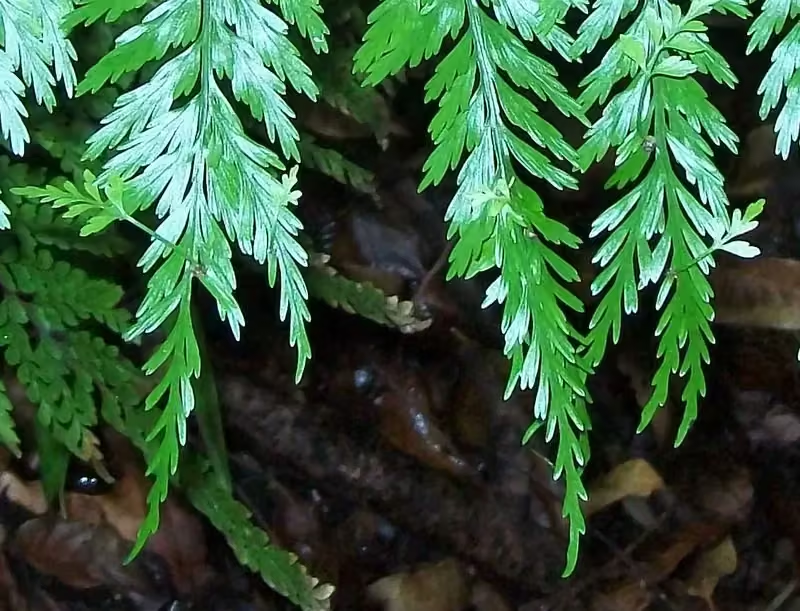
Asplenium scleroprium , commonly known as the Southern Shore Spleenwort, is a robust and distinctive native fern endemic to New Zealand. This tufted fern features stout, erect, and fleshy rhizomes that are densely clothed in blackish-brown scales. Its fronds are notably thick and leathery (coriaceous), often displaying a dark green to blue-green colour. The leaf blades (laminae) are ovate to narrowly ovate or elliptic, ranging from 150 to 500 mm in length and 80 to 200 mm in width.
A key identifying feature of this species is its pinnae (leaflets), which are deeply and regularly toothed along the margins, with tapering apices. This distinguishes it from the similar Asplenium obtusatum , which has blunter pinnae. The sori (spore clusters) are oblong and can reach up to 10 mm in length, characteristically positioned so that they reach the margins of the frond at the base of the deeply cut teeth. This fern is perfectly adapted to the harsh conditions of its coastal habitat, with its fleshy structure helping it to retain moisture against the drying effects of salt spray and wind.
Quick Facts
| Scientific Name | Asplenium scleroprium |
|---|---|
| Height | 15-50 cm |
| Spread | Up to 40 cm |
| Water Needs | Moderate to High (Consistently moist, well-drained) |
| Light | Indirect light to partial shade |
| Frost Tolerance | Moderate (Coastal species, prefers mild temperatures) |
| Salt Tolerance | High (Adapted to coastal salt spray) |
| Growth Rate | Slow |
| Lifespan | Perennial (Long-lived) |
Climate Best Suited to
Asplenium scleroprium is primarily a coastal species, thriving in the temperate and often humid maritime climates of southern New Zealand and its subantarctic islands. It is highly resilient to salt spray and coastal winds, making it ideal for exposed maritime environments. While it prefers moderate temperatures typical of coastal regions, it requires high humidity and consistent soil moisture. In garden settings, it should be protected from extreme heat and prolonged dry spells, preferring cooler, shaded or semi-shaded positions that mimic its natural habitat on rocky headlands and forest margins.
Regional Suitability
| City | Climate Suitability |
|---|---|
| Auckland | Moderate (May struggle with high heat/low humidity without care) |
| Wellington | Suitable (Coastal, temperate, good humidity) |
| Christchurch | Moderate (Needs protection from dry winds and severe frosts) |
| Dunedin | Highly Suitable (Cooler coastal conditions are ideal) |
| Invercargill | Highly Suitable (Native to the region, thrives in local conditions) |
Plant Habitat
Natural Occurrence and Ecology
The Southern Shore Spleenwort is a specialist of the New Zealand coastline, found predominantly in the far south of the South Island, Stewart Island/Rakiura, and several subantarctic islands including the Snares, Chatham, and Auckland Islands. It inhabits exposed rocky headlands, cliff faces, and crevices, often growing directly in the path of salt spray. It also establishes itself at the margins of coastal shrubland and open coastal forests. While it typically grows near sea level, it has been recorded at elevations up to 90 meters on the Snares Islands. It frequently co-exists with Asplenium obtusatum , reflecting their shared preference for rugged maritime environments.
Growing Requirements
Soil Requirements
Prefers moist, organic-rich, and well-drained soil. Adaptable to rocky substrates.
- Rich in organic matter (leaf litter, compost)
- Excellent drainage is essential
- Tolerates thin, rocky soils
- Neutral to slightly acidic pH
Light Requirements
Thrives in indirect sunlight to partial shade. Can tolerate more light in cooler coastal areas if moisture is high.
- Filtered sunlight
- Partial shade
- Avoid intense midday sun in hot climates
Water Requirements
Requires consistently moist soil and high humidity. It is relatively drought-sensitive.
- Keep soil consistently damp
- Provide high humidity through misting or grouping
- Avoid waterlogging the roots
- Water more frequently during dry summer months
Planting and Establishing
Establishment Guidance
When planting Asplenium scleroprium , choose a sheltered spot that mimics its natural coastal or forest-margin habitat. A location with partial shade and protection from drying winds is ideal. Ensure the soil is rich in organic matter and well-draining. If planting in a rocky area or rock wall, provide enough organic material in the crevices to retain moisture. Dig a hole twice the size of the root ball, place the fern so the crown is level with the soil surface, and backfill with a mix of compost and native soil. Water thoroughly after planting and maintain consistent moisture during the first year of establishment. Mulching with organic material will help keep the root zone cool and moist.
Ecological Role
Biodiversity and Ecosystem Impact
As a coastal endemic, Asplenium scleroprium plays a significant role in stabilizing soil and initiating vegetation cover on exposed rocky headlands and cliffs. Its dense growth habit provides essential microhabitats for small coastal invertebrates, contributing to the biodiversity of these rugged environments. It also acts as a nursery plant, creating sheltered pockets where other coastal seedlings can establish. In the subantarctic islands, it is a key component of the unique island flora, contributing to the overall resilience of these isolated ecosystems. Its ability to hybridize with Asplenium obtusatum adds to the complex genetic diversity of New Zealand's coastal ferns.
Uses & Significance
Garden Uses
The Southern Shore Spleenwort is an excellent choice for coastal gardens, rockeries, and fern houses. Its thick, deeply toothed fronds provide unique texture and architectural interest. It is particularly valuable for its salt tolerance, allowing it to thrive in positions where other ferns might struggle. It also performs well as an indoor plant in humid environments.
- Coastal and maritime gardens
- Rock gardens and wall crevices
- Shaded containers
- Indoor plant (with high humidity)
- Native woodland groundcover
Ecological Value
Soil stabilization in coastal areas, habitat for invertebrates, and a contributor to the unique biodiversity of New Zealand's subantarctic islands.
- Erosion control on coastal cliffs
- Provides shelter for small fauna
- Contributes to island ecosystem health
- Indicator of pristine coastal habitats
Landscaping Uses
In landscaping, Asplenium scleroprium is prized for its ability to bring a lush, native forest feel to challenging coastal sites. Its robust form and leathery foliage make it an effective structural element in shaded rock gardens or as an underplanting beneath larger coastal shrubs like Hebe or Olearia. It can be used to naturalize damp, rocky embankments or to add year-round greenery to shaded pathways. Mass planting can create a beautiful, textured groundcover in cool, moist zones. Its compact size also makes it ideal for smaller urban gardens where a resilient and attractive native fern is desired.
Seasonal Care Calendar
Spring
Monitor for new frond emergence. Ensure consistent moisture as growth begins. Apply a light, balanced liquid fertilizer to support healthy development.
- Check for new fronds
- Maintain soil moisture
- Light fertilization
Summer
Increase watering during dry periods to prevent frond wilting. Maintain high humidity through misting if necessary. Ensure protection from intense sun.
- Water regularly during dry spells
- Ensure high humidity
- Protect from direct sunlight
Autumn
Reduce watering as temperatures cool. Remove any dead or yellowing fronds to keep the plant tidy and healthy. Prepare for winter.
- Reduce watering
- Remove old fronds
- Mulch if in cold areas
Winter
Maintain minimal soil moisture, avoiding waterlogging. Protect from severe frosts if grown outside its natural southern range. Cease fertilization.
- Protect from heavy frost
- Keep soil barely moist
- No fertilization
When to Prune and How Much
Pruning for Asplenium scleroprium is minimal and mostly for maintenance. The best time to prune is in late winter or early spring, just before the new growth appears. Remove any dead, damaged, or unsightly fronds by cutting them at the base with clean, sharp shears. This improves air circulation and encourages a fresh flush of healthy fronds. Avoid removing healthy fronds as this can stress the plant.
- Remove dead or yellowing fronds
- Prune in late winter or early spring
- Use sterilized pruning tools
Regular cleaning of the fronds by gentle misting or wiping with a damp cloth can also prevent the buildup of dust and pests, particularly for indoor specimens.
How to Grow Southern Shore Spleenwort
Propagating the Southern Shore Spleenwort ( Asplenium scleroprium ) is a rewarding way to increase your collection of this resilient native fern. While it is primarily a spore-bearing plant, successful propagation can be achieved through both spore culture and the division of established clumps. Each method requires attention to detail, particularly regarding moisture and humidity, to ensure the successful development of new plants that are true to their parentage.
From Seed (Spores)
Ferns do not produce seeds; instead, they reproduce via spores. Propagation from spores is a slow but fascinating process. Spores are found in the sori on the underside of mature fronds. To collect them, place a fertile frond in a paper envelope and leave it in a warm, dry place for several days until the fine, dust-like spores are released. Prepare a sterile growing medium, such as a mix of peat and sand or a specialized fern mix, and sterilize it in an oven or microwave to prevent fungal growth. Lightly sprinkle the spores on the surface of the moist medium in a covered tray. Do not cover the spores with soil. Keep the tray in a location with indirect light and maintain high humidity. Germination will eventually form a green film called a prothallus, followed by tiny fern plantlets. This process can take several months. Once the plantlets are large enough to handle, carefully transplant them into individual pots.
- Collect mature spores from fertile fronds.
- Sterilize a fine-textured, moist growing medium.
- Sprinkle spores over the surface; do not cover.
- Maintain high humidity and indirect light in a covered tray.
- Wait for prothalli and then plantlets to develop.
- Transplant young ferns once they are robust enough.
The key to success with spores is maintaining a sterile environment and high humidity throughout the long germination process.
From Division
Division is a more straightforward and faster method for home gardeners to propagate Asplenium scleroprium . This is best done in spring or early autumn when the plant is not under extreme stress. Carefully remove the mature fern from its pot or the ground and inspect the rhizome. Identify sections that have their own healthy root system and at least one or two fronds. Gently separate these sections using a sharp, clean knife. Replant the divisions into fresh, well-draining soil, ensuring they are kept consistently moist and in a humid, shaded environment until they show signs of new growth and establishment. This method ensures that the new plants are genetically identical to the parent.
- Gently lift the mature plant from the soil.
- Identify natural divisions in the rhizome with roots and fronds.
- Separate carefully using a clean, sharp knife.
- Replant into fresh, moist, well-draining soil.
- Keep in high humidity and shade until established.
Additional Methods
While less common, some Asplenium species can be propagated through tissue culture in a laboratory setting, though this is not typical for home gardeners. For Asplenium scleroprium , focusing on spore collection and rhizome division will yield the best results for garden and landscape use. Ensuring the parent plant is healthy and well-watered before propagation will increase the success rate of any new divisions.
Pests & Diseases
Asplenium scleroprium is generally a hardy species but can be susceptible to common fern pests such as scale insects, mealybugs, and sometimes aphids, particularly in indoor or enclosed environments with poor air circulation. Overwatering or poor drainage can lead to fungal issues such as root rot. To prevent these, ensure good ventilation, appropriate watering practices, and regular inspections. Minor infestations can often be managed with neem oil or insecticidal soap. Providing the plant with its ideal growing conditions is the best defense against disease.
Cultural Significance
While specific traditional Māori uses for Asplenium scleroprium may not be widely documented compared to more common ferns, it forms part of the rich botanical heritage of Aotearoa. As an endemic species of the southern regions and subantarctic islands, it represents the unique biodiversity of New Zealand's southern maritime environments. Ferns, in general, hold spiritual and symbolic importance in Māori culture, often associated with new growth and the forest floor. The resilience of the Southern Shore Spleenwort in its rugged coastal home is a testament to the enduring nature of New Zealand's native flora.
Bonus Tip
To truly replicate the Southern Shore Spleenwort's natural environment, consider planting it in a container with a layer of basalt or limestone chips mixed into the soil. For an authentic touch, position it where it can receive the gentle afternoon breeze, ensuring high humidity is maintained. Regularly misting with rainwater can also help mimic the misty coastal conditions it loves.
Related Plants
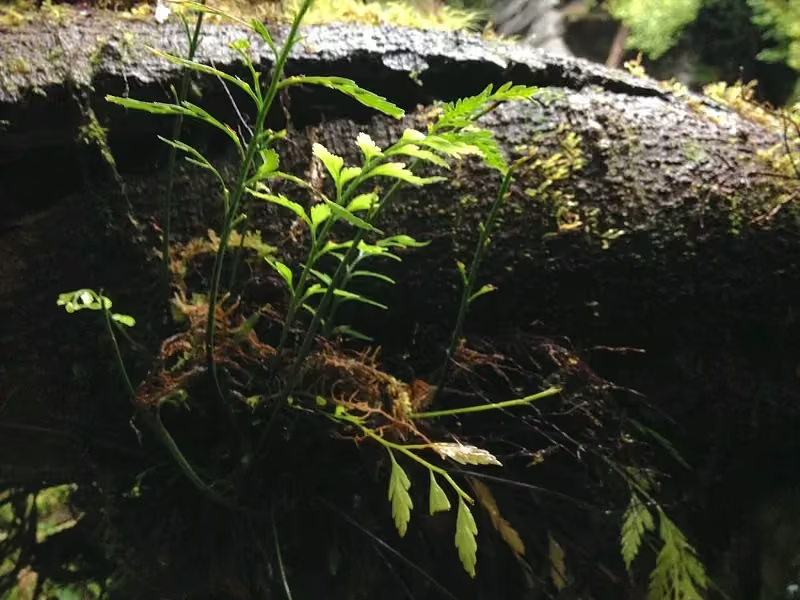
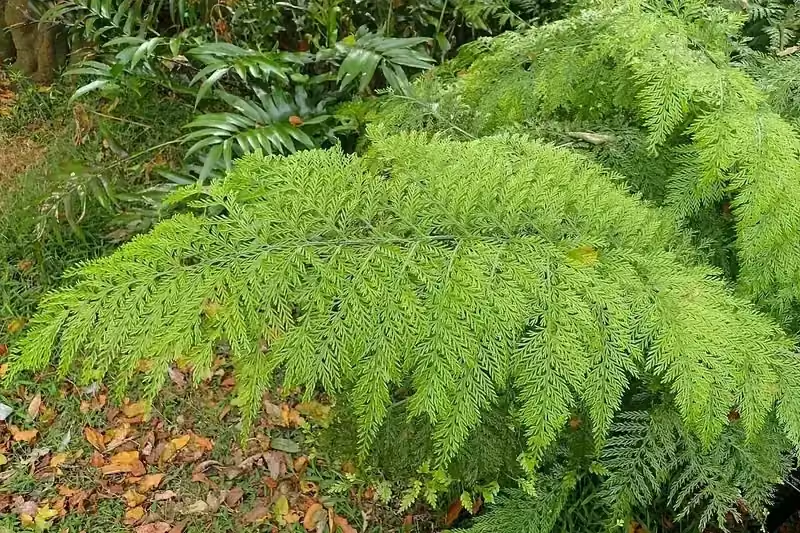
Explore other native plants that share similar characteristics or habitats with Southern Shore Spleenwort ( Asplenium scleroprium ), offering further insights into New Zealand's diverse flora. These related species provide context and opportunities for complementary planting in your garden. For another native fern, explore Mountain Hard Fern.


Plant Conservation
Conservation Status and Threats
Asplenium scleroprium is classified as "At Risk - Naturally Uncommon" in New Zealand. This status reflects its restricted natural distribution, primarily on Stewart Island/Rakiura and various outlying subantarctic islands. While its populations in these remote locations are relatively stable, its limited presence on the South Island mainland makes it vulnerable to localized threats. Conservation of its unique coastal habitats, particularly the rocky headlands and cliff faces, is essential for its long-term survival. Protecting these areas from invasive species and habitat degradation ensures that this hardy and distinctive fern continues to thrive in its maritime home. Sourcing plants from nurseries that prioritize sustainable and ethical propagation also contributes to its conservation.
Frequently Asked Questions
How tall does Southern Shore Spleenwort grow?
It grows 15 to 50 cm tall with a spread of up to 40 cm, forming a robust tufted clump.
What is the conservation status of Southern Shore Spleenwort?
It is classified as At Risk - Naturally Uncommon within New Zealand's threat classification system.
Is Southern Shore Spleenwort suitable for coastal sites?
Yes, it has high salt tolerance and is adapted to exposed rocky headlands directly in the path of coastal salt spray.
Where does Southern Shore Spleenwort grow?
It grows in the far south of the South Island, Stewart Island and subantarctic islands including the Snares, Chatham and Auckland Islands.
Sources and Further Reading
The botanical, growing, and conservation details for Southern Shore Spleenwort (A. scleroprium) on this page draw on authoritative New Zealand plant references and citizen-science observation records. Consult the sources below for full technical records and the latest distribution data.