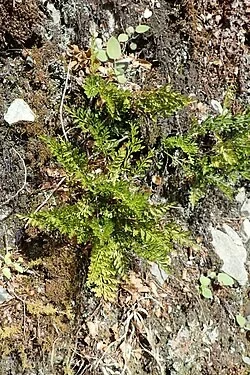
Richard's Spleenwort
Asplenium richardii
Last updated:
Richard's Spleenwort (Asplenium richardii) is an endemic New Zealand fern with finely divided, tripinnate fronds arising from a short, stout, erect rhizome clad in dark brown scales. The fronds vary greatly in size, from 40 to 470 mm long, with dark-green, relatively thin, ovate blades on scaly stipes. It is chiefly a montane to alpine plant, occurring from around 200 up to 1950 metres. In the North Island it is scarce, confined to alpine sites such as Mt Ruapehu and the Kaimanawa Range, while the South Island holds more common populations at higher elevations. It suits cool, humid, shaded rock gardens. Explore more native ferns in our native plant guide.
Plant Description
Identification and Physical Characteristics
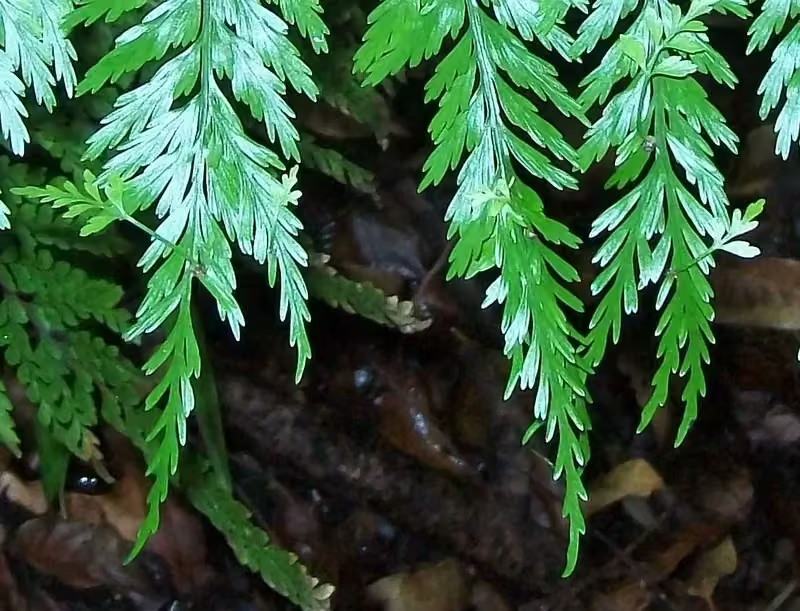
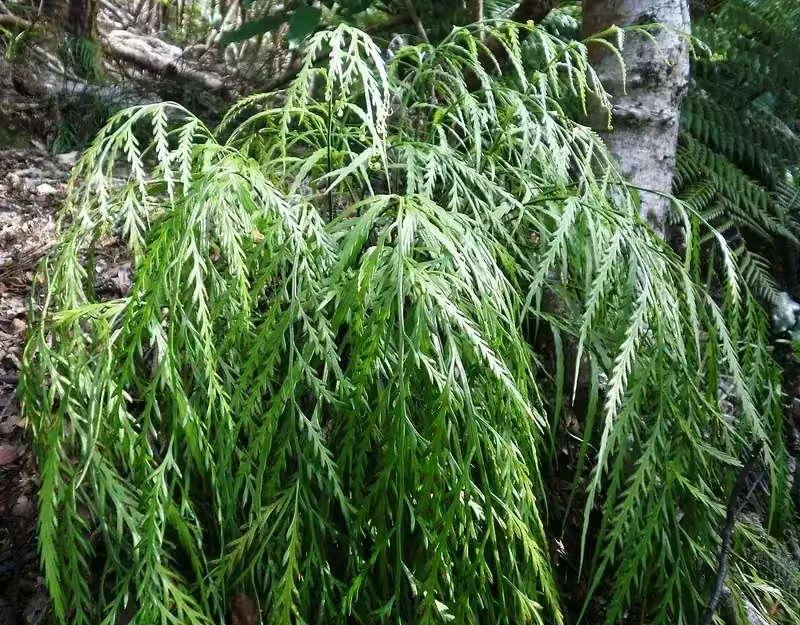
Asplenium richardii , commonly known as Richard's Spleenwort, is an attractive endemic New Zealand fern characterized by its short, stout, erect rhizome, which is covered in dark brown scales. The fronds, displaying elegant tripinnate division, can range significantly in size, from 40 to 470 mm long, with the stipes (stalks) alone measuring 15 to 230 mm. These stipes are typically brown on their underside and green above, densely covered in subulate scales, contributing to the fern's robust appearance.
The laminae (leaf blades) are ovate to narrowly ovate, dark green, and relatively thin, generally measuring between 100-250 mm in length and 40-120 mm in width. A distinctive feature of A. richardii is its crowded, overlapping pinnae (leaflets) that spread in three dimensions rather than lying flat. The ultimate segments of the fronds are linear, acute or sub-acute, and can extend up to 8 mm long. Sori, the spore clusters, are found submarginally and are typically 2-4 mm long. It is often distinguished from similar species such as A. hookerianum by its generally larger size, stouter stipe, and narrower ultimate segments, and from A. appendiculatum by the unique three-dimensional arrangement of its pinnae. This variability in form is a testament to its adaptability across diverse microhabitats.
Quick Facts
| Scientific Name | Asplenium richardii |
|---|---|
| Height | Up to 47 cm |
| Spread | Up to 12 cm |
| Water Needs | Moderate to High (Consistently moist, well-drained) |
| Light | Indirect light to partial shade |
| Frost Tolerance | High (Adapted to alpine conditions) |
| Salt Tolerance | Low to Moderate (Typically found inland, though adaptable to sheltered coastal) |
| Growth Rate | Slow |
| Lifespan | Perennial (Long-lived) |
Climate Best Suited to
Asplenium richardii is well-suited to cool, humid climates found in montane to alpine regions of New Zealand, but also adaptable to sheltered lowland environments with sufficient moisture. It thrives in areas with indirect light or partial shade, protected from harsh winds and direct sun, making it ideal for woodland gardens, fern groves, or shaded patios. Its high frost tolerance, stemming from its alpine distribution, allows it to withstand colder temperatures, while its need for consistent moisture makes it less suited to very dry or hot climates without supplemental care. It is particularly well-adapted to areas with base-rich substrates.
Regional Suitability
| City | Climate Suitability |
|---|---|
| Auckland | Suitable (If provided with shade, humidity, and moisture) |
| Wellington | Suitable (Temperate, often humid, good for shaded areas) |
| Christchurch | Suitable (With protection from dry winds; thrives in cooler, shaded spots) |
| Dunedin | Highly Suitable (Cooler, often humid, ideal for shaded areas) |
| Queenstown | Suitable (Given its alpine tolerance, thrives with adequate shade and moisture) |
Plant Habitat
Natural Occurrence and Ecology
Richard's Spleenwort is an endemic New Zealand fern predominantly found in montane to alpine regions, with an altitudinal range stretching from 200 to 1950 meters. In the North Island, its presence is scarce and restricted to alpine environments such as Mt Honokawa, Mt Ruapehu, and parts of the Kaimanawa Range. The South Island, however, hosts more common populations, particularly at higher elevations in the drier, eastern parts, generally east of the Main Divide. It exhibits a strong preference for various rock types, including basalt, limestone, schist, and greywacke, often growing in the crevices of cliff faces, amongst boulders, and along stream banks, especially under the protective canopy of beech forests. Its adaptability to diverse rock substrates and its ability to thrive at significant altitudes underscore its rugged nature.
Growing Requirements
Soil Requirements
Prefers consistently moist, humus-rich, and well-drained soil. Thrives on various rock types, indicating a need for good aeration and mineral content.
- Humus-rich for fertility and moisture retention
- Well-draining to prevent waterlogging
- Adapted to a range of mineral soils (basalt, limestone, schist, greywacke)
- Neutral to slightly alkaline pH preferred
Light Requirements
Requires indirect light to partial shade. Direct sunlight, especially harsh afternoon sun, will scorch its fronds.
- Filtered light under tree canopy
- Part shade in cooler climates
- Deep shade in warmer, drier regions
Water Requirements
Thrives in consistently moist environments with high humidity. Good air circulation is important.
- Consistently moist, but not waterlogged soil
- Regular watering during dry spells
- High ambient humidity is beneficial
- Water at the edges of pots to prevent mold
Planting and Establishing
Establishment Guidance
When planting Asplenium richardii , choose a location that provides indirect light or partial shade and is sheltered from harsh winds and intense sun. Emulate its natural montane to alpine habitat by ensuring the soil is consistently moist, humus-rich, and free-draining. If planting in the ground, consider incorporating grit or small stones into the soil mix to enhance drainage and mimic its rocky native substrates. Dig a hole twice as wide as the root ball and to a similar depth. Position the fern with its crown level with the surrounding soil, backfill with amended soil, gently firming around the base, and water thoroughly. For container cultivation, use a well-draining potting mix with added perlite or small gravel. Consistent moisture is paramount during establishment, and applying a layer of organic mulch will help maintain soil humidity and temperature.
Ecological Role
Biodiversity and Ecosystem Impact
As an endemic New Zealand fern, Asplenium richardii plays a subtle yet important ecological role in its montane to alpine habitats. It contributes to soil stabilization on rocky outcrops and cliff faces, particularly in areas susceptible to erosion. By forming dense clumps, it creates microhabitats that retain moisture and provide shelter for various small invertebrates, thereby contributing to the foundational biodiversity of these cooler ecosystems. Its presence, especially under beech forests and along stream banks, indicates a healthy, undisturbed environment and adds to the rich understory diversity of New Zealand's high-altitude flora.
Uses & Significance
Garden Uses
Richard's Spleenwort is an excellent choice for shaded gardens, rockeries, or as an accent plant in containers, particularly in cooler climates or sheltered spots. Its elegant, tripinnate fronds and dense, clumping habit make it a visually appealing addition, providing year-round texture. Its adaptability to diverse mineral soils allows for versatility in placement, especially in woodland gardens, fern groves, or on shaded patios.
- Shaded rockeries
- Container plant
- Woodland gardens
- Fern groves
- Shaded patios
- Underplanting in cool, moist areas
Ecological Value
Contributes to soil stabilization on rocky outcrops and provides microhabitats for invertebrates in montane to alpine environments.
- Soil stabilization in erosion-prone areas
- Creates sheltered microhabitats
- Supports invertebrate populations
- Enhances alpine and montane biodiversity
Landscaping Uses
In landscaping, Asplenium richardii is ideal for creating naturalistic scenes in shaded, cool, and humid areas. Its preference for rocky substrates makes it perfect for integrating into rock gardens, dry stack walls, or along the edges of shaded pathways, particularly in montane or alpine-themed gardens. Its elegant form can serve as a striking groundcover beneath native trees or as a feature plant in a sheltered fernery. The ability to thrive in a range of mineral soils, including calcareous types, offers flexibility in design. For container displays, its compact, tufted habit makes it an attractive focal point on shaded balconies or patios.
Seasonal Care Calendar
Spring
As new fronds emerge, ensure consistent moisture and protection from any late frosts. A light application of a slow-release, balanced fertilizer can support vigorous growth.
- Monitor new frond growth
- Maintain consistent soil moisture
- Light fertilization if necessary
Summer
Maintain consistent soil moisture, increasing watering frequency during hot, dry spells. Ensure adequate shade and humidity, especially in warmer climates, to prevent frond scorching.
- Ensure consistent moisture and humidity
- Increase watering during dry periods
- Provide extra shade from direct sun
Autumn
Reduce watering gradually as temperatures cool. Remove any dead or yellowing fronds to maintain plant health and prepare for winter.
- Gradually reduce watering
- Remove old or damaged fronds
- Prepare for cooler temperatures
Winter
Given its high frost tolerance, minimal winter protection is usually needed in most NZ climates. Maintain soil barely moist to prevent root rot in dormant periods. Cease fertilization.
- Minimal frost protection needed (high tolerance)
- Keep soil barely moist
- No fertilization
When to Prune and How Much
Pruning for Asplenium richardii is minimal, primarily focused on removing any dead, damaged, or senescent fronds to maintain plant health and aesthetic appeal. The best time for this light pruning is typically in late winter or early spring, just before the emergence of new growth. Using clean, sharp shears, carefully cut the affected fronds as close to the rhizome as possible without damaging the living tissue. This practice enhances air circulation within the plant, crucial for preventing fungal diseases, and directs the plant's energy towards producing vibrant new fronds. Avoid heavy pruning of healthy fronds, as this can stress the fern and detract from its natural form.
- Remove dead, damaged, or yellowing fronds
- Prune in late winter or early spring
- Use clean, sharp shears
Regular inspection during pruning can also serve as an opportunity to detect early signs of pests, such as scale insects or mealybugs, allowing for prompt and targeted treatment. Maintaining a tidy plant and good air circulation are key preventative measures against most pest and disease issues.
How to Grow Richard's Spleenwort
Propagating Richard's Spleenwort ( Asplenium richardii ) offers an opportunity to cultivate this attractive endemic New Zealand fern. While it is a slow-growing species, successful propagation can be achieved through both spore culture and, for established plants, careful division. Both methods require attention to sterile conditions, appropriate environmental factors, and patience to ensure the successful development of new plants.
From Spores
Propagation from spores is a primary and natural method for ferns like Asplenium richardii , allowing for genetic diversity among offspring. Spores are found within sori on the undersides of mature fronds. To collect, place a fertile frond in a paper envelope in a warm, dry place for several days; the spores will naturally be released as a fine, dust-like powder. Prepare a sterile growing medium, ideally a mix of peat and sand or a specialized fern substrate, and sterilize it thoroughly to eliminate pathogens. Lightly sprinkle the collected spores onto the surface of the moist, sterile medium in a covered container to maintain high humidity. Do not bury the spores. Keep the container in indirect light and at a consistent temperature (e.g., 18-24°C). Germination is a slow process, initially forming a green film known as a prothallus. Eventually, tiny fern plantlets will emerge from these prothalli. Once they are robust enough to handle, carefully transplant them into individual pots, ensuring continued high humidity and indirect light during their sensitive early stages.
- Collect mature spores from fertile fronds.
- Sterilize a moist, fine-textured growing medium.
- Lightly sprinkle spores on the surface; do not cover.
- Place in a covered tray in indirect light to maintain high humidity.
- Wait for germination and the development of prothalli and then plantlets.
- Carefully transplant young plantlets once they are large enough.
The success of spore propagation relies heavily on maintaining meticulous sterility throughout the process to prevent fungal or algal contamination, coupled with consistent high humidity and indirect light. Patience is paramount, as the development from spore to a transplantable fern can take many months.
From Cuttings
For established, clumping ferns like Asplenium richardii , propagation through division of the rhizome is a more direct and often more reliable method than spore propagation for home gardeners, yielding new plants that are genetically identical to the parent. This method is best performed in spring or early summer when the plant is actively growing, which promotes faster recovery and establishment. Division also serves to rejuvenate older, denser clumps, preventing overcrowding and promoting overall plant health. Careful handling of the root system is essential to minimize stress during this process.
- Carefully unpot or gently lift the mature fern from its growing location.
- Examine the rhizome to identify natural divisions or sections that have developed healthy roots and at least a few fronds.
- Gently separate these sections using a clean, sharp knife or by hand, ensuring each new division possesses a viable root system and some frond material.
- Replant each division into its own pot or a prepared garden bed, using a fresh, well-draining, humus-rich potting mix that caters to its preference for mineral-rich conditions.
- Water thoroughly immediately after replanting and place the newly divided plants in a shaded, humid environment to recover and establish, maintaining consistent moisture.
Additional Methods
Beyond spore culture and rhizome division, other propagation methods are not typically employed or effective for Asplenium richardii due to its specific growth habit. The species does not reliably produce bulbils on its fronds for easy vegetative reproduction, and methods like layering are not practical for its tufted form. Therefore, gardeners should concentrate on the reliable methods of spore propagation for genetic diversity and division for cloning existing specimens. Always ensure strict hygiene by sterilizing tools before use to prevent the spread of diseases, and provide a stable, protected environment for young plants to develop, ensuring consistent moisture and appropriate light conditions during their initial growth phases. Consistent care during these early stages is crucial for successful establishment and long-term health.
Pests & Diseases
Asplenium richardii is generally robust, but like many ferns, it can be susceptible to common fern pests such as scale insects and mealybugs, particularly when stressed or in environments with poor air circulation. Fungal issues, such as root rot, can arise if the plant is subjected to consistently waterlogged soil due to inadequate drainage. To prevent these problems, ensure the plant has good air circulation around its fronds, maintain consistently moist but well-drained soil, and perform regular inspections for any early signs of pest infestation or disease. Prompt treatment with horticultural oils or insecticidal soaps can manage pest outbreaks, while improving drainage and adjusting watering practices will help mitigate fungal concerns.
Cultural Significance
As an endemic New Zealand fern, Asplenium richardii contributes to the rich ecological and cultural tapestry of Aotearoa. While specific traditional Māori uses or documented cultural narratives directly tied to Richard's Spleenwort may not be widely known, its presence within native ecosystems, particularly in montane and alpine environments, is valued. Ferns, in general, hold significant cultural importance for Māori, often symbolizing new life, growth, and peace, and are frequently incorporated into art and traditional practices. Asplenium richardii , through its role in stabilizing rocky habitats and providing microhabitats for fauna, subtly contributes to the health and biodiversity of the environments that sustained early Māori communities and continue to inspire today.
Bonus Tip
To appreciate the unique three-dimensional frond spread of Richard's Spleenwort, consider planting it where it can be viewed from multiple angles, perhaps in a raised rockery or an elevated container. Given its adaptability to different rock types, integrating it with locally sourced stones will enhance its natural appeal. Remember its preference for consistent moisture and partial shade, especially if attempting to grow it in warmer, drier regions, to ensure its elegant fronds remain vibrant.
Related Plants
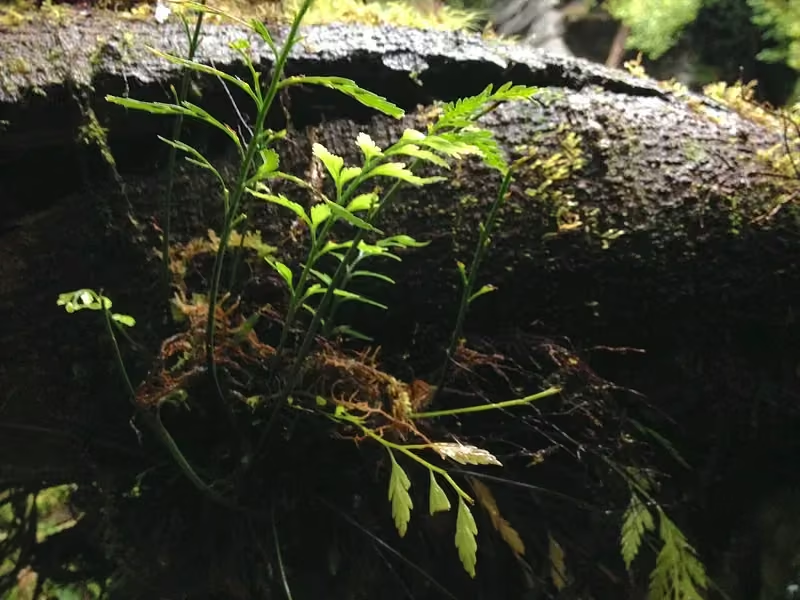
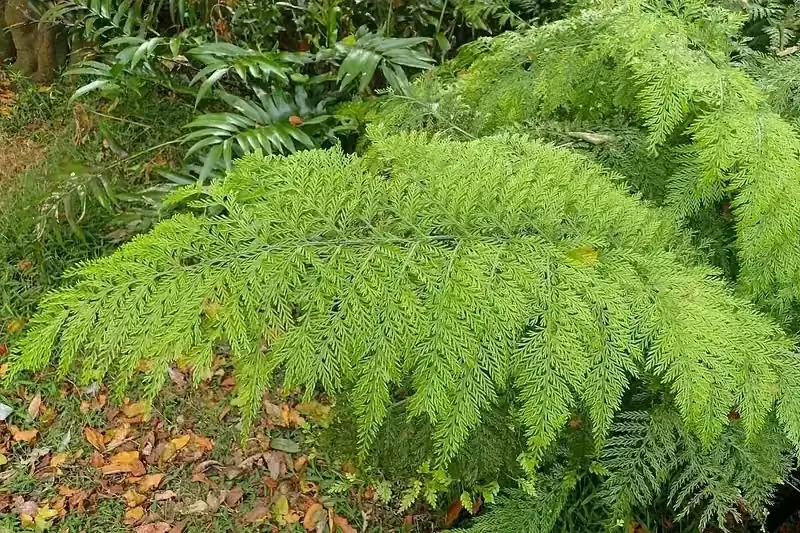
Explore other native plants that share similar characteristics or habitats with Richard's Spleenwort ( Asplenium richardii ), offering further insights into New Zealand's diverse flora. These related species provide context and opportunities for complementary planting in your garden.

Plant Conservation
Conservation Status and Threats
Asplenium richardii is listed as "Not Threatened" in the New Zealand Threat Classification System. This indicates a stable and healthy population, reflecting its widespread distribution across various montane to alpine habitats in New Zealand. While not facing immediate threats, ongoing conservation efforts for native flora, including habitat protection and restoration, benefit this species by maintaining the healthy ecosystems it inhabits. Gardeners can contribute to its continued success by cultivating it in appropriate conditions, sourcing plants from reputable nurseries that promote sustainable practices, and educating others about the importance of native plant biodiversity. Preserving the integrity of its natural rocky habitats, particularly under beech forests, is key to its long-term stability.
Frequently Asked Questions
How tall does Richard's Spleenwort grow?
It grows up to about 47 cm tall with a narrow spread of up to 12 cm, and fronds range from 40 to 470 mm long.
Where does Richard's Spleenwort grow naturally?
It grows in montane to alpine regions of New Zealand from 200 to 1950 metres, scarce in the North Island and more common in the South Island.
Does Richard's Spleenwort tolerate frost?
Yes, it has high frost tolerance and is well adapted to cold alpine conditions.
How fast does Richard's Spleenwort grow?
It is a slow-growing, long-lived perennial fern preferring cool, humid, consistently moist conditions.
Sources and Further Reading
The botanical, growing, and conservation details for Richard's Spleenwort (Asplenium richardii) on this page draw on authoritative New Zealand plant references and citizen-science observation records. Consult the sources below for full technical records and the latest distribution data.