Fan Fern
Schizaea dichotoma
Last updated:
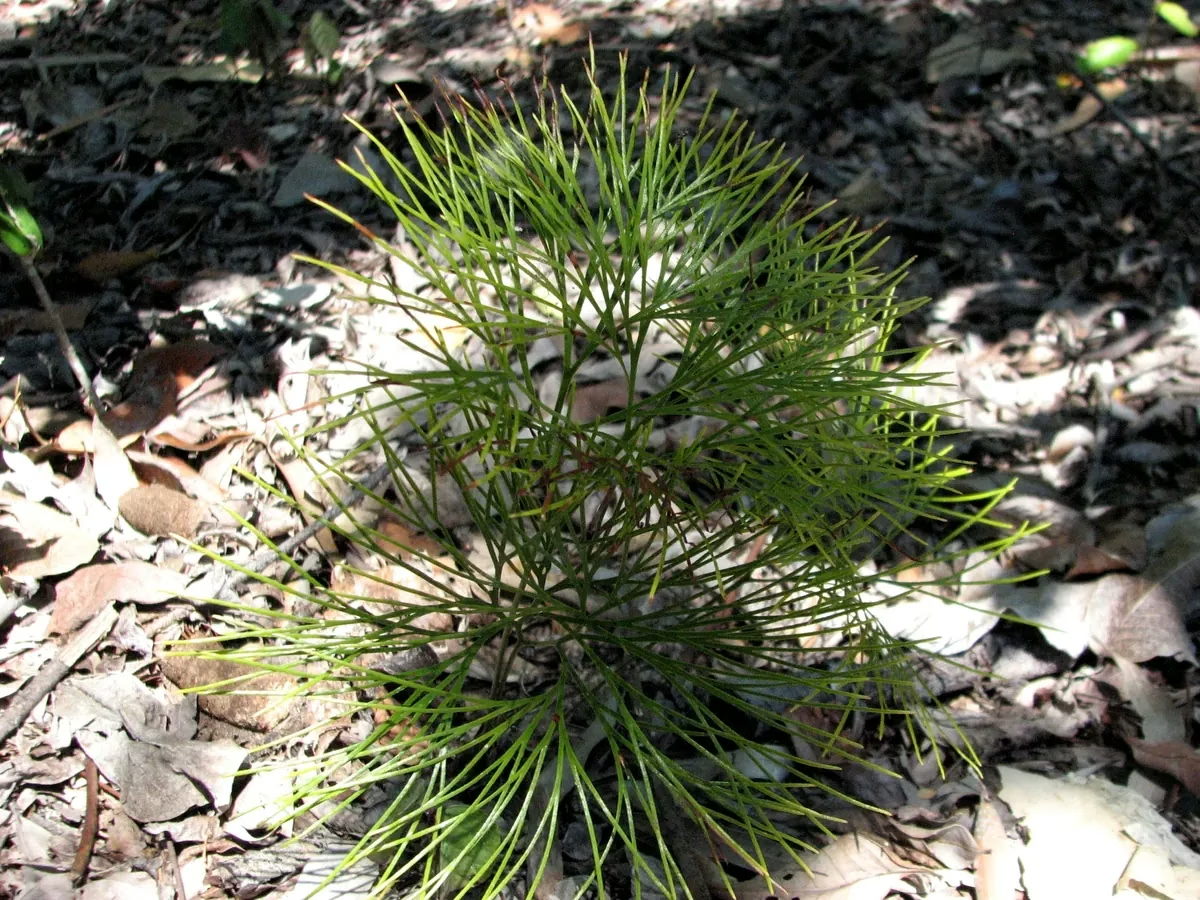
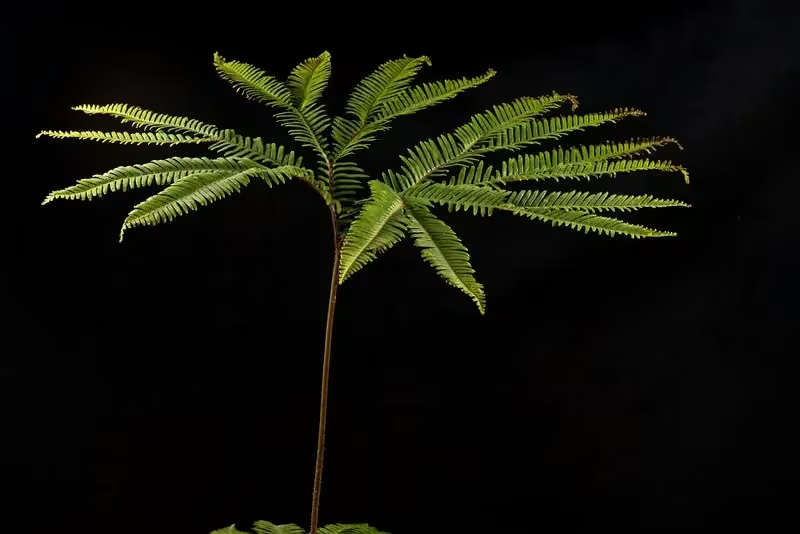
ferns profile: Fan Fern (Schizaea dichotoma) is a small, strange, and beautiful native fern with flattened forked fronds that end in tiny fertile combs. It is indigenous rather than endemic, occurring in New Zealand and widely through the Pacific and Australia. New Zealand conservation sources assess it as At Risk - Naturally Uncommon because populations are scattered and biologically sparse.
Plant Description
Identification and Physical Characteristics
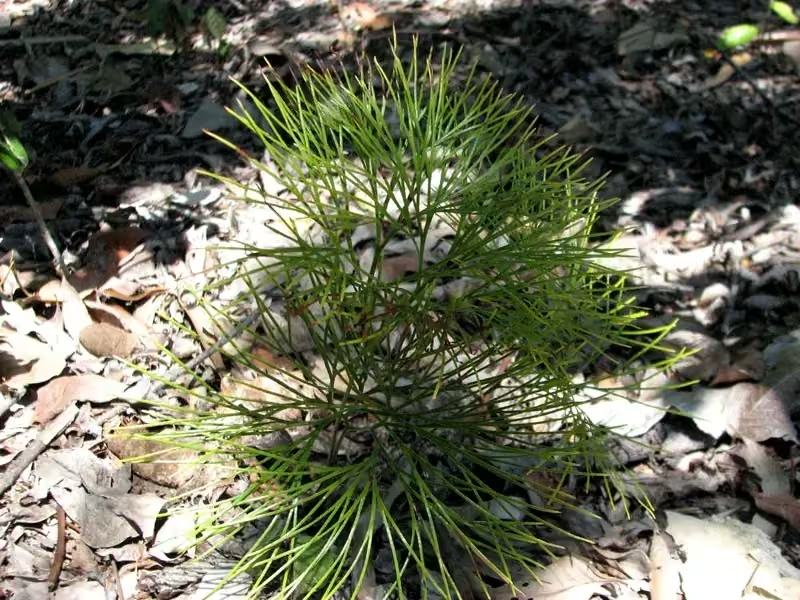
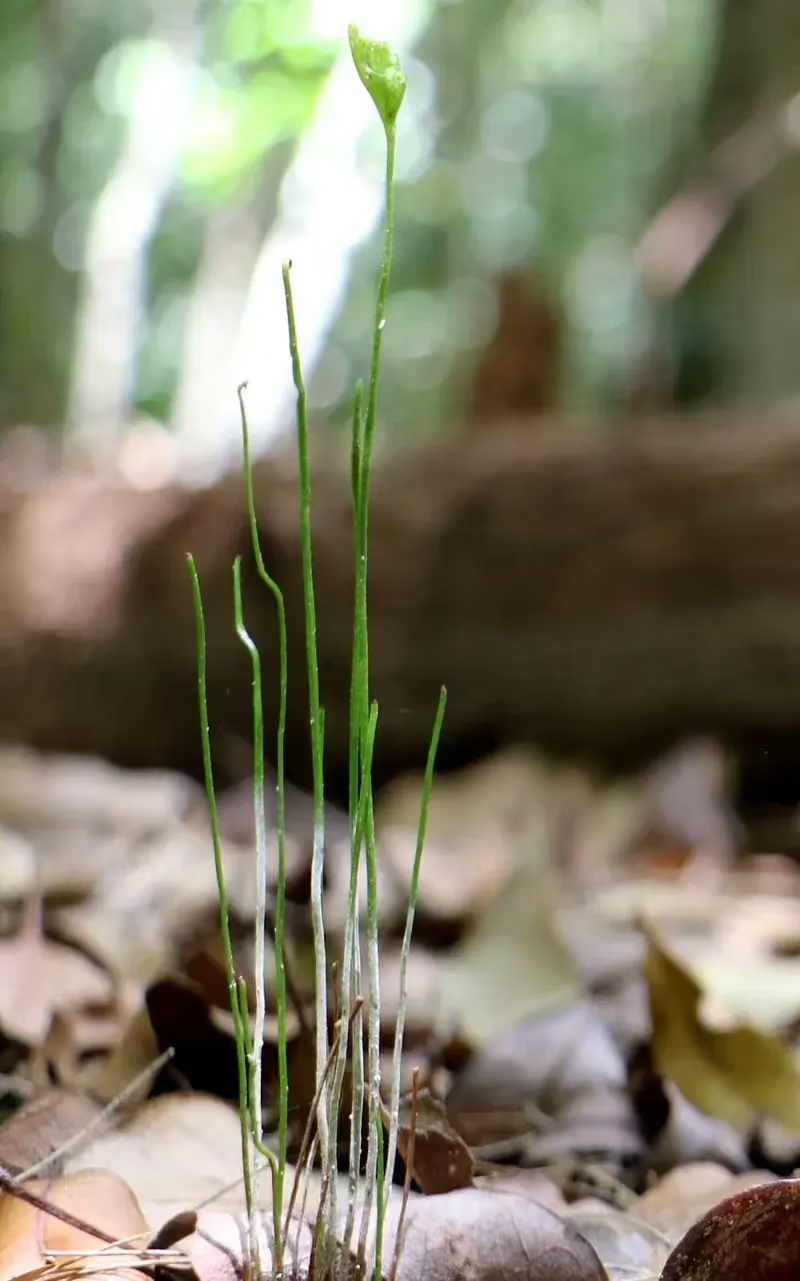
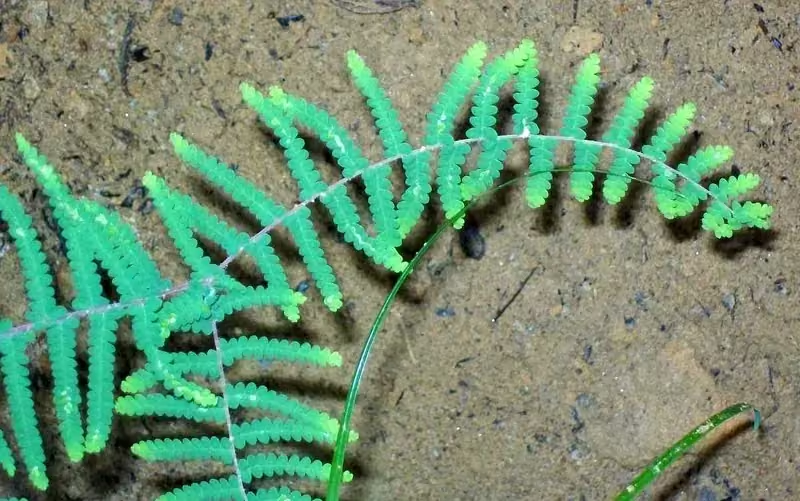
The plant forms diffuse patches from creeping rhizomes in open or semi-shaded ground, often emerging through thick leaf litter. Stipes are dark green and flattened, then divide repeatedly into a fan-shaped structure. At the tips of the forked axes sit tiny fertile laminae with infolded pinnae and sporangia. No other New Zealand Schizaea has exactly this dark, flattened, repeatedly forked fan form.
Quick Facts
| Scientific Name | Schizaea dichotoma |
|---|---|
| Height | Stipes about 10 - 35 cm tall |
| Spread | Diffuse patches from creeping rhizomes |
| Water Needs | Moderate |
| Light | Semi-shade to open filtered light |
| Frost Tolerance | Low to moderate |
| Salt Tolerance | Moderate in coastal forest shelter |
| Growth Rate | Slow and specialised |
| Lifespan | Perennial small fern |
Climate Best Suited to
Fan Fern suits humid northern climates, kauri forest margins, coastal forest shelter, and geothermal scrub where leaf litter and open light remain stable.
Regional Suitability
| City | Climate Suitability |
|---|---|
| Auckland | High in suitable kauri and coastal forest microhabitats |
| Wellington | Low; outside its main natural range |
| Christchurch | Low; unsuitable except specialist collections |
| Nelson | Low to medium only in carefully managed specialist settings |
Plant Habitat
Natural Occurrence and Ecology
New Zealand records place it from Raoul Island and northern North Island sites to Kawhia, Mt Maunganui, and geothermal areas around Rotorua and Taupō. It is usually associated with lowland kauri forest, coastal pōhutukawa forest on islands, and geothermal Kunzea scrub, growing from thick leaf litter or sparsely vegetated ground.
Growing Requirements
Soil Requirements
Use acidic, low-fertility, leaf-litter-rich soil with open texture and stable surface moisture.
- Kauri litter
- Poor sandy or clay soils
- Geothermal scrub humus
Light Requirements
Semi-shade or open filtered light is best; dense shade and rank weeds suppress the small fronds.
- Semi-shade
- Open litter gaps
- No heavy canopy shade
Water Requirements
Moderate moisture and humid air are needed, but crowns should not sit in stagnant wet soil.
- Stable litter moisture
- Good drainage
- Humid shelter
Planting and Establishing
Establishment Guidance
Plant Fan Fern only as specialist propagated material in a carefully matched microhabitat. Do not remove it from the wild. Prepare a low-fertility litter bed with semi-shade, keep taller weeds and rank groundcovers away, and avoid fertiliser or heavy mulch that buries the tiny fronds.
Ecological Role
Biodiversity and Ecosystem Impact
Fan Fern occupies sparse, low-competition fern niches in kauri forest, coastal forest, and geothermal scrub. Its small size means it can be lost under litter movement, trampling, canopy closure, weeds, or development. The plant is a useful indicator of specialised open-litter habitats rather than a general garden fern.
Uses & Significance
Garden Uses
Use only in specialist fern collections or conservation plantings with expert sourcing and habitat matching.
- Specialist fern collections
- Kauri litter displays
- Conservation plantings
Ecological Value
It represents rare open-litter fern habitats and naturally sparse native fern diversity.
- Sparse fern niches
- Kauri forest litter
- Geothermal scrub diversity
Landscaping Uses
This is a close-viewing conservation fern. Plant it in a small labelled bed where the fan-shaped fronds can be seen without trampling. Avoid decorative mulch, dense groundcovers, or irrigation that changes the low-fertility surface conditions.
Seasonal Care Calendar
Spring
New forked stipes appear through litter in mild humid conditions.
Summer
Protect from drying and trampling.
Autumn
Monitor litter depth and weed seedlings.
Winter
Avoid cold wet burial of the small crowns.
When to Prune and How Much
Do not prune the fern. Hand-remove weeds and large fallen leaves carefully so the small fronds are not snapped or buried.
- Hand-weed carefully
- Clear smothering leaves
- Do not cut fronds
Always use clean, sharp tools and avoid disturbing new growth.
How to Grow Fan Fern
Specialist Spore Culture
Propagation is difficult and should be attempted only by experienced growers with legal source material. Collecting from wild plants is inappropriate unless part of an approved conservation programme. Spores should be sown on sterile, low-nutrient, moist media and kept in warm bright shade with stable humidity. The earliest stages are tiny and easily overrun by algae, mould, or moss. Because the plant naturally occupies low-competition litter and poor soils, do not use rich media or heavy fertiliser. Keep source records and maintain plants in labelled collections.
- Use authorised fertile material
- Sow on sterile low-nutrient medium
- Maintain stable humidity
- Keep source records
Moving Cultivated Patches
If a cultivated patch has spread, move only a tiny section with rhizome, litter, and soil intact. Place it into a prepared matching litter bed, water gently, and shade from harsh sun. Do not divide repeatedly or disturb wild colonies. The small rhizomes and stipes break easily, and disturbed patches can take a long time to recover. Movement should be done to preserve a known cultivated accession, not to create quick ornamental display.
- Move only cultivated patches
- Keep litter and rhizome intact
- Place in matching habitat
- Avoid repeated disturbance
Maintaining the Habitat
Long-term success is habitat maintenance. Keep the surface lightly littered but not buried, maintain semi-shade, and remove rank grasses or invasive groundcovers before they close over the fern. Avoid fertiliser, irrigation spray that compacts litter, and foot traffic. In geothermal or kauri-style plantings, mimic the natural low-fertility, open-textured ground. Monitoring should focus on whether fronds continue to emerge, not on pushing rapid growth.
- Keep litter light
- Maintain semi-shade
- Remove rank weeds
- Avoid fertiliser
Pests & Diseases
Trampling, weeds, litter burial, habitat drying, and collection are greater threats than insect pests. Slugs may damage young fronds in gardens.
This Fan Fern note is specific to Schizaea dichotoma, connecting identification, habitat context, and practical care so the section remains useful for readers comparing New Zealand plant profiles.
Cultural Significance
The forked form is reflected in the epithet dichotoma, meaning divided into pairs. Its rarity in everyday gardens makes it an important teaching species for specialised fern habitats.
- Forked-frond name
- Naturally uncommon
- Specialist fern habitat
Bonus Tip
A clear label and a small viewing edge are essential, because this fern can be stepped on before people notice it.
This Fan Fern note is specific to Schizaea dichotoma, connecting identification, habitat context, and practical care so the section remains useful for readers comparing New Zealand plant profiles.
Related Plants
Compare Fan Fern with other small specialised New Zealand ferns.


Plant Conservation
Conservation Status and Threats
Schizaea dichotoma is assessed as At Risk - Naturally Uncommon. Protect known sites from development, trampling, weed invasion, vegetation changes, and unauthorised collection.
Frequently Asked Questions
Is Fan Fern endemic to New Zealand?
No. It is indigenous in New Zealand and also occurs across the wider Pacific and Australia.
Can it be grown easily?
No. Conservation sources describe propagation as difficult and wild plants should not be removed.
Where does it grow naturally?
It grows in kauri forest, coastal forest, geothermal scrub, and open litter-rich ground in northern New Zealand.
Sources and Further Reading
The botanical, growing, and conservation details for Fan Fern draw on authoritative New Zealand plant references and taxonomic databases.