Toatoa
Phyllocladus toatoa
Last updated:
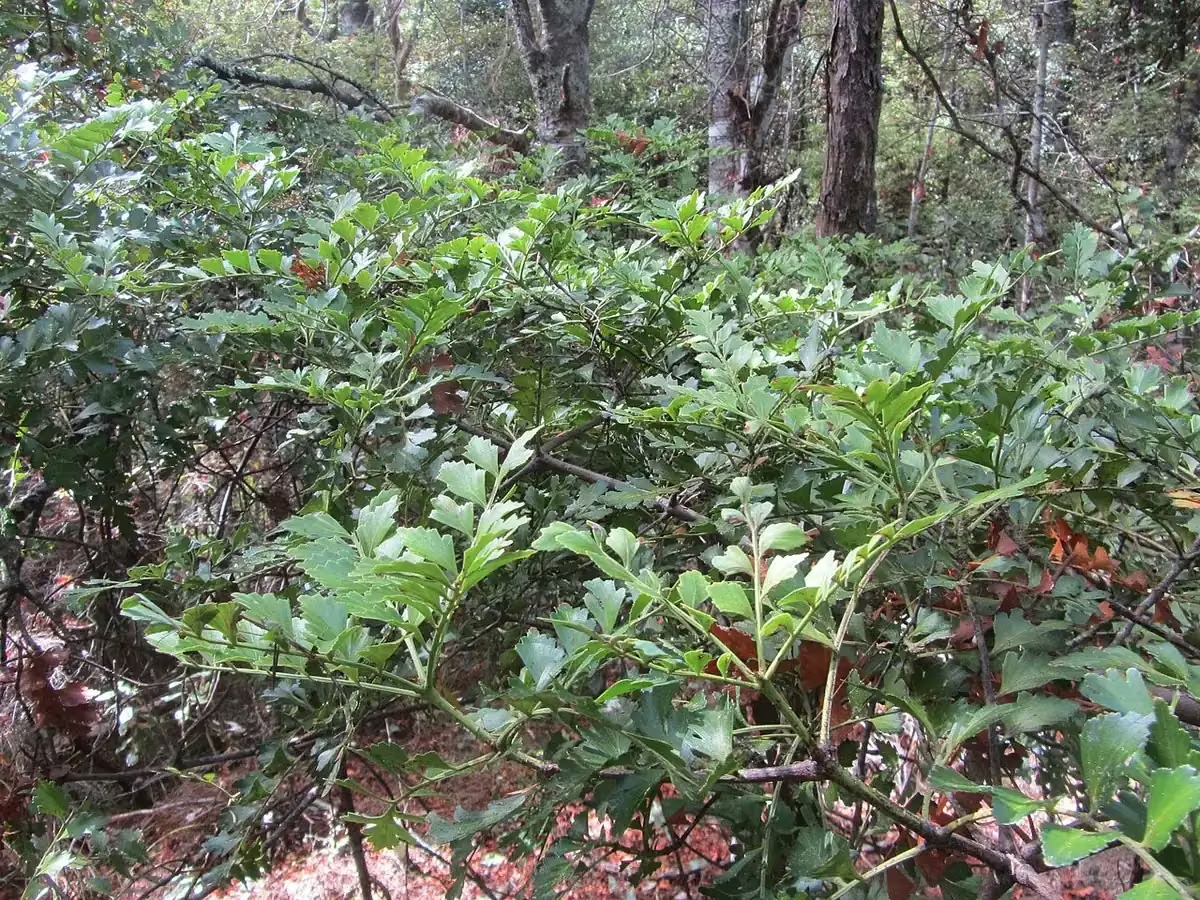
trees profile: Toatoa (Phyllocladus toatoa) is an endemic northern New Zealand conifer often called northern celery pine. It is not a flowering tree; the leaf-like green structures are flattened stems called phylloclades. Current conservation profiles treat it as Not Threatened, with a natural range mainly in the northern North Island from North Cape south toward the central North Island.
Plant Description
Identification and Physical Characteristics
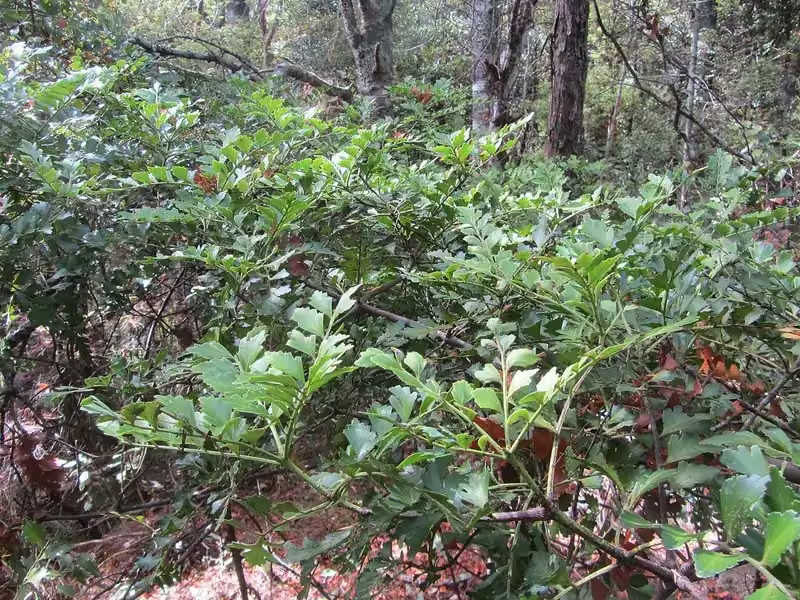
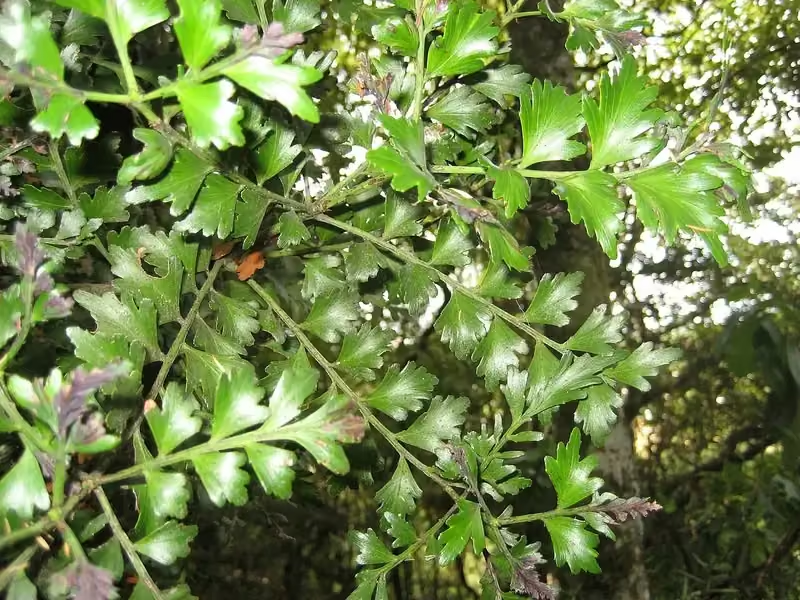
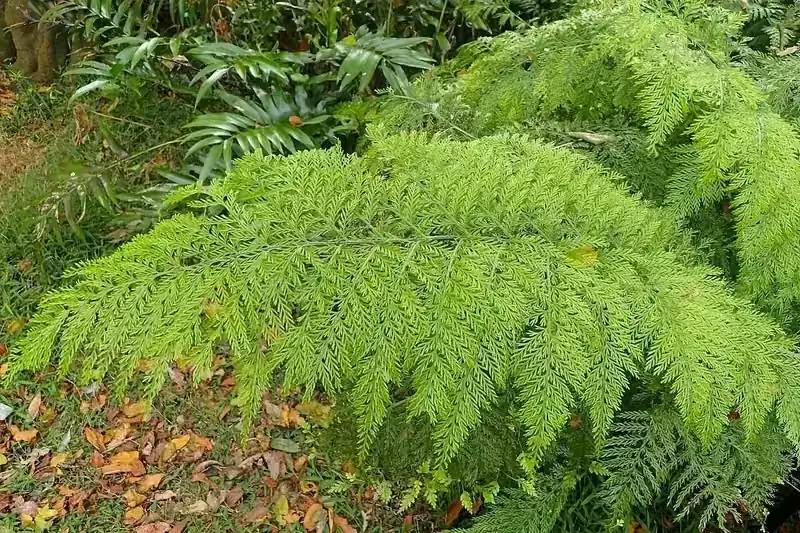
This tree usually forms a slender forest conifer with whorled branch systems and flattened, lobed, celery-like phylloclades that carry out photosynthesis. True leaves are reduced to small scales. Reproductive structures are small and borne on the phylloclade margins or surfaces, with seeds set in fleshy arils. Young trees can be narrow and upright, while mature trees develop more open crowns in forest light.
Quick Facts
| Scientific Name | Phyllocladus toatoa |
|---|---|
| Height | Usually 10 - 25 metres in forest |
| Spread | Narrow to moderate conifer crown |
| Water Needs | Moderate |
| Light | Filtered forest light to sheltered sun |
| Frost Tolerance | Moderate when established |
| Salt Tolerance | Low to moderate in northern shelter |
| Growth Rate | Slow to moderate |
| Lifespan | Long-lived conifer tree |
Climate Best Suited to
Toatoa is best suited to mild northern and central North Island climates, especially humid forest or sheltered garden conditions with free-draining acidic soil.
Regional Suitability
| City | Climate Suitability |
|---|---|
| Auckland | High in kauri and northern forest-style plantings |
| Wellington | Medium in sheltered frost-light gardens |
| Christchurch | Low to medium; needs shelter from cold and dry wind |
| Nelson | Medium in sheltered humid gardens |
Plant Habitat
Natural Occurrence and Ecology
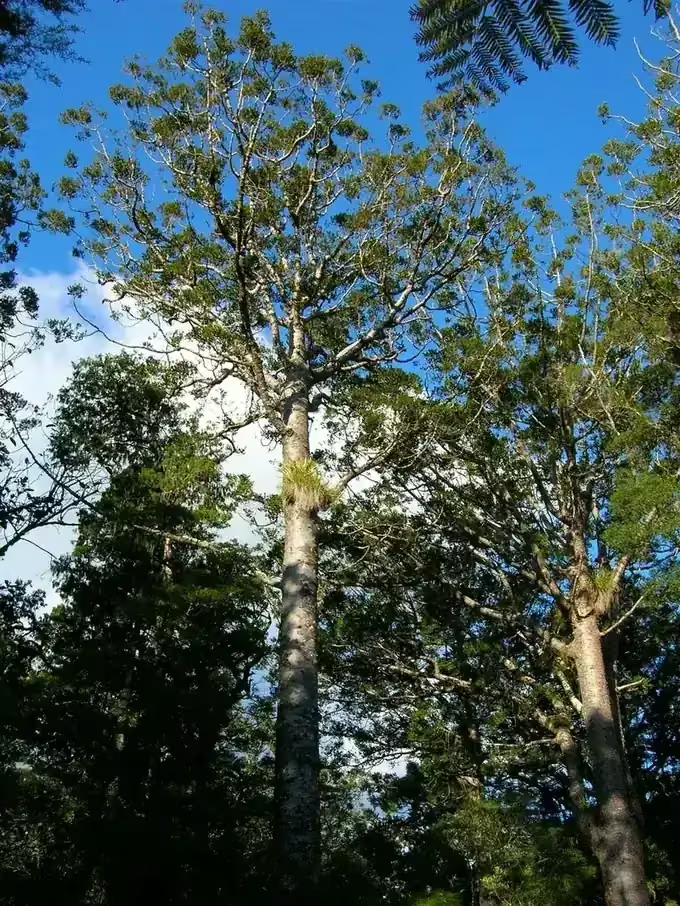
The species occurs naturally in northern forests, including kauri and podocarp-broadleaved associations, and extends south through parts of the central North Island. It prefers well-drained forest soils and humid shelter rather than exposed dry lowland sites. As a conifer with photosynthetic phylloclades, it adds distinctive texture to native forest canopies.
Growing Requirements
Soil Requirements
Use free-draining, humus-rich, slightly acidic forest soil with mulch over the root zone.
- Kauri forest-style soil
- Leaf litter
- No waterlogged clay
Light Requirements
Young plants establish best in filtered shelter, then tolerate brighter canopy-edge light as they mature.
- Filtered shade
- Sheltered sun
- Avoid hot dry exposure
Water Requirements
Keep young trees evenly moist; established trees prefer steady moisture with good drainage.
- Deep establishment watering
- Mulched roots
- Free drainage
Planting and Establishing
Establishment Guidance
Plant Toatoa in a sheltered native forest garden where there is long-term space for a tree. Set the root ball at nursery depth, water deeply, mulch broadly, and protect from browsing and lawn competition. Avoid moving established plants, because conifers resent root disturbance.
Ecological Role
Biodiversity and Ecosystem Impact
Toatoa contributes to northern forest structure and conifer diversity. Its seed structures and arils are part of the podocarp-style fruiting resources used by wildlife, while its unusual phylloclades create a different canopy texture from broadleaved trees. In restoration it helps represent the northern conifer layer alongside kauri, rimu, miro, and tōtara where site conditions allow.
Uses & Significance
Garden Uses
Use as a specimen conifer in large native gardens, northern forest restoration, and botanical collections.
- Forest specimen
- Kauri association plantings
- Botanical collections
Ecological Value
It adds endemic conifer diversity and long-lived structure to suitable northern plantings.
- Conifer canopy
- Bird fruit resource
- Northern forest identity
Landscaping Uses
Toatoa is a refined conifer for patient gardeners. Its celery-like phylloclades look best against darker foliage, tree ferns, and a layered forest understorey. Do not use it as a quick screen; use it as a long-term native tree with enough room and shelter.
Seasonal Care Calendar
Spring
Fresh phylloclades expand in mild forest light.
Summer
Water young trees during prolonged drought.
Autumn
Mulch and check browsing guards.
Winter
Avoid waterlogged soil around young roots.
When to Prune and How Much
Prune only damaged or poorly placed branches. Avoid clipping the phylloclades as a hedge, because the natural conifer form is the plant's main value.
- Remove damaged branches
- Avoid hedge clipping
- Maintain natural form
Always use clean, sharp tools and avoid disturbing new growth.
How to Grow Toatoa
From Fresh Seed
Seed propagation is the preferred method for restoration and collections. Collect ripe seed only from permitted local sources, clean the fleshy aril, and sow in a free-draining conifer mix. Germination may be slow and uneven, so keep trays labelled, shaded, and evenly moist for an extended period. Seedlings should be potted before roots become cramped and grown under light shade. For ecological plantings, keep provenance records because northern and central populations should not be mixed casually across restoration projects.
- Collect permitted ripe seed
- Clean arils
- Sow in free-draining mix
- Keep provenance labels
From Cuttings
Cuttings can be difficult but may be used for collections. Take semi-hardwood shoots from healthy cultivated plants, trim carefully, and place them in a sharp propagation mix under humidity with gentle warmth. Rooting is slow, and losses are normal. Once rooted, harden plants gradually and avoid overpotting. Seed remains better for genetic diversity, while cuttings are useful only where a known form or accession must be retained. Keep young plants shaded, watered, and protected from root disturbance.
- Take semi-hardwood shoots
- Use sharp propagation mix
- Root under humidity
- Harden slowly
Establishing Young Trees
Prepare a weed-free forest site with mulch and shelter before planting. Plant in autumn or spring when soil moisture is reliable. Water deeply, stake only if needed, and keep grass at least half a metre from the trunk. Young Toatoa can sit for a while before strong top growth appears, so maintain care through the slow establishment period. Do not fertilise heavily; a steady root system in good forest soil matters more than rapid soft growth.
- Prepare weed-free shelter
- Plant in moist seasons
- Mulch widely
- Protect from browsing
Pests & Diseases
Young trees can be browsed by deer, goats, possums, or stock. Drought, root disturbance, and compacted wet soil are common cultivation problems.
Cultural Significance
Toatoa is the Māori name and is also used in the scientific epithet. The celery pine name describes the flattened phylloclades that make this conifer look unlike most familiar needle-leaved trees.
- Toatoa name
- Celery pine phylloclades
- Endemic conifer
Bonus Tip
Show visitors the tiny true leaves and the flattened phylloclades side by side; it is a memorable conifer lesson.
This Toatoa note is specific to Phyllocladus toatoa, connecting identification, habitat context, and practical care so the section remains useful for readers comparing New Zealand plant profiles.
Related Plants
Compare Toatoa with other New Zealand conifers and northern forest trees. For another native tree, explore Makamaka.



Plant Conservation
Conservation Status and Threats
Toatoa is assessed as Not Threatened nationally. Local conservation still benefits from protecting northern forest, controlling browsing animals, preventing kauri dieback spread in associated forests, and using local seed sources in restoration.
Frequently Asked Questions
Is Toatoa a pine?
It is a native conifer, but its green flattened phylloclades make it look very different from northern hemisphere pines.
Is it endemic?
Yes. It is endemic to New Zealand.
Where should it be planted?
Use sheltered, free-draining forest sites with long-term room for a tree.
Sources and Further Reading
The botanical, growing, and conservation details for Toatoa draw on authoritative New Zealand plant references and taxonomic databases.