Alpine Holy Grass
Hierochloe novae-zelandiae
Alpine holy grass
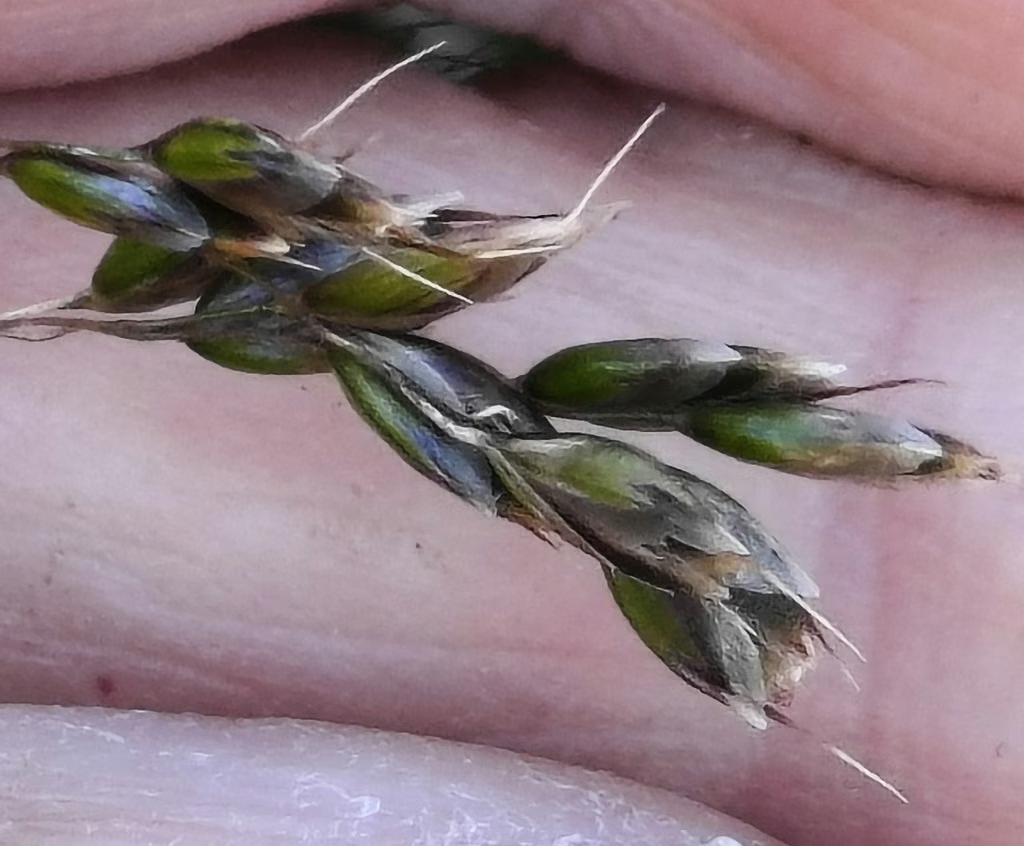
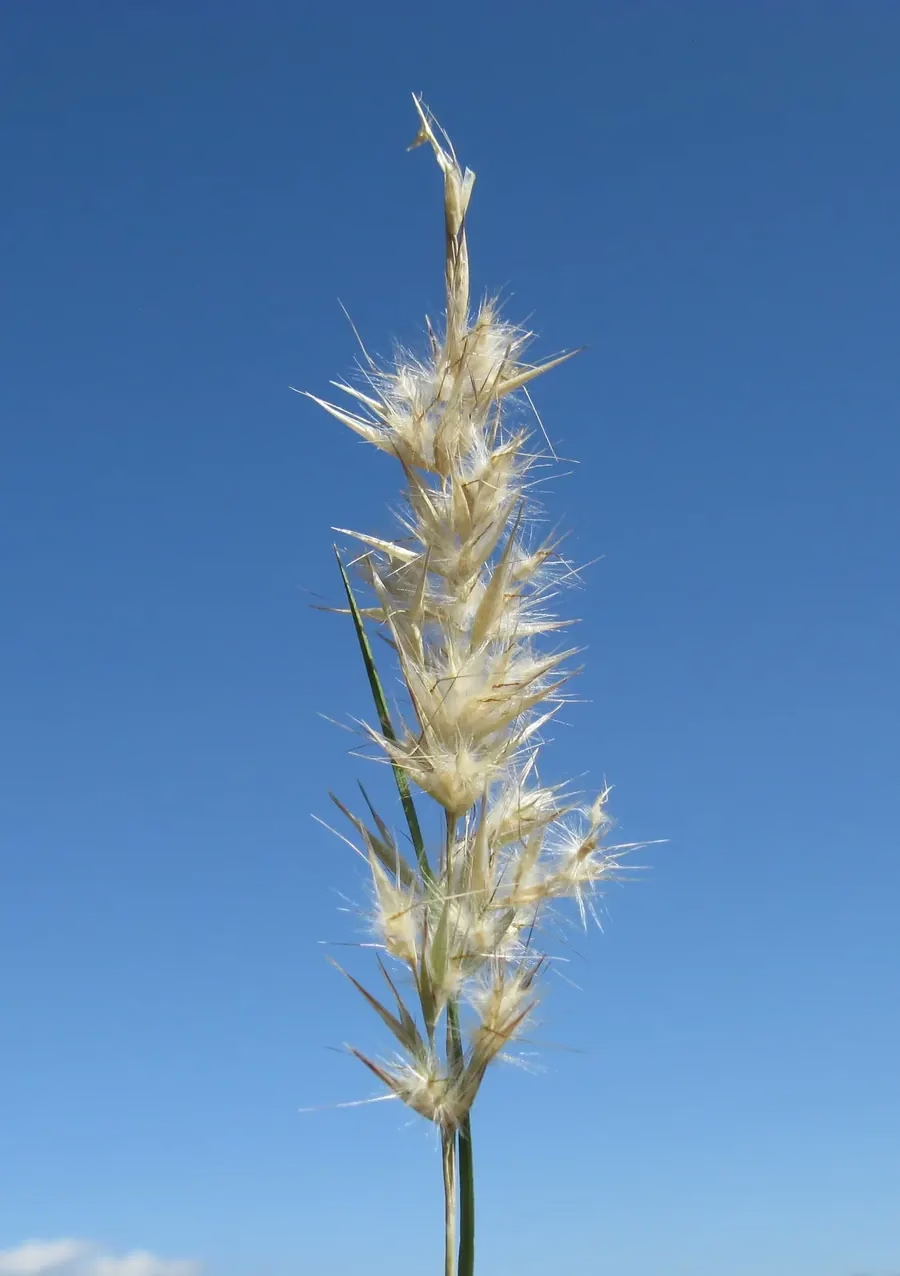
Hierochloe novae-zelandiae is a slender holy grass endemic to New Zealand. Its loose, spreading flower panicle carries small spikelets in groups, and its narrow leaves grow in dense or open tufts.
Identification
The grass forms slender tufts and can be somewhat rhizomatous. Leaf blades are 2-10 cm long and 1.5-3 mm wide, with toothed margins. Smooth stems reach 20-40 cm, while the loose 5-10 cm panicle has thread-like branches and spikelets crowded in groups of three or four.
Quick facts
| Scientific Name | Hierochloe novae-zelandiae Gand. |
|---|---|
| Alternative name | Anthoxanthum novae-zelandiae |
| Common name | Alpine holy grass |
| Family | Poaceae |
| Origin | Endemic to New Zealand |
| Stem height | 20-40 cm |
| Leaf length | 2-10 cm |
| National status | Not Threatened (2023) |
| Height | Flowering stems 20-40 cm tall |
| Water Needs | A cultivation watering requirement is not supplied by the cited Flora account |
| Light | A tested cultivation light rating is not given |
| Spread | Slender tufts, sometimes rhizomatous; maximum width unquantified |
| Frost Tolerance | Minimum tolerated temperature is not documented |
| Salt Tolerance | Salt tolerance is not documented |
| Growth Rate | Annual extension is not quantified in the cited accounts |
| Lifespan | Tufted or somewhat rhizomatous grass |
Natural range
This species is endemic to New Zealand and is recorded in both the North and South Islands. An ecological field report also records it in the undergrowth at the base of the Ruggedy Range on Rakiura / Stewart Island.
| City | Climate Suitability |
|---|---|
| Auckland | Not assessed |
| Wellington | Not assessed |
| Christchurch | Not assessed |
Habitat
Despite the common name alpine holy grass, a 2026 NZPCN field report records it as fine patches in undergrowth where wetland heath meets taller mānuka at the foot of the Ruggedy Range. It also appears in mountain grass guides.
Natural growing conditions
The grass can form patches in wetland-edge undergrowth and is included in a guide to mountain grasses. These observations describe wild sites; the cited Flora description does not provide a tested garden watering or soil regime.
Planting considerations
The plant is a slender, tufted grass with short narrow leaves and stems up to about 40 cm. The cited botanical accounts do not provide a species-specific planting method or spacing recommendation.
Tufts and rhizomes
Flora describes plants ranging from dense to loose tufts and sometimes somewhat rhizomatous. A field report notes finer patches of this species in undergrowth near the wetland edge on Rakiura.
Field identification
Examine the open panicle and its small groups of spikelets. The blades are narrow and short, and the lower male florets have fringed margins; a lens helps separate this grass from other holy grasses.
Garden context
The grass has a fine-textured tuft and an open flowering head rather than a dense plume. Published sources describe its wild growth and identification but do not report a species-specific garden trial.
Flowering structures
The panicle is 5-10 cm long and spreads loosely, with one or two fine branches at each node. Flora describes the florets as light brown at maturity; the cited description does not give a flowering calendar.
Leaf and stem growth
The tapering leaves have shallow ribs and toothed margins, and may be smooth or rough to the touch. The leaf sheaths are hairless and striate; the cited Flora profile does not prescribe pruning.
How to Grow Alpine Holy Grass (Hierochloe novae-zelandiae)
Seed and the modern generic combination
Recent literature also uses Anthoxanthum novae-zelandiae for this endemic grass. Flora of New Zealand describes it under Hierochloe novae-zelandiae, including its mature grain, without giving a tested seed-germination or division method. Check both generic names when tracing an observation or the identity of labelled material.
A slender tuft or small patch
The species forms slender tufts that may be dense or loose, and some plants are rhizomatous. Its tapering leaf blades are approximately 2-10 cm long and 1.5-3 mm wide. The margins carry small teeth, while the surface may be rough or smooth. These short, narrow leaves help distinguish the species from the broader foliage of Hierochloe equiseta.
Recognising the loose flowering head
Smooth flowering stems reach roughly 20-40 cm. Their panicles are about 5-10 cm long, with thread-like branches and spikelets gathered into groups of three or four. Mature florets become light brown. A close photograph of this arrangement, together with the leaf width, can support identification of an established plant.
Checking local conditions
Although commonly called alpine holy grass, the species has also been recorded in lower wetland-edge undergrowth. A 2026 field report describes patches where wetland heath meets taller mānuka near the foot of the Ruggedy Range. Such locality information is useful when interpreting a plant's natural setting. It does not establish a universal potting mix or watering regime for cultivation.
Plant health
A thick, recurved collar and finely toothed leaf margins are part of the published description. The cited sources do not identify a species-specific pest or disease treatment for alpine holy grass.
Names and classification
The 2023 national assessment uses Hierochloe novae-zelandiae. In 2024 the species was transferred to Anthoxanthum as Anthoxanthum novae-zelandiae; NZPCN uses that newer combination in its published taxonomy update.
A closer look at the spikelet
The lower male florets have silky fringes along their margins and slender, nearly straight awns. The bisexual floret has a short point or no awn, a useful feature when studying the spikelet with a lens.
Other native grasses
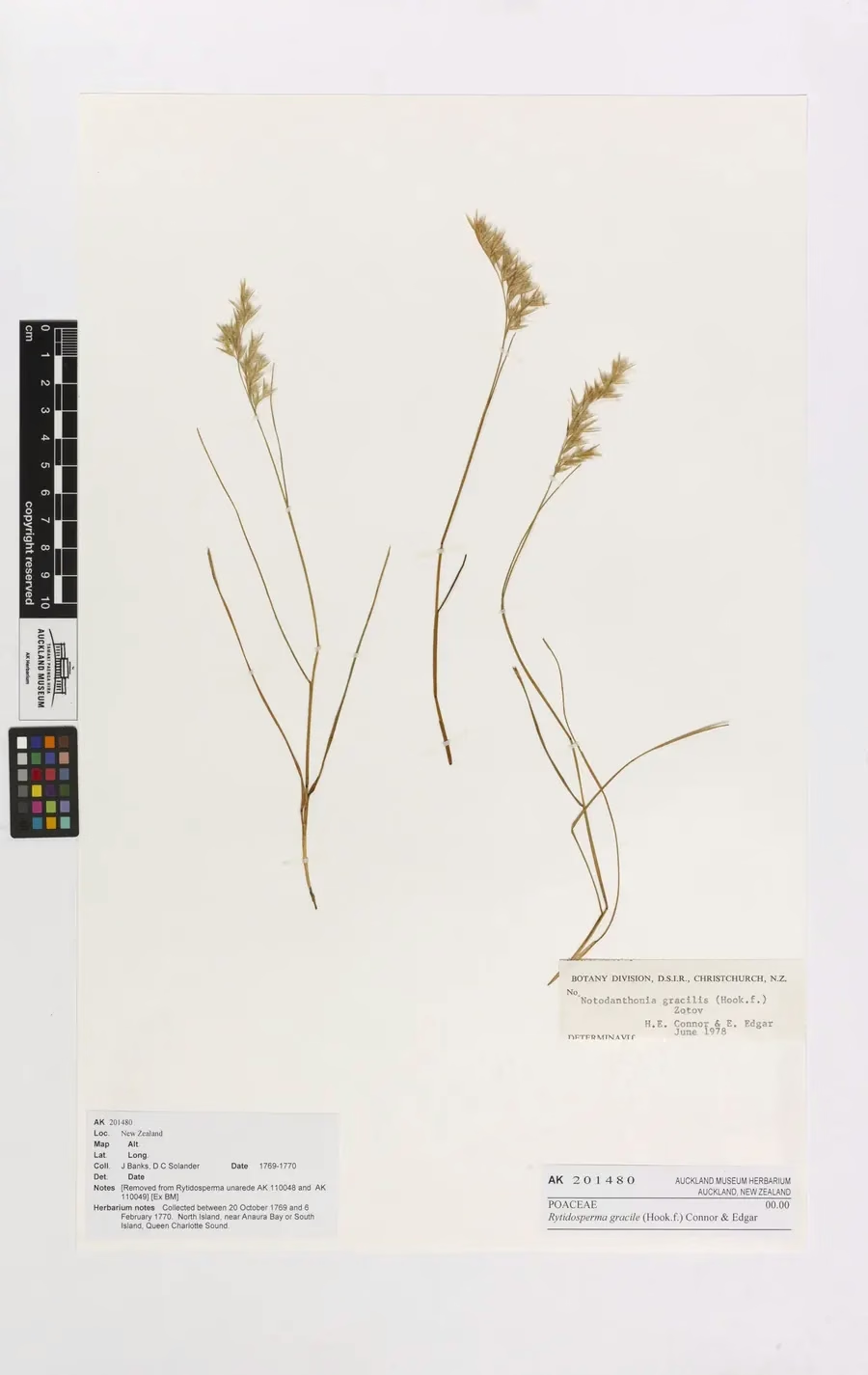
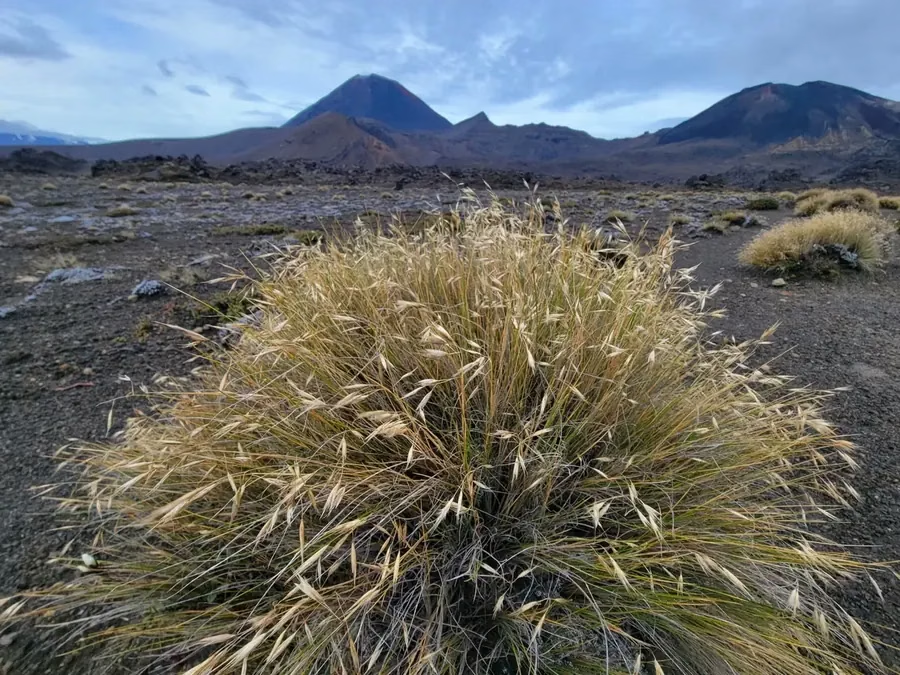
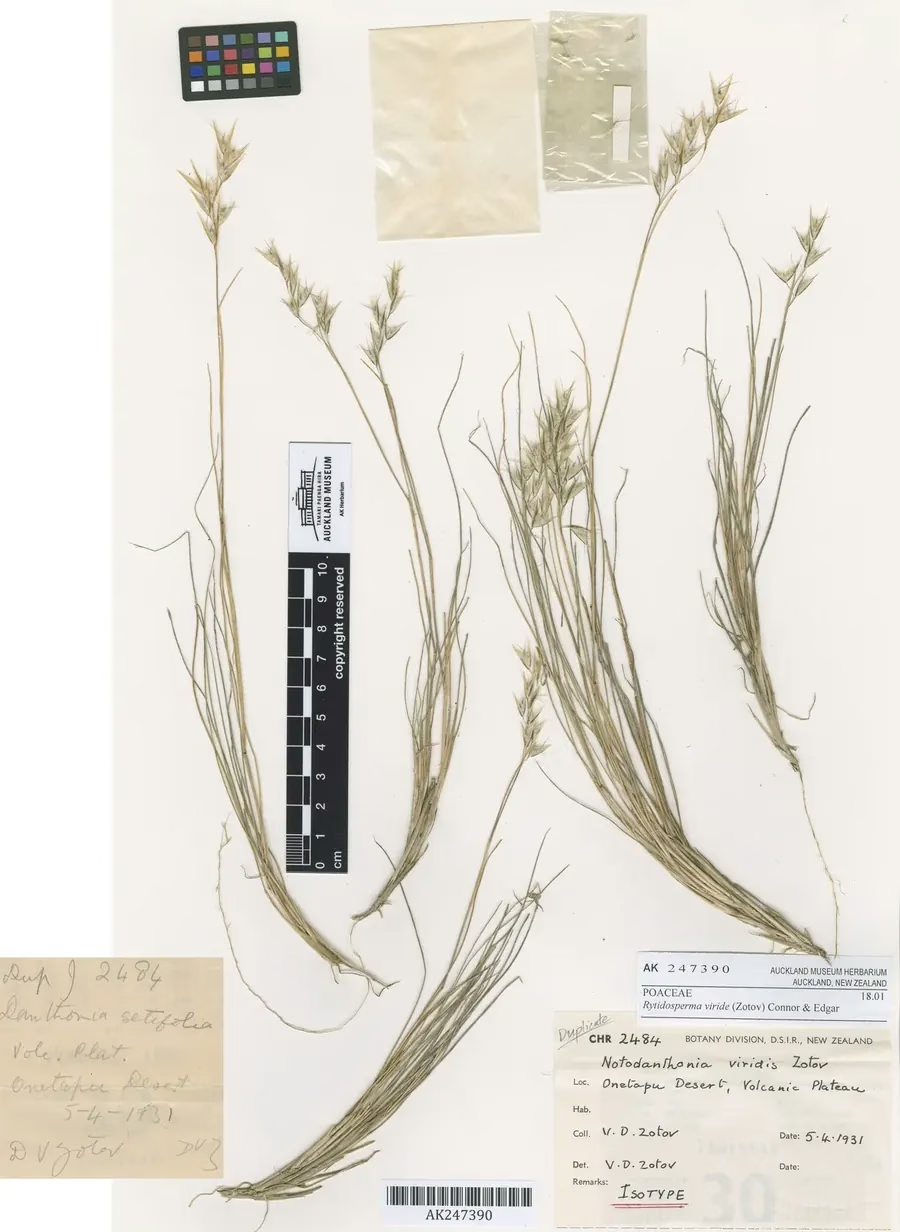
Explore other New Zealand grasses from open habitats, wetlands and mountain country.
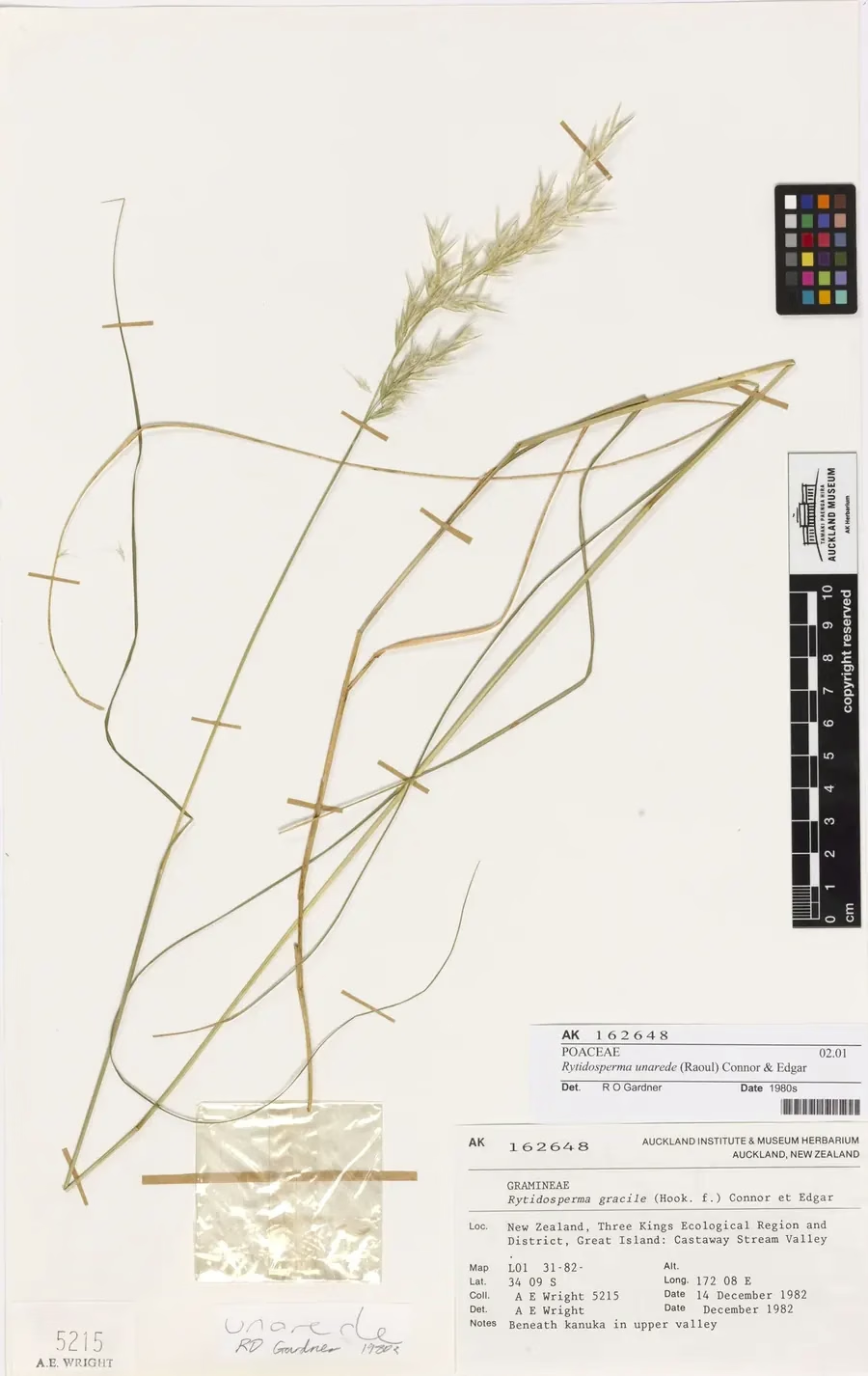
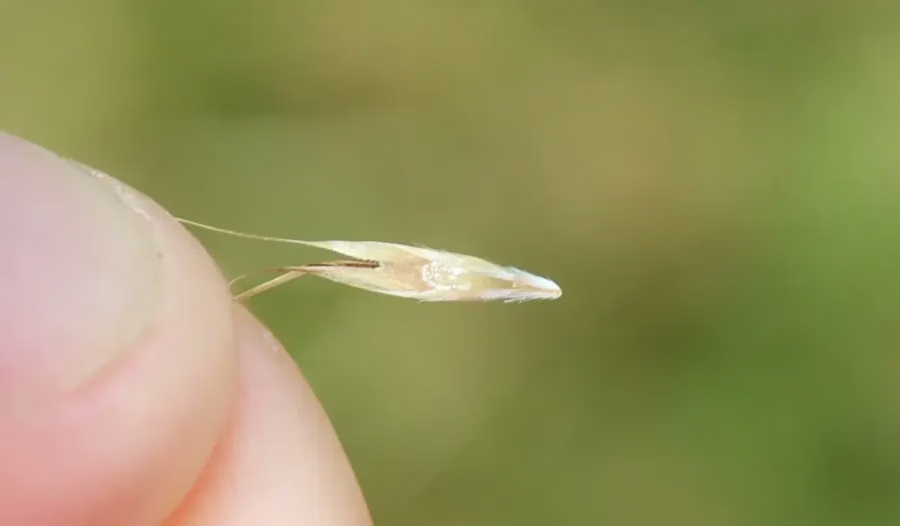
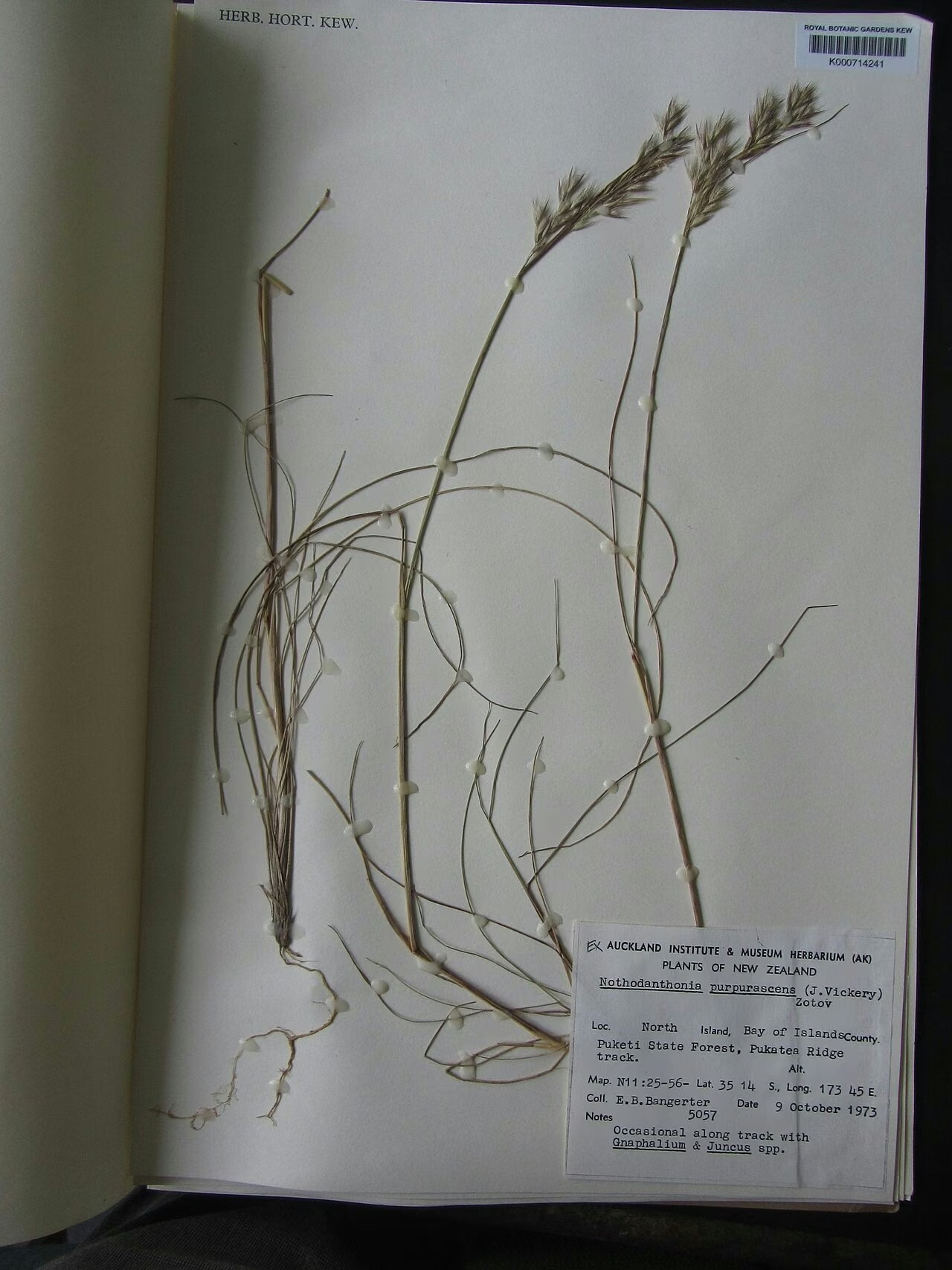
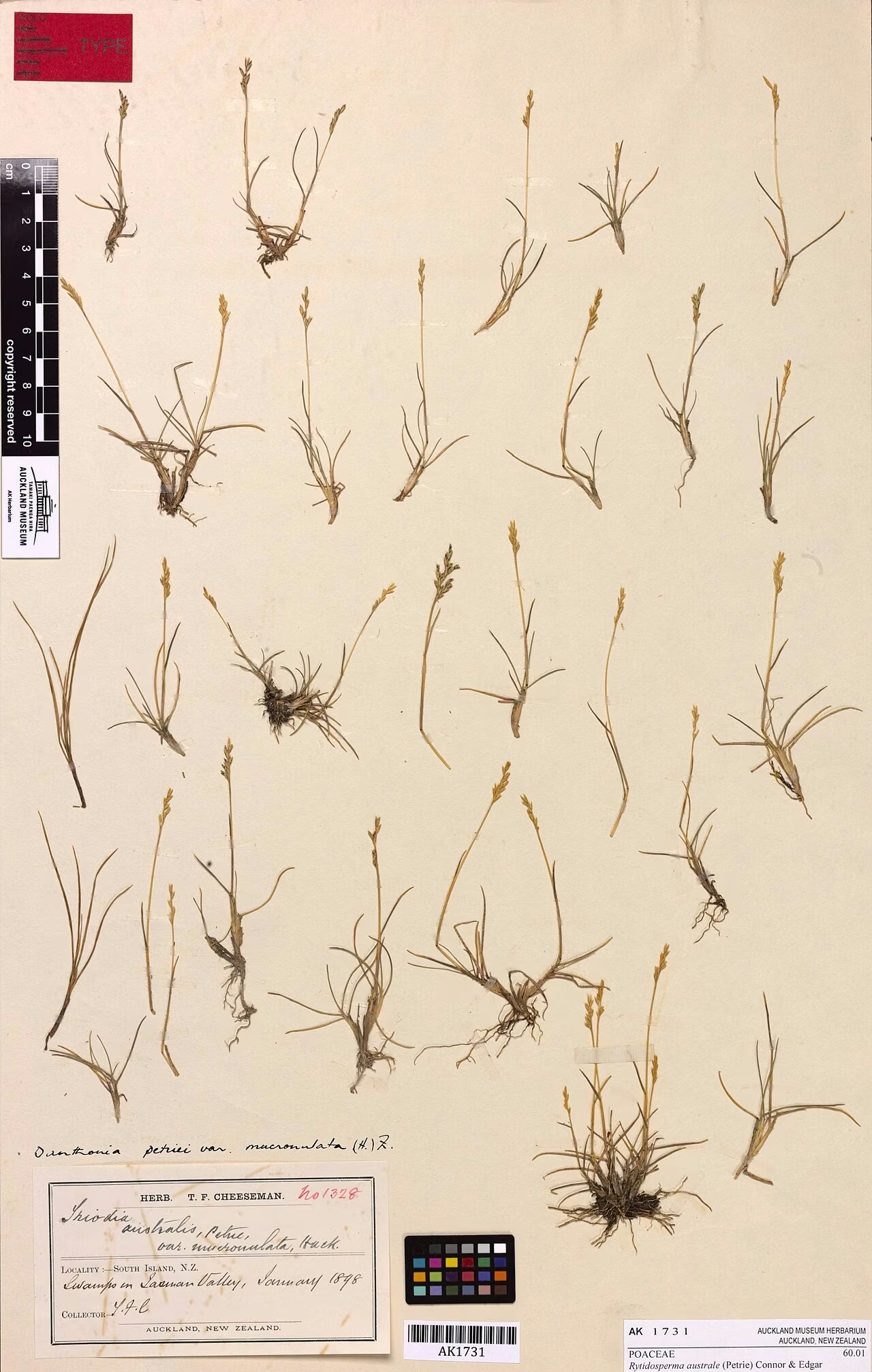
Conservation
Alpine holy grass is endemic to New Zealand. The 2023 national assessment lists it as Not Threatened under the name Hierochloe novae-zelandiae; the newer Anthoxanthum name refers to the same species.
Frequently asked questions
Is its alpine common name a complete habitat description?
No. Field records also include lower wetland-edge undergrowth on Rakiura, so locality details are more informative than the common name alone.
How are the spikelets arranged?
The very loose panicle has thread-like branches carrying spikelets congested in groups of three or four.
What alternative generic name is used?
Recent classifications use Anthoxanthum novae-zelandiae for the same grass.
Sources
Detailed identification and measurements: Flora of New Zealand. Names and 2024 transfer: de Lange and James, 2024.
Field observation: NZPCN Trilepidea, March 2026. National status: 2023 vascular plant assessment.
Last updated: