Shrub Haloragis
Haloragis erecta
Last updated:
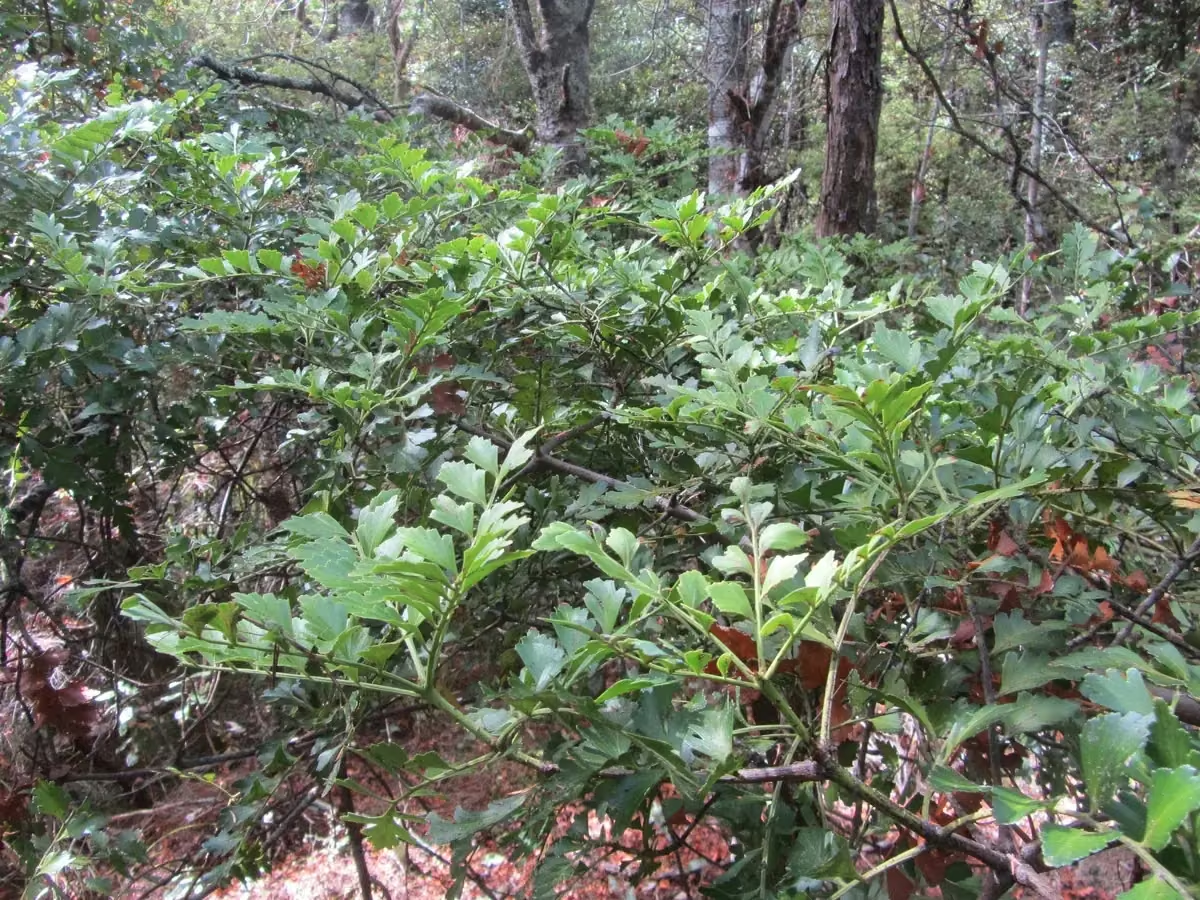
shrubs profile: Shrubby Haloragis (Haloragis erecta subsp. erecta) is an endemic New Zealand herb or subshrub often called toatoa or fire weed. Current New Zealand references treat the native plant behind the species name as the subspecies erecta, and record it as Not Threatened. It is a quick coloniser of slips, fire-disturbed ground, cleared scrub, and forest margins.
Plant Description
Identification and Physical Characteristics
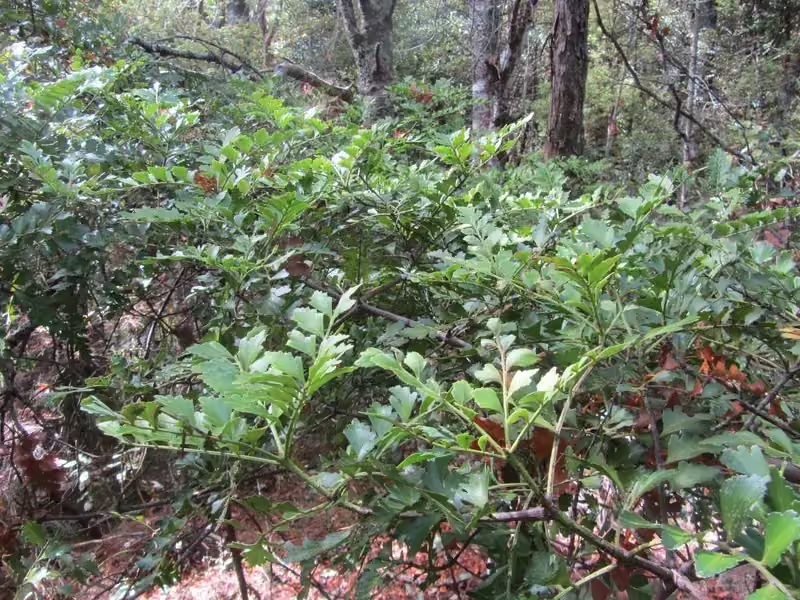
This plant forms freely branching, decumbent to upright stems to about one metre tall. The stems are four-angled and glabrous to slightly rough. Opposite leaves are lanceolate to elliptic, with a cuneate to truncate base and strongly serrated margins. The small four-part flowers are often reddish, with red or yellow anthers and pinkish stigmas, followed by small ribbed or winged fruits. Its year-round flowering and fruiting help it appear quickly after disturbance.
Quick Facts
| Scientific Name | Haloragis erecta subsp. erecta |
|---|---|
| Height | Usually up to about 1 metre |
| Spread | Loose branching clumps |
| Water Needs | Low to moderate |
| Light | Open light to light shade |
| Frost Tolerance | Moderate |
| Salt Tolerance | Moderate in coastal shelter |
| Growth Rate | Fast after disturbance |
| Lifespan | Perennial herb or short-lived subshrub |
Climate Best Suited to
Shrubby Haloragis suits most mild New Zealand districts, from coastal to montane sites, provided the soil is open and not permanently waterlogged.
Regional Suitability
| City | Climate Suitability |
|---|---|
| Auckland | High in forest margins, scrub, and coastal shelter |
| Wellington | High in open scrub and slip-prone sites |
| Christchurch | Medium in sheltered open ground with summer moisture |
| Nelson | High in forest margins and cleared hill-country ground |
Plant Habitat
Natural Occurrence and Ecology
The plant is endemic to the Kermadec, North, South, Stewart, and Chatham Islands. It grows from coastal to montane elevations in forest and scrub, often on slip scars or recently cleared ground. The common name fire weed reflects its tendency to appear after fire, although it is also a normal part of native forest-edge and scrub regeneration. The national wetland indicator rating is facultative upland, meaning it usually grows outside wetlands but can sometimes occur in damp places.
Growing Requirements
Soil Requirements
Open, disturbed, moderately fertile soils suit this species, especially where competition is temporarily reduced.
- Slip scars
- Cleared ground
- Forest-edge loam
Light Requirements
Strongest growth occurs in open light or light shade rather than closed dark forest.
- Scrub edges
- Fresh clearings
- Open restoration sites
Water Requirements
Average soil moisture is adequate once established; avoid prolonged drought in young plants and avoid saturated planting holes.
- Moderate moisture
- Good drainage
- Water during establishment
Planting and Establishing
Establishment Guidance
Use Shrubby Haloragis where a fast native coloniser is helpful, such as fresh restoration margins, rough banks, or open shrubland. Plant small nursery-raised plants after weed control, water them in, and allow surrounding shrubs to establish around them. It is not a formal specimen shrub; it is best used as part of a dynamic early-successional planting.
Ecological Role
Biodiversity and Ecosystem Impact
Shrubby Haloragis quickly occupies open ground after slips, clearing, or fire, helping stabilise small patches of bare soil and adding native cover before slower shrubs dominate. The fruit are recorded as wind dispersed, which fits its ability to arrive in new gaps. Its flowers and foliage also support small invertebrate interactions in mixed scrub habitats.
Uses & Significance
Garden Uses
Use in restoration margins, informal native borders, and sites where self-seeding is acceptable.
- Restoration gaps
- Scrub borders
- Rough banks
Ecological Value
It provides quick cover in disturbed sites and contributes to early native succession.
- Gap colonisation
- Wind-dispersed fruit
- Native understorey texture
Landscaping Uses
Plant it with kānuka, mānuka, māhoe, coprosmas, sedges, and ferns in a layered restoration design. The reddish stems and small serrated leaves add fine texture, while the loose habit softens banks and edges. In tidy gardens, remove unwanted seedlings before they become woody.
Seasonal Care Calendar
Spring
Seedlings and new shoots respond quickly to light and warmth.
Summer
Flowers and fruit may continue through warm months.
Autumn
Fresh seed and cuttings establish readily in mild rain.
Winter
Plants persist in sheltered sites and can still carry flowers or fruit.
When to Prune and How Much
Prune lightly to remove straggly stems, keep plants off paths, or reduce seed set in formal areas. Cut stems cleanly above a branching point and avoid hard pruning of stressed plants during drought.
- Trim straggly stems
- Remove unwanted seedlings
- Avoid drought pruning
Always use clean, sharp tools and avoid disturbing new growth.
How to Grow Shrub Haloragis
From Fresh Seed
Shrubby Haloragis is easily raised from fresh seed, which matches its natural habit of appearing after disturbance. Collect ripe fruit from a cultivated or permitted local source, dry it briefly, and sow the seed on a fine, free-draining native seed mix. Cover only lightly, keep the tray in bright shade, and maintain even moisture without waterlogging. Seedlings should be pricked out while small, then hardened gradually so they do not collapse when moved into an open restoration site. For ecological work, keep seed batches labelled by collection area and avoid moving island or regional material outside its appropriate context.
- Collect ripe fruit
- Sow fresh seed lightly
- Keep moist in bright shade
- Pot seedlings while small
From Cuttings
Soft to semi-firm cuttings are also practical. Take short non-flowering side shoots from healthy plants, remove the lower leaves, and place them into a gritty propagation mix under humidity. Bottom heat is helpful but not essential in warm weather. Once roots form, reduce humidity slowly and grow plants on in a light potting mix. Cuttings are useful where a particular red or maroon form is being maintained, because seedlings may vary in colour and vigour. Do not overfeed young plants, since lush growth can be weak and prone to collapse.
- Take semi-firm shoots
- Remove lower leaves
- Root under humidity
- Harden gradually
Planting into Restoration Sites
Plant after weeds have been controlled and the soil surface is open. Water each plant deeply, mulch lightly, and inspect during the first season for grass competition. Because this species is adapted to disturbed sites, it does not need rich soil or heavy fertiliser. Allow it to flower and seed where natural regeneration is desired, but thin surplus seedlings near paths, drains, or small rare plants. In mixed plantings, it can act as a short-term nurse while longer-lived shrubs and trees grow above it.
- Control weeds first
- Plant into open soil
- Water through establishment
- Thin surplus seedlings
Pests & Diseases
Healthy plants are usually hardy. Seedlings may be browsed by slugs or suppressed by grass. In gardens the main issue is self-sown seedlings in unwanted places, especially where bare soil is left open after weeding.
Cultural Significance
Toatoa is recorded as a common name for this endemic plant. Its response after fire, slips, and clearing makes it a visible part of native regeneration, particularly in rough forest and scrub country where disturbance creates temporary light.
- Toatoa name recorded
- Endemic native plant
- Regeneration species
Bonus Tip
Leave a little bare soil near restoration plantings if you want natural recruitment, but mulch paths and garden edges to reduce unwanted seedlings.
Related Plants
Compare Shrubby Haloragis with other native shrubs and early-successional plants used in restoration. For another native shrub, explore Lyall's Parahebe.




Plant Conservation
Conservation Status and Threats
Current national assessment lists Haloragis erecta subsp. erecta as Not Threatened. Its security depends on retaining ordinary scrub, forest-margin, and disturbance habitats, not only high-profile reserves, because those rough open places are where the plant most often regenerates.
Frequently Asked Questions
Is Haloragis erecta native to New Zealand?
Yes. The New Zealand taxon treated here, Haloragis erecta subsp. erecta, is endemic.
Why is it called fire weed?
It often appears after fire or clearing, where light reaches open soil.
Is it a wetland plant?
It can occur in damp places but is usually an upland or non-wetland plant.
Sources and Further Reading
The botanical, growing, and conservation details for Shrubby Haloragis draw on authoritative New Zealand plant references and taxonomic databases.