Kiekie
Freycinetia banksii
Last updated:
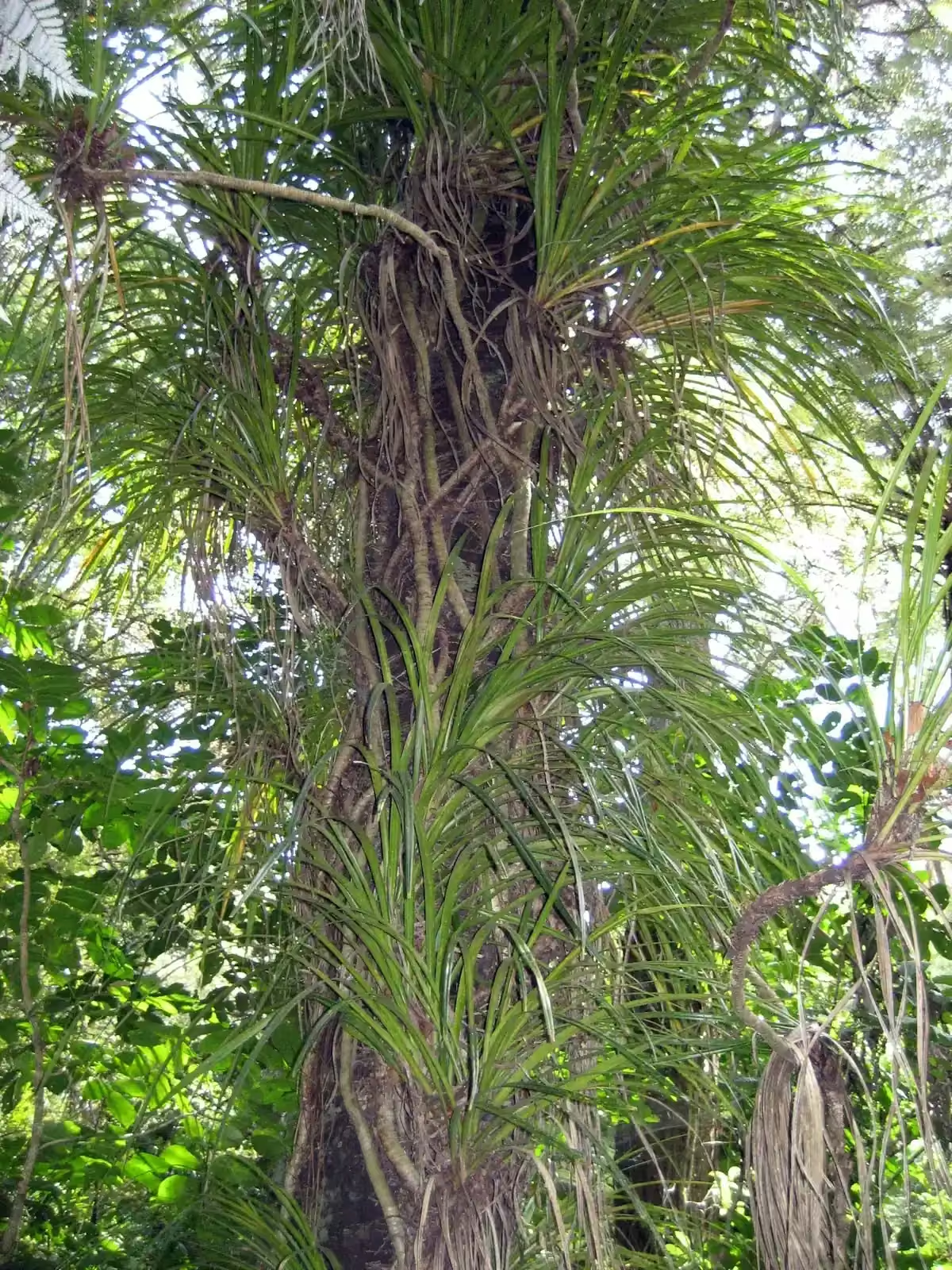
climbers profile: Kiekie (Freycinetia banksii) is an endemic woody climber and sprawling forest plant in the pandanus family. It climbs by aerial roots, forms dense tangles on trunks and slopes, and carries long strap-like leaves in tufts near the stem tips. conservation profile records it as Not Threatened, and cultural sources record its leaves, roots, flower bracts, and fruit as important resources.
Plant Description
Identification and Physical Characteristics
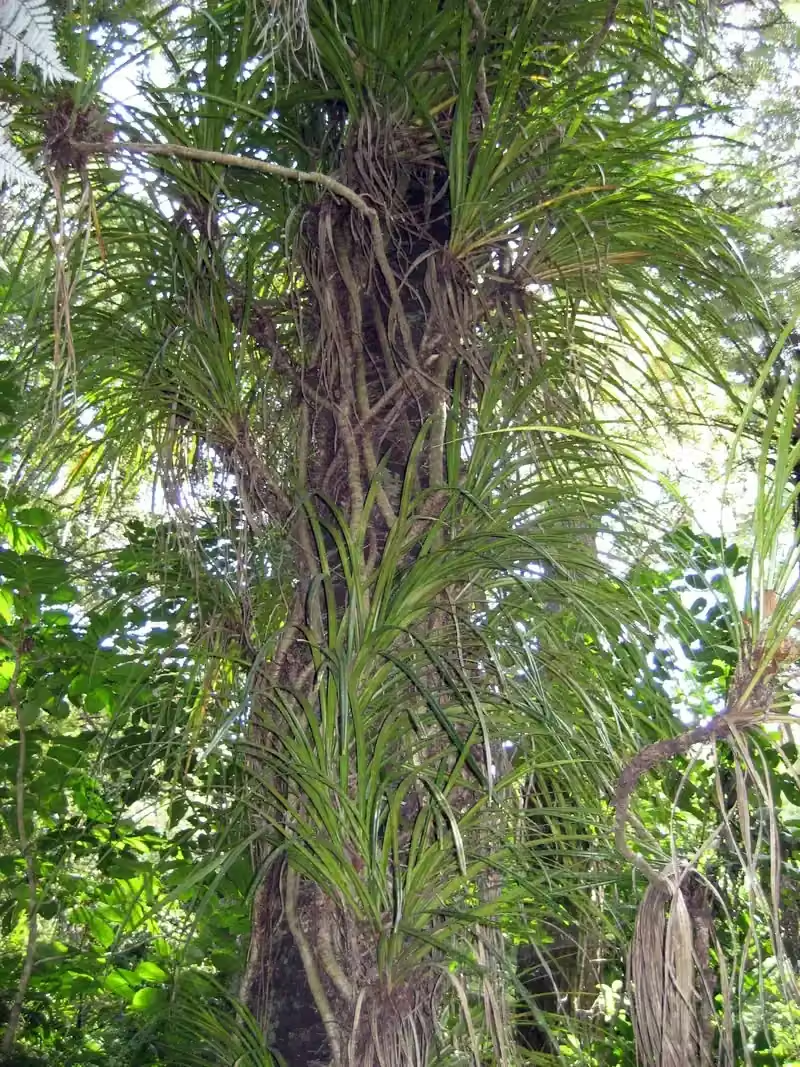
Kiekie produces many cane-like woody stems that root freely and climb tree trunks or spread across the forest floor. The leaves are long, pleated, dark green, and finely toothed along the margins and midrib. Male and female flowers are borne on separate plants in spadices surrounded by thick white to purplish edible bracts. The ripe fruit is elongated and sweet, with many tiny seeds embedded in fleshy tissue.
Quick Facts
| Scientific Name | Freycinetia banksii |
|---|---|
| Height | Climbs several metres into forest trees |
| Spread | Dense tangles or groundcover mats several metres across |
| Water Needs | Moderate to high |
| Light | Shade to filtered forest light |
| Frost Tolerance | Low to moderate when young |
| Salt Tolerance | Moderate in coastal forest shelter |
| Growth Rate | Slow to establish, then vigorous |
| Lifespan | Long-lived woody climber |
Climate Best Suited to
Kiekie suits humid coastal to montane forest climates with shade, shelter, and steady soil moisture. It is most reliable in mild, damp districts and can struggle in exposed frost or dry wind.
Regional Suitability
| City | Climate Suitability |
|---|---|
| Auckland | High in shaded, moist forest gardens |
| Wellington | Medium in sheltered damp gullies and bush margins |
| Christchurch | Low except in protected frost-free shade |
| Nelson | Medium in damp shaded sites and mild valleys |
Plant Habitat
Natural Occurrence and Ecology
Kiekie grows in damp forest, on well-drained slopes, tree trunks, coastal to montane forest, and karst country where it can form large tangles. conservation profile describes it as a woody climber with many ascending cane-like stems and roots that emerge freely. Forest-flora sources note that it is very common in damp forest and can become impenetrable in rich lowland forest.
Growing Requirements
Soil Requirements
Moist, humus-rich, free-draining forest soil with cool roots and organic litter.
- Rich leaf mould
- Free-draining slopes
- Cool shaded roots
Light Requirements
Shade or filtered light under forest canopy suits young plants, with climbing stems reaching brighter light.
- Part shade
- Forest margins
- Support trees
Water Requirements
Keep evenly moist during establishment and protect from drought until roots are deep and spreading.
- Regular moisture
- Mulched roots
- Humid shelter
Planting and Establishing
Establishment Guidance
Plant kiekie beside a sturdy support tree, damp bank, trellis, or shaded gully edge where its roots can remain cool. Give young plants moisture and shelter while they establish, because nursery sources note that kiekie can be slow at first. Once growing strongly, allow room for long stems and dense leaf tufts. Avoid planting where paths, small shrubs, or service access will be overwhelmed by the eventual tangle.
Ecological Role
Biodiversity and Ecosystem Impact
Kiekie adds climbing structure to forest, creates dense shelter, and produces fruit and fleshy bracts used by wildlife. Its aerial roots and tangled stems help occupy vertical and ground layers in damp forest. Possum browsing and habitat loss are noted threats in restoration contexts, so healthy kiekie in forest remnants can indicate protected, humid native habitat.
Uses & Significance
Garden Uses
Use in shaded native forest gardens, damp gullies, revegetation plantings, and where a strong native climber can be supported.
- Forest restoration
- Shaded banks
- Native climber displays
Ecological Value
Kiekie provides dense cover, fruit, nectar-associated resources, and vertical forest structure.
- Bird food
- Forest structure
- Invertebrate shelter
Landscaping Uses
Kiekie is bold and architectural, with long pleated leaves and a strong tropical character. Use it where scale is available: climbing old trunks, covering shaded banks, or forming a dense native screen. It is not suited to narrow beds or dry urban walls unless irrigation, shade, and support are reliable.
Seasonal Care Calendar
Spring
Flowering and new shoot extension begin in mild humid sites.
Summer
Keep young plants watered and shaded from drying heat.
Autumn
Fruit develops and rooted pieces establish well in moist soil.
Winter
Protect young plants from frost and cold wind.
When to Prune and How Much
Prune only to control access, remove dead leaves, or redirect stems. Wear gloves because the leaf margins and midrib are finely toothed. Avoid stripping all climbing stems from a support tree, because established kiekie depends on its aerial root network.
- Trim for access
- Wear gloves
- Keep support stems intact
Always use clean, sharp tools and avoid disturbing new growth.
How to Grow Kiekie
From Seed
Kiekie can be grown from fresh seed collected from ripe fruit. Clean the pulp from the tiny seeds, sow them on a moist, sterile, humus-rich medium, and keep the tray warm, shaded, and humid. Fresh seed is preferred because storage information is limited and viability can decline. Germination does not require heavy pretreatment, although nursery sources note that a short cold period may help. Seedlings are slow at first and should remain in shade with steady moisture until they are large enough to handle.
- Use fresh ripe fruit
- Clean seed from pulp
- Sow on moist humus mix
- Grow shaded and humid
From Rooted Pieces
conservation profile notes that kiekie is easy from rooted pieces, though slow to establish. Select a naturally rooted stem section from cultivated stock, keeping roots moist and leaves trimmed only enough to reduce stress. Pot into a deep, free-draining forest mix and keep in shade with high humidity. Once new roots and shoots are active, plant beside a support or damp bank. Do not collect rooted pieces from wild forest without permission.
- Use cultivated rooted stems
- Keep roots moist
- Pot into forest mix
- Plant beside support after recovery
Establishing in Forest Gardens
Choose a damp, sheltered site with a tree, frame, or bank for support. Prepare soil with leaf mould and coarse bark, then plant at the same depth as the pot. Mulch widely, water through dry spells, and protect young plants from possums, rabbits, and frost. Establishment can be slow, so avoid moving the plant once roots begin to attach. When growth accelerates, guide stems away from paths and young trees that could be smothered.
- Choose damp shade
- Provide a strong support
- Mulch and water deeply
- Guide stems as they extend
Pests & Diseases
Possums can browse kiekie, and young plants may be damaged by slugs, snails, rabbits, or frost. Dry wind and drought cause leaf browning. In dense plantings, remove dead leaves if they trap excessive moisture against young stems.
Cultural Significance
Kiekie is a highly valued Māori weaving and food plant. Ngā Rauropi Whakaoranga records leaves and inner fibres used for mats, kete, cloaks, binding, and other woven work. Edible flower bracts are known as tāwhara, and fruit names include ureure and pīrori. Zealandia also notes its use in clothing, kites, mats, belts, baskets, hats, and tukutuku panels.
- Weaving fibre
- Edible tāwhara
- Forest food and material plant
Bonus Tip
Plant kiekie where you can let it become a real forest climber; clipped into a small border, it loses the form that makes it useful and distinctive.
Related Plants
Compare Kiekie with other native climbers and forest vines.



Plant Conservation
Conservation Status and Threats
conservation profile lists Kiekie as Not Threatened, and POWO treats Freycinetia banksii as an accepted New Zealand climber. Local management should still protect damp forest remnants and control possums, because browsing and habitat loss can reduce kiekie abundance and cultural harvest opportunities.
Frequently Asked Questions
Is Kiekie endemic to New Zealand?
Yes. It is endemic to New Zealand.
Is Kiekie a vine or epiphyte?
It is a woody climber that uses aerial roots to climb and can also form dense ground tangles.
What parts of Kiekie were traditionally used?
Leaves and fibres were used for weaving, while fleshy bracts and fruit were eaten.
Sources and Further Reading
The botanical, growing, and conservation details for Kiekie draw on authoritative New Zealand plant references and taxonomic databases.