Poor Knights Houhere
Hoheria equitum
Last updated:
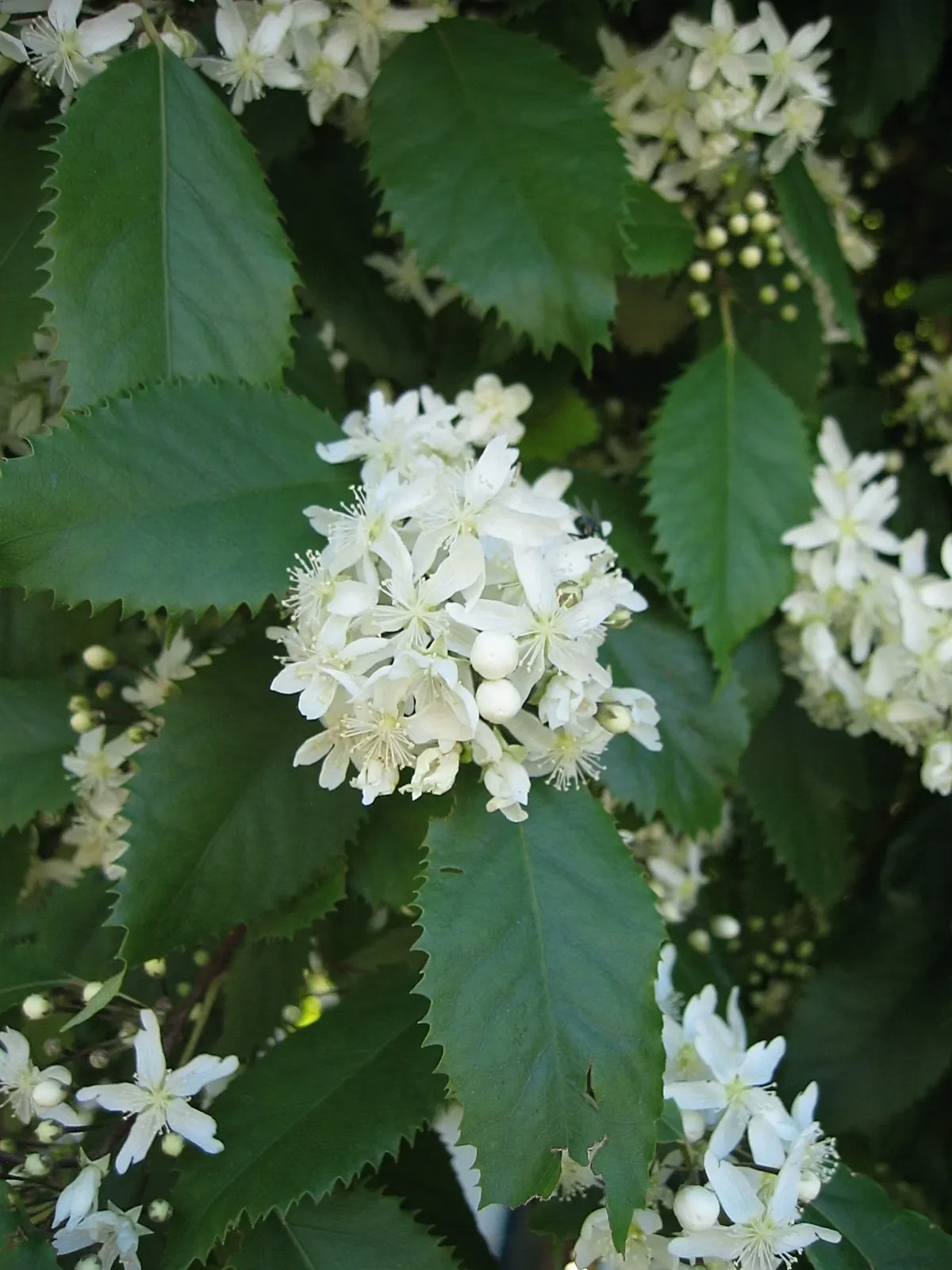
trees profile: Poor Knights Houhere (Hoheria equitum) is a small endemic lacebark tree described from the Poor Knights Islands and the Hen and Chickens Islands off eastern Northland. Biota NZ treats the name as current and endemic, while the 2023 New Zealand threat assessment records it as Naturally Uncommon. It is closely related to Hoheria populnea but has broad elliptic leaves with recurved, entire or only shallowly serrated margins.
Plant Description
Identification and Physical Characteristics
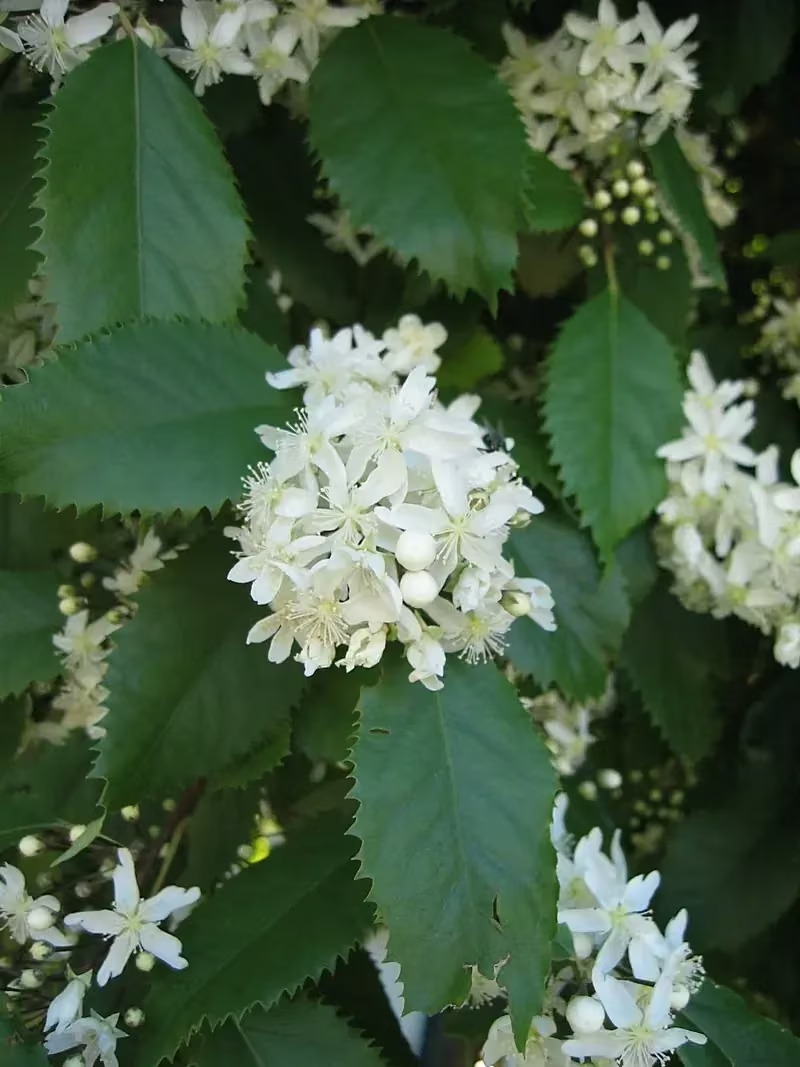
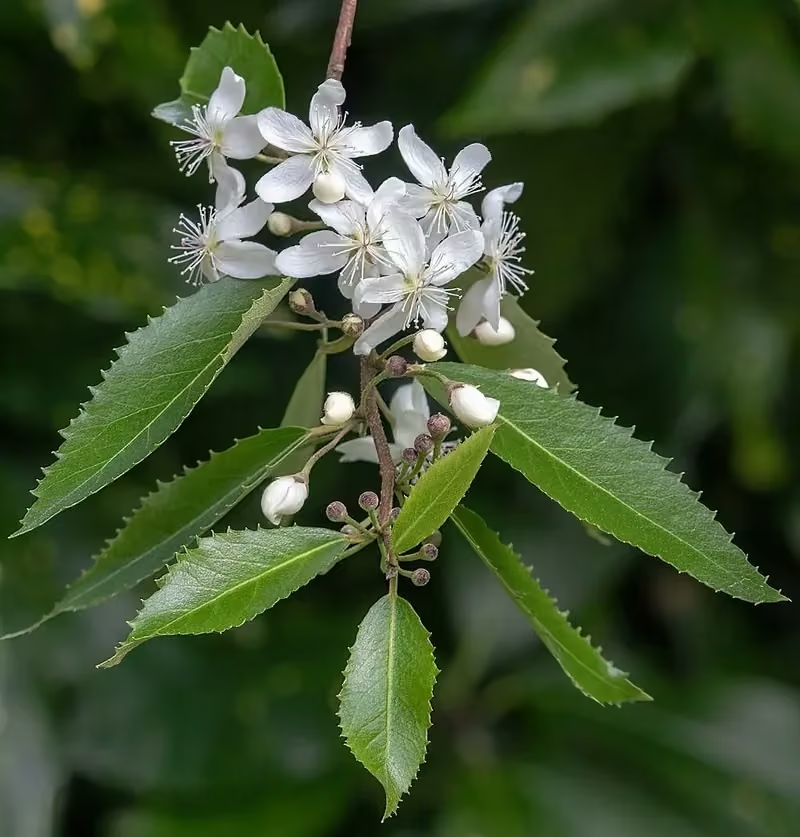
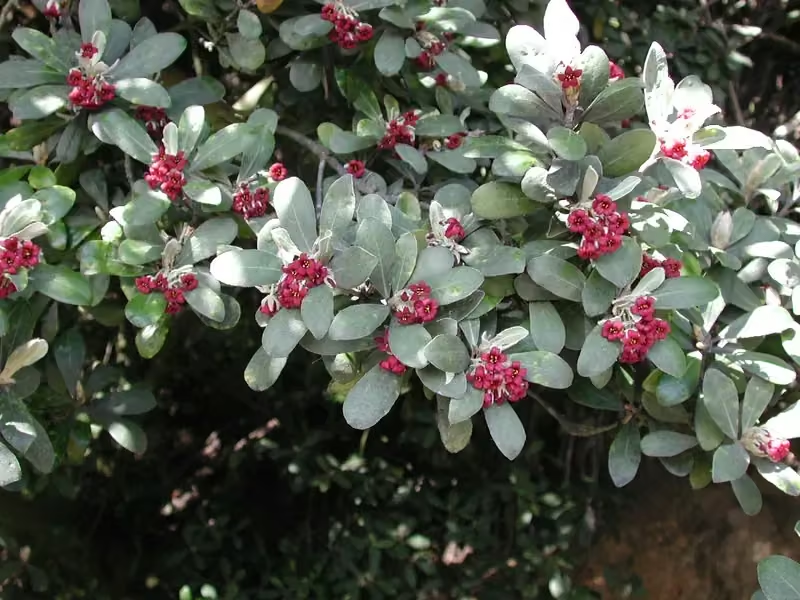
This evergreen tree reaches about six metres tall. Young shoots and flower buds carry stellate hairs, while older parts are mostly glabrous. The bark is tough and fibrous, matching the lacebark character of the genus. Leaves are yellow-green, alternate, elliptic to broadly elliptic, often 7 - 15 cm long and 3 - 9.5 cm wide, with recurved margins and blunt, distant teeth when teeth are present. White flowers are produced in axillary fascicles, usually one to three per cluster, with dark red anthers that fade pale yellow.
Quick Facts
| Scientific Name | Hoheria equitum |
|---|---|
| Height | To about 6 metres |
| Spread | Small tree canopy with slender branches |
| Water Needs | Moderate |
| Light | Full sun to partial shade |
| Frost Tolerance | Light to moderate when established |
| Salt Tolerance | Moderate in coastal shelter |
| Growth Rate | Fast in mild sheltered sites |
| Lifespan | Short to medium-lived small tree |
Climate Best Suited to
Poor Knights Houhere is best suited to mild northern and coastal climates. It can be grown farther south in warm, sheltered gardens with good drainage and protection from hard frost.
Regional Suitability
| City | Climate Suitability |
|---|---|
| Auckland | High in warm sheltered coastal and island-like conditions |
| Wellington | Medium in frost-free coastal shelter |
| Christchurch | Low to medium in warm protected sites only |
| Nelson | Medium in sheltered coastal gardens with summer moisture |
Plant Habitat
Natural Occurrence and Ecology
The species is naturally restricted to the Poor Knights Islands and Hen and Chickens Islands. Available taxonomic references describe it as a coastal island tree, with cultivated and herbarium records outside that natural range. The island origin matters for cultivation: it favours mild air, good drainage, exposure to bright light, and some coastal influence rather than cold inland conditions.
Growing Requirements
Soil Requirements
Use well-drained coastal or forest-edge soil with enough organic matter to hold summer moisture.
- Free-draining loam
- Coastal garden soil
- Avoid waterlogged clay
Light Requirements
Full sun gives best flowering in mild sites, while partial shade protects young plants in exposed gardens.
- Full sun
- Light shade
- Wind shelter for young trees
Water Requirements
Water steadily while establishing, then maintain moderate moisture during hot dry spells.
- Deep establishment watering
- Moist but drained soil
- Mulch over roots
Planting and Establishing
Establishment Guidance
Plant Poor Knights Houhere in a warm, sheltered position with space for a small, fast-growing tree. Set it at the same depth as the nursery container, water deeply, mulch beyond the root ball, and stake only if wind movement threatens the root plate. Avoid frost hollows and compacted wet soils. In colder districts, a north-facing wall or coastal courtyard gives a better chance of long-term success.
Ecological Role
Biodiversity and Ecosystem Impact
On islands, Hoheria equitum contributes white summer flowers and leafy small-tree structure to coastal broadleaved vegetation. Its restricted natural range explains its Naturally Uncommon status, even though plants can be vigorous in cultivation. The flowers are likely to attract generalist insects, as other houhere species do, and the tree adds shelter for coastal birds and invertebrates in mixed island plantings.
Uses & Significance
Garden Uses
Use as a fast, elegant small tree for mild coastal native gardens and island-themed plantings.
- Coastal shelter
- Small flowering tree
- Warm native gardens
Ecological Value
It adds island-endemic diversity and summer flowers to suitable restoration or collection plantings.
- Restricted-range species
- Flower resources
- Coastal canopy texture
Landscaping Uses
Poor Knights Houhere suits a warm courtyard, coastal bank, or sheltered lawn edge where its yellow-green leaves and white flowers can be seen close up. Pair it with whau, karo, taupata, ngaio, and coastal ferns for a northern island character. It is less suitable for cold inland plantings or clipped formal hedges.
Seasonal Care Calendar
Spring
New leaf growth begins strongly in warm sheltered sites.
Summer
White flowers open from mid to late summer.
Autumn
Mulch and water young trees before dry autumn winds if needed.
Winter
Protect young plants from hard frost and cold wind.
When to Prune and How Much
Prune after flowering or during mild settled weather to remove crossed, damaged, or poorly placed stems. Keep cuts light, because the natural form is an open small tree rather than a clipped shrub. Remove basal suckers only where a single trunk is preferred.
- Prune after flowering
- Remove crossing branches
- Control suckers if needed
Always use clean, sharp tools and avoid disturbing new growth.
How to Grow Poor Knights Houhere
From Fresh Seed
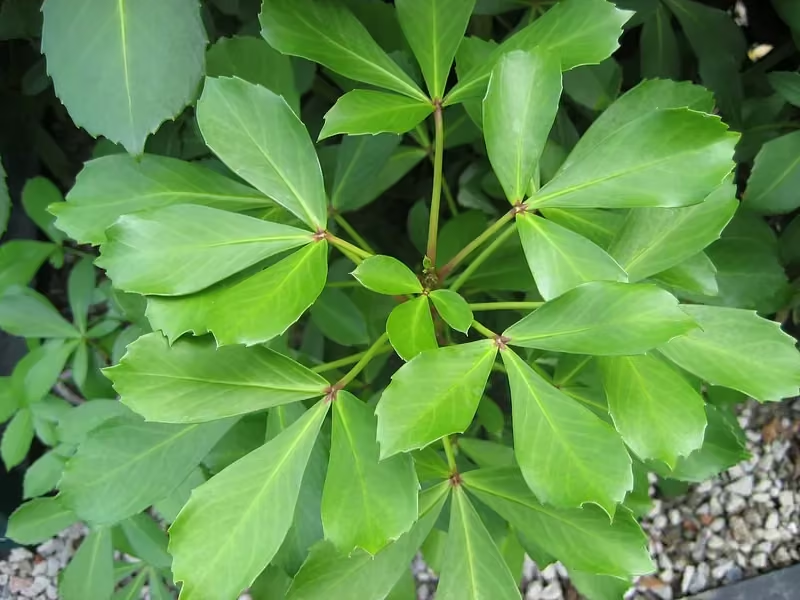
Fresh seed is the most useful way to raise conservation-minded plants, provided seed is collected legally from cultivated or permitted source trees and labelled accurately. Sow into a clean, free-draining seed mix, cover lightly, and keep the tray warm, moist, and shaded from harsh midday sun. Seedlings should be potted on before roots tangle and then grown steadily without heavy fertiliser. Because Hoheria equitum has a restricted natural range, plants for restoration or collection should retain source information. Avoid mixing it casually with other houhere seedlings, since young plants can look similar before flowering.
- Collect permitted ripe seed
- Sow in clean free-draining mix
- Keep warm and lightly shaded
- Label source carefully
From Cuttings
Semi-firm cuttings can be used when a known cultivated plant needs to be retained. Take short shoots from healthy non-flowering growth, remove lower leaves, and place the cuttings into a gritty medium under humidity. Gentle warmth improves rooting. Once roots develop, reduce humidity slowly and pot plants into a native tree mix. Cuttings should be grown in a sheltered nursery area until the root ball is firm enough for planting. This approach is useful for maintaining a particular form, but seed is better for a genetically broad restoration collection.
- Take semi-firm shoots
- Use gritty cutting mix
- Root under humidity
- Harden before planting
Establishing Young Trees
Plant during warm spring or autumn weather rather than in cold wet soil. Choose a sheltered site, loosen the surrounding soil, and water deeply after planting. Mulch widely but keep mulch away from the trunk. During the first two summers, water before leaves wilt and check that wind has not loosened the root plate. Once established, reduce irrigation so the tree develops a resilient root system. Where frost is possible, protect young plants with temporary cloth on the coldest nights and remove protection during the day.
- Plant in warm settled weather
- Mulch around the root zone
- Water through first summers
- Protect from early frost
Pests & Diseases
Young houhere can be damaged by slugs, snails, scale insects, or wind scorch. Good airflow, mulch, and steady watering reduce stress. Watch for browsing on new shoots in unfenced sites.
Cultural Significance
Houhere is the Māori-derived name behind the genus Hoheria, and lacebark refers to the fibrous inner bark layer characteristic of the group. This species carries that lineage into the distinctive northern offshore-island flora.
- Houhere name origin
- Lacebark fibre heritage
- Northern island endemic
Bonus Tip
In cool districts, grow it first in a container for one season so you can test shelter and frost exposure before committing it to the ground.
Related Plants
Compare Poor Knights Houhere with other New Zealand lacebark and coastal small-tree species. For another native tree, explore Silver Pine.



Plant Conservation
Conservation Status and Threats
Hoheria equitum is assessed as At Risk - Naturally Uncommon because its natural distribution is restricted to offshore islands. Cultivation can support awareness and ex situ collections, but wild plants depend on island habitat protection, biosecurity, and careful seed-source management.
Frequently Asked Questions
Where is Hoheria equitum native?
It is native to the Poor Knights Islands and the Hen and Chickens Islands off eastern Northland.
Does it have a common name?
Poor Knights Houhere is used here because the species is a houhere from the Poor Knights and nearby island groups.
Is it suitable for cold inland gardens?
Usually no. It is better suited to mild, sheltered coastal conditions.
Sources and Further Reading
The botanical, growing, and conservation details for Poor Knights Houhere draw on authoritative New Zealand plant references and taxonomic databases.