Introduction
Overview
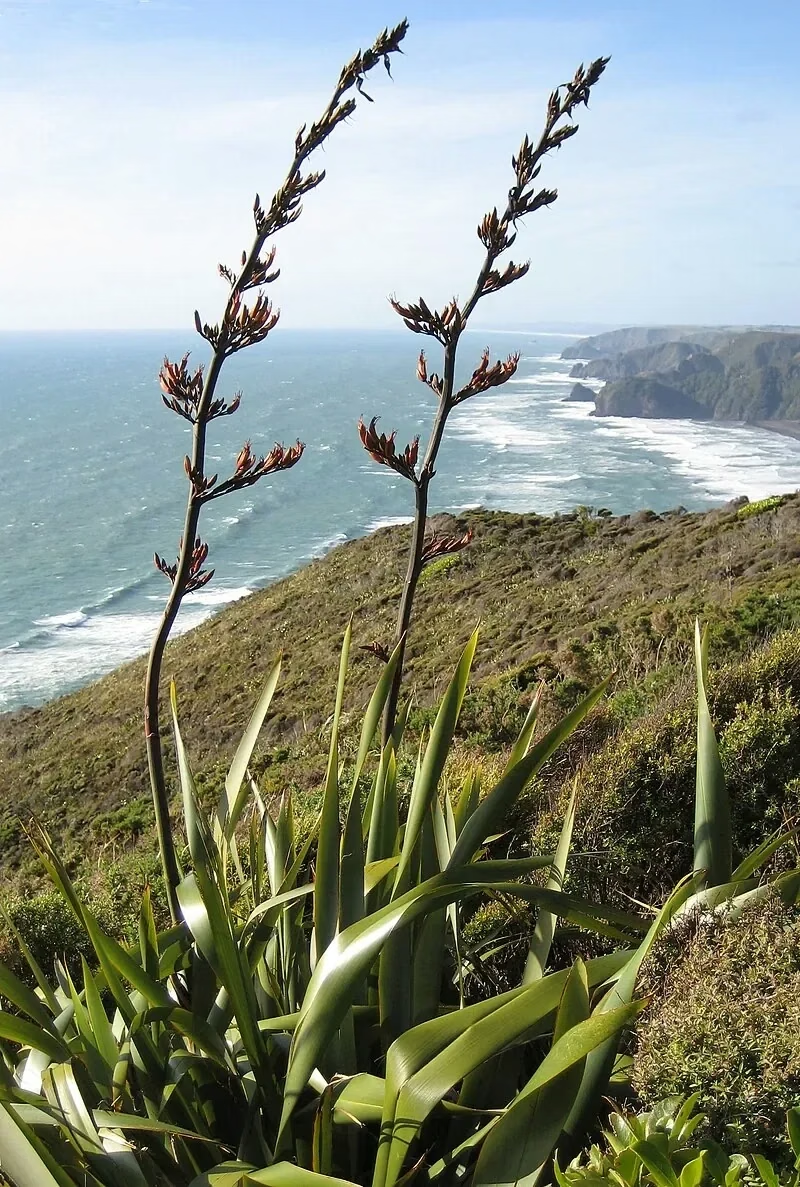
Many New Zealand native plants hold deep cultural significance, especially for Māori, who have used them for food, medicine, weaving, carving, and rituals for centuries. Notable examples include harakeke (Phormium tenax) for weaving, kawakawa (Piper excelsum) for medicinal use, and tōtara ( Podocarpus totara ) for carving waka (canoes). These plants are integral to traditional knowledge and practices, and their conservation is important for maintaining cultural heritage and biodiversity.
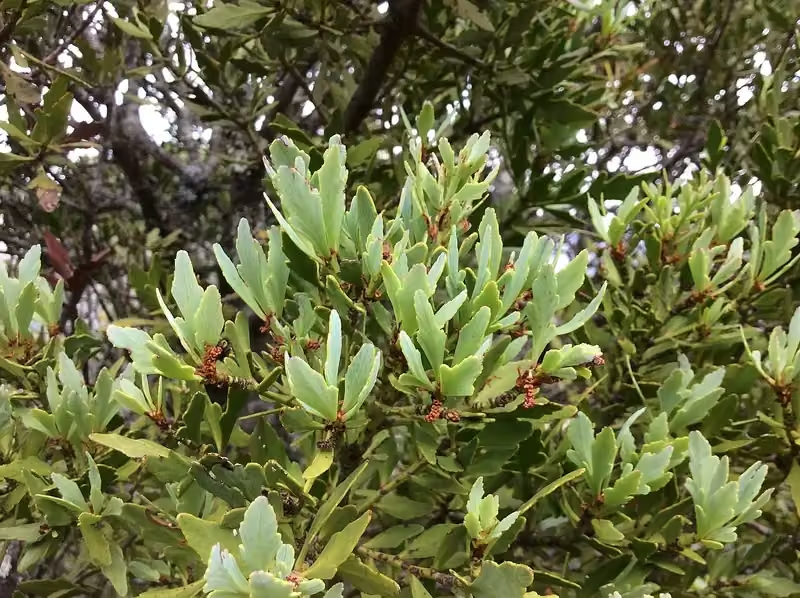
Mountain Toatoa
Phyllocladus alpinus
Complete guide to the Mountain Toatoa ( Phyllocladus alpinus ), including care tips, propagation methods, and its ecological and cultural significance.
Learn more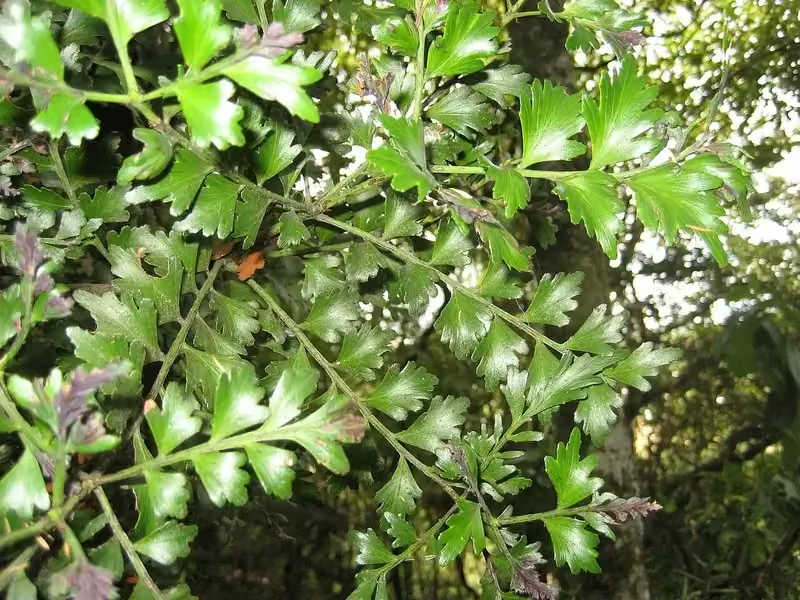
Tānekaha
Phyllocladus trichomanoides
Complete guide to Tānekaha ( Phyllocladus trichomanoides ), including care tips, propagation methods, and its ecological and cultural significance.
Learn more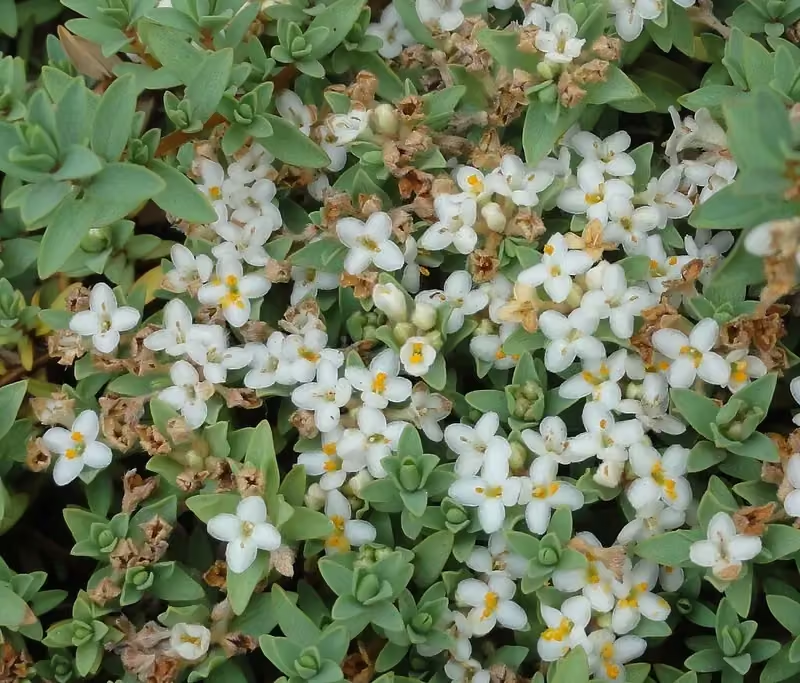
Strathmore Weed
Pimelea prostrata
Guide to Pimelea prostrata - a low, mat-forming shrub with white flowers and white berries; identification, cultivation, and propagation.
Learn more
Mountain Tōtara
Podocarpus laetus
Complete guide to Mountain Tōtara ( Podocarpus laetus ), including care tips, propagation methods, and its ecological and cultural significance in New Zealand.
Learn more
Alpine Tōtara
Podocarpus nivalis
Complete guide to the Alpine Tōtara ( Podocarpus nivalis ), including care tips, propagation methods, and its ecological and cultural significance.
Learn more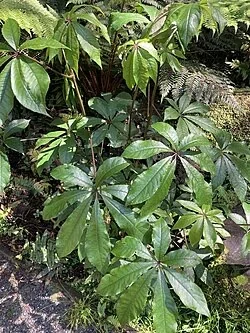
Pāte
Schefflera digitata
Complete guide to Pāte ( Schefflera digitata ), including care tips, propagation methods, and its ecological and cultural significance in New Zealand.
Learn more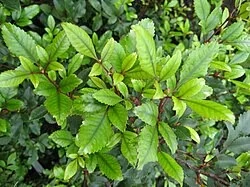
Kāmahi Tree
Weinmannia racemosa
Complete guide to Kāmahi ( Weinmannia racemosa ), including care tips, propagation methods, and its ecological and cultural significance in New Zealand.
Learn more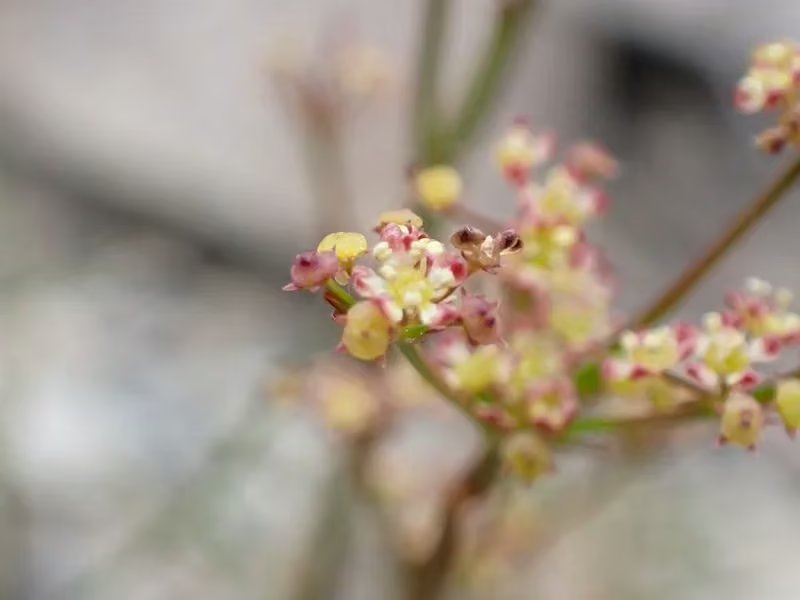
Thread-leaved Anisotome
Anisotome filifolia
Discover the unique characteristics of Thread-leaved Anisotome (Anisotome filifolia), a remarkable New Zealand native valued for its ecological role and distinctive appearance.
Learn more
Silver Fern
Cyathea dealbata
The Silver Fern, or Ponga, is New Zealand's national symbol, revered for its striking silver-backed fronds and traditionally used by Māori for marking trails at night.
Learn more
Black Tree Fern
Cyathea medullaris
The Mamaku (Black Tree Fern) was a significant food source for Māori, who roasted the starchy pith of its trunk and the base of its fronds.
Learn more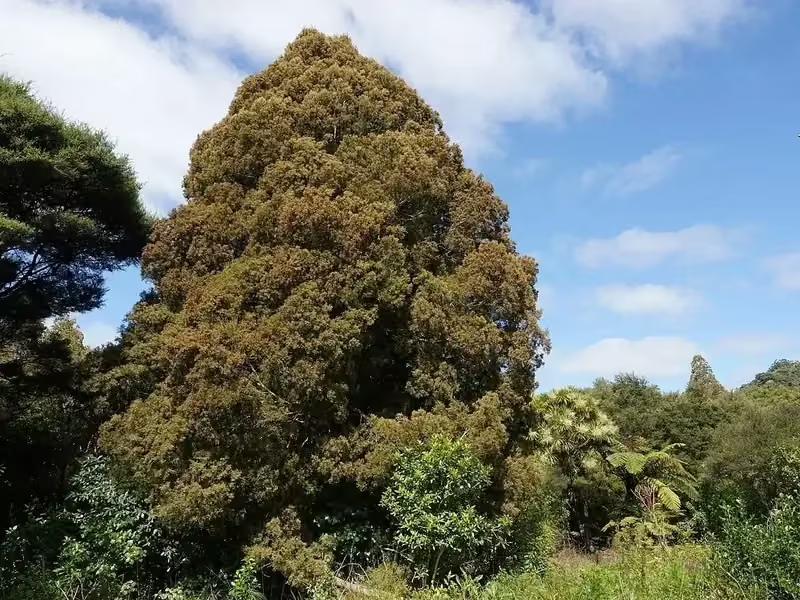
Kahikatea
Dacrycarpus dacrydioides
The Kahikatea, New Zealand's tallest tree, provided Māori with edible berries (koroi) and resin, and its soft wood was used for creating tools and carvings.
Learn more
Rimu
Dacrydium cupressinum
Rimu is one of New Zealand's most valued timber trees, historically used by Māori for tools and construction, and its resin was used as a traditional medicine.
Learn more
Wood Rose
Dactylanthus taylorii
Known as Pua o te Rēinga (Flower of the Underworld), this rare parasitic plant is a taonga species with deep spiritual significance in Māori tradition.
Learn more
Kānuka
Kunzea ericoides
Kānuka has a long history of use in Māori culture, with its hard timber used for weapons and tools, and its leaves and bark valued for their medicinal properties in Rongoā.
Learn more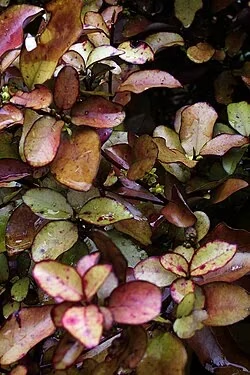
Horopito
Pseudowintera colorata
Key Rongoā plant used by Māori for treating skin conditions and stomach aches, valued for its antifungal properties.
Learn more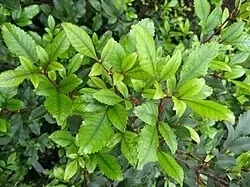
Kāmahi
Pterophylla racemosa
Significant taonga species; its bark was used for its high tannin content in dyeing and its medicinal properties were valued in Rongoā.
Learn more
Forest Maire
Pterophylla sylvicola
Tōwai (Forest Maire) is an important cultural species in the northern North Island, traditionally valued for its strong timber and the medicinal uses of its bark in Rongoā.
Learn more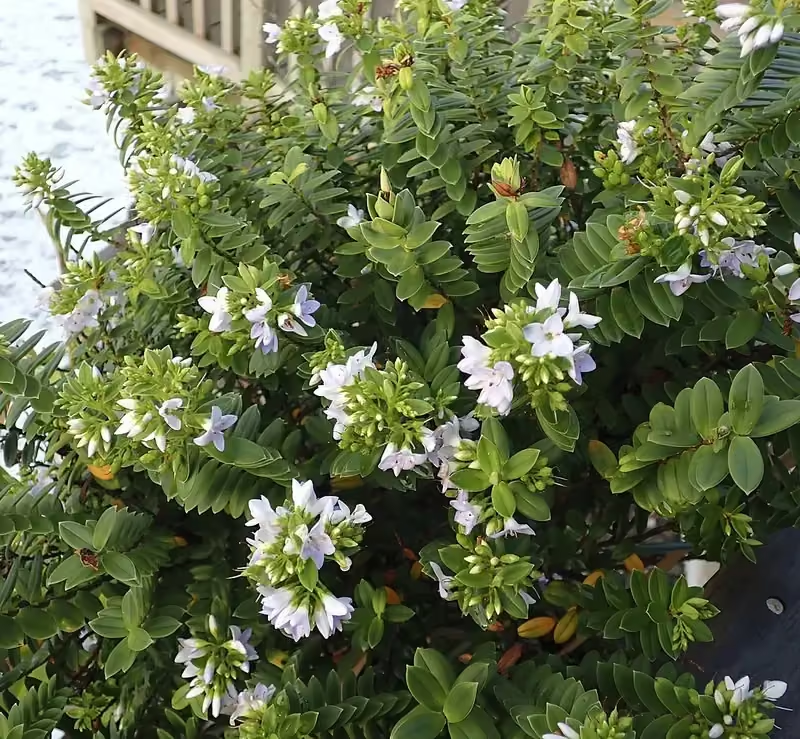
Coastal Hebe
Veronica elliptica
A robust coastal shrub historically valued for its tough branches, used by shipwreck survivors to build coracles, and recognized in Māori culture as kōkōmuka.
View details
Willow-Leaf Hebe
Veronica salicifolia (synonym)
A highly valued Rongoā Māori plant historically used to treat various ailments, this graceful shrub features willow-like leaves and long spikes of white flowers.
View details
Napuka
Veronica speciosa
A showy coastal shrub traditionally used in Māori rituals and ceremonies, symbolizing protection and resilience with its vibrant, long-lasting magenta blooms.
View details
Koromiko
Veronica stricta
Koromiko is a cornerstone of Rongoā Māori, traditionally used to treat stomach ailments and wounds; its leaves were even sent to New Zealand soldiers during the World Wars.
Learn moreCultural Importance
This collection highlights some of the most culturally significant native plants of New Zealand, exploring their traditional uses, cultural importance, and their place in contemporary society. Many of these species also face conservation challenges, making their preservation important not only for biodiversity but for cultural heritage as well.
Rongoā Māori: Traditional Medicine
Rongoā Māori is the traditional healing system of Māori, utilizing native plants for physical, spiritual, and emotional healing. This holistic approach combines plant remedies with spiritual practices, acknowledging the connection between health and the wider natural and spiritual world.
Many of the plants featured in this collection play important roles in Rongoā practices, with knowledge traditionally passed down through generations. While some of these practices continue today, much traditional knowledge was lost during colonization. Current efforts to document, preserve, and revitalize this knowledge are important for both cultural continuity and potential contributions to modern medicine.
Important Note on Cultural Knowledge
The information provided here offers general context about cultural significance but does not provide detailed instructions for traditional uses, particularly medicinal applications. Many plants have specific harvest protocols, preparation methods, and cultural considerations that should be learned through appropriate cultural channels. We encourage readers to respect the cultural context of this knowledge and seek guidance from knowledgeable practitioners when appropriate.
Raranga (Weaving)
Plants like harakeke (flax), kiekie, and pāngao are essential materials in traditional Māori weaving, used to create clothing, baskets, mats, and other practical and ceremonial items.
Construction & Tools
Native plants provided materials for building waka (canoes), whare (houses), and creating tools. Each species was carefully selected for its specific properties and cultural significance.