Sun Orchid
Thelymitra intermedia
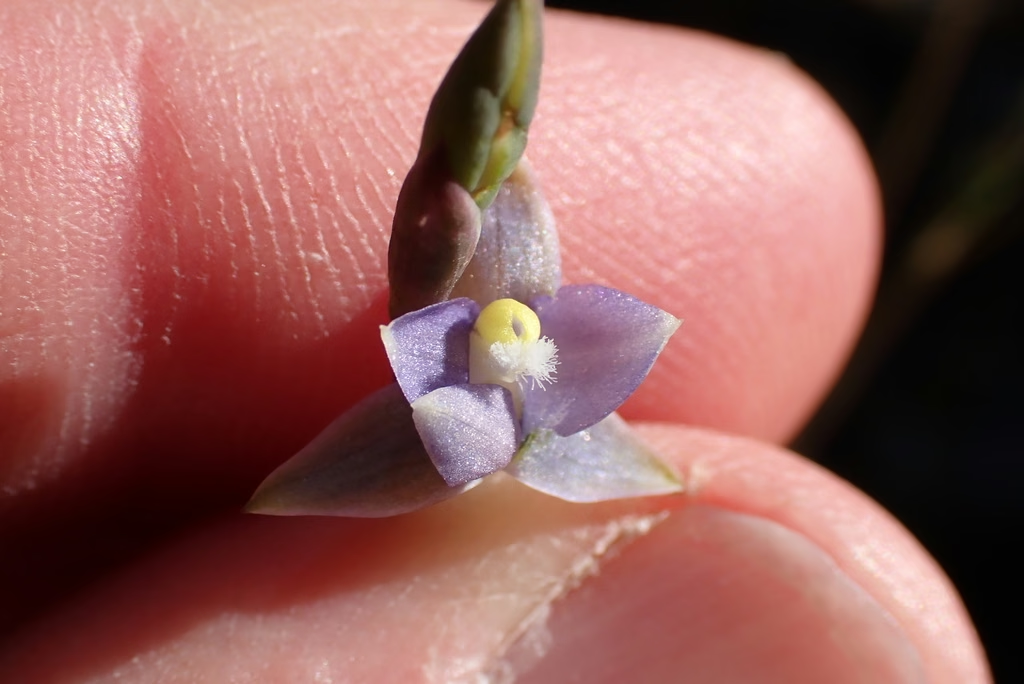
Thelymitra intermedia is a New Zealand endemic sun orchid described from the Bay of Islands. Its application has been debated, and some authors treat the name as a synonym of Thelymitra colensoi.
Identification
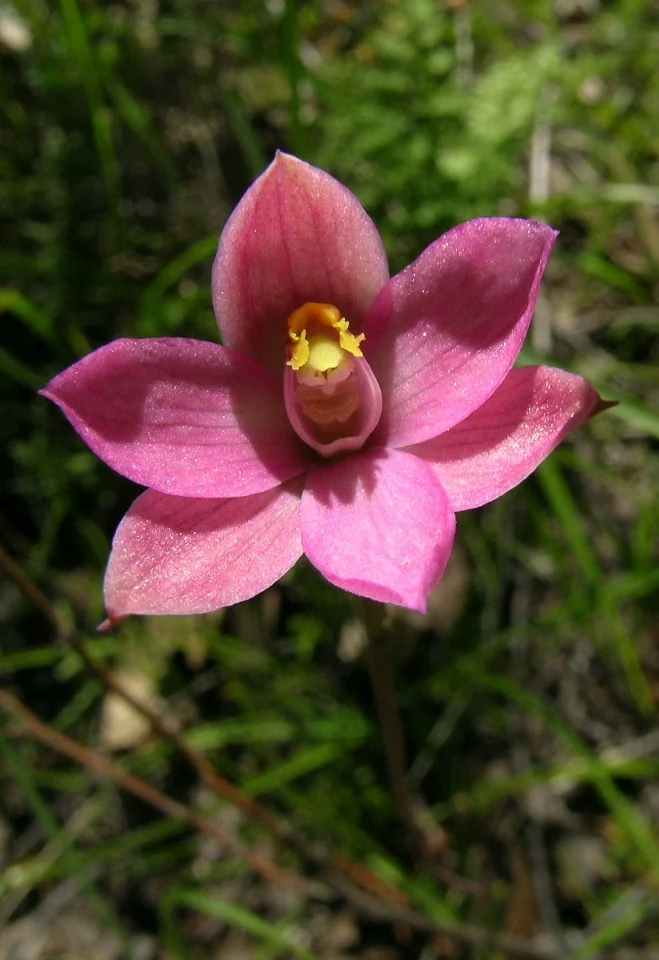
The native orchid field guide describes an arching, broad leaf with a V-shaped cross-section and a red stem base. Its account records up to seven dusky pink to bluish flowers.
The upper column is bronze-brown or occasionally red, with a blunt yellow apex and sparse white hairs on its arms. The back of the column forms a continuous curve.
Quick facts
| Scientific Name | Thelymitra intermedia Berggr. |
|---|---|
| Common name | Sun orchid |
| Family | Orchidaceae |
| Origin | Endemic to New Zealand |
| Flower | Dusky pink to bluish |
| Habitat | Lowland to montane bog, scrub and clay banks |
| Flowering | October to November in the orchid field guide |
| National status | Not Threatened (2023) |
| Height | Total height is not quantified in the cited 2009 field-guide entry |
| Water Needs | A tested watering requirement is not supplied for this taxon concept |
| Light | Bogs, scrub, clay banks and forest are recorded; a cultivation rating is untested |
| Spread | Mature clump width is not quantified in that field guide |
| Frost Tolerance | Minimum tolerated temperature is not documented |
| Salt Tolerance | Salt tolerance is not documented |
| Growth Rate | Annual extension is not quantified in the cited accounts |
| Lifespan | Terrestrial sun orchid; longevity in years is not quantified |
Natural range
The original type locality was the Bay of Islands. The native orchid field guide records the plant from many New Zealand ecological regions, especially northern offshore islands; its exact classification and name application remain contested.
| City | Climate Suitability |
|---|---|
| Auckland | Not assessed |
| Wellington | Not assessed |
| Christchurch | Not assessed |
Habitat and distribution
The field guide describes lowland to montane populations in peat bogs, gumland scrub, clay banks and forests. It records the orchid from northern offshore islands and a range of mainland ecological regions.
Historical descriptions must be read carefully because the same name has also been applied to a different species.
Natural growing conditions
Documented wild habitats include peat bogs as well as clay banks and scrub. The guide does not establish a tested garden soil or watering method, and habitat observations alone do not resolve the naming debate.
Planting considerations
The field guide describes a terrestrial orchid with an arching leaf and a flowering stem. The sources consulted do not provide a tested species-specific planting or nursery propagation protocol.
Habitat records
In the native orchid field guide this plant is recorded across lowland to montane habitats, including gumland scrub, peat bog and forest. Such site records should be interpreted with the guide’s stated use of the name.
Observing the flower
Use a lens to examine the back of the flower column and its sparse white hairs. The guide describes a continuous curve without the shoulders usual in Thelymitra pauciflora.
Garden context
The orchid field guide documents wild sites including scrub and clay banks, but does not report garden trials. Its small flower details require careful identification, particularly given competing interpretations of the scientific name.
Flowers
The native orchid field guide records flowering in October and November. It describes up to seven flowers ranging from dusky pink to bluish, with a bronze-brown upper column and a blunt yellow apex.
Leaf and stem
The field guide describes a broad, arching leaf with a V-shaped cross-section and no ribs, together with a red-stained stem base. The sources do not recommend a pruning treatment.
How to Grow Sun Orchid (Thelymitra intermedia)
Seed and the taxon concept
The cited 2009 orchid field guide describes plants called Thelymitra intermedia, but provides no tested seed-germination or tuber-division method for them. Name usage needs particular care: NZPCN currently recognises this species separately from Thelymitra colensoi and Thelymitra pauciflora, while other treatments unite some of those names.
Checking the leaf and flower characters
In the field-guide concept used here, the leaf is broad and arching, V-shaped in cross-section and not ribbed. The stem base is stained red. A stem can bear up to seven dusky pink to bluish flowers. These characters should be recorded with the locality when identifying material, because an old label alone may not establish which botanical concept was intended.
Observing the column
The upper column is bronze-brown, sometimes red, with a blunt yellow apex and sparse white hairs on its arms. Its back forms a continuous curve. Close photographs of these small structures are more informative than flower colour alone when comparing observations with the field guide.
Habitat, season and historical caution
The guide records flowering in October-November and sites in lowland to montane peat bogs, gumland scrub, clay banks and forest. The 1970 Flora used the same name for a different concept now associated with Thelymitra tholiformis. A 2025 genetic study confirms continuing nomenclatural difficulties. Cultivation claims for any of these names therefore need their taxonomic usage checked before being transferred to this page.
Plant health
A red-stained stem base is a described characteristic in the native orchid field guide. The sources used for this page do not identify a species-specific pest or disease treatment.
Naming and classification
NZPCN and the 2023 national assessment use Thelymitra intermedia Berggr. Other authors regard it as Thelymitra colensoi; a 2025 study describes the application of both names as complicated and in need of further taxonomic work.
A historical identification caution
NZOR assigns the plant described as Thelymitra intermedia by Moore to Thelymitra tholiformis. The older Flora description under that name should therefore not be assumed to describe Berggren’s species.
Related Native Sun Orchids
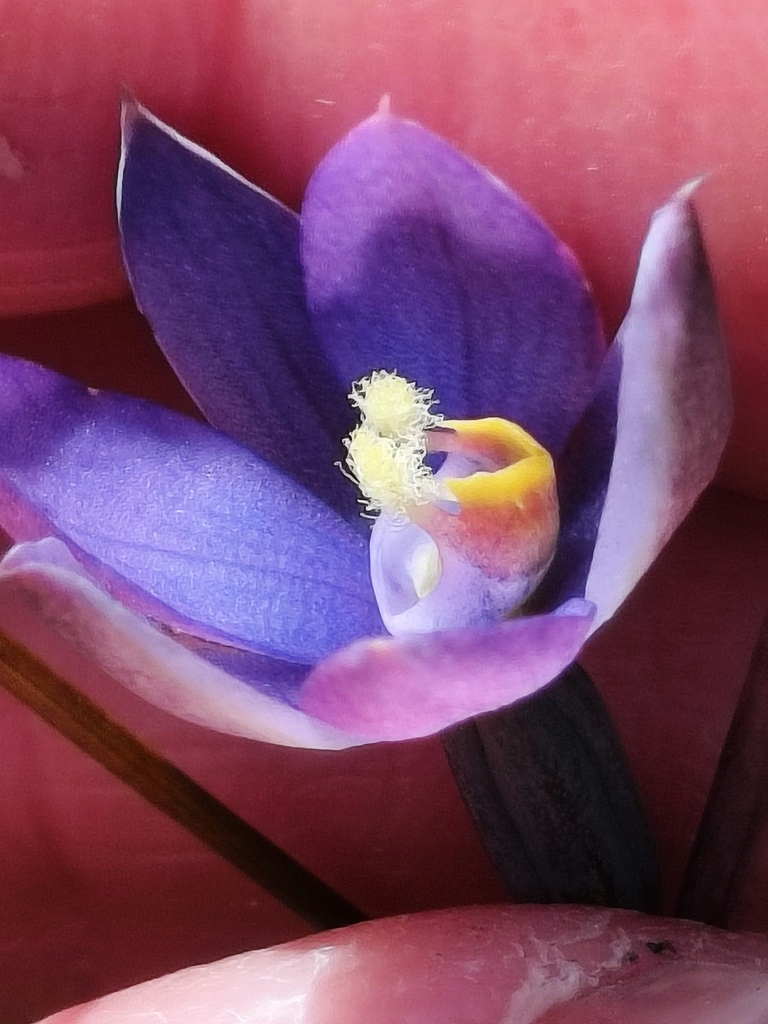
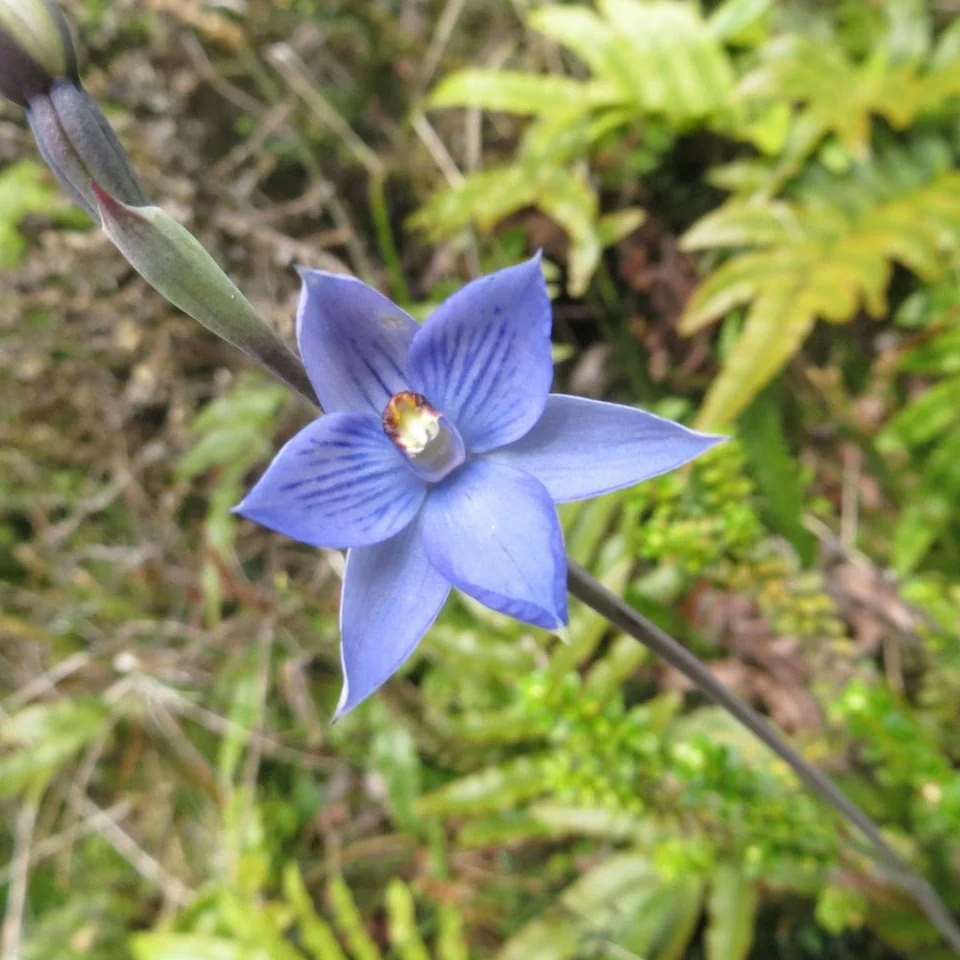
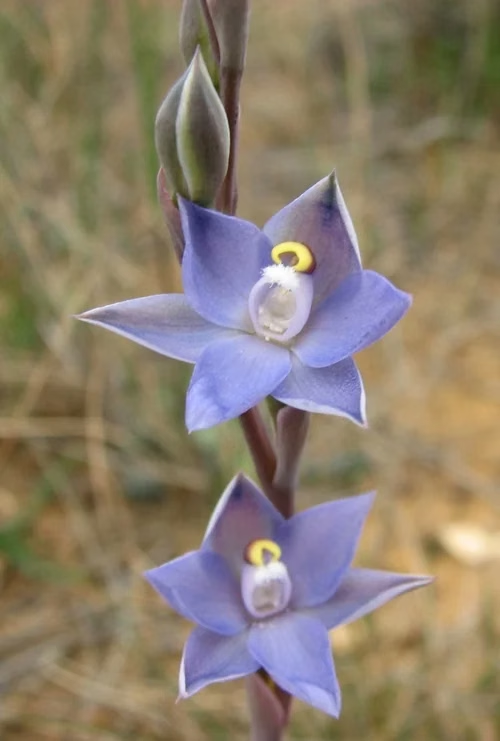
Explore other Thelymitra orchids found in New Zealand grassland, scrub and wet habitats.
Conservation
NZPCN records Thelymitra intermedia as endemic and nationally Not Threatened in the 2023 assessment. Its naming has been interpreted differently by botanical sources, so conservation records should be compared using the assessment’s taxon concept.
Frequently asked questions
Why do references disagree about this name?
Different authors have applied Thelymitra intermedia to different concepts or treated it as a synonym. NZPCN currently retains it separately from Thelymitra colensoi and Thelymitra pauciflora.
Does the old Flora description identify this plant reliably?
The name used by Moore in the 1970 Flora is associated with Thelymitra tholiformis, so that description cannot simply be substituted for the field-guide concept used here.
Which details are useful in photographs?
Record the leaf cross-section, red-stained stem base and the shape, colour and sparse hairs of the flower column, together with the locality and date.
Sources
Identification, habitat and flowering: New Zealand Native Orchid Group field guide. Name and national status: NZ Plant Conservation Network. NZPCN: explicit discussion of colensoi, intermedia and pauciflora concepts. Jones and colleagues (2025): sun-orchid taxonomy and genetic evidence.
Taxonomic uncertainty: 2025 sun-orchid genetic study. Historical misapplication: New Zealand Organisms Register. Type locality: Flora of New Zealand Series.
Last updated: