Akatea
Metrosideros albiflora
Last updated:
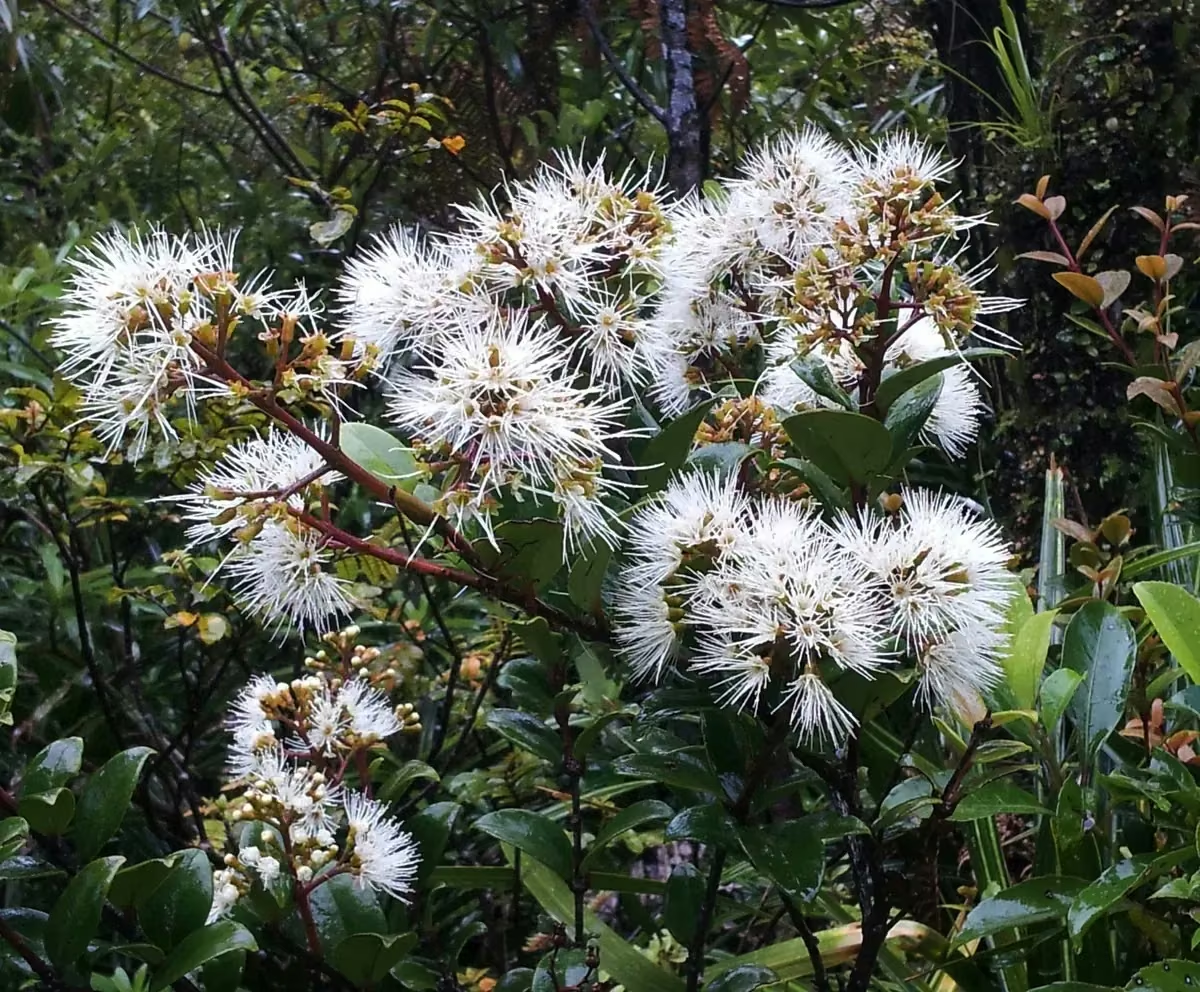
climbers profile: Akatea (Metrosideros albiflora) is an endemic northern climbing rātā with glossy leaves and large white winter-to-spring flower clusters. The current conservation profile lists it as Not Threatened, while regional assessments note local rarity in Auckland and Northland. It is mainly associated with kauri forest from Te Paki south to the northern Waikato and Kaimai area.
Plant Description
Identification and Physical Characteristics
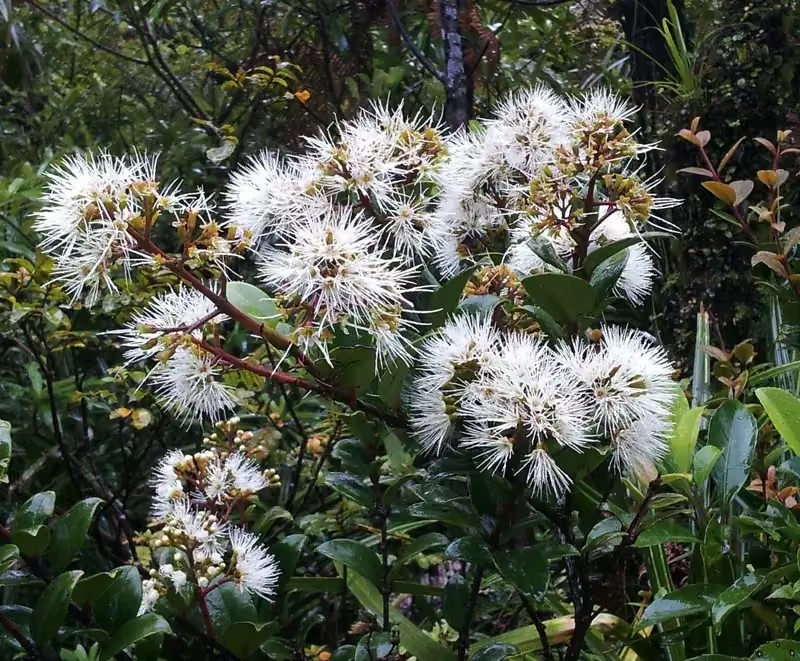
This stout woody vine can climb to about 20 metres. Juvenile and climbing stems are sparingly branched, while reproductive adult growth is much more branched. Young branchlets are often reddish and finely hairy before becoming glabrous. Adult leaves are leathery, glabrous, ovate to elliptic-lanceolate, and larger than those of most other white-flowered climbing rātā. Flowers are white, fluffy, and carried in large terminal compound clusters, with numerous long stamens and later woody capsules.
Quick Facts
| Scientific Name | Metrosideros albiflora |
|---|---|
| Height | Climbing stems to about 20 metres |
| Spread | Large woody vine using forest support |
| Water Needs | Moderate |
| Light | Forest light to canopy edge |
| Frost Tolerance | Low to moderate; cold sensitive |
| Salt Tolerance | Moderate in northern coastal shelter |
| Growth Rate | Slow to establish, stronger with support |
| Lifespan | Long-lived woody climber |
Climate Best Suited to
Akatea is best suited to warm northern climates, humid forest margins, and sheltered kauri-associated plantings. Cold inland conditions are unsuitable.
Regional Suitability
| City | Climate Suitability |
|---|---|
| Auckland | High in warm sheltered kauri and coastal forest plantings |
| Wellington | Low to medium in frost-free coastal shelter only |
| Christchurch | Low; too cold for reliable outdoor planting |
| Nelson | Medium in the warmest sheltered coastal sites |
Plant Habitat
Natural Occurrence and Ecology
The species is confined naturally to the northern North Island, from Te Paki south to Pukemokemoke north of Hamilton and the northern Kaimai Ranges. It grows from coastal to montane forest and is virtually confined to kauri forest associations. It is most common in central and western Northland and the Coromandel Peninsula, but absent from parts of its potential range.
Growing Requirements
Soil Requirements
Use acidic to neutral forest soil with leaf litter, steady moisture, and excellent drainage around roots.
- Kauri forest-style soil
- Leaf litter mulch
- Free drainage
Light Requirements
Young plants need sheltered forest light; mature vines flower where they reach brighter canopy edges.
- Filtered forest light
- Canopy support
- No harsh frost exposure
Water Requirements
Maintain even moisture during establishment, then avoid drought stress in warm exposed sites.
- Moist establishment
- Humid air
- Avoid drought
Planting and Establishing
Establishment Guidance
Plant Akatea only where a long-lived woody climber has strong support and enough space. A mature tree, robust pergola, or restoration forest edge is more appropriate than a light fence. Set young plants into sheltered soil, water through the first summers, and protect from frost and browsing. Avoid planting near vulnerable host trees if future vine weight would be a problem.
Ecological Role
Biodiversity and Ecosystem Impact
Akatea adds the rātā flowering resource to northern kauri forest associations. The white flowers appear from August to November and can provide nectar and pollen for insects and birds at a season when conspicuous flowers are valuable. As a woody climber, it also contributes vertical habitat complexity, linking ground, trunk, and canopy layers.
Uses & Significance
Garden Uses
Use in warm native forest gardens, kauri-themed restoration, and large structures that can carry a woody vine.
- Kauri forest restoration
- Large pergolas
- Warm coastal gardens
Ecological Value
It provides seasonal white rātā flowers and structural climbing habitat in northern forest plantings.
- Nectar resource
- Canopy connection
- Northern endemic diversity
Landscaping Uses
Akatea is not a small trellis plant. Use it as a feature climber on a strong structure or in a broad restoration edge where its glossy leaves and white flowers can mature naturally. Pair it with kauri, taraire, pūriri, kohekohe, nikau, and shade-tolerant ferns in warm northern gardens.
Seasonal Care Calendar
Spring
Flowering can continue into spring and new growth follows warm weather.
Summer
Water young plants during drought and check support ties.
Autumn
Semi-hardwood cuttings are often taken from healthy growth.
Winter
Flowering may begin in late winter; protect young plants from frost.
When to Prune and How Much
Prune only to guide young stems, remove damaged growth, or keep weight off structures. Avoid heavy cutting just before the August to November flowering season. Use clean tools because this is a myrtle-family plant and hygiene matters around disease concerns.
- Guide young stems
- Remove damaged growth
- Avoid pre-flowering cuts
Always use clean, sharp tools and avoid disturbing new growth.
How to Grow Akatea
From Semi-Hardwood Cuttings
Cuttings are possible but can be fickle, as with other climbing rātā. Take semi-hardwood pieces from healthy cultivated plants, ideally with firm but not old wood. Remove lower leaves, wound the base lightly if appropriate, and insert into a sharp, free-draining propagation mix under humidity. Gentle bottom heat and bright shade improve results. Keep hygiene high and discard rotting cuttings quickly. Once rooted, harden plants gradually and grow them in containers until the root system is strong enough for a sheltered permanent site with climbing support.
- Take semi-hardwood pieces
- Use sharp free-draining mix
- Root under humidity
- Harden rooted plants gradually
From Rooted Pieces
The conservation profile notes that climbing rātā can also be grown from rooted pieces. Use only cultivated material that already has roots attached. Pot the rooted section into a barky, humus-rich mix, keep it warm and shaded, and avoid overwatering while new roots form. This method can preserve a known plant, but it should be used sparingly because large pieces are slow to recover. Do not strip wild vines from kauri forest. For restoration, source plants through specialist native nurseries with known provenance.
- Use cultivated rooted material
- Pot into barky humus mix
- Keep warm and shaded
- Source provenance carefully
Establishing a Climbing Plant
Choose a warm site with a permanent support before planting. Water the root ball, plant at container depth, mulch broadly, and tie young stems loosely so they can find the support without being strangled. Keep grass and weeds away from the root zone for the first two years. In dry summers, deep water rather than sprinkling briefly. Because Akatea can become a large woody vine, inspect support strength as the plant matures. Where disease hygiene is important, clean tools and avoid moving infected myrtle-family material between sites.
- Choose permanent support
- Plant in warm shelter
- Mulch and water deeply
- Inspect support as vines mature
Pests & Diseases
Possums browse adult vines, and myrtle rust remains a wider disease concern for myrtle-family plants. Young plants can also suffer from frost, drought, scale insects, and poor support. Keep plants unstressed and use clean tools.
Cultural Significance
Akatea is the Māori name recorded for this large white-flowered climbing rātā. Ngā Upoko Tukutuku describes it as a woody climbing rātā with glossy leaves and large white flowers, placing it within the broader aka vocabulary for climbing plants.
- Akatea name
- Aka climbing plant vocabulary
- Northern kauri forest association
Bonus Tip
Give it a support that still looks good before the vine matures, because flowering may take time while the plant climbs into brighter light.
Related Plants
Compare Akatea with other climbing rātā and northern forest plants.


Plant Conservation
Conservation Status and Threats
Akatea is currently assessed as Not Threatened nationally, after a previous precautionary upgrade related to myrtle rust risk. Regional listings still show local rarity, and the plant remains tied to northern kauri forest associations where possum browse, disease, and habitat condition matter.
Frequently Asked Questions
Is Akatea a tree or a vine?
It is a stout woody climbing vine, not a self-supporting tree.
Where is it native?
It is endemic to the northern North Island and is strongly associated with kauri forest.
Does it have red rātā flowers?
No. Its flowers are white, which helps distinguish it from several other climbing rātā.
Sources and Further Reading
The botanical, growing, and conservation details for Akatea draw on authoritative New Zealand plant references and taxonomic databases.