Sneezeweed
Centipeda minima
Last updated:
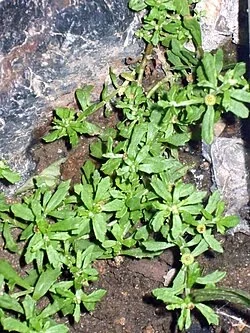
Sneezeweed (Centipeda minima) is a small, aromatic annual herb native to New Zealand, forming low, spreading mats only 50 to 200 mm high on bare mud and silt. Its bright green, kite-shaped leaves are sparingly toothed and release a pungent smell when crushed. It colonises the damp margins of lakes, ponds and slow streams, mainly in the North Island and on Raoul Island in the Kermadecs. Classed as Nationally Critical, it is a pioneer of open, disturbed wet ground and completes its whole life cycle within a single year, relying on a seed bank to reappear when conditions suit. Explore more wetland native plants in our native plant guide.
Plant Description
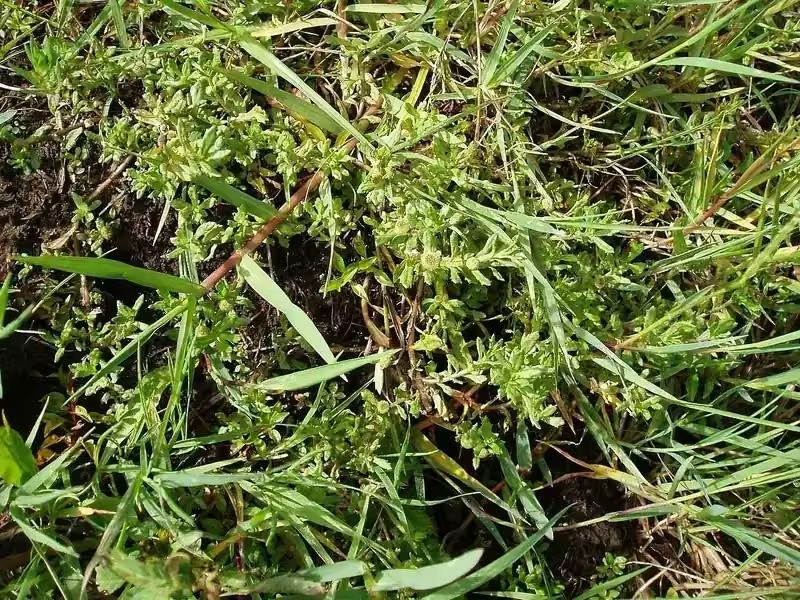
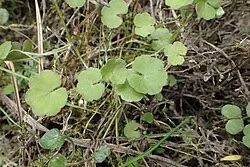
Centipeda minima , commonly known as Sneezeweed, is a small, aromatic annual herb indigenous to New Zealand. This prostrate species typically forms low-spreading mats, reaching about 200 mm in height and 250 mm in diameter. It is characterized by its bright green, kite-shaped leaves which are sparingly toothed towards the tips. The plant is easily overlooked due to its diminutive size but is recognized by its distinct pungent aroma when crushed. As an annual, it completes its life cycle within a single year, relying on a robust seed bank to reappear when environmental conditions are favorable.
Quick Facts
| Scientific Name | Centipeda minima |
|---|---|
| Height | 0.05-0.20 metres |
| Spread | 0.10-0.25 metres |
| Water Needs | High; requires damp to wet soil |
| Light | Full sun to partial shade |
| Frost Tolerance | Moderate |
| Salt Tolerance | Low to Moderate |
| Growth Rate | Fast (Annual) |
| Lifespan | 1 year (Annual) |
Climate Best Suited to
Sneezeweed thrives in warm-temperate to subtropical climates. In New Zealand, it is primarily found in the North Island and on Raoul Island in the Kermadecs. It prefers humid environments and is highly dependent on seasonal water fluctuations. It is not particularly frost-hardy and requires the warmth of spring and summer to germinate and flower.
Regional Suitability
| City | Climate Suitability |
|---|---|
| Auckland | Excellent |
| Wellington | Good (in sheltered spots) |
| Christchurch | Marginal (needs warmth) |
| Dunedin | Poor (too cold) |
| Invercargill | Poor (too cold) |
Plant Habitat
The natural habitat of Centipeda minima includes the muddy or silty margins of lakes, ponds, and slow-moving streams. It is a pioneer of disturbed, open ground where competition from larger, more aggressive plants is minimal. It often appears in areas where water levels have recently receded, such as drying pond edges or damp depressions in coastal dunes. It can also occasionally be found in human-modified environments like poorly draining lawns or muddy tracks.
Growing Requirements
Soil Requirements
This species requires soil that is consistently damp or wet. It can tolerate a range of soil types, including silt, clay, and sandy loams, provided they remain moist.
- Consistently damp or wet soil
- Tolerant of silt and clay
- Prefers open, disturbed ground
Light Requirements
Centipeda minima is intolerant of deep shade and requires bright, open positions to thrive and complete its rapid life cycle.
- Full sun preferred
- Partial shade tolerated
- Avoid competition from tall vegetation
Water Requirements
As a wetland-associated species, it has high water requirements and will quickly wither if the soil dries out completely.
- Must have constant moisture
- Tolerates periodic inundation
- Sensitive to drought
Planting and Establishing
Because it is a small annual, Centipeda minima is best established by sowing seeds directly onto prepared, moist soil. Choose a sunny spot at the edge of a pond or in a damp depression. Clear the area of any competing weeds or tall grasses to provide the open ground this species requires. Lightly press the seeds into the surface of the mud but do not bury them deeply, as they need light to germinate. If planting from pots, do so in late spring once the risk of frost has passed, ensuring the root ball stays moist during the transition.
Ecological Role
This species plays a niche role in wetland ecosystems, colonizing bare mud and providing a food source for specialized insects. It is a sensitive indicator of wetland health and water level dynamics.
Uses & Significance
Garden Uses
Sneezeweed is primarily grown by enthusiasts of rare native flora or for wetland restoration projects. It can be used as a low-growing filler around the edges of a garden pond or in a dedicated bog garden.
- Wetland restoration
- Pond margins
- Native bog gardens
Ecological Value
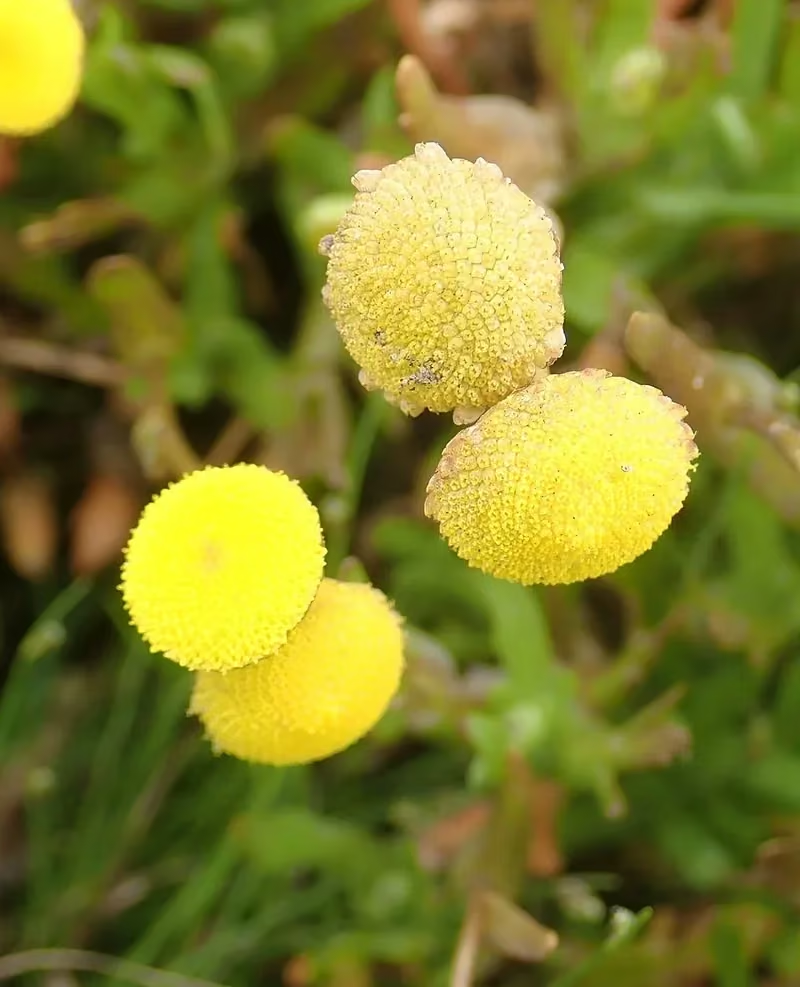
Its flowers provide nectar for small native flies and bees, and its seeds are a component of the diet for some wetland invertebrates.
- Nectar for native insects
- Indicator of wetland health
- Colonizer of bare mud
Landscaping Uses
While not a traditional landscaping plant, it offers a unique texture and aromatic quality for specialized native plantings. It is best used in "wild" areas where its natural self-seeding habit can be accommodated.
Seasonal Care Calendar
Spring
This is the primary time for germination. Keep the site clear of weeds and ensure the ground remains consistently damp as temperatures rise.
- Keep area weed-free
- Ensure consistent moisture
- Monitor for germination
Summer
During the peak of summer, the plant will flower and set seed. Avoid any disturbance to the soil during this time to allow the seed bank to replenish.
- Water during heatwaves
- Allow flowers to set seed
- Maintain open ground
Autumn
As an annual, the plant will naturally die back as weather cools. This is a good time to lightly disturb the soil surface to help seeds settle into the mud.
- Remove dead foliage
- Disturb soil surface slightly
- Ensure seeds are in contact with mud
Winter
The plant survives winter only as seeds in the soil (the seed bank). Ensure the site is not completely overgrown by perennials during the dormant season.
- Protect seed bank site
- Clear encroaching weeds
- Monitor water levels
When to Prune and How Much
Pruning is generally not required for this small annual. Any maintenance should focus on removing competing vegetation rather than trimming the Centipeda itself.
- Not required for the plant
- Focus on weed removal
- Clear dead stems in autumn
Because it is a short-lived species, allowing it to complete its full life cycle without interference is the best approach for long-term survival in your garden.
How to Grow Sneezeweed
Cultivating Sneezeweed ( Centipeda minima ) is a rewarding endeavor for any gardener interested in New Zealand's unique flora. This species can be propagated through several methods, each requiring specific conditions to ensure healthy growth and establishment. Successful propagation depends on mimicking the plant's natural environment and providing consistent care during the early stages of development.
From Seed
Propagation from seed is often the most effective way to produce a large number of Sneezeweed plants. Seeds should be collected when they are fully mature. Freshly collected seeds generally have higher germination rates than those that have been stored for long periods.
Collect dry flower heads in late summer. Rub the heads to release the fine seeds. Store in a cool, dry place or sow immediately.
- Sow on the surface of moist seed-raising mix.
- Keep moist and in a bright spot.
- Do not bury seeds deeply as they need light.
- Natural stratification often improves germination.
- Expect growth as spring temperatures rise.
Natural stratification in the soil over winter often improves germination rates in the spring.
From Cuttings
For those wishing to replicate specific characteristics of a parent plant, vegetative propagation via cuttings is the preferred method. This technique ensures that the new plants are genetically identical to the source. Semi-hardwood cuttings taken during the appropriate season usually yield the best results for this species.
While not a standard method for annuals, rooted pieces or side shoots can sometimes be used to quickly multiply plants during the growing season.
- Identify a side shoot that has touched the ground and rooted.
- Carefully sever and lift with a small amount of soil.
- Pot up into a very moist mix.
- Keep shaded until established.
Additional Methods
Depending on the growth habit of Sneezeweed, other methods such as division or layering might also be viable options. Division is particularly suitable for plants that form dense clumps or have spreading root systems, while layering can be used for species with trailing or flexible stems.
The most reliable "propagation" is simply maintaining the right conditions for the plant to self-sow naturally year after year.
- Ensure bare mud is available in spring.
- Maintain high soil moisture.
- Avoid using residual herbicides nearby.
Pests & Diseases
Generally not affected by many pests, although slugs and snails can be a threat to young seedlings. Its pungent aroma may act as a natural deterrent to some herbivores. Its main threat in a garden setting is excessive dryness or overgrowth by competing weeds.
Cultural Significance
In some cultures, Centipeda species have been used in traditional medicine, particularly for respiratory issues (hence the name Sneezeweed), though its use in New Zealand rongoā is less prominent.
- Traditional uses for respiratory issues
- Source of its common name 'Sneezeweed'
- Rare and threatened in many regions
Bonus Tip
To ensure you don't lose this rare plant, keep a small amount of seed in a cool, dry place as a backup in case your garden population fails to germinate one year.
Related Plants
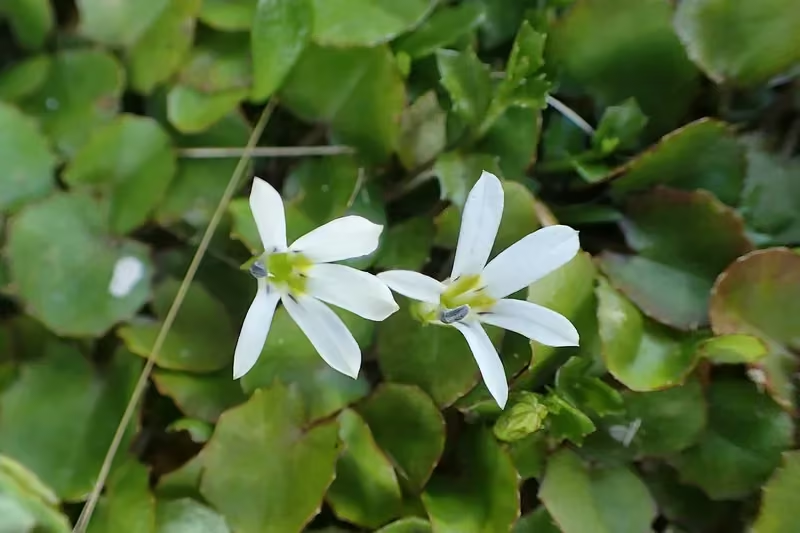
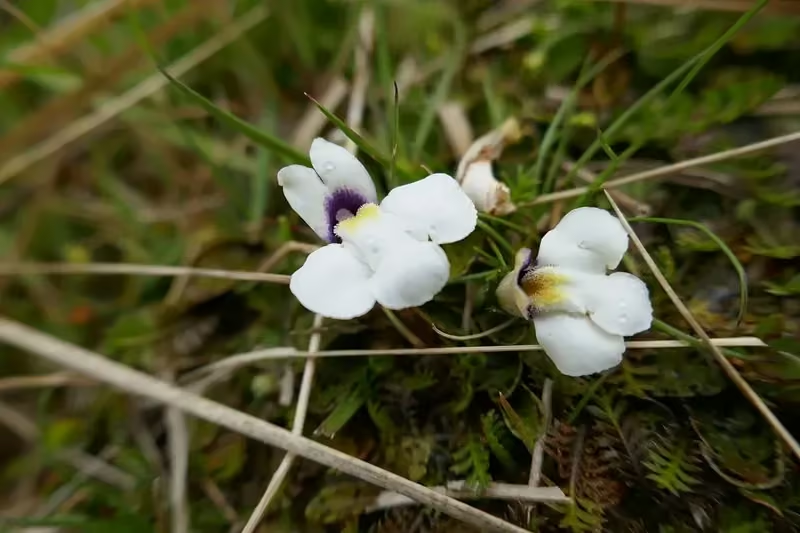
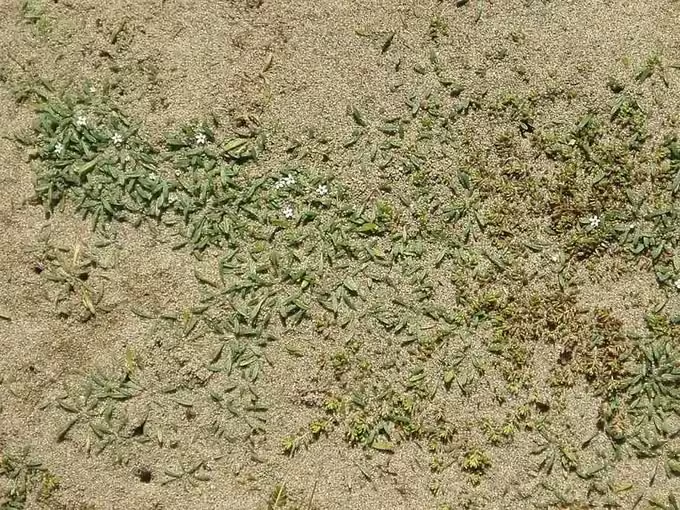
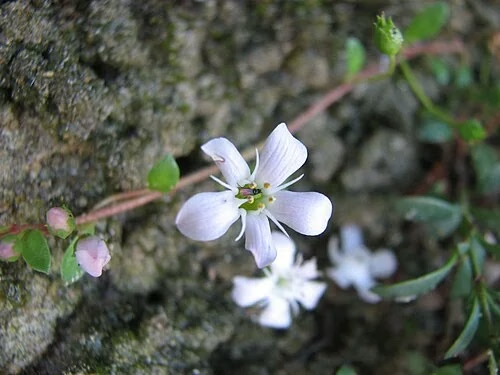
Explore other native plants that share similar characteristics or habitats with Sneezeweed ( Centipeda minima ), offering further insights into New Zealand's diverse flora. These related species provide context and opportunities for complementary planting in your garden.
Plant Conservation
Centipeda minima is considered "Threatened - Nationally Critical" in several regions of New Zealand, including Auckland. It is highly sensitive to habitat loss and competition from exotic weeds. Conservation efforts focus on protecting the ephemeral wetland sites where it occurs and maintaining the open, disturbed ground it requires to germinate.
Frequently Asked Questions
How tall does Sneezeweed grow?
Sneezeweed is a very low plant, reaching only about 50 to 200 mm (0.05 to 0.20 m) in height.
Where does Centipeda minima grow naturally?
It grows on the muddy margins of lakes, ponds and slow streams, mainly in the North Island and on Raoul Island.
Is Sneezeweed an annual or a perennial?
It is an annual, completing its full life cycle within a single year and regrowing from its seed bank.
Does Sneezeweed tolerate frost?
It has moderate frost tolerance and prefers warm-temperate to subtropical, humid conditions.
Sources and Further Reading
The botanical, growing, and conservation details for Sneezeweed (Centipeda minima) on this page draw on authoritative New Zealand plant references and citizen-science observation records. Consult the sources below for full technical records and the latest distribution data.