Mudwort
Limosella lineata
Last updated:
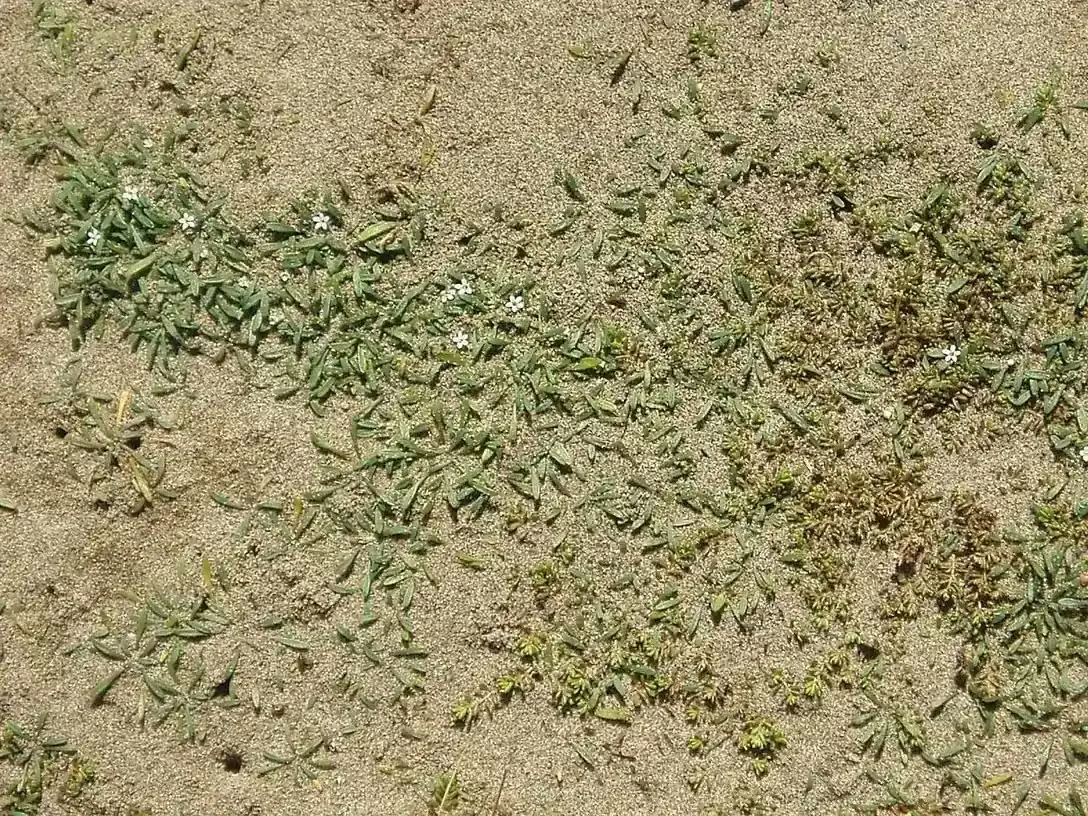
Mudwort (Limosella lineata) is a tiny semi-aquatic perennial herb of New Zealand wetlands, standing just 2 to 5 cm tall and creeping to around 20 cm across. It forms low tufts of linear leaves rising from a slender rhizome, with leaf length shifting from a few millimetres on damp mud to much longer when submerged. From spring to autumn it produces minute white to pale pink flowers on short stalks. Mudwort grows on the muddy and sandy margins of lakes, ponds and slow streams, and in low-salinity estuary edges, forming part of the delicate turf communities botanists use as a sign of healthy, intact wetland. It is very frost hardy and demands permanently saturated soil. Explore more wetland native plants in our native plant guide.
Plant Description
Identification and Physical Characteristics
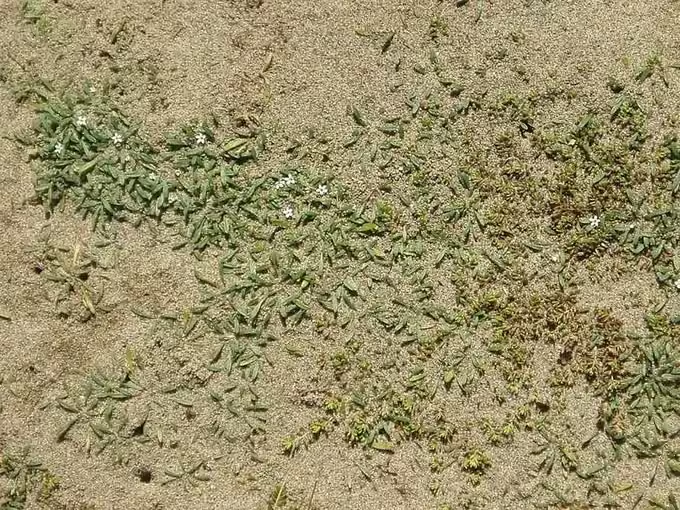
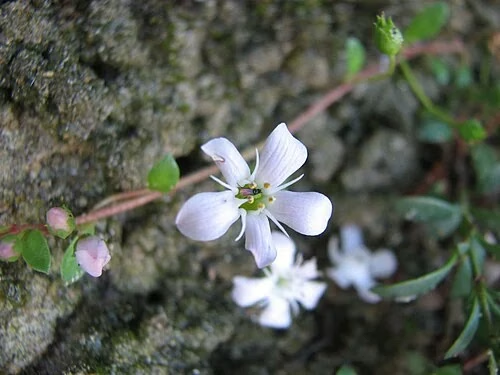
Limosella lineata , commonly known as Mudwort or Striped Mudwort, is a small, semi-aquatic perennial herb native to New Zealand and several other parts of the world. It is a member of the Scrophulariaceae family and is highly specialized for life in the transition zone between water and land. The plant forms low, tufted clusters of linear-cylindrical leaves that grow directly from a creeping rhizome. The leaf length is remarkably plastic, varying from just 5 mm when growing on damp mud to up to 60 mm when the plant is partially submersed in water. From spring through to autumn, Mudwort produces minute white or pale pink flowers on short stalks. These flowers are often solitary but can appear in small clusters, providing a subtle but intricate detail to the muddy margins they inhabit.
Quick Facts
| Scientific Name | Limosella lineata |
|---|---|
| Height | 2-5 cm |
| Spread | Up to 20 cm (creeping) |
| Water Needs | Very high; requires saturated soil |
| Light | Full sun to partial shade |
| Frost Tolerance | High |
| Salt Tolerance | Medium (estuarine varieties) |
| Growth Rate | Fast (in ideal conditions) |
| Lifespan | Perennial herb |
Climate Best Suited to
Mudwort is a hardy and cosmopolitan species found throughout New Zealand, from the far north to the subantarctic islands. It is well-adapted to temperate and lowland climates where it can find reliable freshwater or brackish environments. It is remarkably frost-hardy and can survive being frozen into ice during winter. It performs best in regions with high light levels but requires constant moisture to prevent the delicate foliage from drying out in the heat.
Regional Suitability
| City | Climate Suitability |
|---|---|
| Auckland | High |
| Wellington | High |
| Christchurch | High |
| Dunedin | High |
| Invercargill | High |
Plant Habitat
Natural Occurrence and Ecology
In New Zealand, Limosella lineata is a quintessential member of the wetland flora. Its preferred habitats include the muddy or sandy margins of lakes, ponds, and slow-flowing streams. It is frequently found in "turf" communities at the water's edge, alongside other small native herbs. It also colonizes damp hollows in sand dunes and the upper reaches of estuaries where salinity is low. Its ability to tolerate both total submersion and exposure on damp mud allows it to occupy a niche that many other plants cannot survive in.
Growing Requirements
Soil Requirements
Thrives in wet, muddy, or sandy soils rich in organic matter. It prefers acidic to neutral pH levels.
- Muddy/Silty
- Humus-rich
- Acidic preferred
Light Requirements
Best in full sun or very light partial shade. High light levels are necessary for successful flowering and seed production.
- Full Sun
- Bright light
Water Requirements
Requires permanently wet conditions. It can grow submersed or on saturated mud but cannot tolerate drying out.
- Saturated soil
- High humidity
Planting and Establishing
Establishment Guidance
To establish Mudwort in a garden setting, choose a pond margin or a bog garden that remains wet year-round. It is an excellent plant for the "shallows" of a water feature. If your soil is too dry, consider planting it in a container with no drainage holes, filled with a mix of loamy soil and compost. Space the small tufts about 10-15 cm apart; they will quickly spread via their runners to form a dense green mat. Planting is best done in spring when the water temperatures begin to rise.
Ecological Role
Biodiversity and Ecosystem Impact
Mudwort plays a vital role in stabilizing the fine sediments of lake and pond margins. Its low-growing mats help prevent erosion caused by wave action or heavy rainfall. Ecologically, it provides an important micro-habitat for various aquatic and semi-aquatic invertebrates, which in turn support native fish and bird populations. It also contributes to water quality by absorbing excess nutrients from the water and sediment, making it a valuable species for natural water filtration systems.
Uses & Significance
Garden Uses
In the garden, Limosella lineata is a perfect plant for creating a naturalistic "lawn" at the edge of a pond or within a bog garden. Its delicate texture is highly effective in small-scale water features.
- Pond margins
- Aquarium carpets
- Bog gardens
Ecological Value
A key component of native wetland turf communities, providing essential ecosystem services and supporting specialized aquatic biodiversity.
- Sediment stabilization
- Water filtration
- Invertebrate habitat
Landscaping Uses
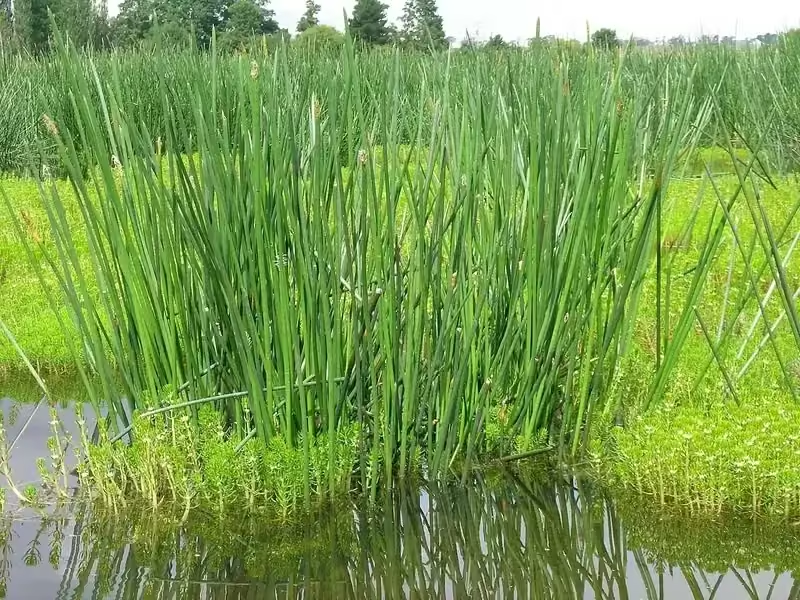
Landscape designers use Mudwort to create soft transitions between land and water. It is a favoured plant for eco-friendly stormwater systems and rain gardens where its ability to handle both saturation and fluctuating water levels is a major asset. Its subtle, bright green foliage provides a clean, refined look that complements the larger architectural forms of raupō or oioi .
Seasonal Care Calendar
Spring
Peak season for new leaf growth and expansion. Ensure the area remains saturated as temperatures rise and day length increases.
- Monitor water levels
- Divide if needed
Summer
Primary flowering period. Provide extra water if levels in ponds drop significantly. Occasional thinning can keep the mat healthy.
- Intensive watering
- Light thinning
Autumn
Growth slows. Collect mature seeds from the base of the leaves if propagation is desired.
- Seed collection
- Remove debris
Winter
The plant is dormant but very hardy. It can survive being covered by snow or frozen in shallow water.
- Cold hardy
- Minimal care
When to Prune and How Much
Mudwort requires very little pruning.
- Remove dead/yellowing leaves
- Thin out dense patches
Only prune to maintain the desired spread or to remove any buildup of algae that might be smothering the leaves in stagnant water.
How to Grow Mudwort
Successfully growing Mudwort ( Limosella lineata ) is a delightful project for anyone interested in native wetland plants or water gardening. This species is remarkably resilient and easy to cultivate, provided its fundamental need for constant, reliable moisture is met. Whether you are using it as a foreground plant in an aquarium or as a naturalistic edging for a garden pond, Mudwort will reward you with its fine texture and vibrant green colour.
The most straightforward way to propagate Mudwort is through division. Because the plant produces creeping runners that naturally root at the nodes, it is very easy to separate an established mat into smaller pieces. The best time for division is in early spring, just as the plant is entering its most active growth phase. Use a sharp knife or garden scissors to cut sections of the runner, ensuring each piece has at least one healthy tuft of leaves and a few visible roots. Press these divisions firmly into the surface of saturated, loamy soil. Keep them in a shaded, humid spot for the first few days to allow the roots to settle before moving them into brighter light.
From Seed
Growing from seed is also possible and is a great way to produce larger quantities of plants for ecological restoration projects. Collect the tiny capsules in late autumn once they have turned brown.
Sow the seeds onto the surface of a fine, pre-moistened seed-raising mix that is rich in peat. Do not cover the seeds with soil, as they require light to germinate. A very light dusting of fine grit can help stabilize them. Place the tray in a saucer of water to ensure the medium remains saturated at all times. Keep the tray in a warm, bright position.
- Collect mature capsules in autumn.
- Sow on moist peat-based mix.
- Maintain constant water saturation.
Germination is usually rapid if the seeds are fresh. Once the seedlings have reached about 2 cm in height, they can be pricked out into individual pots and grown on for a season.
Pests & Diseases
Mudwort is generally free from major pests and diseases. Its aquatic nature deters many common garden insects. However, slugs and snails can be an issue on the damp mud where the plant grows. In aquariums or very stagnant ponds, some fungal rot can occur if the water quality is poor. Ensuring good light levels and some degree of water movement will help prevent most issues.
Cultural Significance
Mudwort is a significant member of New Zealand's indigenous wetland flora. While it doesn't have the broad cultural profile of larger species like Harakeke, it is respected by botanists and ecologists as an indicator of healthy, intact wetland turf communities. Its presence in a lake margin is often a sign of a relatively unmodified ecosystem. It represents the intricate, small-scale beauty of New Zealand's freshwater heritage and is a valuable species for modern cultural restoration projects that aim to protect and enhance our native waterways.
- Indicator of healthy wetlands
- Indigenous botanical heritage
- Specialized turf community specialist
Bonus Tip
For an extra lush look in a bog garden, plant Mudwort alongside Glossostigma elatinoides . The two species have similar growth habits but slightly different leaf shapes, creating a rich, textured green carpet that will perfectly frame larger wetland plants like oioi .
Related Plants
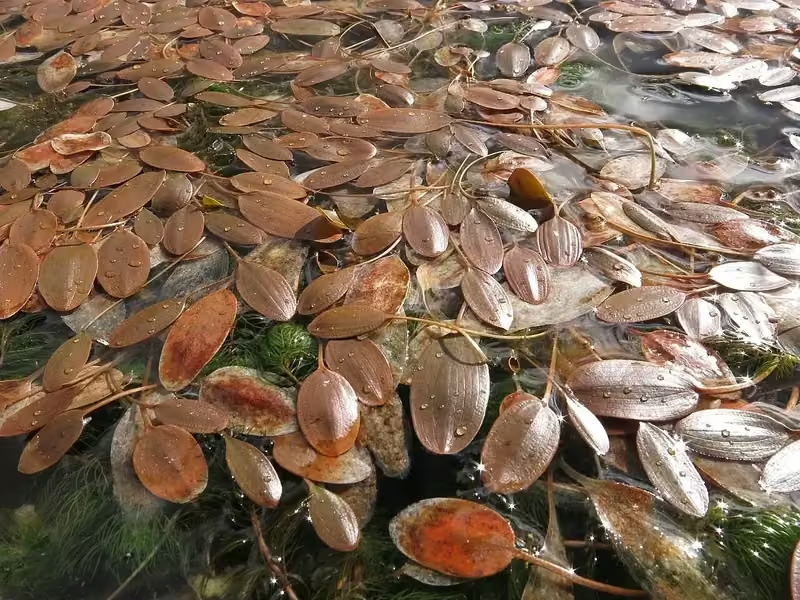
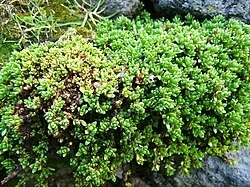
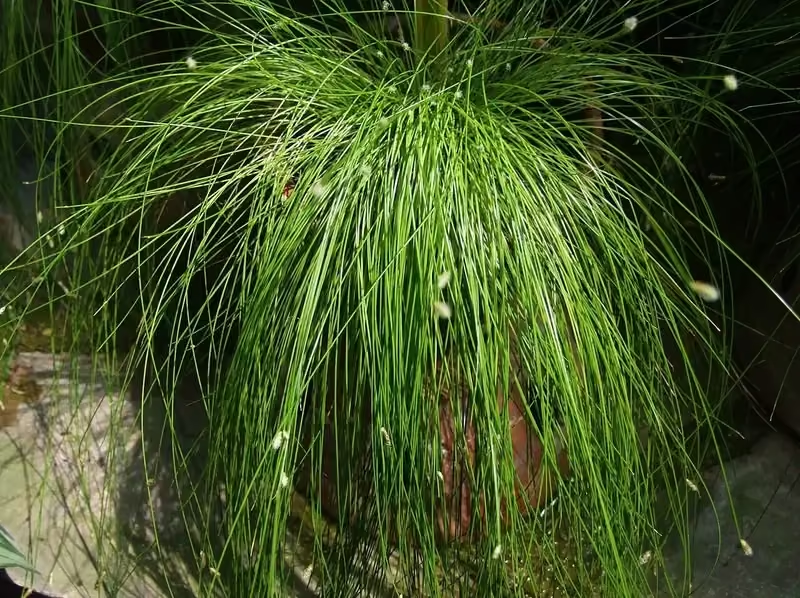
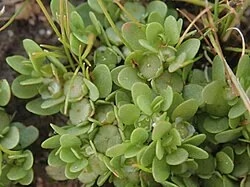
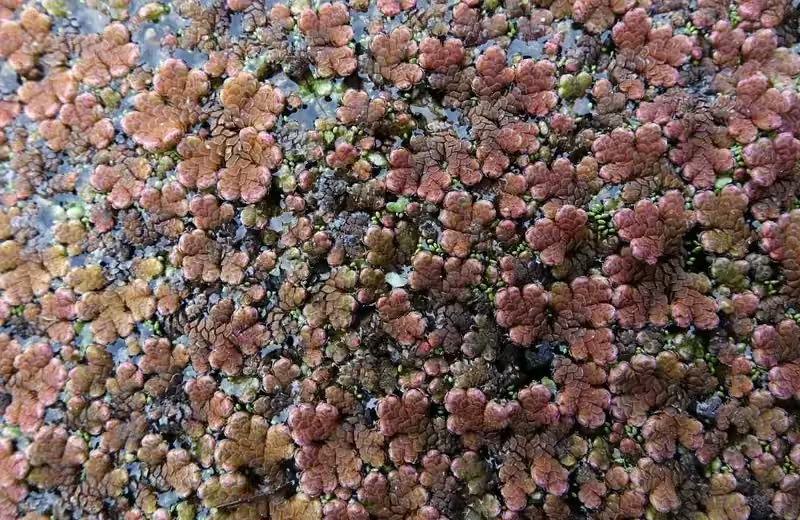
Explore other native plants that share similar characteristics or habitats with Mudwort ( Limosella lineata ), offering further insights into New Zealand's diverse flora. These related species provide context and opportunities for complementary planting in your garden.

Plant Conservation
Conservation Status and Threats
Currently classified as 'Not Threatened', Limosella lineata remains common in suitable wetland habitats. However, its small size makes it easily overlooked and vulnerable to habitat modification, drainage, and the encroachment of invasive aquatic weeds. Protecting the fragile muddy margins of our lakes and streams is essential for ensuring that Mudwort continues to thrive in the wild.
Frequently Asked Questions
How tall does Mudwort grow?
Mudwort is a very low herb, reaching only 2 to 5 cm in height and creeping up to about 20 cm across.
Where does Mudwort grow naturally?
It grows on muddy or sandy margins of lakes, ponds and slow streams, and in low-salinity estuary edges throughout New Zealand.
Does Mudwort tolerate frost?
Yes, it is highly frost tolerant and can survive being frozen in its wetland habitat.
What growing conditions does Mudwort need?
It needs permanently saturated soil and full sun to partial shade, thriving in the wet transition zone between water and land.
Sources and Further Reading
The botanical, growing, and conservation details for Mudwort (Limosella lineata) on this page draw on authoritative New Zealand plant references and citizen-science observation records. Consult the sources below for full technical records and the latest distribution data.