Brass Buttons
Cotula coronopifolia
Last updated:
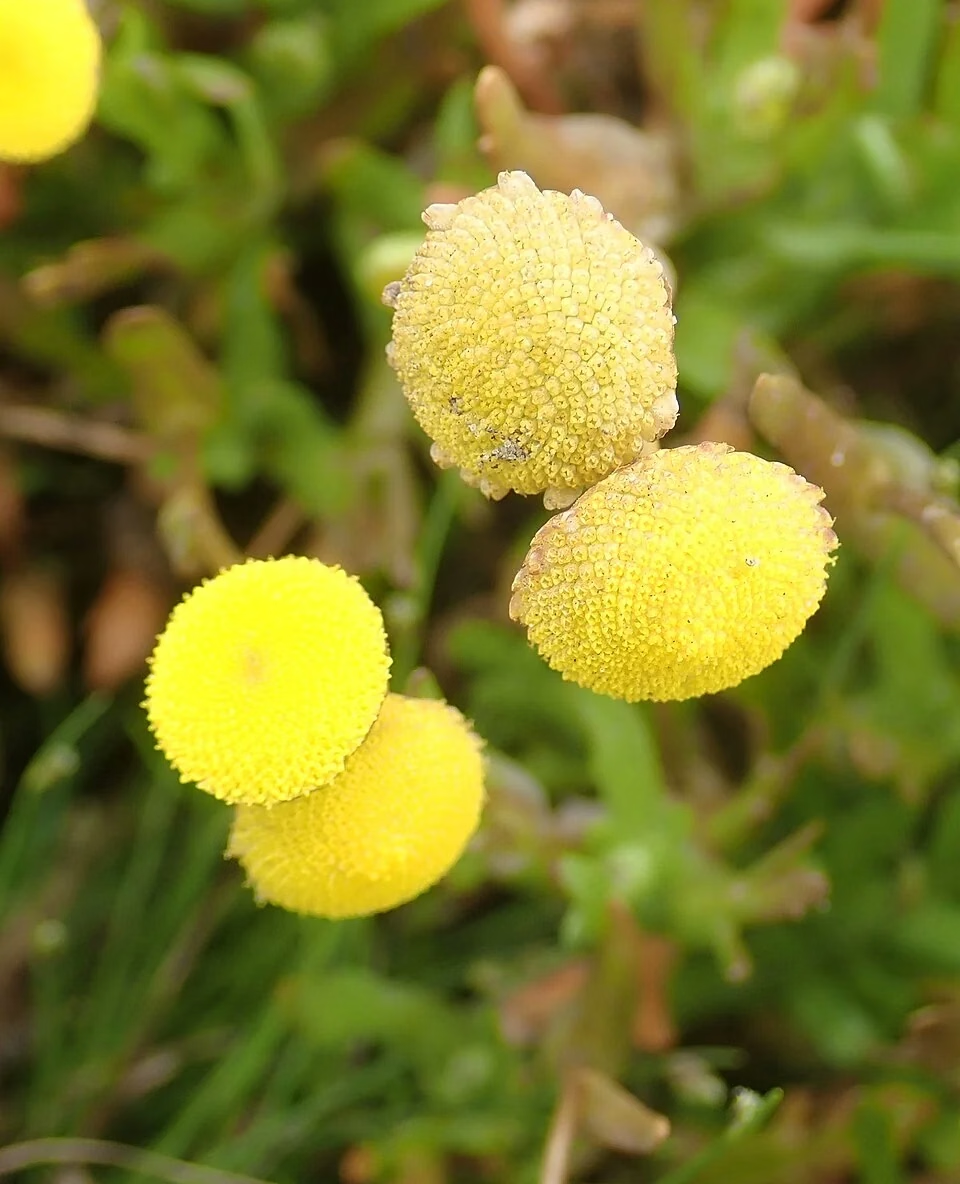
Brass Buttons (Cotula coronopifolia) is a low, creeping herb of New Zealand's coastal wetlands, growing under 30 cm tall and spreading 50-100 cm to form dense mats that root at the nodes. Its fleshy bright-green leaves are aromatic, and it is best known for its bright yellow, disc-shaped flower heads that resemble small hard buttons with no petals. Highly salt-tolerant, it grows in salt marshes, estuaries and brackish margins throughout the North and South Islands. Fast-growing and adaptable, it stabilises soft wet ground and thrives in waterlogged, sunny sites. Explore more wetland native plants in our native plant guide.
Plant Description
Identification and Physical Characteristics
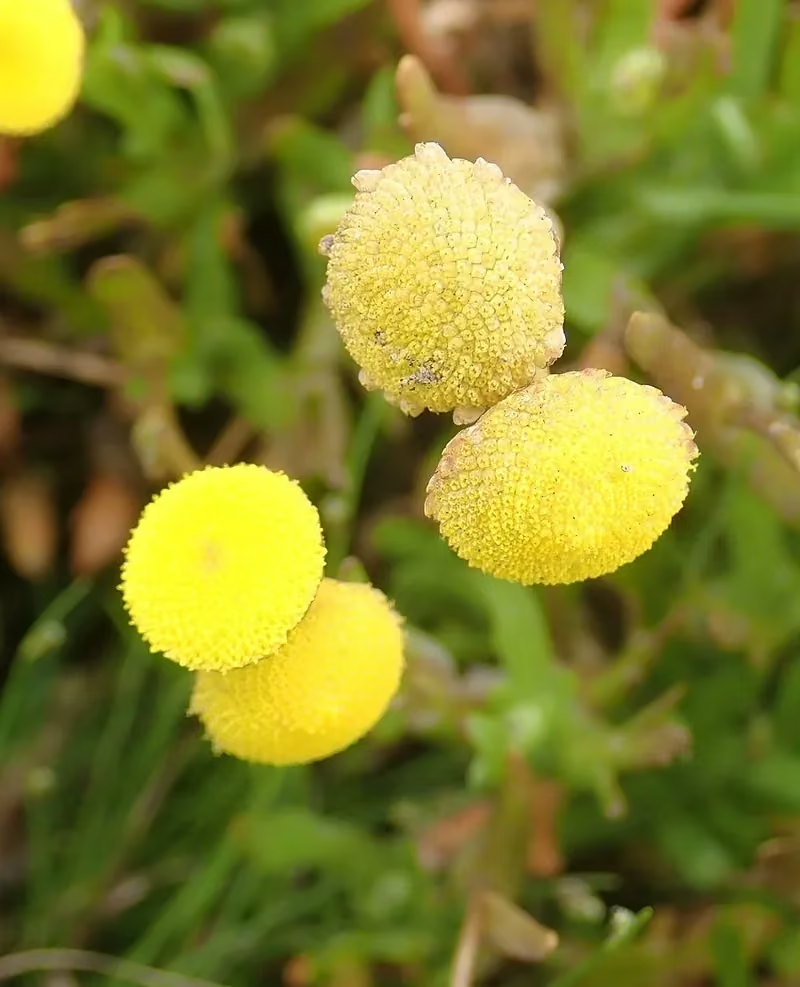
Cotula coronopifolia is an annual or short-lived perennial herb that typically grows to a height of about 30 cm. It features thick, spongy, and often reddish-tinged stems that spread across the ground, rooting readily at the nodes to form dense, low-growing mats. The leaves are fleshy, bright green, and variable in shape, ranging from narrow-linear to lobed or pinnatifid. The most striking feature of the plant is its flower head: a bright yellow, disc-shaped structure that lacks ray florets (petals), giving it the appearance of a small, hard button. The entire plant is highly aromatic and releases a pungent, somewhat spicy scent when crushed or handled. Its waxy leaf cuticle is an adaptation that helps it retain moisture in saline conditions.
Quick Facts
| Scientific Name | Cotula coronopifolia |
|---|---|
| Height | Up to 30 cm (Creeping) |
| Spread | 50-100 cm |
| Water Needs | High (Waterlogged) |
| Light | Full Sun to Partial Shade |
| Frost Tolerance | Moderate |
| Salt Tolerance | High |
| Growth Rate | Fast |
| Lifespan | Annual to Short-lived Perennial |
Climate Best Suited to
Brass Buttons is highly adaptable but performs best in temperate coastal climates. It is widespread throughout New Zealand, inhabiting both the North and South Islands. It thrives in regions with high humidity and is uniquely adapted to withstand saline conditions, making it a common sight in estuaries and along salt-marshes. While it can tolerate light frosts, it is essentially a plant of the water's edge, relying on the thermal stability of nearby water bodies to moderate extreme temperature changes.
Regional Suitability
| City | Climate Suitability |
|---|---|
| Auckland | Highly Suitable |
| Wellington | Highly Suitable |
| Christchurch | Highly Suitable |
| Dunedin | Suitable |
| Queenstown | Suitable (In wetland features) |
| Invercargill | Highly Suitable |
Plant Habitat
Natural Occurrence and Ecology
This species is a specialist of the "marginal" zone-where the land meets the water. Its natural habitats include muddy, often anoxic wetlands, salt marshes, and estuaries. It is highly salt-tolerant and is frequently found growing in brackish water or along sandy shorelines just above the high-tide mark. In New Zealand, it also colonizes seasonally wet inland depressions and the edges of freshwater ponds and lakes. It is a pioneer species, quickly occupying bare, wet mud where other plants struggle due to salinity or low oxygen levels in the substrate.
Growing Requirements
Soil Requirements
Prefers wet, loamy soils rich in organic matter. It can tolerate heavy clay and brackish mud.
- Wet to saturated soil
- Tolerates poor drainage
- High salt tolerance
Light Requirements
Requires bright, direct sunlight to produce its vibrant yellow flowers. Can tolerate partial shade.
- Full sun (best)
- Partial shade
- High light intensity
Water Requirements
Must be kept consistently wet. It is ideally suited to sites where the roots are submerged or the soil is permanently damp.
- Constant moisture
- Waterlogged tolerant
- Brackish water tolerant
Planting and Establishing
Establishment Guidance
Establishing Brass Buttons is easily achieved due to its rapid growth and rooting ability. When planting from pots, ensure the site is saturated. Space plants about 30 cm apart; their creeping stems will quickly bridge the gaps. It is best planted in spring to allow the plant to establish before its main flowering period in summer. If planting into a pond margin, ensure the crown is not submerged more than 5 cm deep. Once the stems touch the ground, they will root at the nodes, creating a stable and expanding mat that helps anchor loose, wet soil.
Ecological Role
Biodiversity and Ecosystem Impact
Cotula coronopifolia plays a significant role in stabilizing wet, soft substrates in both freshwater and saline environments. By forming dense mats, it helps prevent soil erosion on riverbanks and estuary margins. The flowers are attractive to a wide variety of native insects, including flies and beetles, which act as pollinators. In saline environments, it is one of the few species that can thrive in the transition zone, providing essential cover and organic matter for specialized wetland invertebrates and contributing to the overall health of the coastal ecosystem.
Uses & Significance
Garden Uses
A popular choice for the margins of garden ponds, water features, and in damp, low-lying spots where few other plants will grow. Its bright yellow flowers provide a long-lasting and cheerful display.
- Pond margins
- Bog gardens
- Coastal plantings
Ecological Value
Supports native pollinators and contributes to the stabilization of vulnerable wetland and coastal soils. It is an important pioneer species for ecological restoration.
- Erosion control
- Pollinator nectar
- Soil building
Landscaping Uses
Landscapers use Brass Buttons to provide a splash of consistent colour in wet areas. It is particularly effective in coastal-themed designs and in large-scale wetland restoration where its rapid colonization helps suppress more aggressive exotic weeds. Its bright yellow "buttons" provide a sharp visual contrast to the browns and greens of native sedges and rushes.
Seasonal Care Calendar
Spring
Main establishment and growth phase. This is the best time for planting out or propagating from rooted runners.
- Planting
- Divide established mats
Summer
Peak flowering season. Ensure the plant does not dry out if the water table drops.
- Monitor water levels
- Observation
Autumn
Growth slows. The plant may produce seeds that will germinate in the following spring.
- Seed collection
- Clean up dead material
Winter
Often dies back significantly or acts as a dormant perennial. Minimal maintenance is required.
- Dormant phase
- Protect from traffic
When to Prune and How Much
Brass Buttons requires almost no pruning. Its low-growing habit means it remains tidy without regular trimming.
- No regular pruning
- Remove spent flowers
You may choose to pull back the creeping stems if they begin to overgrow other smaller wetland plants. A light "tidy up" in late winter to remove dead stems will encourage fresh growth in the spring.
How to Grow Brass Buttons
Cultivating Brass Buttons ( Cotula coronopifolia ) is an easy and rewarding task, especially for those with damp or low-lying areas in their garden. This species is naturally designed to colonize wet, open environments, making it one of the most resilient native wetland herbs. Success depends primarily on providing a site that remains consistently wet and receiving as much direct sunlight as possible. Because it is a fast-growing pioneer plant, it can be established very quickly to provide a vibrant ground cover. Whether you are using it to beautify a small garden pond or as part of a larger coastal restoration project, Brass Buttons responds well to basic care and can handle the challenging conditions of salty or oxygen-poor soils.
From Rooted Runners
This is the fastest and most reliable method of propagation. Because the stems naturally root at the nodes as they creep, an established mat is full of ready-to-plant individuals.
The best time for this is in early spring or autumn when natural moisture levels are high.
- Locate a healthy, established mat of Brass Buttons.
- Use a sharp trowel to cut out a small clump (about 10 cm square) that includes at least one rooted node.
- Prepare the new site by clearing away competing weeds and loosening the wet soil.
- Press the clump firmly into the mud, ensuring the roots are well-covered.
- Water initially to settle the plant, although natural saturation is usually sufficient.
- The plant will begin to spread its runners within a few weeks of establishment.
From Seed
Sowing from seed is also effective, as this plant is a prolific self-seeder in the wild.
- Collect the dry flower heads in late summer and shake out the tiny seeds into a paper bag.
- Surface-sow the seeds onto a moist, peat-based seed-raising mix in early spring.
- Do not bury the seeds deeply; a very light covering of fine grit or sand is enough.
- Maintain high humidity and bright, indirect light until germination occurs.
- Prick out seedlings once they are large enough to handle and grow on in small pots until they are ready for the garden.
Additional Methods
Stem cuttings can also be used. Simply snip a length of healthy reddish stem and place it in a glass of water. Within a week, roots will begin to emerge from the joints. This is a great way to quickly produce new plants for a school project or small water feature. Regardless of the method, always ensure the young plants are never allowed to dry out during their initial establishment phase.
Pests & Diseases
Generally resistant to most pests. Slugs and snails may occasionally nibble on the fleshy leaves in very humid environments. In stagnant freshwater with poor airflow, it can be susceptible to fungal moulds. Ensure there is some movement in the air or water to maintain plant health.
Cultural Significance
While often grouped with other small herbs as 'rimurimu' or 'waewae kōhatu', Cotula coronopifolia is a familiar part of the New Zealand coastal experience. Its bright yellow flowers are a nostalgic symbol of the New Zealand shoreline for many. It represents the toughness and beauty of the native flora that occupies the harsh, saline boundaries of our islands.
- Coastal heritage symbol
- Resilient native herb
Bonus Tip
Brass Buttons is an excellent plant for a "floating garden" or a rain garden. If you have a damp spot where water pools after rain, this plant will thrive there and provide a burst of yellow colour when most other garden plants might be struggling with the wet soil.
Related Plants
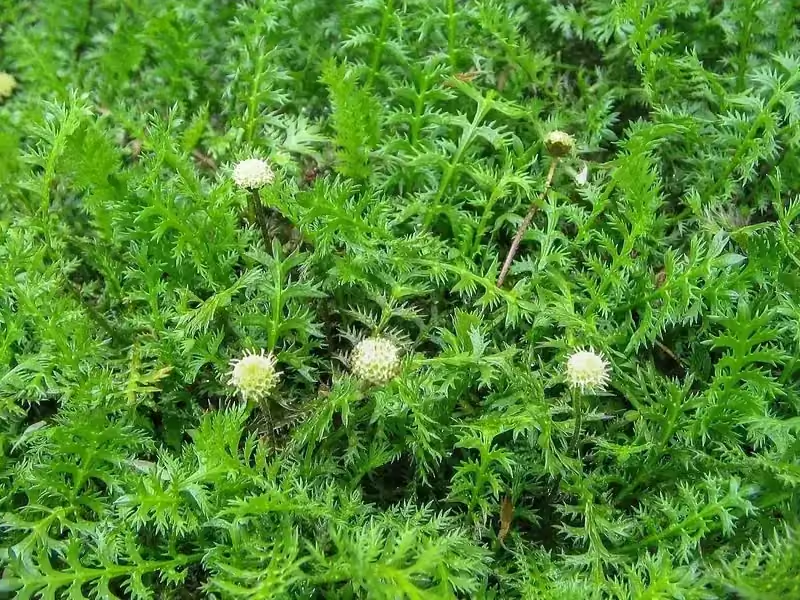
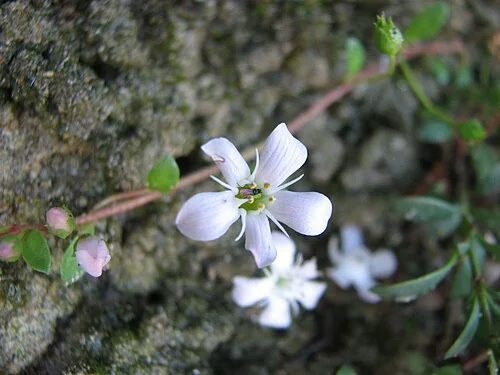
Explore other native plants that share similar characteristics or habitats with Brass Buttons ( Cotula coronopifolia ), offering further insights into New Zealand's diverse flora. These related species provide context and opportunities for complementary planting in your garden.
Plant Conservation
Conservation Status and Threats
Cotula coronopifolia is currently listed as Not Threatened in New Zealand. It is a common and widespread species that often thrives in habitats modified by human activity. However, it is an important part of the native coastal flora and its preservation in natural estuary and salt-marsh environments is vital for the health of those ecosystems. Continued protection of New Zealand's remaining wetlands ensures that Brass Buttons will continue to brighten our shorelines.
Frequently Asked Questions
How tall does Brass Buttons grow?
Brass Buttons is a low creeping herb reaching up to about 30 cm tall and spreading 50-100 cm.
Does Brass Buttons tolerate salt?
Yes, it has high salt tolerance and commonly grows in salt marshes, estuaries and brackish water.
How fast does Brass Buttons grow?
It is a fast-growing plant that quickly forms dense mats in wet ground.
Where does Brass Buttons grow naturally?
It grows in muddy wetlands, salt marshes and estuary margins throughout New Zealand.
Sources and Further Reading
The botanical, growing, and conservation details for Brass Buttons (Cotula coronopifolia) on this page draw on authoritative New Zealand plant references and citizen-science observation records. Consult the sources below for full technical records and the latest distribution data.