Two-Tipped Sedge
Carex lachenalii
Last updated:
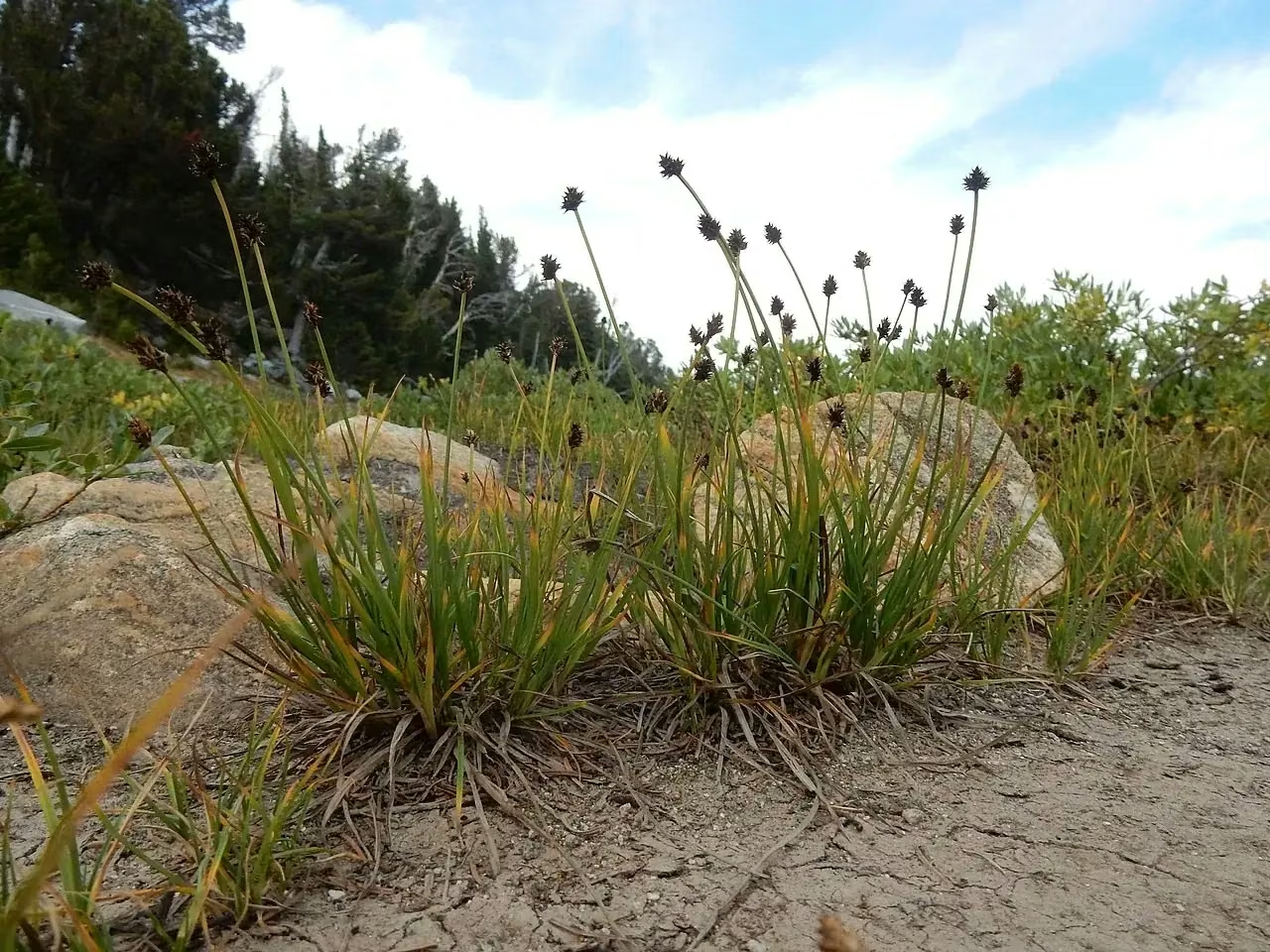
Carex lachenalii, the Two-Tipped Sedge, is a small, wiry alpine sedge that forms green to glaucous-green tufts arising from a deeply rooted rhizome. It is very short, typically only 3 to 20 cm tall, with narrow leaves under 2 mm wide and pliable triangular culms that curve under a compact, dark red-brown seed head. Endemic to the South Island from Nelson to Fiordland, it is an obligate wetland plant of high-elevation seepages, cushion bogs and mossy alpine stream margins, usually above 1000 metres. Very hardy and slow-growing, this naturally uncommon species is adapted to snow, freezing temperatures and constant moisture. Explore more New Zealand alpine plants in our native plant guide.
Plant Description
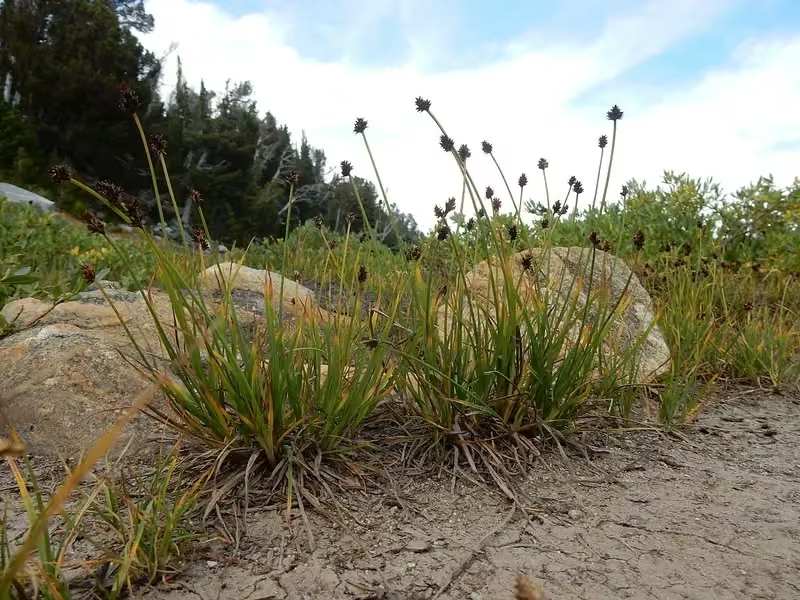
Carex lachenalii forms small, wiry, green to glaucous-green tufts that arise from a deeply rooted rhizome. The plant is quite short, typically reaching only 3 to 20 cm in height. Its leaves are narrow (less than 2 mm wide) and usually shorter than the flowering stems. The culms (stems) are triangular in cross-section and pliable, often curving under the weight of the seed head. The inflorescence is a compact, dark red-brown cluster at the tip of the stem, composed of 2-4 small spikes. This distinctive dark head makes it recognizable in its sparse alpine habitat.
Quick Facts
| Scientific Name | Carex lachenalii |
|---|---|
| Height | 0.03 - 0.2 m |
| Spread | 0.1 - 0.2 m |
| Water Needs | Very High |
| Light | Full Sun |
| Frost Tolerance | Very Hardy |
| Salt Tolerance | Low |
| Growth Rate | Slow |
| Lifespan | Perennial |
Climate Best Suited to
This species is strictly an alpine to subalpine specialist, thriving in the cold, wet climates of the South Island high country. It is adapted to survive heavy snowfall, freezing temperatures, and constant moisture. It is generally not suitable for warm, humid, or lowland climates, where it will struggle to thrive. Its cultivation is best attempted in regions that can replicate the cool, airy conditions of the Southern Alps.
Regional Suitability
| City | Climate Suitability |
|---|---|
| Auckland | Not Suitable |
| Wellington | Challenging |
| Christchurch | Suitable (in cool spots) |
| Dunedin | Very Suitable |
| Queenstown | Very Suitable |
| Invercargill | Very Suitable |
| Hamilton | Not Suitable |
Plant Habitat
Carex lachenalii subsp. parkeri is endemic to the South Island, found from Nelson south to Fiordland. It occupies a specific niche in high-elevation environments, typically above 1000 metres. It is an obligate wetland plant, found almost exclusively in permanently damp seepages, cushion bogs, and along the mossy margins of alpine streams. It often grows in association with other cushion plants and small sedges in these fragile ecosystems.
Growing Requirements
Soil Requirements
Requires constantly moist, peaty, or gritty alpine soils.
- Peaty loam
- Wet grit
- Poor drainage tolerance
Light Requirements
Prefers open, full sun positions but with cool roots.
- Full Sun
- Alpine Light
Water Requirements
Must never be allowed to dry out; naturally a bog plant.
- Very high water needs
- Continuous moisture
Planting and Establishing
Cultivating Carex lachenalii is a specialist endeavor suited to rock garden or alpine trough enthusiasts. Mimic its natural habitat by using a planting mix that retains moisture but allows for some aeration, such as a mix of peat, sphagnum moss, and grit. Plant in a cool, semi-shaded spot if attempting to grow in lower altitudes to protect it from heat stress. Ensure the growing medium remains permanently damp.
Ecological Role
In its natural environment, Carex lachenalii is a component of the diverse alpine cushion bog communities. It helps stabilize wet, peaty soils and provides micro-habitat for alpine invertebrates. Its presence contributes to the structural integrity of these sensitive wetland systems, which regulate water flow from high-altitude catchments.
Uses & Significance
Garden Uses
Primarily of interest to collectors of rare native plants and alpine gardeners.
- Alpine troughs
- Rock gardens (wet areas)
- Botanical collections
Ecological Value
An indicator species for healthy high-alpine wetland systems.
- Biodiversity support
- Alpine ecosystem integrity
Landscaping Uses
Due to its small size and specific requirements, Carex lachenalii is not used in general landscaping. However, for specialized alpine gardens or "scree" features that incorporate a water source, it offers a unique, authentic touch of the New Zealand high country. It is best viewed at close range, such as in a raised trough or pot.
Seasonal Care Calendar
Spring
Check for new growth.
- Ensure constant moisture
- Remove winter debris
Summer
Critical period for hydration.
- Water daily
- Protect from scorching sun
Autumn
Prepare for dormancy.
- Reduce feeding (if any)
- Maintain dampness
Winter
Hardy to cold.
- Protect from root rot if stagnant
- Allow natural dormancy
When to Prune and How Much
Carex lachenalii requires very little pruning. In nature, old foliage decomposes into the peat. In cultivation, you may gently comb out or trim away dead brown leaves in early spring to keep the tuft looking tidy. Avoid cutting back into the green, active growth, as the plant grows slowly and recovery can be prolonged.
- Remove dead leaves only
- Do not hard prune
If the plant becomes congested after several years, it can be lifted and carefully divided, which also serves to rejuvenate the clump.
How to Grow Two-Tipped Sedge
Growing Carex lachenalii is a specialized pursuit, rewarding those who can replicate the demanding conditions of a New Zealand alpine bog. Unlike common garden sedges, this species does not tolerate drought or excessive heat. Success depends on maintaining a cool root run and high humidity. Propagation information is sparse due to its rarity in cultivation, but standard methods for alpine sedges apply. Patience is key, as this plant has a naturally slow growth rate adapted to a short growing season.
From Seed
Propagation from seed is the most likely method for increasing numbers without disturbing an existing plant. Seeds should be collected in late summer when the seed heads darken and begin to dry.
Fresh seed sown immediately generally yields the best results.
- Sow fresh seeds onto a surface of fine, moist, peaty seed-raising mix. Do not cover deeply.
- Place the tray in a cold frame or a sheltered, cool spot outdoors. They may require a period of cold stratification (winter chill) to break dormancy.
- Keep the growing medium constantly moist. Covering with a pane of glass can help maintain humidity.
- Germination may be slow and erratic, occurring the following spring.
- Prick out seedlings carefully once they are large enough to handle, disturbing the roots as little as possible.
Grow young plants on in a cool, shaded nursery area for at least a year before planting out.
From Cuttings (Division)
Division is a practical method for established clumps that are healthy and vigorous. This ensures the new plants are true to type. It is best performed in early spring, just as the plant begins its growth cycle, or in autumn.
Handle the delicate root systems with care during division.
- Lift the plant gently from its container or garden spot.
- Tease the rhizomes apart to separate the clump into smaller sections. Each division must have a good portion of healthy roots and foliage.
- Replant the divisions immediately into fresh, suitable soil mix (peat/grit).
- Water thoroughly and keep in a cool, shaded environment until established.
Additional Methods
The primary "method" for success with Carex lachenalii is environmental control.
Replicating alpine conditions is essential.
- Use a dedicated alpine trough or pot to control soil conditions.
- Ensure the site receives bright light but is protected from the hottest midday sun.
- Consider using an automated irrigation system to ensure the "wetland" condition is never lost.
Pests & Diseases
Carex lachenalii is relatively pest-free in its natural habitat. In cultivation, it may be susceptible to aphids or mealybugs if the plant is stressed by heat or dryness. Fungal issues can arise if there is poor air circulation combined with high humidity, so ensuring good airflow around the foliage while keeping the roots wet is important.
Cultural Significance
As a naturally uncommon alpine species, Carex lachenalii holds significance as part of New Zealand's unique high-country flora. It contributes to the intrinsic value of our alpine wetland ecosystems, which are often fragile and slow to recover from disturbance.
- Rare alpine specialist
- Component of fragile bog ecosystems
Bonus Tip
Create a "mini-bog" in a sink or trough using a liner to retain water at the bottom, topped with a peat and grit mix, to successfully grow this moisture-loving alpine gem.
Related Plants
Explore other native plants that share similar characteristics or habitats with Two-tipped Sedge ( Carex lachenalii ), offering further insights into New Zealand's diverse flora. These related species provide context and opportunities for complementary planting in your garden. For another native grass or sedge, explore Sea Sedge.
Carex decurtata
Carex decurtata
A unique South Island native sedge forming dense tufts of bright green foliage.
Learn more
Enys's Sedge
Carex enysii
A rare, diminutive alpine sedge forming compact turfs, highly prized by native plant collectors.
Learn more
Carex Talbotii
Carex talbotii
A unique diminutive sedge with intense copper to purplish-bronze foliage, found in alpine wetland turfs.
Learn more
Star Sedge
Carex echinata
A delicate alpine sedge known for its unique star-shaped fruit clusters and fine, tufted foliage.
Learn more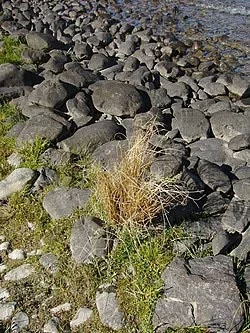
Carex Kaloides
Carex kaloides
A distinctive South Island sedge with striking orange-yellow tufts, ideal for wetland and tussock gardens.
Learn more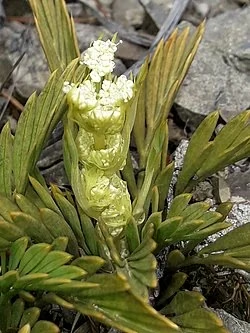
Little Speargrass
Aciphylla monroi
Compact alpine perennial forming small green rosettes with sharp leaves and attractive flower umbels.
Learn more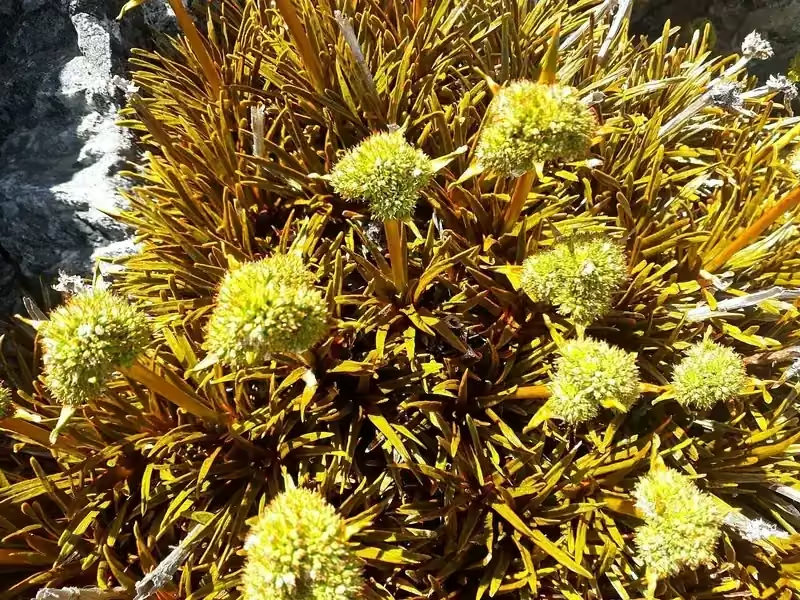
Cushion Speargrass
Aciphylla simplex
Specialized alpine perennial forming dense, prickly cushions on high-altitude fellfields.
Learn more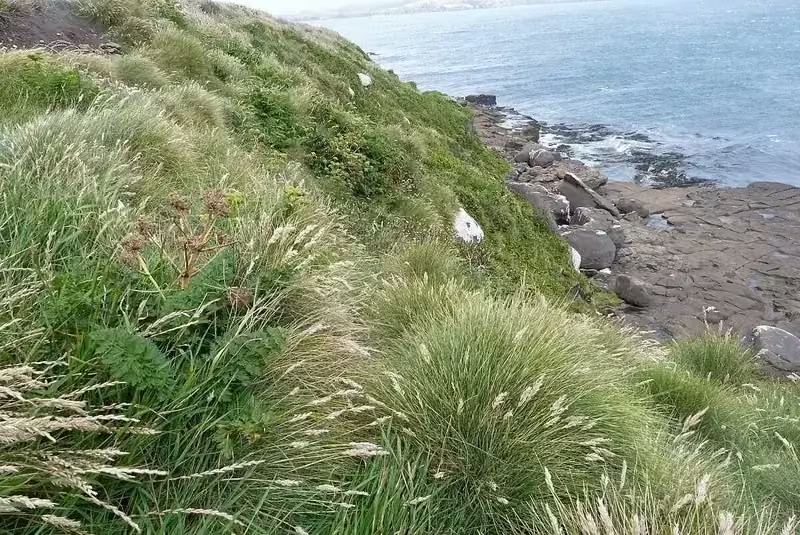
Blue Shore Tussock
Poa astonii
A compact tussock grass endemic to the South Island, ideal for alpine and subalpine gardens.
Learn morePlant Conservation
Carex lachenalii is classified as "Naturally Uncommon" (Sparse) in New Zealand. While not currently under immediate threat, its restricted habitat and small population sizes make it vulnerable to changes in the alpine environment, such as damage from browsing animals or climate change affecting wetland hydrology. Conservation efforts focus on protecting these pristine alpine habitats.
Frequently Asked Questions
How tall does Carex lachenalii grow?
Two-Tipped Sedge is very short, typically reaching only 3 to 20 cm in height.
Where does Carex lachenalii grow naturally?
It grows in South Island alpine wetlands from Nelson to Fiordland, usually above 1000 metres in seepages and cushion bogs.
Is Carex lachenalii frost-hardy?
Yes, it is very hardy, adapted to heavy snowfall, freezing temperatures and constant moisture.
Can Carex lachenalii grow in lowland gardens?
No, it is an alpine specialist and generally struggles in warm, humid or lowland climates.
Sources and Further Reading
The botanical, growing, and conservation details for Two-Tipped Sedge (Carex lachenalii) on this page draw on authoritative New Zealand plant references and citizen-science observation records. Consult the sources below for full technical records and the latest distribution data.