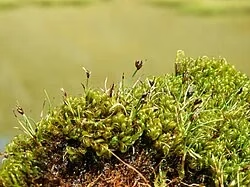
Enys's Sedge
Carex enysii
Last updated:
Enys's Sedge (Carex enysii) is one of New Zealand's smallest Carex species, a shortly rhizomatous perennial that forms dense, low-growing turfs with flowering stems typically only 5-15 cm tall. Its very fine, hair-like leaves are about the length of the stems and deep green to yellowish-green, and in summer it produces a single terminal spike of tightly clustered flowers with pale-brown, beaked fruit. A cold-climate alpine specialist, it grows on open, moist stony ground in alpine herbfields, fellfields and stable screes, favouring limestone or schist substrates. Found in both islands but rare in the North, it is classified At Risk - Naturally Uncommon, extremely frost hardy, and very slow-growing. Explore more native plants such as Carex imbecilla.
Plant Description
Carex enysii is a shortly rhizomatous, perennial sedge that forms dense, low-growing turfs. It is one of New Zealand's smallest Carex species, with flowering culms (stems) typically reaching only 0 to 100 mm in height. The foliage is composed of very fine, hair-like leaves that are usually about the same length as the stems, measuring a mere 0.3 mm in width. The leaves range in colour from a deep green to a yellowish-green. In summer, the plant produces a solitary, terminal spike of tightly clustered flowers. The fruit (utricles) are pale to very light brown, smooth, and taper to a darker, distinct beak. This minimalist structure is a perfect adaptation to the harsh, windy conditions of its high-altitude home.
Quick Facts
| Scientific Name | Carex enysii |
|---|---|
| Height | 0.05-0.15 metres |
| Spread | 0.1-0.2 metres |
| Water Needs | High / Permanently Moist |
| Light | Full Sun |
| Frost Tolerance | Extremely High |
| Salt Tolerance | Low |
| Growth Rate | Very Slow |
| Lifespan | Perennial |
Climate Best Suited to
Enys's Sedge is a cold-climate plant, strictly adapted to montane, subalpine, and alpine regions. It is found in both the North and South Islands, though it is quite rare in the North Island, known from only a few sites such as the Maungahararu Range and Mt Ruapehu. In the South Island, it is more widely but sparsely distributed. It thrives in areas with high rainfall or constant mist, where temperatures remain cool throughout the year. It can withstand extreme winter cold and is frequently buried under snow for several months of the year.
Regional Suitability
| City | Climate Suitability |
|---|---|
| Auckland | Unsuitable (too warm) |
| Hamilton | Poor |
| Wellington | Moderate (alpine position needed) |
| Christchurch | Moderate (cool spot required) |
| Dunedin | Good |
| Invercargill | Good |
Plant Habitat
The natural habitat of Carex enysii is highly specific. It is typically found in open, moist stony ground, particularly in alpine herbfields, fellfields, and stable screes. It shows a preference for areas with limestone or chlorite schist substrates. It is often found growing alongside other cushion plants and alpine herbs in areas where water from melting snow or natural seepages keeps the ground permanently moist. It is classified as an obligate wetland plant in some regions, reflecting its absolute need for consistent hydration despite its rocky surroundings.
Growing Requirements
Soil Requirements
Needs a gritty, free-draining yet moisture-retentive mix that mimics alpine scree.
- Limestone / Schist grit
- High mineral content
- Low organic matter
- Acidic to neutral pH
Light Requirements
Requires full sun to maintain its compact, turf-forming habit. Shade will cause the plant to become lanky and weak.
- Full Sun
- High UV tolerance
- Unsuitable for shade
Water Requirements
Permanently moist conditions are essential. It must never dry out, especially during the summer months.
- Constantly moist soil
- High humidity preferred
- Cool root run
Planting and Establishing
Establishing Carex enysii in a garden setting can be challenging due to its slow growth and specific needs. It is best suited to an alpine trough or a highly managed rock garden. If planting in a trough, use a mix of fine gravel, limestone chips, and a small amount of peat. Ensure the plant is nestled firmly among stones to protect its delicate roots from temperature fluctuations. Position the trough in a cool, bright spot that receives plenty of morning sun but is protected from the intense heat of the afternoon. Regular misting can help maintain the high humidity this alpine species craves.
Ecological Role
Despite its small size, Carex enysii plays a role in stabilizing the soil in high-altitude environments. Its rhizomatous habit allows it to form dense mats that trap fine sediment and moisture, creating a micro-habitat for other tiny alpine plants and invertebrates. It is an integral part of New Zealand's unique alpine biodiversity, representing the extreme end of adaptation to mountain life. In its natural range, it contributes to the resilience of alpine turf communities against wind and water erosion.
Uses & Significance
Garden Uses
Strictly for the alpine enthusiast or specialized native collector. It is too small for general landscaping but perfect for detailed trough displays.
- Alpine troughs
- Limestone rock gardens
- Miniature "fair garden" displays
- Native plant collections
Ecological Value
A rare component of New Zealand's biodiversity that requires specific conservation attention.
- Soil stabilizer in alpine zones
- Habitat for rare alpine insects
- Indicator of limestone-rich alpine sites
- Unique evolutionary adaptation
Landscaping Uses
Carex enysii is not used in traditional landscaping due to its diminutive size and slow growth. However, it is highly prized in "micro-landscaping"-the creation of miniature alpine landscapes in stone troughs or pots. In these settings, it can be used to represent a tiny meadow or turf, providing a perfect scale counterpart to miniature shrubs and conifers. Its rare status and specific habitat needs make it a "trophy" plant for dedicated native gardeners.
Seasonal Care Calendar
Spring
As growth begins, ensure moisture levels are high and consider a very light top-dressing of limestone grit.
- Check moisture daily
- Top-dress with fine grit
- Watch for flower spikes
Summer
Protect from heat. Move containers to a cooler, shaded spot if necessary during heatwaves.
- Intensive watering
- Mist foliage regularly
- Monitor for pests
Autumn
The best time for collecting seeds or careful division if the plant is healthy enough.
- Collect tiny seeds
- Prepare for winter dormancy
- Reduce misting
Winter
Maintain moist soil but ensure containers do not become completely frozen solid for long periods.
- Keep soil moist
- Protect from dessicating winds
- Minimal maintenance
When to Prune and How Much
Carex enysii requires almost no pruning. Given its size, any major cutting back would likely be fatal.
- Remove any occasional dead leaves with tweezers
- Do not prune the flower spikes until they have naturally withered
- Avoid "grooming" with fingers as the leaves are too delicate
This is a "look but don't touch" plant that thrives best when its compact turf is left undisturbed.
How to Grow Enys's Sedge
Cultivating Enys's Sedge ( Carex enysii ) is a slow and meticulous process that appeals to the dedicated alpine gardener. This species is considered somewhat fickle in cultivation because it misses the high-UV light and cool, misty atmosphere of the New Zealand mountains. To succeed, one must prioritize the maintenance of permanent moisture and a cool root run. While it is slow-growing, it can be successfully propagated from fresh seed or by carefully taking rooted pieces from an established clump. Success with this plant is often seen as a badge of honor among native plant enthusiasts.
From Seed
Propagation from seed is the most reliable way to produce healthy new plants without disturbing the rare parent clumps. Seeds should be collected in late summer when they are pale brown and firm.
Like many alpine species, the seeds of Carex enysii benefit from a period of cold stratification. Sowing them in autumn and leaving the pots in a protected outdoor spot over winter is the most natural approach. Alternatively, moist stratification in a refrigerator for 6 weeks before a spring sowing can also yield results. Seeds should be sown superficially on a gritty mix, as they may require light to trigger germination.
- Collect mature seeds in late summer or autumn.
- Sow on the surface of a grit-heavy, limestone-based mix.
- Press down gently but do not cover with soil.
- Place in a cool, bright spot for the winter months.
- Expect germination in late spring as temperatures slowly rise.
Seedlings are extremely small and slow-growing. They should be kept in their original tray for at least a full year before attempting to move them into individual pots.
From Cuttings
Enys's Sedge does not grow from cuttings, but it can be propagated through the division of rooted pieces. This should only be attempted with a healthy, well-established plant, as the recovery time can be lengthy.
Early spring is the only appropriate time for this method. Carefully tease a small section of the turf away from the main clump, ensuring it has several healthy roots and at least one green shoot. Pot this piece immediately into a miniature container using a very gritty, limestone-rich mix. Keep the new division in a high-humidity environment, such as under a glass bell jar or in a propagating frame, until new growth is evident.
- Select a small piece from the edge of a healthy turf.
- Use a sharp, sterilized blade to separate the roots.
- Ensure the division remains moist at all times.
- Keep in a cool, shaded, humid spot for establishment.
Additional Methods
Because Carex enysii is slow and rare, maintaining the parent plant is the highest priority. Many growers prefer to keep the plant in a specialized alpine house or a sunken pit where temperature and moisture can be perfectly controlled. This "pit house" method allows for the cool air and moist substrate that mimics the plant's natural mountain seepage home.
Avoid using any strong fertilizers. A very weak, liquid seaweed-based feed applied once a year in spring is all that is required. Excess nutrients will often lead to the death of this species, as it is adapted to very lean, mineral-rich environments.
Pests & Diseases
Enys's Sedge is generally free of common garden pests, provided it is grown in the correct alpine conditions. Its primary enemy is heat and drought; even a few hours of drying out can be fatal. In the stagnant air of a greenhouse, it may be susceptible to grey mold (botrytis) if kept too wet without airflow. Ensure the plant is in an airy position. Weeds are a significant threat to this tiny sedge, as they can quickly overgrow and smother the compact turf. Hand-weeding with tweezers is often necessary to keep the clumps clear of faster-growing competitors.
Cultural Significance
As a rare and specialized alpine species, Carex enysii is a biological treasure of New Zealand. It represents the incredible diversity of life found in the "high country," a landscape that holds deep spiritual and historical meaning for many New Zealanders.
- Symbol of alpine resilience
- Biologically unique endemic species
- Important indicator of alpine ecosystem health
Bonus Tip
If you are growing Carex enysii in a container, try placing a few pieces of limestone rock around the base. This not only looks natural but helps keep the roots cool and provides the mineral traces the plant enjoys as the rock slowly weathers over time.
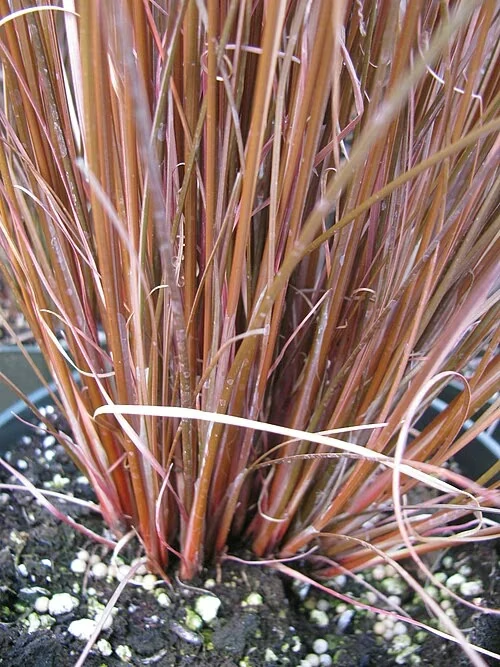
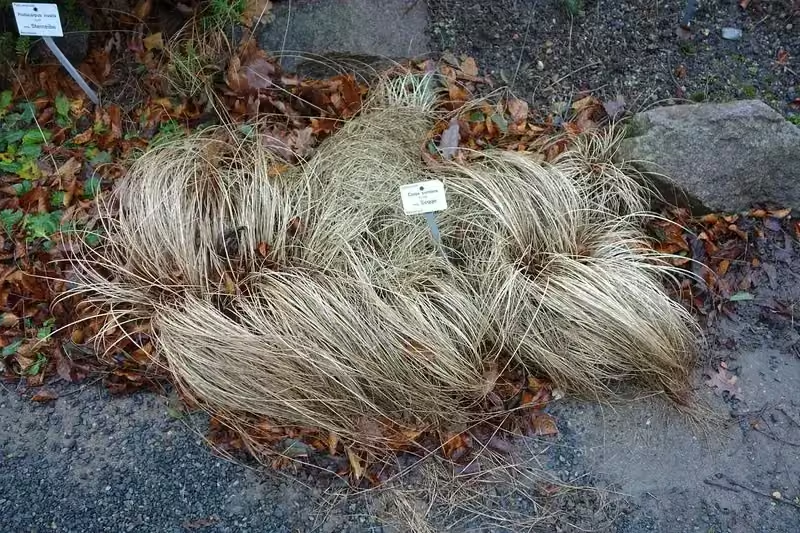
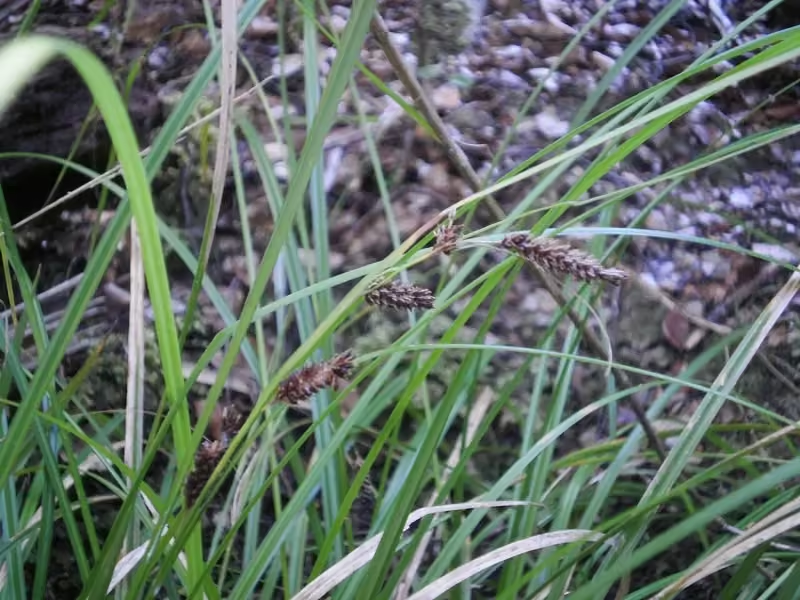
Related Plants
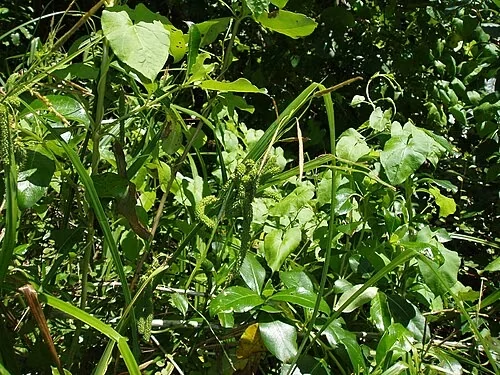
Explore other native plants that share similar characteristics or habitats with Enys's Sedge ( Carex enysii ), offering further insights into New Zealand's diverse flora. These related species provide context and opportunities for complementary planting in your garden.




Plant Conservation
Carex enysii is currently classified as "At Risk - Naturally Uncommon." While it is not facing immediate extinction, its populations are often small and restricted to very specific alpine habitats. These populations can be vulnerable to competition from invasive weeds and the broad impacts of climate change, which may alter the moisture levels and temperatures of its mountain homes. Ongoing monitoring and the protection of limestone-rich alpine areas are key to the conservation of this diminutive native.
Frequently Asked Questions
How big does Carex enysii grow?
It is one of New Zealand's smallest sedges, with flowering stems only about 5-15 cm tall.
What is the conservation status of Enys's Sedge?
It is classified as At Risk - Naturally Uncommon in New Zealand.
Where does Carex enysii grow naturally?
It grows on open, moist stony ground in alpine herbfields, fellfields and stable screes.
Is Enys's Sedge frost hardy?
Yes, it is extremely frost hardy but very slow-growing and best left undisturbed.
Sources and Further Reading
The botanical, growing, and conservation details for Enys's Sedge (Carex enysii) on this page draw on authoritative New Zealand plant references and citizen-science observation records. Consult the sources below for full technical records and the latest distribution data.