Talbot's Sedge
Carex talbotii
Last updated:
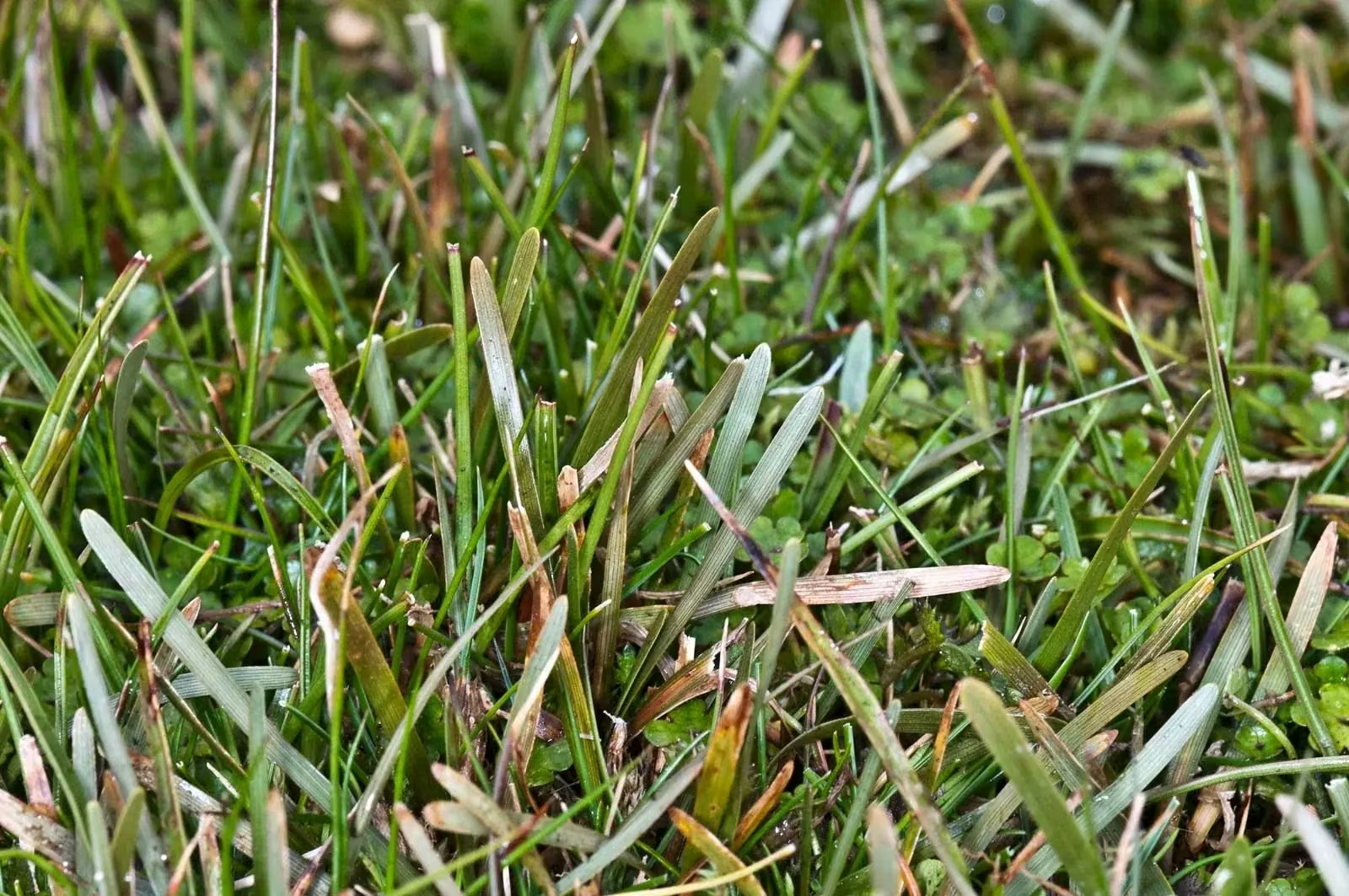
Talbot's Sedge (Carex talbotii) is a diminutive, tufted sedge endemic to New Zealand that forms small, striking clumps just 3 to 6 cm tall. It is easily recognised by its rich colouring, ranging from dark purple-red through wine-red to orange-red, with short culms largely hidden by pale brown leaf sheaths and linear leaves up to 60 mm long. Classed as At Risk - Declining, it grows in montane to subalpine wetlands, along the margins of lakes, tarns, ponds and streams and in turfs bordering ephemeral wetlands, in the North Island's central ranges and more widely in the South Island. Explore more native grasses and flaxes in our native plant guide.

Plant Description
Identification and Physical Characteristics
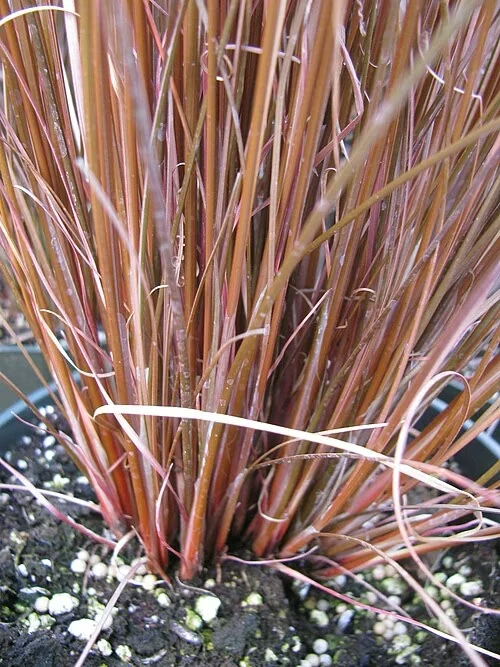
Carex Talbotii is a diminutive, tufted sedge that forms small, striking clumps. It is easily distinguished by its rich coloration, ranging from dark purple-red to wine-red or orange-red, which makes it a standout species in its natural habitat. The culms (stems) are short, typically only 15-30 mm long, and are largely hidden by the light brown leaf sheaths. Its leaves are linear and can grow up to 60 mm in length, with a distinctive concavo-convex shape and bluntly obtuse tips.
Quick Facts
| Scientific Name | Carex talbotii |
|---|---|
| Height | 0.03 - 0.06 metres |
| Spread | Forms small tufts |
| Water Needs | High; prefers wetland margins |
| Light | Full sun to partial shade |
| Frost Tolerance | High |
| Salt Tolerance | Low |
| Growth Rate | Moderate |
| Lifespan | Perennial |
Climate Best Suited to
Carex Talbotii is well-adapted to the cool, temperate climates of New Zealand's montane and subalpine regions. It thrives in areas with consistent moisture and cooler temperatures. While it can be grown in lowland areas, particularly in the south, it requires careful attention to moisture levels to prevent it from drying out in hotter summers.
Regional Suitability
| City | Climate Suitability |
|---|---|
| Auckland | Medium (with care) |
| Wellington | High |
| Christchurch | High |
Plant Habitat
Natural Occurrence and Ecology
This species is endemic to New Zealand and is found in both the North and South Islands. Its preferred habitats are montane to subalpine wetlands, where it grows along the margins of lakes, tarns, ponds, and streams. It can also be found in turfs bordering ephemeral wetlands. In the North Island, it is restricted to the Central Ranges and Mt Ruapehu, while in the South Island, it is more widespread in easterly regions.
Growing Requirements
Soil Requirements
Requires consistently damp to wet soils. It performs best in substrates that are rich in organic matter and mimic the peaty conditions of its natural wetland environment. Poor drainage is generally tolerated well, as it is a wetland species.
- Wet / Boggy
- Peaty
Light Requirements
Grows best in full sun to partial shade. In its natural alpine habitat, it is exposed to high light levels. In gardens, full sun helps to maintain its vibrant reddish leaf coloration, provided the soil moisture is adequate.
- Full Sun
- Partial Shade
Water Requirements
This is a thirsty plant that should never be allowed to dry out completely. It requires regular watering and is ideally suited for planting at the water's edge or in bog gardens where moisture is constant.
- High
- Consistent moisture
Planting and Establishing
Establishment Guidance
When planting Carex Talbotii, choose a site that naturally retains moisture or can be easily irrigated. Dig a hole slightly larger than the root ball and incorporate organic compost to help retain water. Plant at the same depth as it was in the pot. Water thoroughly immediately after planting and maintain high moisture levels during the establishment phase.
Ecological Role
Biodiversity and Ecosystem Impact
As a native wetland sedge, Carex Talbotii plays a role in stabilizing soil along water margins and provides habitat for small invertebrates. It is part of the specialized flora of New Zealand's threatened wetland ecosystems, contributing to the biodiversity of these unique environments.
Uses & Significance
Garden Uses
Excellent for rock gardens with damp pockets, bog gardens, or as a pot plant sitting in a saucer of water. Its small size and colour make it a great accent plant.
- Bog gardens
- Damp rockeries
- Containers
Ecological Value
Supports biodiversity in wetland and alpine turf communities.
- Habitat specialist
- Wetland stability
Landscaping Uses
Carex Talbotii is valued in landscaping for its unique colour and texture. It is perfect for edging ponds or streams and adds interest to damp, shady corners of a rock garden. Its diminutive size allows it to be used in the foreground of plantings without obscuring other species.
Seasonal Care Calendar
Spring
Tidy up any dead foliage from winter. Divide clumps if they have become too dense.
- Tidy foliage
- Divide clumps
Summer
Monitor water levels closely; do not let the soil dry out. Water daily in hot weather if not in a naturally wet site.
- Water frequently
- Check soil moisture
Autumn
Collect seeds if propagation is desired. Maintain moisture levels.
- Collect seeds
- Maintain moisture
Winter
Generally hardy, but ensure it doesn't sit in frozen water for extended periods if in a container.
- Monitor conditions
When to Prune and How Much
Minimal pruning is required. Simply comb through the foliage with your fingers or use a small rake to remove dead leaves.
- Remove dead leaves
- Do not cut back hard
Always use clean, sharp tools.
How to Grow Talbot's Sedge
Cultivating Talbot's Sedge ( Carex talbotii ) is a rewarding endeavor for any gardener interested in New Zealand's unique flora. This species can be propagated through several methods, each requiring specific conditions to ensure healthy growth and establishment. Successful propagation depends on mimicking the plant's natural environment and providing consistent care during the early stages of development. Because it is a wetland species, maintaining high humidity and soil moisture is absolutely critical throughout the propagation process.
From Seed
Propagation from seed is often the most effective way to produce a large number of Carex Talbotii plants. Seeds should be collected when they are fully mature, which typically occurs in late summer or autumn. Freshly collected seeds generally have higher germination rates than those that have been stored for long periods. Sow the seeds in a tray filled with a high-quality, moisture-retentive seed-raising mix.
It is beneficial to keep the seed tray in a cool, shaded spot and ensure the mix remains constantly damp. Germination can be slow and irregular, sometimes taking several months, so patience is required. Once seedlings are large enough to handle, prick them out into individual pots.
- Collect mature seeds in autumn
- Sow in moist seed-raising mix
- Keep damp and shaded
- Transplant when large enough
Keep the young plants well-watered as they establish.
From Cuttings
For sedges like Carex Talbotii, "cuttings" in the traditional sense are not used; instead, we refer to division. Division is the most reliable method for home gardeners to propagate this plant and ensures that the new plants are genetically identical to the source.
This is best done in spring or early autumn when the plant is actively growing. Carefully lift the clump from the ground or pot. Gently tease the roots apart to separate the plant into smaller tufts, ensuring each section has a good amount of roots and foliage attached.
- Lift the clump carefully
- Separate into smaller tufts
- Replant immediately
Additional Methods
Depending on the growth habit of Carex Talbotii, division remains the primary vegetative method. When replanting the divided sections, trim back the foliage slightly to reduce water loss while the roots re-establish. Plant the divisions at the same depth they were growing previously.
Water the new plants thoroughly and keep them in a sheltered, shady spot for a few weeks until they show signs of new growth. This helps them recover from the shock of disturbance.
- Trim foliage slightly
- Plant at original depth
- Water thoroughly
Pests & Diseases
Generally resistant to major pests and diseases. Occasionally susceptible to aphids or mealybugs, which can be treated with horticultural oil.
While generally resilient, maintaining optimal growing conditions is the best defense against pests and diseases. Regular monitoring allows for early detection of any issues, which can often be managed through cultural practices or organic interventions. Ensuring good air circulation and appropriate watering will significantly reduce the plant's susceptibility to common environmental stresses and pathogens.
Cultural Significance
While specific traditional uses for this species are not widely documented compared to larger Carex species (used for weaving), it is part of the broader taonga of New Zealand's native flora.
- Taonga species
- Biodiversity value
Bonus Tip
Plant in groups of 3 or 5 for a striking visual impact with its unique red foliage.
For an extra boost, consider applying a thin layer of high-quality organic mulch around the base of the plant. This helps retain soil moisture, suppresses weeds, and gradually improves soil structure as it breaks down. This simple step can make a significant difference in the plant's overall vigor and resilience, especially during periods of extreme weather.
Related Plants
Explore other native plants that share similar characteristics or habitats with Carex Talbotii ( Carex talbotii ), offering further insights into New Zealand's diverse flora. These related species provide context and opportunities for complementary planting in your garden.




Plant Conservation
Conservation Status and Threats
Carex Talbotii is currently classified as "At Risk - Declining". This status is due to its sparse distribution and the threats posed by habitat modification and competition from invasive weeds in its wetland environments. Conservation efforts focus on protecting these sensitive habitats.
Frequently Asked Questions
How tall does Talbot's Sedge grow?
It is very small, forming tufts only about 3 to 6 cm tall.
What is the conservation status of Carex talbotii?
It is classified as At Risk - Declining, part of New Zealand's threatened wetland flora.
Where does Talbot's Sedge grow naturally?
It grows in montane to subalpine wetlands along lake, tarn, pond and stream margins in both main islands.
Does Carex talbotii tolerate frost?
Yes, it has high frost tolerance and thrives in cool, consistently moist montane conditions.
Sources and Further Reading
The botanical, growing, and conservation details for Talbot's Sedge (Carex talbotii) on this page draw on authoritative New Zealand plant references and citizen-science observation records. Consult the sources below for full technical records and the latest distribution data.