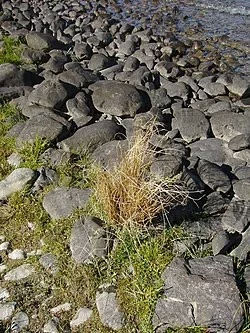
Kaloides Sedge
Carex kaloides
Last updated:
Carex kaloides, or Kaloides Sedge, is a distinctive South Island sedge that forms stout, tufted clumps reminiscent of tussock grasses, reaching up to 1 metre tall with a similar spread. Its most striking feature is the foliage colour, which ranges from vibrant orange-yellow to reddish-yellow, letting it blend into red tussock wetlands. Triangular flowering culms rise erect then arch gracefully, carrying pale straw-coloured compound spikes. Found from Marlborough to Central Otago on river flats, lake and pond margins, seepages and cushion bogs, this naturally uncommon sedge prefers permanently damp ground in cool, montane to subalpine climates. Explore more native grasses and flaxes in our native plant guide.
Plant Description
Carex kaloides is a distinctive sedge that forms stout, tufted clumps reminiscent of tussock grasses. The plant typically reaches heights of up to 1 metre, with a spread of similar width. Its most striking feature is the foliage colour, which ranges from a vibrant orange-yellow to reddish-yellow, making it stand out in its natural wetland habitats. The leaves are channelled and rough to the touch near the tips. The flowering stems (culms) are triangular in cross-section and initially erect before arching gracefully as they mature. The inflorescence is a compound spike, pale straw-coloured, adding texture to the plant's overall appearance.
Quick Facts
| Scientific Name | Carex kaloides |
|---|---|
| Height | 0.3 - 1 m |
| Spread | 0.5 - 1 m |
| Water Needs | High |
| Light | Full Sun |
| Frost Tolerance | Hardy |
| Salt Tolerance | Low |
| Growth Rate | Medium |
| Lifespan | Perennial |
Climate Best Suited to
Carex kaloides is best suited to the cool, temperate climates of the South Island of New Zealand. It thrives in montane to subalpine environments where temperatures are cooler and moisture is abundant. While it is hardy against frost and cold, it generally struggles in the humid, warm conditions of the northern North Island. It prefers open, airy situations and is not well-suited to enclosed, humid gardens.
Regional Suitability
| City | Climate Suitability |
|---|---|
| Auckland | Challenging |
| Wellington | Suitable |
| Christchurch | Suitable |
| Dunedin | Very Suitable |
| Queenstown | Very Suitable |
| Invercargill | Very Suitable |
| Hamilton | Challenging |
Plant Habitat
Native to the South Island, Carex kaloides is found from Marlborough down to Central Otago. Its natural habitat includes river flats, the margins of lakes and ponds, seepages, and cushion bogs. It is often associated with red tussock wetlands, where its similar colouring provides effective camouflage. This sedge prefers permanently damp ground and is adapted to environments that experience periodic inundation but have good water movement.
Growing Requirements
Soil Requirements
Prefers permanently moist to wet soils.
- Moist loams
- Peaty soils
- Wetland margins
Light Requirements
Thrives in full sun to light shade.
- Full Sun
- Semi-Shade
Water Requirements
Requires consistent moisture; do not let dry out.
- High water needs
- Intolerant of drought
Planting and Establishing
When planting Carex kaloides , choose a site that naturally retains moisture or is adjacent to a water feature. Improve the soil with organic matter if it is prone to drying out. Plant in autumn or spring to allow roots to establish before the extremes of winter or summer. Ensure the plant is watered thoroughly during the establishment phase. Spacing should allow for the mature spread of the plant, typically around 75cm to 1m apart.
Ecological Role
Carex kaloides plays a vital role in wetland ecosystems by stabilizing soil along riverbanks and lake margins. Its dense, tufted growth provides habitat and shelter for various wetland invertebrates and ground-dwelling birds. In its natural environment, it contributes to the biodiversity of tussock grasslands and cushion bogs, interacting with other specialized alpine and subalpine flora.
Uses & Significance
Garden Uses
Ideal for wetland gardens and water features.
- Pond margins
- Bog gardens
- Wetland restoration
- Architectural tussock planting
Ecological Value
Supports wetland biodiversity and soil stability.
- Erosion control
- Habitat provision
Landscaping Uses
In landscaping, Carex kaloides is valued for its colour and form. It is an excellent choice for planting in drifts in wet areas or as a specimen plant near a pond edge. Its orange-yellow hues contrast beautifully with green sedges and broad-leaved plants. It is particularly effective in naturalistic or wild style gardens that mimic the South Island high country aesthetic.
Seasonal Care Calendar
Spring
Clean up any winter damage.
- Remove dead leaves
- Apply mulch
Summer
Ensure consistent water.
- Water deeply
- Monitor for stress
Autumn
Planting and division.
- Divide clumps
- Plant new specimens
Winter
Generally dormant/slow growth.
- Check drainage
- Protect from disturbance
When to Prune and How Much
Carex kaloides requires minimal pruning. The main maintenance involves "combing" out dead brown leaves from the tuft with your fingers or a rake to keep the plant looking tidy.
- Remove dead material anytime
- Do not cut back hard unless necessary
If the plant becomes very untidy or sparse, it can be rejuvenated by lifting and dividing it in early spring or autumn, rather than hard pruning which can sometimes disfigure the natural form for a long period.
How to Grow Kaloides Sedge
Cultivating Kaloides Sedge ( Carex kaloides ) is a rewarding endeavor for any gardener interested in New Zealand's unique flora, particularly those with damp or wetland areas to utilize. This species is relatively straightforward to propagate, with division being the most common and reliable method for home gardeners. Successful cultivation relies heavily on replicating the cool, moist conditions of its natural subalpine habitat. It is not a plant for dry, arid gardens or areas with intense, humid heat, as it thrives on constant moisture and cooler root runs.
From Seed
Propagation from seed is a viable method, although it requires patience. Seeds should be collected when they are fully mature, typically in late summer or autumn. The seed heads will turn brown and dry when ready. Freshly collected seeds generally have higher germination rates.
Sowing fresh seed is recommended for best results.
- Collect seeds from the brown flower spikes in autumn.
- Sow seeds on the surface of a moist, seed-raising mix. Do not bury them deeply as they benefit from light to germinate.
- Keep the seed tray in a cool, shaded spot and maintain consistent moisture. A plastic cover can help retain humidity.
- Germination can be irregular and slow; be patient and keep the tray moist.
- Once seedlings are large enough to handle, prick them out into individual pots.
Ensure seedlings are kept moist and grown on in a cool nursery area before planting out.
From Cuttings (Division)
For established plants, vegetative propagation via division is the preferred and most efficient method. This technique ensures that the new plants are genetically identical to the parent and results in larger plants much faster than seed. Division is best undertaken in autumn or early spring when the plant is in active growth but temperatures are mild.
Division reinvigorates older clumps and provides new planting stock.
- Lift the entire clump carefully with a spade, ensuring you get as much of the root system as possible.
- Using a sharp spade or a strong knife, divide the clump into smaller sections. Each section must have healthy roots and several fans of leaves.
- Trim back the foliage by about one-third to reduce water loss while the roots re-establish.
- Replant the divisions immediately into prepared soil or pots.
- Water thoroughly and keep the new plants well-watered until they show signs of new growth.
Additional Methods
While seed and division are the primary methods, ensuring the right environmental conditions is the key "method" for sustained growth. Carex kaloides does not respond well to dry roots.
Site selection is critical for long-term success.
- Choose a site that is naturally wet or install irrigation.
- Ensure the soil is rich in organic matter to hold moisture.
- Avoid planting in areas with strong competition from aggressive weeds or faster-growing exotics.
Pests & Diseases
Carex kaloides is generally robust and resistant to most pests and diseases. However, in gardens, it can occasionally be affected by scale insects or mealybugs, particularly if the plant is stressed by drought. Keeping the plant well-watered and healthy is the best prevention. Rust spots may appear on older leaves in humid conditions; these can be removed by combing out the affected foliage.
Cultural Significance
While specific traditional uses for Carex kaloides are not widely documented compared to other weaving sedges like Harakeke or Pīngao, it is part of the broader group of native sedges that hold ecological and intrinsic value in New Zealand's natural heritage. Its distinct appearance contributes to the unique character of South Island wetlands.
- Part of New Zealand's unique alpine flora
- Contributes to wetland biodiversity
Bonus Tip
Plant in groups of three or five to create a naturalistic "tussockland" look that highlights the beautiful orange-yellow foliage against greener plants. This massing technique not only creates visual impact but also mimics the natural growth patterns of sedges in wetland environments. For the most striking display, position these groups where the low morning or evening sun can backlight the foliage, making the orange-yellow tones glow warmly. Regular division every 3-4 years keeps plants vigorous and prevents the center from dying out while providing new plants to expand your display or share with fellow gardeners.
Related Plants
Explore other native plants that share similar characteristics or habitats with Carex Kaloides ( Carex kaloides ), offering further insights into New Zealand's diverse flora. These related species provide context and opportunities for complementary planting in your garden.

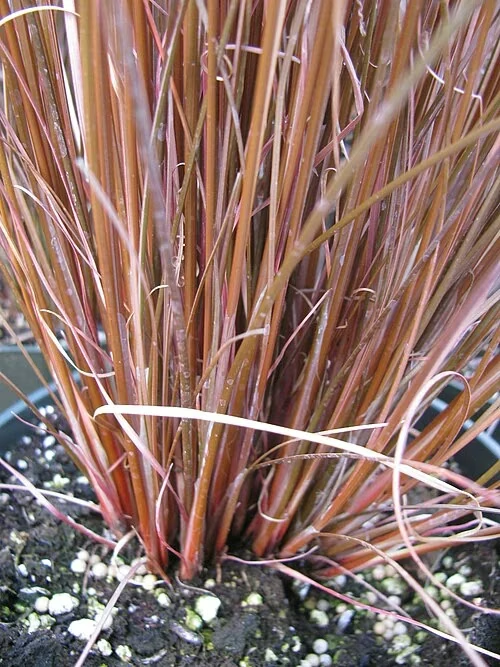
Buchanan's Sedge
Carex buchananii
Complete guide to Buchanan's Sedge ( Carex buchananii ), including care tips, propagation methods, and its ornamental value.
Learn more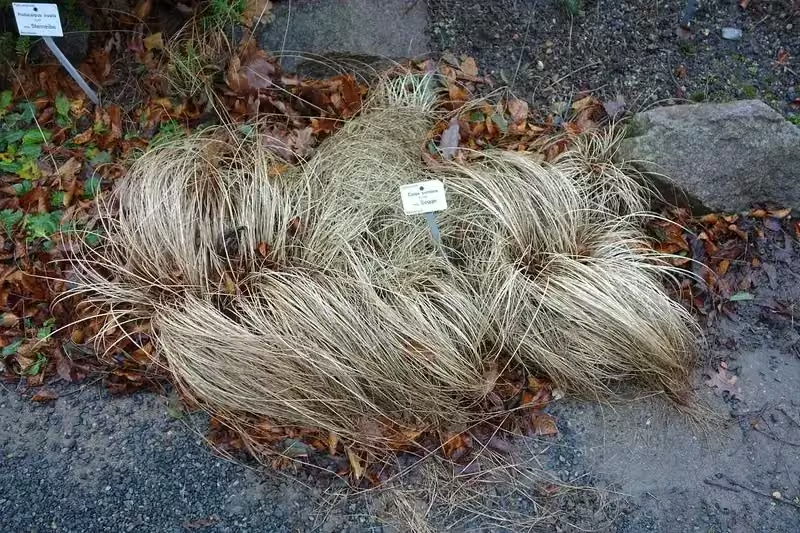
Frosted Curls Sedge
Carex comans
Complete guide to Frosted Curls Sedge ( Carex comans ), including care tips, propagation methods, and its unique cascading beauty.
Learn more
Teasel Sedge
Carex dipsacea
A robust, arching sedge with olive-green to bronze foliage and distinctive dark seed heads.
Learn more
Pūrei
Carex secta
Pūrei is coastal-tolerant with notable shelter value; well suited to New Zealand plantings.
Learn more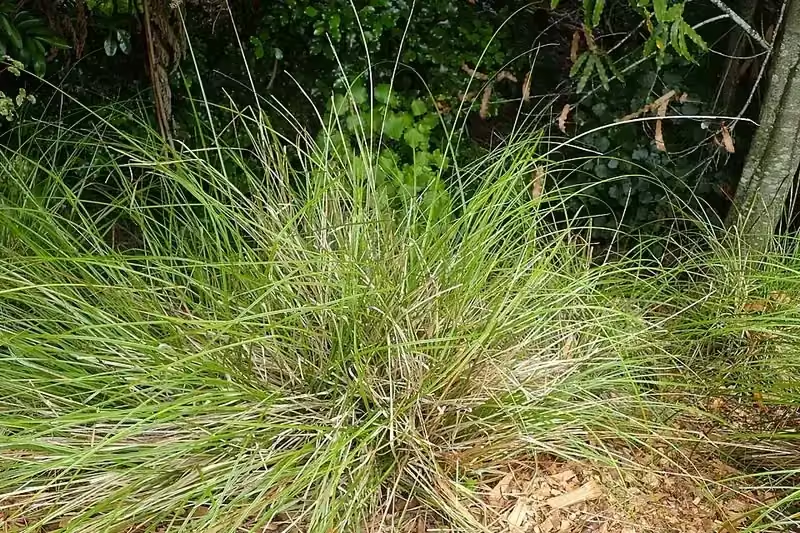
Swamp Sedge
Carex virgata
A tall, upright sedge ideal for wetland restoration and naturalized pond margins.
Learn more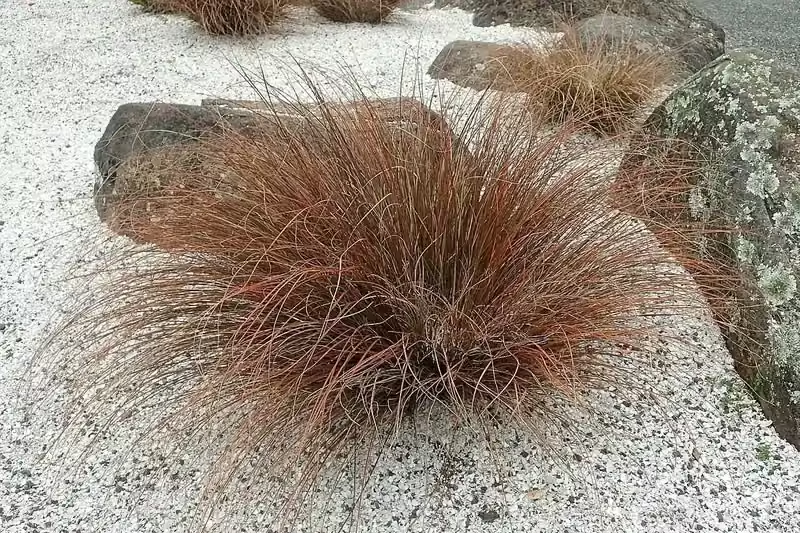
Orange Sedge
Carex testacea
Orange Sedge is a popular ornamental grass with stunning orange-tinted foliage, perfect for New Zealand landscapes.
Learn more
Glen Sedge
Carex flagellifera
A graceful, bronze-toned sedge with arching leaves, perfect for ornamental gardens and rockeries.
Learn morePlant Conservation
Carex kaloides is classified as "Naturally Uncommon" (Biologically Sparse). This means that while it is not currently facing immediate threat of extinction, it has a naturally restricted range or small population size. Conservation efforts focus on protecting its wetland habitats from drainage, development, and invasion by weeds. Preserving the unique ecosystems where it thrives is crucial for its long-term survival.
Frequently Asked Questions
How tall does Carex kaloides grow?
Kaloides Sedge grows up to 1 metre tall, with a spread of roughly 0.5 to 1 metre.
Where does Carex kaloides grow naturally?
It is native to the South Island, from Marlborough south to Central Otago, on river flats, lake margins, seepages and cushion bogs.
Is Carex kaloides frost-hardy?
Yes, it is hardy against frost and cold, suited to cool montane to subalpine climates.
What makes Carex kaloides distinctive?
Its vibrant orange-yellow to reddish-yellow foliage helps it blend into red tussock wetlands.
Sources and Further Reading
The botanical, growing, and conservation details for Kaloides Sedge (Carex kaloides) on this page draw on authoritative New Zealand plant references and citizen-science observation records. Consult the sources below for full technical records and the latest distribution data.