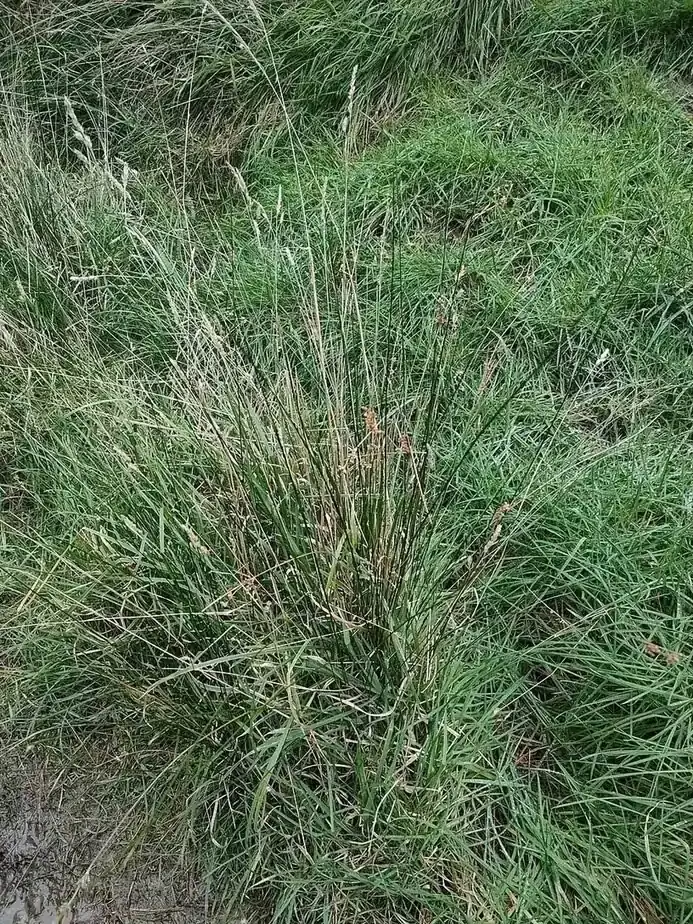
Two-Tiered Rush
Juncus distegus
Last updated:
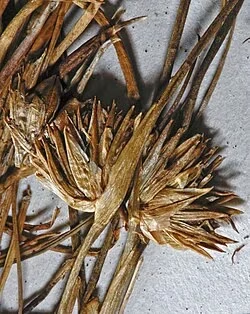
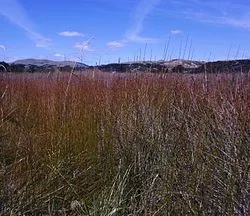
Two-Tiered Rush (Juncus distegus) is an endemic perennial rush found across New Zealand and the Chatham Islands. It forms small, tightly packed clumps of wiry, flexible stems 25 to 75 cm tall, dull to dark green and sometimes reddish-tinted. Its common name comes from the distinctive inflorescence, a compact terminal head of reddish-brown flowers that appears split into two clusters. It grows in open, damp habitats such as swamp margins, seasonally wet ground, and wetland edges, and even in drier hill country and tussock grassland, from coastal dunes up to 1200 m. It is frost-hardy and prefers full sun to partial shade with moist soil. Explore more wetland native plants in our native plant guide.

Plant Description
Identification and Physical Characteristics
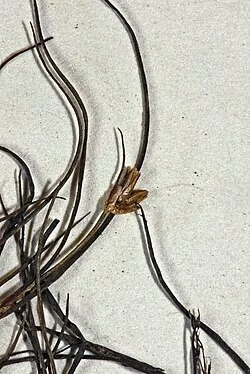
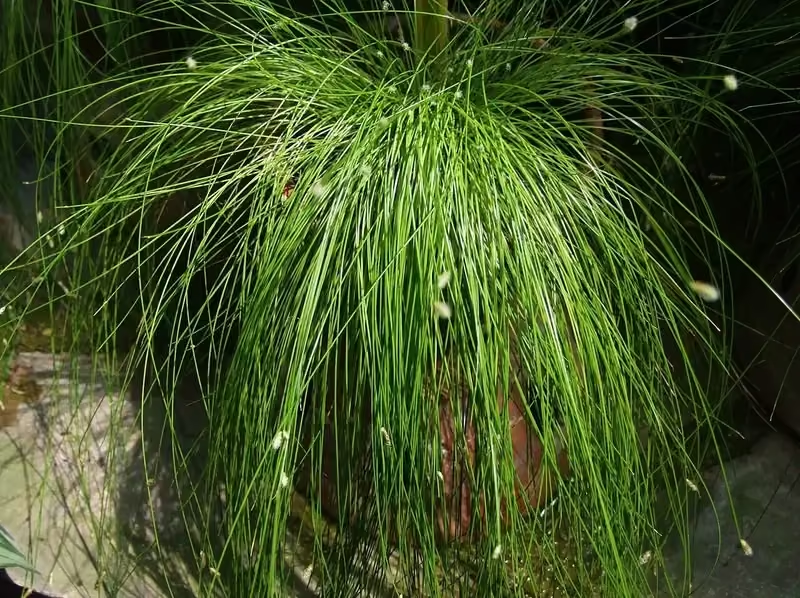
Juncus distegus , commonly known as the Two-tiered Rush, is a distinctive endemic perennial rush found throughout New Zealand and the Chatham Islands. It forms small, tightly packed clumps of wiry, flexible stems that typically range from 25 to 75 cm in height. The stems are a dull to dark green, sometimes taking on a reddish tint, and are notable for their internal structure which features an interrupted pith with small, characteristic gaps. A key identifying feature is its "two-tiered" inflorescence-a compact, terminal head of reddish-brown flowers that appears to be split into two small clusters. Like many rushes, the true leaves are absent, replaced by closely sheathing bracts at the base of the stems. This vertical, architectural plant adds a fine-textured, subtle beauty to damp environments.
Quick Facts
| Scientific Name | Juncus distegus |
|---|---|
| Height | 25-75 cm |
| Spread | 20-40 cm (clump-forming) |
| Water Needs | High; requires consistently moist soil |
| Light | Full sun to partial shade |
| Frost Tolerance | High |
| Salt Tolerance | Medium |
| Growth Rate | Moderate |
| Lifespan | Perennial |
Climate Best Suited to
The Two-tiered Rush is a versatile species adapted to a wide range of New Zealand's climatic conditions. It is widespread in the North and South Islands and the Chatham Islands, occurring from coastal dunes up to upper montane regions at 1200 meters elevation. It thrives in temperate environments with reliable rainfall and can withstand significant frost and wind. While it prefers moist sites, it is remarkably resilient once established, provided it is not subjected to prolonged, severe drought in hot, low-humidity zones.
Regional Suitability
| City | Climate Suitability |
|---|---|
| Auckland | High |
| Wellington | High |
| Christchurch | High |
| Dunedin | High |
| Invercargill | High |
Plant Habitat
Natural Occurrence and Ecology
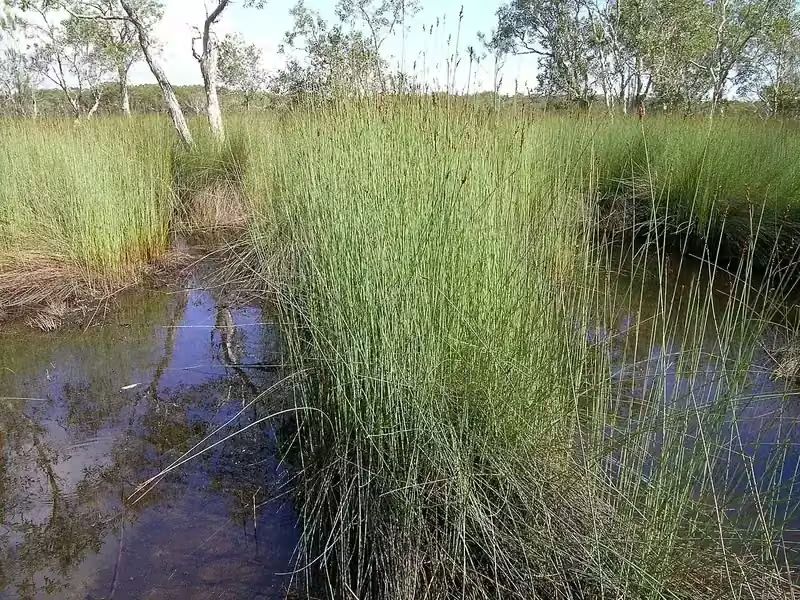
In the wild, Juncus distegus occupies a variety of open, damp habitats. It is frequently found fringing swamps, in seasonally wet places, and around the margins of wetlands. It is also a common component of "cloud forests," where it often colonizes the edges of tracks and boardwalks. Interestingly, it can also be found in drier hill country and tussock grasslands, particularly where the soil is a poorly drained clay. Its ability to colonize both true wetlands and damp terrestrial sites highlights its ecological flexibility.
Growing Requirements
Soil Requirements
Thrives in moist, poorly drained clay or loamy soils. It is well-adapted to nutrient-poor and acidic conditions.
- Clay/Poorly drained
- Acidic to Neutral
- Moisture-retentive
Light Requirements
Best in full sun, which maintains its tight, tufted form. It can handle partial shade, particularly in warmer northern regions.
- Full Sun
- Partial Shade
Water Requirements
Requires consistently moist to wet conditions. It is an ideal plant for boggy areas where other species might struggle with winter wet.
- Consistent moisture
- Flood tolerant
Planting and Establishing
Establishment Guidance
When planting Two-tiered Rush, select a low-lying spot in your garden where the soil remains naturally damp. It is a perfect choice for rain gardens, pond margins, or as a softening element around a water feature. Prepare the soil by incorporating organic matter if it is extremely sandy or dry. Space the tufts about 30-40 cm apart to allow them to form a continuous, textured mass. Planting is best done in autumn or early spring. Water newly planted specimens deeply and regularly until they have established a deep root system.
Ecological Role
Biodiversity and Ecosystem Impact
Juncus distegus provides important ecosystem services by stabilizing damp soils and acting as a natural filter for water runoff. Its dense clumps provide shelter and nesting sites for small ground-dwelling birds and a safe haven for native frogs and invertebrates. The seeds, which become sticky (mucilaginous) when wet, are adapted for dispersal by attaching to the feathers or feet of wetland wildlife, helping to maintain connectivity between isolated wetland patches.
Uses & Significance
Garden Uses
In the garden, this rush is valued for its clean vertical lines and its ability to thrive in wet clay. It is an excellent choice for modern native landscapes and rain gardens.
- Rain gardens
- Pond margins
- Structural mass planting
Ecological Value
A reliable species for riparian restoration and wetland revegetation, particularly effective at colonizing disturbed or poorly drained ground.
- Riparian restoration
- Sediment trapping
- Wildlife shelter
Landscaping Uses
Landscape designers often use Two-tiered Rush to create a sense of continuity in gardens that transition from dry to wet areas. Its fine, wiry texture contrasts beautifully with the broader leaves of Harakeke or Puka . It is also an excellent plant for container gardening in waterlogged pots on a sunny terrace, where its architectural form can be appreciated as a standalone feature.
Seasonal Care Calendar
Spring
Peak season for new growth. Check for any aggressive weeds that may have established within the clumps over winter and remove them.
- Monitor growth
- Weeding
Summer
Flowering period. Ensure the soil remains damp during dry spells. Mulching with pebbles can help keep the root zone cool.
- Watering
- Observe flowers
Autumn
Seeds mature and disperse. A good time for dividing large clumps and replanting them to expand your wetland area.
- Clump division
- New planting
Winter
The plant is dormant and hardy. Trim away any old, brown stems to keep the plant looking fresh for the coming spring.
- Tidy foliage
- Check drainage
When to Prune and How Much
Two-tiered Rush requires very little pruning to maintain its form.
- Remove dead/yellowing stems
- Cut back in late winter
If the clump becomes too congested or looks tired, it can be sheared back to about 15 cm above the ground in late winter. This will encourage a flush of fresh new growth.
How to Grow Two-Tiered Rush
Successfully growing Two-tiered Rush ( Juncus distegus ) is a simple and rewarding process for any gardener, whether you are managing a large restoration site or a small urban water feature. This species is one of the most reliable and low-maintenance native rushes, provided its primary requirement for consistent moisture is met. Its ability to tolerate poorly drained clay soils makes it an invaluable asset for many New Zealand gardens where other plants might struggle with "wet feet."
The most common and effective way to propagate Two-tiered Rush is through the division of established clumps. Because the plant forms dense, many-stemmed tufts that spread slowly via a rhizome system, it is very easy to separate them. The best time for division is in early spring, just as the plant is entering its active growth cycle. Carefully lift a healthy clump with a spade and pull or cut it into smaller sections, ensuring that each new division has several stems and a good portion of the fibrous root system. Replant these immediately into moist soil and keep them well-watered for the first few weeks.
From Seed
Growing from seed is also possible and is a great way to maintain genetic diversity. Collect the ripe nuts in late summer once they have turned a glossy chestnut-brown.
Sow the seeds onto the surface of a fine, pre-moistened seed-raising mix that is rich in organic matter. They require light to germinate, so do not cover them with soil; a very fine sifting of grit is enough. Place the tray in a saucer of water to ensure the medium remains saturated at all times. Keep the tray in a cool, bright position.
- Collect ripe nuts in late summer.
- Sow on surface of moist organic mix.
- Maintain constant water saturation.
Germination is usually reliable and rapid. Once the seedlings reach about 10 cm in height, they can be pricked out into individual pots and grown on for a season before planting out.
Pests & Diseases
Juncus distegus is virtually immune to most common garden pests. Its tough, wiry stems are unappealing to most browsers and insects. In poorly drained, stagnant conditions where oxygen levels are low, it can occasionally be susceptible to fungal root rot. Ensuring some water movement or using free-draining but moist substrates is the best preventative measure. Slugs and snails may occasionally target the base of the stems in early spring.
Cultural Significance
Two-tiered Rush, like many of its relatives, is part of the "Wiwi" group of rushes that hold a quiet but significant place in the New Zealand landscape. It represents the specialized flora of our damp open ground and wetland margins. In traditional Māori contexts, rushes were used for various weaving and construction purposes, although larger species were usually preferred. Today, Juncus distegus is respected as a key component of our native wetland turf communities and is increasingly valued in cultural restoration projects that aim to restore the health and biodiversity of our native waterways and damp grasslands.
- Indicator of healthy damp ecosystems
- Indigenous botanical heritage
- Essential for wetland connectivity
Bonus Tip
For a stunning textural contrast, plant Two-tiered Rush alongside broad-leaved wetland plants like Raupō . The fine, wiry stems of the rush will provide a delicate foreground that highlights the larger forms of the other wetland species.
Related Plants
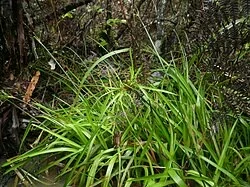
Explore other native plants that share similar characteristics or habitats with Two-tiered Rush ( Juncus distegus ), offering further insights into New Zealand's diverse flora. These related species provide context and opportunities for complementary planting in your garden.


Plant Conservation
Conservation Status and Threats
Currently classified as 'Not Threatened', Juncus distegus is a common and successful member of the New Zealand flora. However, its long-term future depends on the protection of our remaining wetland and damp grassland ecosystems from drainage and pollution. Supporting local restoration efforts and protecting our native waterways ensures that versatile species like the Two-tiered Rush will continue to thrive and provide their essential ecological services for the future.
Frequently Asked Questions
How tall does Two-Tiered Rush grow?
It grows in clumps 25 to 75 cm tall, spreading about 20 to 40 cm wide.
Does Two-Tiered Rush tolerate frost?
Yes, it is highly frost-tolerant and adapted to a wide range of conditions.
Where does Two-Tiered Rush grow naturally?
It grows in open, damp habitats and wetland margins across New Zealand and the Chatham Islands, from coastal dunes up to 1200 m.
What conditions does Two-Tiered Rush need?
It needs consistently moist soil in full sun to partial shade.
Sources and Further Reading
The botanical, growing, and conservation details for Two-Tiered Rush (Juncus distegus) on this page draw on authoritative New Zealand plant references and citizen-science observation records. Consult the sources below for full technical records and the latest distribution data.