Grass-Leaved Rush
Juncus planifolius
Last updated:
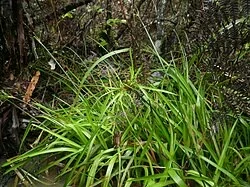
Grass-Leaved Rush (Juncus planifolius) is a perennial rush native to New Zealand, unusual for its flat, solid leaves that resemble those of a broad-leaved grass rather than the cylindrical foliage of typical rushes. It forms tufted clumps 13 to 60 cm tall that range from bright yellow-green to a rich wine-red in exposed or stressed sites. In late spring and summer it produces numerous small flowers in umbrella-like, irregularly branched clusters. A quick coloniser of open, damp ground, it grows on exposed clay, track sides, drain margins, dune wetlands, and stream banks from sea level to about 1000 m, in full sun to partial shade. Explore more wetland native plants in our native plant guide.
Plant Description
Identification and Physical Characteristics
Juncus planifolius , commonly known as the Grass-leaved Rush or Broad-leaved Rush, is a distinctive perennial rush native to the Southern Hemisphere. Unlike many rushes that feature cylindrical stems and leaves, this species is noted for its flat, solid leaves that closely resemble those of a broad-leaved grass. The plant forms tufted clumps that can vary in colour from a bright yellow-green to a rich wine-red, especially when growing in exposed or stressed environments. The stems are upright and can reach heights of 13 to 60 cm. During late spring and summer, it produces small, numerous flowers clustered into umbrella-like, irregularly branched inflorescences. These clusters feature light green centers with striking reddish-brown or wine-red margins, eventually maturing into lustrous brownish-black capsules.
Quick Facts
| Scientific Name | Juncus planifolius |
|---|---|
| Height | 13-60 cm |
| Spread | 20-40 cm (tufted) |
| Water Needs | Moderate to high; prefers damp soil |
| Light | Full sun to partial shade |
| Frost Tolerance | High |
| Salt Tolerance | Medium to high |
| Growth Rate | Moderate to fast |
| Lifespan | Perennial |
Climate Best Suited to
Grass-leaved Rush is a highly adaptable species found throughout New Zealand, including the North, South, Stewart, and Chatham Islands. it is well-suited to temperate and lowland climates, occurring from sea level up to 1000 meters. It thrives in regions with consistent moisture and high humidity but is also remarkably drought-tolerant once established. It is highly frost-hardy and can handle the salt spray of coastal environments, making it a reliable choice for gardens across the country.
Regional Suitability
| City | Climate Suitability |
|---|---|
| Auckland | High |
| Wellington | High |
| Christchurch | High |
| Dunedin | High |
| Invercargill | High |
Plant Habitat
Natural Occurrence and Ecology
In the wild, Juncus planifolius is a specialist of open, damp habitats. It is frequently found on freshly exposed damp clay, along the sides of forest tracks, and on the margins of drains and ditches. It also colonizes dune wetlands, coastal cliffs, and the banks of slow-flowing streams. Its ability to quickly establish on disturbed ground makes it a common sight in both natural and modified landscapes. It is a persistent member of New Zealand's lowland wetland communities, often filling the gaps between larger sedges and rushes.
Growing Requirements
Soil Requirements
Thrives in moist to wet, well-drained soils. It can tolerate a wide range of soil pH levels and nutrient conditions.
- Moist/Loamy
- Clay tolerant
- Adaptable pH
Light Requirements
Best in full sun but will tolerate partial shade. Full sun exposure often leads to more vibrant wine-red foliage tones.
- Full Sun
- Partial Shade
Water Requirements
Requires consistent moisture to look its best. It is highly tolerant of waterlogged soils but can also survive dry periods.
- Regular watering
- Flood tolerant
Planting and Establishing
Establishment Guidance
When planting Grass-leaved Rush, select an area that remains naturally damp or where irrigation is reliable. It is an excellent choice for stabilizing banks or for use in rain gardens. Prepare the soil with organic matter to help retain moisture during the establishment phase. Space the tufts about 30 cm apart; they will quickly grow to form a lush, grassy carpet. Planting is best done in autumn or early spring when rainfall is frequent and temperatures are moderate. Water new plants weekly during their first summer to ensure they develop a deep, resilient root system.
Ecological Role
Biodiversity and Ecosystem Impact
Juncus planifolius plays a significant role in soil stabilization, particularly on disturbed or sloping ground. Its fibrous root system helps prevent erosion and sediment runoff into waterways. Ecologically, it provides ground-level cover for small invertebrates and contributes to the health of wetland turf communities. In estuarine environments, it helps filter water and provides habitat for specialized coastal biodiversity. Its seeds provide a small but reliable food source for various native insects and some birds.
Uses & Significance
Garden Uses
In the garden, this rush is a versatile ground cover for damp areas, pond margins, or coastal landscapes. Its wine-red foliage provides a stunning colour contrast.
- Pond margins
- Coastal gardens
- Rain gardens
Ecological Value
It is a valuable species for riparian restoration and stormwater treatment systems, where its fast growth and soil-binding abilities are highly beneficial.
- Soil stabilization
- Water filtration
- Restoration planting
Landscaping Uses
Landscape designers value Grass-leaved Rush for its soft, grassy appearance and its ability to thrive in "difficult" wet spots. It is often used in mass plantings to create a low-maintenance, naturalistic meadow effect. Its tolerance for salt spray makes it a popular choice for coastal developments where it can be used to soften the edges of paths and retaining walls. The colour variation from green to red allows for creative use of texture and tone in the landscape.
Seasonal Care Calendar
Spring
Active growth and flowering. Check for and remove any competing invasive weeds. Apply a light dressing of general fertilizer.
- Monitor growth
- Weeding
Summer
Peak flowering. Maintain watering schedules during dry periods to ensure the plant remains vibrant and healthy.
- Intensive watering
- Observe flowers
Autumn
Seeds mature. This is a good time for dividing established clumps and replanting them to expand coverage.
- Clump division
- Seed maturation
Winter
The plant is dormant and extremely cold-hardy. Trim back any yellowing foliage to make way for spring growth.
- Tidy foliage
- Check drainage
When to Prune and How Much
Pruning is generally only required to maintain a neat appearance or to remove old growth.
- Remove dead leaves in winter
- Thin out large clumps
In late winter or early spring, the entire clump can be trimmed back to about 10 cm above the ground to encourage a flush of fresh, colourful new leaves.
How to Grow Grass-Leaved Rush
Cultivating Grass-leaved Rush ( Juncus planifolius ) is a straightforward and rewarding process for any New Zealand gardener. This species is naturally adapted to a wide range of open, damp habitats, which makes it exceptionally robust and forgiving once its basic needs for moisture and light are met. Whether you are using it as a functional component of a rain garden or as a decorative element in a coastal landscape, Grass-leaved Rush will reward you with its lush, tufted form and unique colour variations.
The most efficient and common way to propagate this rush is through the division of established clumps. Because the plant forms dense, many-stemmed tufts, it is very easy to separate them into new pieces. The best time for division is in early spring, just as the first signs of active growth appear. Use a sharp spade or garden fork to lift a healthy clump and pull it apart into smaller sections, ensuring that each new division has several stems and a good portion of the fibrous root system. Replant these immediately into moist soil and keep them well-watered for several weeks until they have successfully established.
From Seed
Propagation from seed is also highly effective and is the preferred method for producing large quantities of plants for ecological restoration. Collect the small nuts in late summer once they have turned a lustrous brownish-black.
Sow the seeds onto the surface of a fine, pre-moistened seed-raising mix that is rich in organic matter. They require light to germinate, so do not cover them with soil; a very light dusting of fine grit is enough to keep them from being washed away. Place the tray in a saucer of water to ensure the medium stays completely saturated. Keep the tray in a cool, bright position.
- Collect ripe nuts in late summer.
- Sow on surface of moist organic mix.
- Maintain constant water saturation.
Germination is usually reliable and rapid. Once the seedlings reach about 10 cm in height, they can be moved into individual pots and grown on for a season before planting out.
Pests & Diseases
Grass-leaved Rush is generally free from serious pests and diseases. Its fibrous foliage is deterrent to most common garden insects. However, in poorly drained or stagnant conditions where oxygen levels are low, it can occasionally be susceptible to fungal root rot. Ensuring some water movement or using free-draining but moist substrates is the best preventative measure. Slugs and snails may occasionally target the succulent base of the stems in early spring.
Cultural Significance
Juncus planifolius represents the specialized flora of New Zealand's damp open ground and coastal margins. While it lacks the large-scale cultural profile of species like Harakeke, it is respected by botanists and ecologists as a key component of our native wetland turf communities. Its ability to quickly establish on disturbed ground highlights its role as a pioneer species in the natural regeneration of damp ecosystems. In contemporary times, it is increasingly valued in cultural restoration projects that aim to restore the health and biodiversity of our native waterways and coastal zones.
- Indicator of healthy damp ecosystems
- Indigenous botanical heritage
- Key species for ecological pioneering
Bonus Tip
To achieve the most intense wine-red foliage colour, plant your Grass-leaved Rush in a spot that receives full, direct sun and where the soil is slightly less fertile. The stress from the high light and low nutrients will trigger the production of protective red pigments, making the plant a standout feature in your garden.
Related Plants
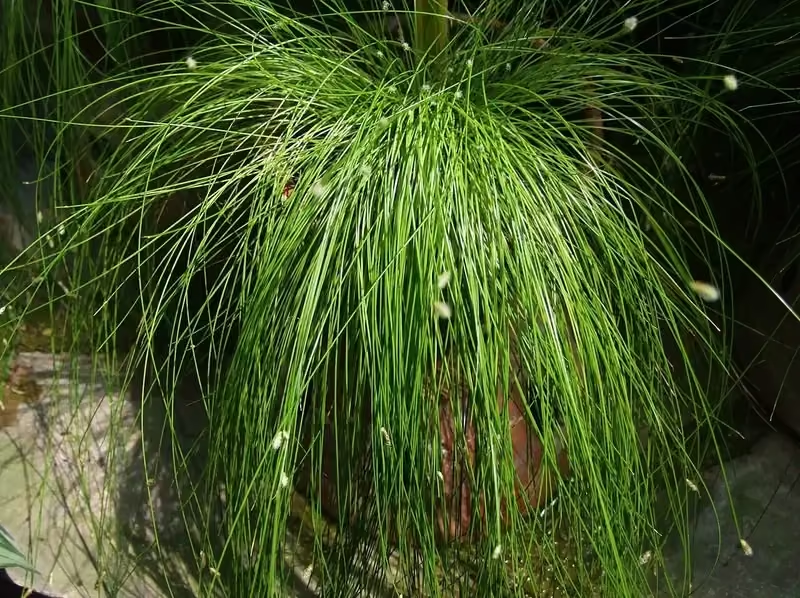
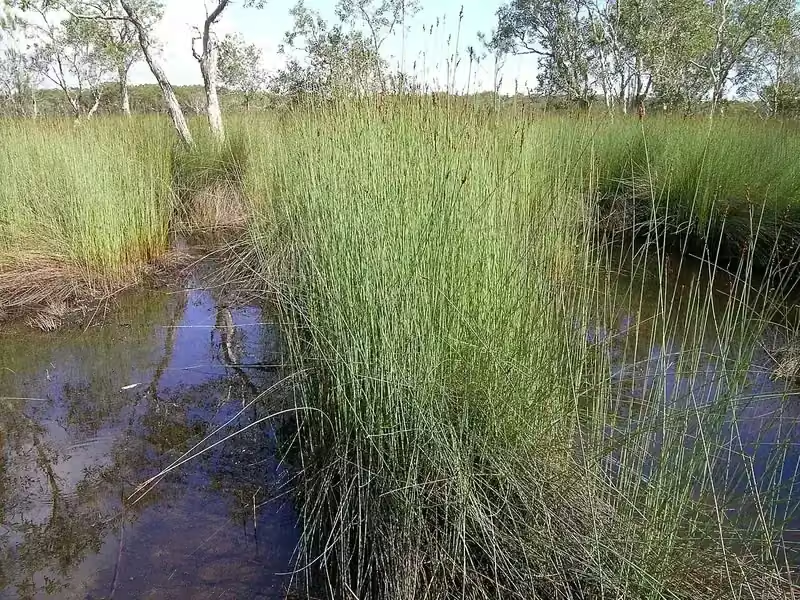
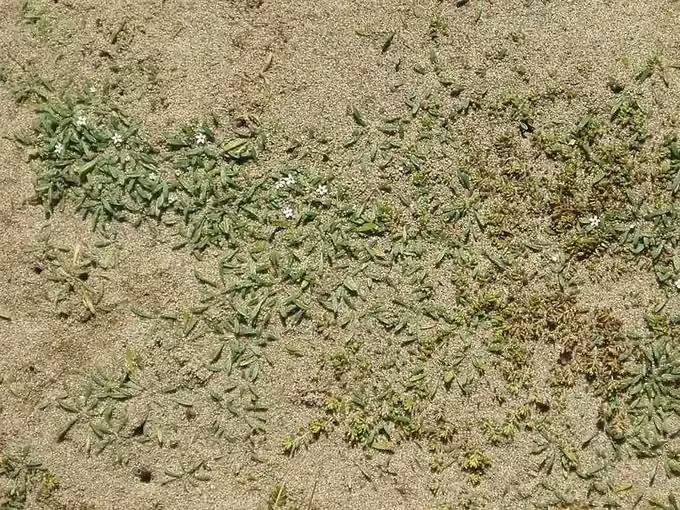
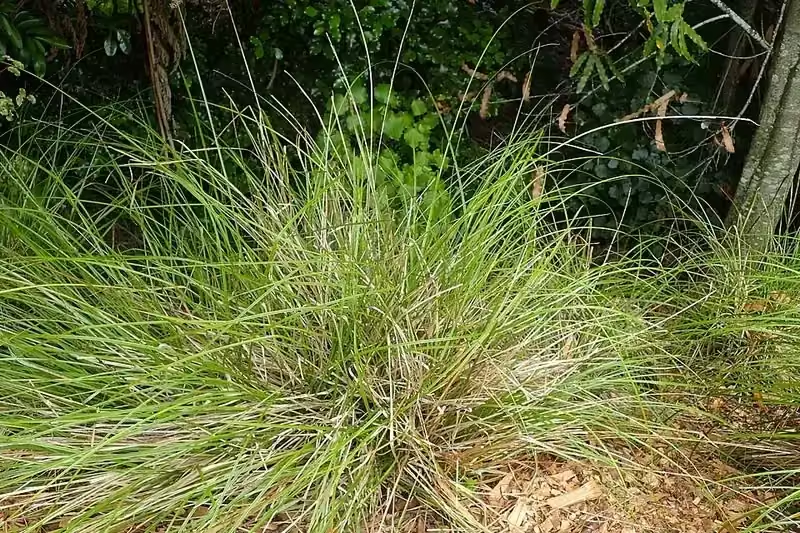
Explore other native plants that share similar characteristics or habitats with Grass-leaved Rush ( Juncus planifolius ), offering further insights into New Zealand's diverse flora. These related species provide context and opportunities for complementary planting in your garden.

Plant Conservation
Conservation Status and Threats
Currently classified as 'Not Threatened', Juncus planifolius is a common and successful member of the New Zealand flora. However, its continued prosperity depends on the protection of our wetlands and coastal ecosystems from drainage and aggressive invasive weeds. Supporting local wetland restoration efforts ensures that versatile species like the Grass-leaved Rush will continue to thrive and provide their essential ecological services for the future.
Frequently Asked Questions
How tall does Grass-Leaved Rush grow?
It forms tufted clumps 13 to 60 cm tall and about 20 to 40 cm wide.
What makes Grass-Leaved Rush distinctive?
It has flat, solid, grass-like leaves and can turn a rich wine-red in exposed sites.
Does Grass-Leaved Rush tolerate frost?
Yes, it is highly frost-tolerant and suited to temperate, lowland climates.
Where does Grass-Leaved Rush grow naturally?
It colonises open, damp ground such as exposed clay, track sides, drains, dune wetlands, and stream banks, from sea level to about 1000 m.
Sources and Further Reading
The botanical, growing, and conservation details for Grass-Leaved Rush (Juncus planifolius) on this page draw on authoritative New Zealand plant references and citizen-science observation records. Consult the sources below for full technical records and the latest distribution data.