Dwarf Rush
Juncus pusillus
Last updated:
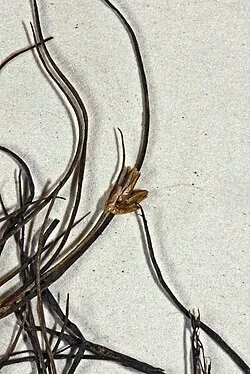
Dwarf Rush (Juncus pusillus) is one of New Zealand's smallest vascular plants, an endemic perennial rush that rarely exceeds a few centimetres in height. It forms widely creeping, tufted patches that hug the ground, growing from a very slender rhizome with thread-like leaves that often turn red-brown to dark brown. An obligate wetland species, it grows in swampy ground, cushion bogs, alpine seepages, and the muddy margins of mountain tarns, lakes, and rivers. Slow-growing and frost-hardy, it is found through the South Island and parts of the North Island south of the Bay of Plenty, and is classed as At Risk - Naturally Uncommon. Explore more wetland native plants in our native plant guide.
Plant Description
Identification and Physical Characteristics
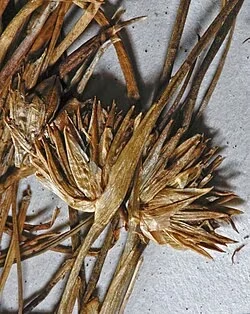
Juncus pusillus , commonly known as the Dwarf Rush, is one of New Zealand's smallest and most delicate vascular plants. This endemic perennial forms widely creeping, tufted patches that hug the ground, rarely exceeding a few centimetres in height. The plant grows from a very slender rhizome, with stems that are often only 1 to 30 mm long. Despite its tiny size, the plant is intricately structured, with filiform (thread-like) leaves that are usually longer than the stems. The foliage often takes on a distinctive red-brown to dark brown colour, which can make it blend into the muddy or peaty substrates it inhabits. During late spring and summer, it produces minute flowers that start pale green and mature to a reddish hue, eventually forming tiny, pointed capsules containing mucilaginous seeds.
Quick Facts
| Scientific Name | Juncus pusillus |
|---|---|
| Height | 1-5 cm |
| Spread | Spreading; forming dense patches |
| Water Needs | Very high; requires saturated soil |
| Light | Full sun to partial shade |
| Frost Tolerance | High |
| Salt Tolerance | Medium |
| Growth Rate | Slow |
| Lifespan | Perennial |
Climate Best Suited to
Dwarf Rush is a hardy endemic species suited to the temperate and montane climates of New Zealand. It is found throughout the South Island and in parts of the North Island south of the Bay of Plenty. It is perfectly adapted to regions with high humidity and consistent moisture availability. It is extremely frost-hardy and can withstand the harsh winter conditions of subalpine bogs. It performs best where temperatures remain cool and the risk of the substrate drying out is minimal.
Regional Suitability
| City | Climate Suitability |
|---|---|
| Auckland | Medium (Requires constant wet) |
| Wellington | High |
| Christchurch | High |
| Dunedin | High |
| Invercargill | High |
Plant Habitat
Natural Occurrence and Ecology
In its natural state, Juncus pusillus is an obligate wetland species. It is found in open, swampy ground, particularly in cushion bogs and alpine seepages. It is also a frequent colonizer of the muddy or sandy margins of mountain tarns, lakes, and rivers. It often grows in association with other small turf-forming plants like Juncus novae-zelandiae . Its habitat range is extensive, occurring from coastal environments up to alpine altitudes of over 1500 meters, provided there is a permanent source of freshwater.
Growing Requirements
Soil Requirements
Requires saturated, peaty, or muddy soils. It is adapted to nutrient-poor environments but needs consistent dampness.
- Peaty/Organic
- Saturated mud
- Acidic to Neutral
Light Requirements
Best in full sun or light dappled shade. It needs good light levels to maintain its compact, tufted growth habit.
- Full Sun
- Bright Indirect
Water Requirements
Extremely high water needs. It should never be allowed to dry out and thrives when partially submerged in water.
- Permanently wet
- Humidity tolerant
Planting and Establishing
Establishment Guidance
Establishing Dwarf Rush in a garden setting is best achieved by placing it in a specialized bog garden or at the very edge of a native pond. Due to its minute size, it can easily be overshadowed by larger plants, so it should be planted in an open, dedicated "turf" area. Use a growing medium rich in peat and ensure the site is protected from aggressive weeds. Planting is best done in early spring. Mulching with a very fine layer of grit can help maintain moisture at the surface while keeping the area tidy.
Ecological Role
Biodiversity and Ecosystem Impact
Dwarf Rush plays a subtle but vital role in the health of New Zealand's wetland turf communities. Its creeping rhizomes help bind the surface of muddy lake margins and bog surfaces, reducing sediment runoff. It provides a specialized micro-habitat for various tiny aquatic invertebrates. The mucilaginous seeds are adapted for dispersal by wind, water, and by sticking to the feathers or feet of wetland birds, facilitating the movement of the species between isolated mountain tarns.
Uses & Significance
Garden Uses
In the garden, this rush is a perfect candidate for miniature water features, alpine troughs, or as a detail plant in a native bog garden display.
- Bog gardens
- Miniature water features
- Alpine troughs
Ecological Value
Ecologically, it is significant as a specialized member of New Zealand's unique subalpine wetland biodiversity and a stabilizer of high-altitude muddy margins.
- Sediment stabilization
- Specialized turf component
- Invertebrate habitat
Landscaping Uses
Landscape designers often use Dwarf Rush to create intricate, ground-level textures in modern wetland designs. It is particularly effective when used in containerized water gardens where its diminutive form can be appreciated at eye level. Its reddish-brown foliage provides a sophisticated colour contrast to the more typical bright green wetland grasses and sedges.
Seasonal Care Calendar
Spring
Active growth season. Monitor water levels closely as evaporation increases. Check for and remove any competing moss or weeds.
- Monitor moisture
- Weed gently
Summer
Flowering and seed production. Ensure the plant remains saturated. Occasional misting can help maintain humidity in dry weather.
- Intensive watering
- Observe tiny flowers
Autumn
Seeds mature and disperse. A good time for dividing clumps to expand your planting area or to share with other enthusiasts.
- Clump division
- Seed maturation
Winter
The plant is dormant and extremely cold-hardy. No special protection is needed as long as the site remains wet.
- Ensure saturation
- Minimal care
When to Prune and How Much
Dwarf Rush requires almost no pruning.
- Remove dead rosettes
- Thin out dense patches
Only remove individual rosettes that have clearly died back. Its slow-growing nature means that any major pruning will take a long time to recover.
How to Grow Dwarf Rush
Successfully growing the Dwarf Rush ( Juncus pusillus ) is a delightful challenge for those who enjoy the minute details of New Zealand's native flora. This species is one of the most diminutive members of our wetland ecosystems, and its successful cultivation depends entirely on replicating its niche environment of constant, reliable moisture. Because it is an obligate wetland plant, it is not a candidate for a standard garden border; instead, it belongs in the saturated world of the bog garden or pond margin.
The most straightforward way to propagate Dwarf Rush is through the division of established tufts. Because the plant spreads via a thin rhizome that naturally roots where it touches the soil, you can easily separate sections of a mat. The best time for this is in early spring, just as the plant begins its active growth cycle. Carefully lift a section of the rooted mat, ensuring that each piece has several tufts of leaves and a good portion of the rhizome and roots. Replant these immediately into saturated, peaty soil. It is often successful to grow these divisions in a pot that is partially submerged in a saucer of water to ensure the soil never dries out even for a few hours.
From Seed
Growing from seed is also possible and is a great way to maintain genetic diversity. Collect the tiny capsules in late summer once they have turned a pale brown.
Sow the seeds onto the surface of a fine, pre-moistened seed-raising mix that is high in peat content. They require light to germinate, so do not bury them; a very fine sifting of grit is enough to keep them from being washed away. Place the tray in a shallow saucer of water to ensure bottom-watering and constant saturation. Keep the tray in a cool, bright position.
- Collect ripe nuts in late summer.
- Sow on surface of moist peat mix.
- Keep saturated via bottom-watering.
Germination is usually reliable if the seeds are fresh. Once the seedlings reach about 1 cm in height, they can be carefully moved into individual small pots.
Pests & Diseases
Dwarf Rush is remarkably free from serious pests and diseases. Its tiny, fibrous stems are unappealing to most common garden insects. The biggest threat to its health is allowing the growing medium to dry out, which will lead to immediate and often irreversible wilting. In very stagnant, warm water, some fungal issues may occur, but these are avoided by ensuring some water movement or using cool substrates.
Cultural Significance
While Dwarf Rush lacks the prominent profile of larger wetland species, it represents the intricate biodiversity of New Zealand's subalpine and alpine bog environments. It is a symbol of the specialized life forms that have evolved to occupy very specific niches in our high-altitude landscapes. In botanical history, it is recognized as a truly endemic species that highlights the unique nature of our southern flora. Its status as "Naturally Uncommon" serves as a reminder of the fragility of our remaining pristine wetland ecosystems and the importance of active conservation efforts to protect even the smallest members of our natural heritage.
- Symbol of subalpine resilience
- Endemic botanical curiosity
- Indicator of specialized bog health
Bonus Tip
To truly appreciate the beauty of Dwarf Rush, grow it in a small, decorative ceramic pot with no drainage hole. Fill it with a peaty mix and keep it constantly filled with water. This "bonsai bog" can be placed on a sunny windowsill or patio table where the tiny details of the rush can be seen clearly.
Related Plants
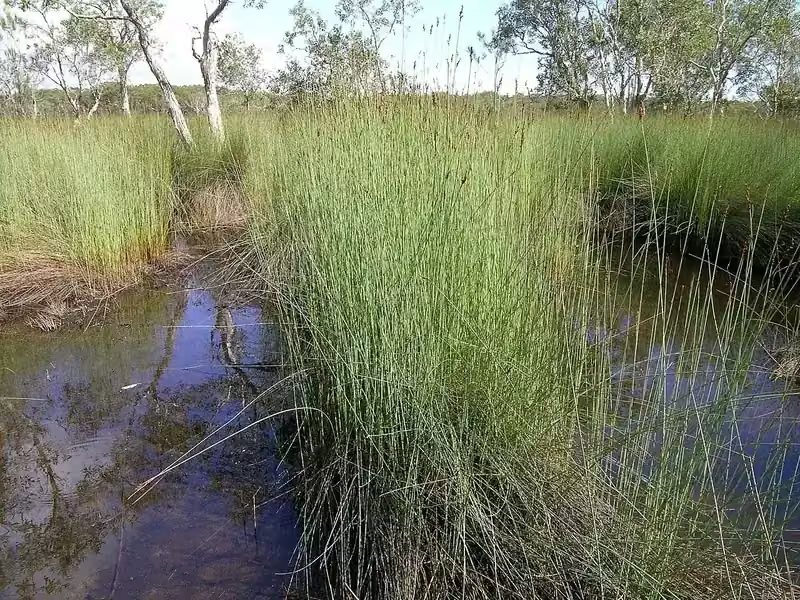
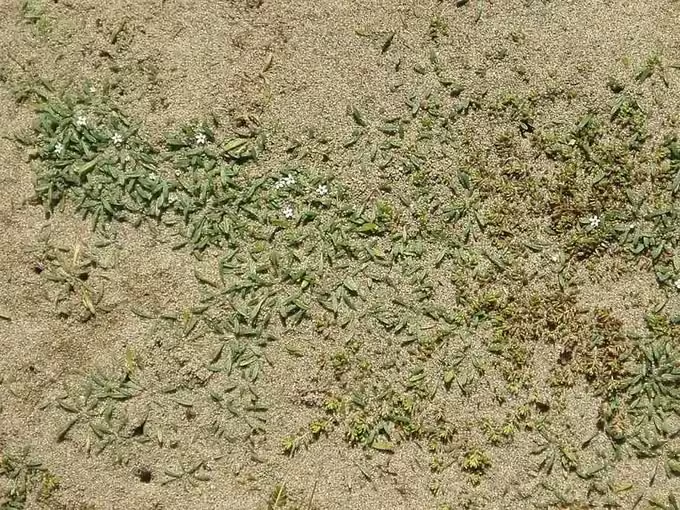
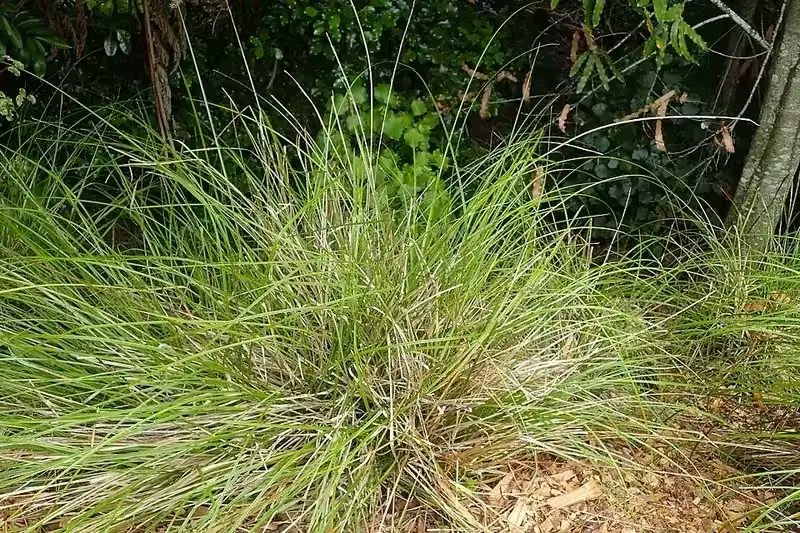
Explore other native plants that share similar characteristics or habitats with Dwarf Rush ( Juncus pusillus ), offering further insights into New Zealand's diverse flora. These related species provide context and opportunities for complementary planting in your garden.


Plant Conservation
Conservation Status and Threats
Currently classified as 'At Risk - Naturally Uncommon', Juncus pusillus is secure in its wild island and mountain habitats. However, its specialized boggy niche is highly sensitive to changes in hydrology and nutrient levels. Protecting New Zealand's pristine mountain tarns and alpine bogs ensures that even the smallest members of our flora, like the Dwarf Rush, continue to thrive in their natural environment.
Frequently Asked Questions
How tall does Dwarf Rush grow?
It is tiny, usually only 1 to 5 cm tall, forming dense creeping patches.
Where does Dwarf Rush grow naturally?
It grows in wetlands such as cushion bogs, alpine seepages, and the muddy margins of tarns, lakes, and rivers.
Does Dwarf Rush tolerate frost?
Yes, it is highly frost-tolerant and suited to montane and alpine climates.
Is Dwarf Rush threatened?
It is classified as At Risk - Naturally Uncommon in New Zealand.
Sources and Further Reading
The botanical, growing, and conservation details for Dwarf Rush (Juncus pusillus) on this page draw on authoritative New Zealand plant references and citizen-science observation records. Consult the sources below for full technical records and the latest distribution data.