Short Rush
Juncus scheuchzerioides
Last updated:
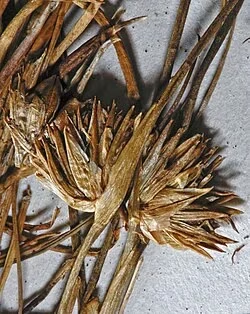
Short Rush (Juncus scheuchzerioides) is a densely tufted, mat-forming perennial rush found on many remote southern islands, including New Zealand's subantarctic Antipodes, Auckland, and Campbell Islands. Its short stems, 2 to 30 cm long, range from bright to dark green with a reddish tinge and are densely branched from the base, bearing narrow, transversely septate leaves. In summer it produces compact terminal heads of 2 to 8 small brownish flowers. Almost always associated with water, it grows in wet peaty turf, on stream banks, and around the margins of alpine and subantarctic pools. It is extremely frost-hardy and needs full sun to very light shade. Explore more wetland native plants in our native plant guide.
Plant Description
Identification and Physical Characteristics
Juncus scheuchzerioides , commonly known as the Short Rush or Greater Rush, is a densely tufted, erect perennial rush. It is a circumpolar species, found on many of the world's most remote southern islands. The plant features stems that range from bright to dark green, sometimes taking on a reddish-green hue. These stems are relatively short, typically between 2 and 20 cm long, and are densely branched from the base. The leaves are narrow, linear, and distinctly transversely septate-a characteristic feature of many Juncus species. During the summer months, the Short Rush produces compact, terminal heads containing 2 to 8 small, brownish flowers. Its growth habit is mat-forming, with creeping fibrous roots that allow it to colonize damp, muddy substrates effectively.
Quick Facts
| Scientific Name | Juncus scheuchzerioides |
|---|---|
| Height | 2-30 cm |
| Spread | Mat-forming; spreading |
| Water Needs | High; requires saturated or flooded soil |
| Light | Full sun to very light shade |
| Frost Tolerance | Very high |
| Salt Tolerance | Medium |
| Growth Rate | Slow to moderate |
| Lifespan | Perennial |
Climate Best Suited to
Short Rush is ideally suited to cool, temperate, and subantarctic climates. It is highly adapted to the high-latitude environments of the Antipodes, Auckland, and Campbell Islands. It thrives in regions with high rainfall, high humidity, and relatively consistent, cool temperatures. It is extremely frost-hardy and can survive prolonged periods of snow cover. While it can be grown in mainland New Zealand, it requires positions that remain cool and perpetually wet, particularly in the warmer North Island regions.
Regional Suitability
| City | Climate Suitability |
|---|---|
| Auckland | Low (Requires cooling) |
| Wellington | Medium |
| Christchurch | Medium |
| Dunedin | High |
| Invercargill | High |
Plant Habitat
Natural Occurrence and Ecology
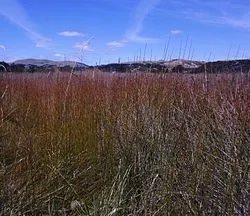
The natural habitat of Juncus scheuchzerioides is almost always associated with running or standing water. It is a common feature of wet, peaty turf, stream banks, and the margins of alpine and subantarctic pools. It often forms large, exclusive stands in boggy depressions or on saturated rocky ledges. Its distribution spans from sea level up to 300 meters in its island homes, representing a specialized flora that has evolved to flourish in the nutrient-poor but water-rich environments of the Southern Ocean.
Growing Requirements
Soil Requirements
Demands acidic, peaty soil that remains constantly saturated. It can tolerate thin soils over rock if moisture is permanent.
- Peaty/Organic
- Acidic
- Consistently wet
Light Requirements
Best in full sun. High light intensity is preferred to maintain the plant's dense, tufted form and encourage flowering.
- Full Sun
- Bright light
Water Requirements
Extremely high water needs. It requires "wet feet" at all times and can handle periodic total submersion.
- Constant saturation
- High humidity
Planting and Establishing
Establishment Guidance
When establishing Short Rush in a garden, choose a location that mimics its native boggy environment. It is an excellent plant for the edge of a pond or a specialized bog garden where the water table is high. Incorporate plenty of acidic organic matter, such as peat or finely shredded bark, into the planting area. Space plants about 15-20 cm apart; they will slowly spread via their creeping roots to form a continuous carpet. Ensure the new transplants are kept saturated during the first growing season to encourage successful establishment.
Ecological Role
Biodiversity and Ecosystem Impact
Juncus scheuchzerioides is a vital component of subantarctic wetland ecosystems. Its dense, mat-forming growth habit helps to stabilize peaty soils and prevent erosion in high-rainfall island environments. It acts as a natural bio-filter, trapping sediment and recycling nutrients in cool-water systems. Furthermore, its stands provide important nesting and foraging habitat for specialized subantarctic birds and support a variety of unique high-latitude invertebrates. It is an essential pioneer species in the colonisation of bare, wet rocky surfaces.
Uses & Significance
Garden Uses
In specialized gardens, this rush is used for pond margins, alpine houses, or as a textured element in a bog garden. Its small scale makes it ideal for containerized wetland displays.
- Pond margins
- Bog gardens
- Alpine troughs
Ecological Value
It is ecologically significant as a key habitat-former in subantarctic peatlands and for its role in maintaining water quality in pristine remote environments.
- Soil stabilization
- Wildlife habitat
- Sediment trapping
Landscaping Uses
Landscape designers value Juncus scheuchzerioides for its refined, vertical texture and its ability to cover saturated ground where few other plants can thrive. It is used to create soft, green transitions between water bodies and terrestrial plantings. Because it is slow-growing and compact, it provides a neat, low-maintenance solution for specialized wetland features where a larger rush would be too dominant.
Seasonal Care Calendar
Spring
Active growth period. Check the area for any invasive weeds that may have established in the damp soil and remove them gently.
- Monitor growth
- Weeding
Summer
Flowering and seed maturation. Ensure the water supply is constant; even brief drying out can be fatal to this specialist species.
- Intensive watering
- Observe flowers
Autumn
Growth slows as temperatures drop. A good time for dividing clumps if you wish to expand your wetland planting area.
- Clump division
- Clear debris
Winter
The plant is dormant and extremely cold-hardy. No special care is needed, though ensuring the site does not dry out is essential.
- Cold protection
- Check moisture
When to Prune and How Much
Short Rush requires very little pruning.
- Remove dead stems in late winter
- Trim back spent flower heads
Simply tidy up the clump by removing any brown or yellowing stems in early spring to make way for new growth. Do not cut back hard into the base.
How to Grow Short Rush
Growing Short Rush ( Juncus scheuchzerioides ) is an engaging horticultural challenge for those interested in the unique flora of the Southern Ocean. This species is naturally adapted to the cool, nutrient-limited, and perpetually wet conditions of subantarctic islands, which means its successful cultivation on the mainland depends on providing a consistently damp and cool niche. It is a plant that truly thrives when its "feet" are wet, making it a perfect candidate for specialized wetland features.
The most reliable way to propagate Short Rush is through the division of established tufts. Because the plant naturally forms dense clumps with creeping roots, it is quite easy to separate sections for replanting. The best time for division is in late winter or early spring, just as the first signs of new growth appear. Carefully lift a healthy clump and pull it apart into smaller pieces, ensuring each division has several stems and a good portion of the fibrous root system. Replant these immediately into saturated, peaty soil. Maintaining high humidity and consistent moisture is critical during the first few weeks after division to allow the roots to re-establish.
From Seed
Propagation from seed is also possible and is a good way to maintain genetic diversity. Collect the small nuts in late summer once they have turned a dark brown.
Sow the seeds onto the surface of a fine, pre-moistened peat-based seed-raising mix. They require light to germinate, so do not cover them with soil; a very fine sifting of grit can help keep them in place. Place the tray in a saucer of water to ensure the medium stays completely saturated. Keep the tray in a cool, bright position.
- Collect ripe nuts in late summer.
- Sow on surface of moist peat mix.
- Maintain constant water saturation.
Germination is usually slow but reliable if the seeds are fresh and kept cool. Once the seedlings reach about 5 cm in height, they can be pricked out into individual pots and grown on for a season.
Pests & Diseases
Short Rush is generally free from serious pests and diseases. Its tough, fibrous stems are unappealing to most common garden insects. However, in poorly drained, stagnant conditions where oxygen levels are low, it can occasionally be susceptible to fungal root rot. Ensuring some water movement or oxygenation in your wetland feature is the best preventative measure. Slugs and snails may occasionally browse on the succulent base of the stems in early spring.
Cultural Significance
As a subantarctic specialist, Juncus scheuchzerioides represents the extreme southern edge of New Zealand's botanical reach. It is a significant part of the remote island ecosystems that are now protected as World Heritage sites. While it lacks the large-scale cultural profile of mainland species, it is a symbol of the primeval and resilient nature of the life forms that inhabit our southernmost territories. Its presence serves as a botanical link across the Southern Ocean, connecting New Zealand to other circumpolar landmasses and highlighting our role as stewards of unique global biodiversity.
- Symbol of subantarctic resilience
- Indicator of remote wetland health
- Circumpolar botanical heritage
Bonus Tip
For a truly naturalistic alpine look, grow Short Rush in a shallow stone basin with no drainage holes. Fill the basin with peat and crushed stone, and keep it filled with water. This creates a miniature "subantarctic pool" that will showcase the intricate texture of the rush perfectly.
Related Plants
Explore other native plants that share similar characteristics or habitats with Short Rush ( Juncus scheuchzerioides ), offering further insights into New Zealand's diverse flora. These related species provide context and opportunities for complementary planting in your garden.


Plant Conservation
Conservation Status and Threats
Currently classified as 'At Risk - Naturally Uncommon' due to its restricted and remote range, Juncus scheuchzerioides is generally secure in its wild island habitats. However, its survival depends on the continued protection of these remote nature reserves from introduced species and the potential impacts of global climate change on subantarctic peatlands. Continued monitoring of these fragile southernmost ecosystems is essential for the long-term conservation of this specialized rush.
Frequently Asked Questions
How tall does Short Rush grow?
Its stems are short, ranging from about 2 to 30 cm long, and it spreads to form mats.
Where does Short Rush grow naturally?
It grows in wet peaty turf, on stream banks, and around alpine and subantarctic pool margins, including New Zealand's subantarctic islands.
Does Short Rush tolerate frost?
Yes, it is extremely frost-hardy and suited to cool, temperate, and subantarctic climates.
Is Short Rush threatened?
It is classified as At Risk - Naturally Uncommon in New Zealand.
Sources and Further Reading
The botanical, growing, and conservation details for Short Rush (Juncus scheuchzerioides) on this page draw on authoritative New Zealand plant references and citizen-science observation records. Consult the sources below for full technical records and the latest distribution data.