Everlasting Daisy
Anaphalioides bellidioides
Last updated:
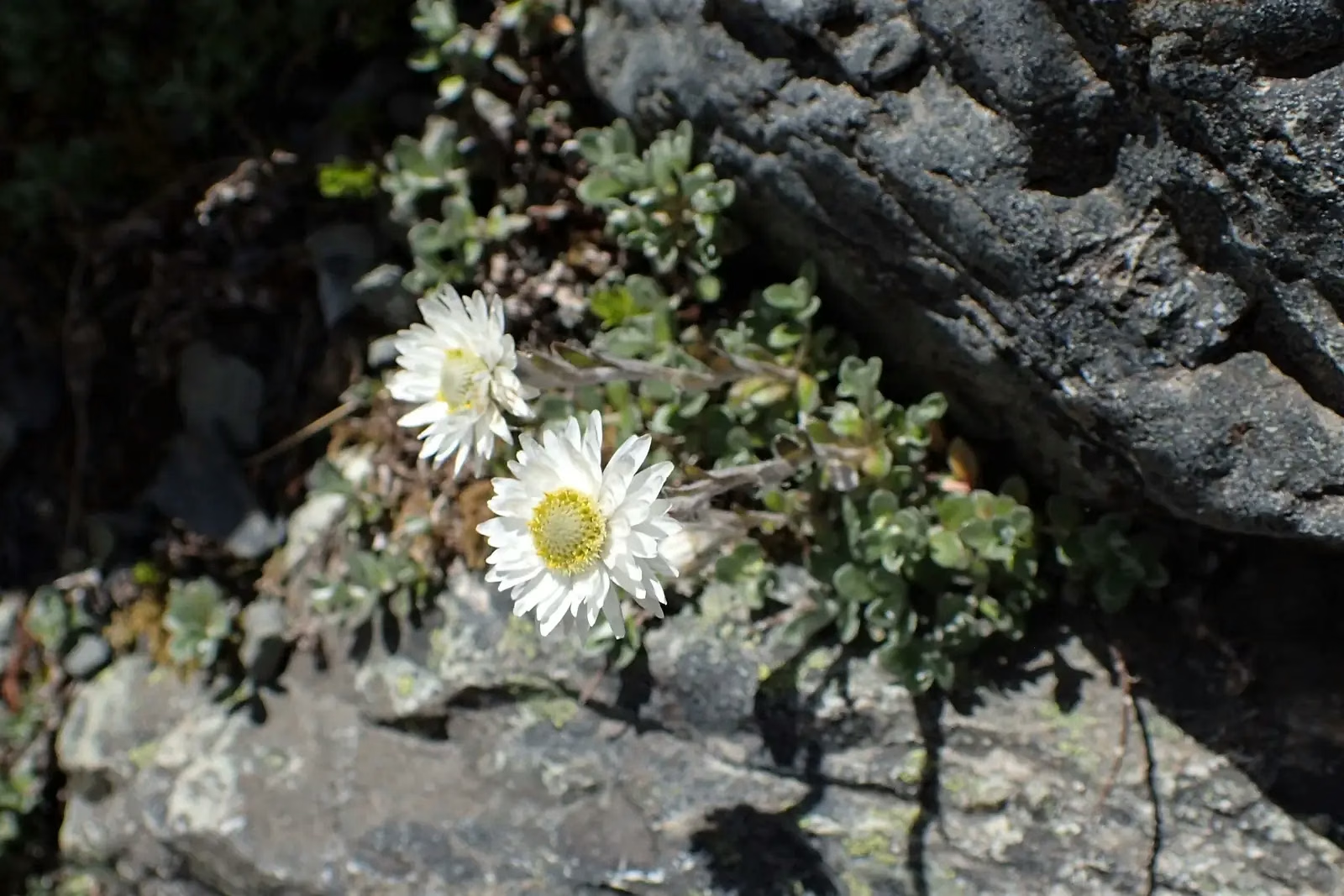
Everlasting Daisy (Anaphalioides bellidioides) is a small, prostrate, mat-forming shrub with trailing shoots up to 50 cm long, its rounded grey-green leaves felted with soft white hairs beneath. From October to December it produces numerous daisy-like heads about 4 mm across, with brilliant white papery bracts around a yellow disc that hold their shape even when dried, giving the plant its everlasting name. It spreads by rooting along the trailing stems to form persistent patches. Found from sea level to subalpine zones across the North Island, South Island and Stewart Island, it thrives on stony, free-draining sites and is very frost hardy. Explore more native plants such as Puatea.

Plant Description
Identification and Physical Characteristics
Anaphalioides bellidioides is a small, prostrate shrub featuring trailing shoots that can reach up to 50 cm in length. Its small, rounded leaves are characteristically grey-green on the upper surface and covered in soft white hairs (tomentum) underneath. During the flowering season from October to December, it produces numerous daisy-like heads, approximately 4 mm in diameter, with brilliant white papery bracts and a yellow central disc. These 'everlasting' flowers are a distinctive feature, maintaining their structure even when dry. The plant spreads by rooting along its trailing stems, allowing it to form persistent patches in suitable environments. The seeds are small, fluffy, wind-dispersed cypselae designed for efficient colonization of open ground.
Quick Facts
| Scientific Name | Anaphalioides bellidioides |
|---|---|
| Height | Variable by habitat |
| Spread | Forms clumps or patches |
| Water Needs | Low to moderate; free-draining soils |
| Light | Full sun; high light |
| Frost Tolerance | High - tolerant of severe freezes |
| Salt Tolerance | Low to moderate |
| Growth Rate | Fast |
| Lifespan | Long-lived perennial |
Climate Best Suited to
Anaphalioides bellidioides is well adapted to various New Zealand regions.
Regional Suitability
| City | Climate Suitability |
|---|---|
| Auckland | High |
| Wellington | High |
| Christchurch | Medium |
Plant Habitat
Natural Occurrence and Ecology
Everlasting Daisy is a versatile species found in a wide variety of open habitats across New Zealand, from sea level up to subalpine regions. It is common throughout the middle and lower North Island and widespread in the South Island and Stewart Island. Its preferred environments include stable riverbeds, morainic gravels, rocky outcrops, and subalpine grasslands. It thrives in sites with thin, rapidly drained mineral soils where competition from larger plants is limited. The species is highly resilient to the extreme conditions of its mountain and coastal homes, demonstrating remarkable tolerance to intense UV radiation, gale-force winds, and severe winter frosts that characterize New Zealand's exposed landscapes.
Growing Requirements
Soil Requirements
Prefers well-draining soil rich in organic matter.
- Well-drained
- Loamy
Light Requirements
Grows best in partial to full sun.
- Full Sun
- Partial Shade
Water Requirements
Requires regular watering during dry periods.
- Regular
- Drought tolerant once established
Planting and Establishing
Establishment Guidance
Establishing Everlasting Daisy in a garden requires creating a high-light, well-drained environment that mimics its natural stony habitat. It must be planted in a very free-draining, gritty soil mix to prevent root rot, which is its primary vulnerability in lower-elevation cultivation. Choose an open, sunny position with excellent airflow to maintain its compact, mat-forming habit. Dig a hole slightly larger than the root ball and plant at the same level as the container. Provide moderate watering during its first summer to help the trailing shoots establish their root system, after which the plant becomes very drought-tolerant. It is an ideal candidate for native rockeries, alpine troughs, or as a decorative ground cover in a xeriscape design.
Ecological Role
Biodiversity and Ecosystem Impact
In its native ecosystems, Anaphalioides bellidioides plays a vital role as a structural component of the pioneer ground layer. Its sprawling growth habit helps stabilize loose soils on steep banks and river terraces, contributing to the overall health of the alpine and coastal environment. The plant provides essential micro-habitats for specialized soil invertebrates and provides a nectar source for native pollinators, including specialized bees and moths. It also serves as a host plant for the larvae of several native moths and flies. By covering bare mineral soil, it assists in the natural resilience and biological diversity of New Zealand's open plant communities, supporting the complex ecological networks of the high country and coastal zones.
Uses & Significance
Garden Uses
Everlasting Daisy is a superb choice for native rock gardens and alpine trough displays due to its compact habit and attractive, long-lasting flowers. Its fine-textured foliage and white-petalled blooms provide a beautiful visual interest that represents the rugged beauty of the New Zealand mountains. It is a highly desirable specimen for collectors of native alpines, offering a piece of the high-country in a very manageable garden scale. Because it is naturally low-growing and spreads via rooting stems, it is an excellent native ground cover for filling small gaps or for use as a fine-textured edging along sunny pathways. The dried flower heads can also be used in indoor floral arrangements.
- Specialized rock gardens
- Alpine trough accents
Ecological Value
Ecologically, it is a valuable species for high-altitude restoration projects and for stabilizing riparian margins in montane zones. It supports local biodiversity by providing habitat for specialized invertebrates and contributes to the overall stability and health of the alpine and subalpine plant communities where it naturally occurs.
- Native pollinator support
- Soil stabilization
Landscaping Uses
In contemporary landscape design, Everlasting Daisy provides a sophisticated and resilient ground-level texture. Its fine, mat-forming habit and grey-green foliage provide a sense of structure and authenticity in mountain-themed or minimalist native garden designs. It is most effective when planted in small, irregular groups among large natural boulders or mass-planted on dry, sunny banks to create a naturalistic high-country look. The play of light through its delicate, papery flowers in summer adds a dynamic and vertical element to the landscape. Its reliable performance and tidy habit make it a low-maintenance and highly effective choice for high-quality native landscaping in exposed garden environments.
Seasonal Care Calendar
Spring
The start of the active growth surge. Check for any winter damage or debris caught in the mat and gently remove it. This is an ideal time to apply a very light dressing of organic native fertilizer around the base to encourage healthy new foliage.
- Fertilize
- Mulch
Summer
Produces elegant white daisy-like flowers from October to December. Provide deep, occasional watering during extreme dry spells to maintain foliage density, ensuring the foliage remains well-ventilated to prevent any risk of rot from humidity.
- Water
- Check for pests
Autumn
The wind-dispersed seeds mature in autumn. This is a good time to tidy the surrounding area and ensure the site remains free-draining before the onset of the alpine winter. You can take semi-hardwood cuttings for propagation now.
- Prune lightly
- Plant new specimens
Winter
Naturally very frost-hardy and adapted to snow cover. Requires minimal care during the winter months; simply avoid heavy foot traffic or disturbance to the root zone while the ground is frozen to protect the dormant plant.
- Frost protection
When to Prune and How Much
Everlasting Daisy requires very little pruning to maintain its health and appearance. Maintenance is generally limited to the occasional removal of old, dead leaf blades or spent flower stalks to keep the mat looking fresh and to allow more light to reach the new growth in the center. This should be done using sharp scissors or shears to cut the stems back lightly if the plant has become overly leggy. Avoid cutting back into the base of the stems, as this can damage the primary growing points. Always use clean tools to prevent the introduction of pathogens to the plant and to ensure quick recovery after maintenance.
- Remove dead branches
Always use clean, sharp tools.
How to Grow Everlasting Daisy
Cultivating Everlasting Daisy ( Anaphalioides bellidioides ) is a rewarding process for the patient native gardener. This hardy species can be propagated through several methods, including semi-hardwood cuttings, division, and seed. Success depends on providing the cool, high-light, and perfectly drained conditions it thrives in throughout its native mountain range home. It is an excellent species for those looking to introduce resilient alpine flora into their collections.
From Seed
Propagation from seed is straightforward using fresh material collected in late summer. The fine seeds should be sown onto the surface of a gritty, free-draining seed-raising mix. They benefit from a period of cold stratification to trigger uniform germination. Placing the sown trays in a cool, bright outdoor position over winter is often the most effective method for home gardeners to trigger germination in the spring. Germination is usually reliable if the seeds are fresh and handled with care.
Sow fresh seeds in a seed-raising mix.
- Collect seeds
- Sow in trays
Keep moist until germination.
From Cuttings
The fastest method for home gardeners to increase their stock is taking semi-hardwood cuttings in late summer or autumn. Use a high-quality rooting hormone and place the cuttings in a well-drained, gritty mix. They should be kept in a high-humidity environment until new growth is evident. Division of established mats in early spring is also a reliable method, ensuring each piece has a healthy portion of the rooted trailing stems.
Take semi-hardwood cuttings in late summer.
- Take cuttings
- Use rooting hormone
Additional Methods
Depending on the growth habit of Anaphalioides bellidioides , other methods such as division or layering might also be viable options. Division is particularly suitable for plants that form dense clumps or have spreading root systems, while layering can be used for species with trailing or flexible stems.
Young daisies are sensitive to drying out and must be kept in a consistently moist environment during their first few seasons. They are best established in a site free from aggressive competition from larger weeds. A top-dressing of fine gravel or crushed rock around the base will help regulate soil moisture and provide the well-drained conditions the delicate mats require to thrive and spread naturally.
- Divide clumps
- Replant immediately
Pests & Diseases
Everlasting Daisy is remarkably resistant to most common garden pests once established. Occasionally, aphids or specialized moth larvae may target the new growth. The most significant threat is root and crown rot, caused by poor drainage, overwatering, or excessive humidity in lowland garden environments. Choosing a well-ventilated, sunny position with perfect drainage is the best way to ensure the long-term health of your daisy and to prevent any physiological issues from developing.
Cultural Significance
The Everlasting Daisy represents the resilient and unique beauty of New Zealand's indigenous alpine flora. Its papery flowers have long been admired by botanists and native plant enthusiasts for their ability to persist through the harsh mountain weather. For Māori, these plants were part of the broader high-country landscape, representing the endurance required to survive in extreme environments. Today, it stands as a symbol of the fragile and exquisite biodiversity of our native mountains, valued by conservationists and gardeners alike.
- Traditional medicine
- Crafts
Bonus Tip
To achieve the most stunning display of Everlasting Daisy, plant it in a large container or a raised rockery where its trailing stems can cascade over the edge. The combination of its grey-green foliage and bright white flowers create a professional-looking and authentic native mountain feature in the garden.
Related Plants
Explore other native plants that share similar characteristics or habitats with Anaphalioides Bellidioides ( Anaphalioides bellidioides ), offering further insights into New Zealand's diverse flora. These related species provide context and opportunities for complementary planting in your garden.


Plant Conservation
Conservation Status
Currently classified as 'Not Threatened' nationally, Everlasting Daisy remains a stable component of New Zealand's flora across its wide natural range. However, its long-term survival is linked to the preservation of specialized high-country habitats and mountain meadows, which are vulnerable to climate change and the potential spread of invasive weeds into the subalpine zone. Protecting these unique mountain environments and maintaining the integrity of alpine hydrological regimes are key strategies for ensuring this resilient daisy continues to thrive across its natural range.
Frequently Asked Questions
What does Anaphalioides bellidioides look like?
It is a prostrate mat-forming shrub with grey-green leaves and white papery daisy heads about 4 mm wide.
When does the Everlasting Daisy flower?
It flowers from October to December, producing daisy heads with white papery bracts and a yellow centre.
Where does Anaphalioides bellidioides grow?
It grows from sea level to subalpine zones across the North Island, South Island and Stewart Island.
Is the Everlasting Daisy frost hardy?
Yes, it has high frost tolerance and withstands severe freezes on thin, free-draining soils.
Sources and Further Reading
The botanical, growing, and conservation details for Everlasting Daisy (Anaphalioides bellidioides) on this page draw on authoritative New Zealand plant references and citizen-science observation records. Consult the sources below for full technical records and the latest distribution data.