Mercury Bay Weed
Dichondra repens
Last updated:
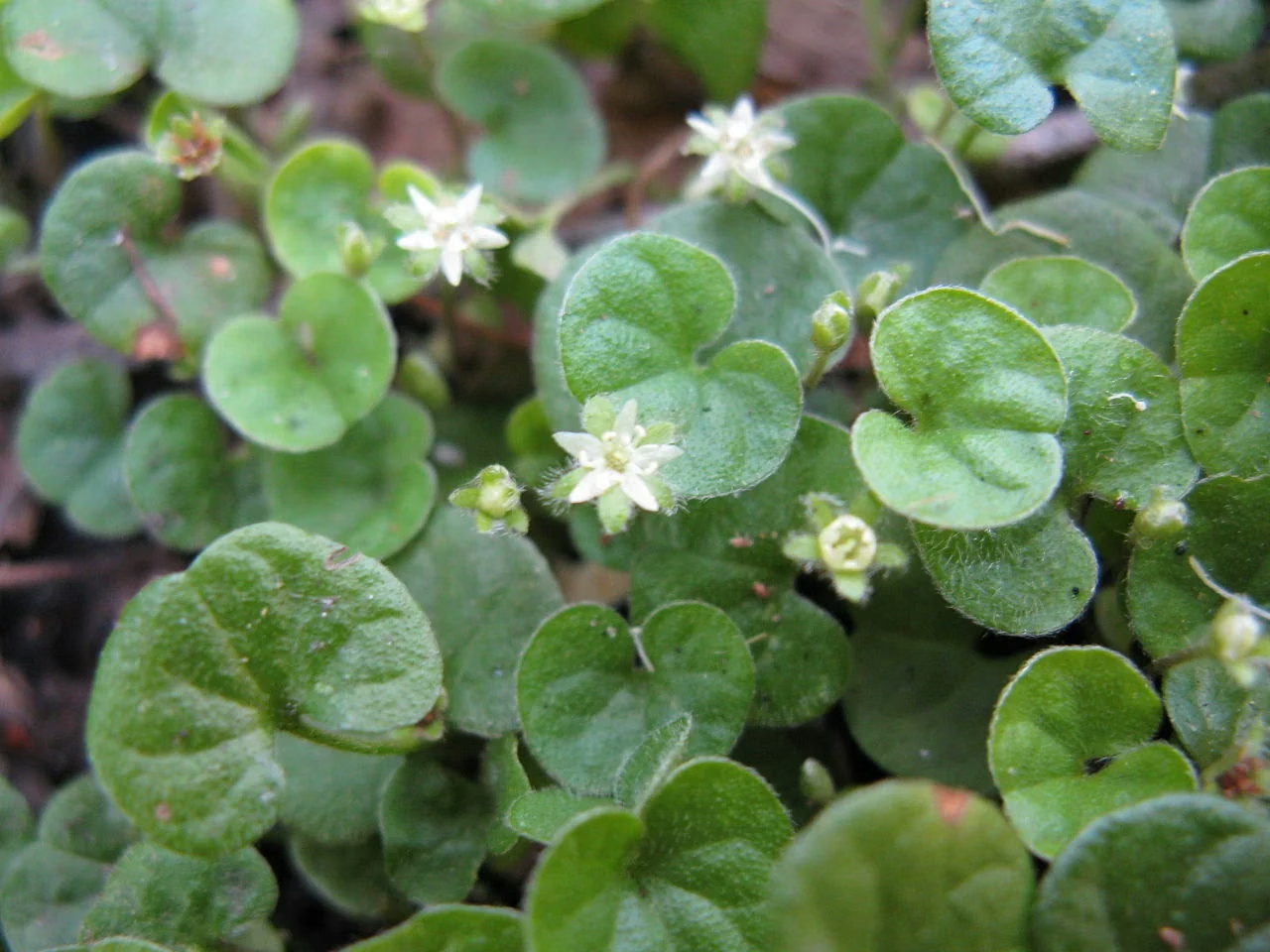
Dichondra repens, commonly known as Mercury Bay weed, is an evergreen perennial ground cover native to New Zealand. It forms a tight, prostrate mat rarely more than 5 to 10 cm high, spreading indefinitely by creeping stolons that root at the nodes to colonise bare ground quickly. Its most attractive feature is the foliage: small, bright to mid-green, circular to kidney-shaped leaves with a soft, slightly hairy texture. The tiny greenish-yellow to white flowers are largely hidden beneath the leaves in spring and summer. Fast-growing and versatile, it grows in damp, shaded forests, grasslands and coastal sites, and is widely used as a low-maintenance lawn substitute. Explore more native ground covers in our native plant guide.
Plant Description
Identification and Physical Characteristics
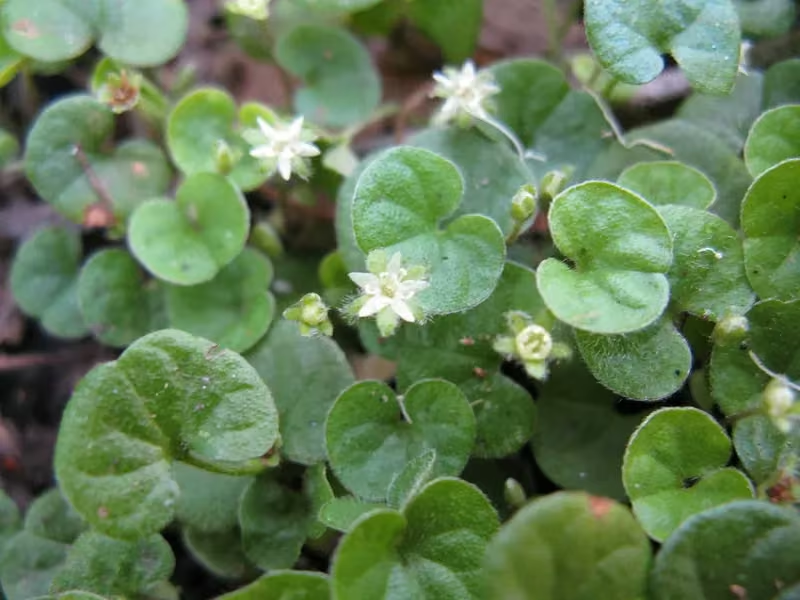
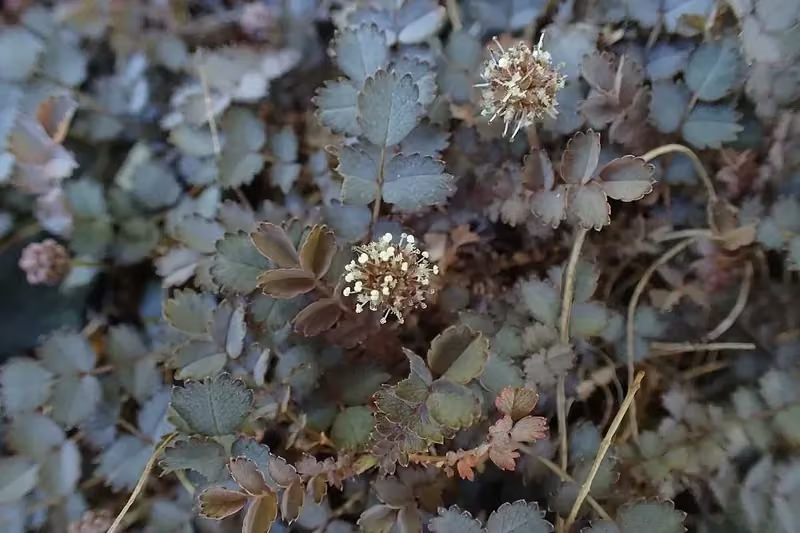
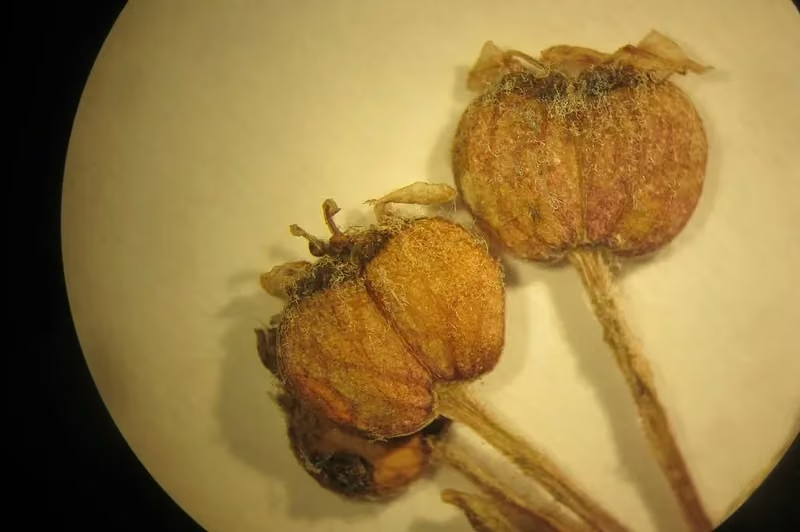
Dichondra repens is an evergreen perennial herb that forms a tight, prostrate mat rarely exceeding 5 to 10 cm in height. It spreads via creeping stolons that root at the nodes, allowing it to rapidly colonize bare ground. The foliage is the plant's most attractive feature: the leaves are small (5-25 mm long), circular to kidney-shaped (reniform), and a bright to mid-green colour. They have a soft, slightly hairy texture and are arranged alternately along the trailing stems. The flowers are minute and often hidden beneath the foliage; they are greenish-yellow or white, star-shaped, and appear primarily in spring and summer. Following flowering, the plant produces small, two-lobed capsules containing few seeds.
Quick Facts
| Scientific Name | Dichondra repens |
|---|---|
| Height | 5-10 cm (Creeping) |
| Spread | Indefinite (Colonizing) |
| Water Needs | Moderate to High |
| Light | Full Sun to Part Shade |
| Frost Tolerance | Moderate |
| Salt Tolerance | Moderate |
| Growth Rate | Fast |
| Lifespan | Perennial |
Climate Best Suited to
Mercury Bay Weed is highly versatile and found throughout New Zealand, from coastal dunes to forest margins. It thrives in temperate regions where humidity is moderate to high. While it is quite heat-tolerant, it performs best in cooler, moist environments. It can withstand light to moderate frosts, although growth may slow significantly or the foliage may brown off in severe southern winters. It is well-suited to the coastal climates of the North Island where it remains green year-round.
Regional Suitability
| City | Climate Suitability |
|---|---|
| Auckland | Highly Suitable |
| Wellington | Highly Suitable |
| Christchurch | Suitable |
| Dunedin | Suitable |
| Queenstown | Suitable (With protection) |
| Invercargill | Suitable |
Plant Habitat
Natural Occurrence and Ecology
In the wild, Dichondra repens is a common inhabitant of damp, shaded areas. It is frequently found in forests, woodlands, and grasslands, particularly on clay-based soils that retain moisture. It also colonizes riverbanks and coastal cliffs where competition from taller plants is limited by shade or salt spray. Because it roots at the nodes, it is an effective primary colonizer of bare patches of earth, often filling the gaps between larger native shrubs or under the forest canopy where it receives filtered light.
Growing Requirements
Soil Requirements
Thrives in moist, well-drained, and humus-rich soils. It is quite adaptable but performs poorly in waterlogged clay.
- Moist but drained
- Humus rich loam
- Tolerates clay loam
Light Requirements
Prefers partial shade or filtered sunlight. In full sun, the leaves may become smaller and tighter to protect from drying.
- Filtered sunlight
- Partial shade
- Full sun (with water)
Water Requirements
Needs regular watering, especially during establishment and dry summer months. It is not deeply drought-tolerant.
- Consistent moisture
- Damp conditions
- High humidity preferred
Planting and Establishing
Establishment Guidance
Establishing Mercury Bay Weed is very successful due to its vigorous creeping habit. When planting from containers, space individual plants about 20-30 cm apart. Within one growing season, they will typically merge to form a complete cover. It is best planted in spring or autumn. Ensure the site is free of perennial weeds before planting, as these can be difficult to remove from within the established mat. For a lawn-like effect, prepare the ground by loosening the soil and adding compost. Keep the area well-watered until the mat is fully established and the stems have rooted firmly into the substrate.
Ecological Role
Biodiversity and Ecosystem Impact
Dichondra repens plays a crucial role in preventing soil erosion in damp habitats. Its dense root system and overlapping leaves stabilize the soil surface, protecting it from heavy rain and runoff. The mat provides a cool, moist microclimate for soil invertebrates and fungi, which are essential for nutrient cycling. In forest margins, it acts as a "living mulch," suppressing the germination of exotic weed seeds and creating a transition zone that supports native biodiversity.
Uses & Significance
Garden Uses
One of the most popular native ground covers in New Zealand. It is an excellent lawn substitute for low-traffic areas and is perfect for filling gaps between stepping stones or underplanting larger trees.
- Lawn alternative
- Between pavers
- Hanging baskets
Ecological Value
Supports healthy soil biology and prevents surface erosion. It is a key species for urban biodiversity and restoration planting in shaded areas.
- Erosion control
- Soil micro-habitat
- Weed suppression
Landscaping Uses
Landscapers value Mercury Bay Weed for its clean, uniform look and soft texture. It is frequently used in modern minimalist designs to create a "green void" that requires much less maintenance than a traditional lawn. Its ability to spill over the edges of pots and retaining walls adds a sense of flow and softness to architectural features. It is also an ideal choice for rain gardens where its moisture-loving nature is a benefit.
Seasonal Care Calendar
Spring
Main growth flush. Apply a balanced slow-release fertilizer to encourage a dense mat. This is the best time for propagation.
- Fertilize
- Divide mats
Summer
Monitor for drying out. If the leaves begin to wilt or curl, provide a deep watering in the early morning.
- Irrigate if dry
- Keep edges tidy
Autumn
Another growth period. Growth will slow as temperatures drop. Remove any fallen tree leaves that might smother the mat.
- Clear debris
- Edge trimming
Winter
Growth slows significantly. In frost-prone areas, avoid walking on the mat if it is frozen to prevent foliage damage.
- Avoid traffic
- Minimal care
When to Prune and How Much
Mercury Bay Weed is generally low-maintenance, but occasional trimming helps maintain its neat appearance. If used as a lawn substitute, it can be mowed 3-4 times a year on a high setting.
- Trim edges regularly
- High-cut mowing (optional)
Regularly trim the trailing stems if they begin to encroach on paths or climb into nearby small shrubs. This encourages the mat to stay dense and tight to the ground.
How to Grow Mercury Bay Weed
Cultivating Mercury Bay Weed ( Dichondra repens ) is a straightforward and highly satisfying project for any gardener. This species is naturally designed to spread, making it one of the easiest native ground covers to establish. The key to a successful mat lies in the initial ground preparation and ensuring consistent moisture during the first few months. Once established, it is remarkably resilient and can even tolerate light foot traffic, making it a functional as well as aesthetic choice for the home landscape. Whether you are using it to replace a traditional grass lawn or to soften the edges of a shaded garden path, Mercury Bay Weed responds well to basic care and provides a lush, evergreen result.
From Division
The most efficient way to propagate Dichondra repens is through the division of established mats. Since the plant naturally roots at every node along its creeping stems, any section of the mat is a potential new plant.
This method is best performed in early spring or autumn when the weather is mild.
- Locate a healthy, dense mat of Mercury Bay Weed.
- Use a sharp trowel to cut out a square plug (approx. 5-10 cm) of the mat, ensuring you take the roots and some soil.
- Prepare the new site by loosening the soil and adding a little compost if the soil is poor.
- Space the plugs about 20-25 cm apart in the new area.
- Firm the soil around each plug and water thoroughly.
- Keep the area consistently moist for the first 2-3 weeks until the plugs begin to send out new runners.
From Seed
Sowing from seed is also possible and is more economical for very large areas.
- Prepare a fine seedbed by removing all weeds and raking the soil smooth.
- Sow the small seeds evenly across the surface.
- Lightly rake the seeds into the soil or cover with a very thin layer of fine sand.
- Keep the surface constantly moist with a fine mist until germination occurs, usually within 10-14 days.
- Avoid walking on the area until the young plants have formed a complete carpet.
Additional Methods
Runners can also be redirected. If you have an area that is patchy, simply pin down the creeping stems into the bare soil using a small wire loop. The stem will quickly root at the contact point and begin filling the gap. This "layering" happens naturally but can be accelerated with a little manual intervention.
Pests & Diseases
Generally resistant to most pests. Slugs and snails may occasionally browse the leaves in very damp, shaded spots. In poorly drained soils or overwatered conditions, it can be susceptible to root rot or fungal leaf spots. Ensure good airflow and do not over-water if the soil is heavy clay.
Cultural Significance
Mercury Bay Weed is a classic component of the New Zealand landscape. Its name honors Mercury Bay, where early botanical collections were made. While not as prominent in traditional Māori lore as large canopy trees, it is respected as part of the diverse ground-level flora that protects the soil. In modern New Zealand, it has become a symbol of the move towards more sustainable, low-maintenance, and native-focused gardening practices.
- Sustainable gardening icon
- Coastal heritage plant
Bonus Tip
If you are using it between stepping stones, don't worry about stepping on it occasionally! A little bit of light traffic actually encourages the plant to grow tighter and more compact, making the mat even tougher and more attractive.
Related Plants
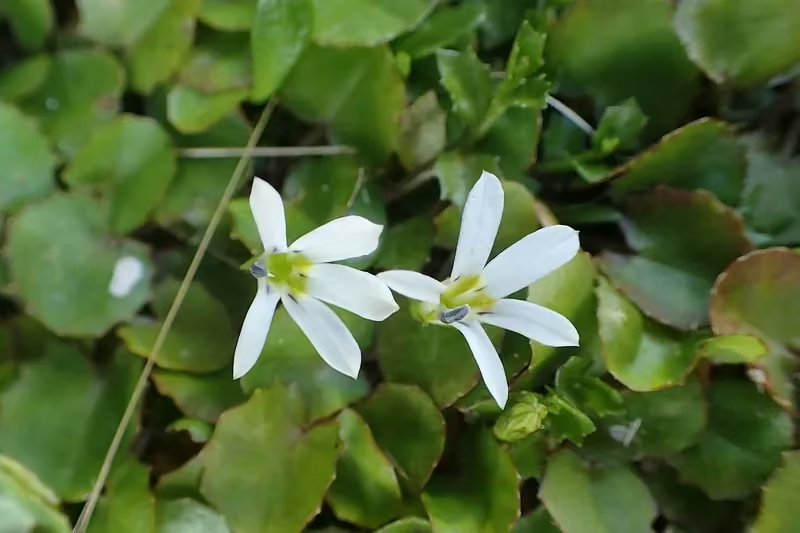
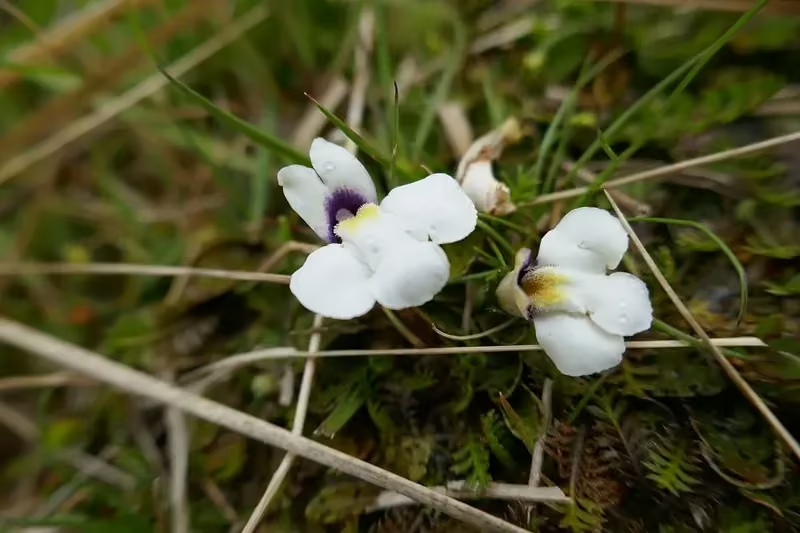
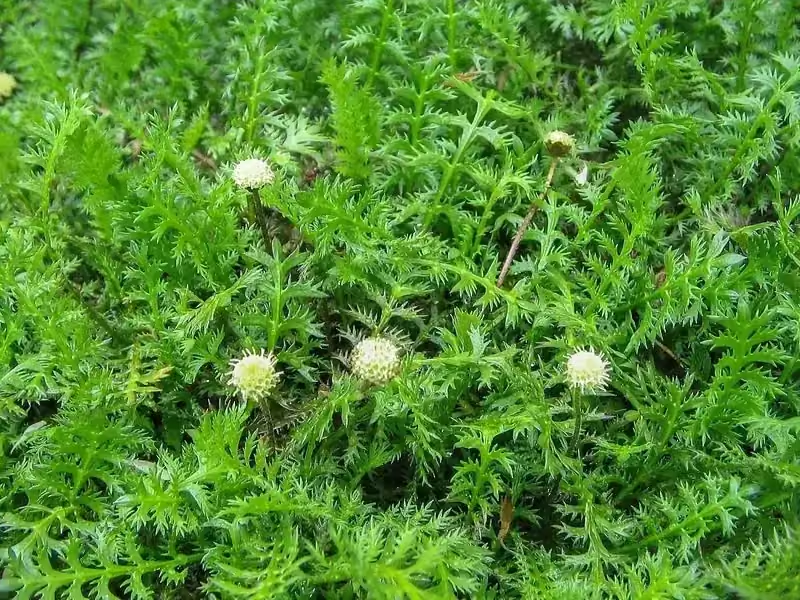
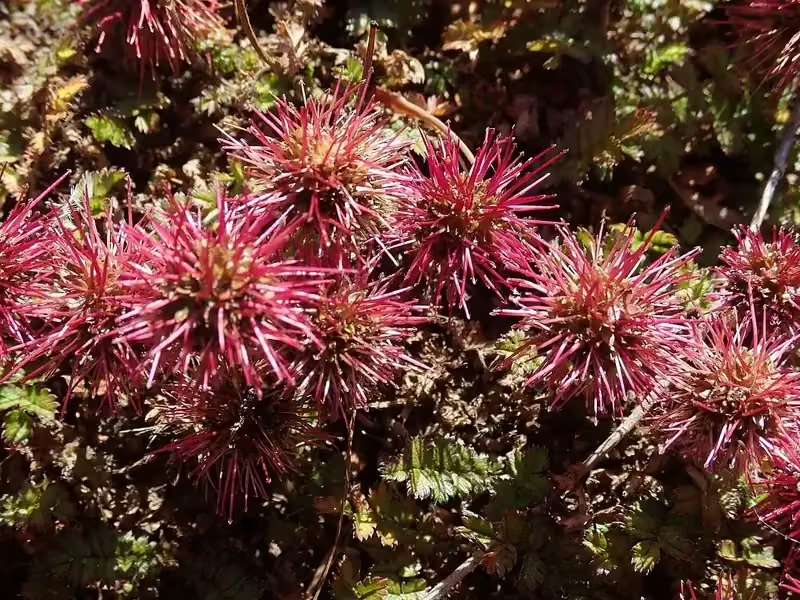
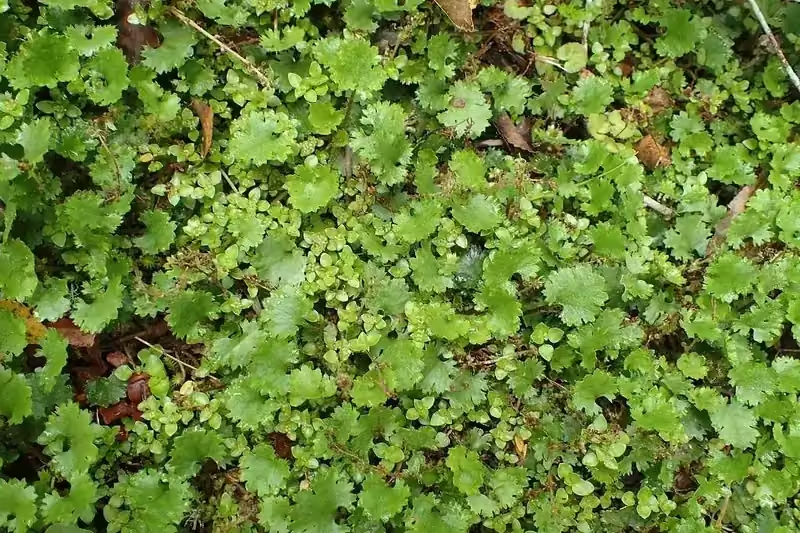
Explore other native plants that share similar characteristics or habitats with Mercury Bay Weed ( Dichondra repens ), offering further insights into New Zealand's diverse flora. These related species provide context and opportunities for complementary planting in your garden.
Plant Conservation
Conservation Status and Threats
Dichondra repens is currently classified as Not Threatened. It is a common and highly resilient plant that often benefits from human landscaping and the creation of open, shaded environments. While not a species of immediate concern, it is a valuable native alternative to invasive exotic ground covers and its use in gardens supports urban biodiversity.
Frequently Asked Questions
How tall does Dichondra repens grow?
It is a creeping ground cover that rarely exceeds 5 to 10 cm in height.
How fast does Mercury Bay weed spread?
It is fast-growing and spreads indefinitely by rooting stolons, quickly colonising bare ground.
Can Dichondra repens be used as a lawn?
Yes, it works well as a lawn substitute and can be mowed a few times a year on a high setting.
Does Dichondra repens tolerate frost?
It has moderate frost tolerance and withstands light to moderate frosts in temperate regions.
Sources and Further Reading
The botanical, growing, and conservation details for Mercury Bay Weed (Dichondra repens) on this page draw on authoritative New Zealand plant references and citizen-science observation records. Consult the sources below for full technical records and the latest distribution data.