Pygmy Sundew
Drosera pygmaea
Last updated:
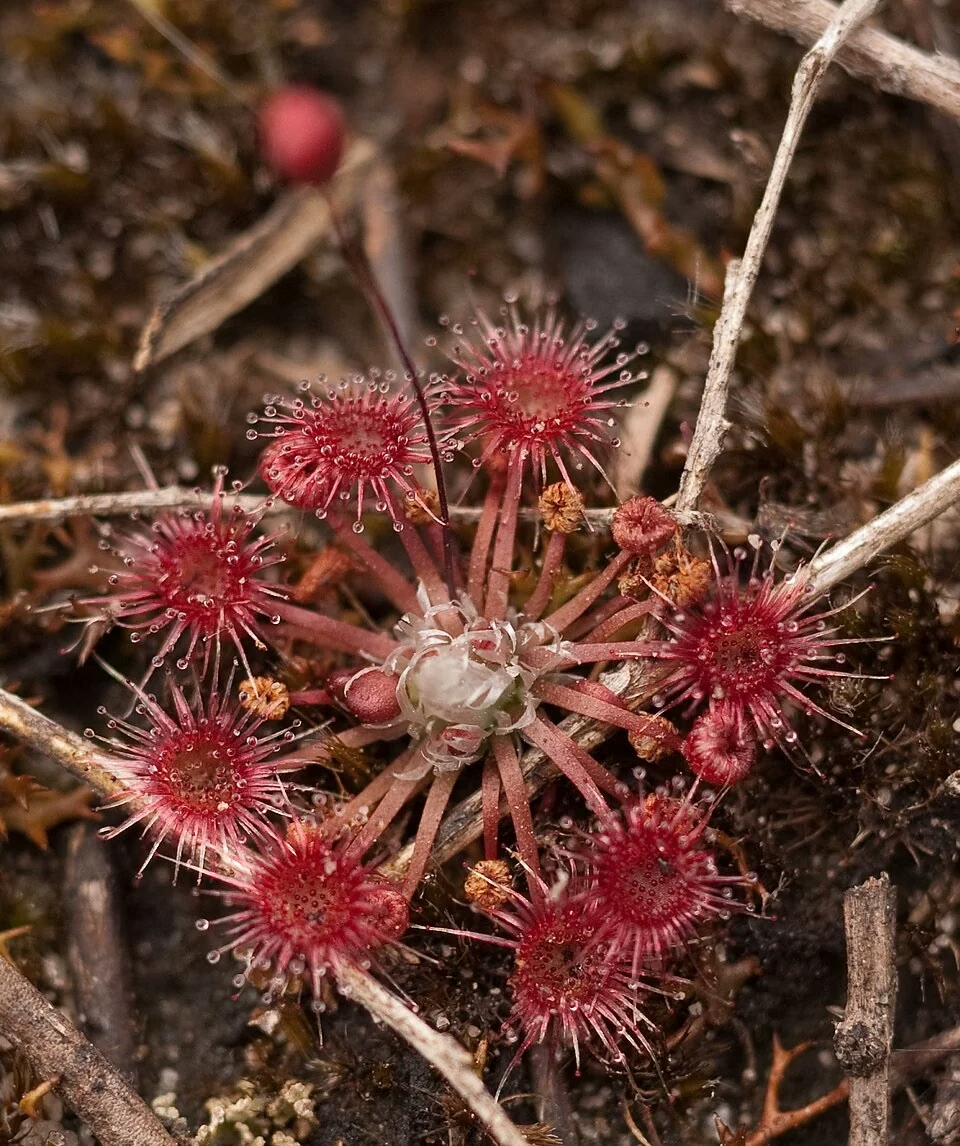
Pygmy Sundew (Drosera pygmaea) is, true to its name, one of the smallest species in the sundew genus, forming a ground-hugging rosette that rarely exceeds 1 to 2 cm across. Each leaf has a small circular blade on a slender stalk, densely covered in glandular hairs tipped with sticky mucilage that traps gnats and other minute insects. Colour ranges from bright yellowish-green to deep crimson in strong light. In summer it sends up very fine stalks, 2 to 5 cm long, each bearing a single tiny white flower. It grows in open, low-competition sites such as peat bogs, gumland shrublands and pakihi across New Zealand. Explore more wetland native plants in our native plant guide.
Plant Description
Identification and Physical Characteristics
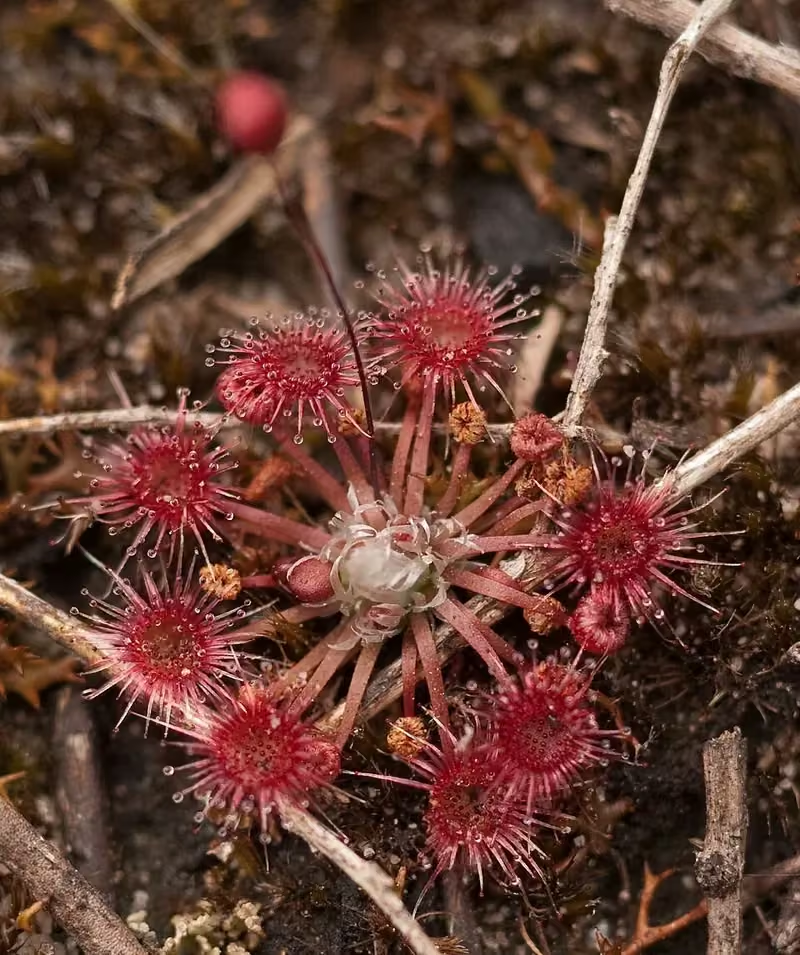
True to its name, Drosera pygmaea is one of the smallest species in the sundew genus. It forms a compact, ground-hugging rosette that rarely exceeds 1 to 2 cm in diameter. The individual leaves consist of a circular (orbicular) lamina supported by a long, slender petiole. These leaves are densely covered in glandular hairs, each tipped with a glistening drop of sticky mucilage that traps small gnats and other minute insects. The coloration can vary from a bright yellowish-green to a deep, intense crimson, especially when grown in high-light conditions. In summer, the plant produces incredibly fine flower stalks, about 2-5 cm long, bearing a single tiny white flower, typically with only four petals-a unique feature among many of its relatives.
Quick Facts
| Scientific Name | Drosera pygmaea |
|---|---|
| Height | 1-2 cm (Rosette) |
| Spread | 1-2 cm |
| Water Needs | High (Consistently Moist) |
| Light | Full Sun to Bright Light |
| Frost Tolerance | Moderate |
| Salt Tolerance | Low |
| Growth Rate | Moderate |
| Lifespan | Annual to Short-lived Perennial |
Climate Best Suited to
Pygmy Sundew is found in a variety of climates throughout New Zealand, from the subtropical North to the cooler regions of the South and Stewart Islands. It is often found in coastal gumlands and pakihi shrublands where humidity remains high. While it can tolerate some seasonal drying in its natural habitat by forming a protective tuft of reflective white stipules in the centre of the rosette, it performs best in temperate, moist climates with high light intensity.
Regional Suitability
| City | Climate Suitability |
|---|---|
| Auckland | Highly Suitable |
| Wellington | Suitable |
| Christchurch | Suitable |
| Dunedin | Suitable |
| Queenstown | Suitable |
| Invercargill | Suitable |
Plant Habitat
Natural Occurrence and Ecology
In New Zealand, the Pygmy Sundew is a specialist of open, low-competition environments. It is frequently found in peat bogs, swampy heaths, and seasonally damp clay pans. It also colonizes the margins of gumland shrublands and pakihi areas. Because of its minute stature, it is easily outcompeted by taller vegetation and therefore relies on sites where the soil is too acidic, nutrient-poor, or waterlogged for more aggressive plants to thrive. It is often found growing on bare patches of peat or among low mosses where it can receive maximum sunlight.
Growing Requirements
Soil Requirements
Requires a very lean, acidic, and mineral-free substrate. A mix of peat and sand is standard.
- Acidic peat moss
- Silica sand / perlite
- Zero fertilizer
Light Requirements
Needs very high light levels to maintain its health and vibrant red coloration. Full sun is best.
- Full sun
- Brightest possible spot
- LEDs for indoor growth
Water Requirements
Must be kept moist but not necessarily waterlogged at all times. Use only mineral-free water.
- Rainwater only
- Distilled water
- Bottom watering tray
Planting and Establishing
Establishment Guidance
Establishing Pygmy Sundews is usually done by sowing seeds or placing gemmae onto the surface of a prepared bog medium. Because the plants are so small, they should be grown in groups to create a visible "mat." Use a pot filled with a 50:50 mix of peat and silica sand. Keep the pot in a shallow tray of rainwater. When establishing, avoid disturbing the surface of the soil, as these tiny plants have very delicate, thread-like roots. It is best to establish them in their permanent container, as they do not transplant well once they have reached maturity.
Ecological Role
Biodiversity and Ecosystem Impact
Drosera pygmaea plays a fascinating role in the micro-ecosystems of New Zealand's bogs. By capturing very small insects, it cycles animal-derived nutrients into the otherwise sterile, nutrient-poor substrate. It acts as a primary colonizer of bare acidic soils, paving the way for other specialized wetland flora. Its presence is often indicative of a healthy, low-nutrient wetland ecosystem that has not been heavily enriched by agricultural runoff.
Uses & Significance
Garden Uses
Primarily used by carnivorous plant enthusiasts and terrarium builders. Its tiny size makes it a perfect candidate for detailed miniature bog displays or "bog bowls."
- Terrariums
- Miniature bog bowls
- Educational displays
Ecological Value
Contributes to the biodiversity of specialized, high-stress environments. It supports a community of micro-invertebrates and is part of New Zealand's unique botanical heritage.
- Insect population control
- Nutrient cycling
- Specialized habitat indicator
Landscaping Uses
Not typically used in general landscaping due to its minute size. However, it can be an effective feature in specialized native rockeries or "pocket bogs" where it can be viewed up close. It adds a layer of intricate detail to wetland-themed garden designs.
Seasonal Care Calendar
Spring
Period of active growth. Increase water levels in the tray and ensure the plant is receiving maximum sunlight.
- Monitor water levels
- Observation
Summer
Flowering period. The plant may produce stipules in the centre to reflect heat. Watch for drying out during hot spells.
- Top up rainwater
- Ensure high light
Autumn
Growth slows. This is the time when some pygmy sundews (though rarely this species in the wild in NZ) might produce gemmae.
- Check for gemmae
- Reduce water slightly
Winter
Minimal growth. In very cold areas, ensure the pot does not freeze solid for extended periods. Keep medium just moist.
- Frost protection
- Dormant phase
When to Prune and How Much
Pruning is virtually unnecessary for Drosera pygmaea . The dead leaves are so small they generally disappear or form a tiny mulch layer beneath the rosette.
- No pruning required
- Self-maintaining
You may choose to remove the tiny flower stalks once they have finished blooming and dried out, simply for aesthetic reasons.
How to Grow Pygmy Sundew
Cultivating the Pygmy Sundew ( Drosera pygmaea ) is a lesson in patience and appreciation for the minute details of nature. Because of its microscopic size, this plant requires specialized conditions that differ from standard horticultural practices. The key to success lies in maintaining a nutrient-free environment and providing intense light. While it is a resilient species, its small stature means it can be easily overwhelmed by moss or algae growth if the conditions are not managed correctly. Many growers find success by treating this plant as a miniature treasure, growing it in dedicated "bog bowls" or terrariums where it won't be lost among larger species.
From Seed
Seeds are the primary method of reproduction for Drosera pygmaea in New Zealand. The flowers are self-pollinating and produce tiny, dust-like seeds in late summer.
Fresh seeds should be sown immediately onto the surface of a moist peat and sand mix.
- Fill a small pot with a mix of 50% blonde peat moss and 50% washed silica sand.
- Scatter the seeds across the surface. Do not cover them, as light is essential for germination.
- Place the pot in a shallow tray of rainwater.
- Keep the setup in a very bright, warm location.
- Germination is variable and can take anywhere from three weeks to several months.
- Be extremely careful when watering to avoid washing the tiny seeds away.
The resulting seedlings are incredibly small and will look like tiny green specks for several weeks.
From Gemmae
Gemmae are specialized brood bodies produced in the centre of the rosette. While more common in Australian pygmy sundews, some forms of D. pygmaea may produce them under specific conditions.
This is a much faster method of propagation than starting from seed.
- Wait until the gemmae are mature and easily detached from the centre of the rosette.
- Use a wet toothpick or a small pair of tweezers to carefully pick up the gemmae.
- Lay them flat on the surface of your prepared peat/sand mix.
- Do not bury them; simply press them gently so they make good contact with the moist surface.
- Maintain high humidity and bright light.
- Roots will usually begin to emerge within a week or two.
Additional Methods
Due to its size, division is not a practical method for Drosera pygmaea . Most growers focus on establishing a large colony from seed or gemmae and allowing the plants to naturally fill the available space. In a stable environment, these plants can self-seed quite effectively, eventually creating a miniature red "carpet" of carnivorous rosettes.
Pests & Diseases
The biggest threat to Pygmy Sundews is not insects, but competing mosses and algae. Because the rosettes are so small, a layer of common nursery moss can easily overtop and smother them. To prevent this, many growers use a top layer of pure silica sand. Fungal issues like Botrytis can occur in winter if the air is stagnant and conditions are too wet.
Cultural Significance
The Pygmy Sundew is a testament to the diversity of life in Aotearoa New Zealand. It represents the "unseen" flora that contributes to the rich biodiversity of our wetlands. For modern conservationists, it serves as a reminder that even the smallest plants have a vital role to play in the health of our ecosystems. Its unique carnivorous adaptation is a source of fascination for students and botanists alike.
- Miniature biodiversity awareness
- Resilient native flora
Bonus Tip
If you are growing these indoors, use a magnifying glass to inspect your plants. You will be amazed at the complexity of the tiny tentacles and the miniature white flowers that are often missed by the naked eye!
Related Plants
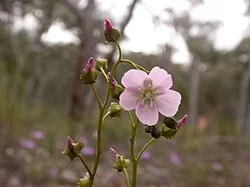
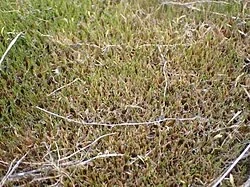
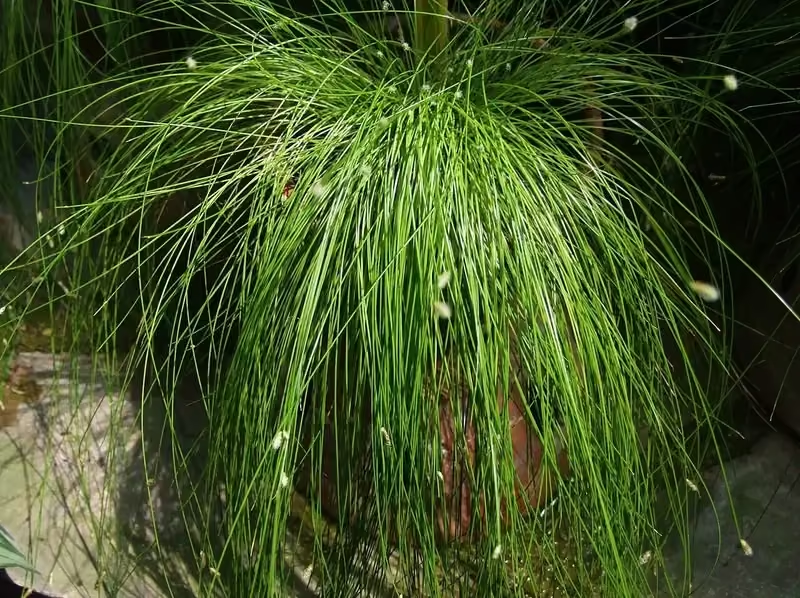
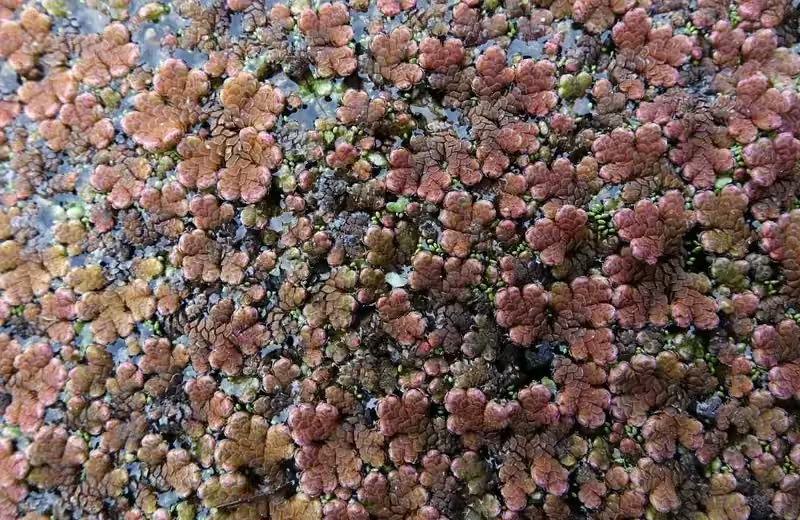
Explore other native plants that share similar characteristics or habitats with Pygmy Sundew ( Drosera pygmaea ), offering further insights into New Zealand's diverse flora. These related species provide context and opportunities for complementary planting in your garden.
Plant Conservation
Conservation Status and Threats
Drosera pygmaea is currently listed as Not Threatened. It is widespread in its preferred habitats. However, its small size makes it particularly vulnerable to subtle changes in habitat, such as nutrient enrichment from nearby agriculture or the invasion of taller exotic weeds. Protecting the integrity of New Zealand's remaining bog and gumland shrublands is vital for the long-term survival of this and other miniature botanical wonders.
Frequently Asked Questions
How big is Pygmy Sundew?
Pygmy Sundew is tiny, forming a rosette only 1 to 2 cm in diameter.
Does Drosera pygmaea tolerate frost?
It has moderate frost tolerance and prefers consistently moist conditions.
Where does Pygmy Sundew grow naturally?
It grows in peat bogs, gumland shrublands and pakihi throughout New Zealand, from the North to Stewart Island.
Is Drosera pygmaea carnivorous?
Yes, its sticky leaves capture and digest small insects to supplement nutrient-poor soils.
Sources and Further Reading
The botanical, growing, and conservation details for Pygmy Sundew (Drosera pygmaea) on this page draw on authoritative New Zealand plant references and citizen-science observation records. Consult the sources below for full technical records and the latest distribution data.