Forked Sundew
Drosera binata
Last updated:
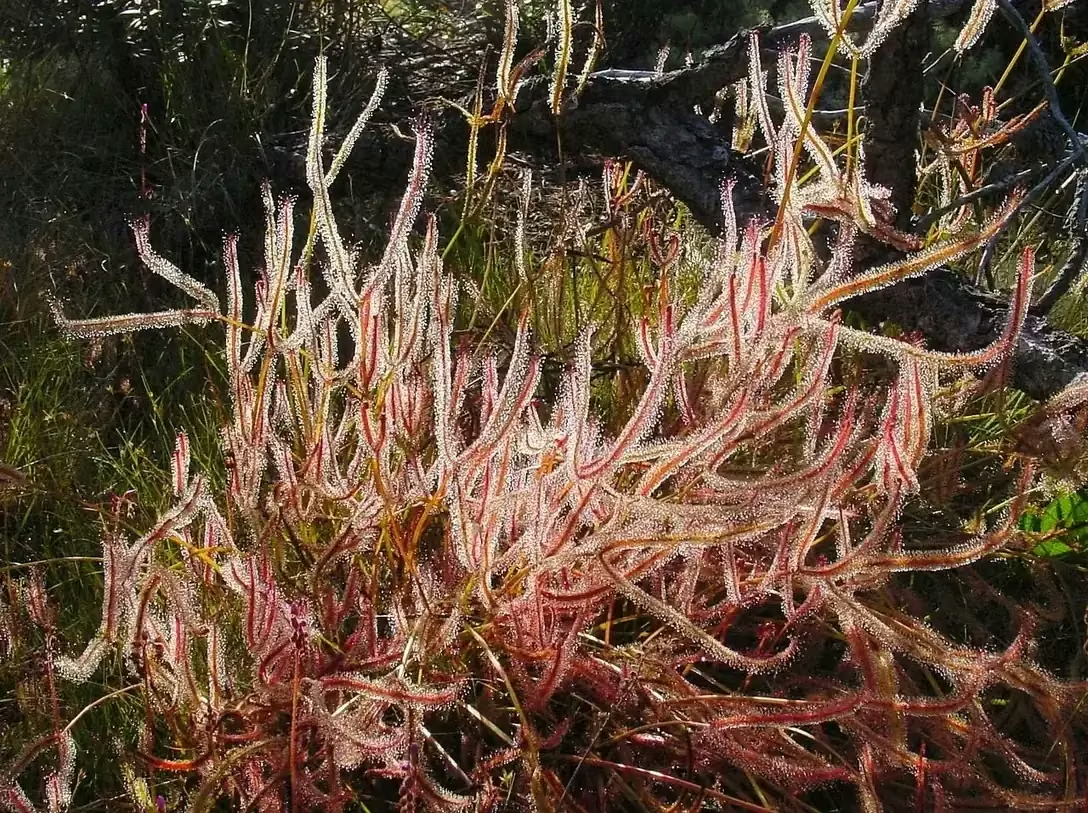
Forked Sundew (Drosera binata) is a striking carnivorous plant instantly recognised by its large, erect leaves that split into two or more antler-like forks. Its wiry leaves reach 15 to 60 cm tall, each lined with glandular hairs that secrete a thick, sweet-smelling mucilage to lure and trap insects, and it bears large white flowers on tall, leafless stalks. Growing fast in summer, it dies back to its roots over winter. Found throughout New Zealand, including the North and South Islands, Stewart Island and the Chatham Islands, it specialises in waterlogged, acidic peat bogs and swampy margins from the coast up to about 1,000 metres. Explore more wetland native plants in our native plant guide.
Plant Description
Identification and Physical Characteristics
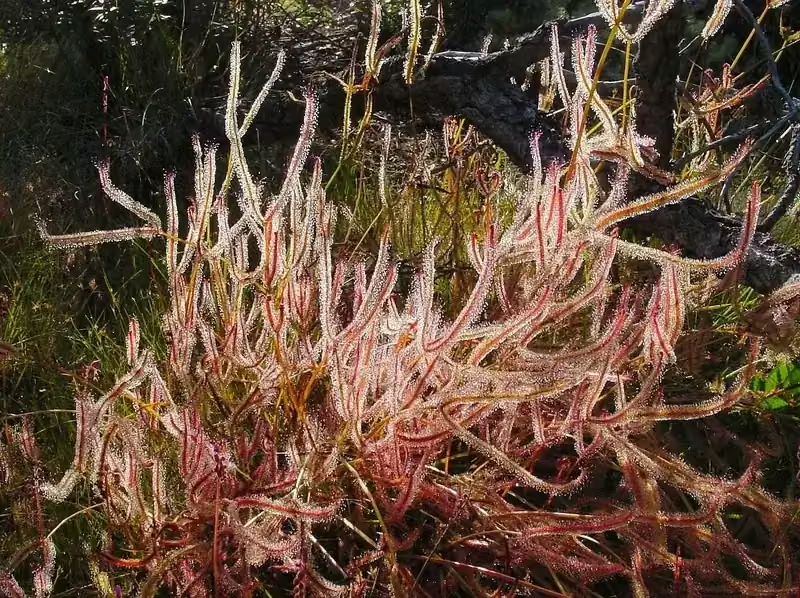
Drosera binata is a unique member of the sundew family, easily distinguished by its large, erect leaves that dichotomously fork. Unlike the compact rosettes of many other sundews, the Forked Sundew can grow quite tall, with its wiry leaves reaching between 15 and 60 cm in height. Each leaf begins as a single stem that divides into two branches (the "T-form"), which in some varieties may further divide into multiple "antler-like" points. The entire upper surface of these forks is lined with glandular hairs that secrete a thick, sweet-smelling mucilage. This "dew" acts as both a lure and a trap for insects. The flowers are relatively large, white, and borne on tall, leafless stalks that rise well above the sticky traps to ensure that pollinators are not accidentally captured.
Quick Facts
| Scientific Name | Drosera binata |
|---|---|
| Height | 15-60 cm (Forked) |
| Spread | 20-40 cm |
| Water Needs | High (Waterlogged) |
| Light | Full Sun to Bright Indirect Light |
| Frost Tolerance | Moderate (Dies back to roots) |
| Salt Tolerance | Low |
| Growth Rate | Fast (During summer) |
| Lifespan | Perennial |
Climate Best Suited to
The Forked Sundew is found throughout New Zealand, including the North and South Islands, Stewart Island, and the Chatham Islands. It is highly adaptable, inhabiting coastal bogs through to subalpine wetlands up to 1,000 metres. In temperate New Zealand climates, it typically exhibits a deciduous-like dormancy, dying back completely to its fleshy rootstock during winter to survive frost and snow, then emerging rapidly as temperatures rise in spring. It thrives in high-humidity areas with consistent year-round rainfall.
Regional Suitability
| City | Climate Suitability |
|---|---|
| Auckland | Highly Suitable |
| Wellington | Highly Suitable |
| Christchurch | Suitable |
| Dunedin | Suitable |
| Queenstown | Suitable (In bog gardens) |
| Invercargill | Highly Suitable |
Plant Habitat
Natural Occurrence and Ecology
In the wild, Drosera binata is a specialist of waterlogged, acidic habitats. Its primary homes are peat bogs, swampy margins, and poorly drained pastures. It is often found growing among Sphagnum moss or Gleichenia ferns. Because it can tolerate being submerged for short periods, it often colonizes the very edges of slow-moving streams and pond margins. It requires open ground where it can access full sunlight, as it is easily outcompeted by tall, shading vegetation. Its presence is usually a sign of a permanent, high-water-table wetland environment.
Growing Requirements
Soil Requirements
Must have nutrient-poor, acidic substrate. It will not survive in standard potting mix or soil with added fertilizers.
- Sphagnum peat moss
- Live Sphagnum moss
- Perlite or silica sand mix
Light Requirements
Requires high light levels. Full sun encourages the most robust growth and vibrant red dew production.
- Full sun preferred
- Brightest windowsills
- High UV tolerance
Water Requirements
Roots must remain wet. Use the tray method to keep the soil saturated. Mineral-free water is mandatory.
- Rainwater only
- Distilled water
- Constantly moist/wet
Planting and Establishing
Establishment Guidance
Forked Sundews are best established in deep pots (at least 15-20 cm) to accommodate their large, fleshy root systems. Use a mix of 50% peat and 50% perlite or sand. Plant them in spring just as the first "fiddleheads" begin to emerge from the central growth point. Ensure the crown is at the soil surface and the medium is thoroughly pre-soaked with rainwater. Place the pot in a saucer that is kept filled with 2-3 cm of rainwater. In a garden setting, they can be established in a permanent bog garden where the water table is consistently high.
Ecological Role
Biodiversity and Ecosystem Impact
The Forked Sundew is an important component of the New Zealand bog community. By capturing larger insects like damselflies and moths, it brings higher levels of organic nitrogen into the nutrient-poor peat environment. It provides a unique micro-ecosystem; several specialized insects have evolved to live on or around sundews without being captured. Its tall growth habit allows it to catch flying insects that stay above the ground-hugging rosettes of smaller sundew species, thus dividing the resource pool in the wetland.
Uses & Significance
Garden Uses
Widely considered one of the best carnivorous plants for New Zealand gardens. Its large size and "active" appearance make it a stunning focal point in bog gardens or large outdoor containers.
- Bog garden feature
- Large terrariums
- Educational gardens
Ecological Value
Helps maintain the health of acidic wetlands by cycling nutrients and providing habitat. It is a flagship species for the conservation of New Zealand's remaining bog landscapes.
- Nitrogen cycling
- Wetland biodiversity
- Indicator of bog health
Landscaping Uses
In professional landscaping, Drosera binata is used in high-end native water features and bog displays. Its unique, branching form provides an architectural element that is rare among native herbs. When planted in large drifts, it creates a shimmering effect as the "dew" catches the sunlight, making it a spectacular choice for public botanical displays and nature-themed designs.
Seasonal Care Calendar
Spring
Growth emerges from the roots. This is the ideal time for repotting and taking root cuttings before the leaves fully expand.
- Repotting
- Divide clumps
Summer
Peak growth and flowering. Keep the water tray topped up. Large specimens can catch dozens of insects a week.
- Top up tray
- Deadhead flower stalks
Autumn
Growth slows. Leaves may begin to brown. This is normal as the plant prepares for its winter rest.
- Reduce water slightly
- Collect seeds
Winter
Often dies back to a central hub (hibernaculum) or just roots. Keep the pot just moist and prevent from freezing solid.
- Protect from deep freeze
- Maintain dormancy
When to Prune and How Much
The primary pruning task for Forked Sundews is removing dead leaves. As leaves catch insects and age, they will eventually turn black and dry out.
- Remove blackened leaves
- Cut spent flower stalks
In late autumn or early winter, once the plant has fully entered dormancy, you can safely trim all the dead foliage back to the soil level to prevent mould and keep the area tidy for spring emergence.
How to Grow Forked Sundew
Cultivating the Forked Sundew ( Drosera binata ) is a rewarding and relatively easy task compared to many other carnivorous species. Its vigour and resilience make it an excellent choice for those new to bog gardening. The plant's success depends on three key factors: acidic soil, pure water, and abundant light. Because Drosera binata produces a significant root system, it is much more forgiving of minor environmental fluctuations than its smaller relatives. In New Zealand, it can be grown outdoors year-round in most regions, benefiting from the natural seasonal cycles that trigger its healthy dormancy and explosive spring growth.
From Root Cuttings
This is the most effective and fascinating way to propagate Drosera binata . The thick, black, spaghetti-like roots have an incredible ability to generate new plantlets from even small segments.
The best time for this is in late winter or early spring just before the plant wakes up.
- Gently remove the plant from its pot and identify several long, healthy roots.
- Snip off 2-5 cm sections of the roots. Do not take more than 20% of the total root mass.
- Lay the root segments horizontally on the surface of a moist peat/sand mix or long-fibered sphagnum moss.
- Cover them very lightly with about 5 mm of the medium.
- Keep the pot in a warm, humid, and bright location.
- Within 4 to 8 weeks, small green rosettes will emerge from the soil.
From Seed
Sowing seeds is also reliable, although it takes longer to produce a mature specimen. The seeds require no special pre-treatment.
- Collect the tiny black seeds from the dry flower capsules in late summer.
- Surface-sow them onto moist peat moss. Do not bury them.
- Keep the medium consistently wet using the tray method.
- Provide bright light and high humidity.
- Seedlings will appear in about a month and grow rapidly during their first summer.
Additional Methods
Established clumps can be easily divided during dormancy. Simply slice the root mass into sections, ensuring each has a portion of the central crown or thick storage roots. Additionally, leaf cuttings can be successful if floated in a jar of distilled water in bright light until plantlets form at the forks.
Pests & Diseases
The Forked Sundew is remarkably pest-resistant-it eats most things that try to eat it! However, aphids can sometimes settle on the flower stalks where there is no sticky dew. These should be wiped off or treated with a safe soap spray. In very humid, stagnant conditions, Botrytis (grey mould) can affect the crown during winter dormancy.
Cultural Significance
Sundews are part of the 'rimurimu' group of plants in Māori botanical classification, often associated with damp, spiritual places. The Forked Sundew is a symbol of the unique evolutionary path of New Zealand's flora, showcasing how plants have adapted to survive in the country's most challenging, nutrient-starved landscapes.
- Wetland preservation symbol
- Evolutionary adaptation icon
Bonus Tip
If your Forked Sundew isn't producing much "dew," it usually means it needs more light or more humidity. Move it to a sunnier spot and watch the glistening droplets return within a few days!
Related Plants
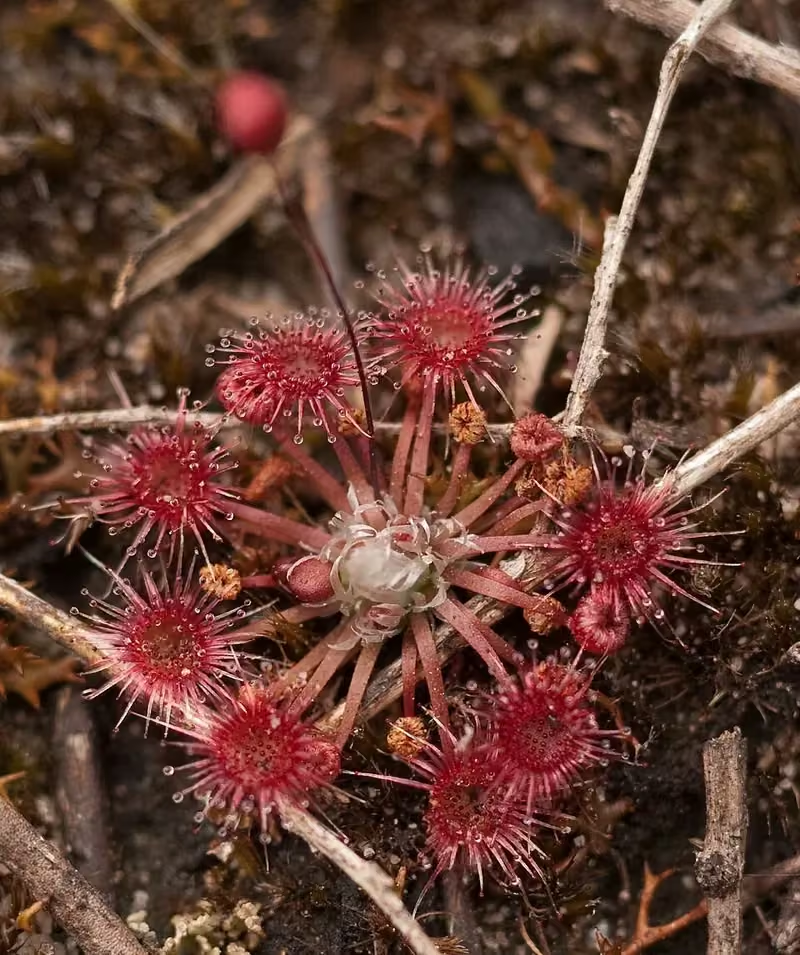
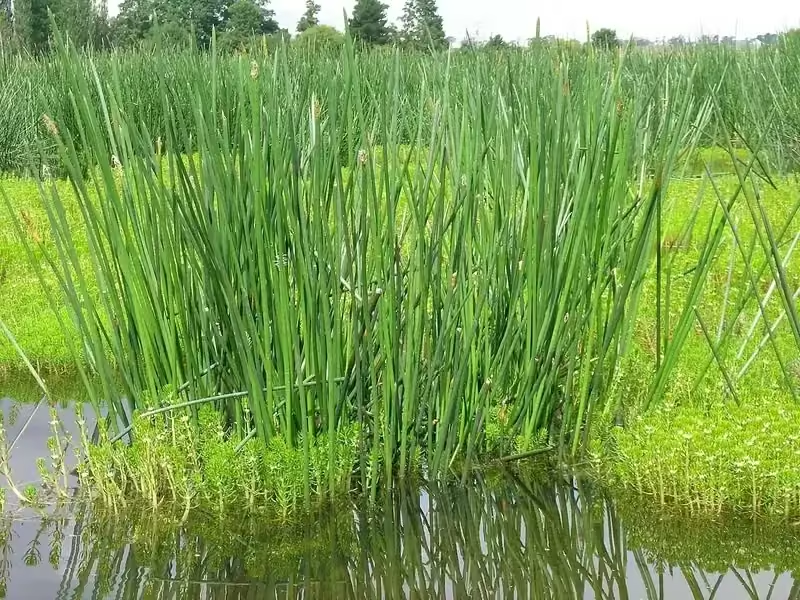
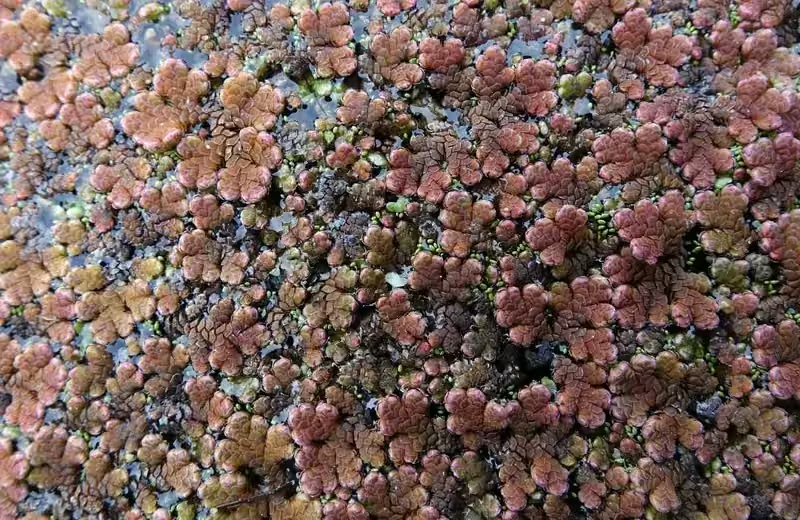
Explore other native plants that share similar characteristics or habitats with Forked Sundew ( Drosera binata ), offering further insights into New Zealand's diverse flora. These related species provide context and opportunities for complementary planting in your garden.



Plant Conservation
Conservation Status and Threats
Drosera binata is currently listed as Not Threatened in New Zealand. It remains relatively common in its specialized bog habitats. However, the drainage of peatlands for agriculture and urban development continues to reduce its range. Protecting New Zealand's remaining wetlands is critical for the long-term survival of the Forked Sundew and the unique biodiversity it supports.
Frequently Asked Questions
How tall does Forked Sundew grow?
Forked Sundew grows 15 to 60 cm tall, with wiry, forking leaves and a spread of 20 to 40 cm.
How fast does Drosera binata grow?
It grows fast during summer, then dies back to its roots over winter.
Does Forked Sundew tolerate frost?
It has moderate frost tolerance, dying back to its roots in cold conditions.
Where does Drosera binata grow naturally?
It grows throughout New Zealand in peat bogs and swampy margins, up to about 1,000 metres altitude.
Sources and Further Reading
The botanical, growing, and conservation details for Forked Sundew (Drosera binata) on this page draw on authoritative New Zealand plant references and citizen-science observation records. Consult the sources below for full technical records and the latest distribution data.