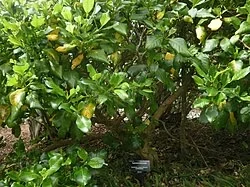
Large-Fruited Coprosma
Coprosma macrocarpa
Last updated:
Coprosma macrocarpa, known as Large-Fruited Coprosma or Coastal Karamu, is a robust evergreen shrub or small tree endemic to New Zealand, growing up to 6 metres tall with a 2 to 3 metre spread. It is best known for its exceptionally large, bright orange to red berries, the biggest of any Coprosma in the country, and for its thick, highly glossy dark green oval leaves. Native to damp, shaded coastal cliffs across the northern North Island and offshore islands, it tolerates salt spray and wind, making it a hardy choice for coastal gardens and hedges. Explore more native shrubs in our native plant guide.
Plant Description
Coprosma macrocarpa , also known as the Large-Fruited Coprosma or Coastal Karamū, is a robust and visually striking shrub or small tree endemic to New Zealand. Typically growing up to 6 metres in height, it is most celebrated for its exceptionally large, bright orange or red berries, which are the largest produced by any member of the Coprosma genus in the country. The foliage is equally impressive, consisting of large, thick, and highly glossy dark green leaves that are broadly oval in shape. These leaves feature prominent midribs and visible veins, with small pits called domatia located on the undersides. In spring, the plant produces small, inconspicuous green flowers. As a dioecious species, individual plants are either male or female, meaning both are required in proximity for the female plants to produce their iconic fruit.
Quick Facts
| Scientific Name | Coprosma macrocarpa |
|---|---|
| Height | Up to 6 metres |
| Spread | 2-3 metres |
| Water Needs | Moderate |
| Light | Full sun to partial shade |
| Frost Tolerance | Hardy |
| Salt Tolerance | High |
| Growth Rate | Moderate to Fast |
| Lifespan | 30-60 years |
Climate Best Suited to
Large-Fruited Coprosma is ideally suited to coastal and lowland temperate climates. It is primarily found in the North Island and offshore islands, where it benefits from the high humidity and moderated temperatures of the sea air. It is very tolerant of salt-laden winds.
Regional Suitability
| City | Climate Suitability |
|---|---|
| Auckland | Excellent |
| Whangārei | Excellent |
| Tauranga | Very Good |
| Gisborne | Very Good |
| Wellington | Good (in sheltered coastal spots) |
Plant Habitat
This species is primarily a coastal dweller, with its distribution focused on the northern half of the North Island and various offshore islands, including the Three Kings Islands. It is well-adapted to the challenges of coastal environments, demonstrating remarkable tolerance to salt spray and strong winds. Large-Fruited Coprosma is commonly found clinging to damp, shaded coastal cliffs, growing within coastal forests, or forming part of the dense scrubland that buffers the shoreline. While it prefers the humidity and moderate temperatures of coastal zones, it can also be found in lowland forest environments further inland, where it continues to provide essential food and shelter for native wildlife.
Growing Requirements
Soil Requirements
Thrives in well-draining soils but is adaptable to various conditions.
- Free-draining loam
- Enriched sandy soils
- Coastal cliff soils
Light Requirements
Performs best in bright light but can handle significant shade.
- Full sun (promotes density)
- Partial shade
- Dappled light
Water Requirements
Requires moderate, consistent moisture during its first year.
- Weekly watering when young
- Drought tolerant once established
- Benefit from coastal humidity
Planting and Establishing
When planting Coprosma macrocarpa , choose a location that can accommodate its eventual height and spread. It makes an excellent hedge or specimen plant in coastal gardens. Dig a hole twice the width of the root ball and mix in plenty of compost. Ensure the plant is set at the same depth as it was in the nursery pot. Water deeply immediately after planting. Applying a generous layer of mulch around the base will help retain soil moisture and keep the roots cool, which is especially important in more exposed sunny positions.
Ecological Role
Large-Fruited Coprosma is a key species for supporting native fauna. Its exceptionally large berries are a major food source for native birds, particularly kererū, which are capable of swallowing the large drupes and dispersing the seeds over wide areas. Native lizards also feed on the fallen fruit. The plant's dense habit provides critical nesting habitat and shelter for small birds and a safe refuge for native insects and invertebrates, contributing significantly to the health of coastal ecosystems.
Uses & Significance
Garden Uses
A fantastic choice for gardeners seeking a structural, wildlife-friendly native.
- Coastal windbreaks and screens
- Feature plant with attractive fruit
- Hedges in coastal environments
- Attracting birds and lizards to the garden
Ecological Value
Provides essential ecosystem services, particularly in northern coastal areas.
- Primary food source for kererū
- Habitat for coastal lizard species
- Important for coastal forest restoration
Landscaping Uses
In landscaping, Coprosma macrocarpa is highly valued for its lush, glossy green foliage which provides a permanent, high-quality look. Its ability to withstand salt spray makes it indispensable for beach-front properties. It can be used as a dense, fast-growing hedge or as a backbone plant in a large native shrubbery. The bright berries provide a splash of seasonal colour that is hard to beat. It also works well when used in restoration projects to stabilize coastal banks and provide quick canopy cover.
Seasonal Care Calendar
Spring
Apply fertilizer and monitor for new growth and flower development.
- Apply organic fertilizer
- Refresh mulch layers
- Plant new specimens
Summer
Ensure adequate hydration and enjoy the ripening of the large drupes.
- Regular deep watering
- Monitor for bird and lizard activity
- Tip-prune if needed for shape
Autumn
A great time for propagation and preparing the plant for the cooler months.
- Take semi-hardwood cuttings
- Collect fresh seeds
- Reduce watering as temperatures drop
Winter
Perform structural pruning and maintain general garden hygiene.
- Prune for size and density
- Clean up any debris around base
When to Prune and How Much
Large-Fruited Coprosma responds very well to pruning, which can be used to maintain its shape or create a dense hedge.
- Prune in late winter or early spring
- Remove any frost-damaged tips
- Hard-pruning is tolerated to rejuvenate old specimens
Use clean, sharp tools to make clean cuts. For hedges, regular light trimming will produce a much denser and more attractive result than occasional heavy pruning.
How to Grow Large-Fruited Coprosma
Cultivating Large-Fruited Coprosma ( Coprosma macrocarpa ) is an excellent way to introduce a touch of the New Zealand coast into your garden. Its hardy nature, attractive glossy foliage, and spectacular berries make it a standout choice for coastal landscaping, restoration projects, or as a structural element in a larger garden. Cultivating this species allows you to appreciate the subtle beauty of New Zealand's understory plants up close.
From Seed
Seeds should be collected from fully ripe drupes. Fresh seed has the highest success rate.
To sow from seed:
- Soak drupes in water to remove the pulp.
- Sow cleaned seeds into a tray of seed-raising mix.
- Lightly cover with soil and keep moist.
- Store in a warm, bright position out of direct sun.
- A short period of cold stratification can improve germination.
Seedlings can be moved to individual pots once they have several sets of leaves. Allow them to grow for at least a year before planting out.
From Cuttings
Semi-hardwood cuttings are a reliable way to propagate Coprosma macrocarpa , especially if you want to ensure the sex of the new plant.
Take cuttings in late summer or early autumn:
- Select 10-15cm healthy stem tips.
- Remove leaves from the bottom two-thirds.
- Use rooting hormone for better results.
- Place in a well-draining mix of peat and perlite.
- Keep in a humid, warm environment until roots form.
Additional Methods
While seed and cuttings are the standard methods, layering can also be used for lower-growing branches. Pinned-down stems will often develop roots at the nodes if kept in contact with moist soil over a period of several months.
Once roots are established, the new plant can be severed and moved to its permanent location. This is a very reliable, though slower, method of propagation.
- Pin a healthy branch to the ground.
- Cover the node with soil and mulch.
- Keep moist for several months.
- Check for roots before detaching.
Pests & Diseases
Coprosma macrocarpa is generally very healthy. It can sometimes attract scale insects, mealybugs, or aphids, which can be managed with neem oil or insecticidal soap. Sooty mould may appear if scale infestations are heavy. Ensure good air circulation and avoid over-fertilizing with high-nitrogen products, as this can encourage soft growth that is more susceptible to pests.
Cultural Significance
The Coprosma genus has many traditional uses in Māori culture. While specific historical records for C. macrocarpa are less common than for larger species like C. robusta , the Coprosma berries were recognized as a food source for birds, which were in turn important for Māori. The plant's role in the healthy, functioning coastal forest ecosystem was inherently respected.
- Source of food for birds, supporting traditional hunting
- Hardy nature valued for coastal shelter
- Part of the complex web of traditional coastal knowledge
Bonus Tip
If you want a truly spectacular berry display, plant at least three Large-Fruited Coprosmas in a group. This increases the chances of having both male and female plants, ensuring a prolific crop of those iconic red fruits every year.
Related Plants
Explore other native plants that share similar characteristics or habitats with Large-Fruited Coprosma ( Coprosma macrocarpa ), offering further insights into New Zealand's diverse flora. These related species provide context and opportunities for complementary planting in your garden. For another native shrub, explore Neglected Coprosma.
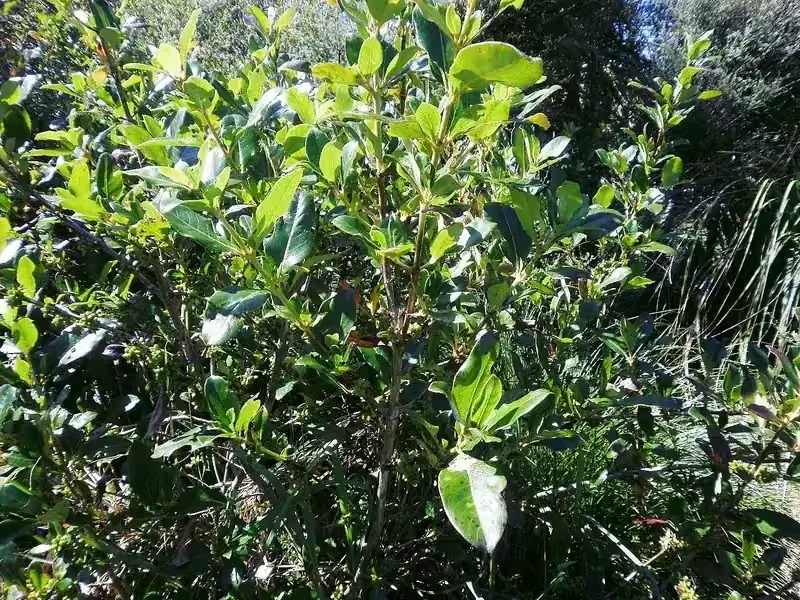
Karamū
Coprosma robusta
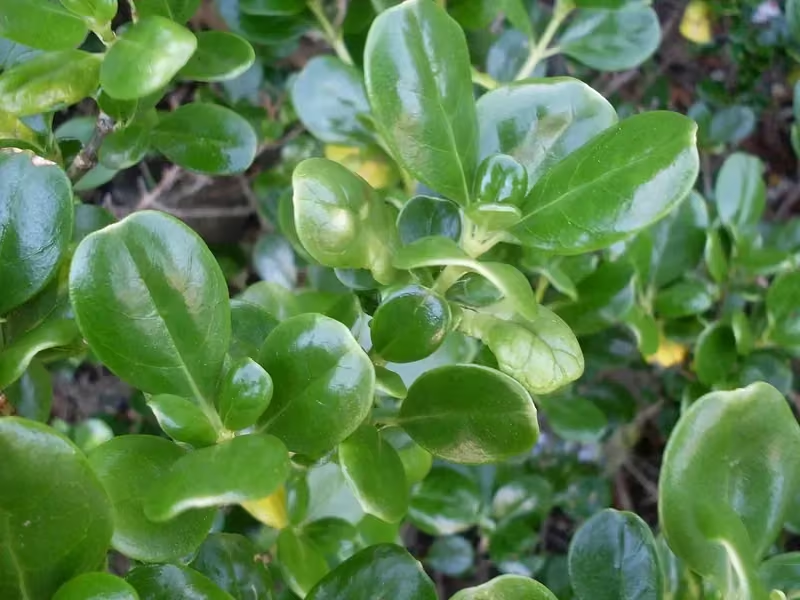
Taupata
Coprosma repens
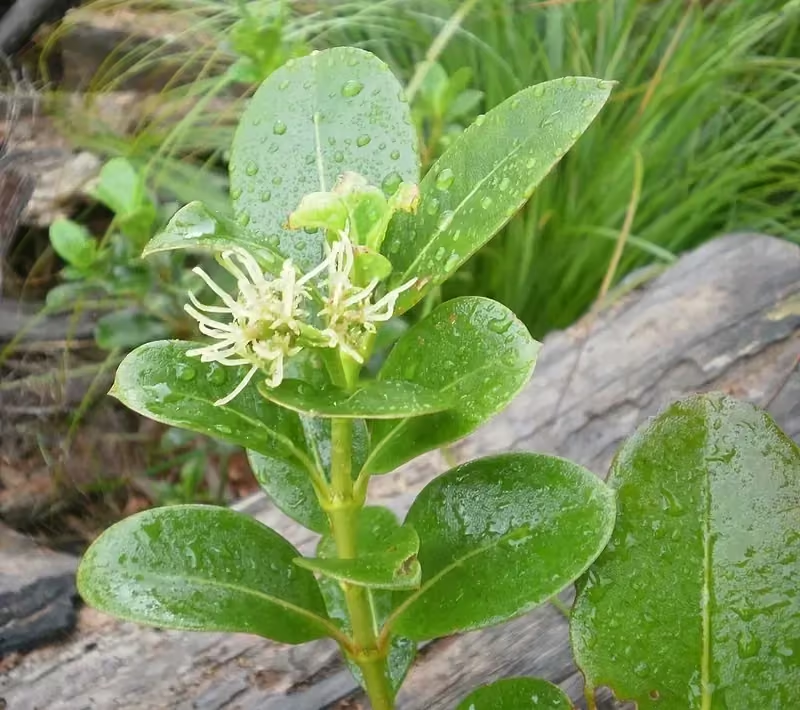
Shining Karamū
Coprosma lucida
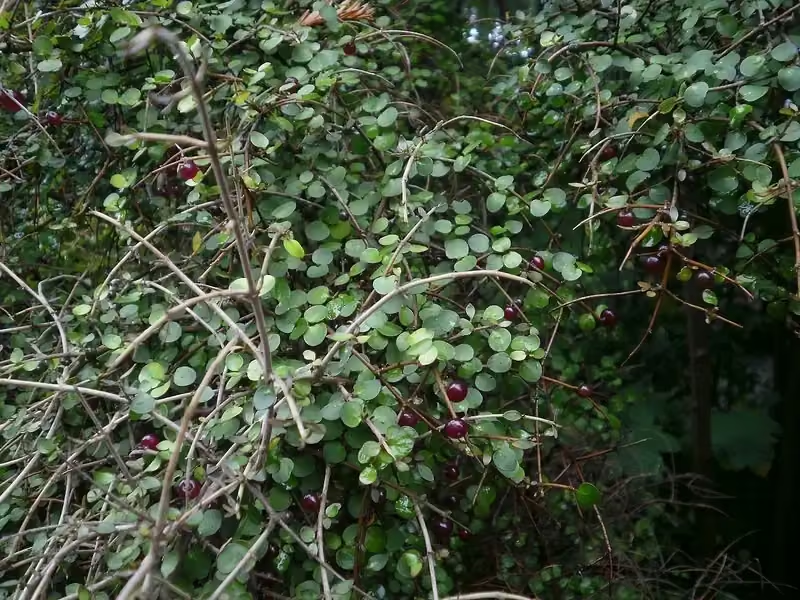
Twiggy Coprosma
Coprosma rhamnoides
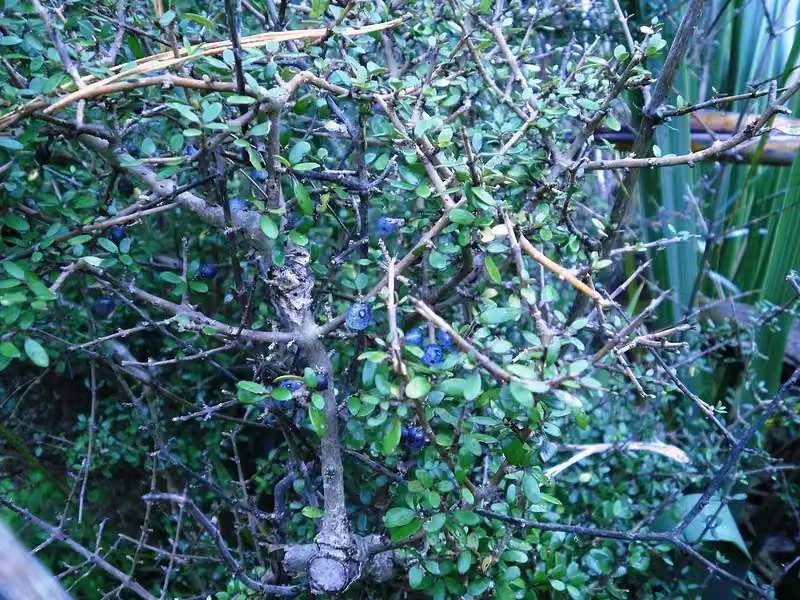
Mikoikoi
Coprosma propinqua

Kanono
Coprosma grandifolia
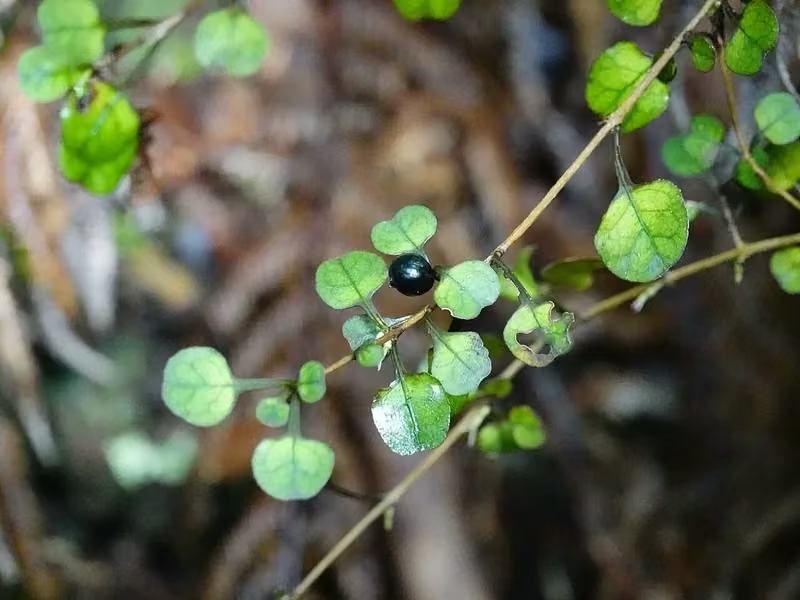
Spatulate Coprosma
Coprosma spathulata
Round-leaved Coprosma
Coprosma rotundifolia
Plant Conservation
Currently classified as "Not Threatened," Coprosma macrocarpa remains common across its northern coastal range. However, habitat loss due to coastal development and modification remains an ongoing concern. Promoting its use in coastal restoration and urban garden settings helps ensure its long-term survival and maintains the vital links in northern coastal ecological corridors.
Frequently Asked Questions
How tall does Coprosma macrocarpa grow?
It grows up to 6 metres tall with a spread of 2 to 3 metres.
Is Coprosma macrocarpa suitable for coastal gardens?
Yes, it has high salt tolerance and withstands salt spray and strong coastal winds.
Does Coprosma macrocarpa tolerate frost?
Yes, it is frost hardy while preferring the milder coastal climates of the northern North Island.
What is special about the berries of Coprosma macrocarpa?
Its large orange to red drupes are the biggest of any New Zealand Coprosma and feed native birds like kereru.
Sources and Further Reading
The botanical, growing, and conservation details for Large-Fruited Coprosma (Coprosma macrocarpa) on this page draw on authoritative New Zealand plant references and citizen-science observation records. Consult the sources below for full technical records and the latest distribution data.