Centella
Centella uniflora
Last updated:
Centella uniflora is a hardy, adaptable perennial herb native to New Zealand that forms a low, spreading mat via slender stolons, making it an excellent natural groundcover just 0.05-0.10 m high but spreading 0.5-1.0 m wide. It is recognised by its kidney-shaped (reniform) leaves, usually glossy green with slightly wavy or toothed margins, and tiny, inconspicuous reddish-purple or white flowers tucked deep within the foliage. A close relative of Centella asiatica, it grows across the North, South and Chatham Islands in damp grasslands, wetland margins, forest clearings, coastal dunes and even lawns. It tolerates full sun to deep shade, frost and a wide range of conditions. Explore more native ground covers in our native plant guide.
Plant Description
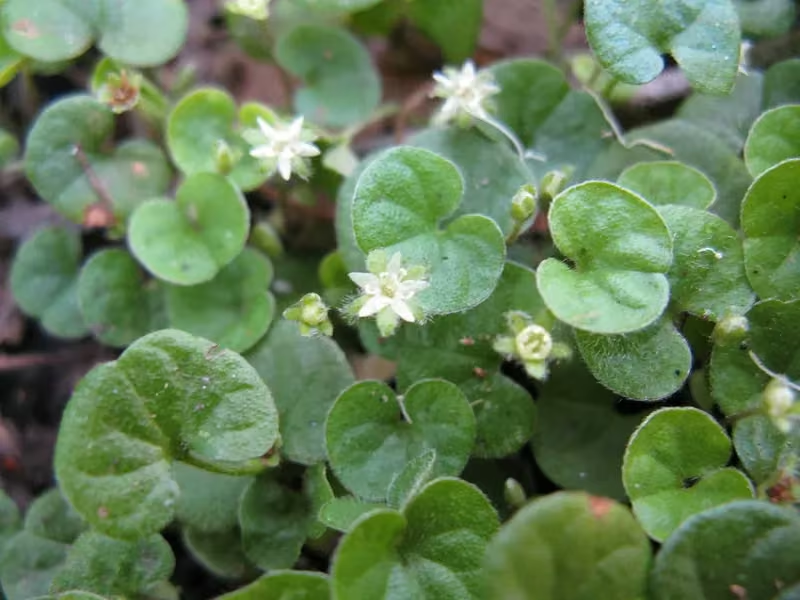
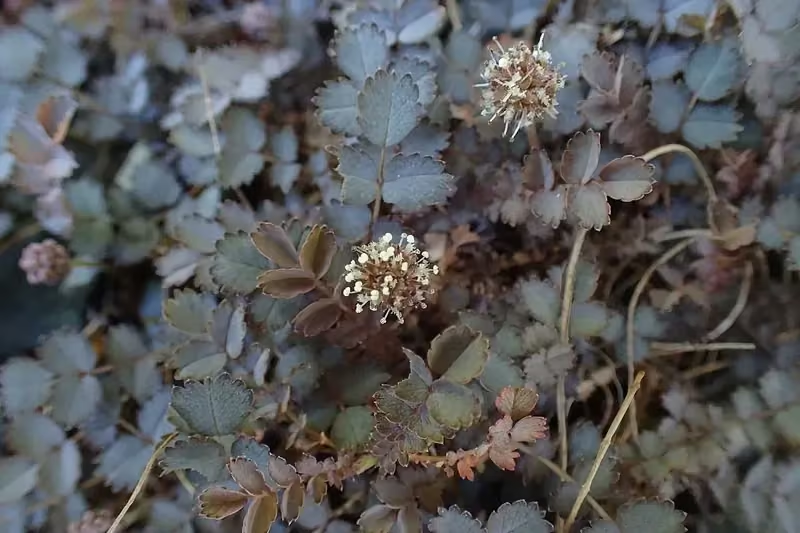
Centella uniflora is a hardy and adaptable perennial herb native to New Zealand. It is a mat-forming species that spreads via slender stolons, making it an excellent natural groundcover. The plant is characterized by its charming kidney-shaped (reniform) leaves, which are typically glossy green with slightly wavy or toothed margins. Closely related to the well-known Centella asiatica , this native version is a common sight in many New Zealand environments, often found growing amidst grasses or tucked into damp, shady corners. Its flowers are tiny and inconspicuous, often reddish-purple or white, and are usually nestled deep within the foliage.
Quick Facts
| Scientific Name | Centella uniflora |
|---|---|
| Height | 0.05-0.10 metres |
| Spread | 0.50-1.0 metre |
| Water Needs | Moderate to High; thrives in damp soil but is surprisingly drought-tolerant |
| Light | Full sun to deep shade |
| Frost Tolerance | High |
| Salt Tolerance | Moderate |
| Growth Rate | Fast |
| Lifespan | Perennial |
Climate Best Suited to
Centella is remarkably versatile and can be found across the North, South, and Chatham Islands. it is capable of withstanding a wide range of climatic conditions, from the humid warmth of the north to the frost-prone regions of the south. It is equally at home in coastal districts, where it tolerates salt spray and wind. This adaptability makes it one of the most reliable native groundcovers for a variety of New Zealand garden styles.
Regional Suitability
| City | Climate Suitability |
|---|---|
| Auckland | Excellent |
| Wellington | Excellent |
| Christchurch | Excellent |
| Dunedin | Excellent |
| Invercargill | Excellent |
Plant Habitat
In its natural state, Centella uniflora occupies an incredibly broad range of habitats. It is frequently found in damp grasslands, wetland margins, forest clearings, and coastal dunes. It is also a very common "weed" in urban lawns, where it thrives despite regular mowing. Its ability to colonize both sunny and shady sites allows it to fill ecological niches in many different plant communities across the country.
Growing Requirements
Soil Requirements
Prefers moist, fertile soils but is highly tolerant of various soil types including clay, loam, and sandy substrates.
- Prefers moist, organic-rich soil
- Tolerant of heavy clay
- Can grow in sandy coastal soils
Light Requirements
This is one of the few native groundcovers that truly thrives in everything from full blazing sun to deep forest shade.
- Full sun for dense mats
- Partial shade preferred in hot areas
- Thrives in deep shade
Water Requirements
While it prefers consistent moisture, established mats can survive significant dry periods by slowing their growth.
- Regular watering in dry spells
- Tolerates damp or boggy ground
- Established plants are drought-hardy
Planting and Establishing
Planting Centella is straightforward due to its vigorous nature. Simply clear the area of aggressive weeds and loosen the soil. Dig small holes spaced about 30cm apart and place a plant or a divided clump into each. Water in well. Because it spreads via runners, the plants will quickly fill the gaps to form a seamless green carpet. If you are using it to replace a lawn, ensure the site is well-prepared and keep it moist during the initial establishment phase to encourage rapid spread.
Ecological Role
Centella provides a valuable protective layer for the soil, helping to maintain moisture and prevent erosion. Its dense foliage offers shelter for small soil invertebrates.
Uses & Significance
Garden Uses
It is an ideal lawn alternative in shady areas where traditional grasses struggle. It also works beautifully as a living mulch under taller shrubs or as a soft edge for pathways and rockeries.
- Alternative for shady lawns
- Living mulch under shrubs
- Pathway edging
Ecological Value
Although its flowers are small, they are visited by various small native insects. The dense mats help suppress invasive weed seedlings.
- Soil moisture retention
- Habitat for ground insects
- Natural weed suppression
Landscaping Uses
Landscapers use Centella for its reliable performance and low maintenance requirements. It provides a lush, soft green texture that complements many other native plants, particularly ferns and sedges.
Seasonal Care Calendar
Spring
This is the best time to divide existing mats to fill in any bare patches or to start new areas of groundcover.
- Divide and transplant clumps
- Apply a light liquid fertilizer
- Check for invasive weeds
Summer
In very hot, dry districts, occasional watering will keep the foliage looking lush and green. Without water, it may turn slightly bronze but will recover quickly.
- Water in extreme drought
- Trim edges if encroaching
- Monitor for scale insects
Autumn
A good time to plant new specimens as the soil is still warm but moisture levels are increasing.
- Planting and establishing
- Remove fallen autumn leaves
- Clean up pathway edges
Winter
Requires virtually no care in winter. It is very frost-hardy and will maintain its green cover throughout the coldest months.
- No pruning required
- Monitor drainage in wet areas
- Minimal maintenance
When to Prune and How Much
Centella is naturally low-growing and rarely requires pruning. If it spreads into areas where it is not wanted, it can be easily pulled back or trimmed with garden shears.
- Trim edges of pathways
- Pull back from other small plants
- No height pruning needed
If the mat becomes too thick or "moundy" over several years, it can be mown on a high setting to encourage fresh, flat growth.
How to Grow Centella
Cultivating Centella ( Centella uniflora ) is a rewarding endeavor for any gardener interested in New Zealand's unique flora. This species can be propagated through several methods, each requiring specific conditions to ensure healthy growth and establishment. Successful propagation depends on mimicking the plant's natural environment and providing consistent care during the early stages of development.
From Seed
Propagation from seed is often the most effective way to produce a large number of Centella plants. Seeds should be collected when they are fully mature. Freshly collected seeds generally have higher germination rates than those that have been stored for long periods.
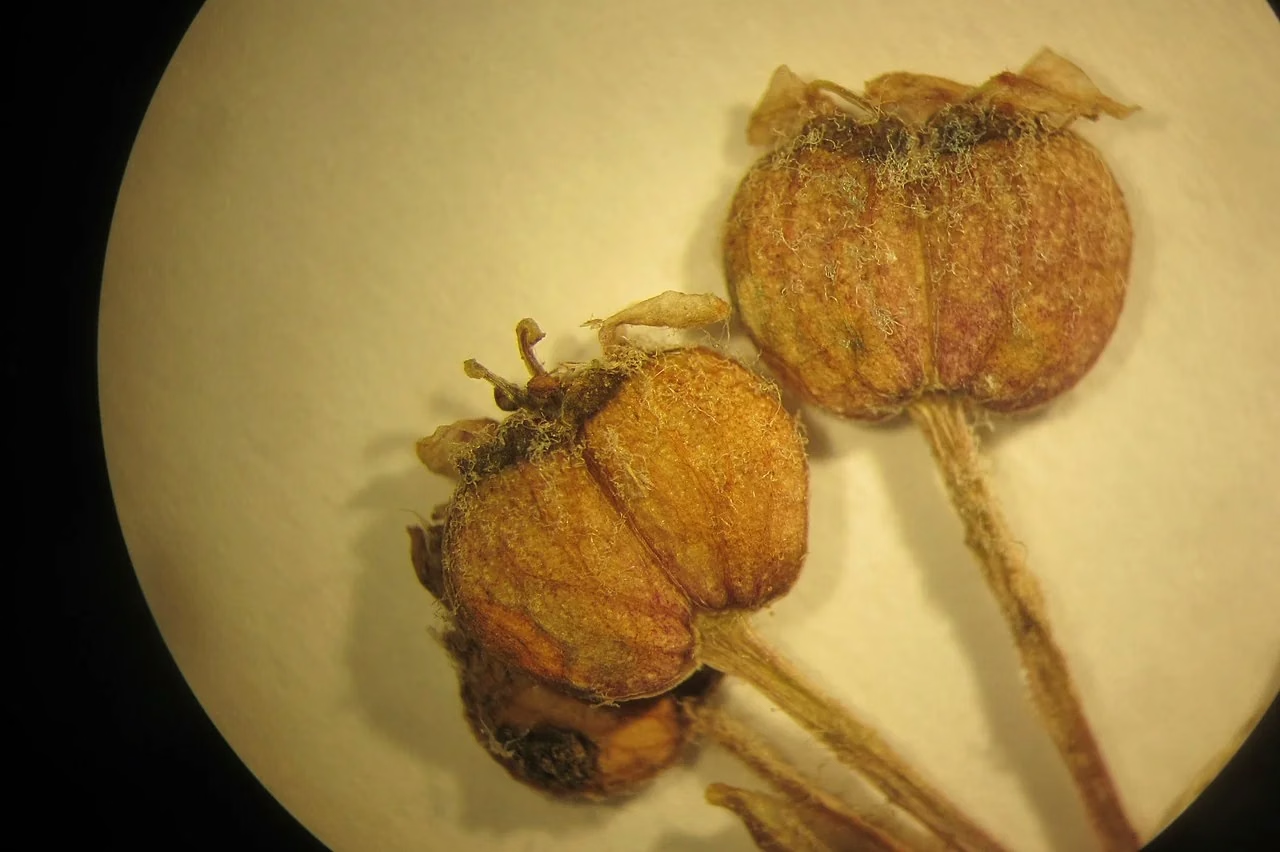
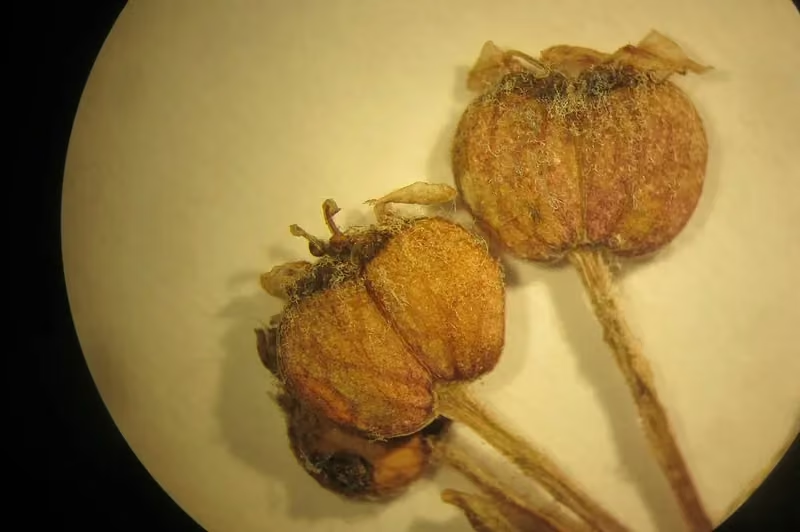
Seeds are produced in small clusters and can be collected in late summer. Collect seed clusters when they turn brown.
- Sow on the surface of a moist seed mix.
- Keep in a warm, bright spot.
- Do not bury seeds deeply.
- Maintain consistent moisture.
- Transplant seedlings once established.
Natural self-seeding is very common in suitable garden environments.
From Cuttings
For those wishing to replicate specific characteristics of a parent plant, vegetative propagation via cuttings is the preferred method. This technique ensures that the new plants are genetically identical to the source. Semi-hardwood cuttings taken during the appropriate season usually yield the best results for this species.
Stolons (runners) can be taken at almost any time of year and will root very quickly.
- Snip a length of runner with at least two leaf nodes.
- Pin it down onto moist soil or a pot.
- Keep moist until new growth appears.
Additional Methods
Depending on the growth habit of Centella, other methods such as division or layering might also be viable options. Division is particularly suitable for plants that form dense clumps or have spreading root systems, while layering can be used for species with trailing or flexible stems.
Division is the easiest and fastest way to multiply your stock of Centella.
- Dig up a small clump with roots attached.
- Separate into smaller pieces.
- Replant immediately and water in.
Pests & Diseases
Extremely resistant to most pests and diseases. Occasionally, it may host scale insects, but these rarely cause significant damage to such a vigorous plant. Over-watering in heavy, undrained soils can sometimes lead to root rot.
Cultural Significance
While Centella asiatica is famous globally for its medicinal properties, our native Centella uniflora shares some of this heritage and is respected for its resilience in the New Zealand landscape.
- Close relative of medicinal Gotu Kola
- Abundant and resilient native herb
- Part of New Zealand's coastal and wetland flora
Bonus Tip
Use Centella as a "green grout" between pavers or stepping stones to create a beautiful, lush look that can handle occasional foot traffic.
Related Plants
Explore other native plants that share similar characteristics or habitats with Centella ( Centella uniflora ), offering further insights into New Zealand's diverse flora. These related species provide context and opportunities for complementary planting in your garden.
Plant Conservation
Centella uniflora is currently classified as "Not Threatened" in the New Zealand Threat Classification System. It is abundant and widespread throughout the country, even flourishing in human-modified landscapes. Its resilience and broad habitat tolerance make it a secure part of New Zealand's diverse flora.
Frequently Asked Questions
How big does Centella uniflora grow?
It is a low groundcover just 0.05 to 0.10 m high, spreading 0.5 to 1.0 m wide via stolons.
Does Centella uniflora tolerate frost?
Yes, it has high frost tolerance and grows in frost-prone southern regions.
Will Centella uniflora grow in shade?
Yes, it grows in full sun to deep shade and colonises both sunny and shady sites.
Is Centella uniflora suitable for coastal gardens?
Yes, it has moderate salt tolerance and naturally grows on coastal dunes and in coastal districts.
Sources and Further Reading
The botanical, growing, and conservation details for Centella (Centella uniflora) on this page draw on authoritative New Zealand plant references and citizen-science observation records. Consult the sources below for full technical records and the latest distribution data.